
Reviewed · POKHARA TOURS
Pokhara: Visit Best Seven Tourist Destination by Sharing Bus
Pokhara packs a lot into one day. This six-hour outing links seven major sights by shared local bus, giving you a practical way to see Pumdikot, the World Peace Pagoda, Davis Falls, three caves, Seti River Gorge, and Bindabasini Temple without arranging separate rides. I especially like the low $9 price and the chance to move around Pokhara as local people do.
I also like the mix of religious sites, natural attractions, and city views. The main catch is the tight schedule and shared transport. A crowded bus, late arrivals, or a slow road can stretch the day well beyond six hours, and two stops may not be visited if the route falls behind.
In This Review
- Seven useful things to know before you go
- Is this the right way to see Pokhara?
- Starting in Lakeside and heading to Pumdikot
- The World Peace Pagoda and its hilltop views
- Davis Falls and Gupteshwor Mahadev Cave
- Mahendra Cave and Bat Cave
- Seti River Gorge and Bindabasini Temple
- The real value of a local bus day
- What to bring and what to leave behind
- Who will enjoy this outing most?
- Should you book the Pokhara seven-destination bus tour?
- FAQ
- How much does the Pokhara shared bus tour cost?
- How long does the experience last?
- What does the price include?
- Which places are visited?
- How much are the entrance fees?
- Is the tour suitable for wheelchair users?
- What should I bring?
Seven useful things to know before you go
- The route covers seven very different sights: temples, caves, a waterfall, a gorge, and two hilltop viewpoints.
- Shared buses keep the price low: hotel pickup and drop-off are included within Pokhara’s Lakeside area.
- Pumdikot comes first: you begin with the large Shiva statue and wide views near Pokhara.
- The day involves plenty of walking: you will climb about 200 steps at the temple and cave area and walk at every stop.
- Entrance fees cost extra: plan on about NPR 800 per person, in addition to the tour price.
- The schedule can slip: other passengers may arrive late, and the bus can become crowded.
Is this the right way to see Pokhara?
At $9 per person, this is one of the least expensive organized ways to cover Pokhara’s main sights. The value comes from the number of places reached in a single outing, plus pickup and return to a hotel in Lakeside. If you tried to arrange several rides yourself, the planning would take more time, even if the total transport cost stayed modest.
The experience is less polished than a private car tour. You ride local shared buses, not a dedicated vehicle. That means you get a more ordinary view of Pokhara, but you also accept crowded seats, changing road times, and less control over how long you stay at each stop.
I would choose this for a first visit when you want broad coverage. It is also useful if you are traveling alone and prefer having a guide and a small group around you. I would not choose it if you want long, quiet visits at each monument or if you dislike walking, stairs, and public transport.
The advertised rating is 3.4 from 10 ratings, which fits the mixed picture. Some outings have been praised for smooth organization, kind assistance, and the number of sights covered. Others have been held back by missed stops, crowded buses, and a French-language request that was not met.
A few more trips worth weighing up before you book
- ZipFlyer Nepal – The World’s Steepest Zip-line
★ 5.0 · 608 reviews - Bungee Pokhara by HighGround Adventures
★ 5.0 · 366 reviews - From Pokhara: Sarangkot Sunrise Himalayas Tour
★ 4.7 · 218 reviews
Starting in Lakeside and heading to Pumdikot
Pickup is offered from ten listed hotels in and around Lakeside, including Hotel Barahi, Lake View Resort, Hotel K2 Pokhara, Hotel Kunja, Dahlia Boutique Hotel, and several others. You should wait in the hotel lobby ten minutes before the scheduled time, since the first part of the route begins with a short walk to the bus.
The ride to Pumdikot takes about 45 minutes. This is a useful first leg because it moves you quickly from the tourist center toward the hill country around Pokhara. Since this is a shared local bus, leave large luggage behind. A small day bag is the practical choice.
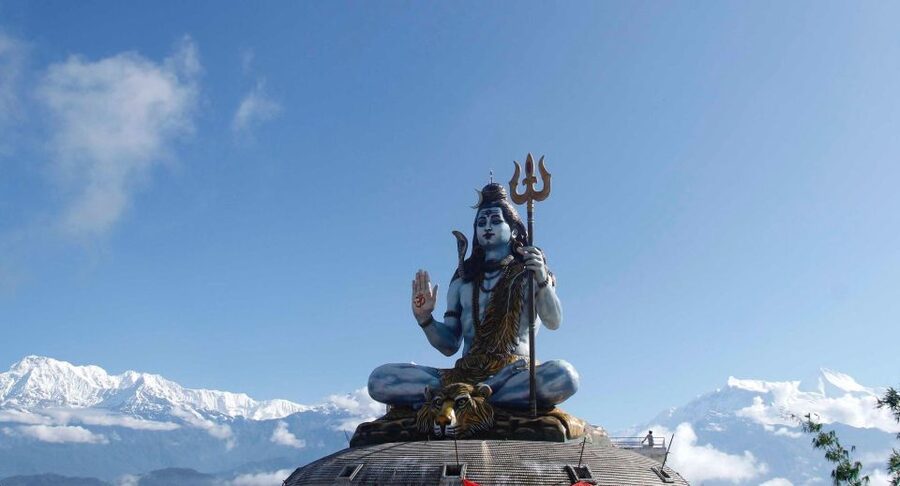
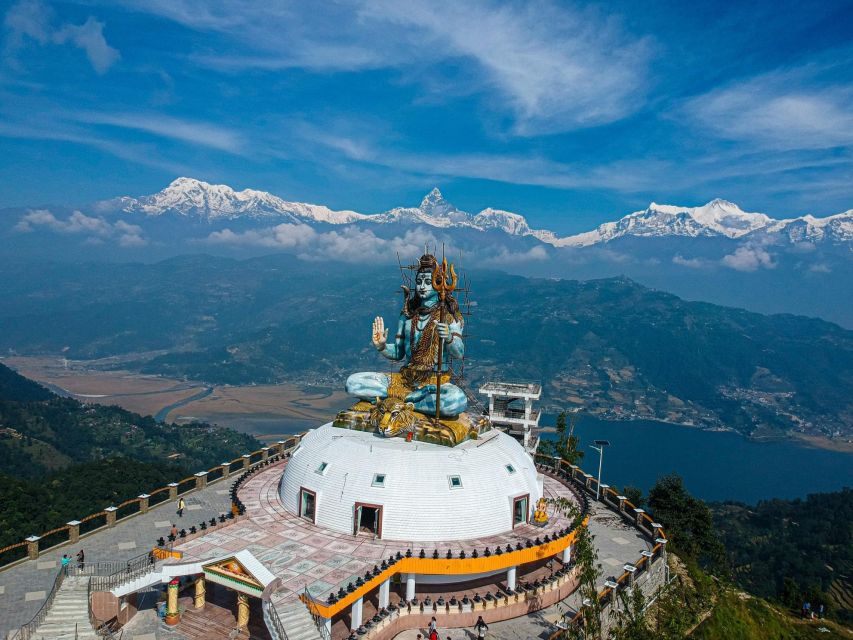
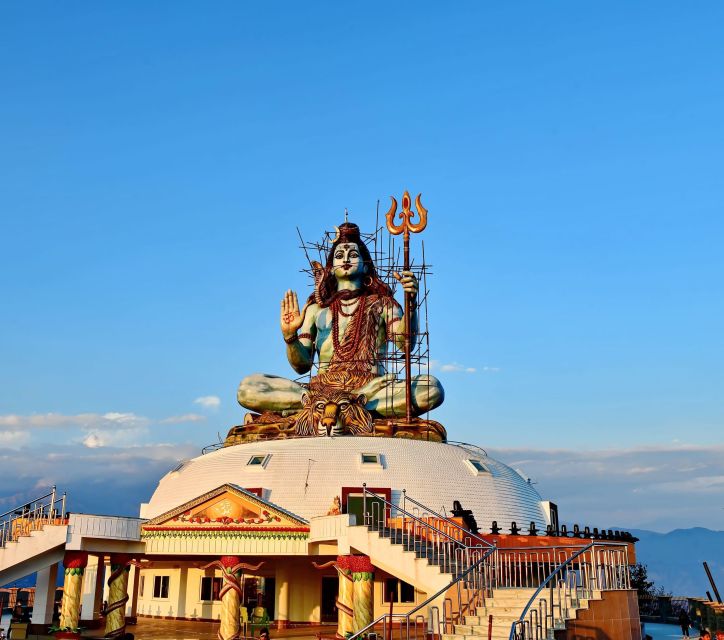
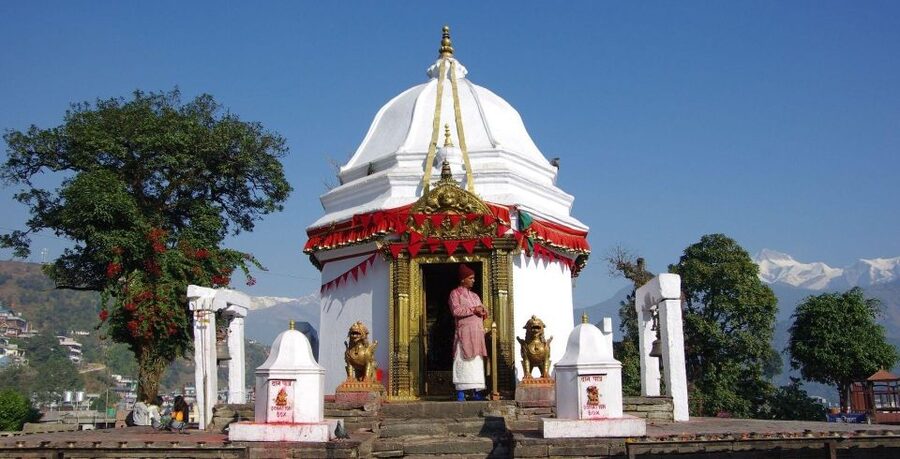
Pumdikot Mahadev Temple is home to the large Shiva statue, often called the Pumdikot Shiva Statue. You have about 30 minutes here. The setting feels calm and spiritual, with open views across the surrounding countryside and toward Pokhara.
The temple is dedicated to Lord Shiva and draws people who come to pray and seek blessings. Even if you are not religious, the stop gives you a clear sense of how worship, mountain scenery, and local travel fit together in Pokhara. The short visit means you will have time to look around and take in the view, but not to linger.
The World Peace Pagoda and its hilltop views
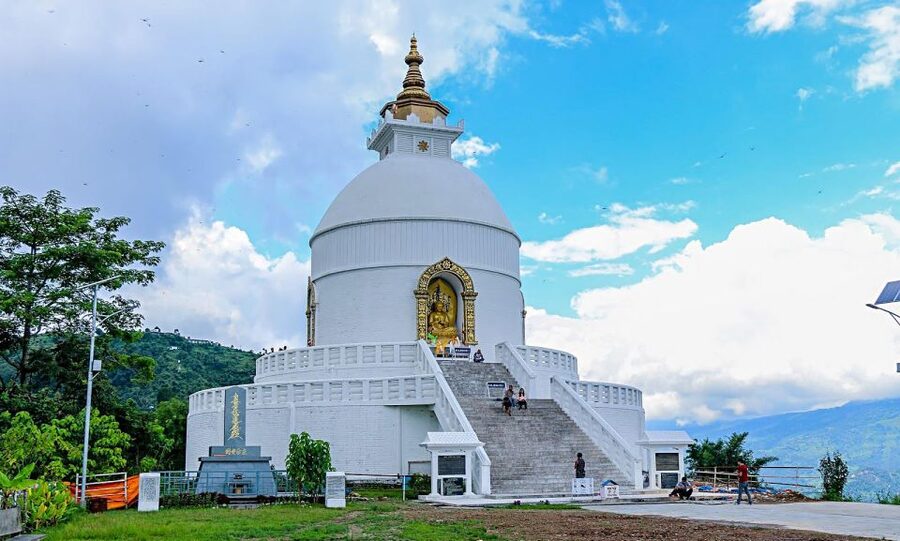
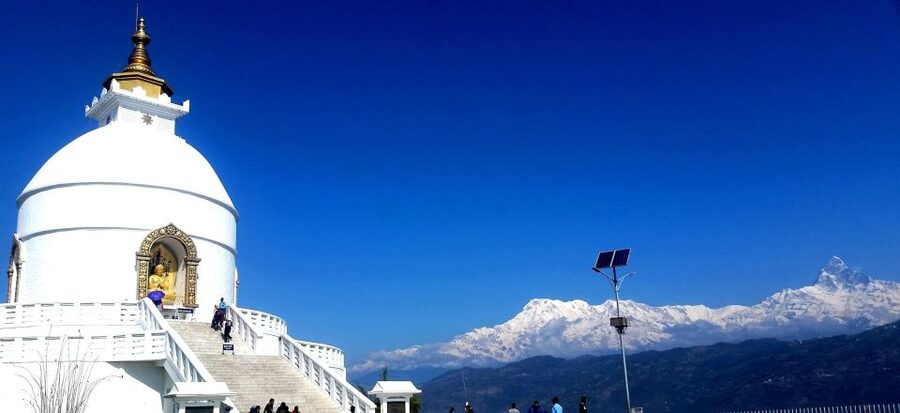
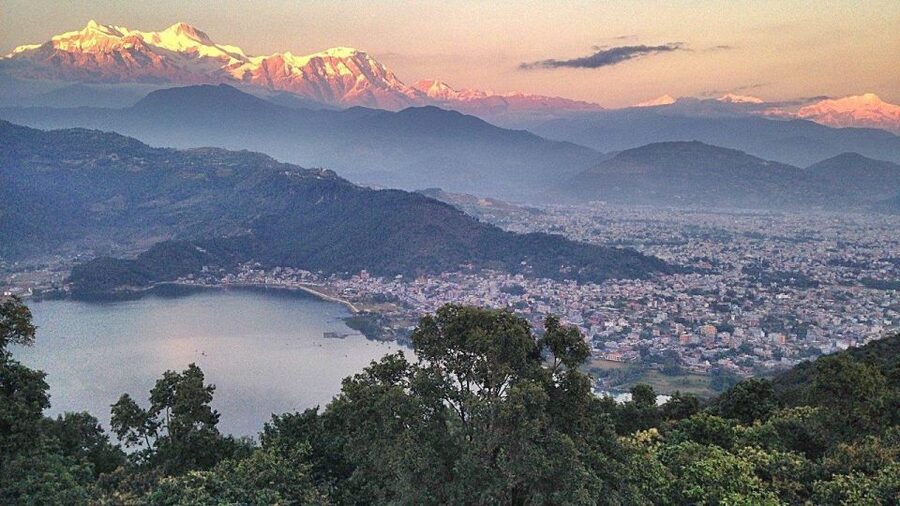
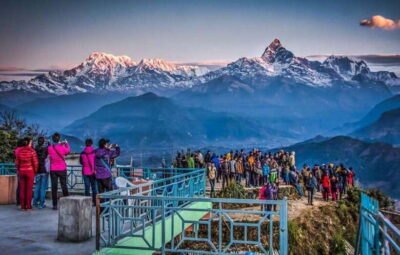
A 25-minute bus ride brings you to the World Peace Pagoda, where you have another 30-minute visit. This white Buddhist monument sits above Pokhara and looks across the city toward the Annapurna range.
The pagoda is built as a symbol of peace and harmony. Its appeal is both spiritual and visual. You get a quiet hilltop setting, a broad view of Pokhara, and a change in mood after the Hindu temple at Pumdikot.
The short stop is enough to see the monument and enjoy the viewpoint, though the mountain view depends on weather. On a clear day, this may be one of the most memorable parts of the outing. If clouds cover the high peaks, the city and hills still make the visit worthwhile.
The bus journey between the first two hilltop sites is part of the experience. You are not being moved in a private bubble. You see ordinary roads and local neighborhoods, and you need to accept that departure times may be flexible.
Davis Falls and Gupteshwor Mahadev Cave
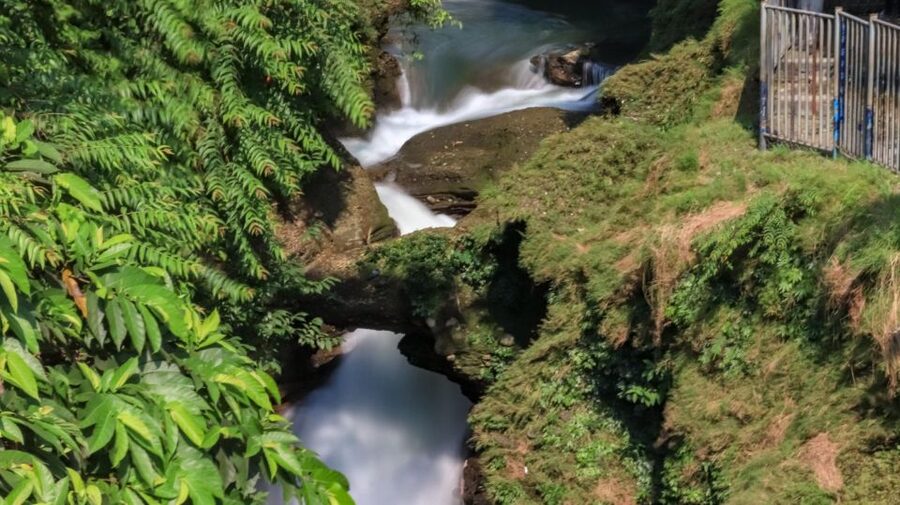
The next bus ride takes about 25 minutes to the Davis Falls area. The stop at Davis Falls lasts around 20 minutes, followed by a five-minute walk to Gupteshwor Mahadev Cave.
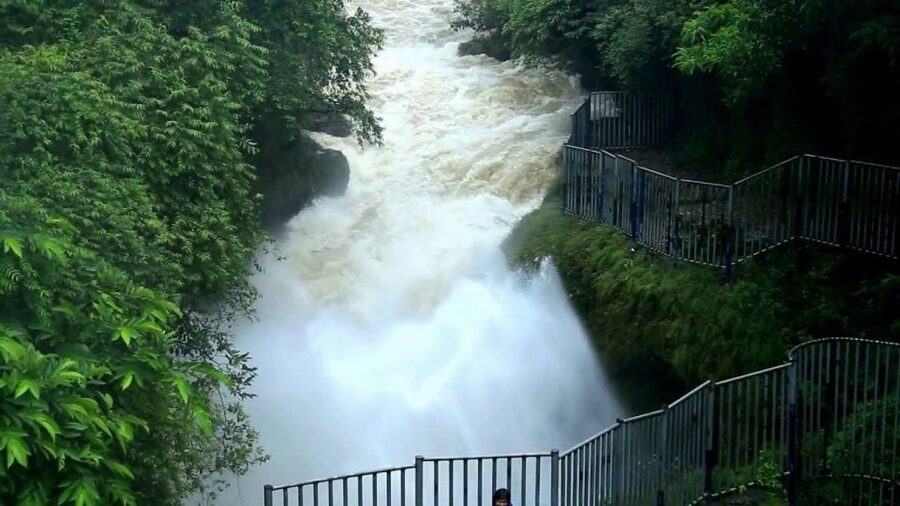
Davis Falls is known locally as Patale Chhango. Water drops through a narrow channel and disappears underground, creating a forceful and unusual waterfall. The name is tied to a local legend, which your guide can explain during the visit.
Twenty minutes is enough to see the falls, but the footing can be wet or uneven. Comfortable shoes matter here, especially because the tour continues on foot to the cave. Take care near slippery surfaces and keep your camera secure.
Gupteshwor Mahadev Cave is dedicated to Lord Shiva and connects with the underground system near the waterfall. Inside, you can see natural rock formations, stalactites, and stalagmites. The cave is a stronger stop for people who enjoy geology and religious places, but it is not an easy visit for anyone who struggles with steps or confined spaces.
The information provided for the outing warns that you will climb about 200 steps at the temple and cave area. The route also requires walking at every attraction. This is not suitable for wheelchair users, and it may be tiring if you have knee, balance, or mobility problems.
A different sort of day from Pokhara:
- ATV Adventure Tour in Pokhara, Nepal
★ 5.0 · 194 reviews - Full-Day Tibetan Cultural Tour to Tibetan Settlements Pokhara
★ 5.0 · 184 reviews - Pokhara: Full-Day Sharing Bus Tour on 7 Iconic Destination
★ 4.1 · 179 reviews - Poon hill Trek 3 days
★ 5.0 · 176 reviews
Mahendra Cave and Bat Cave
After the Davis Falls area, the bus takes about 45 minutes to Mahendra Cave in Batulechaur. You have roughly 20 minutes to explore this cave, named after the late King Mahendra.
Mahendra Cave is known for limestone formations and underground chambers. The stop offers a different cave experience from Gupteshwor Mahadev Cave. Here, the interest is mainly the rock interior and the sense of moving beneath the surface of the city.
The 20-minute visit keeps the route moving, but it also limits the time for careful exploration. If you are fascinated by caves, you may wish for longer. If you simply want to see the main formations, the allotted time should give you a useful introduction.
A ten-minute bus ride leads to Bat Cave, where you have about 20 minutes. As the name suggests, it is a natural or partly accessible cave habitat for bats. Cool conditions and sheltered roosting spaces make caves suitable for these nocturnal animals.
Access to bat habitats can be regulated to protect the animals, so you should follow the guide’s instructions and avoid loud behavior or touching the cave walls. The appeal here is not decoration. It is the chance to see a cave linked to living wildlife, though the bats may not always be easy to spot.
Seti River Gorge and Bindabasini Temple
From Bat Cave, the route continues by bus for about 20 minutes to Seti River Gorge. This is a short ten-minute stop, so think of it as a quick look rather than a full nature walk.
The Seti River has cut a narrow gorge through the city area. Its pale water and steep channel create one of Pokhara’s more unusual urban sights. The brief visit breaks up the cave stops and gives you a glimpse of the force of the river beneath the streets and buildings.
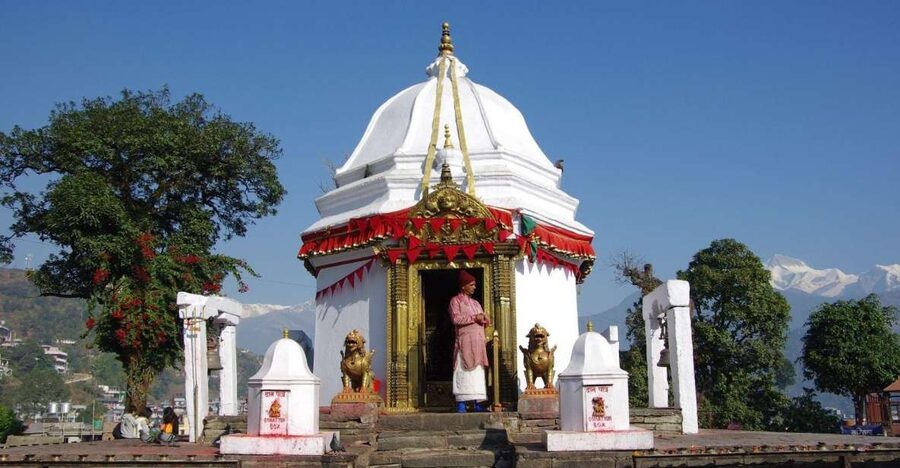
Another 15-minute bus ride brings you to Bindabasini Temple. This Hindu shrine, dedicated to Goddess Durga, is located in the heart of Pokhara. You have about 30 minutes to observe the temple, watch worshippers offering prayers, and take in the city views from the grounds.
Bindabasini is an important religious site, not simply a photo stop. Dress respectfully and remember that worship continues while you visit. The temple gives the day a strong cultural finish, especially after the Buddhist calm of the World Peace Pagoda and the Shiva shrines.
The return bus ride takes about 30 minutes. Drop-off is offered at the same group of Lakeside hotels used for pickup. The full route is planned for six hours, but you should keep the rest of your day flexible. Late arrivals and road delays have caused some outings to run much longer.
The real value of a local bus day
The shared bus is both the best reason to book and the main risk. At this price, you get transport between seven places, hotel pickup and return, and a live guide. You also get the local rhythm of Pokhara, where a journey can be as unpredictable as the destination.
One particularly positive account described the group as friendly and harmonious, with a helpful female escort who assisted people throughout the day. The driver was also praised. That kind of support matters on a route with several changes, short walks, and religious sites.
The weak point is capacity. One account described the bus as overcrowded and said late arrivals added 20 to 30 minutes at several points. This is not a good fit if you need guaranteed departure times or personal space.
Language is another detail to check before paying. The activity provides a live guide, but a French-language request was not fulfilled on one outing. The accompanying guide still helped make that day enjoyable, but you should confirm your preferred language rather than assume the filter or booking page guarantees it.
What to bring and what to leave behind
Wear comfortable clothes and sturdy, comfortable shoes. You will walk between some stops, climb steps, enter caves, and move through busy public areas.
Bring water and money for food, drinks, and admission fees. Food and drinks are not included, and the approximate entrance cost is NPR 800 per person. The schedule includes time for a meal break according to one positive account, but lunch itself is not part of the price, so carry enough cash and do not expect a restaurant stop at a fixed hour.
Do not bring large luggage or oversized bags. Drones and pets are not allowed, though assistance dogs are permitted. A small backpack is more useful than a suitcase.
Who will enjoy this outing most?
I would recommend it to:
- First-time visitors who want to cover Pokhara’s main sights in one day
- Solo visitors who like organized transport and a social group
- Budget-conscious people who do not mind local buses
- Visitors interested in both Hindu and Buddhist sites
- Active adults who are comfortable with walking and stairs
I would hesitate to recommend it to:
- Anyone using a wheelchair
- People who need a predictable six-hour schedule
- Visitors carrying large luggage
- Anyone who wants a private vehicle
- People who prefer slow visits and long photography stops
- Anyone uncomfortable in caves or on uneven ground
The route has a lot of variety, but speed is the price of coverage. You see seven places, yet most stops last only 20 or 30 minutes.
Should you book the Pokhara seven-destination bus tour?
Book it if your priority is quantity, low cost, and local transport. For $9, the combination of hotel pickup, a live guide, and seven varied stops is strong value, especially on a first day in Pokhara.
Skip it if comfort and control matter more than price. A private car would likely give you more room and more say over timing, though it would cost more. Also skip this outing if stairs are a concern or if you need a guaranteed language-specific guide.
My practical advice is to book on a day when you have no evening plans. Keep your bag small, wear good shoes, budget about NPR 800 for entry fees, and expect the schedule to behave like a local bus schedule rather than a Swiss watch. If you can accept that, this is an efficient and memorable introduction to Pokhara’s temples, caves, waterfalls, and hilltop views.
FAQ
How much does the Pokhara shared bus tour cost?
The price is $9 per person. Food, drinks, personal expenses, and entrance fees are not included.
How long does the experience last?
The planned duration is six hours. Delays from crowded buses or late arrivals can make the day longer, so keep your schedule flexible.
What does the price include?
The price includes hotel pickup and drop-off within the Lakeside area of Pokhara, shared local bus transportation, and a live tour guide.
Which places are visited?
The route includes Pumdikot Shiva Statue, the World Peace Pagoda, Davis Falls, Gupteshwor Mahadev Cave, Mahendra Cave, Bat Cave, Seti River Gorge, and Bindabasini Temple.
How much are the entrance fees?
Entrance fees are approximately NPR 800 per person and are paid separately.
Is the tour suitable for wheelchair users?
No. The experience includes walking at every stop and about 200 steps at the temple and cave area.
What should I bring?
Bring comfortable shoes and comfortable clothes. Avoid luggage or large bags. Drones and pets are not allowed, except assistance dogs.
Just added around Pokhara
- Double Dare: Tandem Bungee Adventure★ 4.3 · 3 reviews
- Exhilarating Pokhara-Kathmandu Bus Journey Experience★ 3.5 · 3 reviews
- 3 Day Australian Camp Dhampus Ghandruk Easy Trek in Pokhara★ 3.5 · 3 reviews
- Paragliding in Pokhara★ 5.0 · 3 reviews
- Seti George and Thrilling Suspension Bridge Tour at Pokhara★ 4.5 · 3 reviews
- Overnight Dhampus Australian Camp Easy Hiking from Pokhara★ 5.0 · 3 reviews
- Full Day Entire Pokhara Tour by Car with Guide★ 4.5 · 3 reviews
- 5 Days Mardi Himal Trek.★ 5.0 · 3 reviews
Pokhara Tours, compared.
ZipFlyer Nepal – The World’s Steepest Zip-line
Read our review →

Full-Day Tibetan Cultural Tour to Tibetan Settlements Pokhara
Read our review →
Full-Day Sharing Bus Tour on 7 Iconic Destination
Read our review →
Trekking in Annapurna/Langtang/Everest/Upper Mustang regions
Read our review →Browse the lists this tour appears in