
Reviewed · GHOREPANI POON HILL TREKS
Poon Hill Trek from Pokhara 4 Days
Sunrise comes early in the Himalayas. This four-day Poon Hill Trek from Pokhara packs forests, mountain villages, and big Annapurna views into a short route. I like the private guide service and the chance to stay in local guesthouses, and I especially like that the trail includes Ghandruk rather than stopping at Poon Hill. The main consideration is fitness: four to seven hours of walking each day is manageable for many people, but steep stone paths make this more than a casual stroll.
I also like the cultural side of the route. You pass through Gurung and Magar communities, including Banthanti, and walk through rhododendron and oak forests instead of seeing only mountain ridges. The trade-off is the early start for sunrise and the shared local bus transfers, which may feel basic compared with a private vehicle.
In This Review
- Key points at a glance
- Why Poon Hill works as a four-day Himalayan trek
- Day 1: Pokhara to Nayapul, then uphill to Ulleri
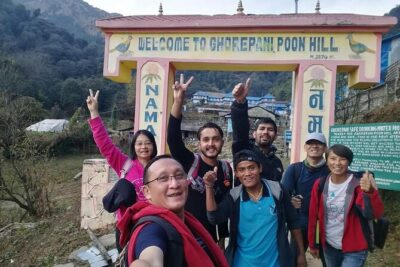
- Day 2: Ulleri through Banthanti to Ghorepani
- Day 3: Poon Hill sunrise, then on to Ghandruk
- Day 4: Ghandruk back to Pokhara
- What the $230 price really covers
- Guide service, guesthouses, and the human side
- Who should book this trek?
- Should you book the Poon Hill Trek from Pokhara?
- FAQ
- How long is the Poon Hill Trek from Pokhara?
- Where does the trek begin?
- Is the trek private?
- Is a guide included?
- What accommodation is included?
- What documents are needed for the trekking permit?
- What is the cancellation policy?
Key points at a glance
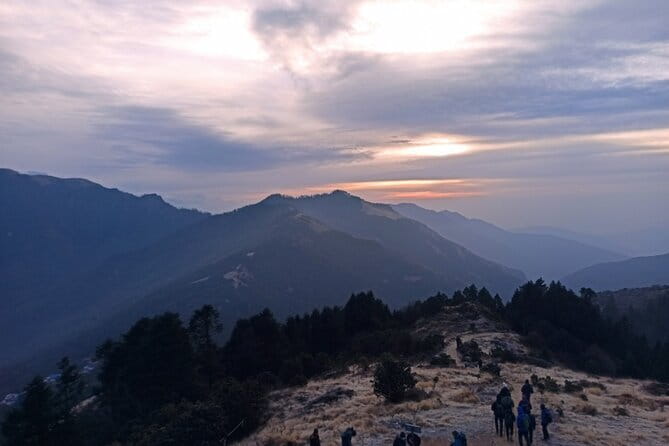
- Sunrise at Poon Hill: Reach the viewpoint before dawn for views of Annapurna, Dhaulagiri, Fishtail, and Himchuli as the light changes.
- A real village route: Ulleri, Ghorepani, and Ghandruk bring you into Gurung and Magar communities, with overnight stays in guesthouses.
- Short but active: The trek lasts four days, with walking days listed at roughly six to seven hours.
- Private trekking arrangement: Only your own group takes part, with an English-speaking guide assigned to lead the route.
- Good beginner value: At $230 per person, the price includes permits, TIMS card, lodging, guide service, and transport listed in the plan.
- Simple transport: The route begins with a shared local bus from Pokhara to Nayapul, so expect local travel rather than luxury transfers.
Why Poon Hill works as a four-day Himalayan trek
Poon Hill is a smart choice if you want a taste of Nepal’s mountain routes without committing to a long expedition. The scenery changes often. You begin among lower-elevation farms and subtropical forest, then move through rhododendron and oak woods, terraced hillsides, streams, and higher mountain villages.
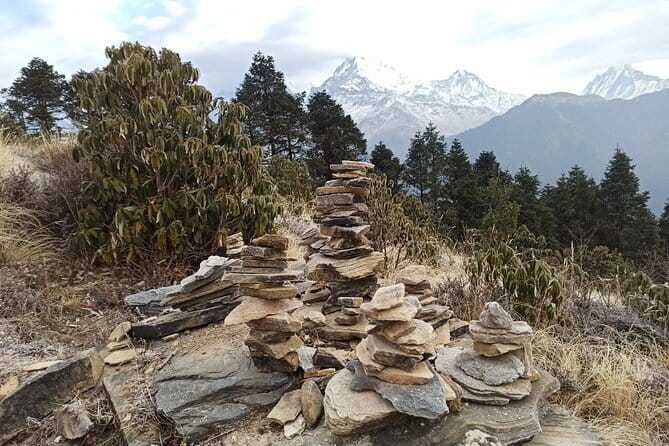
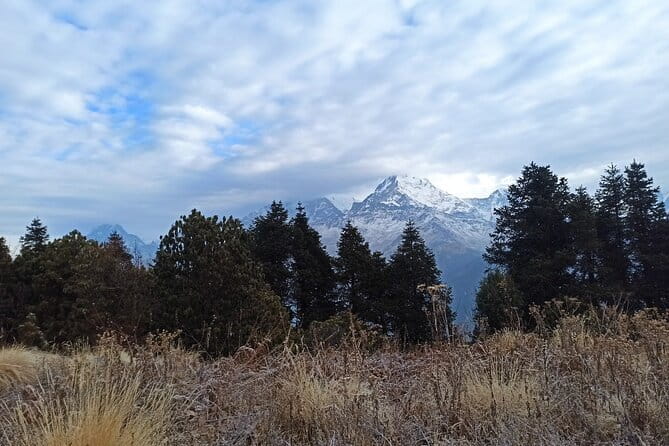
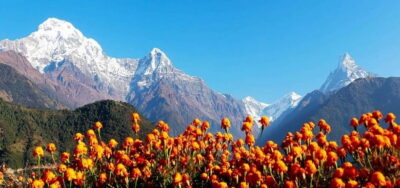
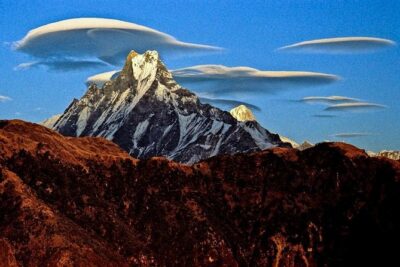
The main reward is the sunrise viewpoint above Ghorepani. From Poon Hill, the first light reaches the Annapurna and Dhaulagiri ranges. Annapurna South, Annapurna I, Dhaulagiri, Machhapuchhre, and Himchuli are among the peaks named along the route. You are not simply walking toward one mountain. You are watching an entire range change color.
The cultural setting adds value. Gurung and Magar villages are part of the route, so the trek has a human scale. You pass homes, guesthouses, and terraced fields rather than walking through empty wilderness for four days. That makes this a useful introduction to rural Nepal, especially if you are visiting Pokhara and want something more substantial than a day trip.
Still, the short duration does not make it effortless. The schedule includes long walking days and steep uphill and downhill sections. I would call it accessible for a reasonably fit person, not easy in the ordinary city-walking sense.
More Ghorepani and Poon Hill Treks:
- Poon hill Trek 3 days
★ 5.0 · 176 reviews - Pokhara: 4-Day Ghorepani, Poonhill & Ghandruk Mountain Trek
★ 5.0 · 132 reviews - Ghorepani – Poon Hill Trek 3N-4D
★ 5.0 · 125 reviews
Day 1: Pokhara to Nayapul, then uphill to Ulleri
The first day begins in Pokhara with hotel pickup and a ride on a shared local bus to Nayapul. The transfer takes about one hour. Nayapul marks the start of the walking portion, and from there you hike toward Ulleri at about 2,070 meters, or 6,791 feet.
The seven-hour estimate is the first clue about the trek’s rhythm. You are not spending the morning sightseeing and taking a short walk after lunch. Day 1 is a proper mountain day, with a significant ascent to Ulleri.
Ulleri is important because it gets you into the hill country right away. The route leads through lower mountain scenery, including terraced fields, forest, and small streams. The changing views help break up the climb, but you should still expect the uphill work to dominate the day.
The shared bus is practical and keeps the package price down. It also means you should expect a local form of transport, not a private sightseeing vehicle. That is a fair exchange for a lower-cost trek, though anyone who values personal space and polished transfers may prefer a more expensive arrangement.
Accommodation is in a guesthouse. The package includes lodging, but it does not list room category or meal arrangements, so ask the provider what is covered before departure. Personal expenses are not included, which means you should budget separately for anything outside the listed services.
Day 2: Ulleri through Banthanti to Ghorepani
Day 2 takes about six hours and leads from Ulleri to Ghorepani. Along the way, you pass Banthanti, a village associated with the Magar community. This is one of the route’s strongest cultural moments because it places the mountain scenery beside everyday village life.
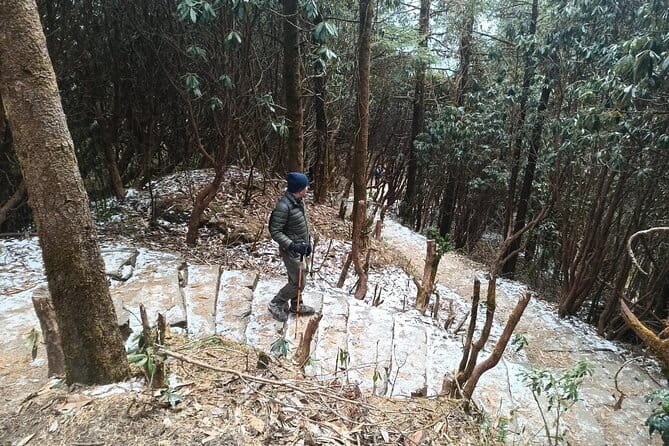
The walk continues through forest and hill country, with views opening toward Annapurna South. The forest section can be especially appealing if you enjoy walking beneath trees rather than crossing exposed slopes all day. Rhododendron and oak are part of the route’s plant life, and the surrounding terraced fields show how people farm these steep hillsides.
Ghorepani is the practical high point before the sunrise walk. The village gives you a base close enough to Poon Hill for an early morning climb. That location matters. You are not trying to travel from Pokhara to the viewpoint before sunrise. You are already in the mountain zone and can start on foot before dawn.
The downside is the evening schedule. You will need to rest early because the next morning begins in darkness. If you prefer relaxed evenings, this is not the most leisurely part of the trip. On the other hand, the early night is a small price for the main spectacle.
Day 3: Poon Hill sunrise, then on to Ghandruk
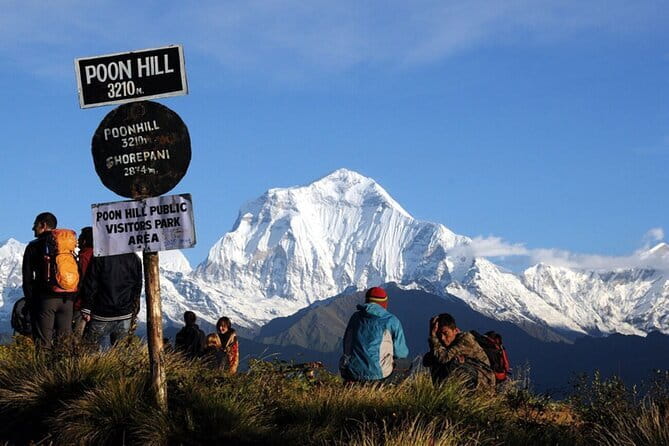
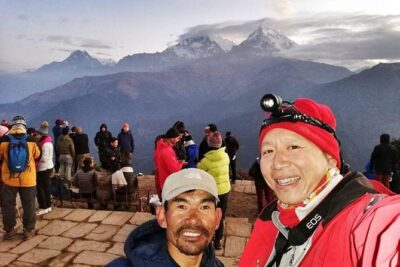
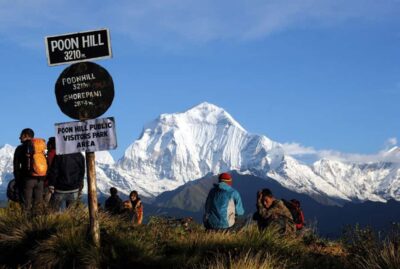
Day 3 is the emotional center of the trek. You start before dawn and hike to the Poon Hill base and viewpoint area. The exact sunrise timing changes with the season, but the plan is clear: leave early enough to watch the first light from above the valleys.
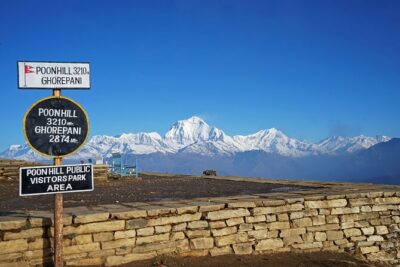
At the viewpoint, the mountains are the show. The sun gradually illuminates the Annapurna and Dhaulagiri ranges, with named peaks including Annapurna I, Annapurna South, Dhaulagiri, Machhapuchhre, and Himchuli. Clear weather is important, so the view is never something you can treat as guaranteed. The schedule gives you the best practical chance of seeing it.
After sunrise, you continue toward Ghandruk. The full day is listed at about seven hours, so do not think of the viewpoint as the end of the day. You still have a substantial walk ahead, with forest paths and mountain views along the way.
Ghandruk is a memorable stop because it is a well-known Gurung village and a major cultural point on this route. It gives you more than a quick photo break. You can see how the village setting fits into the hills, while the surrounding views keep the high mountains in sight.
This is also the day when the trek may feel most demanding. The pre-dawn start cuts into sleep, and the walking continues afterward. A guide can help manage the pace and route, which is one reason the private format is useful. Several customers have singled out guides such as Dadhi, Milan Rai, Bikram, and Sagar for being helpful and for explaining local culture. Guide assignments can vary, so you should not assume a particular name will lead your group, but the pattern of praise points to the human service as a major part of the package.
More Treks and Hikes:
- Trekking in Annapurna/Langtang/Everest/Upper Mustang regions
★ 5.0 · 161 reviews - Pokhara: Annapurna Foothills Day Hike with Transfers
★ 5.0 · 100 reviews - Kathmandu/Pokhara: 5-Day Annapurna Base Camp (ABC) Trek
★ 4.9 · 72 reviews - From Pokhara: 3-Day Ghorepani Poon Hill Trek with Guide
★ 4.9 · 68 reviews
Day 4: Ghandruk back to Pokhara
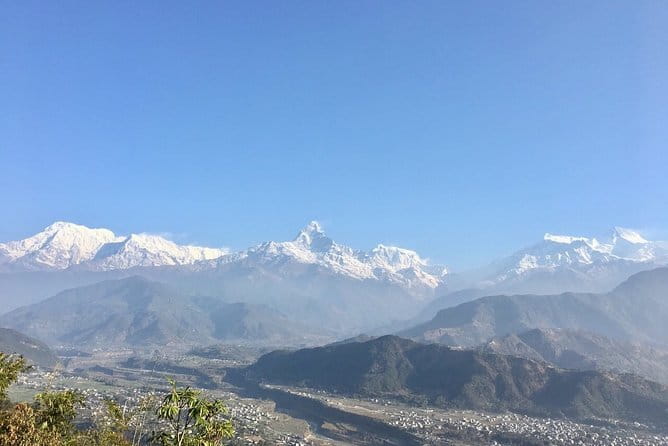
The final day follows a scenic downhill route from Ghandruk toward Pokhara. It is listed at about six hours. The walk gives you a last look at Annapurna I, Annapurna South, Dhaulagiri, Fishtail, and Himchuli before the trek leaves the high country behind.
Downhill walking sounds simple until you spend several hours doing it. Stone paths and uneven ground can be hard on knees and ankles, even when your breathing feels easier than during an ascent. Good shoes and a steady pace matter more here than speed.
Rhododendron forest adds a pleasant final setting. The route then returns you toward Pokhara, with hotel drop-off included in the package. The supplied details do not specify the exact vehicle used for the final return, so confirm that point if transport comfort matters to you.
Ending in Pokhara after four active days is convenient. You do not need to arrange a separate return service, and you can continue with other plans in the city. The final day is still a walking day, so avoid scheduling an important flight or fixed activity immediately afterward unless you have plenty of time.
What the $230 price really covers
At $230 per person, the price is attractive for a private four-day trek. The package includes hotel pickup and drop-off, round-trip transfers by shared local bus as listed in the route, an English-speaking trekking guide, trekking permits, a TIMS card, and guesthouse accommodation.
That list covers several items that can add up if arranged separately. The permits and TIMS card are particularly useful because the provider handles the paperwork, though you must supply passport details and a photo. A selfie is accepted for the photo requirement.
The phrase private trek deserves a close look. Your group is the only group taking part in the activity, which gives you a more personal arrangement than a large departure. Yet the transport is shared local bus service, so private does not mean every part of the trip uses a private vehicle.
Personal expenses are excluded. The information does not specify meals, drinks, porter service, insurance, or extra purchases, so you should ask before booking rather than assume they are included. The low price is strongest for someone who wants the core trekking arrangement, not a fully loaded luxury package.
Guide service, guesthouses, and the human side
The guide is central to this trek. A good guide does more than point out the path. The strongest feedback describes guides who kept things organized, helped with the route, and explained Nepali culture. Specific praise has gone to Dadhi, Milan Rai, Bikram, and Sagar, while Purna Bahadur was praised as a strong porter on one trip.
The provider lists an English-speaking guide and a private group. That combination should appeal to you if you want to ask questions, adjust the pace within reason, and have one person responsible for the route. It is also useful during the pre-dawn Poon Hill walk, when darkness and unfamiliar paths make clear guidance valuable.
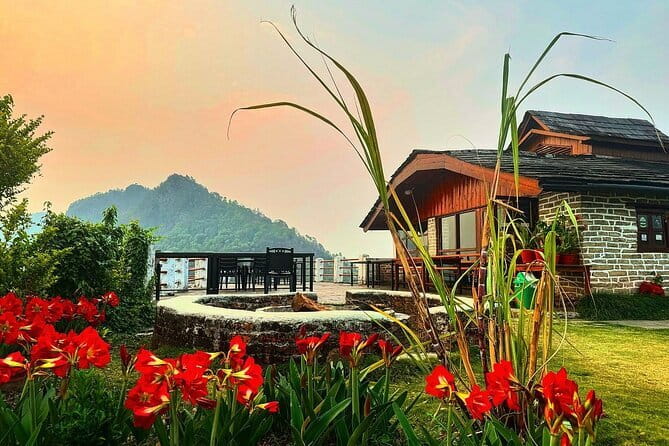
Guesthouse accommodation is included. This suits the character of the trek. You are using simple mountain lodging rather than a resort, and the guesthouses place you close to village life and the walking route. Details about room arrangements are not provided, so ask whether rooms are private or shared and what facilities are available.
The experience has earned a 5 rating from 27 posted ratings, with 100 percent recommending it. The most praised elements are consistent: sunrise, mountain views, helpful guides, smooth arrangements, and comfortable guesthouses. That is a strong record, though it does not remove the practical limits of weather, uphill walking, and basic transport.
Who should book this trek?
I would recommend it to you if you have moderate physical fitness and want a short Himalayan route with a clear highlight. It suits first-time trekkers, families with an appropriate fitness level, and people with limited time in Nepal. The four-day plan gives you forests, villages, mountain views, and a famous sunrise without requiring a long commitment.
It is also a good fit if you care about cultural contact. Banthanti and Ghandruk make this more than a mountain-view walk. You will pass through Magar and Gurung communities and stay in guesthouses along the route.
I would be more cautious if you dislike early starts, shared buses, steep trails, or simple accommodation. The trek is described as accessible, but six to seven hours of walking is still serious exercise. You should also remember that clear weather affects the sunrise view.
The cancellation policy is friendly: you can receive a full refund if you cancel at least 24 hours before the start time. Cancellations or changes made within 24 hours are not refunded or accepted. Cut-off times follow local time in Nepal.
Should you book the Poon Hill Trek from Pokhara?
Book it if you want strong mountain views in a compact itinerary, value a private guide, and accept local transport and guesthouse lodging. The price is good for what it includes, especially the permits, guide, accommodation, and transfers.
I would choose this route over a shorter viewpoint outing because it gives you time in Ulleri, Ghorepani, and Ghandruk. You get the sunrise, but you also get forests, farms, village life, and a sense of how the hills are lived in.
Before paying, confirm the guesthouse setup, meal arrangements, and final transport details. If those basics suit you, this is a well-priced and rewarding introduction to Nepal’s mountain trails.
FAQ
How long is the Poon Hill Trek from Pokhara?
The experience lasts approximately four days. The listed walking days take about seven hours on Day 1, six hours on Day 2, seven hours on Day 3, and six hours on Day 4.
Where does the trek begin?
The trip begins in Pokhara. You take a shared local bus to Nayapul, which is described as the starting point of the walking route.
Is the trek private?
Yes. The activity is private, so only your own group participates. The listed transfers use a shared local bus.
Is a guide included?
Yes. An English-speaking trekking guide is included. The provider assigns the guide, and guide names praised in the available feedback include Dadhi, Milan Rai, Bikram, and Sagar.
What accommodation is included?
Guesthouse accommodation is included. The supplied details do not state whether rooms are private or shared.
What documents are needed for the trekking permit?
You need to provide your passport details and a photo. A selfie is accepted for the photo.
What is the cancellation policy?
You receive a full refund if you cancel at least 24 hours before the experience start time. Cancellations or changes made less than 24 hours before the start time are not accepted and are not refunded.
More 4-Day Experiences
- Pokhara: 4-Day Mardi Himal Trek
★ 4.9 · 59 reviews - 4-Day Private Poon Hill Trekking Tour
★ 5.0 · 58 reviews - Pokhara: 4-Day Private Trek Tour
★ 4.9 · 43 reviews - From Pokhara: 4-Day Mardi Himal Base Camp Trek
★ 4.9 · 31 reviews
Just added around Pokhara
- Double Dare: Tandem Bungee Adventure★ 4.3 · 3 reviews
- Exhilarating Pokhara-Kathmandu Bus Journey Experience★ 3.5 · 3 reviews
- 3 Day Australian Camp Dhampus Ghandruk Easy Trek in Pokhara★ 3.5 · 3 reviews
- Paragliding in Pokhara★ 5.0 · 3 reviews
- Seti George and Thrilling Suspension Bridge Tour at Pokhara★ 4.5 · 3 reviews
- Overnight Dhampus Australian Camp Easy Hiking from Pokhara★ 5.0 · 3 reviews
- Full Day Entire Pokhara Tour by Car with Guide★ 4.5 · 3 reviews
- 5 Days Mardi Himal Trek.★ 5.0 · 3 reviews
Ghorepani Poon Hill Treks, compared.
4-Day Ghorepani, Poonhill & Ghandruk Mountain Trek
Read our review →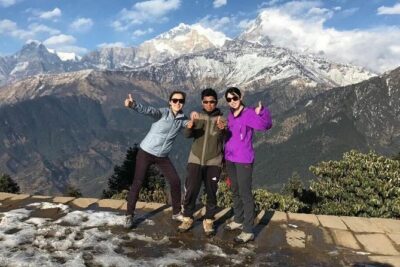
Browse the lists this tour appears in