
Reviewed · ANNAPURNA BASE CAMP TREKS
Kathmandu/Pokhara: 5-Day Annapurna Base Camp (ABC) Trek
The Himalayas make you work for the view. This five-day Annapurna Base Camp trek combines big mountain scenery with forests, waterfalls, Gurung villages, and a soak at Jhinu Danda hot springs. I like the compact route and the care provided by guides such as Raju, Pratip, Om, and Smile. I also like that down jackets, sleeping bags, trekking poles, permits, and water-purification tablets are available, keeping the packing list manageable.
The main catch is the pace. You will walk for five to eight hours most days, climb to 4,130 meters, and return by a demanding route with long downhill sections. The advertised price of $96 is attractive, but meals, porter service, flights, and some transport options depend on the package you choose.
- ABC at 4,130 meters: Reach the base camp beneath Annapurna I, the 8,091-meter peak.
- A changing mountain route: Walk from bamboo forest and waterfalls to icy ridges and the Annapurna Sanctuary.
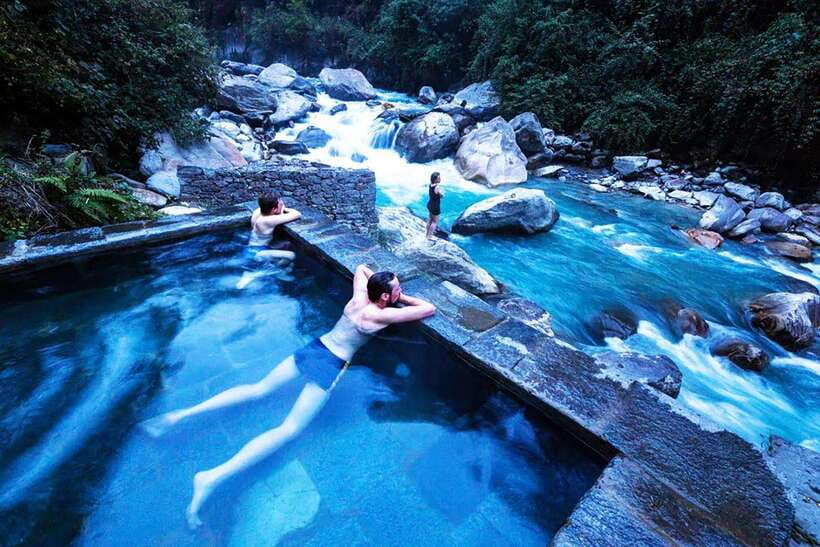
- Jhinu Danda hot springs: Finish the trek with a warm, natural soak near the river.
- Strong guide support: Guides regularly check your pace, health, meals, rooms, and equipment.
- Five full days on foot: Expect a serious hike, not a gentle sightseeing trip.
- Flexible starting point: Begin in Pokhara, or add a flight from Kathmandu.
In This Review
- What the Annapurna Base Camp route gives you in five days
- Day 1: Pokhara to Simrung, then the climb to Sinuwa
- Day 2: Sinuwa to Deurali through waterfalls and forest
- Day 3: Deurali to Machhapuchhre Base Camp and ABC
- Sunrise at ABC is worth the early alarm
- Day 4: The long return to Bamboo or Sinuwa
- Day 5: Jhinu Danda and the ride back to Pokhara
- Guides are a major part of the value
- Accommodation, food, and the real cost of $96
- Weather, altitude, and packing for the ABC trek
- Who should book this five-day trek?
- Should you book the Annapurna Base Camp trek?
- FAQ
- How high does the Annapurna Base Camp trek go?
- How long do I walk each day?
- Can I start the trek in Kathmandu?
- Is porter service included?
- Are meals included?
- Can I borrow trekking equipment?
- Are hot showers and Wi-Fi included?
- What happens if I need to cancel?
What the Annapurna Base Camp route gives you in five days
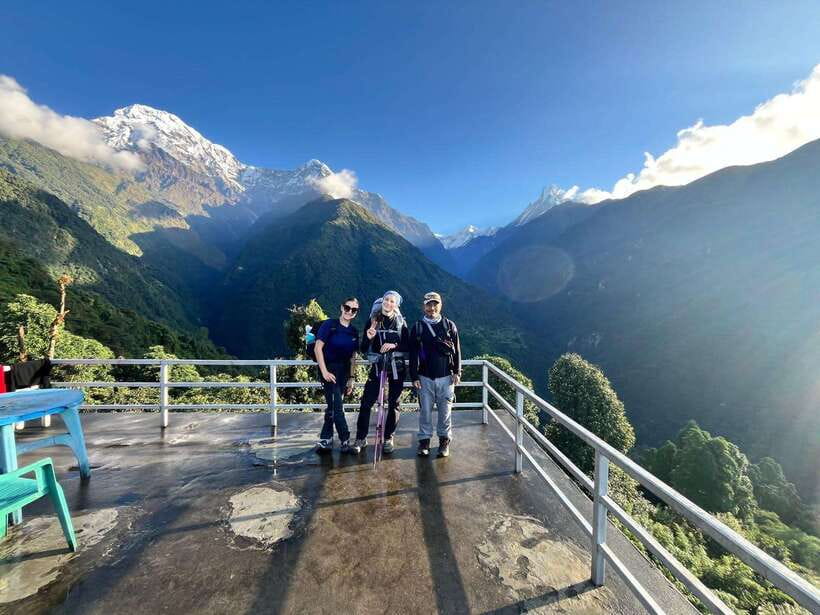
The appeal of this trek is the quick change in scenery. You start among subtropical vegetation and terraced hills, then move through bamboo valleys, dense forest, waterfalls, and higher alpine ground. By the time you reach Annapurna Base Camp, the route feels enclosed by enormous Himalayan peaks.
Annapurna I is the main prize, but the journey is not only about one summit. The sanctuary has its own atmosphere, with steep walls, cold air, snow in the higher sections, and a clear sense of entering a mountain bowl. The route also passes through villages where tea houses and terraced farms remain part of daily life.
This is a short ABC itinerary. That is useful if you have limited time, but it leaves little room for slow acclimatization or a relaxed day. You need to arrive ready to walk, and you should tell your guide early if you are struggling.
Day 1: Pokhara to Simrung, then the climb to Sinuwa
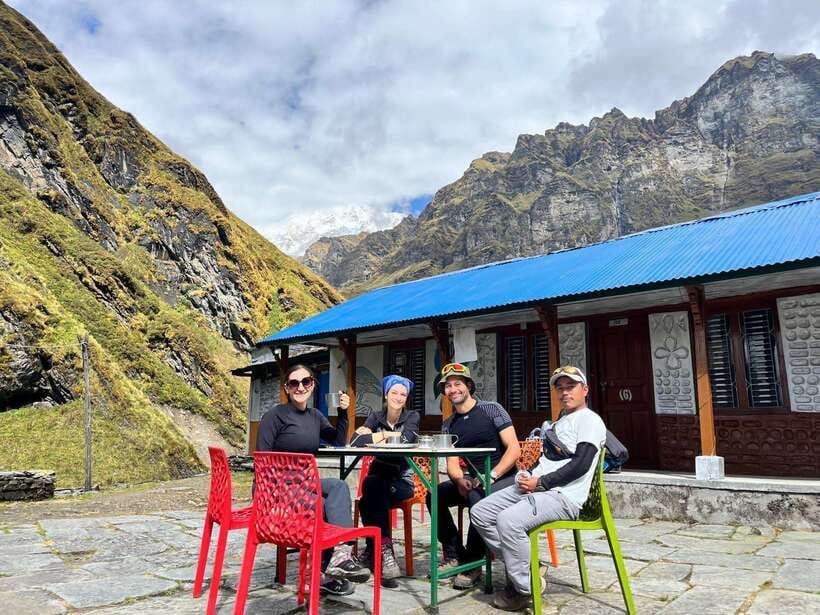
The first day begins with hotel pickup. If you start in Kathmandu and choose the flight option, you take a roughly 30-minute flight to Pokhara before driving onward.
From Pokhara, a shared Jeep takes about two to three hours to reach Simrung via Nayapul. The road transfer is part of the adventure, though it can be tiring before the hiking even starts. In the rainy months, road conditions and landslides can affect timing, so keep your plans after the trek flexible.
The walk from Simrung to Sinuwa covers about 10 to 11 kilometers and takes five to six hours. You pass rivers, forest, village sections, and changing vegetation as the path rises. The overnight stop is at a mountain guest house in Sinuwa, at about 2,340 meters.
This first day tells you what kind of trip you have booked. The distance may look modest on paper, but the repeated uphill sections and uneven trail require steady effort. Your guide will usually set a practical pace, with breaks for water, food, and photos.
More Annapurna Base Camp Treks:
- Private 7 – Day Annapurna Base Camp Trekking
★ 5.0 · 50 reviews - Annapurna Base Camp Trek (8 days)
★ 5.0 · 45 reviews - From Pokhara: 5-Day Annapurna Basecamp Trek with Hot Springs
★ 4.9 · 26 reviews
Day 2: Sinuwa to Deurali through waterfalls and forest
Day two runs from Sinuwa to Deurali, again about 10 to 11 kilometers and five to six hours. The route passes Himalaya, a small settlement with tea houses, and continues through dense woodland.
Waterfalls are a major feature of this section. In the wet season, they can be especially impressive, but rain also means muddy paths, slippery stones, and wet feet. Pack spare socks and keep your rain protection easy to reach. Clothing that is soaked at the end of the day may not dry overnight.
The forest gives this part of the trek a cool, enclosed feel. You are not staring at mountain peaks all day, but the trees, rushing water, and steep valley create a strong sense of progress. At Deurali, the altitude reaches about 3,230 meters, so this is where you should pay closer attention to headaches, unusual tiredness, nausea, or poor sleep.
The accommodation is a basic mountain guest house. Some people receive private rooms, but you should not count on that every night. Wi-Fi, hot showers, and battery charging cost extra and are not included.
Day 3: Deurali to Machhapuchhre Base Camp and ABC
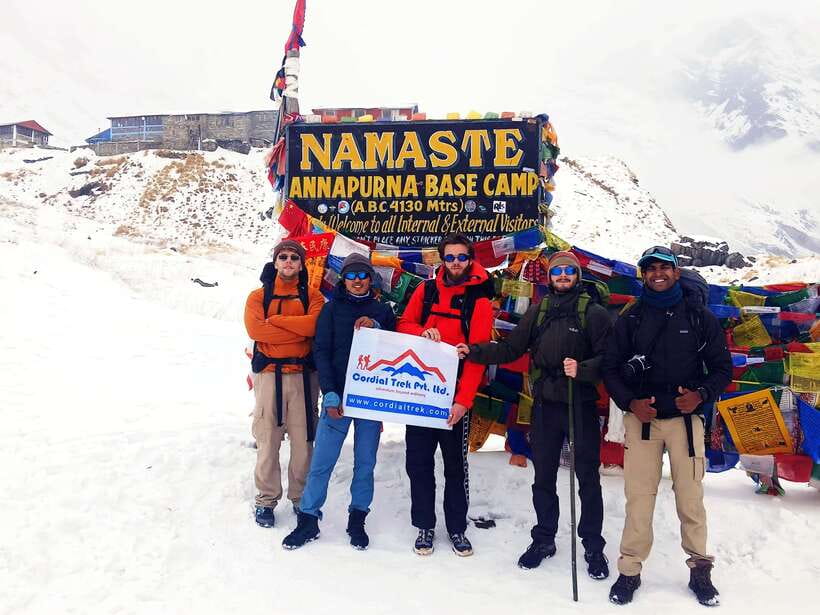
Day three is the emotional center of the trek. You walk from Deurali to Annapurna Base Camp, passing through Machhapuchhre Base Camp, usually called MBC. The distance is listed at 10 to 11 kilometers, with five to six hours of walking.
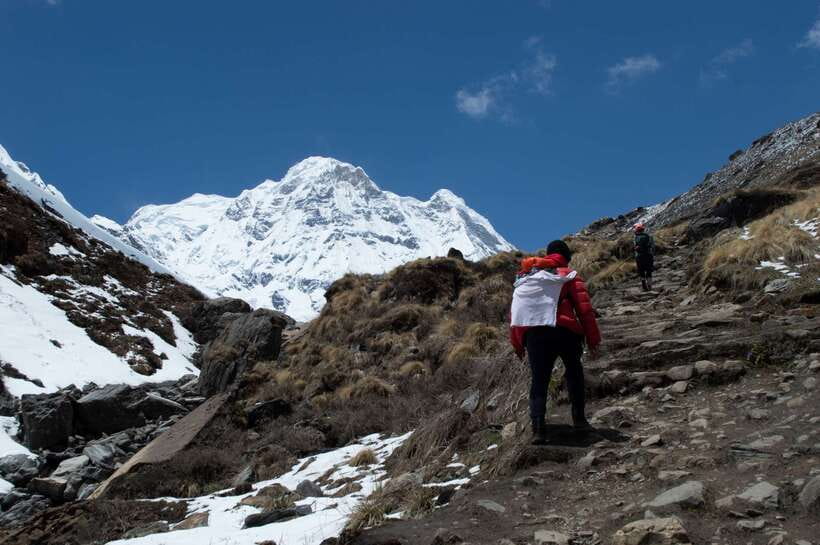
The vegetation thins as you gain height. The trail enters the Annapurna Sanctuary, where the surroundings become colder and more exposed. The route through the MBC valley brings you closer to the high peaks, and the final approach to ABC feels very different from the forested trail below.
At 4,130 meters, Annapurna Base Camp is high enough for altitude problems to be a real concern. You should walk slowly, drink regularly, and follow your guide’s advice. If you feel seriously unwell, do not treat reaching the camp as more important than your health.
The tea houses at ABC are simple, but location matters more than comfort here. After a long climb, you are sleeping in the heart of the sanctuary, surrounded by high Himalayan walls. The cold can be severe, especially in winter, so use the available down jacket and sleeping bag if needed.
Sunrise at ABC is worth the early alarm
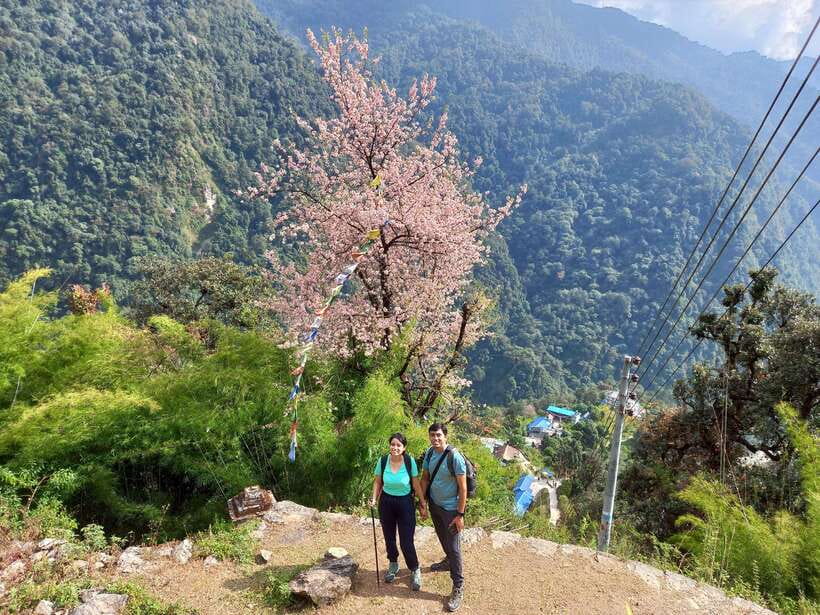
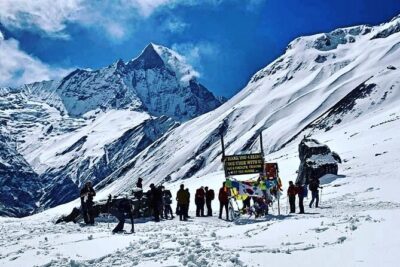
The next morning begins with the trek’s best visual reward: sunrise from ABC. Clear conditions can bring dramatic light across the surrounding peaks and turn the snowfields pink and gold.
Weather is never guaranteed. In the monsoon, clouds and fog may hide the mountains for much of the day, though brief clear spells can reveal impressive views. In winter, cold temperatures can make the morning difficult, but the air may be clearer.
Give yourself enough time for photos, but remember that the return walk is long. The schedule calls for hiking back to Bamboo or Sinuwa, covering 12 to 14 kilometers in seven to eight hours. This is one of the hardest days because you are descending after reaching the highest point.
More Treks and Hikes:
- Poon hill Trek 3 days
★ 5.0 · 176 reviews - Trekking in Annapurna/Langtang/Everest/Upper Mustang regions
★ 5.0 · 161 reviews - Pokhara: 4-Day Ghorepani, Poonhill & Ghandruk Mountain Trek
★ 5.0 · 132 reviews - Ghorepani – Poon Hill Trek 3N-4D
★ 5.0 · 125 reviews
Day 4: The long return to Bamboo or Sinuwa
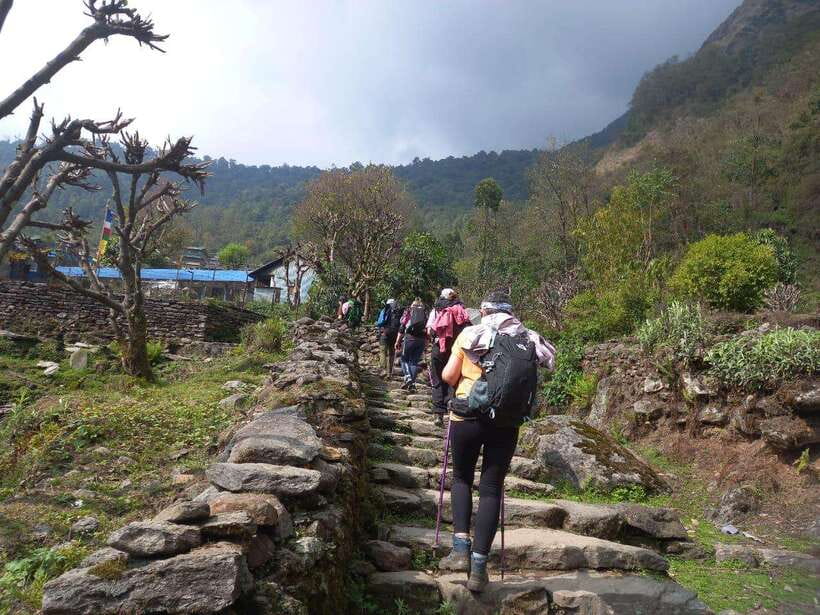
The route drops through Deurali, Himalaya, and Dobhan before reaching the overnight stop. Downhill walking sounds easy until your knees, ankles, and feet have absorbed several hours of uneven trail.
This day rewards good pacing. I would rather walk steadily and arrive tired than rush the first half and struggle later. Trekking poles are particularly useful on wet stones and long descents, and they can be borrowed at no extra cost.
The return route gives you a different view of the forest. Waterfalls and river crossings that felt uphill on the way to ABC now become landmarks showing how far you have come. You spend another night in a guest house at roughly 2,340 meters.
The schedule says Bamboo or Sinuwa, so the exact overnight point may depend on your pace, weather, and trail conditions. Ask your guide about the plan each morning. A good guide can adjust the day while keeping the main goal intact.
Day 5: Jhinu Danda and the ride back to Pokhara
The final hiking section runs about seven to eight kilometers and takes four to five hours. You pass through Jhinu Danda, where natural hot springs offer a welcome break before the drive back to Pokhara.
The hot springs are not a minor extra. After four days of climbing and descending, warm water can make the final day feel far more pleasant. You should still allow time for the stop, since the Jeep journey from Simrung to Pokhara takes another two to three hours.
The standard drop-off in Pokhara is scheduled no later than 5 p.m. If you need to catch a flight, the operator can take you to Pokhara Airport. A return flight to Kathmandu can be added, with arrival in Kathmandu planned no later than 7:30 p.m. Those continuing to an international flight should allow plenty of extra time and understand that mountain roads and weather can disrupt plans.
One useful point comes from the trip’s flexible handling. When a participant needed to reach the airport quickly, the guide and porter helped arrange a faster Jeep transfer. That kind of support matters more than polished promises when plans change.
Guides are a major part of the value
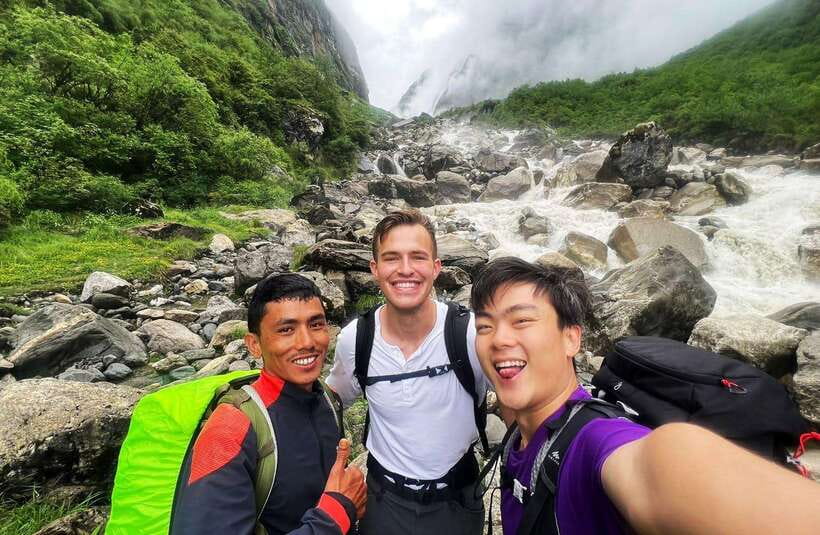
The strongest part of this experience is the guide service. Guides including Raju, Pratip, Om, Anil Sherpa, Smile, Raj, Oham Raj Tamang, and Terence Tamang are praised for keeping people safe, adjusting pace, explaining local culture, and helping with food and rooms.
The best guide for you is not simply the fastest one. You want someone who notices when you are too tired, gives clear advice at altitude, and can keep morale up during a long climb. Several guides also add local stories, plant knowledge, mountain information, music, games, and humor. Om is known for singing along the trail, while Terence introduced a Nepalese card game during the evenings.
Solo hikers, especially those on their first major trek, can gain a lot from this support. One solo woman described feeling safe throughout the route, while another first-time hiker with little mountain experience completed the trip with help from a guide and porter.
Porter service is included only with the all-inclusive option, or as an add-on to some budget packages. If you carry everything yourself, the trek becomes harder. A porter can make the difference between enjoying the forest and merely surviving the schedule.
Accommodation, food, and the real cost of $96
The starting price of $96 per person is excellent for a five-day Himalayan trek if you select the budget arrangement and already have suitable gear. It becomes a stronger deal when permits, guide service, transport from Pokhara to Simrung, four nights of accommodation, first aid, luggage storage, and borrowed equipment are included.
Read the package details carefully. Meals are included with the all-inclusive option or when added separately, but they are not automatically included in every budget or one-way flight choice. Porter service also varies by package. Flights between Kathmandu and Pokhara cost extra unless you choose the relevant flight option.
The mountain guest houses are functional rather than luxurious. You may have a private room, but shared rooms are possible, particularly when trekking alone. One sleepless night caused by a snoring roommate is a reminder that earplugs are a sensible addition to your bag.
Food is available at the tea houses, and several people found it plentiful and enjoyable. Prices rise at altitude, so carry cash for meals, snacks, drinks, showers, Wi-Fi, and charging. Hot, cold, and alcoholic drinks are not part of the base inclusions.
Weather, altitude, and packing for the ABC trek
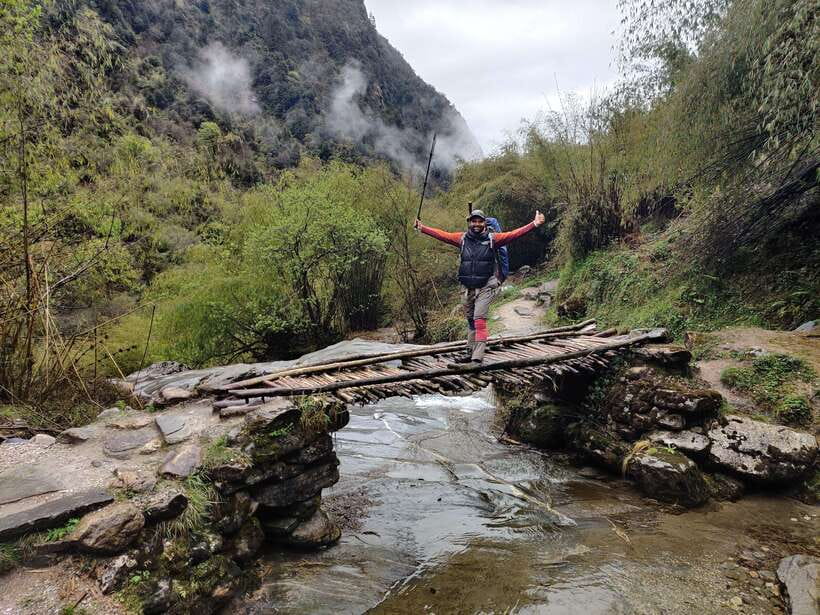
Spring and autumn, from March to May and September to November, offer the most practical balance of trail access and mountain views. Listed temperatures range from lows of -3°C to 3°C and highs of 2°C to 20°C.
Summer and monsoon, from June to August, can bring temperatures from 0°C to 22°C. Rain, fog, mud, and wet clothing are the main problems. The upside is quieter trails and occasional clear views that appear dramatically through the clouds.
Winter, from December to February, can drop to -10°C at night, with daytime highs ranging from -5°C to 15°C. Warm layers are essential, and crampons may be useful in snowy conditions.
Pack:
- Thermal base layers and a down or puffer jacket
- Trekking pants, warm socks, gloves, and a beanie
- Waterproof, high-ankle trekking boots
- Trekking poles and a water bottle or CamelBak
- Sunscreen, sunglasses, toiletries, and a towel
- A daypack, with a duffel bag if using porter service
- Cash, passport or accepted copy, and a passport-sized photo
- Travel insurance, which is strongly recommended
You must provide a passport copy and recent passport photo at least one day before departure so trekking permits can be processed.
Who should book this five-day trek?
I would recommend this trip to a reasonably active person who wants a fast route into the high Himalayas without organizing every permit, room, transfer, and guide alone. It also suits solo hikers who value close support and first-time trekkers willing to accept a tough schedule.
I would not choose it for someone with limited mobility, a fear of long uphill walks, or little tolerance for basic lodging. The activity is not suitable for people with mobility impairments, and it is not designed for a slow, relaxed mountain holiday.
The route can sometimes be shortened or adjusted. One strong hiker completed it in three days with a hot-spring visit, but that is not the normal plan and should not be treated as the target. Most people should use the full five days.
Should you book the Annapurna Base Camp trek?
Book it if you want maximum mountain experience in minimum time, and you accept early starts, basic tea houses, long walking days, and uncertain weather. The combination of ABC sunrise, waterfall-filled forest, Gurung villages, and Jhinu Danda hot springs gives the trip more variety than a simple out-and-back climb.
Choose the all-inclusive option if you want meals and a porter handled in advance. Choose a budget package only if you are comfortable paying for meals and porter service separately and checking every inclusion before departure.
The guides appear to be the heart of the operation. If you can request one, names such as Raju, Pratip, Om, Smile, Anil Sherpa, or Terence Tamang have repeatedly been associated with attentive care and good company. At $96 before optional extras, this is a very strong value, but the real cost depends on your meals, flights, porter, showers, charging, and personal spending.
FAQ
How high does the Annapurna Base Camp trek go?
The highest point is Annapurna Base Camp at 4,130 meters. Machhapuchhre Base Camp is passed on the way.
How long do I walk each day?
The schedule includes five to six hours of walking on the first three days, seven to eight hours on day four, and four to five hours on day five.
Can I start the trek in Kathmandu?
Yes. People starting in Kathmandu can choose a roughly 30-minute flight to Pokhara. Round-trip and one-way flight options are available depending on the package.
Is porter service included?
Porter service is included with the all-inclusive option. It can be added to certain budget or Kathmandu one-way flight options.
Are meals included?
Four breakfasts, five lunches, and four dinners are included with the all-inclusive option or when the meal add-on is selected. Meals are not included in some budget packages.
Can I borrow trekking equipment?
A down jacket, sleeping bag, and trekking poles can be borrowed at no additional cost. Crampons are recommended for snowy conditions, but availability should be checked before departure.
Are hot showers and Wi-Fi included?
No. Hot showers, Wi-Fi, and battery charging are not included. Hot, cold, and alcoholic drinks are also extra.
What happens if I need to cancel?
You can cancel up to 24 hours before the activity for a full refund. The reserve-now, pay-later option lets you hold a place without paying immediately.
More 5-Day Experiences
- Mardi Himal Trek 5 Days
★ 5.0 · 23 reviews - Ghorepani Poonhill Trek 5 Days from Pokhara
★ 5.0 · 14 reviews - 5 Days Adventures Lower Mustang Trip by 4WD Jeep
★ 5.0 · 12 reviews - From Pokhara: 5-Day Mardi Himal Base Camp Trek
★ 5.0 · 10 reviews
Just added around Pokhara
- Double Dare: Tandem Bungee Adventure★ 4.3 · 3 reviews
- Exhilarating Pokhara-Kathmandu Bus Journey Experience★ 3.5 · 3 reviews
- 3 Day Australian Camp Dhampus Ghandruk Easy Trek in Pokhara★ 3.5 · 3 reviews
- Paragliding in Pokhara★ 5.0 · 3 reviews
- Seti George and Thrilling Suspension Bridge Tour at Pokhara★ 4.5 · 3 reviews
- Overnight Dhampus Australian Camp Easy Hiking from Pokhara★ 5.0 · 3 reviews
- Full Day Entire Pokhara Tour by Car with Guide★ 4.5 · 3 reviews
- 5 Days Mardi Himal Trek.★ 5.0 · 3 reviews
Annapurna Base Camp Treks, compared.



Kathmandu to Annapurna Base Camp (ABC) 5-Day Trek
Read our review →
11-Day Hike Tour to Annapurna Base Camp Bliss in Kathmandu
Read our review →Browse the lists this tour appears in