
Reviewed · PHOTOGRAPHY SESSIONS
Evening Photography Tour of Kathmandu
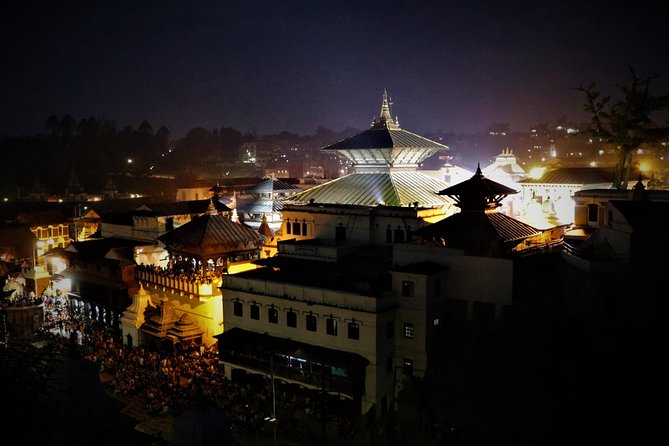
Sacred Kathmandu looks different after sunset. This private three-to-four-hour outing takes you to Boudhanath Stupa and Pashupatinath Temple, where butter lamps, prayer walks, chanting, and fire rituals give you far more than ordinary sightseeing. I like the focused route and the fact that private transport from central Kathmandu is included. I also like having a licensed English-speaking city guide who can point out useful positions and explain what you are photographing.
The main consideration is that this is a short evening visit, not a full photography workshop. You get access to meaningful settings and ceremonies, but no camera instruction, meal, bottled water, or alcoholic drink is included. One past booking also found the promotional picture a little misleading, so I would book this for religious scenes and evening atmosphere rather than for a broad city-by-night tour.
In This Review
- Key points before you book
- Why an evening photography tour works in Kathmandu
- Beginning at Boudhanath Stupa
- Moving on to Pashupatinath Temple
- What the private guide adds
- Is $102 a fair price?
- Practical advice for photographers
- Who will enjoy this experience most?
- Should you book the Evening Photography Tour of Kathmandu?
- FAQ
- How long does the Evening Photography Tour of Kathmandu last?
- What locations are included?
- Is transportation included?
- Is this a private activity?
- What does the $102 price include?
- What happens if the tour is canceled because of weather?
Key points before you book
- Boudhanath after dark: See devotees and monks circumambulate the white-domed stupa while butter lamps glow around the shrine.
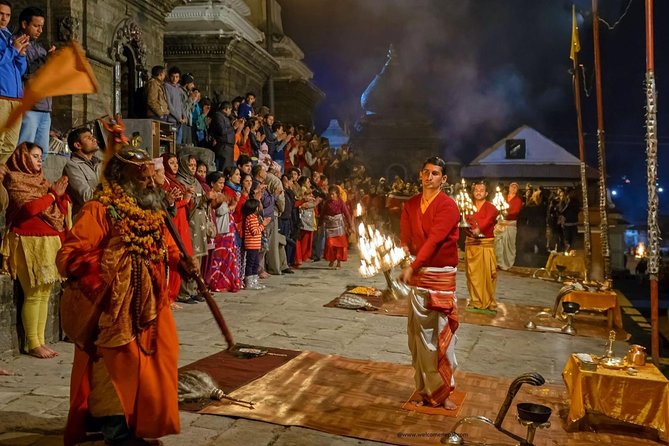
- Pashupatinath’s evening aarti: Photograph chanting, singing, and flame rituals offered to Lord Shiva beside the sacred Bagmati River.
- Private transport included: You travel between the two sites in private transportation, with pickup offered from central Kathmandu.
- Two fixed stops, about one hour each: The schedule gives you time at both landmarks, but it leaves little room for delays or extra locations.
- A guide shapes the experience: Guides such as Bikash and Deepa have been praised for explaining Kathmandu, its heritage, and the ceremonies in clear detail.
- $102 per person: The price makes the most sense for a small group that values convenience, guidance, and private transportation.
Why an evening photography tour works in Kathmandu
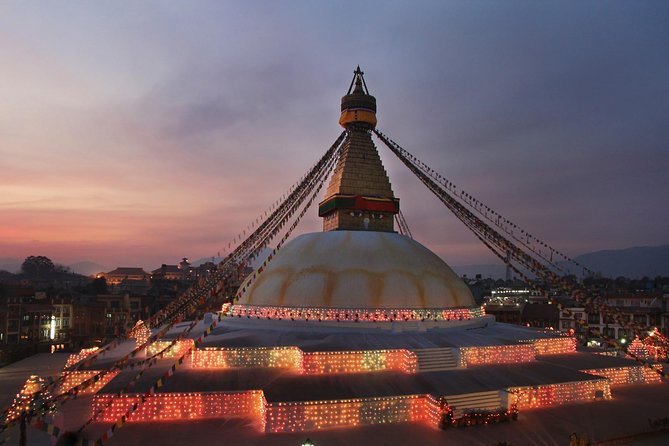
Kathmandu is full of famous daytime sights, but evening changes the mood. At Boudhanath, the white stupa is lit and decorated while people make a parikrama, walking clockwise around it in prayer. At Pashupatinath, the focus shifts from Buddhist devotion to a Hindu aarti, a ceremony in which flames are offered to the gods.
That contrast is the real strength of this tour. In only a few hours, you see two major religious traditions in active use, not just their buildings. Your camera gives you a reason to slow down, notice gestures and light, and look beyond the usual postcard view.
I would not treat the outing as a technical course. The supplied details promise access, transport, and local interpretation, but they do not promise lessons in exposure, lenses, composition, or night photography. If you want to improve your camera skills, ask the guide at the start how much practical photography help is available.
The private format matters here. You are not tied to the pace of a large bus group, and your guide can help you reach the most useful viewing areas within the available time. It also means the $102 fee is easier to justify when split among a small party, especially since group discounts may be available.
More Evening Tours in Kathmandu
- Kathmandu Sunset Tour by Rickshaw Including Durbar Square Visit
★ 5.0 · 73 reviews - 3 Nights 4 Days Chitwan National Park with Tower Night Stay
★ 5.0 · 41 reviews - 3 night 4 Day Yoga & Ayurveda Retreat to Detox the Body & Mind, Nepal
★ 5.0 · 37 reviews
Beginning at Boudhanath Stupa
Boudhanath is the quieter and more visually controlled half of the evening. Its large white dome, decorated upper structure, and ring of lamps give you strong shapes to work with once the light fades. The site is an important pilgrimage center for followers of Tibetan Buddhism, so the action is not staged for a camera.
You can expect to see devotees walking around the stupa in a parikrama. Monks and worshippers light butter lamps and pray for the well-being of all sentient beings and world peace. Those details make the visit more than a stop for architectural photographs. The useful pictures may come from the relationship between the illuminated dome, moving figures, prayer, and small points of flame.
The planned time here is about one hour, and admission is included. That is enough for a purposeful visit if transportation is on schedule. I would use the first few minutes to look carefully rather than immediately taking pictures. Watch the direction of the walking circuit, notice where lamps are placed, and let your guide show you where the setting works best.
This is also where a guide can protect you from treating a living religious center like a photo set. You are photographing people during prayer, so patience and restraint matter. The tour description says the guide will help you find settings and moments worth capturing, which is useful when the site feels unfamiliar and the light is changing.
You should also keep your expectations practical. The information provided does not promise a quiet stupa, exclusive access, or permission to photograph every person closely. The experience is about observing and recording a public religious setting with respect. Your guide’s local advice is likely to be more useful than simply carrying the most expensive camera.
Moving on to Pashupatinath Temple
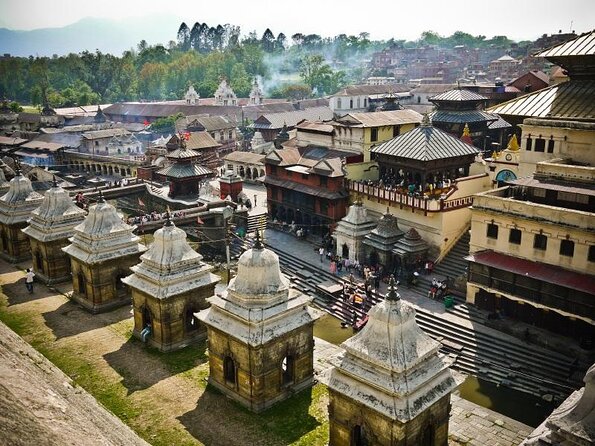
Pashupatinath brings a different kind of energy. This ancient Hindu temple is one of the most important shrines dedicated to Lord Shiva. The name Pashupatinath means protector of all living beings, and the evening visit centers on worship rather than on sightseeing alone.
The main event is the evening aarti. Priests offer light from flames to the gods while sacred Vedic verses and hymns are chanted. Singing, movement, and fire give you a very different photographic subject from the still white dome at Boudhanath.
The ceremony takes place beside the Bagmati River, and one booking described witnessing a fire devotion to Shiva there at night. That detail is important because it tells you what makes this stop memorable: the setting is not only the temple structure. The river, the gathered devotees, the priests, the flames, and the sound all work together.
The schedule allows about one hour, with admission included. That gives you a reasonable window to watch the ceremony and make photographs, but it is not an open-ended evening. If the transfer from Boudhanath takes longer than expected, the time at Pashupatinath could feel tight. Kathmandu traffic is a practical concern, even though the supplied tour information does not give a travel time between the sites.
The description says devotees may dance in a trance during the aarti. It also connects the movement of the ritual with Shiva’s celestial Tandav dance. Your guide can help explain those references, which is valuable because a photograph of chanting and flame can lose its meaning if you do not understand what is happening.
Use discretion here. Religious ceremonies deserve attention beyond the camera screen. I would watch the opening part of the aarti before shooting constantly, then choose a few moments carefully. This approach usually produces better photographs and lets you experience the ritual as something more than a dramatic night scene.
What the private guide adds
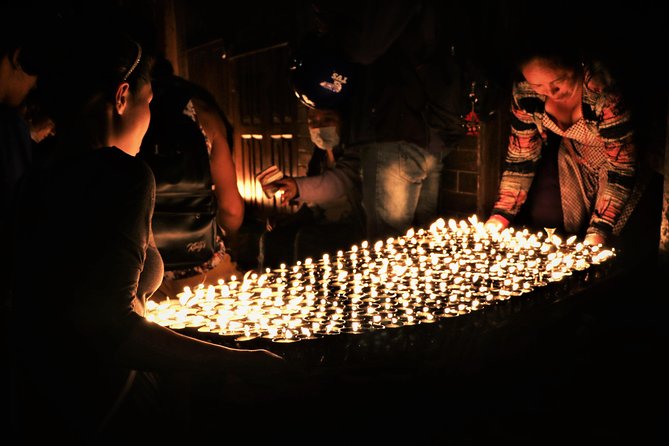
The guide is central to the value of this outing. The tour includes an English-speaking licensed city guide, and direct feedback about guides named Bikash and Deepa is especially positive. Bikash was praised for his strong understanding of Kathmandu and its heritage sights, along with a professional and polite manner. Deepa was associated with a well-informed explanation of the nighttime Shiva ceremony.
Those comments point to a useful benefit between the two stops. The car ride is not just dead time. One person found the guide interesting and said the conversation included other subjects about Kathmandu and Nepal while driving between sites. That can help connect the two religious centers to the wider city.
I would still set your own expectations before leaving. If your priority is camera technique, tell the guide what you need. If your priority is cultural understanding, ask about the meaning of the prayers, the purpose of the lamps, and the structure of the aarti. The experience appears strongest when you want both access to good scenes and a human explanation of what you are seeing.
Because this is a private activity, only your group participates. That gives you more room to ask questions than you would have on a large shared excursion. It may also make the pace feel less rushed, though the fixed three-to-four-hour duration still limits how long you can remain at either site.
A few more trips worth weighing up before you book
- Pokhara: Adventure Paragliding Trip with Photos and Videos
★ 4.6 · 50 reviews - Pokhara: Paragliding Adventure with Photos and Video
★ 4.7 · 44 reviews - Paragliding Tandem Flight from Pokhara with Photos and Video
★ 5.0 · 11 reviews - Pokhara: Paragliding Adventure with Photos and Video
★ 5.0 · 7 reviews
Is $102 a fair price?
At $102 per person, this is not the cheapest way to visit Boudhanath and Pashupatinath. You are paying for more than admission, though. The fee includes private transportation, all fees and taxes, and a licensed English-speaking guide. Pickup is offered, and the activity is private rather than shared.
The value improves if you are traveling with companions and can use a group discount. It also improves if you would otherwise need to arrange evening transport yourself or feel uncertain about finding the best place to watch the rituals. Kathmandu at night can be harder to manage when you are focused on equipment and timing.
The price is less attractive if you only want to see the buildings. Both sites can be visited in daylight, and one person who had already visited them during the day still found the evening worthwhile because of the ceremonies and the guide’s extra explanations. That is the key distinction: the fee pays for the evening setting, the ritual focus, and the convenience of moving between both landmarks.
Dinner, bottled water, and alcoholic drinks are not included. Since the tour lasts only three to four hours, this is not a major issue, but you should plan accordingly. Bring your own water and arrange food before or after the excursion rather than expecting a meal during it.
The tour is booked an average of 12 days ahead, which suggests you should not leave it until the last minute if the evening matters to your schedule. Confirmation is provided at booking. Free cancellation is available if you cancel at least 24 hours before the start time.
Practical advice for photographers
Bring the camera you already know how to use. The tour says all you need is your camera, but that does not mean night photography is effortless. You may be working with low light, bright lamps, moving people, and strong contrast between flames and darker surroundings.
A small camera bag is likely more useful than a large kit. Keep your equipment organized so you can change settings without missing a brief moment. Since no tripod or camera accessories are listed as included, do not assume that photography equipment will be supplied.
Respect the religious setting first. Avoid blocking walking routes or interrupting worship. Your guide can help identify good positions, but you remain responsible for how closely and how often you photograph people.
The hour at each site is best treated as a sequence of choices. At Boudhanath, you might focus on the repeating movement of the circumambulation and the warm light of the butter lamps. At Pashupatinath, you might wait for the priests to raise the flames or for the ceremony’s chanting and movement to gather force.
Do not judge the outing only by the number of pictures you bring home. The strongest result may be a small set that shows the difference between the two places. Boudhanath offers circular movement, white architecture, and lamps. Pashupatinath offers fire, sound, riverbank worship, and the devotion directed toward Shiva.
Who will enjoy this experience most?
I would recommend this tour to a photographer who wants access to significant evening scenes without spending time figuring out transport and locations alone. It also suits anyone who wants a compact introduction to Kathmandu’s Buddhist and Hindu traditions, with a guide providing context along the way.
It is a good fit for couples, families, or small groups who prefer a private pace. The private format can be especially helpful when different people in your group want different amounts of time for explanation and photography.
You may want to choose another activity if you need a full technical workshop, a long list of photo locations, or a meal included. You should also be cautious if your only interest is city illumination, since the real focus is religious practice at two major landmarks.
Weather can affect the experience. If poor weather causes cancellation, you will be offered another date or a full refund. The activity also requires a minimum number of participants, and a cancellation for that reason comes with the option of a different date or experience, or a full refund.
Should you book the Evening Photography Tour of Kathmandu?
Book it if you want a carefully planned evening built around two meaningful ceremonies, not just a drive past illuminated monuments. The best reasons are the contrast between Boudhanath’s butter lamps and prayer circuit and Pashupatinath’s fire-filled aarti beside the Bagmati River.
The strongest value comes from the private transport and guide. Bikash and Deepa were singled out for polite, useful explanations, and the guide can help you understand what your camera is recording. At $102, the price is reasonable for a small group that wants convenience and cultural interpretation, especially if a group discount applies.
I would skip it if you expect formal photography coaching or a broad Kathmandu night tour. For the right person, though, this is a focused and memorable way to see the city’s spiritual life after dark.
FAQ
How long does the Evening Photography Tour of Kathmandu last?
The tour lasts approximately three to four hours. The planned visit is about one hour at Boudhanath Stupa and one hour at Pashupatinath Temple, with travel time between the sites.
What locations are included?
The tour visits Boudhanath Stupa and Pashupatinath Temple in Kathmandu. Both admission tickets are included.
Is transportation included?
Yes. Private transportation is included, and pickup is offered from central Kathmandu.
Is this a private activity?
Yes. Only your group participates in the activity.
What does the $102 price include?
The price is $102 per person and includes private transportation, all fees and taxes, and an English-speaking licensed city guide. Dinner, bottled water, and alcoholic drinks are not included.
What happens if the tour is canceled because of weather?
If poor weather causes cancellation, you will be offered a different date or a full refund. The same options apply if the minimum number of participants is not met.
More Evening Experiences
- Kathmandu: Pashupatinath Temple Evening Aarati Tour
★ 5.0 · 36 reviews - Kathmandu: Pashupatinath Temple Aarti Night Tour
★ 4.8 · 29 reviews - Pashupatinath Evening Aarati: Few Divinely Hours in Kathmandu
★ 4.5 · 23 reviews - 2 Night 3 Days Pokhara City Tour
★ 5.0 · 22 reviews
Just added around Kathmandu
- Private Shopping Tour in Kathmandu★ 5.0 · 3 reviews
- Nagarkot Sunrise With 7 UNESCO World Heritage Private Tour★ 5.0 · 3 reviews
- Kathmandu: Nightlife and Pub Crawl Tour★ 5.0 · 3 reviews
- Mount Everest Scenic Flight 50 Minutes★ 5.0 · 3 reviews
- Momo Cooking Class -The Art Of Making MoMo with Home Chef★ 5.0 · 3 reviews
- Kathmandu: Nagarkot, Bhaktapur, Doleswor & Sanga Statue Tour★ 5.0 · 3 reviews
- Makalu Base Camp Trek★ 5.0 · 3 reviews
- Everest Experience Trek 6 Day Hiking Adventure★ 5.0 · 3 reviews
Photography Sessions, compared.
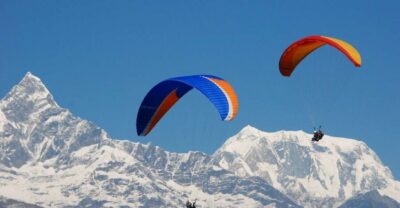
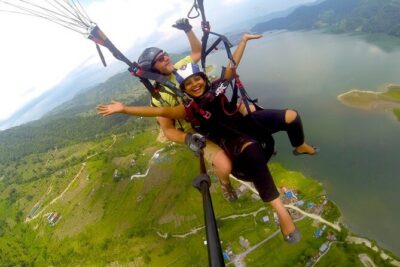
Paragliding Tandem Flight from Pokhara with Photos and Video
Read our review →Browse the lists this tour appears in