
Reviewed · MOMO MAKING CLASSES
Momo Cooking Class -The Art Of Making MoMo with Home Chef
Momos turn dinner into a group project. This 2.5-hour Kathmandu class brings you into a local home kitchen to knead dough, prepare fillings, fold dumplings, and cook them with a host and family. I like the hands-on format and the chance to try chicken, buffalo, or vegetarian momos rather than simply eating them at a restaurant. The main point to consider is that the class uses wheat dough, so it is not a good fit if you have a gluten allergy.
I also like the small private setting, where only your group takes part. Children and adults can join in, and the host is described as friendly and patient. The meeting point is at People’s Dental College and Hospital near Sorakhutte Chowk, though hotel pickup has been arranged for some visitors, so confirm that detail before you set out.
In This Review
- Key Points at a Glance
- Why Momos Make Such a Good Kathmandu Cooking Class
- Meeting the Host Near Sorakhutte Chowk
- Kneading Dough Before the Folding Begins
- Preparing Chicken, Buffalo, or Vegetable Fillings
- Learning to Fold Momos by Hand
- Cooking the Momos and Sitting Down Together
- What the $35 Price Really Buys You
- Who Will Enjoy This Class Most
- Timing, Transport, and Booking Advice
- Should You Book the Momo Cooking Class?
- FAQ
- Where does the momo cooking class begin?
- Where does the activity end?
- How long does the cooking class last?
- What types of momos can I make?
- Is the class private?
- Can I cancel for a full refund?
Key Points at a Glance
- Start with the dough: You learn to knead the wrapper mixture before moving on to the filling.
- Choose your momo style: Chicken, buffalo, and vegetable fillings are available.
- Fold your own dumplings: The class gives you practical time to shape momos by hand.
- Cook and eat together: Once finished, you sit with the host and family for the meal.
- Private group format: Your party participates alone, making this a good choice for families and friends.
- Simple Kathmandu logistics: The listed start point is near public transportation, and a mobile ticket is accepted.
Why Momos Make Such a Good Kathmandu Cooking Class
Momos are one of Nepal’s best-known foods, but they are more than a quick plate of dumplings. They are social food. People prepare them together, fold them around a table, and eat them while talking. That makes a cooking lesson a useful way to understand everyday food culture without needing a long lecture.
The class focuses on the complete process. You do not simply watch a cook fill and steam a basket. You work through the basic stages yourself: kneading dough, preparing ingredients, folding the momos, and cooking them.
That order matters. A restaurant plate hides the work behind the food. Here, you see why the wrapper needs the right texture, why the filling must be prepared before folding, and why the shape takes a little practice. Your first momo may look a bit lopsided. That is part of the fun.
The setting also gives the class a personal feel. It takes place in the kitchen of a host’s home in Kathmandu, followed by a meal with the host and family. You get a simple local encounter rather than a polished demonstration kitchen built for tourists.
More Cooking Classes in Kathmandu
- Half day cooking class in Thamel kathmandu
★ 5.0 · 607 reviews - Kathmandu: Local Women-Led Nepali Cooking & Momo Class
★ 4.9 · 360 reviews - Kathmandu: Local Lead Nepali Cooking & Momo-Making Class
★ 5.0 · 212 reviews
Meeting the Host Near Sorakhutte Chowk
The listed meeting point is People’s Dental College and Hospital at Sorakhutte Chowk, Kathmandu 44600. This area is near public transportation, which makes it a practical place to reach from other parts of the city. The activity ends back at the same meeting point.
Allow time to find the exact meeting spot. A busy Kathmandu intersection can be confusing, and the meeting point is given as a landmark rather than a named restaurant or cooking studio. A mobile ticket is accepted, and booking confirmation is provided at the time of reservation.
Hotel pickup has been provided in at least some arrangements, with a guide taking visitors to a local home. Do not assume that pickup is included for every booking. Ask the operator when you reserve, especially if you are staying outside the immediate area.
Once you meet the host, expect a friendly home setting rather than a formal school. The atmosphere is meant to be relaxed. In one reported family booking, the instructor made it easy for both children and adults to join the work, which suggests that the pace is suitable for mixed-age groups.
Kneading Dough Before the Folding Begins
The first practical stage is the dough. This may sound basic, but it is central to a good momo. The wrapper must be workable enough to roll and fold, while still holding together during cooking.
You get to knead the dough with your own hands, then prepare it for the wrappers. The class does not skip this step, which is important if you want to repeat the recipe after returning home. You will better understand the texture by handling it yourself than by watching someone else do it.
This is also where the class can be a little messy. If you prefer a quick meal with no flour on your hands, this may feel slow. If you enjoy learning by doing, it is one of the strongest parts of the activity.
The class is not recommended for people with gluten allergies. The dough is a key part of the dish, and no gluten-free version is promised. Vegetarian fillings are available, but vegetarian does not mean gluten-free here.
Preparing Chicken, Buffalo, or Vegetable Fillings
After the dough, you prepare the filling. The available choices include chicken, buffalo, and vegetables. Buffalo, often called buff in Nepal, is a common local choice and gives you a chance to try a filling you may not often see at home.
The mix of options works well for a private group. One person can make vegetable momos while another chooses chicken or buffalo. If your group has different diets, confirm the available choices when booking so the host can plan accordingly.
The supplied information does not give a full ingredient list or mention specific spices, sauces, or cooking equipment. That means you should not expect a fixed tasting menu with several side dishes. The clear focus is the dumpling itself and the steps needed to make it.
A local cooking class is most useful when you ask questions as you work. You can ask how the filling is seasoned, how much goes into each wrapper, and how the host knows when the momos are ready. The exact lesson will depend on your host and your group, but the process gives you a practical base for making momos later.
More Momo and Nepali Cooking Classes:
- Local Women Lead Nepali Cooking Class
★ 5.0 · 125 reviews - The best Private Nepali Cooking Class in Kathmandu
★ 5.0 · 83 reviews - Kathmandu: Traditional Momo Making Class & Pickup
★ 4.8 · 60 reviews - Traditional Nepali Momo Making Classes
★ 5.0 · 53 reviews
Learning to Fold Momos by Hand
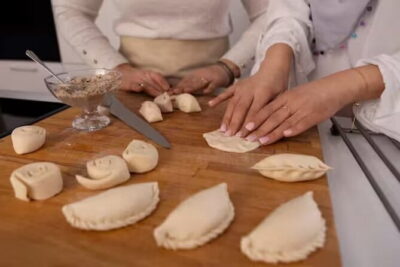
Folding is the part most people look forward to, and also the part that takes practice. You place filling inside the wrapper, bring the edges together, and form the dumpling. The shape may improve as you go, but nobody needs to arrive with expert fingers.
This stage makes the class feel like a shared activity. You can compare shapes with the rest of your group, help younger children, and laugh at the early attempts. The instructor is described as patient, which matters here because a rushed demonstration would leave beginners struggling.
The class is private, so your group can work at its own pace. That does not guarantee unlimited time or a fully customized lesson, but it does mean you are not sharing the kitchen with a large mixed group. For families, couples, or friends, that private format is a real advantage.
You should also keep expectations sensible. The goal is to learn the basic method and enjoy the meal, not to become a professional dumpling maker in one afternoon. If your folds are uneven, the cooked momos can still taste good.
Cooking the Momos and Sitting Down Together
Once the momos are shaped, you cook them. The information provided identifies cooking as the final hands-on stage, though it does not specify whether every batch is steamed, fried, or prepared by another method. Ask the host if you want to know the exact cooking style before the class begins.
The best part comes after the work. You sit with the host and family to eat the momos and talk. That shared meal gives the class a natural finish. Instead of leaving as soon as the food is ready, you have time to enjoy what you made in the same home where the lesson took place.
This social ending is especially useful if you want more than a recipe. You can ask about the dish, compare the different fillings, and get a feel for how food fits into home life in Kathmandu. The meal is not just a reward for finishing the task. It is the point where the cooking turns into a personal exchange.
Keep in mind that a home meal is likely to be more informal than a restaurant visit. If you need a tightly scheduled activity with a precise menu and fixed service, this may not be your best choice. If you like a slower meal with conversation, it should suit you well.
What the $35 Price Really Buys You
At $35 per person, this is not the cheapest way to eat momos in Kathmandu. You can find dumplings at local eateries for much less. The value here comes from the instruction, the private setting, the ingredients, and the chance to eat food you prepared yourself.
The 2.5-hour duration gives the class enough time to cover the full process without treating it as a rushed snack stop. You have time for dough, filling, folding, cooking, and the meal afterward. For a first visit to Nepal, that is a useful way to spend part of an afternoon or evening.
The private format improves the value for families and small groups. You are paying for an activity that everyone can share, not just a meal for one person. Parents may find the hands-on work more memorable for children than another restaurant stop.
The price is less appealing if you mainly want to taste momos or if you already know how to make dumplings. In that case, the cooking lesson may feel longer than necessary. I would book it for the home setting and personal contact, not because it is the cheapest food experience in Kathmandu.
Who Will Enjoy This Class Most
This class fits people who enjoy practical activities. You should book it if you want to work with your hands, try a familiar food in a new setting, and share a meal with a local host.
It is a particularly good match for:
- Families with children who can take part in simple kitchen tasks
- Couples looking for a relaxed food activity
- Friends who want a private group experience
- First-time visitors curious about Nepali food
- People who want to learn a recipe they can try at home
The class may not suit you if you have a gluten allergy, dislike home-based activities, or want a formal culinary course with detailed written instruction. The available information also does not promise accessibility features, so ask before booking if you have mobility or other access needs.
A translator has been included in at least one arrangement, which can help if you do not share a strong language with the host. Translation support is not clearly listed as a standard feature for every booking, so confirm it in advance if it matters to you.
Timing, Transport, and Booking Advice
Plan on about two hours and thirty minutes for the full activity. That estimate includes the cooking work and the time spent eating with the host and family.
The start point is at Sorakhutte Chowk, near public transportation. Since the activity returns to the meeting point, you can plan your next stop from there. If you are relying on hotel pickup, get written confirmation rather than assuming it is included.
The activity is private, and only your group participates. This is useful for dietary questions, family pacing, and simple communication with the host. It also means that the quality of the experience depends in part on the match between your group and the host’s style.
Free cancellation is available if you cancel at least 24 hours before the local start time. Cancellations within 24 hours are not refunded, and changes made during that period are not accepted.
Should You Book the Momo Cooking Class?
Book this class if you want to understand momos by making them, not just ordering them. The strongest reasons are the home kitchen, the patient hands-on teaching, the choice of chicken, buffalo, or vegetable fillings, and the shared meal with the host and family.
I would especially recommend it for families and small private groups. The activity has enough variety to keep different ages involved, and the private format avoids the stiffness of a large class.
Skip it if you need gluten-free food, prefer a quick tasting stop, or want a polished professional kitchen. For everyone else, $35 buys a useful slice of Kathmandu food culture, plus a skill you can carry home. That is a fair price for a meal you help create from the first handful of flour to the final momo.
FAQ
Where does the momo cooking class begin?
The class begins at People’s Dental College & Hospital at Sorakhutte Chowk, Kathmandu 44600, Nepal.
Where does the activity end?
The activity ends back at the listed meeting point.
How long does the cooking class last?
The class lasts approximately 2 hours and 30 minutes.
What types of momos can I make?
The available choices include chicken, buffalo, and vegetarian momos.
Is the class private?
Yes. Only your group participates in this private activity.
Can I cancel for a full refund?
Yes, if you cancel at least 24 hours before the experience start time. Cancellations or changes made within 24 hours are not refunded or accepted.
More Workshops
- Knife (Khukuri) Making Workshop- Forge of the Gurkhas
★ 5.0 · 143 reviews - Kathmandu: Local Women-Lead Nepali Cooking & Momo Class
★ 4.9 · 45 reviews - Kathmandu: Local Lead Nepali Cooking & Momo Making Class
★ 4.9 · 40 reviews - Knife Khukuri Making Workshop
★ 4.9 · 38 reviews
Just added around Kathmandu
- Private Shopping Tour in Kathmandu★ 5.0 · 3 reviews
- Nagarkot Sunrise With 7 UNESCO World Heritage Private Tour★ 5.0 · 3 reviews
- Mount Everest Scenic Flight 50 Minutes★ 5.0 · 3 reviews
- Kathmandu: Nightlife and Pub Crawl Tour★ 5.0 · 3 reviews
- Kathmandu: Nagarkot, Bhaktapur, Doleswor & Sanga Statue Tour★ 5.0 · 3 reviews
- Makalu Base Camp Trek★ 5.0 · 3 reviews
- Kathmandu: Momo Making Class with a Local Chef★ 5.0 · 3 reviews
- Everest Experience Trek 6 Day Hiking Adventure★ 5.0 · 3 reviews
Momo Making Classes, compared.




Nepalese Momos or Dal Bhat Cooking Class (Cook with Delight)
Read our review →
The best Private Nepali Cooking Class in Kathmandu
Read our review →
Nepalese Kitchen in Pokhara: Momos or Dal Bhat Cooking Class
Read our review →
Browse the lists this tour appears in