
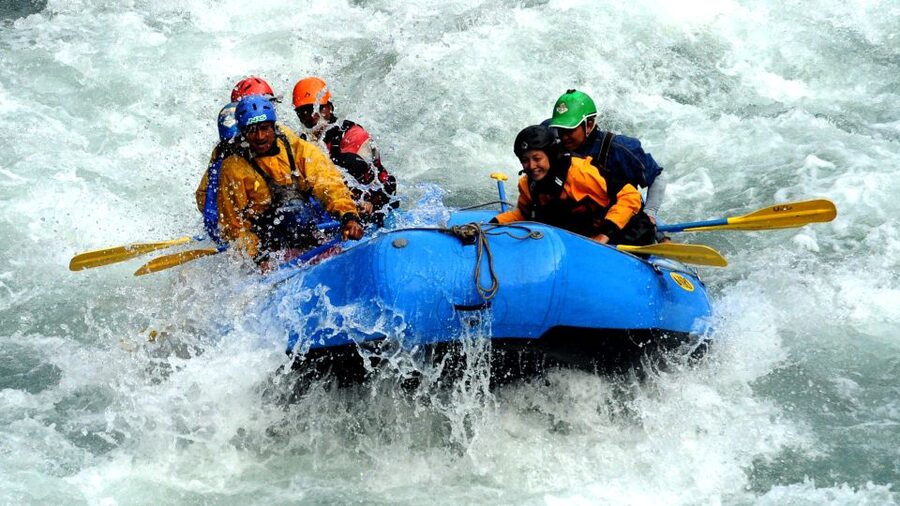
Reviewed · CHITWAN JUNGLE SAFARI
From Kathmandu / Pokhara / Chitwan: River Rafting – 1 Day
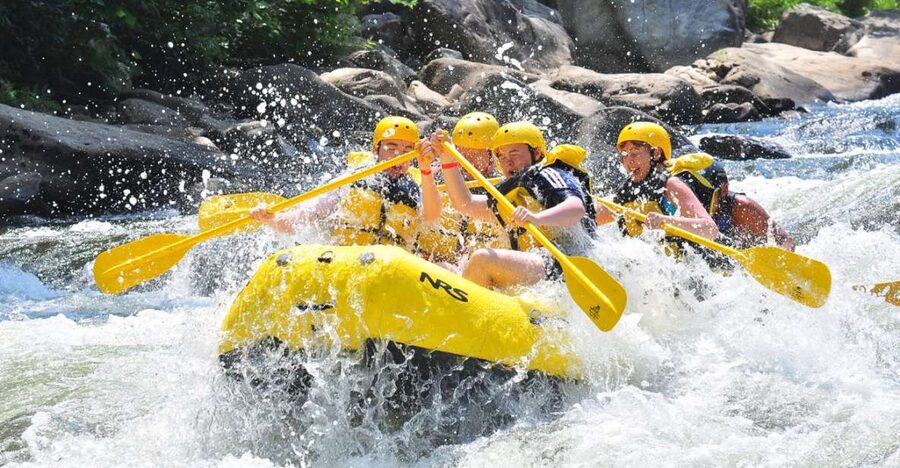
Hold tight, the Trishuli gets lively fast. This half-day rafting trip gives you a taste of Nepal’s white water without requiring a multi-day expedition, with several rapids, a riverside lunch, trained safety staff, and transport options from major stops.
I like the grade 3 to 4 Upset rapid, which gives the short trip a proper burst of adventure. I also like the friendly attitude reported by Lukas from the Netherlands, who described the guides and staff as kind and helpful after his April 8, 2025 booking.
The main drawback is the short rafting time. The river portion lasts about 2.5 hours, while the full activity is listed at roughly three hours, so much of your day may involve road transfers. The route and final transfer details also vary by starting point, so confirm your pickup and drop-off before paying.
In This Review
- Five things to know before you grab a paddle
- Why the Trishuli works for a one-day adventure
- Early morning transport from four Nepal stops
- Meeting the raft crew and learning the safety basics
- The first 2.5 hours on the Trishuli
- Lunch on the river beach before Upset
- The Upset rapid and the second run of white water
- Finishing at Chitwan District and continuing onward
- What the $43 price really covers
- Who will enjoy this trip most
- Should you book the Trishuli rafting day?
- FAQ
- How long does the rafting itself last?
- Where can I start the rafting trip?
- Where does the activity finish?
- Is lunch included?
- What should I bring?
- Is the rafting suitable for pregnant women?
Five things to know before you grab a paddle
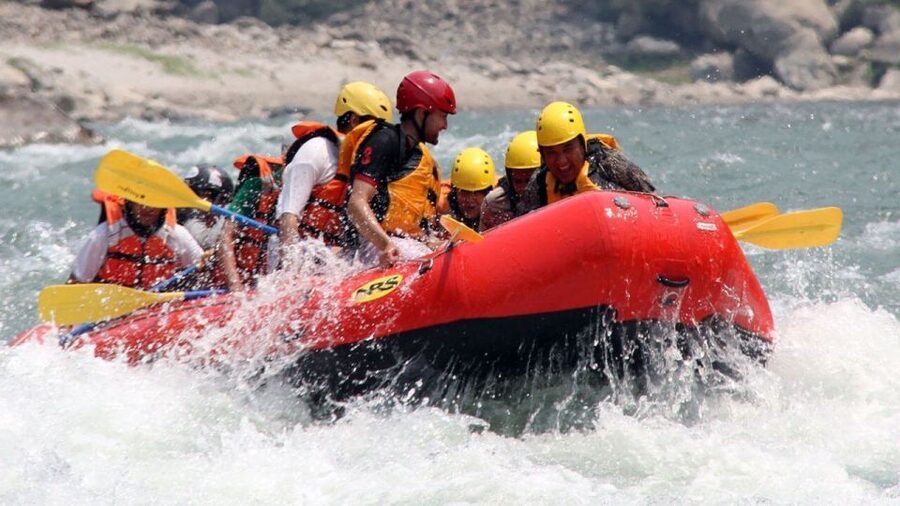
- Majhimtar marks the approach to the biggest excitement: The key rapid comes just after Majhimtar and before the Upset rapid.
- The Upset rapid is rated grade 3 to 4: That rating promises a serious jolt, though river conditions can affect how it feels.
- Lunch comes on a river beach: You eat beside the water before tackling the Upset section.
- You can start from four major locations: Pickup options are listed in Chitwan, Lumbini, Pokhara, and Kathmandu.
- Safety support is built into the trip: You get a licensed English-speaking guide, a safety kayaker, standard rafting equipment, a first aid kit, and river permits.
Why the Trishuli works for a one-day adventure
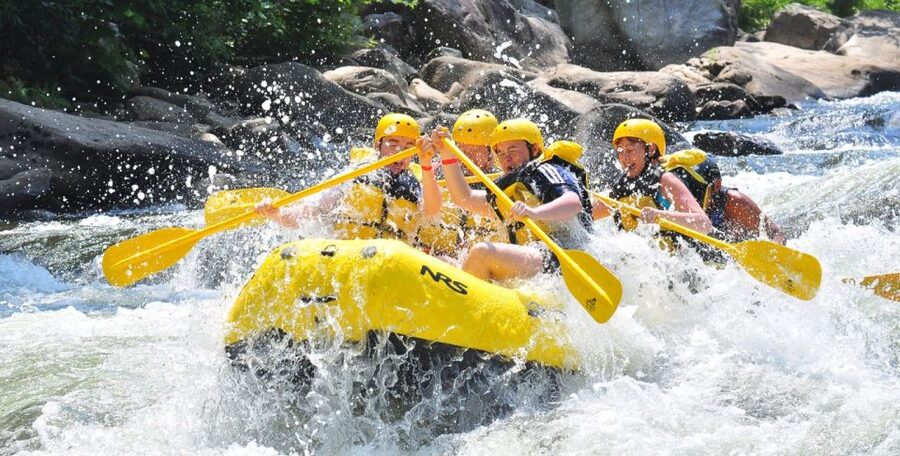
The Trishuli is a practical choice if you want white water without giving several days to the river. You can add it to a Nepal route that already includes Kathmandu, Pokhara, Chitwan, or Lumbini, then continue toward another major stop after the rafting.
That convenience is the real appeal. A longer river trip can offer more remote scenery and more time on the water, but it also takes more planning. This outing keeps the commitment short and focuses on the main thrill: paddling through a run of named rapids with a guide calling instructions from the raft.
I also like the way the river section has a clear rhythm. You begin with a safety briefing, meet the raft crew, handle a mixture of smaller and larger rapids, stop for lunch, then face more white water after the meal. It is not simply a quick splash followed by a long wait.
More Day Trips in Kathmandu
- Kathmandu: 7 UNESCO Sites Tour in 1 Day (Private Tour)
★ 4.9 · 204 reviews - Day Trip to Bhaktapur and Panauti from Kathmandu
★ 5.0 · 184 reviews - The Most Beautiful 1 Day Experience in Kathmandu Nepal
★ 5.0 · 84 reviews
Early morning transport from four Nepal stops
Your day begins early, with travel by car, van, or tourist bus to the rafting start point. The available pickup areas are Chitwan, Lumbini, Pokhara, and Kathmandu. The exact road time is not given, so you should ask for a firm pickup time and vehicle detail before setting out.
This matters most from Pokhara and Kathmandu. The rafting itself is short, but getting to the river and onward to your next stop can shape the whole day. Pack light, keep your change of clothes close, and avoid placing anything essential in a bag that will be out of reach during the river run.
The transport arrangement includes one-way tourist transport and one-way public transfer. That wording suggests the trip is designed to connect with a broader Nepal route rather than return you to your original pickup point. The stated finish is Chitwan District, while the description also refers to transfers toward Chitwan National Park, Pokhara, or Kathmandu. Confirm your exact endpoint, especially if you have a hotel, bus, or flight booked that evening.
Meeting the raft crew and learning the safety basics
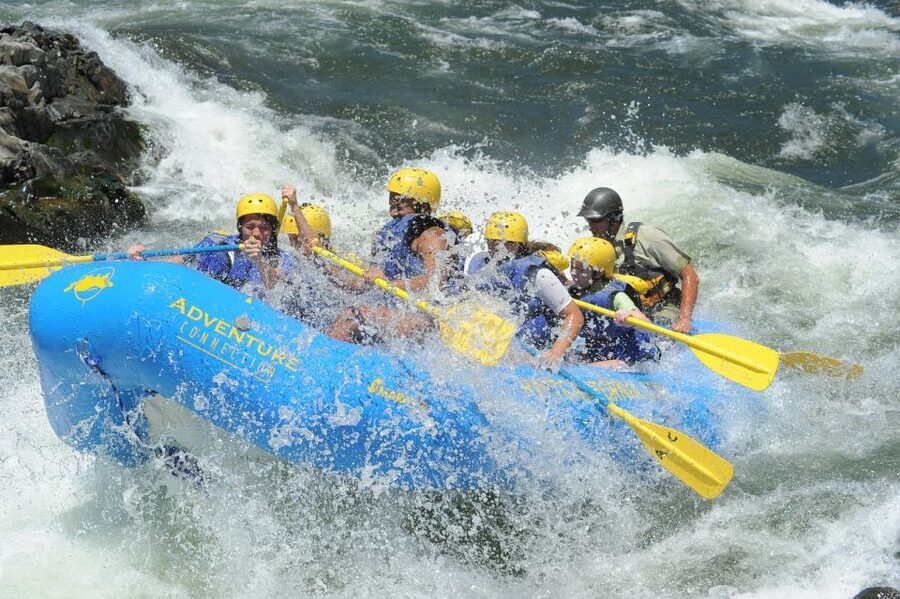
At the launch point, you meet the raft crew and receive a short briefing on safety procedures. This is not a formality to rush through. The guide needs to explain how to hold the paddle, respond to commands, and behave if the raft jolts or someone ends up in the water.
The crew includes a licensed English-speaking rafting guide and a safety kayaker. Guides are also available in Nepali, Japanese, and Hindi. The safety kayaker is an important part of the setup because a small craft can move around the raft and assist during a difficult moment.
The equipment is described as international standard rafting gear. A first aid kit and river permits are included too. Personal insurance is not included, so you need to arrange that yourself if you want cover for an adventure activity.
I would pay close attention to the briefing even if you have rafted before. River trips depend on quick, shared responses. The guide will be giving commands while the raft moves, and knowing the basic signals makes the experience safer and more enjoyable.
The first 2.5 hours on the Trishuli
The rafting portion lasts about 2.5 hours, with the complete activity described as three hours. During the first half of the river run, you encounter several small and large rapids. That variety is useful for building confidence before the more demanding section.
The rapids have Nepali names as well as common names. Your rafter explains those names as you go, giving the trip a local character beyond the physical rush. I like this detail because it helps you remember the river as a series of distinct places rather than one continuous stretch of splashing water.
The trip description places the main point of interest after Majhimtar. You may find the water becoming more demanding as you approach the Upset rapid, so listen closely to the crew at this stage. The Colorado River rating scale gives the rapid a grade of 3 to 4, a level that signals challenging white water rather than a calm float.
That rating should not be treated as a fixed promise. River difficulty can vary with water conditions, and the operator does not provide a seasonal difficulty breakdown. Still, the grade gives you a useful idea of the trip’s character. This is an active rafting outing, not a gentle sightseeing cruise.
More Chitwan Jungle Safaris:
- 3-Day Chitwan National Park Jungle Safari Tour Package with Pick Up
★ 5.0 · 184 reviews - From Kathmandu/Pokhara: 3-Day All-Inclusive Chitwan Safari
★ 4.6 · 133 reviews - Kathmandu: 3-Day Chitwan Safari Tour with Hotel Transfers
★ 4.6 · 127 reviews - Kathmandu/Pokhara: 3 Day Chitwan Jungle Safari Tour
★ 4.7 · 87 reviews
Lunch on the river beach before Upset
Lunch is served on a beach beside the river just before the Upset rapid. This is one of the trip’s best design choices. You get a pause to eat, dry off, and gather yourself before the most notable rapid.
The stop also breaks up the physical effort. Rafting can be tiring because you are listening, paddling, bracing, and reacting for much of the run. A riverside lunch gives your arms and attention a short rest.
The food itself is not described, so do not book this expecting a particular menu. The useful point is that lunch is included and served during the river outing, rather than forcing you to arrange a separate meal during a tight transfer day.
Keep your change of clothes available for after the rafting. Sandals are also listed as an item to bring. Choose footwear that can handle wet conditions and stay on your feet, since the river entrance, beach stop, and exit may all involve wet ground.
The Upset rapid and the second run of white water
After lunch, you soon encounter more small and large rapids. The Upset section is the main challenge identified for the day, and its grade 3 to 4 rating gives the trip its strongest edge.
This is where the guide’s role matters most. The rafter explains the tricky sections and directs the group through them. You are not left to read the river alone, which makes the activity more approachable for someone with limited rafting experience.
At the same time, you should be honest about your comfort level. The activity is not suitable for pregnant women, and the operator does not describe it as a relaxed float. If you want a quiet river ride with little physical action, this is probably the wrong choice.
The appeal is simple: you get a compact, guided encounter with Nepal’s white water. The river does the entertaining, while the crew handles the technical side and helps the raft move as a team.
Finishing at Chitwan District and continuing onward
When you reach the put-out point, the rafting ends and your onward transfer begins. The trip information names Chitwan District as the finish, while the route description says you may be transferred to Chitwan National Park, Pokhara, or back to Kathmandu.
Because the final destination is not expressed in one consistent way, treat this as a point to clarify rather than a minor detail. Ask exactly where you will be dropped off and what kind of transfer is included. One-way tourist transport and one-way public transfer can be good value, but only if the connection matches your plans.
For someone moving between Nepal’s main tourist areas, this arrangement may save the cost and trouble of organizing separate transport. For someone planning a return to the original hotel, it may not. The trip is best viewed as a rafting connection between destinations, not automatically as a round-trip activity.
What the $43 price really covers
At $43 per person, the price is reasonable for a short adventure if you use the included services. You receive transport in both directions of the route arrangement, a licensed guide, a safety kayaker, rafting equipment, lunch, a first aid kit, and river permits.
The price becomes stronger when you would otherwise need to arrange a separate vehicle, permit, meal, and river crew. Those costs can add up quickly, especially when you are traveling between Kathmandu, Pokhara, Chitwan, and Lumbini.
The value is less convincing if you are paying mainly for a few hours on the water and already have transport organized. Remember that the rafting lasts around 2.5 hours, while the early start and road connections may take much longer. You are buying convenience and guided support as much as rafting time.
The free cancellation rule allows you to cancel up to 24 hours before the activity for a full refund. You can also reserve now and pay later, which helps if your Nepal route is still changing. Those terms are useful because road plans and weather can disrupt a tightly arranged itinerary.
Who will enjoy this trip most
I would recommend this rafting day to you if you want a clear burst of adventure between major Nepal stops. It suits people who like active outings but do not want to camp beside the river or commit to a long expedition.
It is also a good fit if you value organized safety support. The guide, safety kayaker, equipment, first aid kit, and permits are all handled as part of the price. The multilingual guide option is helpful if English is not your first language.
You may want to skip it if your schedule cannot absorb an early start and uncertain road timing. You should also look elsewhere if you want a long day on the river, a return to your starting hotel, or a detailed list of meals and exact transfer times before booking.
Should you book the Trishuli rafting day?
Book it if you want a compact, properly supported white-water experience and the one-way transport fits your route. The grade 3 to 4 Upset rapid, riverside lunch, named rapids, and friendly staff make this more than a token paddle.
Before you commit, confirm three things: your exact pickup time, the precise put-out location, and your final transfer destination. If those details work, $43 is a fair price for a guided half-day run with equipment, lunch, permits, and safety support.
FAQ
How long does the rafting itself last?
The rafting section lasts about 2.5 hours. The complete activity is listed as approximately three hours, not including any longer road transfers connected with pickup and drop-off.
Where can I start the rafting trip?
Pickup options are listed in Chitwan, Lumbini, Pokhara, and Kathmandu. You should confirm the exact pickup details before the day of the activity.
Where does the activity finish?
The itinerary identifies Chitwan District as the finish. The trip description also mentions transfers to Chitwan National Park, Pokhara, or Kathmandu, so confirm your specific endpoint when booking.
Is lunch included?
Yes. Lunch is served on a river beach before the Upset rapid.
What should I bring?
Bring a change of clothes and sandals. Personal insurance is not included.
Is the rafting suitable for pregnant women?
No. The activity is listed as unsuitable for pregnant women.
More 1-Day Tours
- Nagarkot Sunrise & Bhaktapur Heritage Tour -Private Full Day Trip
★ 4.0 · 42 reviews - 1 Day Kathmandu Valley Sightseeing Tour
★ 5.0 · 37 reviews - Chandragiri Hill Day Trip from Kathmandu
★ 4.5 · 25 reviews - Amazing 1 Day Trekking Experience in Kathmandu Nepal
★ 5.0 · 24 reviews
More Rafting Trips
- Himalayan White Water Rafting Day Trip from Kathmandu
★ 4.0 · 22 reviews - Rafting in Nepal: Trishuli, Bhotekoshi & Other River Rafting
★ 4.5 · 5 reviews - Rafting Tour In Trishuli river
★ 4.0 · 5 reviews - Beginner-Friendly Rafting Adventure on the Trishuli River
★ 4.9 · 3 reviews
Just added around Kathmandu
- Private Shopping Tour in Kathmandu★ 5.0 · 3 reviews
- Nagarkot Sunrise With 7 UNESCO World Heritage Private Tour★ 5.0 · 3 reviews
- Mount Everest Scenic Flight 50 Minutes★ 5.0 · 3 reviews
- Kathmandu: Nightlife and Pub Crawl Tour★ 5.0 · 3 reviews
- Momo Cooking Class -The Art Of Making MoMo with Home Chef★ 5.0 · 3 reviews
- Kathmandu: Nagarkot, Bhaktapur, Doleswor & Sanga Statue Tour★ 5.0 · 3 reviews
- Makalu Base Camp Trek★ 5.0 · 3 reviews
- Kathmandu: Momo Making Class with a Local Chef★ 5.0 · 3 reviews
Chitwan Jungle Safari, compared.
Jungle Towernight Stay In Chitwan National Park ,nepal-2 Nights 3 Days Package
Read our review →
3-Day Chitwan National Park Jungle Safari Tour Package with Pick Up
Read our review →
3-Day Chitwan Safari Tour with Hotel Transfers
Read our review →
3 Nights 4 Days Chitwan National Park with Tower Night Stay
Read our review →
2 Days Chitwan Jungle Safari Tour from Pokhara/Kathmandu
Read our review →Browse the lists this tour appears in