
Reviewed · TEMPLES & MONASTERIES
Pokhara: Day Hiking from Sarangkot to World Peace Stupa from Lakeside
Catch sunrise, then earn your views. This private Pokhara hike links Sarangkot sunrise with a walk through villages, farmland, and forest to the World Peace Stupa. I like the hotel pickup and the quiet boat crossing on Fewa Lake, both useful touches that make the day easy to arrange.
I also like the small-group format. Your guide can adjust the pace and shape the outing around your needs. The main caution is clear: the trails are steep, and the early start, long descent, and climb to the stupa require a moderate fitness level. Cloud and rain can also hide the Himalaya at sunrise.
In This Review
- Key points at a glance
- Why this Pokhara hike works so well
- The 5 a.m. pickup from Lakeside
- Sarangkot and the Annapurna sunrise
- The steep trail through villages and farmland
- Crossing Fewa Lake by rowing boat
- The climb to World Peace Stupa
- Devi’s Fall and Gupteswar Gupha after the hike
- What the $130 price really includes
- Who should book this half-day outing
- Should you book it?
- FAQ
- How long does the Sarangkot to World Peace Stupa hike take?
- What time does hotel pickup begin?
- Is this a private tour?
- Is the Fewa Lake boat crossing included?
- Are entrance fees for Devi’s Fall and Gupteswar Gupha included?
- What fitness level is needed?
Key points at a glance
- Start at 5 a.m. from a Lakeside hotel, with about a 40-minute drive to Sarangkot.
- Watch for Annapurna sunrise views, though clouds and rain can block the mountains.
- Walk through villages, farmland, and forest rather than staying on city streets.
- Cross Fewa Lake by rowing boat, an appealing break between the two main hikes.
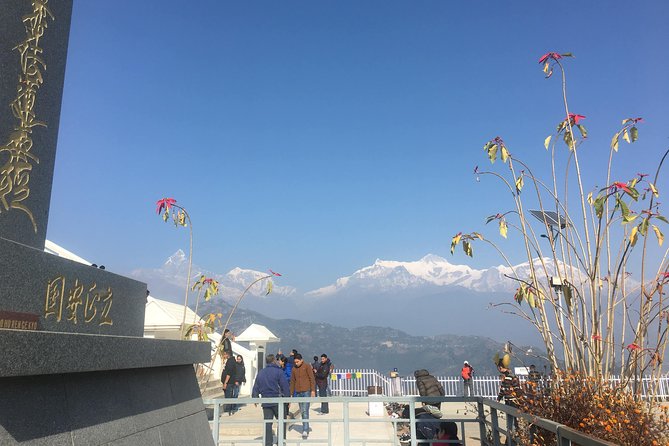
- Reach the World Peace Stupa for broad views across Pokhara Valley, green hills, and the Annapurna range.
- Finish with Devi’s Fall and Gupteswar Gupha, with entrance fees paid separately.
Why this Pokhara hike works so well
This is a smart way to get a taste of Himalayan walking without committing to a multi-day trek. You get mountain views, rural paths, a lake crossing, a hilltop monument, and two well-known sights near Pokhara, all in roughly five to six hours.
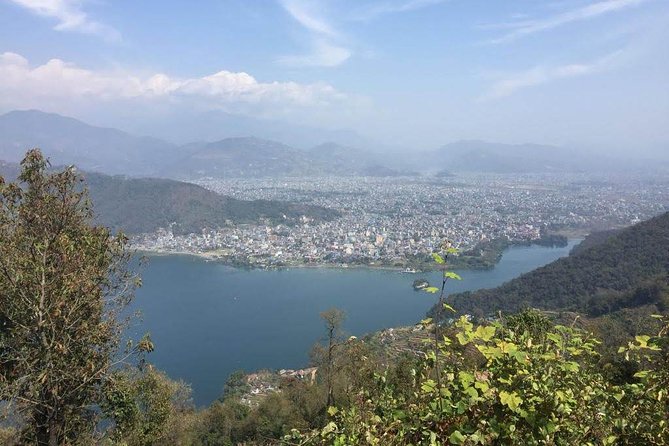
The route also gives you a better sense of Pokhara’s setting. The city sits beside Fewa Lake, with steep hills rising around it and the Annapurna range visible on a clear day. Instead of seeing the area only from a café in Lakeside, you move through several different environments in one morning.
The private setup matters. You are not tied to the pace of a large group, and your guide can make adjustments if you need a slower walk or more time at a viewpoint. That does not make the trail flat or easy, but it gives you more control over a physically demanding morning.
At $130, the price is easiest to justify for a small private group rather than a solo participant. It includes transport within the Lakeside area, an English-speaking trekking guide, bottled water, the Sarangkot entrance fee, and the rowing boat across Fewa Lake. Devi’s Fall and Gupteswar Gupha cost extra, as do meals, drinks, and any tip.
More Sarangkot Sunrise Trips:
- From Pokhara: Sarangkot Sunrise Himalayas Tour
★ 4.7 · 218 reviews - Pokhara: Sarangkot Sunrise with Half or Full-Day City Tour
★ 4.8 · 100 reviews - The Best of Pokhara: Full-Day Private Tour with Sarangkot Sunrise
★ 5.0 · 66 reviews
The 5 a.m. pickup from Lakeside
The day begins early. Your guide picks you up at your hotel within Pokhara’s Lakeside area at 5 a.m., then drives for about 40 minutes to Sarangkot.
That early departure is not just a scheduling detail. Sarangkot is best known for sunrise over the Annapurna mountains, so leaving late would defeat the purpose. You should be ready before pickup time, with shoes on and any breakfast packed or arranged in advance. Food is not included.
Hotel pickup and drop-off are included only within the Lakeside area. If you are staying elsewhere in Pokhara, confirm the meeting point before booking. The transfer is private for your group, which is more comfortable than organizing a separate taxi before dawn.
The weather deserves attention. A clear morning can give you a memorable view of the Annapurna range, but mountain weather changes quickly. One outing reached Sarangkot in clouds and rain, blocking the Himalaya and limiting the sunrise view. The surrounding hills can still be attractive, but you should not treat a clear mountain panorama as guaranteed.
Sarangkot and the Annapurna sunrise
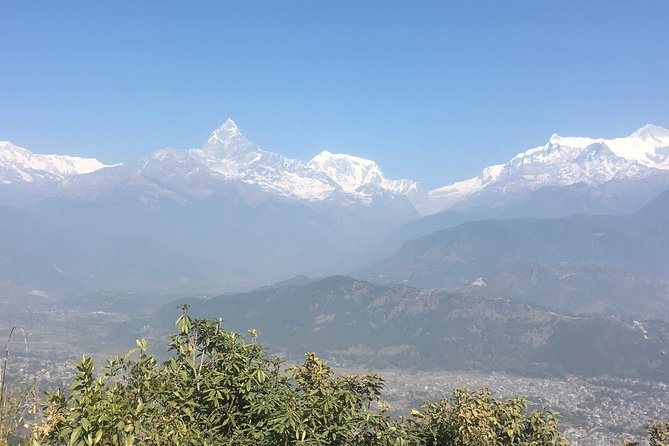
Sarangkot is the scenic opening act. From the viewpoint, you look toward the Annapurna ranges and the hills around Pokhara as daylight spreads across the area.
The stop is scheduled for about two hours, including the viewpoint visit and the start of the hike. That gives you time to wait for changing light, take photographs, and listen to your guide explain the mountains and the surrounding area.
The biggest reward here is timing. The same view in full daylight can be pleasant, but sunrise adds changing color and a sense of scale. You also begin the walking portion while the day is still relatively fresh.
The main risk is your expectations. Clouds may cover the mountains completely, and rain can make the early stop feel less rewarding. I would still choose the tour for the full route, not only for the sunrise. If weather blocks Sarangkot, the village trails, lake crossing, and World Peace Stupa remain worthwhile parts of the morning.
The steep trail through villages and farmland
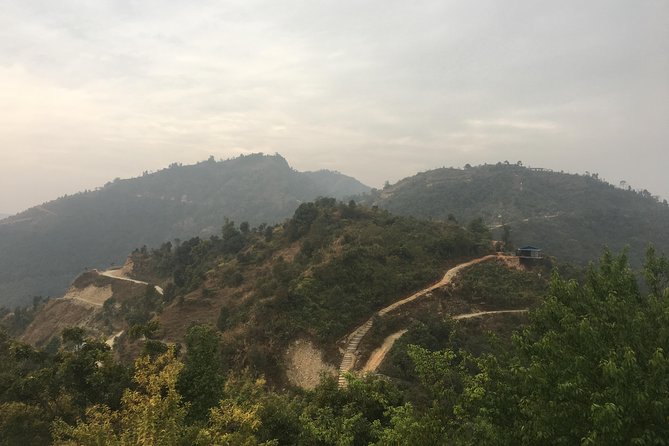
After Sarangkot, the route follows hilly paths toward Fewa Lake. You pass through villages and farmland, with sections through forest before reaching the water.
This is the most authentic part of the outing. You get away from Pokhara’s main tourist strip and see how the hills around the city are used and settled. The route is not described as a long-distance trek, but it is still a real hike, not a gentle stroll between viewpoints.
The steep sections are the key issue. One participant with knee problems found the descent difficult but managed it with support from the guide, Shambhu. That detail is useful if you have sensitive knees, limited downhill strength, or little recent hiking experience. Ask for a slower pace and use the guide’s support, but do not book this expecting an effortless walk.
Good footwear is important. The supplied information does not specify trail conditions, so I would choose sturdy walking shoes with a reliable sole rather than casual sandals. Carry any personal medication you need, and take the included bottle of water. You may also want extra water, since meals and drinks are not included.
The private format helps here. A guide can keep the pace suited to your group instead of making you chase a faster party. Still, customization has limits. A steep trail remains steep, and the total morning includes several active sections.
More Temples, Stupas and Monasteries:
- Peace & Panorama: Stupa and Pumdikot Scenic Drive Tour
★ 3.6 · 3 reviews - Kathmandu Spiritual Sites: Bodhnath & Pashupatinath Tour
★ 5.0 · 185 reviews - Kathmandu: Chandragiri Cable Car and Monkey Temple Tour
★ 4.8 · 139 reviews - From Kathmandu: 2 Stupas and Kopan Monastery Spiritual Tour
★ 4.8 · 115 reviews
Crossing Fewa Lake by rowing boat
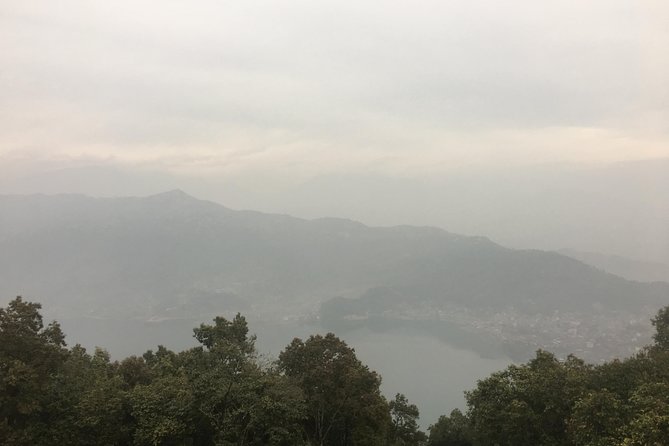
When you reach Fewa Lake, you cross by rowing boat. This is a welcome change after the hilly walk and gives your legs a short break before the climb to the stupa.
The boat ride also links the two sides of the experience in a natural way. You begin high above Pokhara at Sarangkot, descend through rural paths, cross the lake, and then climb again toward the World Peace Stupa. In a few hours, you see the city from several angles.
The crossing is included in the price, so you do not need to budget separately for the boat. The route description does not give the exact time on the water, and the schedule can depend on the walking pace and local conditions. Treat it as a scenic transfer rather than a separate lake excursion.
Keep your belongings secure during the crossing. A small daypack is easier than a large bag, especially since you will carry it over the entire route.
The climb to World Peace Stupa
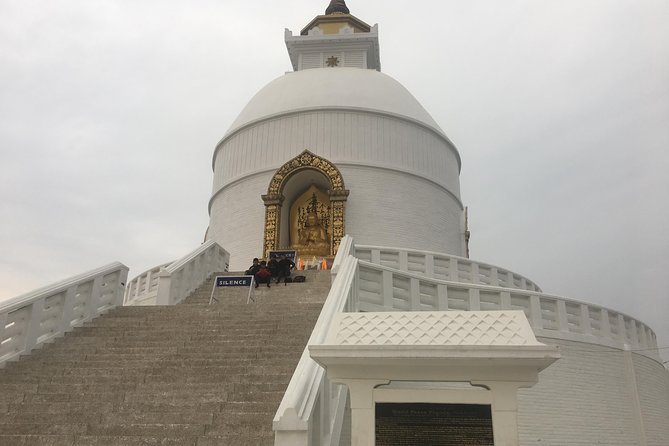
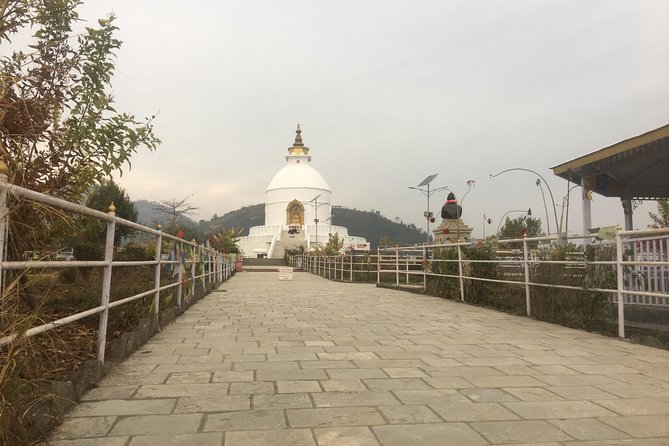
After crossing Fewa Lake, the trail rises through village and forest toward the World Peace Stupa. The climb is another demanding section, but the payoff is one of the broadest views on the route.
From the top, you can look across Pokhara Valley, toward the Annapurna mountains, and over the surrounding green hills. The stupa gives you a strong sense of how the city, lake, farmland, and hills fit together.
The stop is scheduled for about three hours, covering the crossing, the uphill walk, and time at the stupa. That makes this the main part of the tour. You should not rush it, especially if the weather is clear and the mountains are visible.
The World Peace Stupa is also a good place to pause after the physical effort. You can catch your breath, take photographs, and hear more from your guide about Pokhara and the Himalaya. The guide’s role is not limited to leading the way. The tour is designed to add local and mountain context as you move between each stop.
The view is weather-dependent, just as it is at Sarangkot. Clouds may hide the Annapurna range, but the valley and nearby hills can still make the climb worthwhile. If you want the best chance of mountain views, an early start is helpful, but no tour can control the weather.
Devi’s Fall and Gupteswar Gupha after the hike
Once you leave the stupa area, the tour continues by road to two nearby sights: Devi’s Fall and Gupteswar Gupha. Together, they add a short cultural and natural finish to the morning.
The stop at Devi’s Fall lasts about 20 minutes. It is a waterfall site near the highway, so you do not need to plan another hike of the same length. The entrance fee is not included.
Gupteswar Gupha is a historic cave with a Hindu shrine dedicated to Lord Shiva at a depth of about 40 meters. Continuing another 100 meters brings you to a river connected with water falling from Devi’s Fall. The cave visit takes about 40 minutes, and its entrance fee is also extra.
The cave may not suit everyone. A descent of about 40 meters and a further passage of roughly 100 meters can feel tiring after the morning’s hike. If you have knee trouble or dislike confined spaces, ask your guide about the route before entering. The tour information does not provide accessibility details, so you should not assume the cave is suitable for every physical ability.
These final stops are optional in practical terms because the extra entrance charges are not covered, although they form part of the planned outing. Carry some local cash or confirm payment arrangements before the day begins.
What the $130 price really includes
The $130 cost covers more than a guide and a vehicle. You receive private transportation from and back to a Lakeside hotel, an English-speaking trekking guide, bottled water, the Sarangkot entrance fee, and the boat crossing on Fewa Lake.
That package has good value for a couple, family, or small group that wants a private morning. You avoid arranging a pre-dawn taxi, finding a boat, and working out the route yourself. The guide also adds practical support on steep sections and explains the places you visit.
The value is weaker for one person unless you place a high value on privacy and convenience. Group discounts are available, so the per-person cost may improve when several people share the private tour.
Budget separately for meals and drinks, Devi’s Fall, Gupteswar Gupha, and a voluntary tip. Since no meal is included, plan your breakfast before pickup or ask your hotel about an early takeaway option. The supplied details do not state the exact entrance prices at the waterfall and cave, so check those costs before setting your daily budget.
Who should book this half-day outing
I would recommend this tour to active visitors who want varied scenery without a multi-day trek. It suits people who enjoy steep walking, early starts, village paths, and a flexible private guide.
It is also a good choice if you have limited time in Pokhara. In one morning, you can see Sarangkot, Fewa Lake, the World Peace Stupa, Devi’s Fall, and Gupteswar Gupha. That is a lot of ground, though the pace can feel full rather than leisurely.
I would hesitate if you have serious knee problems, poor fitness, or no interest in uphill and downhill walking. The private format may help, as Shambhu did for one hiker with knee trouble, but it cannot remove the physical demands.
I would also avoid booking this as your only plan for seeing the Himalaya. Clouds and rain can block the Annapurna views. Think of the mountains as a major bonus, while the villages, lake, stupa, and cave form the broader experience.
Free cancellation is available when you cancel at least 24 hours before the start time. Changes or cancellations inside that window are not accepted for a refund.
Should you book it?
Book this if you want an active, well-packed introduction to Pokhara with private transport and a guide who can adjust the pace. The sunrise, village trail, boat crossing, and World Peace Stupa create a varied day that feels more rewarding than a simple viewpoint transfer.
Skip it if steep trails are a serious concern or if you need a slow, relaxed sightseeing morning. For everyone else, especially a small group, the $130 price can be fair value. Just bring sturdy shoes, prepare for an early start, keep your weather expectations modest, and remember that the waterfall and cave fees are extra.
FAQ
How long does the Sarangkot to World Peace Stupa hike take?
The full experience lasts approximately five to six hours. The Sarangkot portion is scheduled for about two hours, and the World Peace Stupa portion takes about three hours, followed by short visits to Devi’s Fall and Gupteswar Gupha.
What time does hotel pickup begin?
Pickup is at 5 a.m. from hotels within the Lakeside area of Pokhara.
Is this a private tour?
Yes. Only your group participates, and the private format allows the outing to be customized to your needs.
Is the Fewa Lake boat crossing included?
Yes. A rowing boat to cross Fewa Lake is included in the tour price.
Are entrance fees for Devi’s Fall and Gupteswar Gupha included?
No. Entrance fees for both Devi’s Fall and Gupteswar Gupha are paid separately. The Sarangkot entrance fee is included.
What fitness level is needed?
A moderate level of physical fitness is recommended. The trails are steep, with both downhill and uphill sections, so the tour is best for active people who are comfortable hiking.
More Treks and Hikes
- Poon hill Trek 3 days
★ 5.0 · 176 reviews - Trekking in Annapurna/Langtang/Everest/Upper Mustang regions
★ 5.0 · 161 reviews - Pokhara: 4-Day Ghorepani, Poonhill & Ghandruk Mountain Trek
★ 5.0 · 132 reviews - Ghorepani – Poon Hill Trek 3N-4D
★ 5.0 · 125 reviews
More Day Hikes in the Valley
- Pokhara: Annapurna Foothills Day Hike with Transfers
★ 5.0 · 100 reviews - 2-Day Private Trekking Tour to Australian Camp & Dhampus
★ 5.0 · 42 reviews - 1-Day Private Dhampus Trekking Tour
★ 5.0 · 35 reviews - Pokhara: Easy Day Hike to Australian Camp & Dhampus Village
★ 5.0 · 24 reviews
Just added around Pokhara
- Double Dare: Tandem Bungee Adventure★ 4.3 · 3 reviews
- Exhilarating Pokhara-Kathmandu Bus Journey Experience★ 3.5 · 3 reviews
- 3 Day Australian Camp Dhampus Ghandruk Easy Trek in Pokhara★ 3.5 · 3 reviews
- Paragliding in Pokhara★ 5.0 · 3 reviews
- Seti George and Thrilling Suspension Bridge Tour at Pokhara★ 4.5 · 3 reviews
- Overnight Dhampus Australian Camp Easy Hiking from Pokhara★ 5.0 · 3 reviews
- Full Day Entire Pokhara Tour by Car with Guide★ 4.5 · 3 reviews
- 5 Days Mardi Himal Trek.★ 5.0 · 3 reviews
Temples & Monasteries, compared.
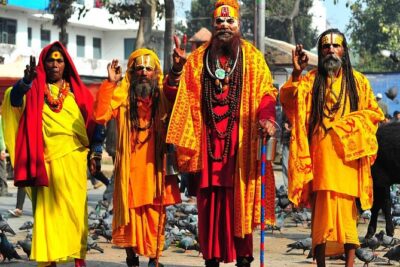
Kathmandu Spiritual Sites: Bodhnath & Pashupatinath Tour
Read our review →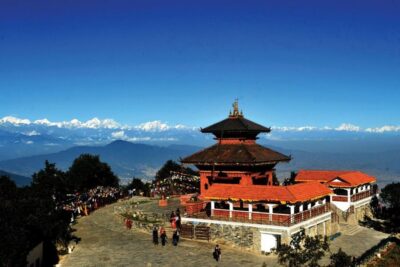
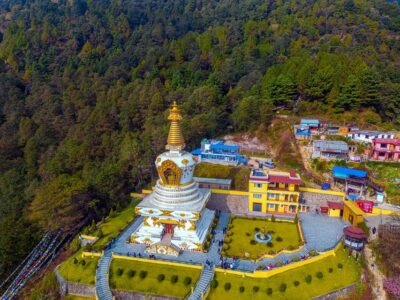
Monkey Temple – Swayambhunath Tour – Private/Small Group
Read our review →
Dhulikhel, Namobuddha & Panauti: A Scenic Day Tour from Kathmandu
Read our review →Browse the lists this tour appears in