
Reviewed · TEMPLES & MONASTERIES
Monkey Temple – Swayambhunath Tour – Private/Small Group
Ancient stories make this walk memorable. This three-hour Swayambhunath tour combines neighborhood streets, Hindu and Buddhist shrines, and the famous hilltop stupa, with a local guide explaining the myths behind Kathmandu Valley. I like the tiny group size, capped at five people, and the way the route reaches Swayambhunath on foot rather than treating the temple as a quick photo stop. The main drawback is the uphill walking, including 365 stairs, which may be hard if you have knee trouble or severe asthma.
I also like the modest $15 price, especially for a solo visitor who wants context without paying for a private full-day guide. You will need an extra 200 Nepalese rupees in cash for the Swayambhunath entrance, and the tour is best for people who are comfortable walking for several hours.
In This Review
- Key points at a glance
- Starting in Thamel and walking toward Swayambhu
- Indrayani and Bijeshwori, two early religious stops
- Bhagwan Pau and the 365-step climb
- Swayambhunath, the main visit
- Harati Ajima and the story of a changed demon
- World Peace Pond and Manjushree Temple
- Amideva Buddha Park and three huge figures
- Shova Bhagawati and the walk back
- Why the small group matters
- Is $15 good value?
- Who should book this walk?
- Final call: a smart first look at Swayambhunath
- FAQ
- How long does the Swayambhunath tour last?
- Where does the tour begin?
- Where does the tour end?
- How many people can join the tour?
- Is Swayambhunath entrance included?
- What is included in the price?
- Are coffee and tea included?
- How difficult is the walking?
- Can I cancel for a full refund?
Key points at a glance
- Small group of no more than five: You get a better chance to ask questions and keep pace with the guide.
- A neighborhood walk before the stupa: The route begins near Thamel and passes local religious sites before reaching Swayambhunath.
- 365 steps to Bhagwan Pau: The climb is part of the experience, but it requires moderate fitness.
- Stories of Kathmandu Valley’s origin: Legends about a former lake and the role of Manjushree give the temples a clear cultural setting.
- A mix of Hindu and Buddhist sites: Indrayani, Bijeshwori, Harati Ajima, Manjushree, and Amideva Buddha Park show how closely the traditions meet in Kathmandu.
- Good value with one extra fee: The tour costs $15 per person, but Swayambhunath admission is 200 rupees, paid in cash.
Starting in Thamel and walking toward Swayambhu
The meeting point is Pumpernickel Bakery on Paryatan Marg, in the heart of Thamel. This is a practical place to begin because Thamel is a common base for visitors, and the tour finishes at the same point.
From there, you walk toward Bhagwan Pau, a journey listed at about 30 minutes. That opening stretch matters. Instead of being dropped at the temple gate, you get a gradual change from the central Thamel area to the neighborhoods around Swayambhu.
I like this format for a first morning in Kathmandu. A guide can point out details that are easy to miss when you are simply finding your way through the streets. One previous guest described the walk through Thamel as a useful way to understand both the older and present-day sides of Kathmandu. That is exactly where a walking tour earns its fee.
The tour is not a vehicle-based outing, so you should wear shoes that are comfortable for uneven streets and stairs. Coffee and tea are not included, and there is no promise of a refreshment stop, so carry water from the start.
More Temples, Stupas and Monasteries:
- Kathmandu Spiritual Sites: Bodhnath & Pashupatinath Tour
★ 5.0 · 185 reviews - Kathmandu: Chandragiri Cable Car and Monkey Temple Tour
★ 4.8 · 139 reviews - From Kathmandu: 2 Stupas and Kopan Monastery Spiritual Tour
★ 4.8 · 115 reviews
Indrayani and Bijeshwori, two early religious stops
Before the main climb, the route includes Indrayani Temple, also called Luti Ajima, and Bijeshwori Temple. These stops help explain how Swayambhu fits into the wider religious life of Kathmandu rather than presenting it as an isolated monument.
Indrayani is linked to the eight Matrikas established when Licchavi King Gunakamdev founded Kathmandu city in the 13th century. The story connects a neighborhood shrine to the early shape of the city. Your guide can explain the legend and point out the temple’s role as one of those guardian sites.
Bijeshwori is important to both Hindu and Buddhist worshippers. It also has a special place for Tibetan Buddhists, while Hindu devotees visit as well. This shared use is one of the most interesting parts of the route. You are not looking at two sealed-off religious worlds. In Kathmandu, traditions often overlap in the same sacred spaces.
The supplied timing does not assign a long visit to either temple, so expect brief stops rather than extended temple study. That is a small limitation if you want detailed architectural analysis. On the other hand, the short visits keep the walk moving and leave more time for Swayambhunath and the hilltop views.
Bhagwan Pau and the 365-step climb
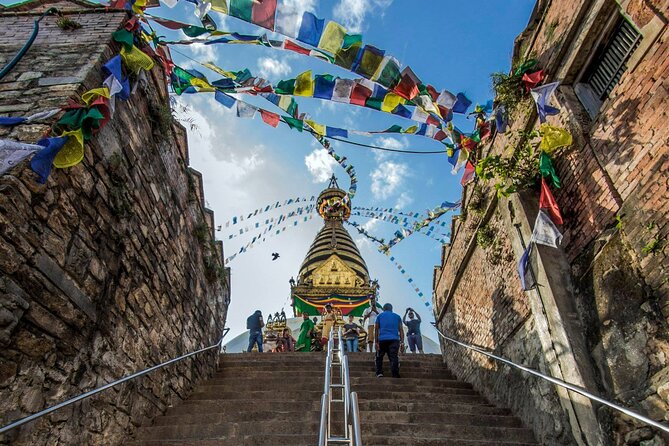
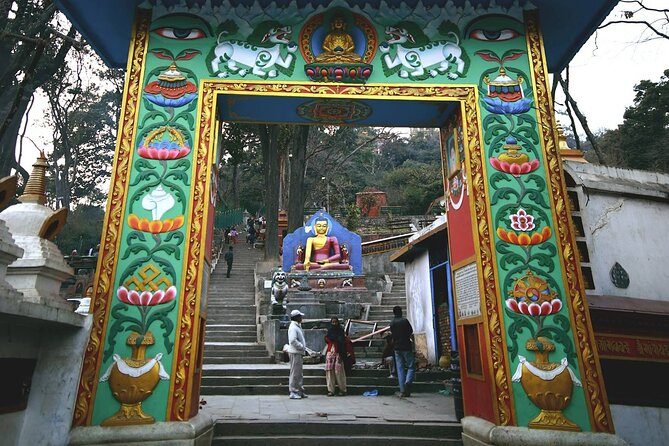
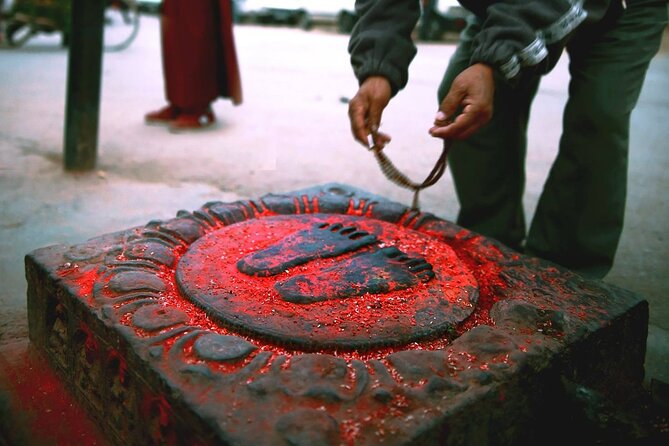
Bhagwan Pau marks the bottom of Swayambhu Hill and the start of the main stairway. The name refers to the feet of Lord Buddha, giving this point a symbolic role before the physical climb begins.
The stairway has 365 steps. That number is easy to remember, but do not treat it as a casual handful of stairs. The tour pauses at Bhagwan Pau so you can rest, drink water, and prepare for the ascent.
This is the clearest fitness test of the morning. The tour information recommends a moderate fitness level and specifically advises against joining if you have severe asthma or knee problems. You do not need to be an athlete, but you should be comfortable climbing a long flight of steps at a steady pace.
The reward is the sense of approaching the hilltop sanctuary gradually. You are not simply arriving at a viewpoint by road. The stairway gives the temple a stronger presence, and the pause at the bottom lets the group gather before continuing.
If you prefer a relaxed pace, say so early. With a maximum of five people, the guide has more room to adjust than on a large bus tour. That small-group format is one of the best features here.
Swayambhunath, the main visit
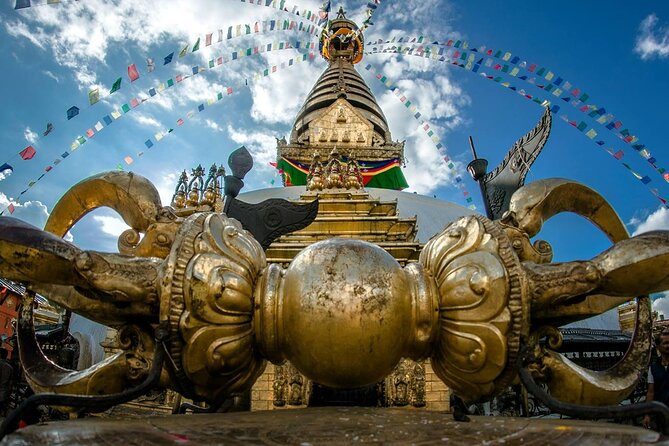
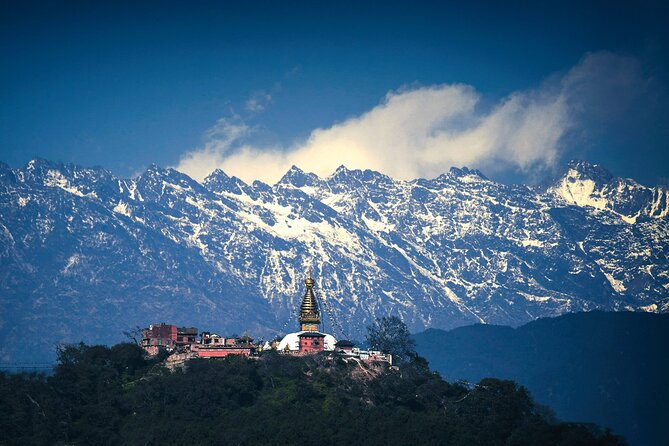
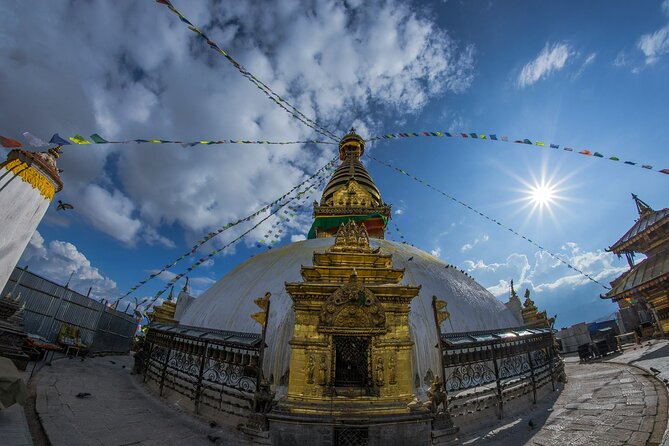
Swayambhunath is one of Nepal’s holiest Buddhist stupas and the central attraction of the tour. It sits on a hill in the middle of Kathmandu, with a broad view over the city from its elevated position.
The visit is scheduled for about 40 minutes. That is enough for an introduction to the stupa, nearby structures, and the surrounding neighborhood, but it is not an all-day temple study. I would treat this tour as a strong orientation to Swayambhunath, not as a substitute for returning later on your own.
The name Swayambhu means self-originated, and the guide focuses on the legends connected with that idea. You will also hear about the origin of Kathmandu Valley, including the story that the valley was once a great lake. These stories are not just decoration. They help you understand why the hill and stupa carry such weight in local religious tradition.
Religious ceremonies may be taking place during your visit. A good guide can explain what you are seeing and help you behave respectfully without turning the moment into a staged performance. One of the strongest points of this tour is the chance to learn about both Hinduism and Buddhism in plain language, especially if you are new to Nepalese religious customs.
The admission fee is not included. Swayambhunath costs 200 rupees, about $1.50, paid directly to temple authorities in cash. Bring the correct currency if possible. The amount is small, but forgetting it can create an avoidable nuisance at the main stop.
A few more trips worth weighing up before you book
- Everest Base Camp Trek – 14 Days
★ 5.0 · 1,499 reviews - Private Kathmandu Sightseeing Tour | UNESCO World Heritage sites
★ 5.0 · 756 reviews - Everest Base Camp Helicopter Tour landing at Everest View Hotel
★ 5.0 · 668 reviews - Half day cooking class in Thamel kathmandu
★ 5.0 · 607 reviews
Harati Ajima and the story of a changed demon
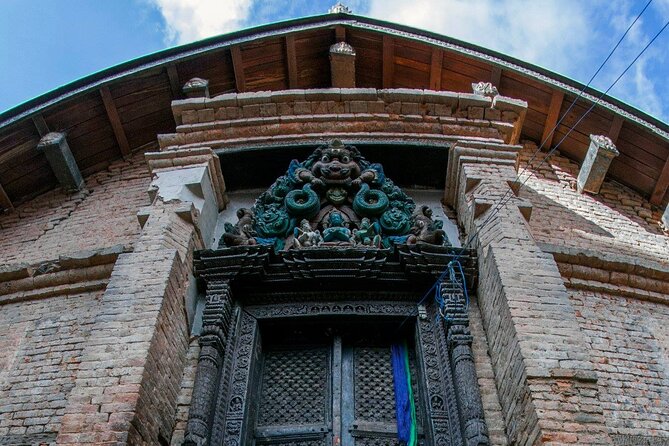
Near Swayambhunath, the route visits Harati Ajima Temple. The stop is short, listed at about five minutes, but the story gives it more weight than the timing suggests.
Harati began in legend as a demon and later became Mother Harati, a protective figure worshipped by people around Kathmandu Valley. The change from feared being to revered mother is a useful example of how religious stories evolve and how a figure can take on a new place in community life.
The temple’s Nepalese pagoda architecture is another reason to pause. You will not spend long here, so ask your guide to point out the features that make the building a pagoda-style temple. This is a quick stop, but it adds another layer to the main visit.
World Peace Pond and Manjushree Temple
The World Peace Pond lies on the western side of Swayambhunath. In its center is a brass Buddha standing on a lotus flower, and writing on the surrounding wall is presented in English.
This is a calmer, more reflective stop after the main temple area. The tour details do not give a fixed visit length for the pond, so the actual pause may depend on the group and the guide. It is a useful place to slow down, take in the hilltop setting, and connect the religious symbols with the wider stories of the site.
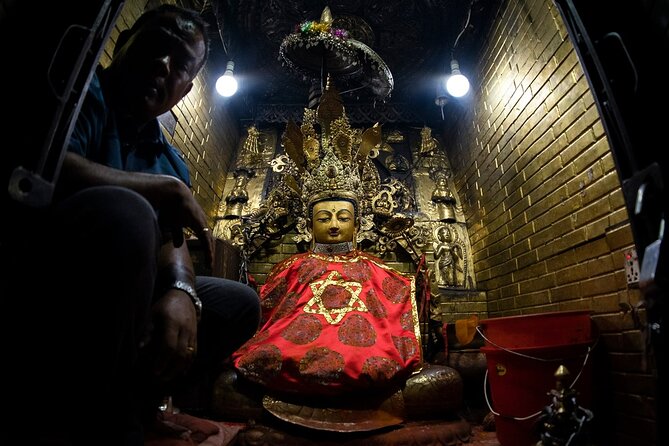
Manjushree Temple receives about 15 minutes. It is a small shrine dedicated to Maha Manjushree, the figure linked to the story of Kathmandu Valley changing from a lake into a city. The guide explains the legend while showing you the western side of the valley.
You should keep your expectations realistic. This is a small temple, not a huge complex with a long sequence of halls. Its value comes from the story and the view. For many people, this will be the point where the valley-origin legend becomes easiest to picture.
Amideva Buddha Park and three huge figures
Amideva Buddha Park is one of the more visually striking stops after the stupa. The park contains three large statues: a 67-foot Amitabha Buddha in the center, with 64-foot Chenrezig and Padmasambhava figures on either side.
The scheduled visit lasts about 20 minutes. That gives you time to walk around the park and hear the story of Siddhartha, as described in the tour plan. The scale of the statues provides a contrast to the smaller shrines and pagoda buildings visited earlier.
I like this part of the route because it broadens the experience beyond the famous stupa. Swayambhunath is not only one object at the top of a hill. The surrounding sacred area includes newer public spaces, smaller temples, statues, ponds, and viewpoints.
The stop may appeal especially to photographers, but the real value is visual comparison. You can see different styles of Buddhist expression within one walking route, from the ancient stupa to the enormous modern statues.
Shova Bhagawati and the walk back
The route also includes Shova Bhagawati, a shrine devoted to the goddess Bhagwati on the Bishnumati River. It is one of four major Bhagwati temples in Kathmandu, according to the tour information.
This stop brings the walk back into the city’s broader Hindu religious setting. After spending much of the morning around Buddhist Swayambhu, you get another reminder that Kathmandu’s sacred geography is shared by several traditions.
The return walk from Bhagwan Pau to Pumpernickel Bakery takes about 30 minutes. The tour ends where it began, at the Thamel meeting point. If you want to stay around Swayambhu longer, the guide allows you to explore on your own and walk back to the meeting point independently.
That flexibility is useful. Forty minutes at Swayambhunath may suit someone with limited time, but you may want longer for photographs, quiet observation, or another look at the shrine area. You are not forced to return with the group if you prefer to linger, though you are responsible for finding your own way back.
Why the small group matters
A maximum of five participants is a real advantage on a walking tour built around stories. In a large group, the guide’s explanation can become a speech delivered over people’s heads. Here, you should have more opportunity to ask about a ceremony, a temple symbol, or a legend that catches your attention.
The format also suits solo visitors. One solo woman described feeling safe and appreciated the guide’s historical knowledge and explanations of Hinduism and Buddhism. Another solo visitor praised the amount covered in a short time.
If Santosh is leading your walk, expect a guide who has been particularly praised for historical detail and storytelling. His approach appears to suit people who want more than directions and photo stops. Guide assignments can vary, so it is sensible to confirm the name when booking if that matters to you.
The main tradeoff is pace. A small group can be personal, but the three-hour schedule covers many stops. You may hear a useful explanation, take a few photographs, and then move on. If you want long periods of silent viewing, this may feel brisk.
Is $15 good value?
At $15 per person, this is a low-cost way to get a guided introduction to Swayambhunath and several nearby religious sites. The price is especially fair for a solo visitor, since a private guide can otherwise cost much more.
The group discount feature may make it even more appealing for companions booking together, though the exact discount is not stated. Youth pricing applies to students with a valid student card.
Add 200 rupees in cash for Swayambhunath admission. Coffee and tea are extra as well. Even with the entrance fee, the total remains modest for three hours of guiding, walking, local stories, and several temple visits.
The value depends on what you want. If you only need a ride to the stupa and a quick look around, you can visit independently for less. If you want someone to connect Indrayani, Bijeshwori, Manjushree, Harati, and the valley-origin myths, the guide makes the extra cost worthwhile.
Who should book this walk?
I would choose this tour if you are staying in Thamel, have one free morning, and want an introduction to Kathmandu’s religious traditions. It also fits solo visitors who prefer company but do not want a large organized group.
It suits you best if you:
- Enjoy walking and short cultural stops
- Want Hindu and Buddhist context together
- Have moderate fitness for 365 stairs
- Prefer a group of five or fewer
- Are visiting Kathmandu for the first time
- Want a guide who explains legends as well as monuments
Think twice if stairs are difficult for you, or if severe asthma or knee problems make uphill walking unsafe. The tour also may not fit if you want a slow, unstructured visit with lots of time at each shrine.
Free cancellation is available if you cancel at least 24 hours before the start time. Changes or cancellations made later are not accepted for a refund.
Final call: a smart first look at Swayambhunath
I would book this tour for a practical first visit to Swayambhunath, especially at $15 and with a five-person limit. The best features are the neighborhood approach, the clear stories about Kathmandu Valley, and the mix of Hindu and Buddhist sites.
Bring water, cash for the 200-rupee entrance, and shoes suited to stairs. If you want a guide who adds meaning to what you see, this is a strong choice. If you mainly want a quick temple visit or cannot manage the climb, visit Swayambhunath independently another way.
FAQ
How long does the Swayambhunath tour last?
The tour lasts approximately three hours.
Where does the tour begin?
It begins at Pumpernickel Bakery on Paryatan Marg in Kathmandu’s Thamel area.
Where does the tour end?
The tour ends back at the Pumpernickel Bakery meeting point.
How many people can join the tour?
The group has a maximum of five participants.
Is Swayambhunath entrance included?
No. The entrance fee is 200 Nepalese rupees, about $1.50, paid in cash directly to the temple authorities.
What is included in the price?
An English-speaking guide is included.
Are coffee and tea included?
No. Coffee and tea are not included.
How difficult is the walking?
You should have a moderate level of physical fitness. The route includes 365 stairs to Swayambhunath, and people with severe asthma or knee problems are not advised to join.
Can I cancel for a full refund?
Yes. You can cancel at least 24 hours before the experience’s start time for a full refund. Changes or cancellations made less than 24 hours before the start time are not accepted for a refund.
Just added around Kathmandu
- Private Shopping Tour in Kathmandu★ 5.0 · 3 reviews
- Nagarkot Sunrise With 7 UNESCO World Heritage Private Tour★ 5.0 · 3 reviews
- Kathmandu: Nightlife and Pub Crawl Tour★ 5.0 · 3 reviews
- Mount Everest Scenic Flight 50 Minutes★ 5.0 · 3 reviews
- Kathmandu: Nagarkot, Bhaktapur, Doleswor & Sanga Statue Tour★ 5.0 · 3 reviews
- Momo Cooking Class -The Art Of Making MoMo with Home Chef★ 5.0 · 3 reviews
- Makalu Base Camp Trek★ 5.0 · 3 reviews
- Kathmandu: Momo Making Class with a Local Chef★ 5.0 · 3 reviews
Temples & Monasteries, compared.
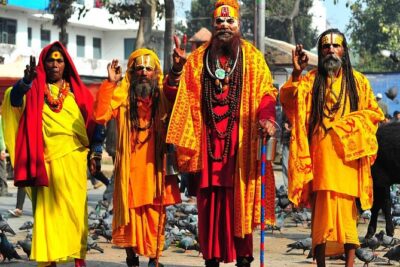
Kathmandu Spiritual Sites: Bodhnath & Pashupatinath Tour
Read our review →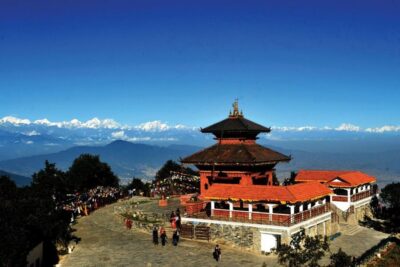
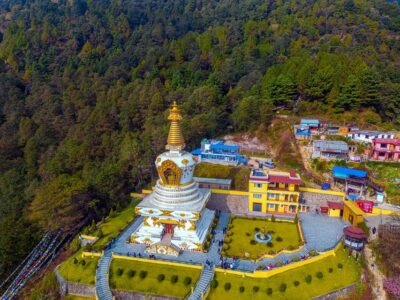
Dhulikhel, Namobuddha & Panauti: A Scenic Day Tour from Kathmandu
Read our review →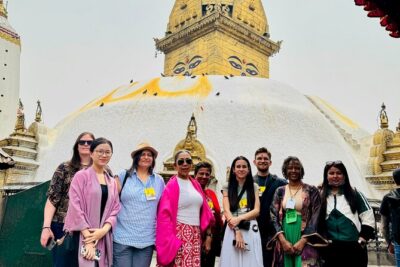
Chandragiri Cable Car & Monkey Temple Tour- Private/Group
Read our review →Browse the lists this tour appears in