
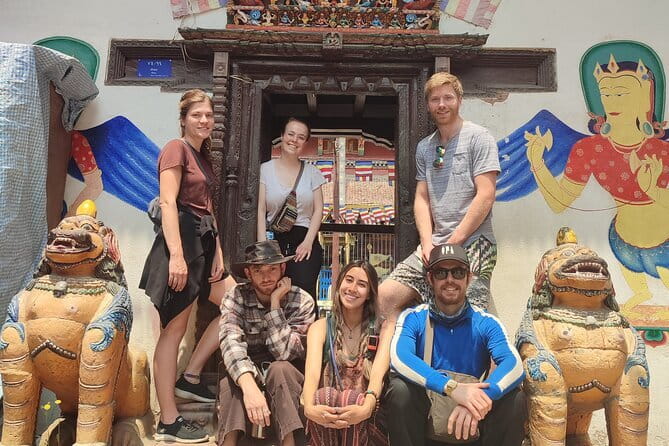
Reviewed · PATAN TOURS
Folklore and Everyday Life in Ancient Patan
Patan’s best stories are often down side streets. This two-hour to two-and-a-half-hour walk takes you beyond the famous palace square and into old courtyards where Newar Buddhist customs, Tantric Hindu traditions, shrines, resting shelters, and daily life still meet. I like the focus on local neighborhoods rather than another standard palace tour, and I like that the walk connects old beliefs with the way young Nepalis live today. The main drawback is clear: Patan Durbar Square is not included, so you need extra time and money if you want the grand temples and museum afterward.
At $65, this makes the most sense if you value a small group and a guide who can explain culture, folklore, and religion rather than simply point at buildings. Sandip receives especially warm praise for his humor, care, and ability to show places you would probably miss alone. The tour begins at 10 a.m. at Patan Dhoka and ends near the main square, making it easy to continue sightseeing on your own.
In This Review
- Key points to know before you book
- Why old Patan is worth seeing beyond the main square
- Pimbahal: courtyards built around belief and practical life
- Nyakhachowk: old houses, resting shelters, and quiet shrines
- Nag Bahal: trade, art, and outside influence
- Swotha Square: finish with tea shops and a simple next step
- The monastery visit and the religious focus
- How the walk handles modern Patan
- $65 value, group size, and practical details
- Who will get the most from this Patan walk
- Should you book Folklore and Everyday Life in Ancient Patan?
- FAQ
- Where does the tour begin?
- What time does the tour start?
- Where does the tour end?
- Is Patan Durbar Square included?
- How long does the experience last?
- How large is the group?
- What is included in the price?
- Can I cancel for a full refund?
Key points to know before you book
- A neighborhood walk, not a palace tour: The route explores old Patan around the main square, but does not include admission to Patan Durbar Square or its museum.
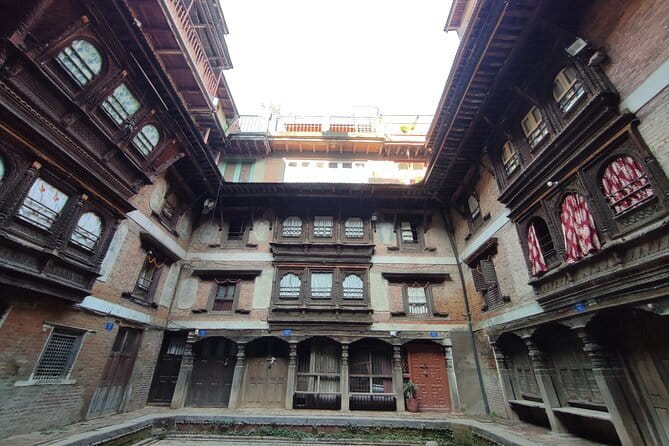
- Courtyards reveal the real subject: Pimbahal, Nyakhachowk, and Nag Bahal show how shared urban spaces support worship, art, rest, and community life.
- Religion is treated as part of daily life: The guide discusses Newar Buddhism and Tantric Hinduism as living practices, not just museum subjects.
- A small group keeps the walk personal: The maximum group size is 10 people, a useful limit in narrow lanes and compact courtyards.
- The route ends in a useful place: Swotha Square is only a few minutes from Patan Durbar Square, so you can add the palace complex afterward.
- Sandip is a strong reason to consider it: His explanations, humor, and attention to local details are the most praised parts of the experience.
Why old Patan is worth seeing beyond the main square
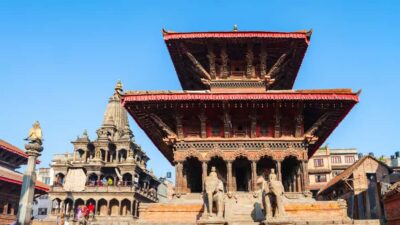
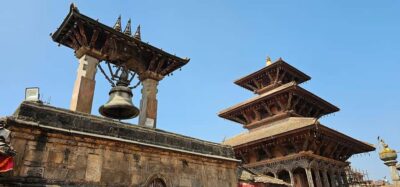
Patan is famous for its palace complex, carved temples, and metalwork. Yet the central square can give you only a polished slice of the city. This walk heads into the surrounding old town, where the story is less about royal display and more about how people organized homes, monasteries, shrines, work, and worship.
You meet the guide at the entrance gate of the old town on Patandhoka Road. From there, the route moves through narrow streets and open courtyards. The contrast matters. A tight passage can suddenly lead into a broad communal space, often framed by old houses, shrines, and traditional resting places.
I like this approach because it gives you a better sense of Patan as a lived-in city. You are not only looking at a carved window or a temple roof. You are considering why courtyards were built, how religious practice shaped them, and how older customs continue beside modern ambitions.
The tour also gives attention to folklore and myth. The supplied details do not promise a single dramatic legend at every stop, so you should expect a cultural walk rather than a theatrical storytelling show. Its value is in the connections between small objects, buildings, rituals, and social habits.
More Patan and Lalitpur Visits:
- Bhaktapur & Patan Durbar Square Day Tours
★ 5.0 · 122 reviews - Kathmandu: Private Patan and Bhaktapur Sightseeing Tour
★ 4.7 · 64 reviews - Patan and Bhaktapur City Full Day Tour
★ 5.0 · 24 reviews
Pimbahal: courtyards built around belief and practical life
The first main stop is Pimbahal, reached through traditional courtyard settlements. The discussion here centers on how Newar urban design reflects spiritual practices and local knowledge.
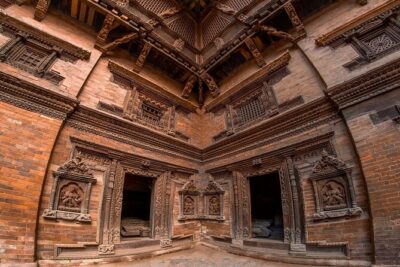
This is an important opening because it sets the tone for the rest of the walk. A courtyard in Patan is not simply an attractive open space. It can connect houses, shrines, monasteries, water sources, and community activity. The guide uses these spaces to explain how older settlements worked as social and religious units.
Pimbahal is also home to a Newar Buddhist monastery said to date back many centuries. You receive time to look at the setting and understand its place in the neighborhood. Admission is included because the walk does not charge separate entry fees at these stops.
The strongest part of this section is the attention to local practice. You learn how traditional settlement patterns embody ideas about community and worship. That makes Pimbahal more rewarding than a quick photograph from a passing vehicle.
Keep your expectations sensible. This is a walking discussion in an active old neighborhood, not a formal museum visit with displays and labels. You may find the courtyard quiet and reflective, but the guide’s explanation is what gives the stop its meaning.
Nyakhachowk: old houses, resting shelters, and quiet shrines
From Pimbahal, the route follows a smaller path toward Nyakhachowk. This stretch is one of the reasons to choose the tour, since it focuses on details that are easy to miss when you are aiming only for the major monuments.
Look for falchaa, traditional resting areas, along with ancestral shrines and vernacular houses. These features help explain how people used the town in practical ways. A resting shelter is not as imposing as a temple, but it tells you about movement, public life, and the habits of residents.
The group then enters another courtyard, where one of the area’s important Buddhist monasteries is located. The information provided does not give the monastery’s name, so you should not expect a named attraction to appear clearly on every map or sign. The guide’s explanation is likely to be especially useful here.
The planned time at Nyakhachowk is about 30 minutes. That is enough for a focused look and conversation, though not enough for a long architectural study. If you enjoy asking questions, this is a good place to do it. The walk is designed for people curious about Nepali society, not only for those collecting landmark photographs.
Sandip is praised for explaining local traditions in an easygoing way and for using humor without losing the cultural point. That balance matters in a subject that includes complex religious ideas. You can ask for clarification without feeling that you are interrupting a lecture.
Nag Bahal: trade, art, and outside influence
Nag Bahal is one of the largest courtyards in old Patan. The visit lasts about 15 minutes, but the subject reaches far beyond the clock.
Here the guide discusses how contact with the wider world shaped traditional art. The route specifically points to Greek influence and Hellenistic impressions in Buddhist and Hindu iconography. That is a useful reminder that Himalayan art did not develop in isolation. Ideas, forms, and artistic styles traveled across long distances and were adapted to local religious settings.
You should pay close attention to the small details the guide identifies. Without context, an unfamiliar figure or decorative form may look like one more piece of carved or cast ornament. With explanation, it becomes evidence of exchange between cultures and changing artistic ideas.
The short time at Nag Bahal is both a strength and a limitation. It keeps the tour moving and leaves room for several neighborhoods, but anyone fascinated by religious art may want longer. You can ask the guide for recommendations if you want to continue studying Patan’s metalwork and iconography after the walk.
The stop also reinforces one of the tour’s central ideas: old Patan is not frozen in the past. Its traditions have always changed through contact, adaptation, and new ways of thinking.
A few more trips worth weighing up before you book
- Everest Base Camp Trek – 14 Days
★ 5.0 · 1,499 reviews - Private Kathmandu Sightseeing Tour | UNESCO World Heritage sites
★ 5.0 · 756 reviews - Everest Base Camp Helicopter Tour landing at Everest View Hotel
★ 5.0 · 668 reviews - Half day cooking class in Thamel kathmandu
★ 5.0 · 607 reviews
Swotha Square: finish with tea shops and a simple next step
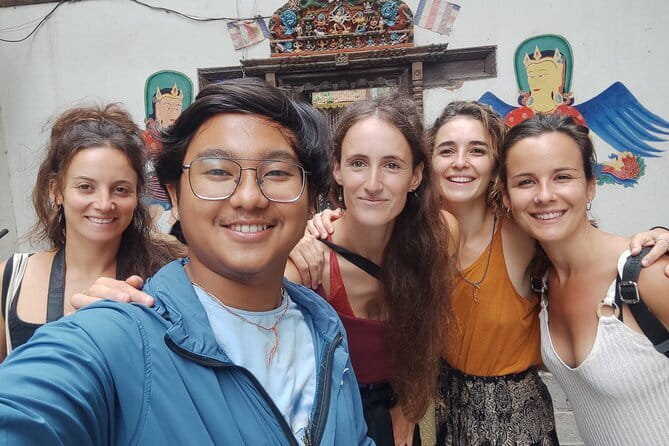
The walk ends at Swotha Square, a pleasant closing point with temples, shrines, and tea shops. After the tight lanes and enclosed courtyards, a square gives you room to pause and take stock of what you have seen.
This is not just a drop-off point. It lets the tour end in a place where you can sit, have tea, and continue looking around at your own pace. It also makes the logistics easy. Swotha Square is only a couple of minutes from Patan Durbar Square.
If you want the major monuments, go there after the walk. The palace complex requires its own ticket, and the museum inside is specifically worth your time. Since this tour does not include the square, you should budget for that additional admission and allow enough time after the 10 a.m. walk.
I see the separation as a sensible choice. You can first understand the surrounding town with a guide, then visit the formal royal center independently. The drawback is that a visitor expecting one complete Patan sightseeing ticket may feel the $65 price does not cover enough. Read the tour as a cultural neighborhood walk, not as an all-inclusive Patan package.
The monastery visit and the religious focus
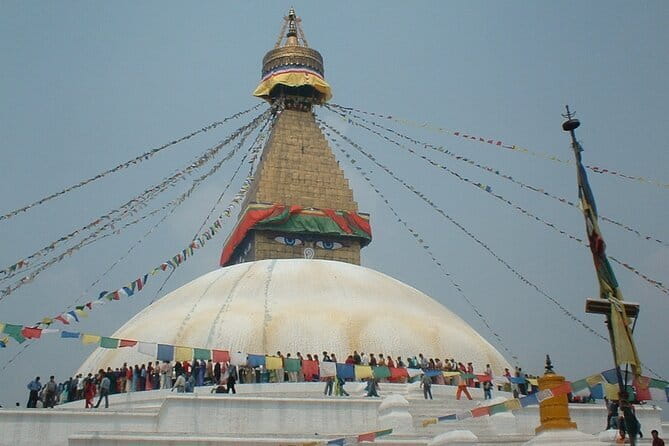
Another part of the route highlights one of the most respected and decorated Buddhist monasteries in the Patan area. The information supplied describes a monastic order with more than 4,000 ordained monks connected to it.
That figure gives you a sense of scale, but the tour’s real strength is not a statistic. It is the chance to see how Newar Buddhism fits into the city around it. The walk also discusses Tantric Hinduism, allowing you to compare and connect two faith traditions that have shaped life in the Kathmandu Valley.
You do not need specialist religious knowledge to follow the tour. The guide’s role is to explain how beliefs influence shrines, festivals, architecture, art, and ordinary routines. Sandip is repeatedly praised for handling these subjects with clarity and humor, while remaining attentive to the people in his group.
The route is especially useful if you want more than a list of temple names. It gives you questions to carry into the rest of Nepal: who maintains a shrine, how do communities share sacred space, and how do young people balance inherited customs with modern values?
How the walk handles modern Patan
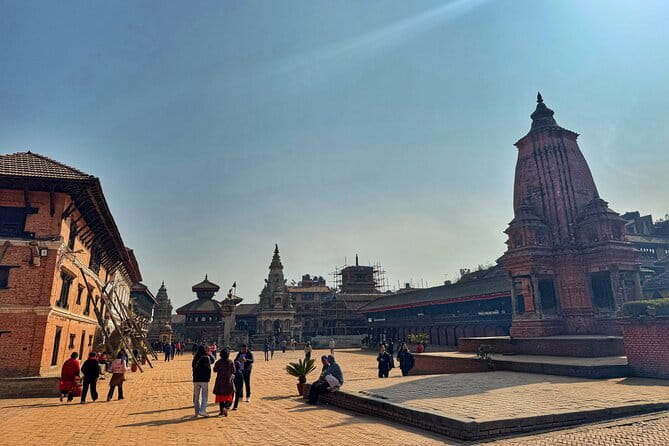
The tour is not only about ancient buildings. Its stated purpose is to connect past traditions with the ambitions of the future. That means you should expect some discussion of young Nepalis and the way modern values sit alongside cultural norms.
This angle gives the experience a welcome sense of balance. Patan is not presented as a preserved set piece where daily life stopped centuries ago. You are encouraged to see an old town that continues to change while retaining religious and social habits.
The guide also points out artifacts and small details that can be easy to overlook. One piece of feedback specifically praises the tour for making sense of tiny objects found in the old town, though the full detail is not available. That suggests the walk rewards curiosity and close looking.
I would choose this experience early in a Kathmandu Valley visit if you want cultural context before visiting more major monuments. I would also choose it after a palace tour if you found the formal sites beautiful but a little disconnected from ordinary life.
$65 value, group size, and practical details

The cost is $65 for roughly two to two-and-a-half hours. Since an experienced local guide is included and the group is capped at 10, the price can be fair for people who want personal explanation rather than a large group moving from monument to monument.
The value depends on your interests. If you mainly want entrance tickets and famous temples, this may feel expensive because Patan Durbar Square is excluded and must be paid for separately. If you want access to less obvious courtyards and a clear explanation of local religion and folklore, the guide is the main product, and the price is easier to justify.
The meeting time is 10 a.m. at Patan Dhoka, Patandhoka Road, Lalitpur 44600. The tour ends at Swotha Square, listed at map location M8FG+W63, Lalitpur 44600. A mobile ticket is provided, and pickup and drop-off are not included.
You should wear comfortable shoes and be ready for narrow streets, courtyards, and steady walking. The experience requires good weather. If poor weather causes cancellation, you are offered another date or a full refund.
Most people can participate, and service animals are allowed. The location is near public transportation, which is useful because you arrange your own way to the starting point and onward journey.
Free cancellation is available up to 24 hours before the start time. Changes or cancellations made less than 24 hours ahead are not refunded, so keep the local cut-off time in mind.
Who will get the most from this Patan walk
I would recommend it to you if you enjoy asking why a place looks and works the way it does. It suits curious first-time visitors, repeat visitors who have already seen the main square, and anyone interested in Newar culture, Buddhism, Hinduism, urban design, or local folklore.
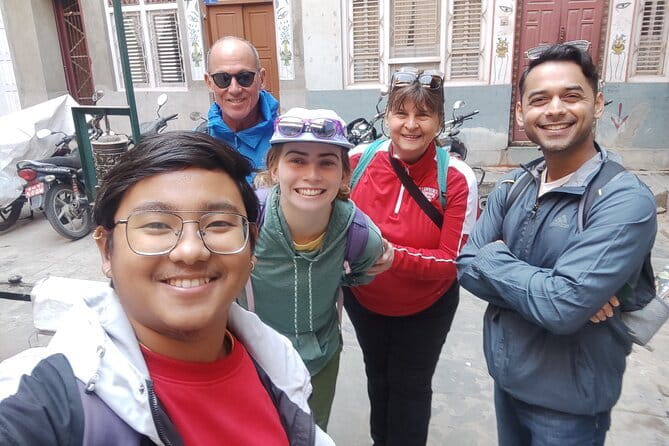
It also suits people who prefer a small group. A maximum of 10 is far better than a large crowd when the route passes through tight lanes and modest courtyards. Sandip’s light humor and attentive style should appeal if you want serious information delivered in a relaxed way.
You may want to skip it if your time in Patan is very limited and you have not yet seen Durbar Square. In that case, visit the palace complex first, then decide if you have another two hours for the surrounding old town.
You should also look elsewhere if your priority is a long, technical study of architecture or a tour built around entrance tickets. This experience is about cultural interpretation and everyday settings, with no main-square admission included.
Should you book Folklore and Everyday Life in Ancient Patan?
Book it if you want Patan to feel like a community rather than a collection of monuments. The strongest reasons are the courtyard route, the discussion of Newar Buddhist and Tantric Hindu practice, the examples of artistic exchange, and the chance to see old-town spaces that are easy to pass without noticing.
The best plan is to schedule it at 10 a.m., then continue to Patan Durbar Square and its museum from Swotha Square. That gives you both sides of Patan: the working old town first, and the grand royal center afterward.
At $65, it is not the cheapest way to see Patan. But for a group of no more than 10 and a guide such as Sandip, who brings humor, patience, and strong cultural knowledge to the walk, it offers a useful perspective that a self-guided visit may not provide.
FAQ
Where does the tour begin?
It begins at Patan Dhoka on Patandhoka Road in Lalitpur, Nepal.
What time does the tour start?
The scheduled start time is 10 a.m.
Where does the tour end?
The walk ends at Swotha Square, at map location M8FG+W63 in Lalitpur. It is a couple of minutes from Patan Durbar Square.
Is Patan Durbar Square included?
No. Patan Durbar Square is not included, and independent admission requires an additional ticket.
How long does the experience last?
The tour lasts approximately two hours to two hours and 30 minutes.
How large is the group?
The maximum group size is 10 people.
What is included in the price?
An experienced local guide is included. Pickup, drop-off, and admission to Patan Durbar Square are not included.
Can I cancel for a full refund?
Yes. You can cancel at least 24 hours before the experience start time for a full refund. Cancellations or changes made less than 24 hours ahead are not refunded.
Just added around Kathmandu
- Private Shopping Tour in Kathmandu★ 5.0 · 3 reviews
- Nagarkot Sunrise With 7 UNESCO World Heritage Private Tour★ 5.0 · 3 reviews
- Kathmandu: Nightlife and Pub Crawl Tour★ 5.0 · 3 reviews
- Mount Everest Scenic Flight 50 Minutes★ 5.0 · 3 reviews
- Kathmandu: Nagarkot, Bhaktapur, Doleswor & Sanga Statue Tour★ 5.0 · 3 reviews
- Momo Cooking Class -The Art Of Making MoMo with Home Chef★ 5.0 · 3 reviews
- Makalu Base Camp Trek★ 5.0 · 3 reviews
- Everest Experience Trek 6 Day Hiking Adventure★ 5.0 · 3 reviews
Patan Tours, compared.
Kathmandu and Patan Heritage and Living Goddess Experience Tour
Read our review →
Patan & Bhaktapur Durbar Square Tour with Lunch – Private/Group
Read our review →
Nagarkot Sunrise, Bhaktapur and Patan Durbar Square Tour in Kathmandu
Read our review →Browse the lists this tour appears in