
Reviewed · EVEREST BASE CAMP TREKS
Everest Base Camp Trek – 14 Days
The world’s great walk starts with a small plane. Ace the Himalaya’s 14-day Everest Base Camp trek combines the famous trail, careful acclimatization, porters, domestic flights, and a small group capped at 14 people. I like the built-in rest days at Namche Bazaar and Dingboche, and I like that a first-aid-trained guide, filtered trail water, permits, meals, and staff support are bundled into the $1,800 price.
The main consideration is the physical demand. You will walk at high altitude for long days, reach 5,365 meters at Base Camp, and climb Kala Patthar to 5,555 meters. Flights to Lukla can also shift to Manthali Airport during busy seasons, adding an early road transfer from Kathmandu.
In This Review
- Key points before you book
- What the $1,800 price really covers
- Day 1: A soft landing in Kathmandu
- Day 2: Flying into Lukla
- Day 3: Suspension bridges and Namche Bazaar
- Day 4: Acclimatization around Namche
- Day 5: Tengboche Gompa at 3,860 meters
- Days 6 and 7: Dingboche and the Nangkartshang climb
- Day 8: The Khumbu Glacier and climbers’ memorials
- Day 9: Reaching Everest Base Camp at 5,365 meters
- Day 10: Kala Patthar at 5,555 meters
- Days 11 and 12: Retracing the route to Lukla
- Days 13 and 14: Back to Kathmandu and home
- Guides, porters, and group size
- Fitness, equipment, and safety
- Who should book this trek?
- Should you book the Everest Base Camp trek?
- FAQ
- Where does the Everest Base Camp trek begin and end?
- How long is the Everest Base Camp trek?
- What is the highest point reached on the trek?
- Are domestic flights included?
- Are meals included?
- Is porter service included?
- Is travel insurance included?
Key points before you book
- Two acclimatization days: Namche Bazaar and Dingboche provide essential pauses before the trail climbs higher.
- A 14-person maximum: The group is small enough for personal attention without requiring a private departure.
- Lukla flights included: The Kathmandu to Lukla flight sector, airport tax, and return flight are part of the package, though seasonal airport changes can affect the schedule.
- Porters carry the main load: One porter serves two people for 11 days, while your domestic flight baggage allowance is 15 kilograms.
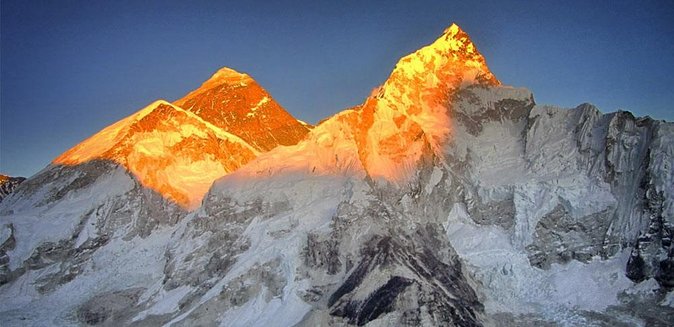
- The best mountain views come from Kala Patthar: Base Camp is the goal, but the 5,555-meter viewpoint usually offers the more rewarding mountain outlook.
- Strong guide and porter support: Guides including Kishor, Chris, Maddy, and Rajendra Khatry have been praised for safety, organization, good humor, and personal care.
What the $1,800 price really covers
At first glance, $1,800 is a serious price for a two-week trip. Once you add the domestic flights, permits, guide, porters, meals, staff insurance, trail accommodation, airport transfers, and Kathmandu hotels, the package becomes easier to justify.
You receive two nights in a three-star, twin-share hotel in Kathmandu with breakfast. On the trail, accommodation is in twin-share guesthouses. Attached toilets are specifically included in Lukla, Phakding, and Namche, while the plan does not promise that same arrangement at every stop.
Your guide is government licensed, English speaking, and trained in first aid. Staff wages, food, accommodation, insurance, equipment, and medicine are covered. That matters in a remote mountain region, where handling a problem is far more useful than simply having someone point out the path.
The package also includes an Ace the Himalaya duffel, trekking map, sun hat, and completion certificate. Filtered water is provided using a Katadyn Pocket Water Filter, and seasonal fruit is included during the trek.
You still need to budget for lunch and dinner in Kathmandu, drinks, personal equipment, tips, a Nepal visa, international flights, and travel insurance. The insurance must cover emergency high-altitude rescue and evacuation. That is not an optional extra in practical terms.
Tipping is expected for guides and porters. The exact amount is not provided, so ask Ace the Himalaya for current guidance before departure. Also note the single supplement: the advertised price can apply to one person, but a $250 surcharge may apply if no group or accommodation partner is available, or if you request a private departure.
More Everest Base Camp Treks:
- Everest Base Camp Trekking
★ 5.0 · 485 reviews - Everest Base Camp Trekking – 13 Day
★ 5.0 · 365 reviews - Everest Base Camp Trek -14 Days
★ 5.0 · 321 reviews
Day 1: A soft landing in Kathmandu
Your airport representative meets you outside Tribhuvan International Airport with an Ace the Himalaya signboard. A private tourist vehicle takes you to your hotel, with the transfer included.
This first day is simple, and that is a good thing. You have time to settle in, recover from the international flight, and get ready for a trek that becomes demanding very quickly. The airport transfer also removes one small nuisance at the start, especially if Kathmandu is unfamiliar to you.
Day 2: Flying into Lukla
The trek begins with the flight to Tenzing-Hillary Airport in Lukla. The flight itself is short, listed at about 30 minutes, but it delivers a dramatic change from city streets to steep mountain valleys.
There is an important seasonal note. During the busiest trekking months, March through May and October through November, flights may operate from Manthali Airport in Ramechhap rather than Kathmandu because of airport congestion. That means an early transfer by road from Kathmandu may be required.
This is worth confirming before you arrive. The flight is included, but the exact departure airport and timing can affect your first morning. Once in Lukla, the trail begins toward the lower Khumbu villages, with the day including accommodation and meals under the trekking package.
Day 3: Suspension bridges and Namche Bazaar
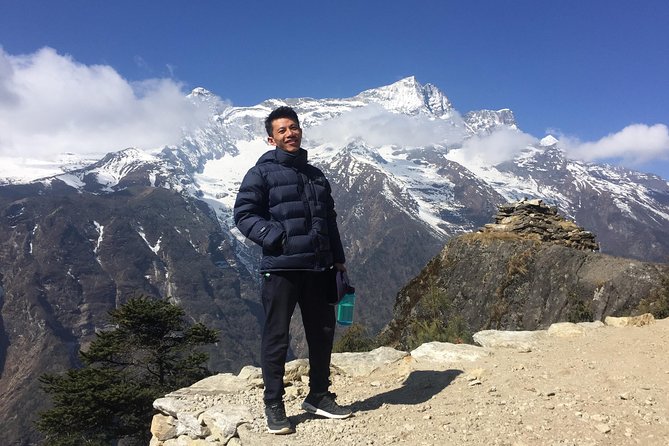
The route follows the Dudh Koshi River and crosses it several times on suspension bridges decorated with prayer flags. The trail then enters Sagarmatha National Park and climbs toward Namche Bazaar.
Namche is the main trading town of the Khumbu region and an important point in the trek. The itinerary lists a long trekking day, so you should expect the walk to require steady effort rather than a casual afternoon stroll.
Namche is also where the carefully planned pacing starts to pay off. You are gaining altitude, but the schedule does not rush you straight upward. A guide can watch how you are adjusting and help you take the next steps at a sensible pace.
More Treks and Hikes:
- Nagarkot Sunrise View and Day Hiking from Kathmandu
★ 5.0 · 471 reviews - Annapurna Circuit Trek with Tilicho Lake
★ 5.0 · 368 reviews - Annapurna base camp trek 5 Days
★ 5.0 · 252 reviews - Everest Base Camp Trekking – 2025/2026
★ 5.0 · 199 reviews
Day 4: Acclimatization around Namche
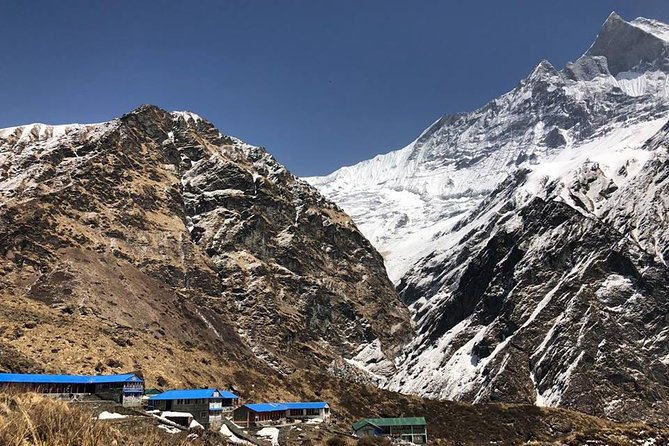
The group spends a full day in Namche to adjust to thinner air. You take a shorter walk to the Sherpa Museum, which presents traditional Sherpa customs and local culture.
I like this pause because it gives the itinerary more purpose than simply racing toward the highest point. High-altitude trekking is not only about strong legs. Your body needs time to adapt, and a rest day can make the later stages safer and more manageable.
The Sherpa Museum also adds context to the villages and monasteries you pass. The trek is not just a march toward a famous photograph. It moves through communities shaped by Buddhism, trade, mountaineering, and life in a demanding mountain region.
Day 5: Tengboche Gompa at 3,860 meters
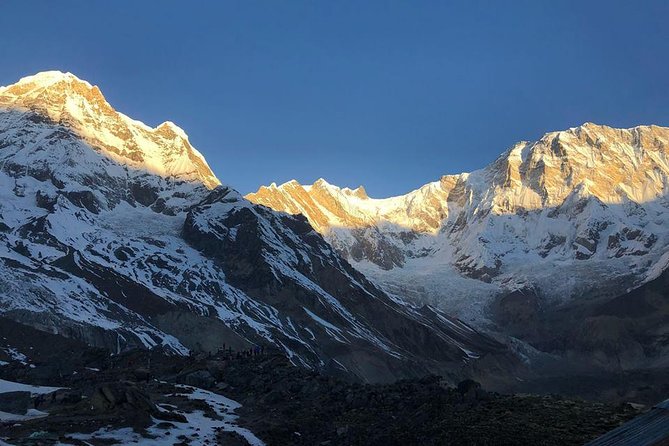
The trail continues beside the Dudh Koshi, with mountain views opening along the route. You reach Tengboche at 3,860 meters, home to Tengboche Gompa.
The monastery is one of the cultural highlights of the route. Inside, you see religious features and Buddhist art, while outside, the setting gives the stop much of its power. The itinerary describes another long day, so the monastery visit comes as part of a serious walking schedule.
You should also expect the scenery and altitude to compete for your attention. The views may make you want to stop constantly, but the group still needs to reach its accommodation. A good guide helps balance photography, rest, and progress.
Days 6 and 7: Dingboche and the Nangkartshang climb
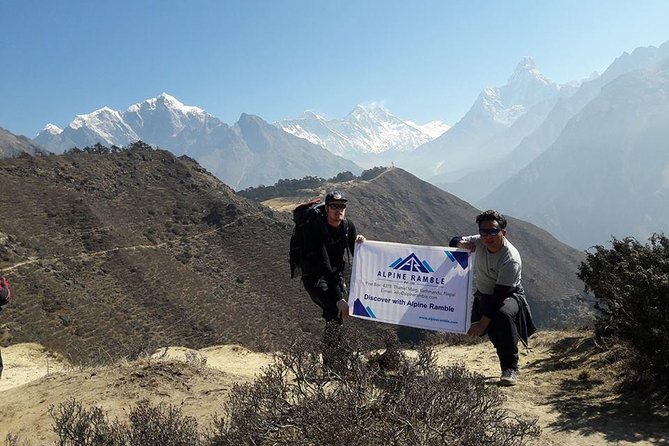
From Tengboche, the path drops to Debuche, crosses the Imja Khola, and climbs toward Pangboche. Mani stones line parts of the route, adding a clear reminder of the area’s Buddhist traditions.
The trail continues upward to Dingboche, where the altitude becomes a more serious factor. The next day is reserved for acclimatization rather than distance. You hike toward Nangkartshang Peak above Dingboche, a viewpoint with broad mountain views.
This is another strong part of the plan. The schedule gives you a chance to climb high during the day and return to Dingboche rather than sleeping at the higher point. The itinerary does not provide the exact hiking distance or duration for Nangkartshang, so ask for that detail if you want to prepare precisely.
The trek remains physically demanding, even on an acclimatization day. Do not mistake a rest day for a day without effort. You are still walking uphill at altitude.
Day 8: The Khumbu Glacier and climbers’ memorials
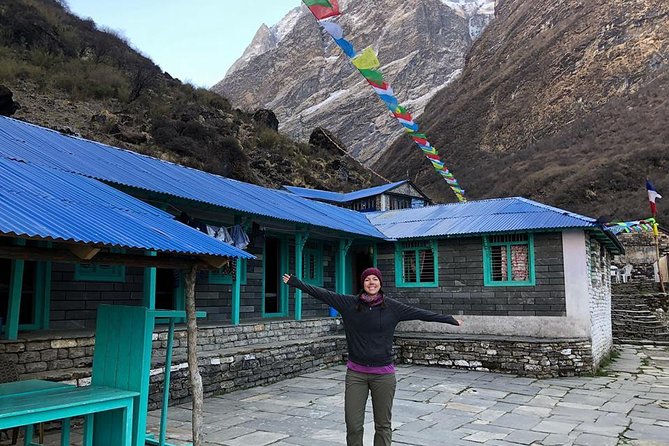
From Dingboche, the route continues toward Lobuche along the lateral moraine of the Khumbu Glacier. You pass stone memorials honoring climbers who died on nearby peaks.
This is one of the trek’s more sobering moments. The memorials add meaning to the goal ahead, but they also make clear that the mountains are not a theme park backdrop. The route demands respect, patience, and attention to your health.
Lobuche is one of the final major stops before Base Camp. The day is listed as another long trek, and by now the repeated uphill and downhill walking will have accumulated. This is where your packing choices, footwear, pacing, and willingness to rest begin to matter.
Day 9: Reaching Everest Base Camp at 5,365 meters
This is the day many people picture when they book the trek. You walk along the Khumbu Glacier and continue to Everest Base Camp, at 5,365 meters above sea level.
The approach is difficult. The high altitude changes the character of the walk, and the glacier route is not a simple level path. The itinerary describes this as a big day, with a listed Base Camp stop of about 30 minutes.
That half-hour can feel short after so much effort, but it reflects the practical nature of the trek. You need time for photographs and the achievement itself, while also conserving energy at a very high elevation. During spring, there may be expedition activity at Base Camp, which can add interest and movement to the scene.
Keep your expectations realistic. Everest Base Camp is not necessarily the best place for a clear view of Mount Everest itself. The next morning’s climb to Kala Patthar is designed to provide the stronger mountain outlook.
Day 10: Kala Patthar at 5,555 meters
The climb to Kala Patthar is described as one of the hardest and most rewarding days. The ascent reaches 5,555 meters, higher than Base Camp, and the viewpoint is prized for its mountain views.
This is the day when stamina matters most. You are climbing again after the Base Camp walk, and every step takes place in thin air. The itinerary lists the Kala Patthar stop at about 30 minutes, but the effort is much larger than the time spent at the top.
I would treat this as the trek’s visual high point. Base Camp gives you the satisfaction of reaching the famous destination. Kala Patthar gives you the setting that many people most want to see, including the surrounding Everest region. If weather limits visibility, the physical achievement still remains, but the views can never be guaranteed.
Days 11 and 12: Retracing the route to Lukla
The return begins with a long descent through Pangboche and Tengboche to Namche Bazaar. Downhill walking sounds easy, but tired knees and accumulated fatigue can make it surprisingly demanding.
The following day continues to Lukla, the starting point of the trek. The itinerary allows time to reflect as a group on the achievement. This is a useful closing rhythm: you move from the highest section back to a town with more services, rather than ending the walking days abruptly.
The return route also lets you see familiar places from a different angle. You may notice details missed on the way up because your attention was focused on altitude, breathing, and the next village.
Days 13 and 14: Back to Kathmandu and home
The flight from the Everest region to Kathmandu takes about 35 minutes. On arrival, a representative meets you and provides the transfer back to your hotel.
Your last night in Kathmandu gives you a buffer before departure, though flight schedules in mountain regions can change. The final day includes a private transfer to Tribhuvan International Airport.
The activity ends where it began, at the Kathmandu airport. Airport and hotel transfers are included, which keeps the final logistics straightforward.
Guides, porters, and group size
The maximum group size is 14 people, and the experience is sold as an intimate small-group trek. That is a useful middle ground. You get shared costs and company on the trail without joining a huge procession.
The porter arrangement is one porter for every two people, for 11 days. You are not expected to carry your full duffel up the mountain, but you still need a daypack with personal essentials. The domestic flight luggage allowance is 15 kilograms, so pack with care.
The guide team is a major part of the value. Specific guides praised for their service include Kishor, Chris, Maddy, and Rajendra Khatry. Maddy is repeatedly associated with friendly support, while Kishor is praised for his care and local information. Rajendra is noted for professionalism, safety focus, and personal attention.
Porters named Saman and Sher also received warm praise for their humor and care. Those details matter because the staff are not background logistics. They shape how safe, supported, and enjoyable you feel during difficult days.
Fitness, equipment, and safety
The company asks for moderate physical fitness, but that phrase should not be read too casually. The trek includes repeated long days, suspension bridges, steep climbs, high altitude, and a 5,555-meter summit walk.
The guide carries a comprehensive first-aid kit, and emergency medical evacuation arrangements are included for the worst-case scenario. That does not replace your own travel insurance. You need coverage for high-altitude rescue and evacuation before setting out.
Personal trekking equipment is not included. The supplied information does not list a required gear sheet, so request the current packing list before booking or arriving in Nepal. The 15-kilogram flight limit makes that request especially useful.
Who should book this trek?
I would recommend this trip to you if you want the classic Everest Base Camp route but do not want to arrange every permit, flight, meal, porter, and overnight stop yourself. It suits fit hikers who can handle long days and who value a planned pace with two acclimatization days.
It also suits solo bookers who want the social safety of a group. You can book alone, but the $250 single surcharge may apply if no group or room-sharing partner is available, or if you want a private departure.
This is not the best choice if you need flexible daily distances, private rooms throughout, or a relaxed walking holiday. The trip has a fixed 14-day structure, and the highest days are genuinely strenuous.
The experience has a 5 rating from 1,499 reviews and a 100 percent recommendation rate. Names such as Maddy, Kishor, Chris, and Rajendra Khatry are worth requesting when you contact the company, although guide assignments cannot be promised here.
Should you book the Everest Base Camp trek?
Book it if you want a well-supported classic route and understand that the reward comes with real exertion. The price is fair for the domestic flights, porters, permits, meals, staff support, Kathmandu transfers, and acclimatization plan.
Before paying, confirm the Lukla flight arrangements for your month, the Kathmandu to Manthali transfer if applicable, the current gear list, tipping guidance, and the conditions for the single surcharge. You should also buy high-altitude evacuation insurance and prepare for the 15-kilogram baggage limit.
I would choose this trek for structure, safety support, and the chance to focus on walking instead of paperwork. I would skip it only if you are not ready for long high-altitude days or if the fixed schedule leaves too little room for your style of travel.
FAQ
Where does the Everest Base Camp trek begin and end?
The trek begins with pickup at Tribhuvan International Airport in Kathmandu. It ends with a drop-off at the same airport on Day 14.
How long is the Everest Base Camp trek?
The trip lasts approximately 14 days, including airport transfers, Kathmandu accommodation, domestic flights, trekking, acclimatization days, and the return to Kathmandu.
What is the highest point reached on the trek?
The itinerary reaches 5,555 meters at Kala Patthar. Everest Base Camp is listed at 5,365 meters.
Are domestic flights included?
Yes. The Kathmandu to Lukla and Lukla to Kathmandu flights are included, along with the airport departure tax for that flight sector. During peak seasons, flights may operate from Manthali Airport instead of Kathmandu.
Are meals included?
Breakfast, lunch, and dinner are included during the trek. Breakfast is included in Kathmandu, but lunch and dinner in Kathmandu are not included. Alcoholic and other hot or cold drinks are also excluded.
Is porter service included?
Yes. Porter service is included for 11 days, with one porter assigned for every two people. The domestic flight luggage allowance is 15 kilograms.
Is travel insurance included?
No. You must arrange your own travel insurance, including coverage for emergency high-altitude rescue and evacuation.
Just added around Kathmandu
- Private Shopping Tour in Kathmandu★ 5.0 · 3 reviews
- Nagarkot Sunrise With 7 UNESCO World Heritage Private Tour★ 5.0 · 3 reviews
- Kathmandu: Nightlife and Pub Crawl Tour★ 5.0 · 3 reviews
- Mount Everest Scenic Flight 50 Minutes★ 5.0 · 3 reviews
- Kathmandu: Nagarkot, Bhaktapur, Doleswor & Sanga Statue Tour★ 5.0 · 3 reviews
- Momo Cooking Class -The Art Of Making MoMo with Home Chef★ 5.0 · 3 reviews
- Makalu Base Camp Trek★ 5.0 · 3 reviews
- Everest Experience Trek 6 Day Hiking Adventure★ 5.0 · 3 reviews
Everest Base Camp Treks, compared.






Everest Base Camp Trek with Helicopter Return from Gorakshep to Lukla
Read our review →Browse the lists this tour appears in