
Reviewed · KATHMANDU UNESCO HERITAGE TOURS
Private Kathmandu Sightseeing Tour | UNESCO World Heritage sites
Kathmandu rewards curious eyes. This private sightseeing tour brings you to major Hindu and Buddhist landmarks, including Pashupatinath Temple and Boudhanath Stupa, while a local guide explains the customs, symbols, and stories that can be easy to miss on your own. I like the hotel pickup and drop-off, and I like having a private vehicle so you can adjust the pace.
The other strong point is choice. You can select two, four, or seven UNESCO sites, making the day easier to match to your time and energy. The main drawback is traffic. The seven-site option can become a long day with plenty of time in the car, and entrance fees are extra.
The experience costs about $17 per person, though monument tickets, food, drinks, and tips are not included. That is a low price for a private guide and car, but the final cost depends on the number of sites you choose and the entry fees charged at each monument.
In This Review
- Key points to know before booking
- Why this tour works well as a first day in Kathmandu
- Swayambhunath, the hilltop Monkey Temple
- Boudhanath Stupa and the rhythm of prayer
- Pashupatinath and the serious side of Kathmandu
- Patan Durbar Square and the Patan Museum
- Bhaktapur Durbar Square, the longest stop
- Changu Narayan, a smaller but worthwhile addition
- Kathmandu Durbar Square and the capital’s old center
- Choosing two, four, or seven sites
- Guides, drivers, and the private touring advantage
- Is $17 good value?
- Who should book this Kathmandu tour?
- FAQ
- What sites can this private Kathmandu tour include?
- How long does the tour last?
- Is hotel pickup included?
- Are entrance fees included in the price?
- Can I enter the inside of Pashupatinath Temple?
- Can I take a lunch break during the tour?
- Should you book it?
Key points to know before booking
- Seven major heritage sites are available: The fullest option can include Swayambhunath, Boudhanath, Pashupatinath, Patan Durbar Square, Bhaktapur Durbar Square, Changu Narayan, and Kathmandu Durbar Square.
- The four-site option may be the best balance: You get a solid introduction to Kathmandu without spending the whole day moving between monuments.
- Guides are a major strength: Guides such as Dipesh, Deepak, Bidhya, Shankar, Prasant, Mukesh, Kabin, and Razz are praised for clear explanations and flexible service.
- Hotel pickup removes a real hassle: Pickup and return are included for hotels in central Kathmandu, with extra charges possible outside the city center.
- Expect extra entrance costs: Published figures are NPR 1,400 for two sites, NPR 2,600 for four, and approximately NPR 5,800 to NPR 6,000 for seven sites.
- Temple access has religious restrictions: Only Nepali and Indian nationals of the Hindu faith may enter the inner premises of Hindu temples during the tour.
Why this tour works well as a first day in Kathmandu
Kathmandu is not a city you understand from a quick drive past its sights. A carved window, a small shrine, a prayer wheel, or a cremation ritual can carry centuries of meaning. Without context, the city may look like a wonderful but confusing collection of courtyards and temples.
A private guide helps put those pieces together. Guides explain the principles of Hinduism and Buddhism, the purpose of rituals, the background of Nepal’s monuments, and aspects of daily life in Kathmandu. Several guides are also praised for answering questions about subjects as varied as the Nepalese flag, local society, and the country’s mountain peaks.
I especially like this format for your first full day in the capital. You get a useful sense of where Kathmandu, Patan, Bhaktapur, Boudha, and the main religious centers fit within the Kathmandu Valley. It is not a slow, specialist study tour. It is a broad introduction that helps you decide what deserves a second visit.
The private setup also matters. You are not tied to the interests or walking speed of a large group. Guides have adjusted start times, shortened the day when requested, added shopping time, and arranged extra stops connected to a person’s interests. One guide even found a monastery visit for a visitor who had a particular interest in monasteries.
More City Tours in Kathmandu
- Kathmandu: Private City Guided Tour
★ 4.9 · 174 reviews - Kathmandu Private Sightseeing Tour | UNESCO World Heritage Sites
★ 5.0 · 109 reviews - Kathmandu: Private Patan and Bhaktapur Sightseeing Tour
★ 4.7 · 64 reviews
Swayambhunath, the hilltop Monkey Temple
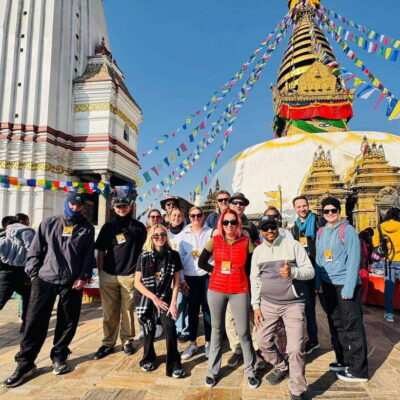
Swayambhunath is often called the Monkey Temple, and it is one of the most memorable stops in the city. The stupa sits close to Kathmandu and offers a strong introduction to Nepalese Buddhist symbols and worship.
The planned visit can be brief, around 30 minutes in one version of the route, or closer to an hour in another. That difference matters. If you want time to look at the stupa, observe devotees, and hear the guide explain the site, make sure your chosen package allows enough time.
The attraction is not only the monument itself. Swayambhunath gives you a sense of how religion is woven into ordinary city life. You might see prayer activity, offerings, or people making their way around the stupa. Ask your guide about what you are seeing rather than treating the site as a photo stop.
Admission is not included in the tour price. The information provided also lists admission as free for one Swayambhu stop, so confirm which entrance fee applies to your selected option.
Boudhanath Stupa and the rhythm of prayer
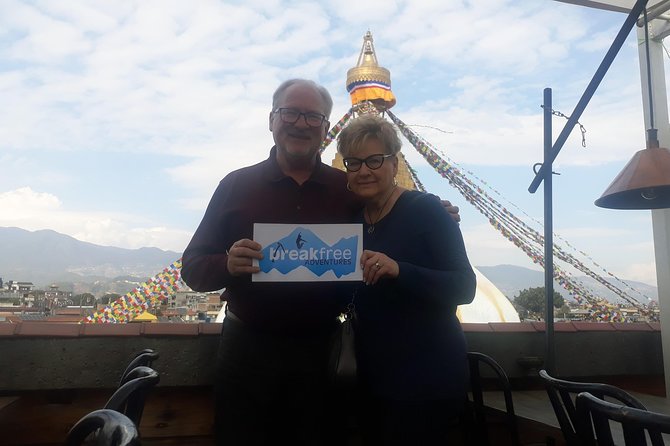
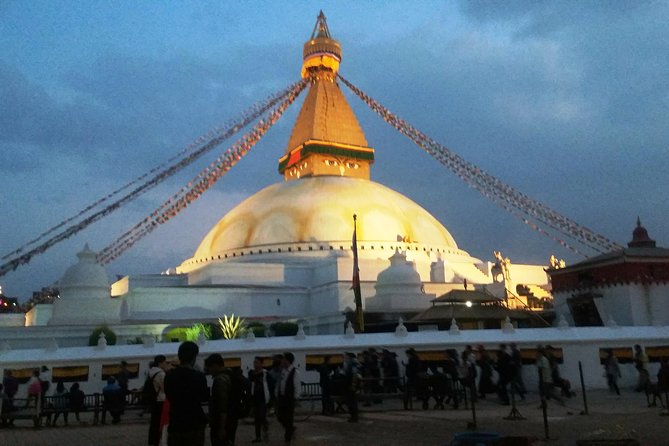
Boudhanath is one of the tour’s essential stops. Its large white dome and watchful Buddha eyes create a calm center within Kathmandu’s busy urban setting. The suggested visit lasts about an hour, which gives you time to walk around the stupa and listen to an explanation of Buddhist practice.
This is a good place to slow down. Walk clockwise around the stupa, notice the prayer wheels, and watch how local worshippers use the space. Your guide can explain the meaning behind the design instead of leaving you with only a striking photograph.
One particularly practical touch is the possibility of taking a lunch break nearby. A guide may suggest restaurants, and one tour ended with lunch at a rooftop café overlooking Boudhanath. Food is not included, so you pay separately, but this can turn a necessary meal into part of the sightseeing.
Boudhanath can also be attractive later in the day. One visitor specifically recommended seeing the stupa in the evening. If your timing is flexible, ask if the route can place Boudhanath toward the end, though traffic and the selected package will affect what is possible.
Pashupatinath and the serious side of Kathmandu
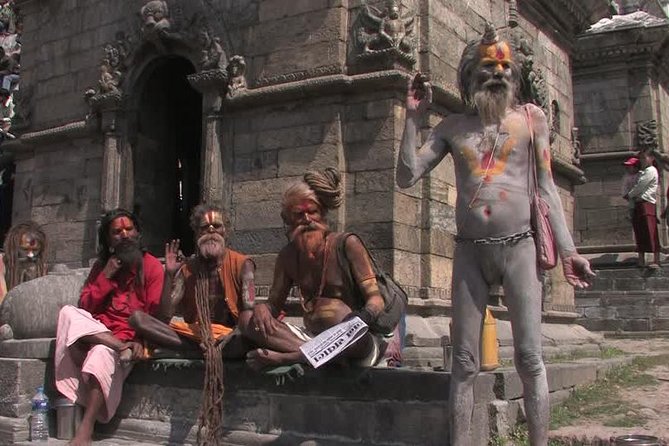
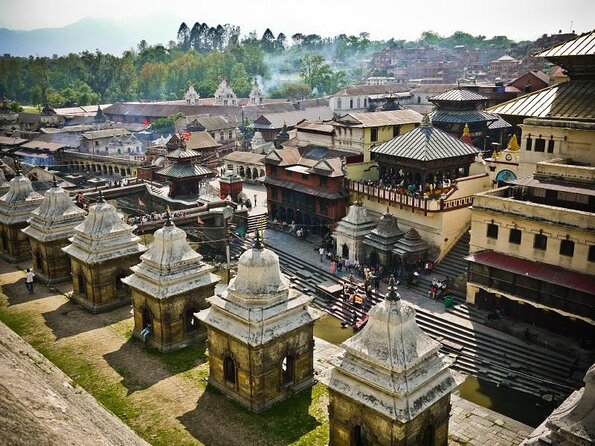
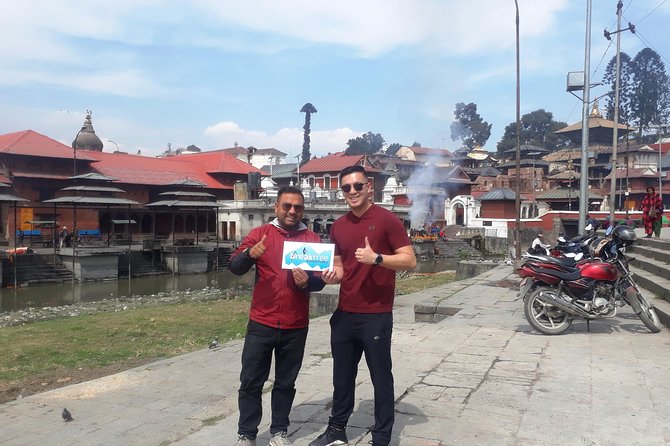
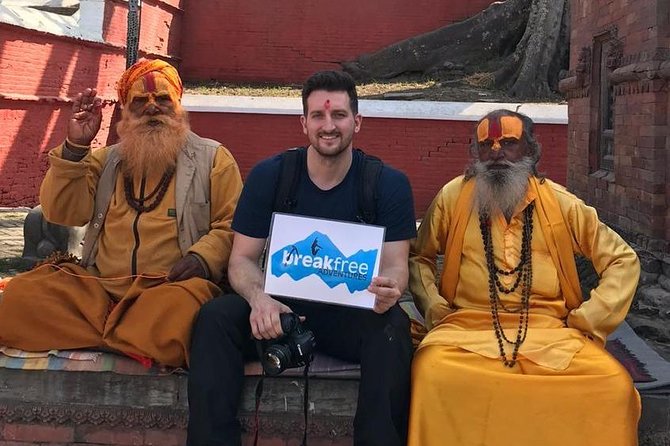
Pashupatinath is Nepal’s most important Hindu temple complex and one of the places where the spiritual life of the city feels most immediate. The visit is usually scheduled for about an hour, although the route information lists this stop more than once, depending on the package or timing.
This is not a simple sightseeing stop. The complex is connected with worship, cremation, and Hindu religious practice. One guide patiently waited while a visitor observed a Hindu cremation ceremony. That kind of moment requires respect, quiet attention, and careful listening to local guidance.
There is an important access rule. Only Nepali and Indian nationals of the Hindu faith may enter the inner premises of Hindu temples during the tour. Other visitors can still view significant parts of the complex, but you should not expect unrestricted access to every temple interior.
Your guide is most useful here. The rituals may be unfamiliar, and a good explanation helps you understand what is happening without turning a sacred place into a performance. Guides such as Deepak and Dipesh have been praised for explaining religious customs clearly, including ceremonies taking place during festivals.
More UNESCO Heritage Days:
- Kathmandu: Full Day 7 UNESCO Tour with Lunch – Private/Group
★ 5.0 · 415 reviews - Kathmandu: Full Day Top 4 UNESCO Tour with Lunch – Private/Group
★ 5.0 · 269 reviews - UNESCO Seven World Heritage Tour in Kathmandu
★ 5.0 · 253 reviews - Kathmandu: Full-Day 7 UNESCO Tour with Lunch – Private/Group
★ 4.9 · 247 reviews
Patan Durbar Square and the Patan Museum
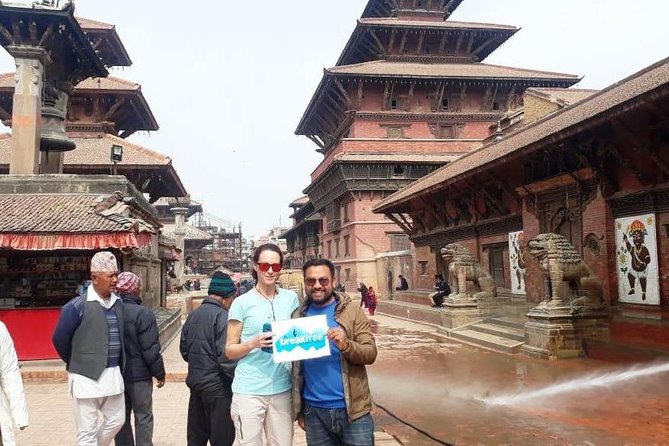
Patan Durbar Square offers a different mood from the great stupas. This former royal center is filled with temples, courtyards, carved details, and palace architecture. The suggested visit lasts about an hour, followed by about 30 minutes at Patan Museum.
The museum occupies old palace buildings and courtyards, including Sundari Chowk. It is a useful companion to the square because it gives you a closer look at the artistic and religious traditions behind the buildings. I would not rush this pairing if architecture and craftsmanship interest you.
Patan Gate is also listed as an entrance point to the old city. It helps you understand that Patan is more than one square. The historic center has its own identity, and moving through its gates and courtyards makes the area feel like a former city rather than just another monument.
The four-site option often works well for Patan. You have enough time to hear the background, wander without being hurried, and ask questions. One strong feature of a private tour is that your guide can combine explanation with time alone. Some people want a detailed account of every carving, while others need a few quiet minutes to look around.
Bhaktapur Durbar Square, the longest stop
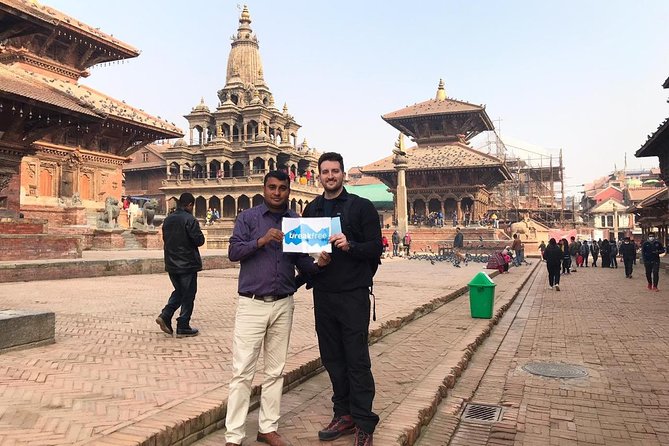
Bhaktapur is usually given about two hours, making it the longest single visit on the route. That extra time is justified. The square and surrounding old city contain temples, palace buildings, courtyards, and streets where the historic character is easier to appreciate at walking speed.
This is the stop most likely to make the seven-site option feel demanding. Bhaktapur is outside central Kathmandu, and reaching it adds road time. Still, if you want the broadest picture of the valley’s old royal cities, it is an important inclusion.
A guide can help you use the two hours well. Ask about the relationship between Bhaktapur, Patan, and Kathmandu, rather than seeing them as three unrelated collections of old buildings. The differences in style, layout, and local identity become clearer when someone explains the wider setting.
Admission is extra. You should also remember that the tour price does not cover meals or drinks, so a full day with Bhaktapur included should include a planned lunch break.
Changu Narayan, a smaller but worthwhile addition
Changu Narayan Temple is scheduled for about 30 minutes and is identified as a UNESCO World Heritage site. Compared with the large squares and stupas, this is a shorter stop, but it helps complete the picture of the Kathmandu Valley’s religious heritage.
The stop is best for you if you want the full seven-site count and do not mind a longer day. If you have limited time, low energy, or a strong preference for lingering at each place, the two or four-site option may serve you better.
The route includes driving through the Kathmandu Valley, and Changu Narayan adds to that sense of covering a wide area. The private car is useful here, but no driver can remove the valley’s traffic from the equation.
Kathmandu Durbar Square and the capital’s old center
Kathmandu Durbar Square is another major heritage site, with a suggested visit of about 30 minutes. It gives you a direct look at the historic heart of the capital and is often paired with explanations about Nepal’s royal and religious past.
Thirty minutes is enough for an introduction but not for a slow architectural study. If this is the place you most want to explore, tell your guide before the day begins. The private format may allow some adjustment, although the overall route and traffic will set limits.
The square also works as a useful contrast with Patan and Bhaktapur. Seeing all three old royal centers in one day can be rewarding, but it can also make the monuments blur together if you rush. That is the strongest argument for choosing four sites rather than seven.
Choosing two, four, or seven sites
The two-site option is best when you have only a few hours, are arriving tired, or want to concentrate on the most famous religious landmarks. It costs less in entrance fees and leaves more room for a relaxed pace.
The four-site option is the safest choice for many people. It provides a meaningful introduction to Kathmandu, gives you time to listen and wander, and avoids turning the day into a checklist. A guide can still offer a broad account of Hinduism, Buddhism, Nepalese history, and city life.
The seven-site option is for determined sightseers. You will cover the valley’s major UNESCO locations in one day, including both Bhaktapur and Changu Narayan. The reward is range. The cost is more road time, more entrance fees, and less time at each site if delays occur.
I would choose seven sites only if seeing all of them is a clear priority. Several people have found the four-site pace more comfortable, while one person completed all seven and described the day as memorable and full of learning. Both reactions make sense because the right choice depends heavily on your energy and interests.
Guides, drivers, and the private touring advantage
The strongest praise is directed at the guides and drivers. Dipesh is repeatedly singled out for his warmth, flexibility, and explanations of history and religion. Deepak is praised for making a seven-site day comfortable, while Bidhya is noted for adjusting the experience to personal interests.
Other guide names connected with positive experiences include Shankar, Prasant, Mukesh, Kabin, Razz, and Bhattarai. The consistent pattern is clear: the guide is not just there to point at buildings. The best value comes from asking questions and letting the guide shape the explanations around your interests.
Drivers also matter in Kathmandu. The city’s roads can be crowded, and moving between sites takes patience. Clean, air-conditioned private transportation, along with drivers such as Sajan, Sujan, Shyam, Ravi, and others, gives you a more comfortable base between stops.
Hotel pickup and drop-off are included for central Kathmandu hotels. If you are staying outside the city center, ask about any added charge before booking. A mobile ticket and confirmation at booking make the arrangements simple, but you should still confirm the pickup time and selected site package.
Is $17 good value?
At about $17 per person, the price is attractive for a private car, English-speaking guide, hotel transfers, air conditioning, and taxes. If you are sharing with others, the value improves because the per-person cost remains low while you receive a private experience.
The headline price does not tell the whole budget story. Monument tickets are separate, and the supplied figures are NPR 1,400 for two UNESCO sites, NPR 2,600 for four, and approximately NPR 5,800 to NPR 6,000 for seven. The difference in the seven-site fee should be confirmed before you go.
You also pay for lunch, drinks, personal purchases, and tips. These are normal extras, but they matter when comparing the tour with arranging taxis and individual guides yourself. The private vehicle and local explanations are the main reasons the package can be worth more than its unusually low starting price.
Who should book this Kathmandu tour?
I would recommend it to first-time visitors who want a useful overview without organizing several separate taxis and admissions. It also suits solo visitors, couples, families, and small groups who prefer to ask questions freely and change the pace when possible.
It is a particularly good fit if you care about religious practice, architecture, Nepalese culture, or local history. The tour also suits people with only one free day in Kathmandu, provided they choose the site count carefully.
I would be cautious about the seven-site option if you dislike long drives or prefer to spend hours at one monument. I would also explain your priorities at the start. Tell your guide if you care most about Buddhism, Hindu rituals, palace architecture, photography, shopping, or food. That is how you get more than a standard circuit.
You can cancel for a full refund up to 24 hours before the start time. Changes or cancellations made less than 24 hours ahead are not accepted, based on local time.
FAQ
What sites can this private Kathmandu tour include?
The available sites include Swayambhunath, Boudhanath Stupa, Pashupatinath Temple, Patan Durbar Square, Patan Museum, Changu Narayan Temple, Bhaktapur Durbar Square, and Kathmandu Durbar Square. The exact selection depends on whether you choose two, four, or seven UNESCO sites.
How long does the tour last?
The experience lasts approximately four to 10 hours. The total time depends on the number of sites selected, traffic, and how long you spend at each stop.
Is hotel pickup included?
Yes. Pickup and drop-off are included for hotels in central Kathmandu. Additional charges may apply for pickup or return outside those areas.
Are entrance fees included in the price?
No. Monument entry fees are paid separately in Nepali rupees. The stated amounts are NPR 1,400 for two sites, NPR 2,600 for four sites, and approximately NPR 5,800 to NPR 6,000 for seven sites.
Can I enter the inside of Pashupatinath Temple?
Only Nepali and Indian nationals of the Hindu faith are permitted to enter the inner premises of Hindu temples during the tour. Other visitors can explore permitted areas of the complex.
Can I take a lunch break during the tour?
Yes. You can ask your guide for restaurant suggestions and take a lunch break during the day. Meals and drinks are not included.
Should you book it?
Book this tour if you want a private, low-cost introduction to Kathmandu’s major cultural sites, with hotel transport and a guide who can explain what you are seeing. I would choose four sites for the best balance of substance and comfort.
Choose seven only if completing the full set is your main goal. Choose two if you have limited time or want a gentler start. With sensible expectations about traffic, extra fees, and temple access, this is a practical way to get your bearings in Kathmandu and understand why the valley’s monuments matter.
More History Tours
- Kathmandu: Full Day Private Top 4 UNESCO Heritage Tour W/Lunch.
★ 5.0 · 86 reviews - Kathmandu World Heritage Tour
★ 5.0 · 74 reviews - Nagarkot Sunrise & Bhaktapur UNESCO Heritage Private Tour
★ 5.0 · 66 reviews - Kathmandu Heritage Tour (Full Day)
★ 5.0 · 63 reviews
Just added around Kathmandu
- Private Shopping Tour in Kathmandu★ 5.0 · 3 reviews
- Nagarkot Sunrise With 7 UNESCO World Heritage Private Tour★ 5.0 · 3 reviews
- Kathmandu: Nightlife and Pub Crawl Tour★ 5.0 · 3 reviews
- Mount Everest Scenic Flight 50 Minutes★ 5.0 · 3 reviews
- Kathmandu: Nagarkot, Bhaktapur, Doleswor & Sanga Statue Tour★ 5.0 · 3 reviews
- Momo Cooking Class -The Art Of Making MoMo with Home Chef★ 5.0 · 3 reviews
- Makalu Base Camp Trek★ 5.0 · 3 reviews
- Kathmandu: Momo Making Class with a Local Chef★ 5.0 · 3 reviews
Kathmandu UNESCO Heritage Tours, compared.

Full Day 7 UNESCO Tour with Lunch – Private/Group
Read our review →
Full Day Top 4 UNESCO Tour with Lunch – Private/Group
Read our review →
Full-Day 7 UNESCO Tour with Lunch – Private/Group
Read our review →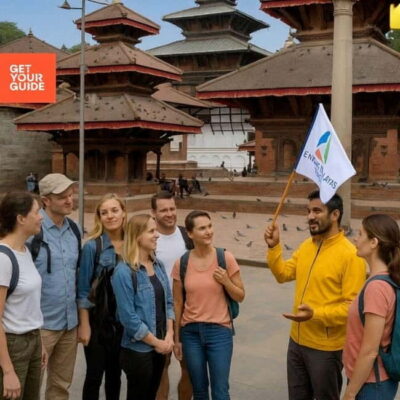
Kathmandu Private Sightseeing Tour | UNESCO World Heritage Sites
Read our review →Full Day 7 UNESCO Tour with Lunch – Private/Group
Read our review →Browse the lists this tour appears in