
Reviewed · ANNAPURNA CIRCUIT TREKS
Kathmandu: 10-Day Annapurna Circuit Trek via Thorong La Pass
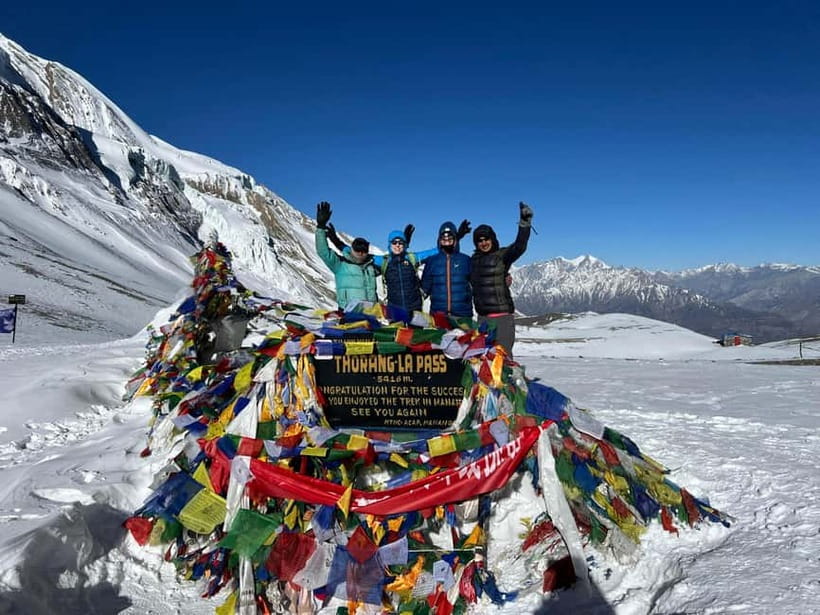
Thorong La is the payoff. This 10-day Annapurna Circuit trek combines high mountain scenery with Tibetan-style villages, apple orchards, pine forests, and the memorable crossing of Thorong La at 5,416 meters. I like the built-in acclimatization day in Manang, and I like that the $447 price includes transport, permits, meals, tea-house lodging, a guide, and one night in Pokhara. The catch is simple: this is a serious high-altitude trek, not a scenic stroll, and insurance, gear, bottled water, and personal costs are extra.
The route uses public buses and shared jeeps at the beginning and end, which keeps the cost down but can make the transport days long. The strongest part of the experience is the local support. Guides such as Ganesh, Prakash, Chakra, and Ghanshyam were praised for setting a careful pace, watching hydration and meals, and helping trekkers prepare for the pass.
In This Review
- Key points to know before booking
- Why this 10-day route works
- Day 1: Kathmandu to Besisahar and Dharapani
- Day 2: Dharapani to Chame at 2,670 meters
- Day 3: Chame to Upper Pisang at 3,200 meters
- Day 4: Upper Pisang to Manang at 3,540 meters
- Day 5: Rest and acclimatization in Manang
- Day 6: Manang to Yak Kharka at 4,050 meters
- Day 7: Yak Kharka to Thorong Phedi at 4,450 meters
- Day 8: Thorong La to Muktinath
- Day 9: Muktinath through Kagbeni to Jomsom
- Day 10: Jomsom to Pokhara by public bus
- Guides, porters, and the human side
- Meals, rooms, and extra costs
- Who should book this trek?
- Should you book it?
- FAQ
- How high is Thorong La Pass?
- How long does the trek last?
- Is an acclimatization day included?
- What transport is used at the beginning?
- Are meals included?
- Is accommodation included?
- Is a guide included?
- Is trekking equipment included?
- Do I need travel insurance?
Key points to know before booking
- Thorong La reaches 5,416 meters: The pass day is the hardest and most rewarding section, with an early start and a long descent to Muktinath.
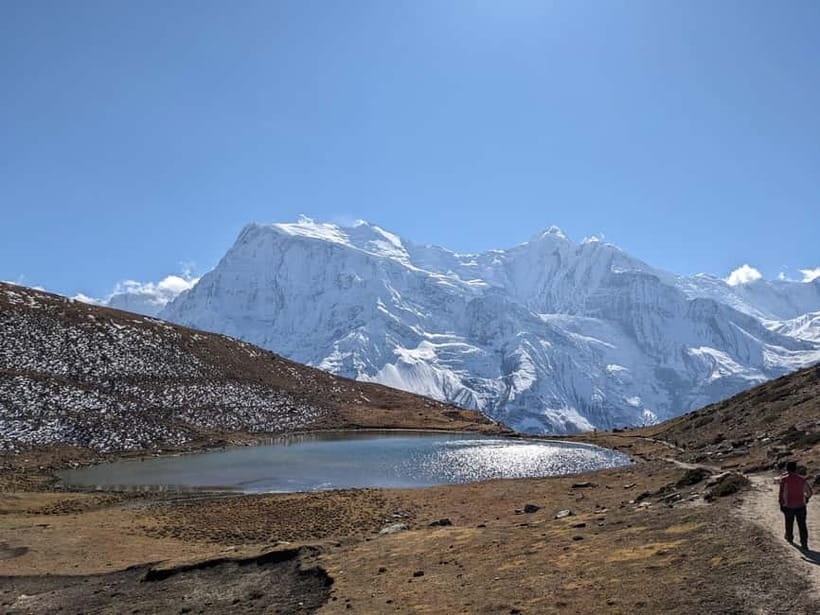
- Manang provides a proper acclimatization day: You can rest, visit the stupa, and hike toward Gangapurna Glacier Lake or other nearby viewpoints.
- The route changes dramatically: Expect green valleys, oak and pine forests, dry high-altitude country, Buddhist villages, and Mustang views.
- The price covers the main trekking basics: Permits, TIMS card, meals, tea-house accommodation, transport, a local guide, and emergency rescue assistance are included.
- Public transport keeps the tour affordable: Kathmandu to Besisahar takes about seven to eight hours by bus, followed by a shared jeep to Dharapani.
- You need insurance and suitable gear: Medical and helicopter evacuation cover up to 5,400 meters is strongly recommended, while trekking equipment is not included.
Why this 10-day route works
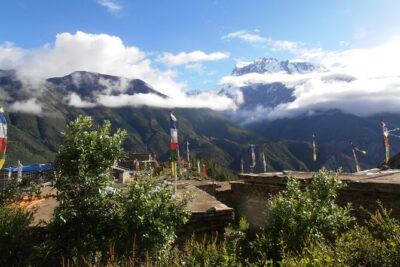
The Annapurna Circuit is famous because it changes character every few days. You begin among green hills and river valleys, then walk through pine and oak woods before reaching the dry, wind-swept country around Manang. After the pass, the setting shifts again toward Muktinath, Kagbeni, and Jomsom.
That variety gives the trek more depth than a simple out-and-back mountain walk. You see farms, Buddhist temples, traditional villages, bridges, orchards, and huge Himalayan peaks. The walking is the main event, but the local communities make the route feel like a journey through Nepal rather than a fitness challenge with views attached.
At $447 per person, the trip offers good value if you need a guide and want the main arrangements handled. It includes three meals each trekking day, tea-house or lodge accommodation, permits, transport, and a night at Hotel Orchid in Pokhara after the trek. You still need to budget for drinks, showers, charging, laundry, water, equipment, tips, insurance, and personal purchases.
The private-group format is useful if you want the pace adjusted to your own condition. It also means you should clarify the group size before booking, since private does not always mean solo. Pickup is available from hotels in Kathmandu’s Thamel area and Pokhara’s Lakeside area.
More Annapurna Circuit Itineraries:
- Kathmandu: 9-Day Annapurna Circuit Trek via Thorong La Pass
★ 5.0 · 17 reviews - Annapurna Circuit Trek with Tilicho Lake
★ 5.0 · 368 reviews - Annapurna Circuit Trek
★ 5.0 · 94 reviews
Day 1: Kathmandu to Besisahar and Dharapani
The first day is mostly about reaching the trailhead. A public bus from Kathmandu to Besisahar takes roughly seven to eight hours, followed by a shared jeep to Dharapani.
This is a long transport day, and road conditions can make it tiring. Still, the journey gives you a useful look at rural Nepal, with hills, forests, river valleys, and changing views from the bus window. The shared jeep is practical rather than luxurious, but it avoids the cost of a private vehicle.
Dharapani sits at about 1,850 meters, a sensible starting altitude for a route that will eventually reach more than 5,400 meters. You are not thrown directly into the thin air. That gradual rise is one of the most important safety features of the schedule.
Day 2: Dharapani to Chame at 2,670 meters
The first trekking day takes about six hours and reaches Chame at 2,670 meters. The route passes grassy fields, oak and pine forests, and Bagarchhap, a Bhote village with a Buddhist temple.
Views of Annapurna II begin to give the walk a real Himalayan scale. At Timang, near the foot of Lamjung Himal, the trail becomes especially scenic before leveling out toward Chame.
Chame is the administrative center of Manang District, but this itinerary focuses more on the walk and overnight tea-house stay than on town sightseeing. The altitude gain is noticeable but reasonable. Walk slowly, drink often, and avoid treating the first day as a race.
Day 3: Chame to Upper Pisang at 3,200 meters
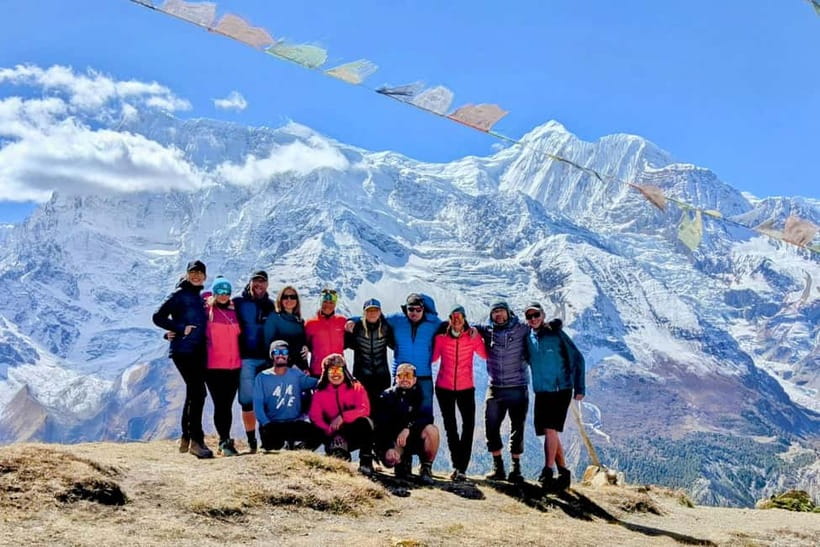
The five to six hour walk to Upper Pisang brings more dramatic mountain scenery. You pass an apple orchard and climb toward the Bhratang Valley before descending toward Pisang and Upper Pisang.
Lamjung Himal remains part of the view, while the route begins to feel drier and more open. The overnight altitude of 3,200 meters is high enough that you may notice the thinner air, even if the walking itself feels manageable.
The choice of Upper Pisang matters because it gives you a more traditional village setting than the road corridor below. Accommodation is in a tea house or lodge, with meals included. Do not expect hotel comforts at this stage. Tea houses are basic, and extra charges for hot showers, charging, or bottled water are not covered.
More Treks and Hikes:
- Poon hill Trek 3 days
★ 5.0 · 176 reviews - Trekking in Annapurna/Langtang/Everest/Upper Mustang regions
★ 5.0 · 161 reviews - Pokhara: 4-Day Ghorepani, Poonhill & Ghandruk Mountain Trek
★ 5.0 · 132 reviews - Ghorepani – Poon Hill Trek 3N-4D
★ 5.0 · 125 reviews
Day 4: Upper Pisang to Manang at 3,540 meters
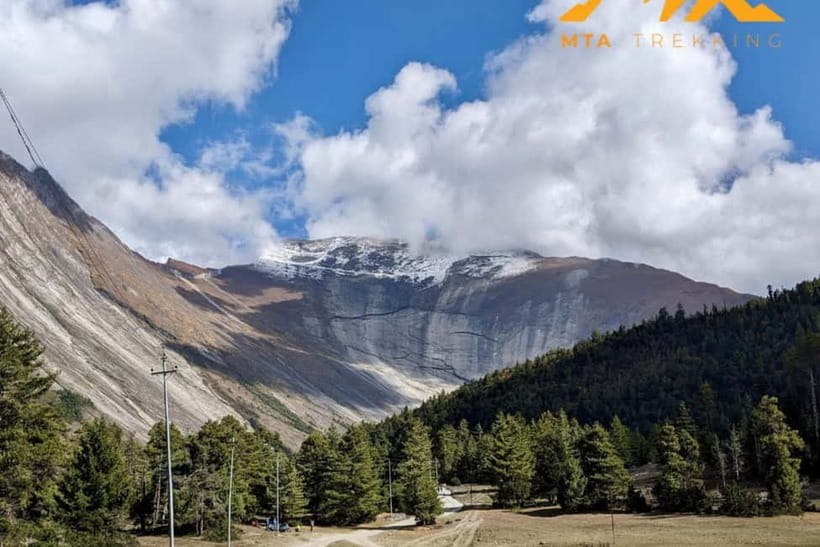
This five to six hour section is one of the prettiest days on the route. You cross the Marsyangdi River on a wooden bridge and pass Mungji and Braga before reaching Manang.
The views open toward Tilicho Peak, Annapurna III, and Annapurna IV. Manang Valley has a drier, more Tibetan feel than the lower route, with Buddhist architecture and wide mountain views.
Braga is especially worth noticing for its Buddhist character, though the supplied schedule does not promise a separate guided visit. Your guide can help you understand the villages and local customs along the way. Guides have been praised for explaining Nepali culture, religion, daily life, and the mountain environment, which adds much more than simple trail navigation.
Day 5: Rest and acclimatization in Manang
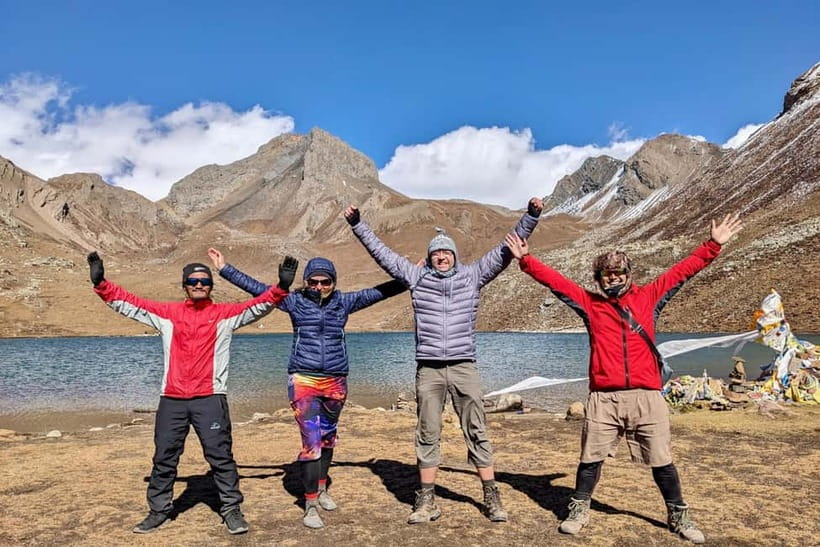
This is not a wasted day. It is the day that helps make the Thorong La crossing more realistic.
The itinerary allows optional walks around Manang, including a hike toward Gangapurna Glacier Lake or an icefall reached by crossing a river. It also includes exploring Manang village and hiking to a stupa.
The listed maximum altitude for the day is 4,050 meters, but you do not need to force a long hike. The goal is to spend time at altitude, move gently, and return to sleep in Manang. A good guide will adjust the outing to your condition. Ghanshyam was praised for managing rest and pace, while other guides were credited with helping trekkers eat well, stay hydrated, and avoid unsuitable food at higher elevations.
Do not ignore symptoms here. Headache, nausea, unusual tiredness, dizziness, or breathing trouble deserve attention. The provider warns about Acute Mountain Sickness and recommends insurance that covers medical treatment and helicopter evacuation up to 5,400 meters.
Day 6: Manang to Yak Kharka at 4,050 meters
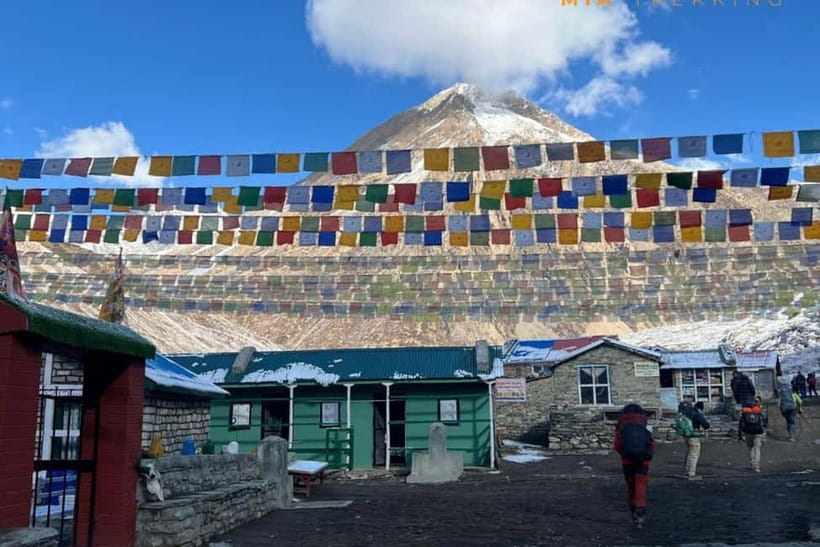
The walk to Yak Kharka takes about four hours, but the short distance can fool you. At 4,050 meters, every uphill section takes more effort, and breathing becomes harder.
This is where a steady guide becomes valuable. You should walk slowly, keep your layers handy, and resist the temptation to hurry because the day looks short on paper. The views are broad and impressive, but the altitude now controls the schedule.
Yak Kharka is a functional overnight stop rather than a sightseeing town. The point is to gain height gradually before Thorong Phedi. Meals and lodging are included, but comfort becomes more basic as you go higher.
Day 7: Yak Kharka to Thorong Phedi at 4,450 meters
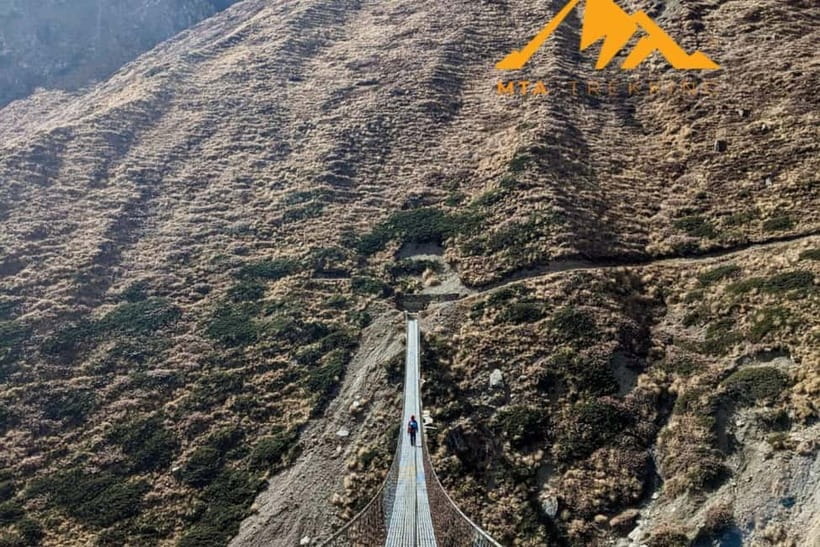
The four to five hour walk to Thorong Phedi includes a gradual climb, a descent toward the Marsyangdi headwaters, a hidden wooden bridge, and a renewed ascent on the river’s right bank.
The trail feels increasingly exposed and mountainous as you approach the pass. Thorong Phedi is the final staging point before the big crossing, so conserve your energy. This is not the night for extra wandering, heavy drinking, or a late meal.
The itinerary lists an overnight altitude of 4,450 meters. Some trekkers may feel fine, while others may sleep poorly. That is normal at high altitude, but worsening symptoms are not something to push through. Emergency rescue assistance is included in the package, yet you need your own travel and rescue insurance. The included assistance should not be treated as a replacement for insurance.
Day 8: Thorong La to Muktinath
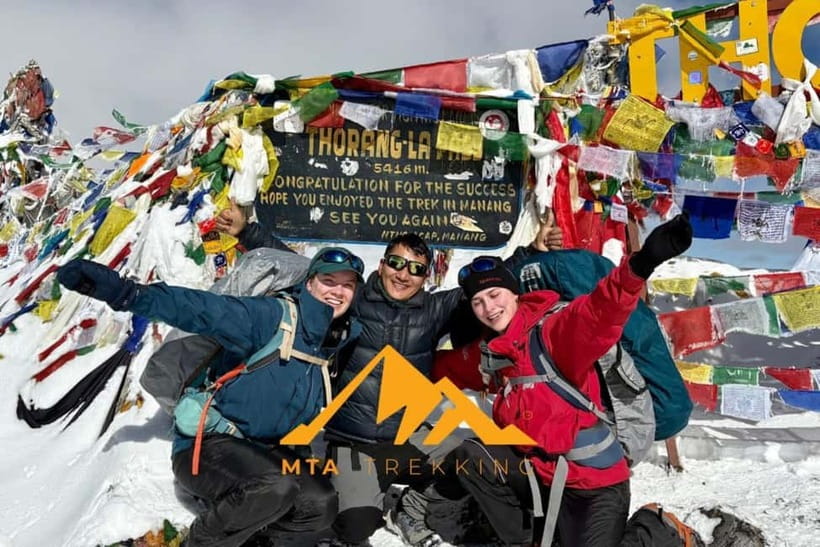
This is the defining day. The trek from Thorong Phedi over Thorong La to Muktinath takes about seven to eight hours, reaches 5,416 meters, and requires an early start.
The climb is slow and demanding. Cold, wind, thin air, and the length of the day all matter. Your guide’s job is not to make the mountain easy. It is to keep the pace sensible, watch your condition, and help you make good decisions.
At the top, you get the satisfaction of crossing one of the world’s highest trekking passes. The descent brings views toward Mustang Valley and Dhaulagiri, and the scenery changes quickly from the high pass to the drier country around Muktinath.
Muktinath is an important religious site for both Hindus and Buddhists. The itinerary includes reaching Muktinath but does not promise an extended temple tour, so ask your guide how much time is available. After such a long day, a warm meal and rest may be more appealing than a full visit.
Day 9: Muktinath through Kagbeni to Jomsom
The seven to eight hour walk to Jomsom passes through Kagbeni, one of the most atmospheric villages on the route. The setting is dry and strongly influenced by the culture of Mustang.
Kagbeni gives you a chance to slow down and notice the contrast with the green lower valleys. Its position near the Kali Gandaki corridor and its traditional character make it one of the most memorable stops, even though the itinerary does not specify a separate sightseeing program.
This can be a tiring day after the pass. If your legs are sore, ask about the exact walking plan and whether any part can be shortened. The value of a private group is the chance to discuss your condition rather than simply follow a fixed pace.
Day 10: Jomsom to Pokhara by public bus
The final transfer to Pokhara takes about eight hours by public bus. It is another long travel day, but it returns you from the high country to one of Nepal’s most popular lakeside cities.
One night at Hotel Orchid in Pokhara is included, along with a farewell dinner. That extra night is welcome. After several nights in basic tea houses, a proper hotel room and an evening meal give you time to recover before flying or traveling onward.
Do not expect the final day to feel like a quick airport transfer. Public buses are part of the budget design, and the journey can be tiring. The benefit is that you avoid paying for a private vehicle while still completing the route.
Guides, porters, and the human side
The guide can make or break a high-altitude trek. Recent departures received especially strong praise for Ganesh, Prakash, Chakra, and Ghanshyam. Their strengths included adjusting the pace, encouraging rest, checking meals and hydration, and explaining local life.
Prakash was praised for choosing longer routes with better mountain views and for speaking some Polish. Ghanshyam was described as an experienced guide who helped manage acclimatization and supplied water-purifying tablets when needed. Chakra was valued for knowing the route and villages well.
A porter is not listed as included, so confirm this before you go. One two-person group found a porter extremely helpful because he carried two bags of about 10 kilograms each, plus his own equipment. If you are not used to carrying a pack at altitude, paying for a porter may be one of the smartest optional expenses.
Meals, rooms, and extra costs
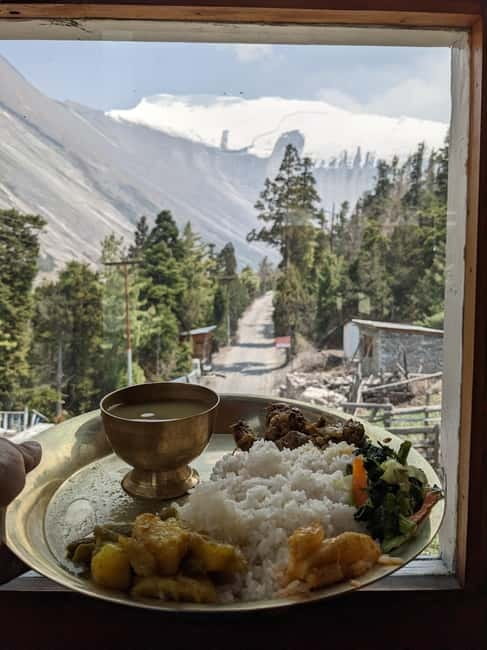
Breakfast, lunch, and dinner are included during the trek. That is a major part of the $447 value, since food costs rise as supplies move higher into the mountains.
Soft drinks, alcoholic drinks, bottled or boiled water, showers, phone calls, laundry, battery charging, bar bills, and personal purchases are extra. Alcohol is also a poor choice at high altitude, even aside from the provider’s rule against alcohol and drugs.
Tea-house rooms and lodges are included, but the package does not promise private bathrooms or luxury facilities. Bring warm clothing, long pants, a change of clothes, a waterproof bag, sunscreen, sunglasses, and proper hiking shoes. Trekking gear is not included, and a sleeping bag may be worth arranging before departure. One older pair borrowed extra sleeping bags in Kathmandu after a pre-trek meeting.
Who should book this trek?
You should consider it if you want the full Annapurna Circuit experience but prefer a guide to handle permits, lodging, meals, and route decisions. It suits fit adults who can manage repeated days of five to eight hours on foot and who understand that altitude, not just distance, is the main challenge.
The provider does not recommend it for children under 15, people with altitude sickness, people over 70, people with respiratory issues, or pregnant women. Those limits are sensible. A private group may help with pacing, but it does not remove the physical demands.
At 62, one participant completed the pass with careful pacing, a porter, and guide support. That is encouraging, but it should not be read as a guarantee for every older trekker. A medical discussion, proper insurance, and honest fitness assessment are wise before you commit.
Should you book it?
Book this trek if Thorong La is your main goal and you want a low-cost package with strong local support. The price is attractive because it covers the expensive practical basics, and the itinerary includes the most important acclimatization stop in Manang.
Do not book it casually because the schedule looks short. Ten days leaves little spare time if weather, roads, illness, or slow acclimatization causes delays. Confirm what trekking gear you can rent, whether a porter is available, the private group size, and the exact insurance requirements.
For a prepared trekker, this is a powerful route with excellent variety, good logistical value, and guides who appear to take safety seriously. For someone seeking comfort, flexible rest days, or a gentle introduction to the Himalayas, a longer itinerary would likely be the wiser choice.
FAQ
How high is Thorong La Pass?
Thorong La Pass reaches 5,416 meters, or 17,769 feet, above sea level.
How long does the trek last?
The experience lasts 10 days, beginning in Kathmandu and ending with public bus travel from Jomsom to Pokhara.
Is an acclimatization day included?
Yes. Day 5 is an acclimatization day in Manang, with optional walks toward places such as Gangapurna Glacier Lake and an icefall.
What transport is used at the beginning?
You travel by public bus from Kathmandu to Besisahar, taking about seven to eight hours, then continue to Dharapani by shared jeep.
Are meals included?
Breakfast, lunch, and dinner are included during the trek.
Is accommodation included?
Yes. Tea-house or lodge accommodation is included during the trek, along with one night at Hotel Orchid in Pokhara after the trek.
Is a guide included?
Yes. An experienced, government-registered local guide is included. Guiding is available in English and Hindi.
Is trekking equipment included?
No. You need to bring or arrange your own trekking gear, warm clothing, hiking shoes, and other required items.
Do I need travel insurance?
Yes. The provider strongly recommends comprehensive travel insurance with medical coverage and helicopter evacuation up to 5,400 meters. Insurance itself is not included.
Just added around Pokhara
- Double Dare: Tandem Bungee Adventure★ 4.3 · 3 reviews
- Exhilarating Pokhara-Kathmandu Bus Journey Experience★ 3.5 · 3 reviews
- 3 Day Australian Camp Dhampus Ghandruk Easy Trek in Pokhara★ 3.5 · 3 reviews
- Paragliding in Pokhara★ 5.0 · 3 reviews
- Seti George and Thrilling Suspension Bridge Tour at Pokhara★ 4.5 · 3 reviews
- Overnight Dhampus Australian Camp Easy Hiking from Pokhara★ 5.0 · 3 reviews
- Full Day Entire Pokhara Tour by Car with Guide★ 4.5 · 3 reviews
- 5 Days Mardi Himal Trek.★ 5.0 · 3 reviews
Annapurna Circuit Treks, compared.

15-Day Private Annapurna Circuit Trek from Kathmandu
Read our review →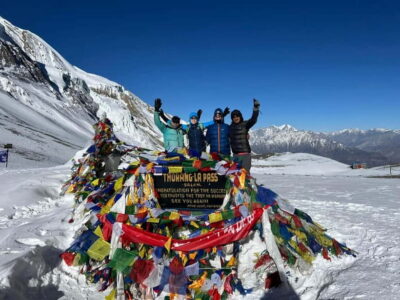
Browse the lists this tour appears in