
Reviewed · ANNAPURNA CIRCUIT TREKS
15-Day Private Annapurna Circuit Trek from Kathmandu
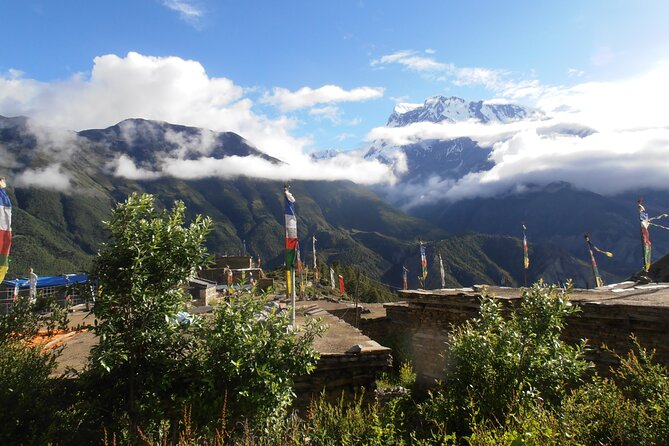
Mountain days start with long roads. This 15-day private Annapurna Circuit trek links Kathmandu, Manang, Thorong La Pass, Muktinath, Jomsom, Tatopani, Ghorepani, Poon Hill, Pokhara, and back to Kathmandu for $995 per person. I like the family-run feel, with Nepali language lessons and a homely approach, and I like that permits, meals, regular lodge stays, transport, and airport transfers are bundled into one price. The main catch is the pace: several days are listed at about 12 hours, and the schedule leaves little room for delays, weather, or a slow start at altitude.
I also like the private format, since only your group participates and the route can be discussed around your preferences. Past trips have praised guides and porters by name, including Dinesh, Binute, Bashudev, and Pratap, with safety, good humor, and personal care often highlighted. Still, this is not a soft sightseeing holiday. You need moderate fitness, a willingness to use public transport, and comfort with basic mountain lodges.
In This Review
- Key points before you book
- What the $995 price really covers
- Kathmandu to Besisahar and Bulbule: a long first day
- Ghermu and Chamje: villages, bridges, and steep trail work
- Dharapani, Bagarchhap, and Chame at 2,300 meters
- Pisang to Manang: forest, cliffs, and a choice of routes
- Manang acclimatization: the day that protects the rest of the trek
- Manang to the final camp before Thorong La
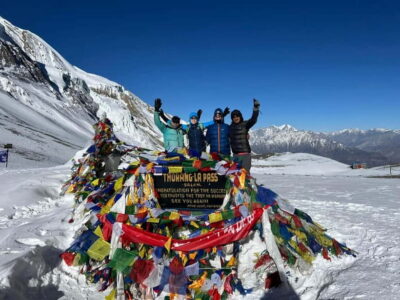
- Thorong La at 5,416 meters: the biggest test
- Muktinath to Jomsom: several ways to finish the high route
- Tatopani, Shikha, and Ghorepani: lower valleys and rhododendron forest
- Poon Hill sunrise and the final road to Pokhara
- Pokhara to Kathmandu and the farewell meal
- Guide support, private groups, and what the praise means
- Who should book this trek?
- Should you book the Annapurna Circuit trek?
- FAQ
- How long is the Annapurna Circuit trek?
- Where does the experience begin?
- Is airport transportation included?
- Is the tour private?
- What level of fitness do I need?
- Is a guide included?
- Is a porter included?
- Are meals included?
- Are permits included?
Key points before you book
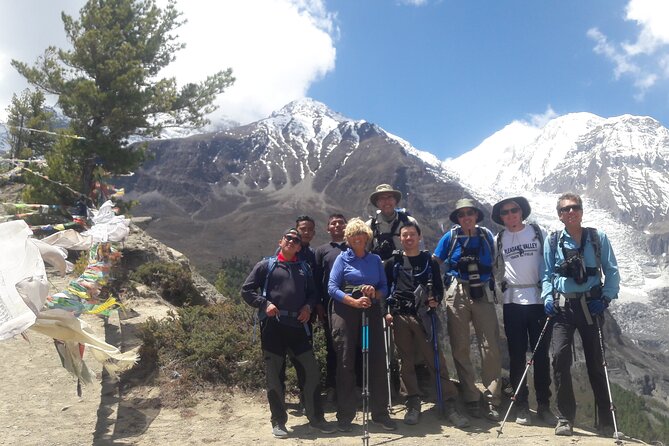
- Thorong La reaches 5,416 meters: The pass crossing is the physical heart of the trip and requires a proper acclimatization day in Manang.
- Meals are included for all 15 days: Breakfast, lunch, and dinner are listed as included, while drinks, hot water, showers, charging, laundry, and bar bills cost extra.
- Transport is part of the adventure: You use a local bus to Bulbule, public transport around Muktinath and Tatopani, a car from Nayapul to Pokhara, and a deluxe tourist bus back to Kathmandu.
- The route mixes famous and quieter stops: You get the Annapurna Circuit, Muktinath, Jomsom, hot springs, Ghorepani, and the sunrise walk to Poon Hill.
- The package includes key paperwork: Annapurna Conservation Area permits and a TIMS card are covered, along with guide costs, insurance, equipment, lodging, food, and transport.
- This is a private family-style operation: The company says it is run by family members and offers Nepali language teaching during the trip.
What the $995 price really covers
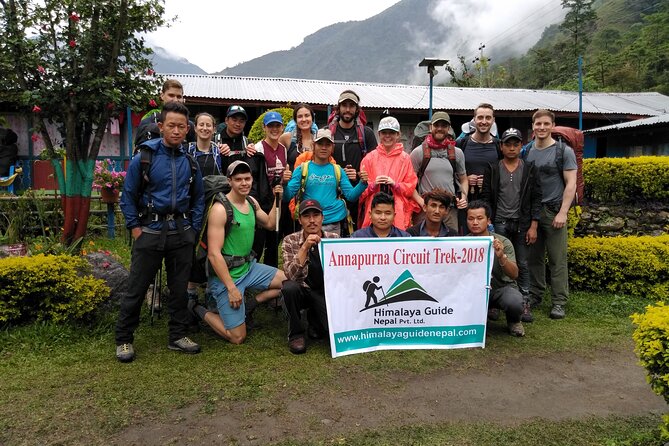
At $995, this trek offers solid value if you want a largely arranged 15-day route without paying separately for every essential item. The price includes airport pickup and drop-off, the long bus ride from Kathmandu to Bulbule, lodge accommodation during the trek, an experienced guide, permits, taxes, all listed meals, transport from the trek endpoint to Pokhara, and a tourist bus from Pokhara to Kathmandu.
That matters in Nepal, where small costs can pile up. Permits, guide expenses, meals, and long-distance transport are already handled. You also receive a farewell lunch or dinner and a small gift from the company.
The limits are equally important. Extra nights in Kathmandu and Pokhara are not included. Porters are available only by request, so confirm the cost and arrangement before departure if you do not want to carry your own pack. Drinks, bottled water, beer, soda, laundry, phone use, battery charging, showers, and boiled water are also personal expenses.
The lodge accommodation is described as normal rather than deluxe. I would read that as practical mountain lodging, not a hotel standard. This is a good match for you if your priority is reaching the pass and seeing the route, rather than spending heavily on comfort.
More Annapurna Circuit Itineraries:
- Annapurna Circuit Trek with Tilicho Lake
★ 5.0 · 368 reviews - Annapurna Circuit Trek
★ 5.0 · 94 reviews - Annapurna Circuit Trek
★ 5.0 · 35 reviews
Kathmandu to Besisahar and Bulbule: a long first day
Your trip begins with airport pickup at Tribhuvan International Airport in Kathmandu. The listed meeting time is 10:15 in the morning, so make sure your arrival plan matches that timing.
The first major transfer uses a local bus toward Besisahar and Bulbule. The drive takes about six to seven hours, depending on the exact arrangement and road conditions. You follow the Trisuli River, cross it at Muglin, and continue toward the Marshyangdi valley.
This is not glamorous transport, but it gives you an early look at everyday Nepal. You see the route change from Kathmandu traffic to river valleys and hill settlements. The trade-off is time. A local bus is less private and less predictable than a dedicated vehicle, so keep your first day flexible.
Ghermu and Chamje: villages, bridges, and steep trail work
The second day begins with breakfast, then a long walk through villages and along the east bank of the Marshyangdi River. The route reaches Ngadi before climbing toward Bahun Danda, a Brahmin settlement at about 1,270 meters.
The uphill section gives the day some bite, but it also brings the first proper mountain rhythm: breakfast, walking, a village lunch, and a lodge arrival later in the day. The stated duration is about 12 hours, which is a serious day on foot. Ask your guide to clarify the actual walking time and planned overnight stop before setting out.
From Ghermu, the route heads downhill to Syange, crosses a suspension bridge, and climbs along a cliff face toward Chamje. The bridge crossing and narrow trail sections make this feel like a real Himalayan trek rather than a road-based tour. The route is scenic, but steep drops and uneven paths call for careful footing.
Dharapani, Bagarchhap, and Chame at 2,300 meters
The next section crosses the Marshyangdi again and passes through Dharapani and Bagarchhap, at about 1,960 meters. You then reach Danque at around 2,300 meters, marked by a stone entrance chorten and traditional village architecture.
This part of the route brings more visible mountain culture. Chortens, village layouts, and the shifting style of the settlements help show that the Annapurna Circuit is not only about big peaks. You are moving through communities shaped by trade, farming, religion, and the narrow valley around the river.
The day is again listed at about 12 hours, so pacing matters. A private guide can help you adjust breaks, but you should not assume that private means easy. The route gains height steadily, and the schedule is demanding from the start.
More Treks and Hikes:
- Everest Base Camp Trek – 14 Days
★ 5.0 · 1,499 reviews - Everest Base Camp Trekking
★ 5.0 · 485 reviews - Nagarkot Sunrise View and Day Hiking from Kathmandu
★ 5.0 · 471 reviews - Everest Base Camp Trekking – 13 Day
★ 5.0 · 365 reviews
Pisang to Manang: forest, cliffs, and a choice of routes
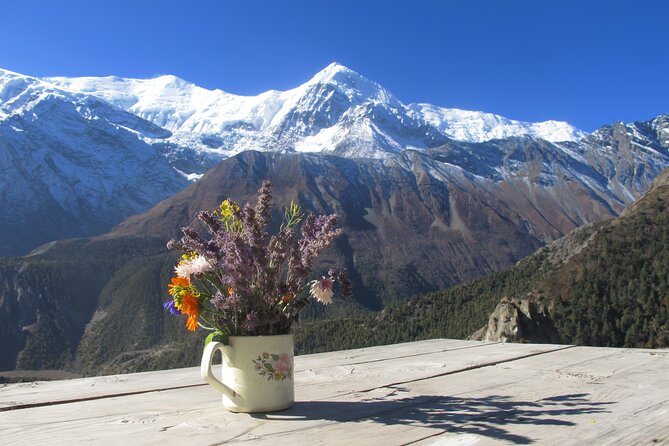
The route toward Manang passes through dense forest and a narrow valley before crossing the Marshyangdi at about 3,038 meters. One memorable feature is a dramatic curved rock wall that rises roughly 1,500 meters above the river.
From Pisang, two route options are described. One follows the Marshyangdi River, while another crosses the river and later rejoins the main route at Mungji. The lower option passes through pine forest. Ask your guide which path fits the day, weather, and your energy level.
Manang is an important pause in the schedule. The itinerary places you there for several nights, which is sensible because the next section climbs toward Thorong La. At this altitude, racing ahead is a poor bargain. The private format gives you a chance to discuss how you feel and how hard to push.
Manang acclimatization: the day that protects the rest of the trek
The rest day in Manang is not wasted time. It is built into the plan before the climb to 5,416-meter Thorong La Pass, and it may be the most important day for enjoying the final third of the route.
The optional activities include exploring Manang and visiting a lama, with a suggested donation of 100 Nepalese rupees. You can use the day for a gentle outing or simply rest, depending on your condition. The supplied plan does not give a fixed activity schedule, so discuss the options with your guide.
This is also a good time to check your layers, water supply, footwear, and day pack. Hot and cold drinks are not included, and battery charging and boiled water cost extra. Those small practical matters become more noticeable as the route gets higher and services become simpler.
Manang to the final camp before Thorong La
After Manang, the trail climbs toward Tanki village and continues through Ghungsang. It leaves the Marshyangdi valley and follows the Jarsang Khola valley northward, passing pastures and scrub.
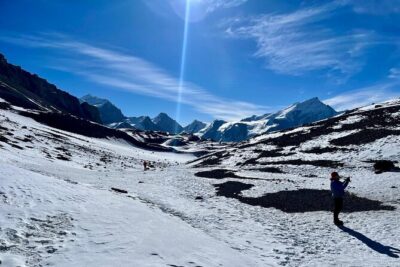
The scenery changes as the route rises. Forest gives way to more open ground, and the valley feels less sheltered. You are now walking toward the hardest section of the trip, so a steady pace is more useful than a fast one.
The next stop is described as the last camp before the Thorong La crossing. The route follows yak grazing ground, crosses the Jarsang Khola, and climbs to a tea shop at Durali. With a listed walking time of about 12 hours, this is another long day. Keep your pack light and make sure you understand where the night will be spent.
Thorong La at 5,416 meters: the biggest test
The pass day begins early. Phedi is described as the last night in Manang District and the final hard push before the pass. The early start is necessary because the climb is long, and the day continues after you reach the high point.
Thorong La is the moment that gives this trip its shape. At 5,416 meters, it is not a casual viewpoint. Cold, thin air and the steep climb can make the pass difficult even for fit hikers. Your guide’s role is especially important here, and the company includes guide salary, equipment, insurance, transport, lodging, and food.
After crossing, the route descends toward Muktinath. That change is dramatic: the pass section is high and exposed, while Muktinath brings religious importance and a new phase of the journey. The itinerary does not promise a particular amount of free time at the site, so ask how the day is divided.
Muktinath to Jomsom: several ways to finish the high route
From Muktinath, the plan offers different route possibilities toward Tatopani or Pokhara. One shorter option uses a flight from Jomsom to Pokhara, while the overland route continues through Marpha, Ghasa, and Tatopani over several days.
The included arrangement specifically lists public transportation from Muktinath to Tatopani, so confirm the exact route before you go. Transport choices can change the feel of the trip. A vehicle saves time and walking, while the longer route offers more time in the Kali Gandaki valley.
Jomsom is the key overnight point in this part of the journey. It marks a shift from the high pass section toward lower valleys, hot springs, villages, and the final Poon Hill trek.
Tatopani, Shikha, and Ghorepani: lower valleys and rhododendron forest
After time around the hot spring, the route heads down and crosses a suspension bridge over the Kali Gandaki River. It then follows the Burung Khola before turning toward the trail junction for Shikha.
The hot spring stop provides a welcome change after Thorong La. It is also one of the few points where the schedule offers a clear chance to relax rather than simply walk, climb, eat, and sleep.
From Shikha, you pass Magar villages such as Phalate and Chitre, along with terraced fields. The climb through rhododendron and pine forest toward Ghorepani is described as hard. This section may surprise you: the highest pass is behind you, but the trekking is not finished.
Poon Hill sunrise and the final road to Pokhara
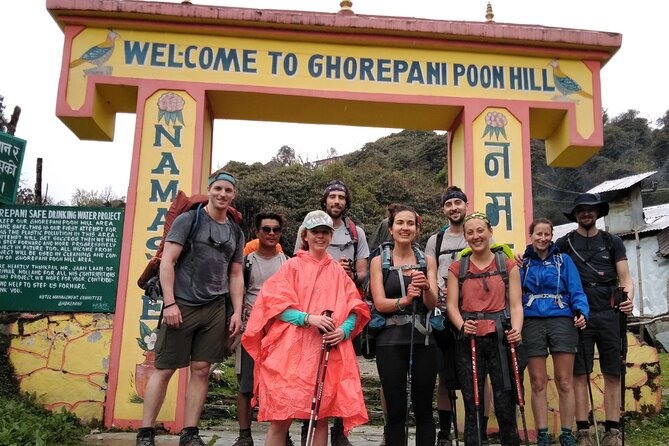
The Poon Hill walk begins early, with a 40 to 50 minute climb to about 3,210 meters. From the viewpoint, the planned sunrise panorama includes Dhaulagiri, Tukuche Peak, Nilgiri, Annapurna South, and Hiunchuli.
This is a fitting final mountain morning because the viewpoint gathers several major peaks into one wide scene. Bring warm layers and a headlamp if your guide confirms the early departure, since the walk begins before sunrise.
After returning from Poon Hill, the route continues to Nayapul, where a car takes you to Pokhara Lakeside. The exact walking and road timing may vary, but the day is listed at about 12 hours. Pokhara is a useful place to recover, though any extra night there costs more and is not included.
Pokhara to Kathmandu and the farewell meal
The final day uses a deluxe tourist bus from Pokhara to Kathmandu, unless you arrange a different option with the company. The return trip is listed at about 12 hours, so do not schedule a tight onward flight that same day.
The company offers a farewell lunch or dinner at a suitable time. That small closing touch fits the family-run approach and gives you a chance to thank your guide before leaving.
Airport transfers are included at the beginning and end of the trip. Since the transport schedule is long, confirm where you will be dropped off and how much spare time you should leave before your international departure.
Guide support, private groups, and what the praise means
The strongest pattern in the company’s service is personal attention. Guides named in past trips include Dinesh, Binute, Bashudev, Pratap, and Salman. Pratap was praised for guiding a trek to Tilicho Lake and Thorong La, while Dinesh and Binute were singled out for safety, cheerfulness, and making the walking days feel smooth.
You should not assume a particular guide unless the company confirms one. Still, those names give you useful questions to ask before booking: Who will guide my group? Is a porter included or optional? What happens if someone needs a slower pace? How are transport changes handled?
The private setup is best for couples, families, and friends who want to set their own rhythm. It is less attractive if you want a social group atmosphere or a gentler itinerary with shorter walking days.
Who should book this trek?
I would recommend it to a fit first-time Himalayan trekker who wants the classic Annapurna route with a guide and most major costs included. It also suits repeat visitors who value a family-run Nepal company and want help with permits, transport, meals, and lodges.
You should think twice if you dislike long bus rides, basic accommodation, public transportation, or long walking days. The listed schedule is ambitious, and the 5,416-meter pass requires serious preparation.
The cancellation terms are friendly: you can cancel at least 24 hours before the start for a full refund. Changes made within 24 hours are not accepted, and a minimum group requirement applies even though the activity itself is private.
Should you book the Annapurna Circuit trek?
Book it if you want a well-priced, private route that combines the Annapurna Circuit, Thorong La, Muktinath, hot springs, Ghorepani, and Poon Hill in one 15-day plan. The package handles many costly essentials, and the personal service praised around guides such as Dinesh, Binute, Bashudev, and Pratap is a real reason to consider it.
Before paying, confirm the exact daily walking times, the chosen route from Muktinath, porter pricing, lodge standards, and the transport plan after Poon Hill. If those details suit your fitness and comfort level, this offers a strong introduction to Nepal’s high mountain trails without the expense of arranging every piece yourself.
FAQ
How long is the Annapurna Circuit trek?
The experience lasts approximately 15 days, including transport from Kathmandu, the trek, the journey to Pokhara, and the return to Kathmandu.
Where does the experience begin?
It begins at Tribhuvan International Airport in Kathmandu, Nepal. The listed start time is 10:15 in the morning.
Is airport transportation included?
Yes. International airport pickup and drop-off are included, covering the airport to hotel and hotel to airport transfers.
Is the tour private?
Yes. This is a private activity, and only your group participates.
What level of fitness do I need?
A moderate level of physical fitness is required. The schedule includes several days listed at about 12 hours, plus the climb across Thorong La Pass at 5,416 meters.
Is a guide included?
Yes. An experienced guide is included, along with the guide’s salary, equipment, insurance, transportation, lodging, and food.
Is a porter included?
No. Porter service is not included, but the company can arrange one if requested.
Are meals included?
Yes. Breakfast, lunch, and dinner are listed as included for all 15 days. Drinks such as soda, mineral water, beer, and other hot or cold beverages are extra.
Are permits included?
Yes. The Annapurna Conservation Area Permit and TIMS card are included, along with government taxes.
Just added around Kathmandu
- Nagarkot Sunrise With 7 UNESCO World Heritage Private Tour★ 5.0 · 3 reviews
- Private Shopping Tour in Kathmandu★ 5.0 · 3 reviews
- Kathmandu: Nightlife and Pub Crawl Tour★ 5.0 · 3 reviews
- Mount Everest Scenic Flight 50 Minutes★ 5.0 · 3 reviews
- Kathmandu: Nagarkot, Bhaktapur, Doleswor & Sanga Statue Tour★ 5.0 · 3 reviews
- Momo Cooking Class -The Art Of Making MoMo with Home Chef★ 5.0 · 3 reviews
- Kathmandu: Momo Making Class with a Local Chef★ 5.0 · 3 reviews
- Makalu Base Camp Trek★ 5.0 · 3 reviews
Annapurna Circuit Treks, compared.

Annapurna Circuit Trek with Tilicho Lake (16 Days)
Read our review →Browse the lists this tour appears in