
Reviewed · ANNAPURNA CIRCUIT TREKS
Annapurna Circuit Trek
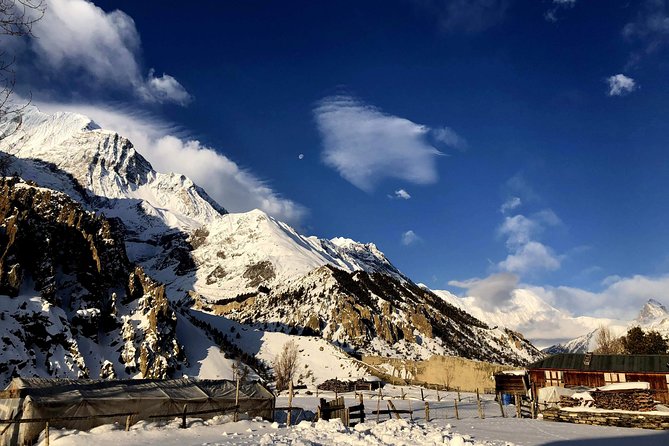
The high pass is the prize at the end. This 14-day private trek combines the Annapurna Circuit with a guide, trekking permits, tea-house lodging, full-board meals on the trail, and the hard-won crossing of Thorung La at 5,416 meters. I especially like the airport pickup and the well-covered hotel arrangements in Kathmandu and Pokhara. I also like the built-in rest day at Manang, which gives your body a fair chance to adjust before the highest walking days.
The main caution is that this is a serious high-altitude trek, not a gentle sightseeing holiday. Some staff and guide training may need improvement, so clear communication matters. The long road transfers, basic trail lodging, extra charges for hot showers and Wi-Fi, and the lack of a porter in the base price also deserve careful thought.
In This Review
- Key points before you book
- What the $1,150 price really covers
- Day 1: A soft landing in Kathmandu
- Day 2: The long road to Syange
- Day 3: From Syange toward Dharapani
- Day 4: Forest, ridges, and Chame
- Day 5: Paungda Danda and the road toward Pisang
- Day 6: Upper Pisang to Manang
- Day 7: Rest and acclimatization in Manang
- Day 8: Higher ground beyond Manang
- Day 9: Thorung Phedi and the final approach
- Day 10: Thorung La to Muktinath
- Day 11: The long ride to Pokhara
- Day 12: A free day in Pokhara
- Day 13: Returning to Kathmandu
- Day 14: Airport transfer and departure
- Guide quality, private groups, and practical concerns
- What to pack and what costs extra
- Should you book the Annapurna Circuit Trek?
- FAQ
- How long is the Annapurna Circuit Trek?
- Where does the trek begin?
- Is this a private trek?
- What is the highest point of the route?
- Are meals included?
- Is a porter included?
- Can I cancel for a full refund?
Key points before you book
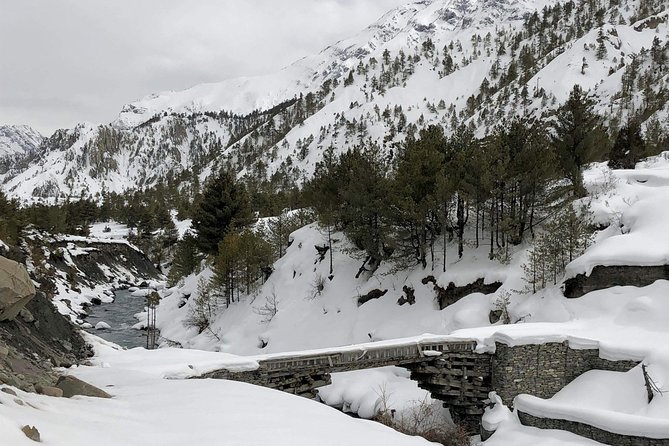
- Thorung La reaches 5,416 meters: The pass is the physical centerpiece of the trip and requires steady pacing.
- Manang includes an acclimatization day: You can rest or take shorter hikes to Bonjo Gumba, Gangapurna Lake, or nearby viewpoints.
- Full board applies while trekking: Breakfast, lunch, dinner, and tea are included on the trail, but not every meal in Kathmandu or Pokhara.
- The route mixes trekking and long drives: Expect an 8 to 9 hour drive to Syange and about 10 hours from Muktinath to Pokhara.
- This is a private group trip: Only your own party participates, and the route can be adjusted to suit your needs.
- Porter service costs extra: The company may provide a duffel bag and sleeping bag if needed, but carrying your own load is the default.
What the $1,150 price really covers
At $1,150 per person, this trek offers a useful bundle for anyone who does not want to arrange Nepal’s permits, transport, hotels, guides, and mountain lodging separately. You receive airport and hotel transfers by private vehicle, a professional trekking guide, essential permits and entrance fees, Kathmandu and Pokhara hotels with breakfast, tea-house accommodation, and full-board meals during the walking portion.
That matters on the Annapurna Circuit. The trip involves several transport changes, remote lodges, local buses or jeeps, and a high-altitude crossing. Having one company handle the paperwork and timing reduces the number of small decisions you need to make.
The value is strongest if you want a ready-made trip with support. The score is listed as 5 out of 5 from 35 reviews, with 100 percent recommending the experience. The most warmly praised practical features are the airport transfers, smooth document arrangements, and good hotel accommodation in Kathmandu and Pokhara.
Still, $1,150 is not the final cost. International flights, a Nepal visa, tips, porter service, alcoholic drinks, bottled water, Wi-Fi, charging, hot showers, and other personal expenses are excluded. Lunch and dinner in Kathmandu and Pokhara are also yours to pay for.
The absence of a porter is especially important. If you are not used to carrying trekking gear for several hours a day, budget for that service before you commit. You may receive a company duffel bag and sleeping bag for use, but that does not remove the need to carry your own pack.
More Annapurna Circuit Itineraries:
- Annapurna Circuit Trek with Tilicho Lake
★ 5.0 · 368 reviews - Annapurna Circuit Trek
★ 5.0 · 94 reviews - Annapurna Circuit Trek
★ 5.0 · 34 reviews
Day 1: A soft landing in Kathmandu
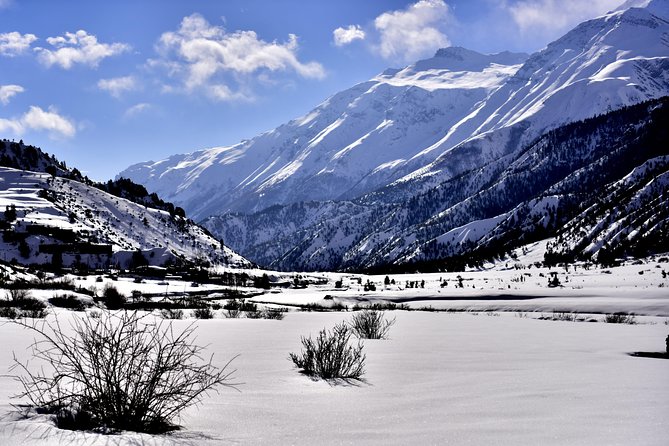
Your trip begins at Tribhuvan International Airport, where a company representative meets you and transfers you to your hotel by private vehicle. After time to rest, your guide gives you a briefing about the Annapurna Circuit.
This is a sensible first day. You do not have to find a taxi after a long international flight, and the briefing gives you a chance to ask about pace, gear, meals, and the demanding days ahead. I would use this meeting to confirm exactly what you are carrying, how the guide handles altitude concerns, and what time the early road departure begins.
Your Kathmandu hotel includes breakfast, but lunch and dinner are not included during the city stay. Plan for your own meals and personal spending here.
Day 2: The long road to Syange
After breakfast, the group drives toward Syange. The journey takes about 8 to 9 hours, with the route beginning by tourist bus from Kathmandu toward Besisahar and continuing by local transport as arranged.
This is not a scenic transfer you should underestimate. It is a full day on the road before the main walking begins. The benefit is that the itinerary gets you farther into the circuit quickly. The drawback is fatigue, especially if roads are rough or traffic slows the journey.
Admission fees are included for this day. You should keep water and essential items close rather than buried in luggage, since you will spend most of the day moving between road stops and vehicles.
Day 3: From Syange toward Dharapani
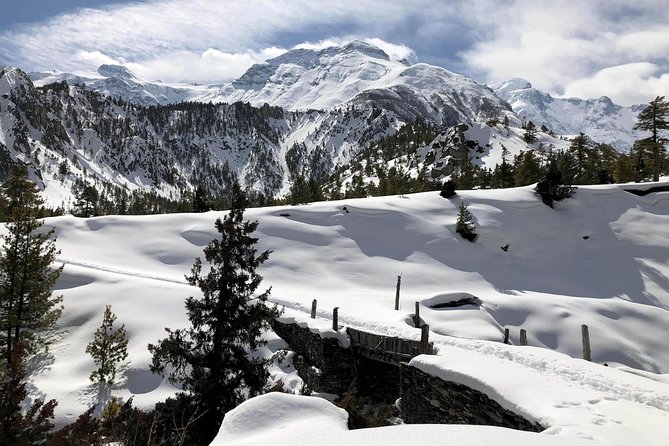
The first proper walking day follows the route toward Dharapani. The description allows roughly 7 to 8 hours of walking, although the daily schedule also lists about 6 hours. Either way, prepare for a long day on foot.
You cross a bridge and continue through the early mountain scenery toward Dharapani. This is where the trek begins to feel real. You are no longer simply being transported toward the mountains, and your legs begin to show you what the next 11 days require.
The route is included with the necessary entrance fees. Your overnight stay is in a lodge or tea house, with twin-sharing accommodation and full-board meals. Trail lodging is practical rather than luxurious. Expect the comfort of a warm meal and a bed, but keep expectations modest regarding private facilities and modern conveniences.
More Treks and Hikes:
- Everest Base Camp Trek – 14 Days
★ 5.0 · 1,499 reviews - Everest Base Camp Trekking
★ 5.0 · 485 reviews - Nagarkot Sunrise View and Day Hiking from Kathmandu
★ 5.0 · 471 reviews - Everest Base Camp Trekking – 13 Day
★ 5.0 · 365 reviews
Day 4: Forest, ridges, and Chame
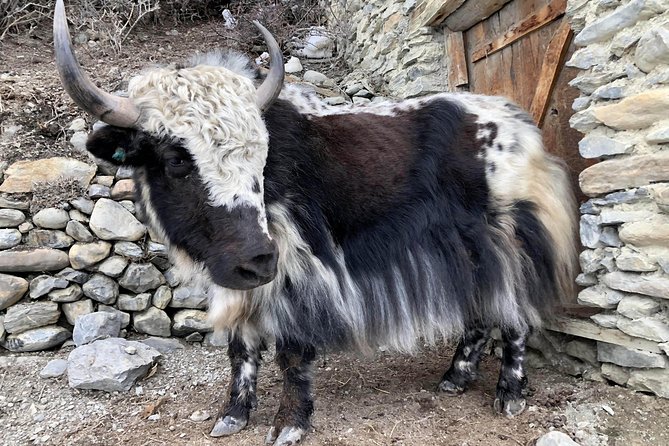
The walk toward Chame passes through steep ridges, green woodland, and areas affected by landslides. The day is expected to take about 6 hours.
This section rewards attention. You need to watch the trail, especially where the ground is steep or uneven, while still looking up to enjoy the surrounding peaks. The route description is honest about the need for caution, which is useful for anyone who imagines the circuit as a simple uphill path.
Chame is one of the route’s important settlements and a useful place to settle into the rhythm of trekking. Your guide’s role matters here. A good guide should help keep the group together, judge a sensible pace, and point out safe footing in the rougher sections.
Day 5: Paungda Danda and the road toward Pisang
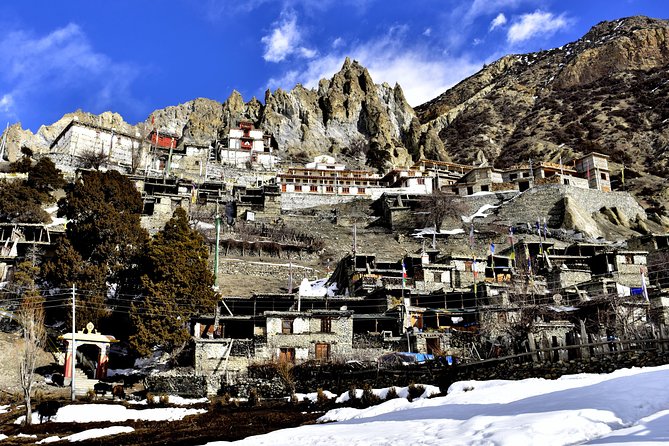
The trail becomes narrow and steep as it follows the valley. One of the day’s visual highlights is Paungda Danda, a curved rock formation rising about 1,500 meters.
The walk takes about 6 hours. This is a day for patience rather than speed. The high cliffs and changing terrain make the route memorable, but the narrow sections call for care, particularly if you are carrying your own bag.
The scenery begins to shift as you move farther into the circuit. You see a more open mountain setting and start to feel the approach of Manang. Meals remain covered while trekking, including breakfast, lunch, dinner, and tea.
Day 6: Upper Pisang to Manang
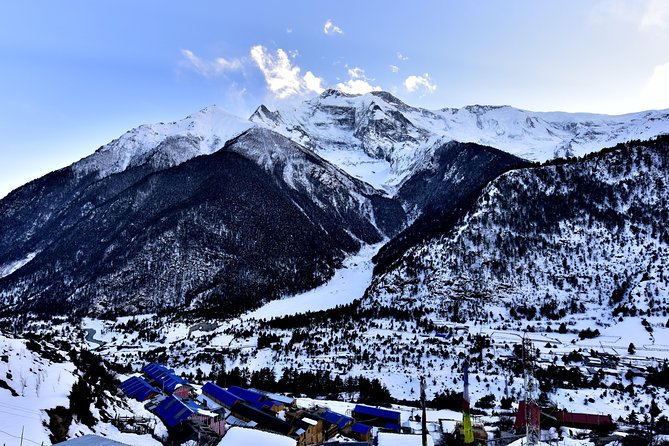
The route continues through Upper Pisang toward Manang, with a planned walking time of about 7 hours. The itinerary description also refers to Tenki and the Marshyangdi Valley, along with juniper trees, a stream, and Ghunsa Village.
Manang is one of the great stops on the circuit because it is both scenic and practical. It gives you access to a longer acclimatization break before the pass. The views become more dramatic, but the altitude also becomes a bigger concern.
Do not treat arrival in Manang as a reason to push harder. Eat, drink, rest, and listen to your guide. The next day is deliberately lighter for a reason.
Day 7: Rest and acclimatization in Manang
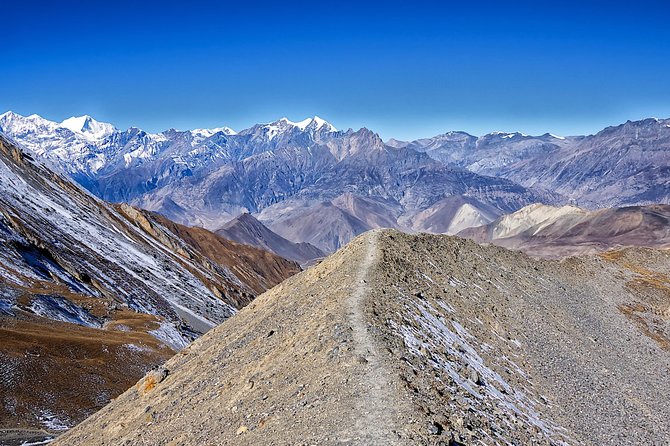
This is a rest day, but it does not have to mean sitting indoors all day. You may take a short hike to Bonjo Gumba or Gangapurna Lake, with other nearby walking options mentioned around the village.
I like this part of the plan. A high-altitude trek needs a slower day, and Manang gives you a chance to test how your body responds before the route climbs higher. Keep any outing short and steady. This is not the day to prove your fitness.
The schedule allows about 5 hours for optional activity, but you should not feel obliged to use every available hour. If you feel unwell, resting is the better choice. Your guide carries first-aid medicine, but that is not a replacement for careful pacing or medical advice.
Day 8: Higher ground beyond Manang
The trail climbs again through Tenki and along the northwestern side of the Marshyangdi Valley. You pass a small stream, juniper trees, and Ghunsa Village. The walking time is about 4 hours.
This shorter day is helpful as the air gets thinner. The route still demands effort, but the reduced walking time gives you room to move slowly and take breaks. At this stage, the scenery is not the only thing changing. Your breathing, sleep, appetite, and energy can all feel different.
This is where a private trek has an advantage. Your group can discuss pace with the guide rather than trying to match strangers. The tour is customizable, although any changes should be agreed on carefully because altitude and lodge availability limit what can be changed safely.
Day 9: Thorung Phedi and the final approach
The day begins with a gradual ascent toward Thorung Phedi. You cross a suspension bridge to reach Lather Village, then continue past cliffs toward the high camp area. The planned walking time is about 4 hours.
Thorung Phedi is a strategic overnight stop before the pass. The short schedule helps you save energy for the following morning, when the main challenge arrives. Do not let the shorter distance fool you. At altitude, four hours can feel much harder than four hours at home.
This is a good evening to organize your pack, check your layers, and ask your guide about the next day’s start. Keep the essentials accessible. You do not want to empty your entire bag in a cold lodge before an early crossing.
Day 10: Thorung La to Muktinath
This is the hardest and most memorable day. You cross Thorung La, at 5,416 meters, before descending toward Muktinath on the western side of the pass. The full day takes about 8 hours.
The challenge is not only the height. You also face cold, thin air, a long ascent, and a major descent afterward. Going slowly is not a sign of weakness here. It is the sensible way to protect your energy.
Muktinath adds cultural interest to the day. The stop includes Muktinath Temple, a major pilgrimage site with strong significance in Nepal. The route also brings you into the Tibetan-influenced culture of Mustang, giving the circuit a change in character after the Manang section.
This is the day when a guide can be especially useful. You need someone who can monitor the group, help with route decisions, and respond if a member struggles. The company’s first-aid kit is carried by the local guide, but you should still bring any personal medication you need.
Day 11: The long ride to Pokhara
After breakfast, you leave the mountains by shared bus or jeep for Pokhara. The drive from Muktinath takes about 10 hours.
This is a demanding transfer after the pass. You may be ready for a quiet hotel room, and that is exactly what you receive in Pokhara. Two hotel nights with breakfast are included in the overall trip, giving you a more comfortable base after the tea houses.
The long drive is also the itinerary’s clearest weakness. It saves time compared with walking the entire circuit, but it is not relaxing in the same way as a short scenic transfer. If you are prone to motion sickness, plan ahead with suitable medication and keep water nearby.
Day 12: A free day in Pokhara
The day after the trek is open for exploring Pokhara Valley on your own. No organized activity is specified, so you have flexibility.
I like having this buffer. Your body may need a quiet morning, while someone else in your group may want to explore. Since lunch and dinner are not included at the Pokhara hotel, you can choose where and what to eat.
Use this day to rest, sort your belongings, and confirm the next day’s departure. It is also a good moment to review any extra charges, such as the optional flight to Kathmandu.
Day 13: Returning to Kathmandu
After breakfast, you return to Kathmandu by tourist bus, a journey of about 7 hours. A flight from Pokhara is available for an extra charge.
The bus is included, while the flight costs more. That choice depends on your budget and how much time you want in Kathmandu. The return transfer to your Kathmandu hotel is included, along with breakfast at the hotel.
You spend two nights in Kathmandu as part of the package, though the first night is on arrival and the second follows Pokhara. City meals beyond breakfast remain your responsibility.
Day 14: Airport transfer and departure
On departure day, the company provides a private vehicle transfer to Tribhuvan International Airport. The transfer takes about 20 minutes, although traffic can affect the actual timing.
The trip ends with a completion certificate after a successful trek. That is a small touch, but it gives you a physical reminder of completing one of Nepal’s best-known high-altitude routes.
Guide quality, private groups, and practical concerns
The private format is one of the strongest parts of this experience. Only your group participates, so the pace can be discussed openly and the route can be adjusted within practical limits. That is valuable on a trek where people often have different energy levels.
At the same time, guide quality deserves attention. A detailed assessment of the experience praised the hotel stays and smooth arrangements for documents and airport transfers, but also pointed out that staff and trekking guides need more training. I would treat that as a useful warning rather than a reason to dismiss the trip.
Before departure, ask who your guide will be, what qualifications and high-altitude experience they have, how emergencies are handled, and whether a porter can be added. The supplied information does not name the guide, so get that detail before you travel.
The tour requires moderate physical fitness. You should be comfortable with repeated days of walking, steep terrain, long hours, and the effects of high altitude. The pass is not a casual add-on.
What to pack and what costs extra
The company may provide a duffel bag and sleeping bag if needed. You still need personal clothing and trekking essentials, and you should plan for variable conditions at lower and higher elevations.
Extra costs include:
- International flights and Nepal travel visa
- Guide and porter tips
- Porter service
- Alcoholic drinks
- Bottled water
- Wi-Fi and device charging
- Hot showers during the trek
- Lunch and dinner in Kathmandu and Pokhara
- Any personal expense outside the listed inclusions
The full-board arrangement removes much of the daily food planning on the trail. It does not mean every drink, snack, shower, or comfort item is included, so carry some Nepalese currency for small purchases.
Should you book the Annapurna Circuit Trek?
I would book this trek if you want the major logistics handled, prefer a private group, and are ready for a serious mountain route. The price is reasonable for the combination of permits, guide, accommodation, meals, airport transfers, and city hotels, particularly if you would rather not organize each part yourself.
I would hesitate if you want luxury lodging, dislike long road journeys, need a porter included, or have limited experience with strenuous high-altitude walking. Ask about the guide’s qualifications and add the likely extras to your budget before paying.
The itinerary’s best features are clear: Manang gives you a rest day, Thorung La provides a genuine goal, Muktinath adds cultural interest, and the company handles much of the paperwork and transport. With realistic expectations and careful preparation, this is a strong choice for an active visitor who wants the classic Annapurna route without managing every detail alone.
FAQ
How long is the Annapurna Circuit Trek?
The experience lasts approximately 14 days, including arrival and departure transfers, trekking days, a rest day in Manang, a rest day in Pokhara, and transport between Kathmandu, the trail, Pokhara, and Kathmandu.
Where does the trek begin?
The experience begins at Tribhuvan International Airport in Kathmandu, Nepal. A company representative meets you there and transfers you to your hotel by private vehicle.
Is this a private trek?
Yes. Only your own group participates, and the trek can be customized to suit your needs.
What is the highest point of the route?
The highest point is Thorung La, also called Thorong La in the itinerary, at 5,416 meters.
Are meals included?
Breakfast is included at the Kathmandu and Pokhara hotels. During the trek, full-board meals are included, consisting of breakfast, lunch, dinner, and tea. Lunch and dinner in Kathmandu and Pokhara are not included.
Is a porter included?
No. Porter service is not included in the price. A company duffel bag and sleeping bag may be provided if needed, but you should ask about adding a porter if you do not want to carry your own trekking gear.
Can I cancel for a full refund?
You can cancel at least 24 hours before the experience begins for a full refund. Changes or cancellations made less than 24 hours before the start time are not accepted or refunded. If poor weather causes cancellation, you are offered another date or a full refund.
Just added around Kathmandu
- Private Shopping Tour in Kathmandu★ 5.0 · 3 reviews
- Nagarkot Sunrise With 7 UNESCO World Heritage Private Tour★ 5.0 · 3 reviews
- Mount Everest Scenic Flight 50 Minutes★ 5.0 · 3 reviews
- Kathmandu: Nightlife and Pub Crawl Tour★ 5.0 · 3 reviews
- Kathmandu: Nagarkot, Bhaktapur, Doleswor & Sanga Statue Tour★ 5.0 · 3 reviews
- Momo Cooking Class -The Art Of Making MoMo with Home Chef★ 5.0 · 3 reviews
- Everest Experience Trek 6 Day Hiking Adventure★ 5.0 · 3 reviews
- Kathmandu: Momo Making Class with a Local Chef★ 5.0 · 3 reviews
Annapurna Circuit Treks, compared.

15-Day Private Annapurna Circuit Trek from Kathmandu
Read our review →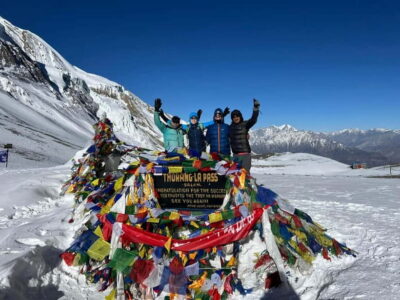
Annapurna Circuit Trek with Tilicho Lake (16 Days)
Read our review →Browse the lists this tour appears in