
Reviewed · PRIVATE CAR WITH DRIVER
Kathmandu 2 days tour private car and guide, cover major highlights
Four UNESCO sites make a strong Kathmandu introduction. This private two-day tour links the city’s major temples, palaces, stupas, and cremation grounds by car with a local guide, giving you a useful first look without the work of arranging several separate outings. I especially like the private vehicle and hotel pickup, which make the busy Kathmandu streets easier to manage, and the chance to set the departure time by phone after booking. The main drawback is that monument entry fees are extra, so the $95 price is not the full cost.
The plan also gives you a good cultural spread. You see the old royal center, Buddhist pilgrimage sites, major Hindu temples, and the medieval squares of Patan and Bhaktapur. The schedule is full, but the private format lets you adjust the timing. Guide Paras receives especially warm praise for his clear explanations and relaxed manner, while guide Gyan is noted for sharing stories beyond the standard guidebook.
In This Review
- Key points to know before booking
- Why this two-day plan works
- Kathmandu Durbar Square and the living goddess
- Swayambhunath, the hilltop Monkey Temple
- Pashupatinath and the Bagmati River
- Boudhanath, Kathmandu’s Little Tibet
- Patan Durbar Square and the art of the palace towns
- Bhaktapur and the medieval valley outside Kathmandu
- What the $95 price really covers
- Timing, flexibility, and what to clarify
- Who should book this Kathmandu tour?
- Should you book it?
- FAQ
- How long is the Kathmandu tour?
- What sights are included on day one?
- What do you visit on day two?
- Is transportation included?
- Is a guide included?
- Are entrance fees included in the price?
- What time does the tour start?
- Can children join the tour?
- Can I cancel for a full refund?
Key points to know before booking
- Four major Kathmandu sights on day one: Kathmandu Durbar Square, Swayambhunath, Pashupatinath, and Boudhanath are combined into one efficient city circuit.
- Patan and Bhaktapur on day two: The shorter five to seven-hour outing focuses on medieval palaces, temples, and village scenery.
- Private transport and guide: Only your group participates, with a car, van, or bus supplied according to group size.
- Flexible departure planning: The listed start time is 9:45 a.m., but you can arrange a preferred time by phone after confirmation.
- $95 per person before admission fees: Hotel transfers and guiding are included, but meals, drinks, and monument tickets are not.
- Good fit for a first Kathmandu visit: You cover the city’s essential cultural sights in two days without committing to a long trek or large group excursion.
Why this two-day plan works
Kathmandu can feel like several cities packed together. Royal courtyards, Buddhist shrines, Hindu temples, old palace towns, and ordinary neighborhoods all sit within a relatively small area, but traffic can make short distances take time.
That is where a private car helps. You are not waiting for a large group to gather, and the guide can adjust the pace when you want more time at a courtyard or less time at a crowded monument. You also avoid the need to work out separate taxis for six major sites.
The schedule has a sensible rhythm. Day one stays within Kathmandu itself and concentrates on the city’s best-known religious and royal landmarks. Day two moves toward Patan and Bhaktapur, where the focus shifts to medieval architecture and traditional urban life.
I would treat this as an orientation tour, not a slow archaeological study. You will see a lot in two days, but each stop has enough detail to reward a guide who can explain what you are looking at. Paras is praised for making the experience educational and spiritually meaningful, while Gyan is known for offering local stories that may not appear in a standard guidebook.
A few more trips worth weighing up before you book
- Airport Pickup By Private Car.
★ 4.5 · 25 reviews - Nagarkot Sunrise By Private Car
★ 5.0 · 21 reviews - Private Car Service from Kathmandu to Pokhara
★ 5.0 · 10 reviews
Kathmandu Durbar Square and the living goddess
Your first major stop is Kathmandu Durbar Square, the old royal center. The square is more than one building. It is a group of palace courtyards, shrines, monasteries, sculptures, and ceremonial spaces linked to Nepal’s royal past.
The most distinctive detail is Kumari Baha, associated with the Kumari, Nepal’s living goddess. The word Kumari refers to a virgin girl, while Baha means monastery in the local language. The building is connected to the Kumari tradition, and the courtyard gives you a close look at the carved wood and brickwork that define much of old Kathmandu.
You can expect to spend about an hour in the Durbar Square area according to the suggested day-one plan, though the broader itinerary description allows around five hours for the first day. The difference matters. This is not a fixed museum-style visit with every minute locked in. Your guide can shape the time around your interests and the traffic.
The palace complex also includes a gallery presenting memorials connected with the Shah Dynasty and the Gurkhas. That gives the visit a political and military side, not just a religious one. If you enjoy architecture, ask your guide to point out the courtyards, ancient sculptures, and different roof and temple forms rather than rushing from one named monument to the next.
The practical weakness is that Kathmandu Durbar Square can feel like a lot to absorb at once. Names and stories come quickly. A private guide is most useful here because you can pause and ask what a shrine is for, who used a palace courtyard, or how the Kumari tradition fits into Kathmandu life.
Swayambhunath, the hilltop Monkey Temple
From the old palace center, the car continues to Swayambhunath, often called the Monkey Temple. The drive is listed at about 30 minutes, though Kathmandu traffic can affect any road estimate.
Swayambhunath provides a very different experience from Durbar Square. Instead of palace courtyards, you get a major Buddhist site with a strong hilltop setting and a name that reflects the monkeys often seen around the temple area. The stop adds religious variety to the day and gives you a chance to see how Buddhist worship fits into the wider Kathmandu Valley.
The suggested visit is fairly brisk. That is sensible for a two-day highlights tour, but you should tell the guide if you want extra time here. A short stop can introduce the monument, while a longer one lets you look more closely at the shrine details and observe the movement of worshippers.
I like the way Swayambhunath follows Kathmandu Durbar Square. The two sites show different sides of the city without requiring a separate day. The tradeoff is that day one becomes a steady sequence of stops, so people who prefer quiet, unhurried visits may find the pace quick.
Pashupatinath and the Bagmati River
The tour then goes to Pashupatinath Temple, one of the most important Hindu sites in the Kathmandu Valley. The temple sits beside the Bagmati River, which flows toward the Ganges, and the setting has great religious importance.
This is also the most sensitive stop on the tour. The area includes open public cremation grounds, where Hindu rites may be taking place. You may see holy men with painted faces, dreadlocked hair, and ash on their bodies. This is not a staged cultural show. It is an active religious and funeral site, so respectful behavior matters.
The planned visit lasts about an hour, with the road journey listed at roughly 30 to 40 minutes. Another itinerary entry gives a 30-minute stop, so you should confirm the exact timing with the operator if Pashupatinath is a priority for you.
I consider this one of the tour’s most meaningful visits, but it may not suit everyone. The cremation rituals can be emotionally heavy, and photography needs care and restraint. A good guide can explain the religious setting without turning private ceremonies into entertainment. The guide’s role here is especially important, since a few plain explanations can help you understand the site while keeping your attention respectful.
A different sort of day from Kathmandu:
- Everest Base Camp Trek – 14 Days
★ 5.0 · 1,499 reviews - Private Kathmandu Sightseeing Tour | UNESCO World Heritage sites
★ 5.0 · 756 reviews - Everest Base Camp Helicopter Tour landing at Everest View Hotel
★ 5.0 · 668 reviews - Half day cooking class in Thamel kathmandu
★ 5.0 · 607 reviews
Boudhanath, Kathmandu’s Little Tibet
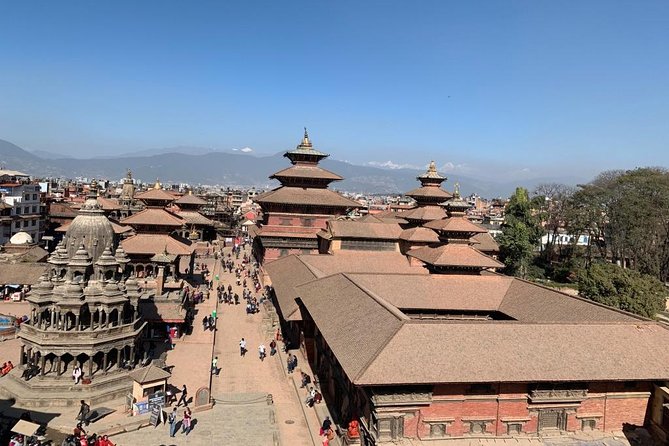
A short drive takes you to Boudhanath Stupa, often called Little Tibet. This is the day’s major Buddhist landmark and a strong contrast with the Hindu rituals at Pashupatinath.
The stupa gives you a more open, circular setting. You can walk around the monument, take in the devotional atmosphere, and notice the Tibetan Buddhist character of the area. The stop works well after Pashupatinath because it shows two major religious traditions within a short drive of one another.
The schedule does not specify a separate length for Boudhanath, so the time will depend on the day’s traffic and the pace of your group. This is another place where a private tour helps. If you want a little extra time to walk around the stupa, you can ask rather than follow a large group’s fixed departure.
After Boudhanath, the car returns you to your hotel. Day one is packed, but it gives you a clear sense of Kathmandu’s religious and royal character. It also leaves you with an important practical lesson: road time is part of sightseeing here. A private car does not remove traffic, but it makes the movement between sites simpler.
Patan Durbar Square and the art of the palace towns
Day two turns toward Patan and Bhaktapur. The outing is expected to last about five to seven hours, making it shorter and less crowded with stops than the first day.
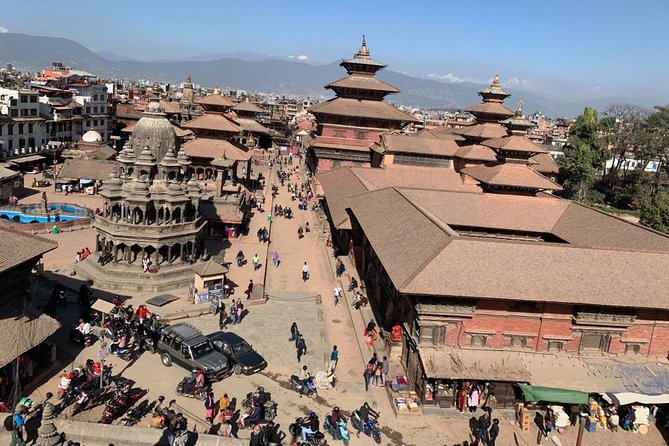
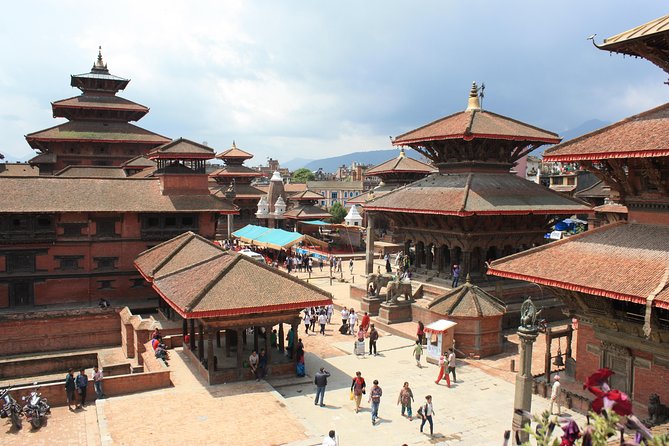
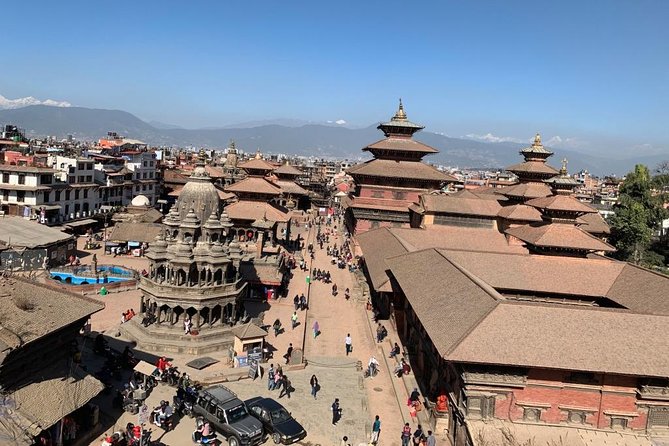
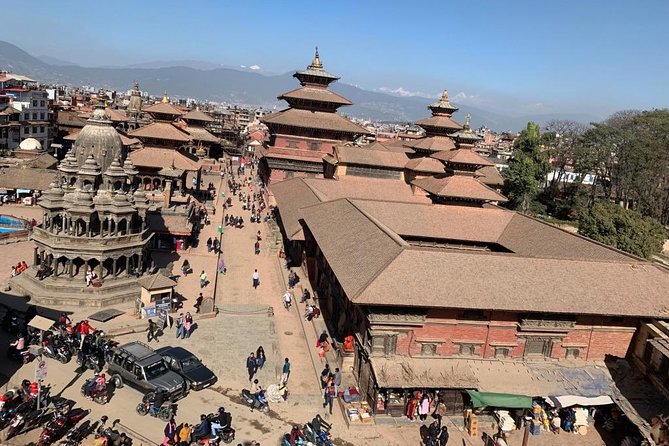
Patan Durbar Square is known for its medieval palaces and temples. It offers another look at Newar architecture and urban design, with carved details and ceremonial spaces that reward slow observation. Because you have already seen Kathmandu Durbar Square, you can compare the two old royal centers rather than treating Patan as an isolated sight.
That comparison is one of the best reasons to visit both. Kathmandu gives you the capital’s old palace core, while Patan adds another historic city center with its own collection of temples, courtyards, and decorative work. The tour information does not provide a precise time allocation for Patan, so ask your guide how the day will be divided if architecture is your main interest.
The private format is useful here for another reason. You can ask for context about the differences between the palace towns, rather than simply taking photographs and moving on. Guide Gyan is praised for telling stories that are not normally found in guidebooks, and that style can add real value at a place where the carved details may otherwise blur together.
Bhaktapur and the medieval valley outside Kathmandu
Bhaktapur completes the second day with another concentration of medieval palaces and temples. The route also includes village areas, giving you a view beyond the central monuments.
The appeal of Bhaktapur is the sense of an old palace town rather than a single religious building. You will see how temples, courtyards, and civic spaces fit together. The visit is a useful counterpoint to Kathmandu because the day moves away from the capital’s main core and into a setting associated with traditional valley life.
The five to seven-hour limit is realistic for a highlights visit to Patan and Bhaktapur, but it is not enough for a very slow study of every shrine. You should decide in advance what matters most to you. If you want both royal squares, the guide will need to keep the day moving. If one place matters more, the private schedule may allow you to give it extra attention.
The mention of villages is important. This is not only a palace-and-temple circuit. You may also see ordinary settlements along the route, which helps connect the grand monuments with the wider Kathmandu Valley. The tour does not promise a long countryside walk, so think of this as a brief road-level look at village life rather than a rural excursion.
What the $95 price really covers
At $95 per person, the tour offers solid value if you want a private two-day introduction and are sharing the vehicle with other members of your own group. You receive a local private guide, private transportation, and hotel pickup and drop-off. Those inclusions remove several common costs and planning tasks.
The price does not include food, drinks, or monument admission fees. That means you should budget beyond the advertised amount. Since the admission charges are not specified, I would ask for the current total before departure so there are no surprises during the day.
The value is strongest for people who want convenience and explanation. If you are comfortable arranging taxis, researching each site, and managing traffic on your own, you might spend less independently. But a private car becomes worthwhile when you have only two days and want the main sites linked efficiently.
Group discounts are available. The vehicle may be a car, van, or bus depending on the group, but the activity remains private, with only your party participating. That makes the cost more attractive for families or friends traveling together.
Timing, flexibility, and what to clarify
The listed start time is 9:45 a.m. After confirmation, you can choose a time by phone. This is helpful if you need to fit the tour around a flight, another activity, or your hotel routine, but do not assume the time changes automatically. Contact the operator and agree on it.
Day one is described as flexible, with the suggested order moving from Kathmandu Durbar Square to Swayambhunath, Pashupatinath, and Boudhanath. Day two covers Patan and Bhaktapur and lasts about five to seven hours.
Because traffic is a major factor in any Kathmandu road trip, I would keep some breathing room around the schedule. The private format lets you change the order or spend more time at a favorite stop, but it cannot guarantee a fast drive.
Hotel pickup and drop-off are included. The tour is private, and confirmation is received at booking. Children must be accompanied by an adult, and the information says most people can participate.
Free cancellation is available when you cancel at least 24 hours before the local start time. Changes or cancellations inside that period are not accepted for a refund, so check your plans early.
Who should book this Kathmandu tour?
I would recommend this tour to you if it is your first visit to Kathmandu and you want the major cultural sights covered quickly. It also suits families, couples, and small groups who prefer a private guide rather than a fixed large-group schedule.
It is a good choice if you value context. The sites are impressive on their own, but the Kumari tradition, Bagmati cremation grounds, Buddhist practice at Boudhanath, and Newar palace architecture are easier to understand with explanation.
I would be more cautious if you want long visits at each monument, quiet photography, or a relaxed pace. Six major sites across two days is efficient, not leisurely. The extra admission fees also mean the final cost will be higher than $95 per person.
Should you book it?
Book this tour if you want a practical Kathmandu introduction with private transport, hotel transfers, and a guide who can add local stories to the main sights. Paras is praised for making the experience both informative and spiritually rewarding, while Gyan receives credit for sharing details beyond the usual guidebook material.
Before confirming, ask for the exact monument fees, the vehicle type for your group, the planned time at each stop, and the final departure time. If you accept a full schedule and budget for admissions, this is a strong two-day way to see Kathmandu, Patan, and Bhaktapur without wasting precious time arranging transport.
FAQ
How long is the Kathmandu tour?
The experience lasts two days. The second day is described as lasting about five to seven hours, while the first day includes several major Kathmandu sights and is presented as a fuller sightseeing day.
What sights are included on day one?
Day one includes Kathmandu Durbar Square, Swayambhunath, also called the Monkey Temple, Pashupatinath Temple and cremation sites, and Boudhanath Stupa.
What do you visit on day two?
Day two visits Patan Durbar Square and Bhaktapur Square, with a focus on medieval palaces, temples, and village areas.
Is transportation included?
Yes. A private car, van, or bus is included for the private trip, along with hotel pickup and drop-off.
Is a guide included?
Yes. A local private guide is included, and only your own group participates in the activity.
Are entrance fees included in the price?
No. Monument entry fees are not included. Food and drinks are also not included.
What time does the tour start?
The listed start time is 9:45 a.m. A different departure time can be arranged by phone after booking confirmation.
Can children join the tour?
Yes, but children must be accompanied by an adult. The additional information also says most people can participate.
Can I cancel for a full refund?
Yes. You can receive a full refund if you cancel at least 24 hours before the experience start time. Cancellations or changes made less than 24 hours before the start are not refunded or accepted.
Just added around Kathmandu
- Private Shopping Tour in Kathmandu★ 5.0 · 3 reviews
- Nagarkot Sunrise With 7 UNESCO World Heritage Private Tour★ 5.0 · 3 reviews
- Kathmandu: Nightlife and Pub Crawl Tour★ 5.0 · 3 reviews
- Mount Everest Scenic Flight 50 Minutes★ 5.0 · 3 reviews
- Kathmandu: Nagarkot, Bhaktapur, Doleswor & Sanga Statue Tour★ 5.0 · 3 reviews
- Momo Cooking Class -The Art Of Making MoMo with Home Chef★ 5.0 · 3 reviews
- Makalu Base Camp Trek★ 5.0 · 3 reviews
- Everest Experience Trek 6 Day Hiking Adventure★ 5.0 · 3 reviews
Private Car with Driver, compared.
Chandragiri Hills cable car day trip, private car with driver from Kathmandu
Read our review →
Discover Pokhara in Style: Private Vehicle Service with Driver
Read our review →
Private Car Drive from Pokhara to Kathmandu and V.V
Read our review →Browse the lists this tour appears in