
Reviewed · KATHMANDU UNESCO HERITAGE TOURS
Kathmandu: Private UNESCO World Heritage Site Tour
Sacred places shape every corner of Kathmandu. This private day tour links four UNESCO World Heritage Sites with hotel pickup, a private car, and a guide who can explain the religious meaning behind the monuments instead of leaving you to guess. I especially like the convenient route through the Kathmandu Valley and the personal attention from guides such as Ramesh, Rajendra Manandhar, Badri Nepal, Bhin, and Niraj.
I also like the flexible approach. Guides have adjusted visits for families, skipped places guests had already seen, and allowed extra time at Pashupatinath. The main drawback is simple: monument entrance fees and meals are not included, so the advertised $50 price is not your full day’s cost.
In This Review
- Key points at a glance
- Why this Kathmandu day tour works well
- Starting in the Kathmandu Valley
- Swayambhunath, the hilltop Monkey Temple
- Kathmandu Durbar Square and the old royal center
- Boudhanath Stupa, the day’s great visual pause
- Pashupatinath Temple and the spiritual heart of Kathmandu
- Private transport through Kathmandu’s tight traffic
- The guides are the main reason to book privately
- What the $50 price really includes
- Who will get the most from this tour
- Should you book this Kathmandu heritage tour?
- FAQ
- How long does the Kathmandu UNESCO World Heritage Site tour last?
- Which sites are included?
- Is hotel pickup included?
- Are entrance fees included in the price?
- What languages does the guide speak?
- Can I cancel the tour for a full refund?
Key points at a glance
- Four major heritage sites in one day: Visit Kathmandu Durbar Square, Boudhanath Stupa, Pashupatinath Temple, and Swayambhunath Stupa.
- Private transport matters: Your driver waits while you walk through each site, a useful comfort in Kathmandu’s tight traffic.
- Guides receive the strongest praise: Ramesh is often singled out for care and flexibility, while Rajendra, Badri, Bhin, and Niraj are also praised for clear cultural explanations.
- Boudhanath is the visual high point: This enormous white-and-gold stupa is described as the largest in South Asia.
- Expect a full day on foot: The schedule allows about 11 hours across the valley, with several hours of walking and sightseeing.
- Budget extra money: Meals, drinks, and admission charges are separate from the $50 tour price.
Why this Kathmandu day tour works well
Kathmandu can feel like a large puzzle on your first day. Temples appear behind shops, prayer flags cross side streets, and major monuments sit in different parts of the valley. A private tour gives you a useful framework. You can see the essential sites without spending your first day arranging taxis, checking opening details, or trying to understand why a shrine matters.
The route covers Hindu and Buddhist traditions side by side. At Pashupatinath, you encounter one of Nepal’s most sacred Hindu temple complexes. At Boudhanath and Swayambhunath, Buddhist symbols and ritual practices take center stage. Kathmandu Durbar Square adds royal architecture, courtyards, and carved temples to the mix.
The tour lasts one day and costs $50 per person. That is a fair starting price for a private vehicle, hotel pickup and drop-off, a live guide, and tax. You must still pay for the monuments and your own food and drinks, so keep extra cash available. The value is strongest if you want a guided introduction rather than four quick photo stops.
More UNESCO Heritage Days:
- Private Kathmandu Sightseeing Tour | UNESCO World Heritage sites
★ 5.0 · 756 reviews - Kathmandu: Full Day 7 UNESCO Tour with Lunch – Private/Group
★ 5.0 · 415 reviews - Kathmandu: Full Day Top 4 UNESCO Tour with Lunch – Private/Group
★ 5.0 · 269 reviews
Starting in the Kathmandu Valley
Pickup is available from your hotel in Kathmandu or from Outshine Adventure in Thamel, with Paknajol Marg listed as the pickup and drop-off point. After breakfast, you meet your guide and driver before heading into the valley.
The exact starting time depends on availability, so you should check it when booking. Since the day includes four major sites and substantial walking, an early start is sensible if offered. Traffic can affect the order and duration of stops, but the private format gives the guide more room to make practical adjustments.
The valley itself adds to the experience. Green hills and cultivated areas appear beyond the dense city, and the changing views help explain why Kathmandu has long been both a cultural center and a place of natural beauty. Do not expect a quiet countryside outing. This is a city tour, and the road sections are part of understanding how old sacred sites fit into modern Kathmandu.
Swayambhunath, the hilltop Monkey Temple
Swayambhunath is scheduled for about two hours, including a guided visit and walking. It is commonly called the Monkey Temple because monkeys live around the stupa, and the playful animals are one of the site’s memorable details. You may see them moving around the steps and surrounding areas, but treat them as wild animals rather than pets.
The stupa gives you a strong first lesson in Nepal’s religious art. Your guide can explain the symbols, temple details, and spiritual practices that make the site more than a scenic viewpoint. The tour information also highlights the chance to see intricate Hindu temple artwork elsewhere during the day, so this stop helps set up the broader mix of faiths found throughout Kathmandu.
Allow energy for the walking. Swayambhunath is not a drive-up photo stop in this schedule. You have time to look closely, ask questions, and take in the city views, but comfortable shoes will make the visit easier. The two-hour timing is useful because a rushed visit would miss much of what makes the place distinctive.
Kathmandu Durbar Square and the old royal center
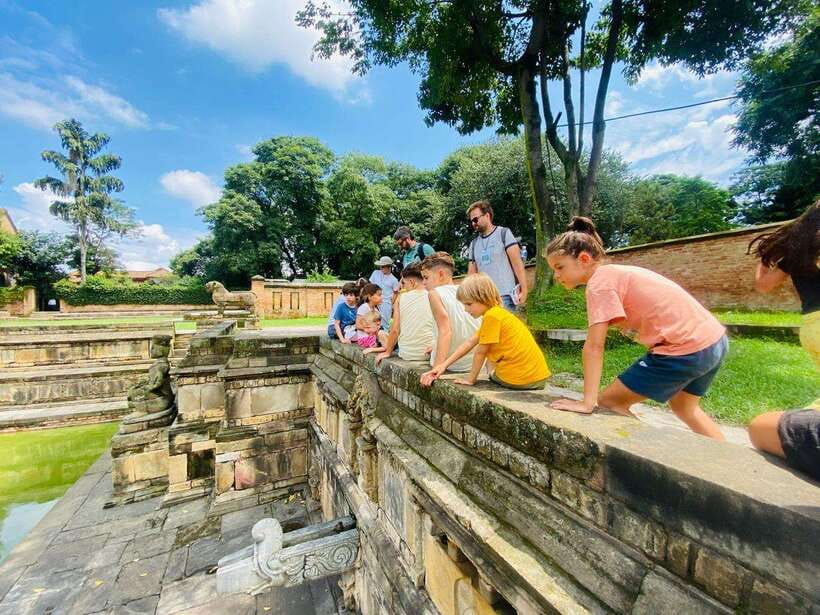
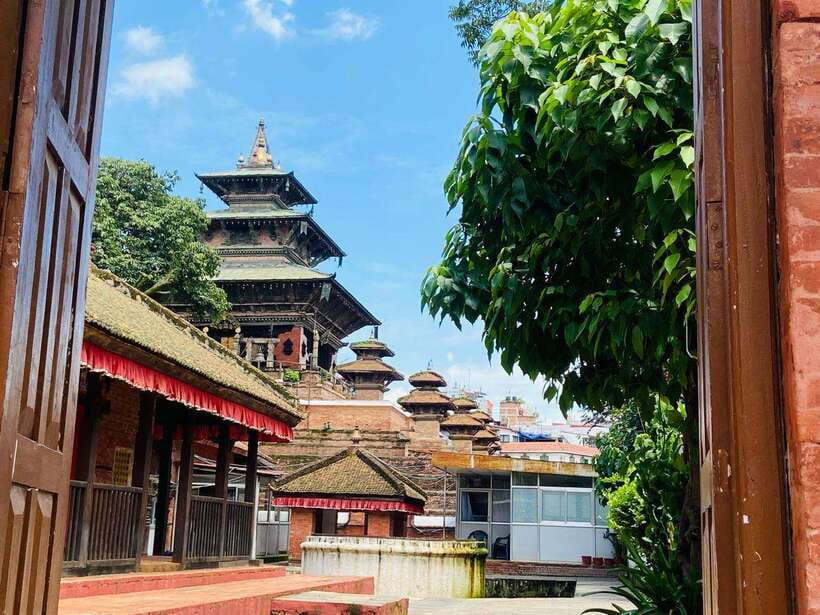
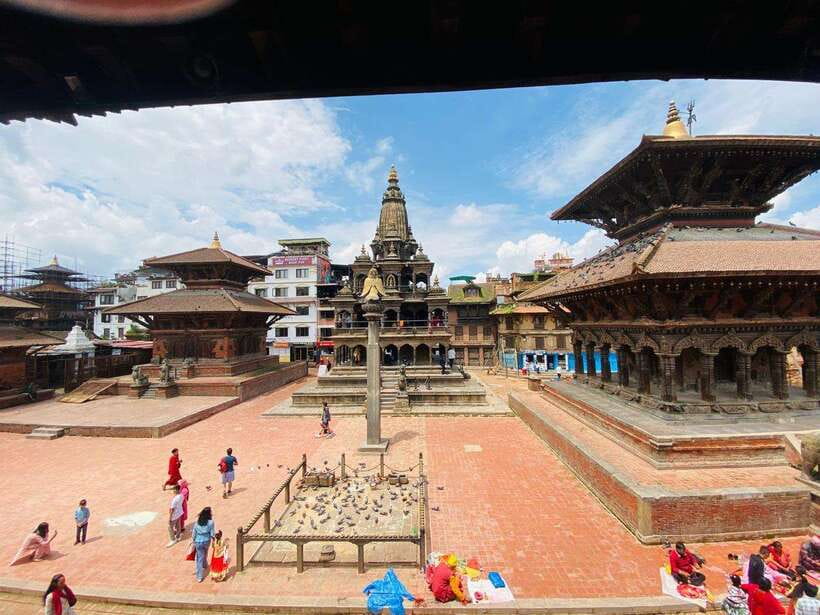
Kathmandu Durbar Square receives another two-hour visit. Here, you walk among temples and historic buildings associated with Kathmandu’s royal and religious life. The supplied description places some temples as far back as the third century, giving the square a long timeline that reaches well beyond the more recent streets around it.
This is the stop where a guide can make the greatest difference. Carved wood, courtyards, shrines, and palace buildings can look impressive without being easy to interpret. Rajendra Manandhar has been praised for explaining religion, the country, and daily life, while Bhin is noted for answering detailed questions and allowing time at each location.
The square also gives you a close look at city life. You are not visiting a sealed museum. People move through the area, worshippers use the temples, and daily activity continues around the historic buildings. That mixture can feel noisy and crowded, but it is also the point. You see heritage as part of living Kathmandu rather than as a display removed from ordinary life.
The site’s name may bring Kasthamandap to mind, the temple traditionally associated with the city’s name and built from a single tree. The tour description connects Kathmandu’s identity with this remarkable building tradition. Ask your guide to point out the details that are easy to pass while walking.
More History Tours:
- UNESCO Seven World Heritage Tour in Kathmandu
★ 5.0 · 253 reviews - Kathmandu Private Sightseeing Tour | UNESCO World Heritage Sites
★ 5.0 · 109 reviews - Kathmandu: Full Day Private Top 4 UNESCO Heritage Tour W/Lunch.
★ 5.0 · 86 reviews - Kathmandu World Heritage Tour
★ 5.0 · 74 reviews
Boudhanath Stupa, the day’s great visual pause
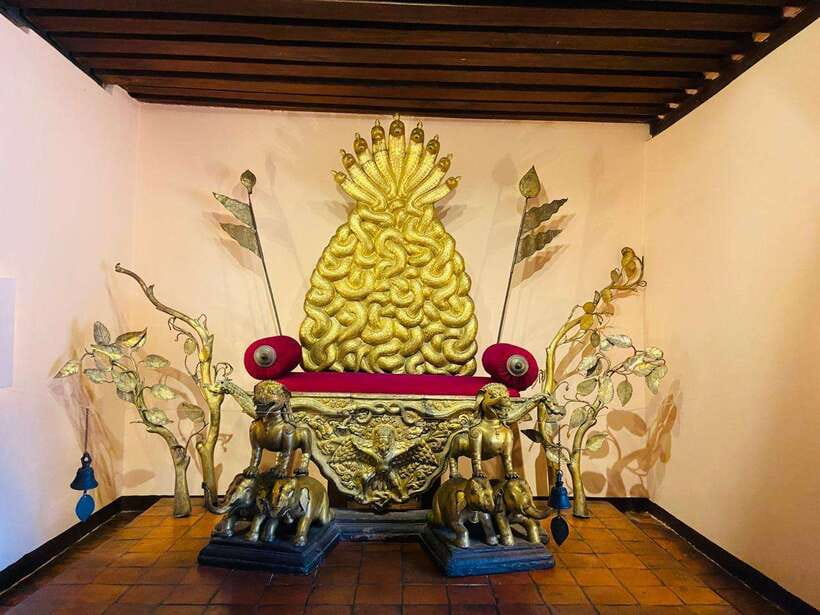
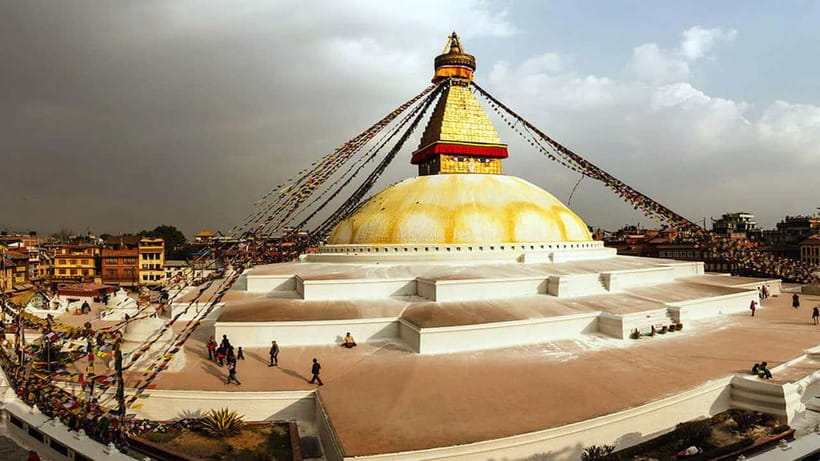
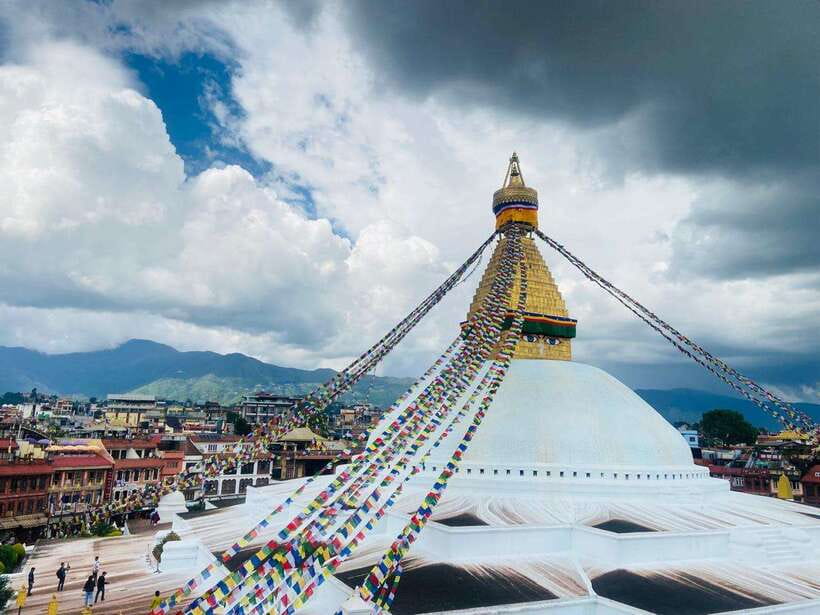
Boudhanath Stupa is planned as a one-hour stop with guided sightseeing and free time. It is described as the largest stupa in South Asia, and its scale is immediately different from the more enclosed temple spaces elsewhere in the city.
The broad white dome, golden details, prayer flags, and steady movement around the base give the site a strong sense of order. The usual practice is to walk around the stupa, and your guide can explain the meaning of the structure and the rituals taking place around it. Even with only an hour, you have room to make a circuit, take photographs, and pause without being hurried from one corner to the next.
This is a good place to ask questions about Buddhism in Nepal. The private format helps here because you can set the pace and ask for explanations suited to your own interests. If you prefer architecture, focus on the stupa’s form and details. If you are more interested in religious practice, ask your guide to explain the walking route and the prayer activity.
The shorter time is the one limitation. Boudhanath deserves longer if you want a slow visit, time for shopping, or a relaxed meal nearby. Since food is not included, any café or restaurant stop would need to fit into the day with your guide. Still, placing Boudhanath in a one-day introduction is sensible. It gives you one of Kathmandu’s most recognizable sights without letting a single monument take over the whole schedule.
Pashupatinath Temple and the spiritual heart of Kathmandu
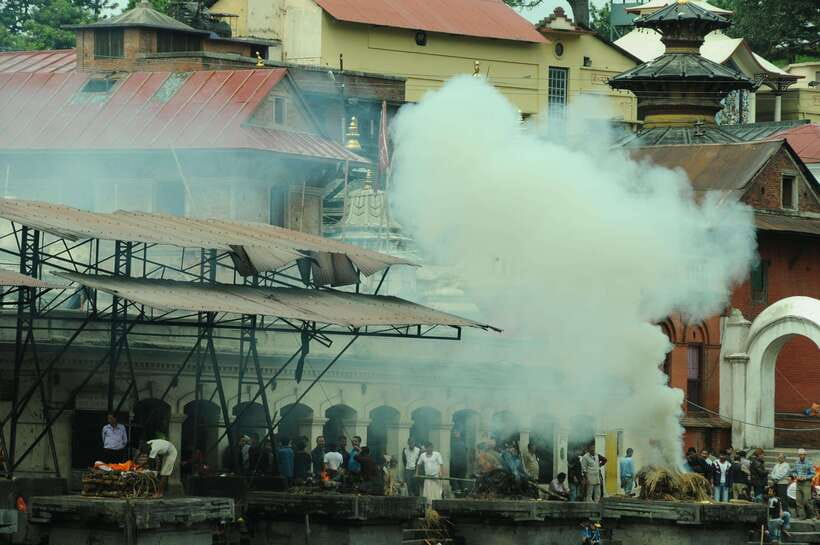
Pashupatinath receives about two hours, including free time. It is one of the most sacred Hindu temples in Nepal, and the tour description evokes the morning bells that fill Kathmandu with religious energy. Even if you are not Hindu, this is an important place to approach with care and attention.
Your guide explains the religious and cultural significance of the temple complex, while you walk through its permitted visitor areas and observe the artwork, shrines, and activity around the site. The supplied information does not promise entry into every part of the temple, so you should follow local rules and your guide’s instructions.
One particularly useful feature is the tour’s flexibility. Christin wanted to spend more time at the crematorium, and the guide accommodated that request. That detail matters because Pashupatinath can be emotionally powerful. Some visitors may want to observe quietly, while others may prefer to keep moving. A private guide can respond better than a fixed group schedule.
Pashupatinath is also a place where cultural sensitivity matters most. Keep your voice low in areas connected to worship and cremation, ask before photographing people, and let the guide explain what is appropriate. The goal is not simply to collect another famous sight. It is to understand a living religious center respectfully.
Private transport through Kathmandu’s tight traffic
The private car is not a luxury extra here. It is a practical part of the tour. Kathmandu traffic can be slow and difficult to navigate, and the driver handles the roads while you focus on the next stop.
The driver drops you at each location and waits while you walk. Several visitors specifically praised drivers for punctuality and for managing tight traffic. One family also found the car helpful with a four-year-old child, and another visitor called the air-conditioned vehicle a blessing during a hot day.
Air conditioning is not guaranteed as a special feature in every booking description, but it was available for at least some tours. You can ask about the vehicle when arranging your day. Either way, private transport is especially useful if you are traveling with children, have limited time, or do not want to spend the day negotiating separate rides.
The route covers a lot of ground. The schedule lists six hours for general Kathmandu Valley sightseeing, plus two hours at Swayambhunath, two at Kathmandu Durbar Square, one at Boudhanath, and two at Pashupatinath. These times overlap as a practical outline rather than a promise of exact minutes, since traffic and your own pace can change the day.
The guides are the main reason to book privately
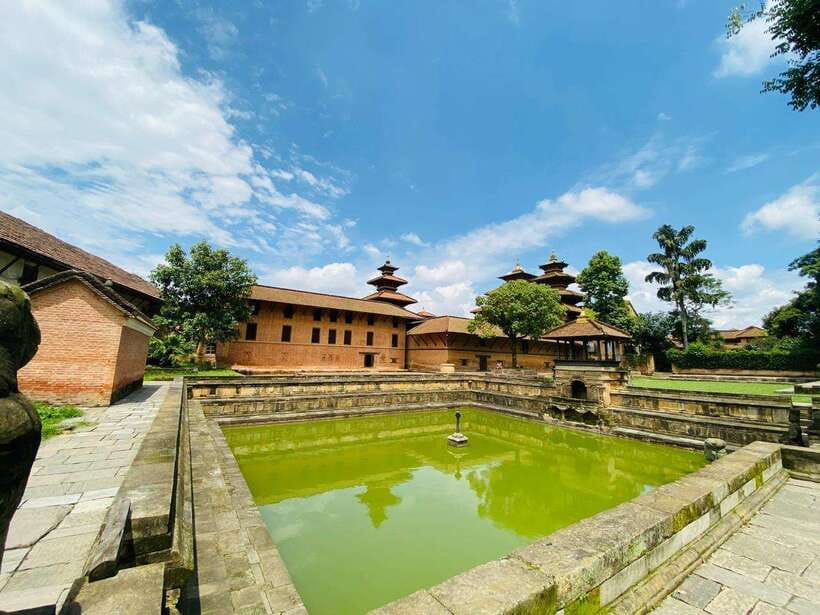
The strongest part of this experience is the human service. Ramesh is repeatedly praised for being caring, attentive, and willing to adapt. Guests describe him as helpful with changes, thorough in his explanations, and supportive from pickup through drop-off.
Other guides add their own strengths. Rajendra Manandhar is praised for being friendly and able to explain religion, Nepal, and local people. Badri Nepal is described as flexible and helpful with local purchases such as malas, bracelets, and thangka paintings. Bhin is praised for detailed answers and for giving people time at each site. Niraj is noted for his passion and clear explanations of culture, history, and spiritual traditions.
Guide assignment can vary, so you should not assume you will receive a particular person. Still, these names show the level of service the company can provide. The live tour is offered in English or Spanish, which makes the cultural explanations more useful than a simple driver-led transfer.
A good guide also helps you avoid a common Kathmandu problem: seeing impressive buildings without understanding their purpose. Here, you can ask why a symbol appears, how a ritual works, or how Hindu and Buddhist traditions share the same valley.
What the $50 price really includes
At $50 per person, the tour offers a reasonable way to cover four major sites in a single day. The package includes an expert guide, hotel pickup and drop-off, private transportation, and taxes.
You must budget separately for:
- Monument entrance fees
- Meals
- Drinks
That distinction matters. The tour is not an all-inclusive sightseeing day. If you want lunch, coffee, or bottled water, pay for those yourself. One visitor specifically wished water had been included during a hot day, so carry money and consider bringing your own bottle.
The value improves when two or more people share the private vehicle, though the listed price is per person. Solo visitors still gain from the convenience and guide access, but should compare the cost with a group tour if keeping expenses as low as possible is the main goal.
Free cancellation up to 24 hours before the tour and the option to reserve now and pay later also reduce the risk of changing plans. Those policies are useful in Kathmandu, where weather, flights, and trekking schedules can shift.
Who will get the most from this tour
I would choose this experience if you have one full day in Kathmandu and want context with your sightseeing. It suits first-time visitors, couples, families, solo guests, and anyone who prefers a private car to arranging multiple local rides.
Families may appreciate the flexible pace and the waiting driver. Solo visitors may value having someone to explain customs and help with practical needs. The company has also helped with wider trip planning and stayed in contact to support safety and later arrangements, according to the experience shared by one guest.
This is less suitable if you want a slow, highly specialized visit to one monument. Four major sites in one day means the pace is active. Boudhanath gets about one hour, and each major temple has a planned window. If you already know Kathmandu well, ask for changes before the day begins. The guides have shown they can adjust the route, including skipping places you have already seen.
Bring your passport or another form of identification, as requested in the tour information. Wear shoes suitable for several walking stops, and plan for heat by arranging water and light clothing. Temple visits call for respectful behavior and attention to local instructions.
Should you book this Kathmandu heritage tour?
Book it if you want an efficient, private introduction to Kathmandu’s religious and royal landmarks, with a real guide rather than a simple sightseeing transfer. The combination of Pashupatinath, Boudhanath, Swayambhunath, and Kathmandu Durbar Square gives you a useful first picture of the valley’s Hindu, Buddhist, artistic, and royal traditions.
The most convincing reason to book is the guide service. Ramesh, Rajendra Manandhar, Badri Nepal, Bhin, and Niraj are all praised for clear explanations, kindness, patience, and flexibility. The most important caution is the extra cost of entrance fees, food, and drinks.
For a one-day visit, $50 per person is a fair starting value, especially if private transport and hotel pickup save you time. Ask about the start time, vehicle, expected entrance charges, and any sites you want to adjust. If you want the major sights explained properly and prefer a day shaped around your interests, this is a strong choice from Outshine Adventure.
FAQ
How long does the Kathmandu UNESCO World Heritage Site tour last?
The experience lasts one day. The schedule includes several hours of sightseeing across the Kathmandu Valley, with planned visits to four major sites.
Which sites are included?
The tour visits Swayambhunath Stupa, Kathmandu Durbar Square, Boudhanath Stupa, and Pashupatinath Temple.
Is hotel pickup included?
Yes. Pickup and drop-off are included from your hotel in Kathmandu or from Outshine Adventure in Thamel. Kathmandu, Paknajol Marg is also listed as a pickup and drop-off location.
Are entrance fees included in the price?
No. Monument entrance fees are not included. Meals and drinks are also separate.
What languages does the guide speak?
Live guiding is available in English and Spanish.
Can I cancel the tour for a full refund?
Yes. You can cancel up to 24 hours in advance for a full refund. The activity also offers reserve now and pay later.
Just added around Kathmandu
- Private Shopping Tour in Kathmandu★ 5.0 · 3 reviews
- Nagarkot Sunrise With 7 UNESCO World Heritage Private Tour★ 5.0 · 3 reviews
- Kathmandu: Nightlife and Pub Crawl Tour★ 5.0 · 3 reviews
- Mount Everest Scenic Flight 50 Minutes★ 5.0 · 3 reviews
- Momo Cooking Class -The Art Of Making MoMo with Home Chef★ 5.0 · 3 reviews
- Kathmandu: Nagarkot, Bhaktapur, Doleswor & Sanga Statue Tour★ 5.0 · 3 reviews
- Makalu Base Camp Trek★ 5.0 · 3 reviews
- Everest Experience Trek 6 Day Hiking Adventure★ 5.0 · 3 reviews
Kathmandu UNESCO Heritage Tours, compared.

Private Kathmandu Sightseeing Tour | UNESCO World Heritage sites
Read our review →
Full Day 7 UNESCO Tour with Lunch – Private/Group
Read our review →
Full Day Top 4 UNESCO Tour with Lunch – Private/Group
Read our review →
Full-Day 7 UNESCO Tour with Lunch – Private/Group
Read our review →
Kathmandu Private Sightseeing Tour | UNESCO World Heritage Sites
Read our review →Browse the lists this tour appears in