
Reviewed · KATHMANDU UNESCO HERITAGE TOURS
Kathmandu: UNESCO Heritage Site Private & Guided Tour
Seven heritage sites, one packed outing. This Kathmandu tour links hilltop views, sacred riverside temples, enormous stupas, and royal squares into one practical route. I like the private transport and hotel pickup, and I like the chance to hear local stories from guides such as Nabin, Sajan, and Pranav. The main drawback is easy to spot: entrance fees are not included, so your final cost will be higher than $59.
You also need stamina for this route. Seven major sites mean plenty of walking, steps, courtyards, and visual information in one trip. Still, for a first visit to the Kathmandu Valley, it is a strong way to get your bearings quickly, especially if you want history, architecture, and religious culture in one experience.
In This Review
- Key points to know before booking
- Why this route works for a first Kathmandu visit
- Swayambhunath, the hilltop view over Kathmandu
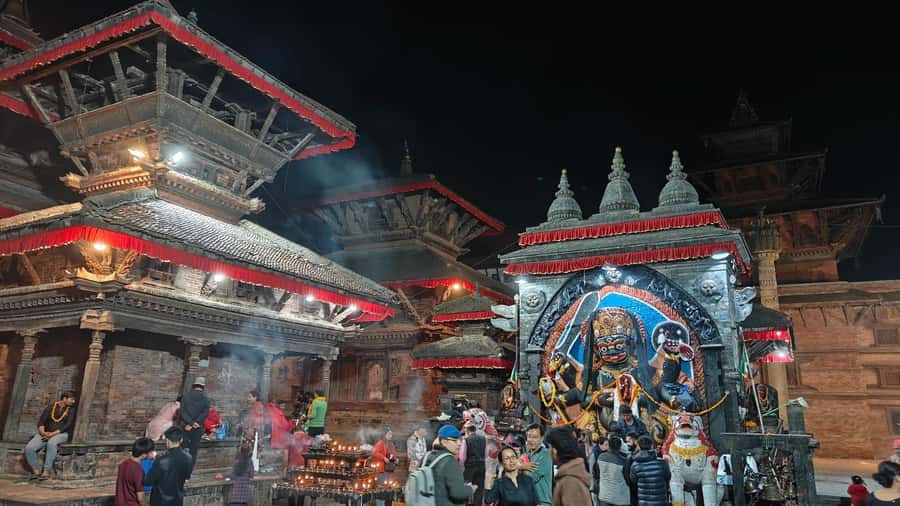
- Pashupatinath and the Bagmati River
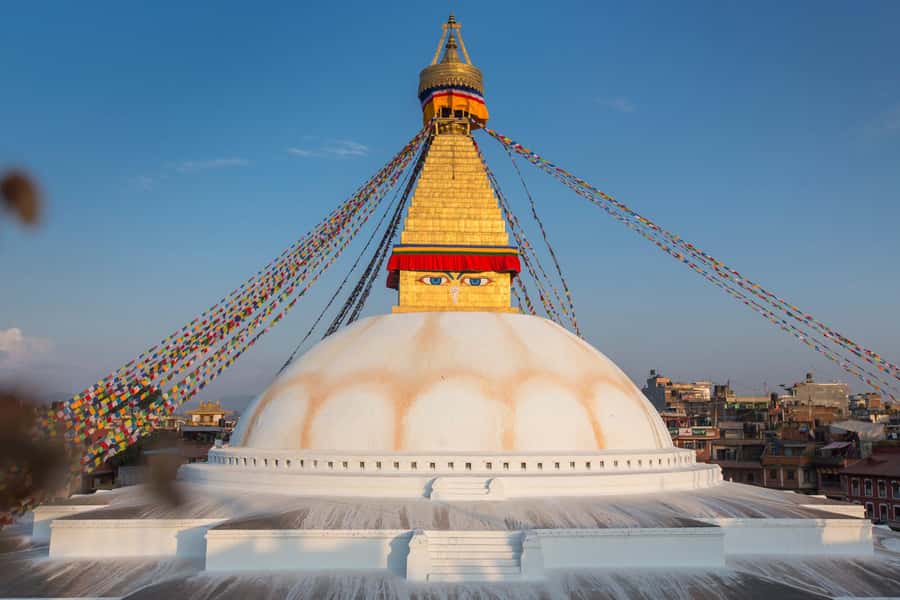
- Boudhanath, a great circle of Tibetan Buddhist culture
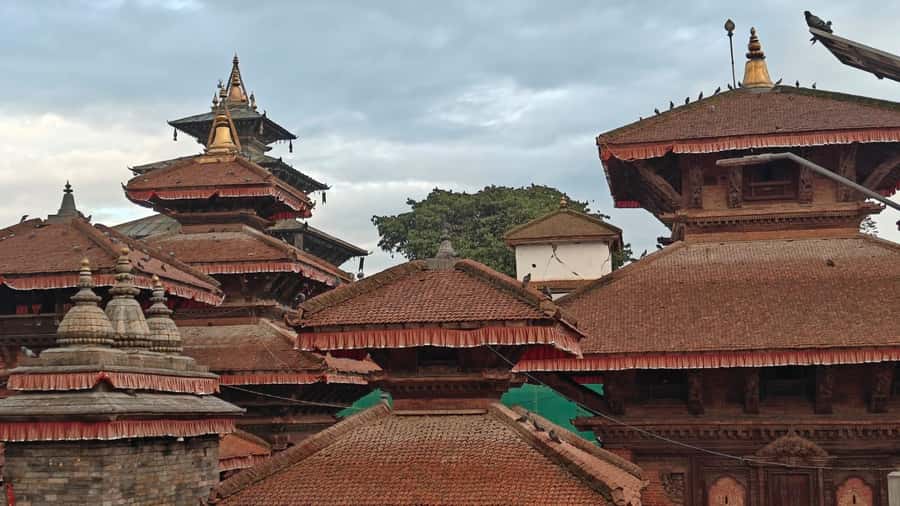
- Kathmandu Durbar Square and the royal past
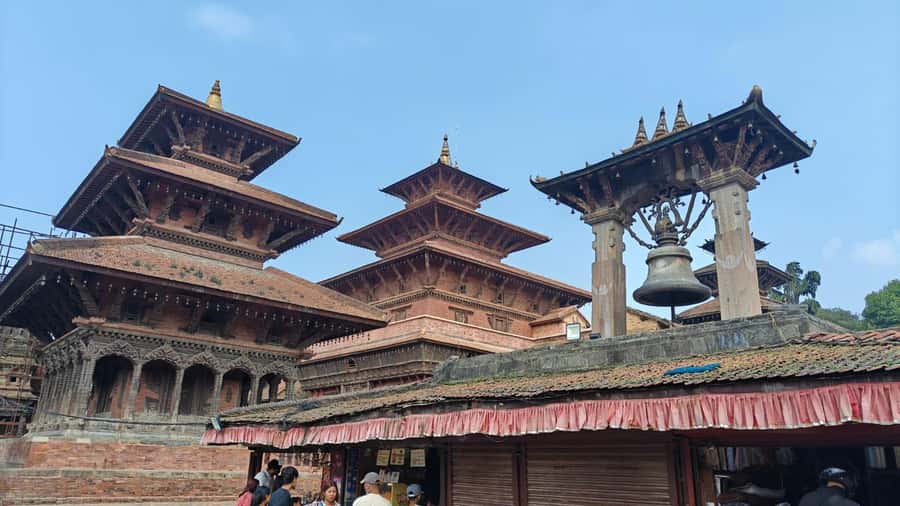
- Patan Durbar Square and Newari design
- Bhaktapur Durbar Square, a preserved medieval center
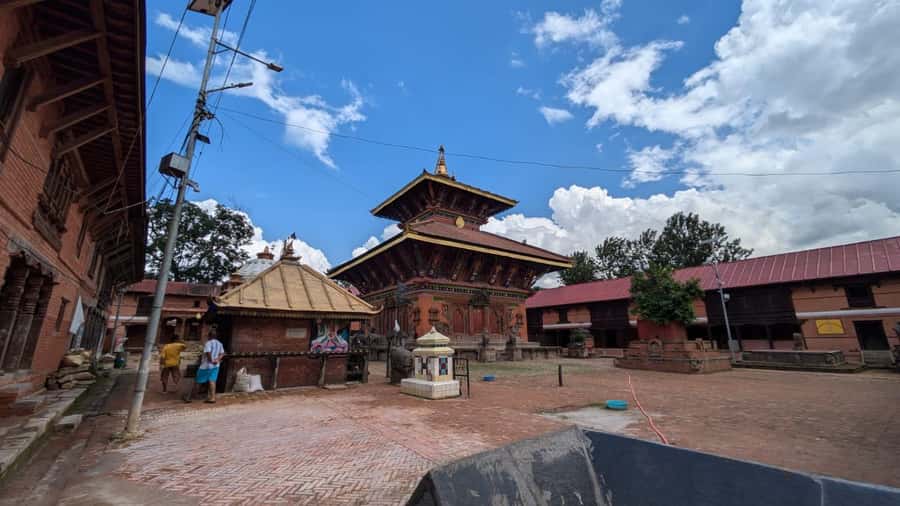
- Changunarayan, the quieter final chapter
- The guide can make or break the day
- What the $59 price really covers
- Practical details that affect your decision
- Who should book this Kathmandu heritage tour?
- Should you book it?
- FAQ
- How many UNESCO World Heritage Sites does the tour visit?
- Which sites are included?
- What is the price?
- Are entrance fees included?
- Is transportation provided?
- Which languages are available?
- Is the tour suitable for wheelchair users?
- Can I reserve now and pay later?
- What is the cancellation policy?
Key points to know before booking
- Seven UNESCO sites in one tour: Swayambhunath, Pashupatinath, Boudhanath, Kathmandu Durbar Square, Patan Durbar Square, Bhaktapur Durbar Square, and Changunarayan.
- Private transport saves time: Hotel pickup and drop-off within Kathmandu Valley make the long route easier than arranging separate taxis.
- Swayambhunath gives you the big picture: The hilltop stupa offers broad views across the Kathmandu Valley.
- Pashupatinath requires cultural respect: This is an important Hindu pilgrimage site beside the Bagmati River, not simply a photo stop.
- Newari craftsmanship is the star: Patan and Bhaktapur reveal carved wood, brickwork, palace courtyards, and temple design.
- Budget beyond the advertised price: Site entry fees, meals, insurance, and personal costs are extra.
Why this route works for a first Kathmandu visit
Kathmandu can feel confusing at first. The valley is filled with temples, shrines, courtyards, monasteries, and historic squares, but the meaning of each place is not always obvious from the outside. A local guide gives you a useful thread to follow.
This route also shows that Kathmandu is not one single kind of city. You move from Buddhist worship at Swayambhunath and Boudhanath to Hindu ritual at Pashupatinath, then into former royal centers shaped by Newari artists and builders. The result is a broad introduction to Nepal’s spiritual and architectural life.
I especially like the practical design. You are not left to organize seven separate rides or work out which sites fit together. Transportation connects the stops, and pickup and drop-off are available within Kathmandu Valley. That matters in a place where traffic can make short distances take longer than expected.
The tradeoff is pace. This is a sightseeing circuit, not a slow afternoon spent in one square. You should expect a full set of impressions rather than long, quiet time at every monument. If you enjoy variety, that is a benefit. If you prefer lingering with a cup of tea and sketching one courtyard, it may feel hurried.
More UNESCO Heritage Days:
- Private Kathmandu Sightseeing Tour | UNESCO World Heritage sites
★ 5.0 · 756 reviews - Kathmandu: Full Day 7 UNESCO Tour with Lunch – Private/Group
★ 5.0 · 415 reviews - Kathmandu: Full Day Top 4 UNESCO Tour with Lunch – Private/Group
★ 5.0 · 269 reviews
Swayambhunath, the hilltop view over Kathmandu
Swayambhunath Stupa is one of Kathmandu’s most recognizable sights. It is also called the Monkey Temple, and its hilltop position gives you a useful view of the Kathmandu Valley.
The setting makes this an excellent first stop. From above, you can begin to understand the scale and shape of Kathmandu before spending the rest of the day among tightly packed historic streets and courtyards. The stupa itself brings together Buddhist symbols, prayer activity, and the visual details that make Nepalese religious sites so distinctive.
Expect steps and walking here. The tour is not suitable for wheelchair users, and Swayambhunath is one reason why. Wear shoes that are comfortable for uneven ground and repeated stops.
Your guide can help explain the symbols and customs rather than leaving you with only the famous photo. That personal explanation is important because the site can look simple at first glance, while its religious meaning is much more layered.
Pashupatinath and the Bagmati River
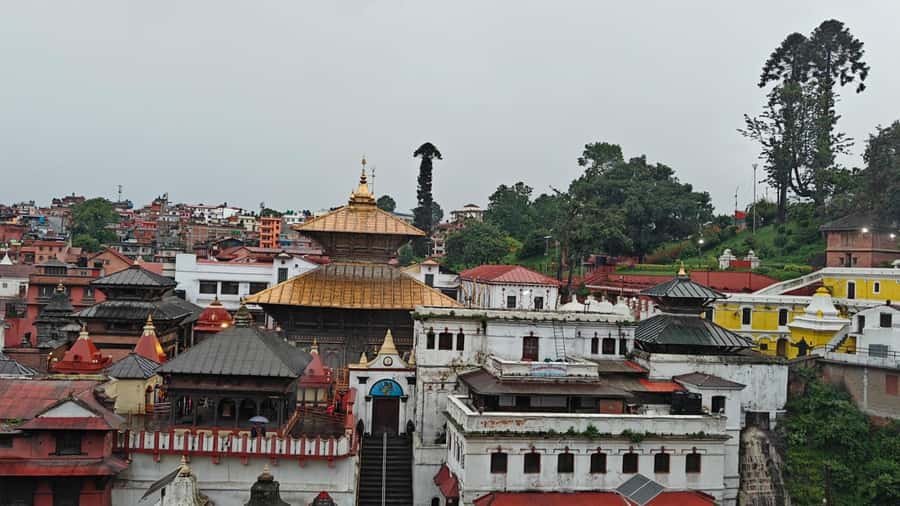
Pashupatinath Temple is one of Nepal’s most sacred Hindu sites. It sits beside the Bagmati River and has a different mood from the Buddhist stupas on the route.
This is a place to slow down mentally, even if the schedule keeps moving. The river, temple structures, and ongoing religious activity make Pashupatinath a site where respectful behavior matters. Follow your guide’s advice about where you may go and what you may photograph.
The main temple is a Hindu pilgrimage site, so access and viewing arrangements may differ from those at a general historic monument. You should not expect a standard museum visit. The value here comes from seeing a living place of worship and understanding its role in Nepalese religious life.
Pashupatinath can be an emotional stop. The Bagmati River is part of the site’s sacred setting, and the atmosphere may feel more serious than at the grand squares. A guide can provide context and help you observe without treating religious practice as a performance.
Boudhanath, a great circle of Tibetan Buddhist culture
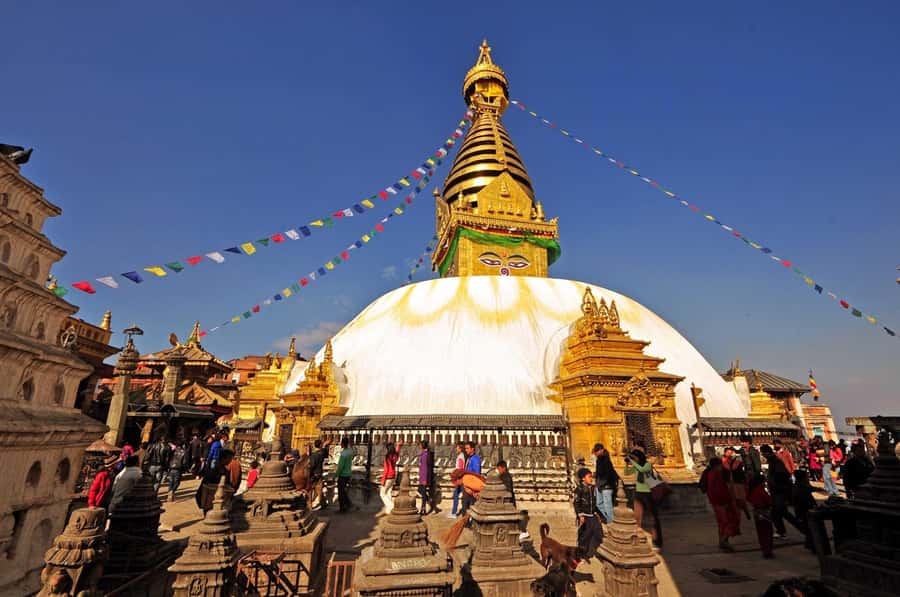
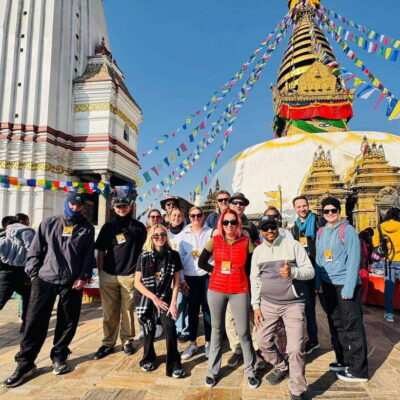
Boudhanath Stupa is one of the largest stupas in the world and one of the tour’s most memorable visual stops. Its broad white dome, golden details, and large central form create a strong sense of space after Kathmandu’s narrow lanes.
The stupa is also a center of Tibetan culture. That gives the visit a cultural dimension beyond architecture. You can watch the flow of religious activity around the monument while your guide explains its place in Buddhist practice and Nepal’s wider cultural story.
I like the contrast between Boudhanath and Swayambhunath. Swayambhunath gives you height and valley views. Boudhanath gives you a large open center where the monument dominates the surrounding area. Seeing both helps you understand how different Buddhist sites can feel.
The route includes several religious places, so the day may seem repetitive if you only look for buildings. Try to notice the differences in setting, ritual, design, and community. That is where a guide adds real value.
More History Tours:
- UNESCO Seven World Heritage Tour in Kathmandu
★ 5.0 · 253 reviews - Kathmandu Private Sightseeing Tour | UNESCO World Heritage Sites
★ 5.0 · 109 reviews - Kathmandu: Full Day Private Top 4 UNESCO Heritage Tour W/Lunch.
★ 5.0 · 86 reviews - Kathmandu World Heritage Tour
★ 5.0 · 74 reviews
Kathmandu Durbar Square and the royal past
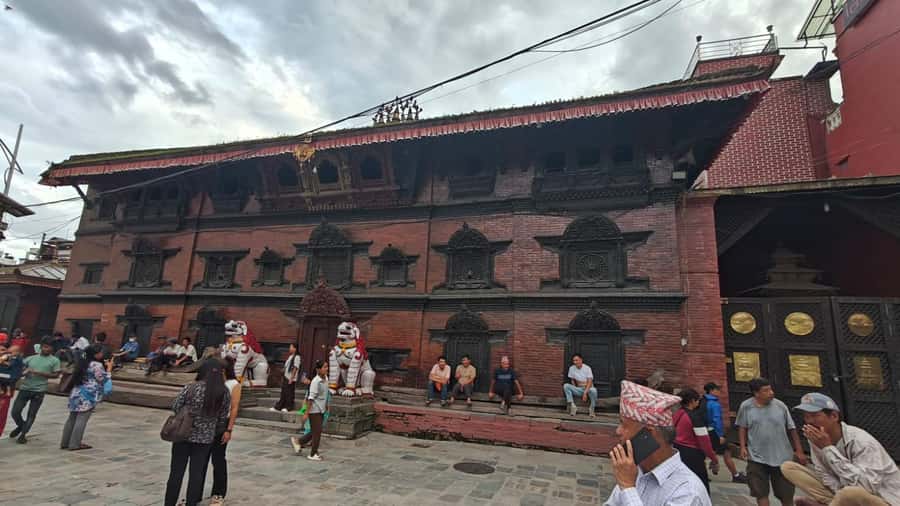
Kathmandu Durbar Square introduces Nepal’s monarchy and the old royal center of the capital. The Hanuman Dhoka Palace is a key highlight, along with the Kumari Ghar, associated with the living goddess.
This is one of the best stops for connecting architecture with political history. Palaces, temple fronts, courtyards, and carved details are not random decoration. Together, they show how royal power, religion, festivals, and Newari design once met in the center of Kathmandu.
The Kumari Ghar is especially distinctive because it relates to a living religious tradition rather than only to the past. Your guide can help explain the idea of the Kumari and the role of the building without reducing it to a quick curiosity.
Give yourself time to look upward. Carved windows, roof supports, doorways, and temple details are easy to miss when you are focused on moving through a crowded square. The guide names most praised for this experience include Nabin, Pranav, and Sajan, and the strongest feedback about the guiding centers on clear explanations and stories that make the sites easier to understand.
Patan Durbar Square and Newari design
Patan Durbar Square is a highlight for anyone who enjoys architecture. Its palaces, temples, courtyards, and carved ornament show the skill of Newari builders and artists.
Patan is not just another royal square. It gives you a chance to study details closely, especially carved wood and the arrangement of buildings around shared courtyards. The design rewards patience. A quick photograph will not show why the square matters.
I find guided visits especially useful here because the visual information can be overwhelming. A guide can point out a temple form, a carved figure, or a palace feature and explain how it fits into the larger story of the square.
Patan also pairs well with Bhaktapur later in the route. Both reveal Newari craftsmanship, but comparing them helps you notice different layouts and moods. Keep your expectations realistic, though. The tour covers many major places, so your time at Patan may be enough for an introduction rather than a detailed study of every building.
Bhaktapur Durbar Square, a preserved medieval center
Bhaktapur Durbar Square is known for its preserved medieval character and royal heritage sites. It is another strong stop for architecture, especially if you enjoy temples, palace fronts, brickwork, and historic courtyards.
Bhaktapur helps you picture the Kathmandu Valley before modern development spread across it. The square’s appeal comes from the combination of scale and detail. You can appreciate the larger royal setting, then focus on the small carvings and building elements that give the place its character.
This is also where a guide’s storytelling can prevent the visit from becoming a parade of names. The best guiding connects what you see with how the square functioned and why its buildings were important.
Bhaktapur is one of the places where you may wish for extra free time. Because the tour includes seven sites, you will not have unlimited hours to wander. If this becomes your favorite stop, make a note to return independently if your schedule allows.
Changunarayan, the quieter final chapter
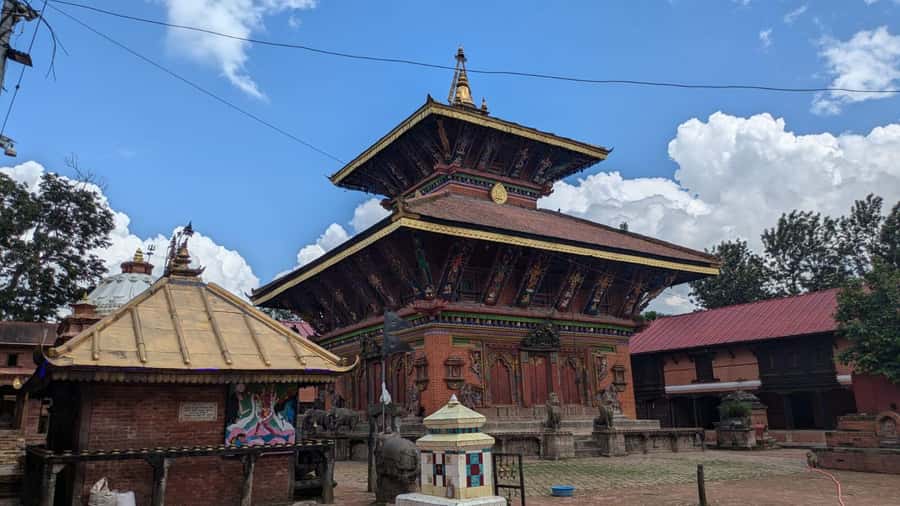
Changunarayan Temple completes the heritage circuit. It is described as one of the oldest Hindu temples in the Kathmandu Valley and is a quieter addition to the better-known squares and stupas.
Its position in the itinerary gives the day a useful change of pace. You have already seen major urban and pilgrimage sites, so Changunarayan offers a less central setting and another chance to examine Hindu temple design.
Do not judge the site by fame alone. The value of Changunarayan is partly in its age and partly in the way it rounds out the tour. Without it, you would see several major centers but miss one of the valley’s older temple traditions.
The final stop may feel demanding if you are tired. That is another reason to wear good walking shoes, carry water for use outside the vehicle, and pace yourself from the beginning.
The guide can make or break the day
A seven-site tour depends heavily on the guide. You need someone who can explain history without turning every stop into a lecture, and who can help you understand the difference between a religious site, a royal square, and a living cultural center.
The most strongly praised guide on this experience is Nabin. He is credited with bringing the history and meaning of Durbar Square to life, explaining art and architecture clearly, and even introducing a traveler to local food during a morning walking tour. Sajan is also praised for strong knowledge and careful organization, while Pranav is described as friendly and helpful.
These names do not guarantee who will lead your booking. Guide assignments can vary. Still, they show the kind of service this company aims to provide: personal explanations, local context, and a courteous manner rather than a simple drive between monuments.
The driver matters, too. Sundar is specifically praised for friendly service and smooth, skillful driving. Since the route covers several parts of the valley, a comfortable vehicle and a calm driver make a real difference.
What the $59 price really covers
At $59 per person, the tour offers solid value if you want private transport and a guide for a wide cultural circuit. You are paying for convenience, local interpretation, and hotel pickup and drop-off within Kathmandu Valley.
The price does not include entrance fees at all seven UNESCO World Heritage Sites. That is the most important budget point. You should treat $59 as the tour service price, not the complete cost of the day.
Meals are also not specified, and personal expenses, travel insurance, accommodation, international airfare, and visa fees are excluded. Extra activities are outside the listed service as well.
The value is strongest for first-time visitors who would otherwise need to arrange several rides and research each site. It may be less attractive if you already know Kathmandu well or plan to spend several days exploring each square slowly.
Practical details that affect your decision
The tour offers English and Hindi guiding. Pick-up and drop-off are available within Kathmandu Valley, and transportation between sites is included.
The experience is not suitable for wheelchair users. That is a key consideration because several stops involve historic surfaces, steps, courtyards, and walking routes that may not be accessible.
Drinks are not allowed in the vehicle, and alcohol and drugs are prohibited. Plan your day around that rule. You can reserve now and pay later, which is helpful if you want to keep your plans flexible. Cancellation is available up to 24 hours in advance for a full refund.
I would also plan for a long, active day even though a precise duration is not provided. Seven sites require attention and energy. Keep your schedule afterward light, especially if you want time to process what you have seen.
Who should book this Kathmandu heritage tour?
I would recommend it most strongly to a first-time visitor with limited time in the valley. You get a broad introduction to Buddhist and Hindu sites, former royal centers, Newari architecture, and Nepalese cultural traditions without having to coordinate the route yourself.
It also suits history fans, architecture enthusiasts, spiritual seekers, and anyone who prefers asking questions instead of reading only plaques. The guide’s explanations are central to the experience, particularly at Patan, Bhaktapur, Kathmandu Durbar Square, and the two major stupas.
You should think twice if you dislike busy itineraries, need extended rest periods, or want to explore just one neighborhood in depth. The route is ambitious. Its strength is range, not leisurely pacing.
Should you book it?
Book this tour if you want to see all seven UNESCO sites with private transport and a local guide in one organized outing. The $59 starting price is reasonable for that convenience, but remember to add entrance fees and personal costs.
My practical advice is to book it early in your Kathmandu stay. The hilltop view at Swayambhunath, the sacred setting of Pashupatinath, the scale of Boudhanath, and the royal squares will give you a useful framework for the rest of Nepal. Just arrive ready to walk, stay respectful at religious sites, and accept that seven stops means a full visual meal rather than a slow tasting menu.
FAQ
How many UNESCO World Heritage Sites does the tour visit?
The tour visits seven UNESCO World Heritage Sites in the Kathmandu Valley.
Which sites are included?
The route includes Swayambhunath Stupa, Pashupatinath Temple, Boudhanath Stupa, Kathmandu Durbar Square, Patan Durbar Square, Bhaktapur Durbar Square, and Changunarayan Temple.
What is the price?
The listed price is $59 per person.
Are entrance fees included?
No. Entrance fees for all seven UNESCO World Heritage Sites are not included.
Is transportation provided?
Yes. Comfortable transportation between sites is included, along with hotel pickup and drop-off within Kathmandu Valley.
Which languages are available?
The tour is offered in English and Hindi.
Is the tour suitable for wheelchair users?
No. The experience is listed as unsuitable for wheelchair users.
Can I reserve now and pay later?
Yes. You can reserve your place and pay later, with no payment required today.
What is the cancellation policy?
You can cancel up to 24 hours in advance for a full refund.
Just added around Kathmandu
- Private Shopping Tour in Kathmandu★ 5.0 · 3 reviews
- Nagarkot Sunrise With 7 UNESCO World Heritage Private Tour★ 5.0 · 3 reviews
- Kathmandu: Nightlife and Pub Crawl Tour★ 5.0 · 3 reviews
- Mount Everest Scenic Flight 50 Minutes★ 5.0 · 3 reviews
- Momo Cooking Class -The Art Of Making MoMo with Home Chef★ 5.0 · 3 reviews
- Kathmandu: Nagarkot, Bhaktapur, Doleswor & Sanga Statue Tour★ 5.0 · 3 reviews
- Makalu Base Camp Trek★ 5.0 · 3 reviews
- Everest Experience Trek 6 Day Hiking Adventure★ 5.0 · 3 reviews
Kathmandu UNESCO Heritage Tours, compared.

Private Kathmandu Sightseeing Tour | UNESCO World Heritage sites
Read our review →
Full Day 7 UNESCO Tour with Lunch – Private/Group
Read our review →
Full Day Top 4 UNESCO Tour with Lunch – Private/Group
Read our review →
Full-Day 7 UNESCO Tour with Lunch – Private/Group
Read our review →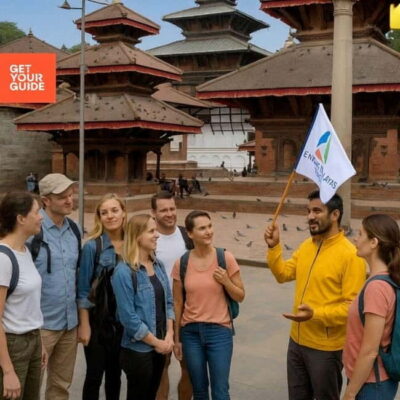
Kathmandu Private Sightseeing Tour | UNESCO World Heritage Sites
Read our review →Browse the lists this tour appears in