
Reviewed · HISTORICAL TOURS
Pick 2-Wonders of Kathmandu: A 3-Hour Heritage Hop
Kathmandu rewards a focused first look. This private three-hour tour lets you choose two major heritage sites, then see them with an English or Hindi guide rather than rushing through a long checklist. I especially like the choice of four routes and the hotel pickup, private vehicle, and flexible pace. The tradeoff is clear: three hours gives you a useful introduction, not a full exploration, and entrance fees are extra.
At $3.94 per person, the starting price is unusually low for private transport and a guide. You should check the final booking cost carefully, then budget for monument tickets, cash purchases, and any personal expenses. If your schedule is tight, this is a smart way to get a meaningful taste of Kathmandu without giving an entire day to sightseeing.
In This Review
- The four best reasons to choose this short tour
- How the three-hour format works
- Option 1: Kathmandu Durbar Square and Swayambhunath
- Kathmandu Durbar Square
- Swayambhunath, the Monkey Temple
- Option 2: Pashupatinath and Boudhanath
- Pashupatinath Temple
- Boudhanath Stupa
- Option 3: Patan and Kathmandu royal squares
- Patan Durbar Square
- Kathmandu Durbar Square
- Option 4: Bhaktapur’s four-square historic center
- Why the guide can make or break the experience
- Price, entrance fees, and what you really receive
- Practical advice for your three hours
- Should you book Pick 2 Wonders of Kathmandu?
- FAQ
- How long does the Kathmandu heritage tour last?
- Where does pickup take place?
- Which heritage sites can I choose?
- Is the tour private?
- Are entrance fees included?
- Which languages are offered?
- Can I cancel the booking?
The four best reasons to choose this short tour
- Choose two sites that match your interests: Pick from Kathmandu Durbar Square, Swayambhunath, Pashupatinath, Boudhanath, Patan Durbar Square, and Bhaktapur Durbar Square.
- See the Kumari tradition: Kathmandu Durbar Square offers a chance to see the temple of Kumari, the living goddess, depending on access and timing.
- Reach a hilltop viewpoint: Swayambhunath gives you broad 360-degree views of Kathmandu Valley from its hilltop setting.
- Travel privately from Thamel: Hotel pickup and drop-off, an air-conditioned vehicle, bottled water, and a private group keep the outing simple.
- Learn from guides who adjust the pace: Guides such as Nilakantha Acharya and Prakash are praised for clear explanations, patience, and help with photographs.
- Keep your day flexible: You can cancel up to 24 hours before departure and reserve without paying immediately.
How the three-hour format works
Your pickup is from Thamel, and you should wait in your hotel lobby or at your apartment entrance five to ten minutes before the agreed time. The tour returns you to Thamel, which makes it useful before an evening meal, a flight, or another planned activity.
A private vehicle matters in Kathmandu. The selected sites sit in different parts of the city, and driving between them saves time compared with arranging separate taxis. Still, three hours includes pickup, road time, sightseeing, and drop-off, so you should think of this as two carefully chosen visits rather than a relaxed city day.
The guide is the key to making the short schedule work. Nilakantha Acharya is especially praised for explaining monuments, rituals, and local traditions in a way that suits your questions. He has also helped with photographs and adjusted the pace for people who wanted to linger. Another guide, Prakash, receives similar praise for making the tour informative and easy to follow.
You should select your preferred option before confirming the reservation. That choice is important because each route has a different feel. One focuses on royal architecture and Buddhist symbolism. Another centers on Hindu worship and Tibetan Buddhist culture. The Patan and Kathmandu route is best for architecture, while Bhaktapur gives you one concentrated historic setting.
More History Tours:
- Private Kathmandu Sightseeing Tour | UNESCO World Heritage sites
★ 5.0 · 756 reviews - UNESCO Seven World Heritage Tour in Kathmandu
★ 5.0 · 253 reviews - Kathmandu Private Sightseeing Tour | UNESCO World Heritage Sites
★ 5.0 · 109 reviews
Option 1: Kathmandu Durbar Square and Swayambhunath
This is the strongest all-purpose introduction to Kathmandu. You get royal architecture in the old city, then a hilltop Buddhist site with wide views and a lively religious setting.
Kathmandu Durbar Square
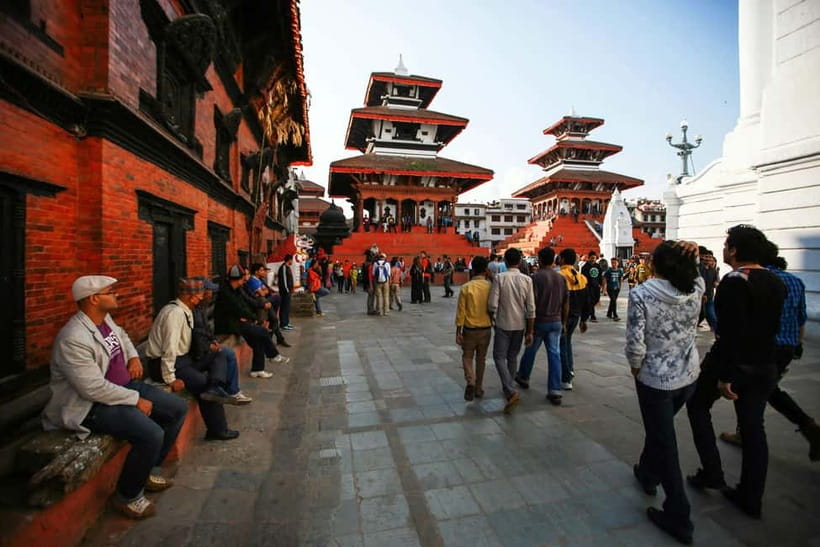
Kathmandu Durbar Square places you among palaces, courtyards, temples, and carved Newari details. The square reflects the Malla and Shah dynasties, and the nine-storied Nautale Durbar is one of the major architectural sights.
The value of a guide is high here because the square can feel like a collection of separate buildings if you walk through alone. A guide can connect the palace buildings, temple forms, royal traditions, and living religious practices. Look closely at the wood carving and brickwork rather than treating the square as a quick photo stop.
The Kumari tradition gives this visit a special local character. Kumari is regarded as a living goddess, and her temple is in the square. Seeing her is never something you should treat as guaranteed. If she appears, the moment may be brief, and respectful behavior is essential. Even when you do not see her, the temple and the tradition add an important layer to the visit.
This stop can be busy and visually crowded, with many structures competing for your attention. That is why the three-hour plan works better when you allow the guide to point out the most important details instead of trying to inspect every corner.
Swayambhunath, the Monkey Temple
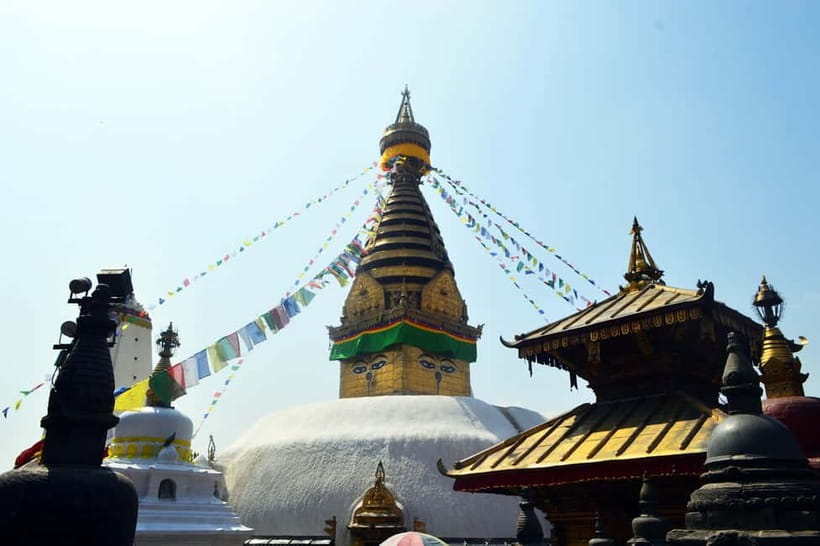
Swayambhunath sits on a hill and is known for its large stupa, often called the Monkey Temple. You can expect Buddhist imagery, playful monkeys, and a high viewpoint over Kathmandu Valley.
The panoramic view is the main reward. From the top, you can take in a broad 360-degree scene of the capital. Weather and air quality affect how far you can see, but the hilltop position gives this stop a different scale from the enclosed courtyards of Durbar Square.
The name can make the site sound like a novelty, but the religious setting deserves more attention than the monkeys. Watch the ritual activity, notice the symbols around the stupa, and ask your guide about the blend of Buddhist and Hindu practice found in Kathmandu Valley.
This option requires moving between a historic city square and a hilltop monument. If stairs or uneven surfaces are difficult for you, note that the experience is not suitable for wheelchair users. The tour is also not suitable for babies under one year or people over 95.
A few more trips worth weighing up before you book
- Everest Base Camp: 3 Hour Helicopter Sightseeing Tour
★ 4.4 · 17 reviews - 3 Hours Night Pashupatinath Aarati Tour
★ 4.5 · 4 reviews - Kathmandu: About 3-hour Cooking Class Experience near Thamel
★ 5.0 · 3 reviews - Private 3-Hour Nagarkot Sunset Tour from Kathmandu
★ 3.5 · 3 reviews
Option 2: Pashupatinath and Boudhanath
Choose this route if religion matters more to you than royal palaces. It combines one of Hinduism’s most important temples with Nepal’s great Buddhist stupa, giving you two distinct spiritual settings in one short outing.
Pashupatinath Temple
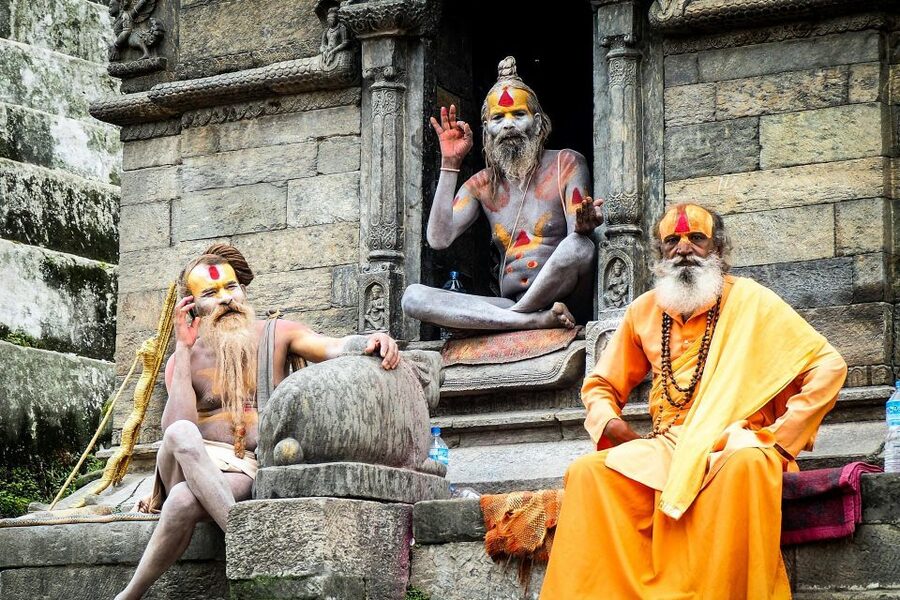
Pashupatinath is dedicated to Lord Shiva and sits beside the sacred Bagmati River. The temple area is known for Hindu worship and traditional cremation rituals along the riverbanks.
This can be a powerful but serious visit. You may witness cremation activity, so you should be ready for an emotionally weighty setting and follow your guide’s advice about respectful conduct. The temple complex is not simply an architectural attraction. It is an active place of worship, and that changes how you should behave and what you should photograph.
A festival day can add unusual energy and ritual detail. One guide, Nilakantha, has explained symbols and ceremonies during a festival visit, helping make sense of activity that could otherwise seem confusing. Timing matters here, since the character of the site can change with religious events.
Pashupatinath is one of the places where a short guided visit earns its keep. You may see ceremonies, shrines, and practices that are difficult to understand without context. Keep your questions coming, but remember that the guide cannot control which rituals are taking place during your three-hour window.
Boudhanath Stupa
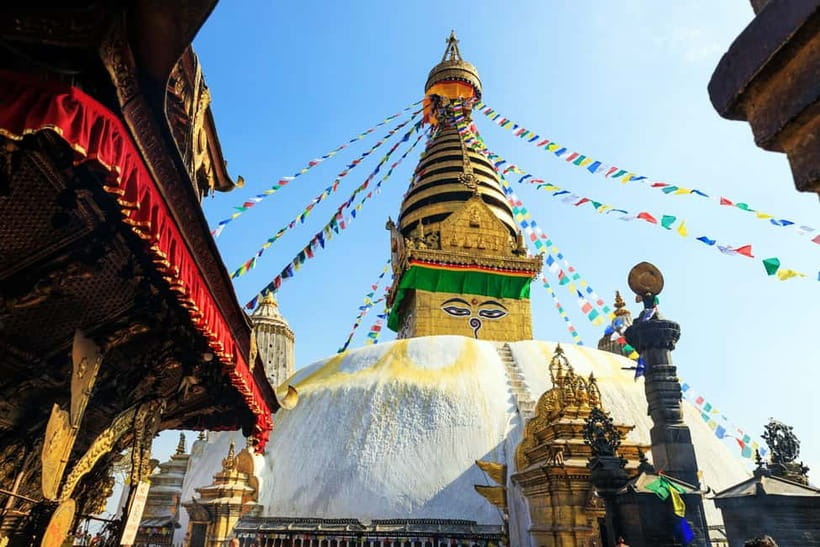
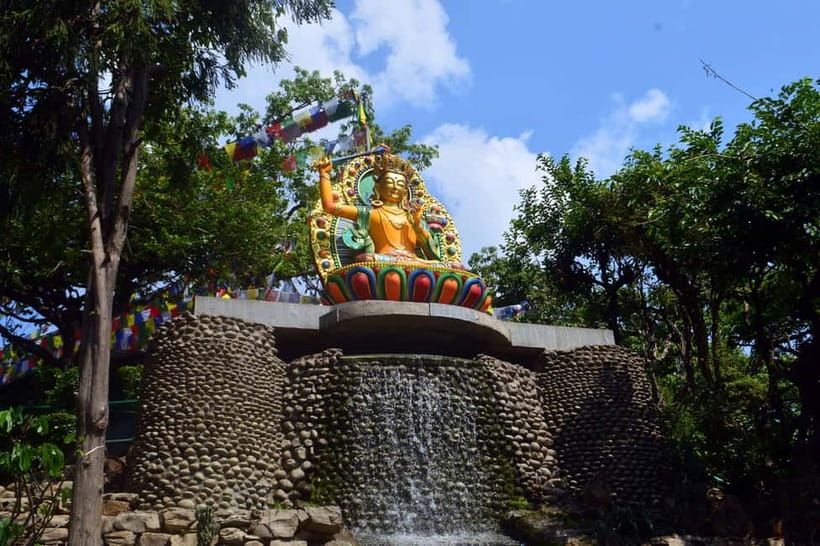
Boudhanath is a vast Buddhist stupa and the largest mandala in Nepal. It was once an important stop on the ancient trade route to Tibet, and its scale gives the visit a calm, spacious feel after the intensity of Pashupatinath.
The stupa is best appreciated at a steady pace. Walk around it, examine the design, and pay attention to the atmosphere of devotion. Your guide can explain the religious meaning and the stupa’s place in the Kathmandu Valley.
This route has strong contrast. Pashupatinath is connected to the Bagmati River and Hindu rites, while Boudhanath centers on a major Buddhist monument. In three hours, you get a compact look at two traditions that help define Kathmandu.
If you prefer palaces, carved windows, and royal stories, this may not be your first choice. If you want religious culture and sacred places, it is probably the most rewarding pairing.
Option 3: Patan and Kathmandu royal squares
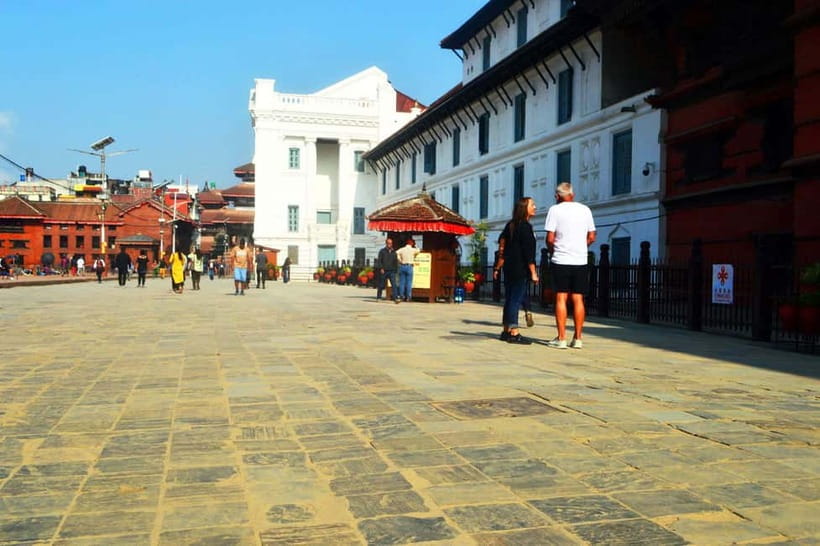
This route suits you if Newari architecture is your main interest. It places two UNESCO-listed royal squares on the same schedule, but the advantage is also the challenge: you will see many buildings in a short time.
Patan Durbar Square
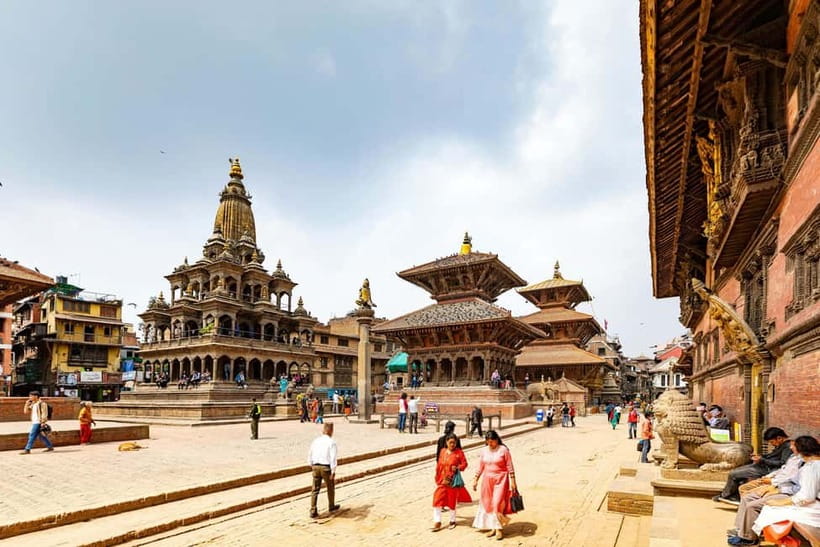
Patan Durbar Square sits in Lalitpur, the artistic heart of the valley. Its medieval royal palace, temples, statues, red brick paving, and detailed Newari construction create a strong sense of place.
Take time to look upward and inward. The best details are often in the carved windows, temple supports, metal figures, and small courtyard spaces. A guide can help you distinguish royal buildings from religious structures and explain why Patan is so closely linked with art and craftsmanship.
Patan feels different from Kathmandu Durbar Square, even though both share royal and temple architecture. If you enjoy comparing styles, this is a good pair. The drawback is that the two squares can begin to blur if you move too quickly or are not especially interested in architecture.
Kathmandu Durbar Square
Adding Kathmandu Durbar Square gives you another look at palaces, temples, and the Kumari tradition. The Nautale Durbar and the square’s long royal story make it a useful comparison with Patan.
I would choose this option for an architecture-focused first visit, particularly if you want to compare the two royal centers. I would not choose it if your main goal is a viewpoint or a broad introduction to religious practice. In that case, Option 1 or Option 2 gives you greater contrast.
Option 4: Bhaktapur’s four-square historic center
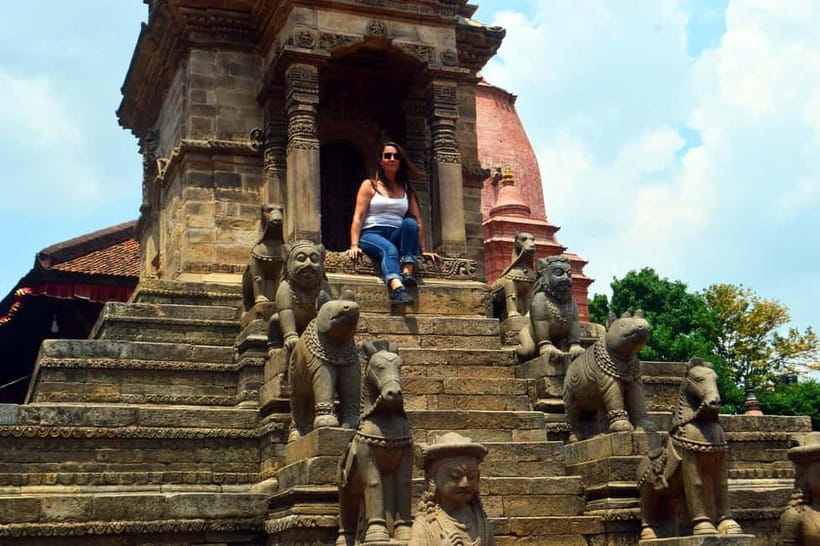
Bhaktapur offers the most concentrated route. Instead of splitting your time between two separate major sites, you focus on one ancient city and its large Durbar Square.
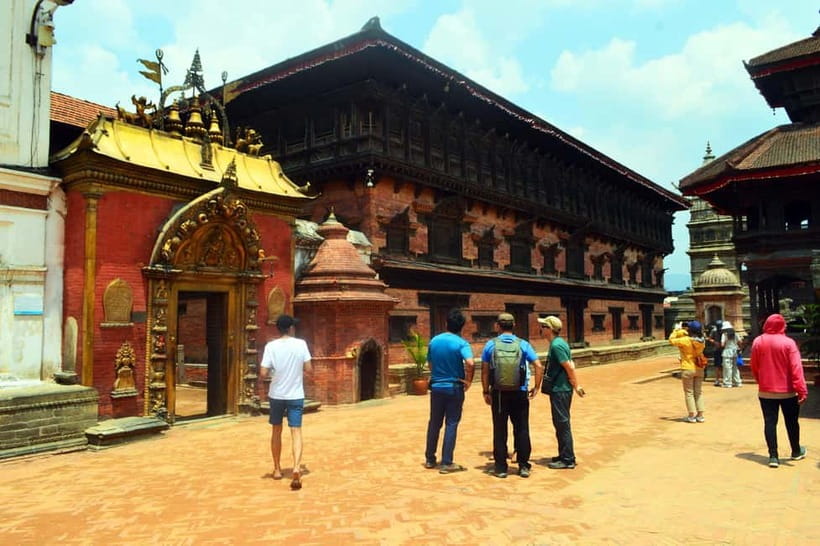
Bhaktapur is Nepal’s smallest district but contains the country’s largest Durbar Square. The square is made up of four smaller squares, so even this single choice contains several connected areas to explore.
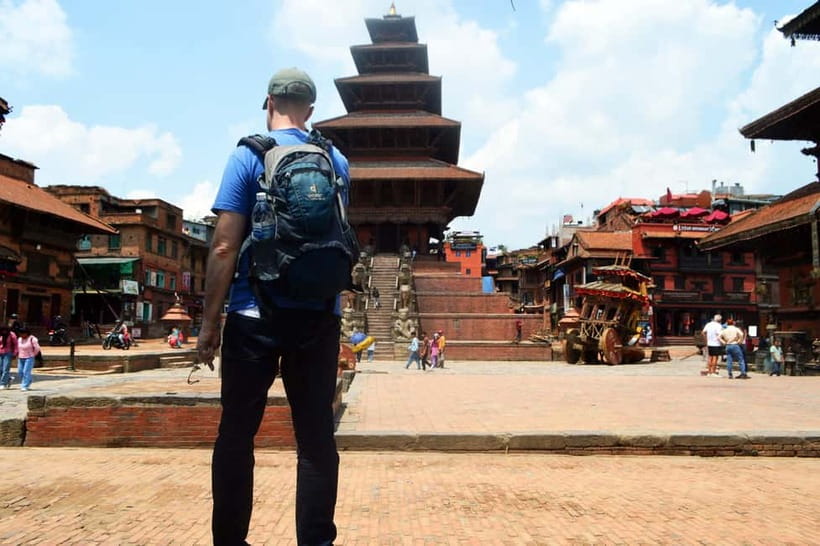
The five-storied Nyatapola Temple is the essential sight. It is Nepal’s tallest temple and gives Bhaktapur an unmistakable vertical landmark. The square also rewards slow looking, especially if you enjoy brick streets, carved façades, temples, and the feel of an old urban center.
This is the best option for you if you dislike changing locations and want one place with plenty to see. It may be less suitable if you want the broadest sample of Kathmandu Valley culture in three hours. You will not get the hilltop views of Swayambhunath or the religious contrast of Pashupatinath and Boudhanath.
Why the guide can make or break the experience
The tour’s strongest feature is not just the private car. It is the chance to ask questions while looking at places that carry several layers of meaning.
Nilakantha Acharya has been praised for his explanations at Kathmandu Durbar Square, Swayambhunath, Pashupatinath, and Boudhanath. He is also described as patient with questions and willing to let you spend more time on the parts you find most interesting. That flexibility is valuable because no two people look for the same things.
The guide can also help during the gaps between major sights. One particularly useful touch was taking a jet-lagged visitor to a rooftop for coffee between stops. Coffee is not listed as part of the tour, so you should not assume it is included, but the example shows how the pace may be adjusted to your needs.
Drivers such as Hari and Ram have also been praised for supporting the experience. You receive an air-conditioned private vehicle and bottled water, which is a welcome break between outdoor visits. You should still bring cash, since entrance fees and personal purchases are not included.
Price, entrance fees, and what you really receive
The advertised price is $3.94 per person, which makes the tour look like an easy bargain. For a private group with hotel pickup, an air-conditioned vehicle, bottled water, and a guide, the base value is strong.
The important catch is that monument entrance fees are not included. There is an add-on option, but you should check the total before booking and carry cash. Meals, beverages, and personal expenses also come out of your pocket.
At this price, the tour is best understood as affordable transport plus guided access to two major sites. It is not an all-inclusive sightseeing package. Even after adding entry costs, it can make sense if you value saved time and do not want to arrange several rides across Kathmandu yourself.
The provider has a perfect overall rating from 22 reviews, and 92 percent of reviewers gave the transport a perfect score. Those figures point to reliable satisfaction, especially with the guides and vehicle, though the short duration remains the main limit.
Practical advice for your three hours
Choose your pair based on your priorities, not on the number of famous names.
- Choose Kathmandu Durbar Square and Swayambhunath for royal architecture, Kumari tradition, Buddhist symbolism, and city views.
- Choose Pashupatinath and Boudhanath for Hindu and Buddhist religious culture.
- Choose Patan and Kathmandu Durbar Squares for Newari architecture and royal history.
- Choose Bhaktapur for one concentrated historic center and Nyatapola Temple.
Wear practical footwear and bring your passport and cash. Large bags, luggage, alcohol, and drugs are not allowed. The information provided does not promise specific access inside every shrine, so follow your guide’s instructions and treat active religious sites with care.
You should also tell the guide at the start if you have a fixed schedule. The tour can adjust to your interests, but it cannot remove Kathmandu’s road time from the clock. A private tour gives you flexibility, not extra hours.
Should you book Pick 2 Wonders of Kathmandu?
I would book this tour if you have only three hours in Kathmandu, want private transport, and prefer a guide who can explain what you are seeing. It is especially good for a first afternoon, a short stopover, or a visitor who wants two UNESCO sites without committing to a full-day program.
I would choose Option 1 for the broadest first impression, Option 2 for spiritual and cultural depth, Option 3 for architecture, and Option 4 for a slower visit to one historic city.
Skip it if you want unhurried photography, extensive time at every temple, or a full tour of all six heritage sites. For everyone else, the low base price, strong guide feedback, and ability to choose your own pair make this a practical introduction to Kathmandu.
FAQ
How long does the Kathmandu heritage tour last?
The tour lasts three hours, including hotel pickup and return to Thamel.
Where does pickup take place?
Pickup is from your hotel in Kathmandu. You should wait in the hotel lobby or at the entrance of your residential apartment five to ten minutes before pickup.
Which heritage sites can I choose?
You can choose two sites from Kathmandu Durbar Square, Swayambhunath, Pashupatinath Temple, Boudhanath Stupa, Patan Durbar Square, and Bhaktapur Durbar Square.
Is the tour private?
Yes. The experience is organized for a private group and includes an air-conditioned private vehicle.
Are entrance fees included?
No. Monument entrance fees are not included in the base price. An add-on option is available.
Which languages are offered?
Live guiding is available in English and Hindi.
Can I cancel the booking?
Yes. You can cancel up to 24 hours in advance for a full refund, and you can reserve now and pay later.
Just added around Kathmandu
- Private Shopping Tour in Kathmandu★ 5.0 · 3 reviews
- Nagarkot Sunrise With 7 UNESCO World Heritage Private Tour★ 5.0 · 3 reviews
- Mount Everest Scenic Flight 50 Minutes★ 5.0 · 3 reviews
- Kathmandu: Nightlife and Pub Crawl Tour★ 5.0 · 3 reviews
- Momo Cooking Class -The Art Of Making MoMo with Home Chef★ 5.0 · 3 reviews
- Kathmandu: Nagarkot, Bhaktapur, Doleswor & Sanga Statue Tour★ 5.0 · 3 reviews
- Makalu Base Camp Trek★ 5.0 · 3 reviews
- Everest Experience Trek 6 Day Hiking Adventure★ 5.0 · 3 reviews
Historical Tours, compared.

Private Kathmandu Sightseeing Tour | UNESCO World Heritage sites
Read our review →
Full-Day Tibetan Cultural Tour to Tibetan Settlements Pokhara
Read our review →
Kathmandu Private Sightseeing Tour | UNESCO World Heritage Sites
Read our review →
Afternoon Tibetan Cultural Tour to Tibetan Settlements Pokhara
Read our review →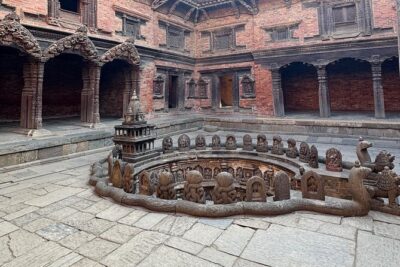
Full Day Private Top 4 UNESCO Heritage Tour W/Lunch.
Read our review →
Nagarkot Sunrise & Bhaktapur UNESCO Heritage Private Tour
Read our review →Browse the lists this tour appears in