
Reviewed · ANNAPURNA BASE CAMP TREKS
6 days Annapurna Basecamp Trek
Annapurna rewards every hard step. This six-day trek from Pokhara packs snowy peaks, Gurung villages, rhododendron forests, suspension bridges, and a sunrise at Annapurna Base Camp into a short mountain trip. I like the 360-degree mountain views and the chance to reach Annapurna I, at 8,091 meters, without committing to a much longer Himalayan route. I also like that transport, a licensed guide, breakfast, teahouse stays, and useful cold-weather gear are included.
The main caution is the pace. Several days are listed at about 12 hours, and the route includes steep climbs, descents, cold conditions, and high altitude. The operator describes this as the shortest and safest ABC itinerary, but short does not mean easy. You need moderate fitness, a willingness to walk long days, and some flexibility if weather or trail conditions affect the schedule.
In This Review
- Key things to know before you book
- What the $450 price really covers
- Starting near Pokhara and reaching Chhomrong
- Crossing the Jhinu Danda bridge
- Day two: entering the Annapurna Sanctuary
- Day three through rhododendron forest and the Modi River valley
- Day four: the final climb to Annapurna Base Camp
- Day five: the Annapurna I sunrise
- Day six: returning to green hills and the Modi River valley
- Guides, group size, and the human side of the trek
- Fitness, equipment, and daily comfort
- Who gets the most from this six-day trek
- Cancellation and booking details
- Should you book it?
- FAQ
- Where does the Annapurna Base Camp trek start?
- How long is the trek?
- What fitness level is required?
- Is Annapurna Base Camp admission included?
- What meals are included?
- Is a porter available?
- What accommodation is provided?
- What is the cancellation policy?
Key things to know before you book
- Annapurna I sunrise: The early light changes the color of the snow peaks, with Annapurna I as the main prize.
- 285-meter suspension bridge: The Jhinu Danda bridge hangs 135 meters above the Kimrong River.
- Rhododendron country: The route passes through forests with more than 30 rhododendron species.
- Gurung villages: Chhomrong and nearby settlements offer a look at communities known for their Gurkha soldiers.
- Practical inclusions: Breakfast for five mornings, teahouse accommodation, private transport, a licensed guide, and a duffle bag or sleeping bag are covered.
- A small-group format: The maximum group size is 20, with private transportation included.
What the $450 price really covers
At $450 per person, this trek offers solid value if you want the main arrangements handled for you. The price covers all fees and taxes, private transportation, five breakfasts, teahouse accommodation, and a licensed, experienced, insured guide. A duffle bag, sleeping bag, and anti-slip crampons are also available as needed.
That package removes several practical headaches. You do not need to arrange a separate airport-style transfer from Pokhara to the trail area, find a guide on arrival, or rent every piece of cold-weather equipment yourself. For a first Himalayan trek, that support matters.
The price does not cover lunch or dinner, so budget for meals beyond breakfast. Bottled drinks, machine coffee, toiletries, Wi-Fi, and charging may cost extra at the teahouses. A porter is available for $30 per day, and insurance is your responsibility. Tips for the guide and porter are also not included.
One important point: a $450 trek can look all-inclusive until you add meals, drinks, charging, insurance, and porter service. If you want to carry only a daypack, add the porter fee to your calculation. If you are comfortable carrying your own gear, the basic price is more attractive.
More Annapurna Base Camp Treks:
- Kathmandu/Pokhara: 5-Day Annapurna Base Camp (ABC) Trek
★ 4.9 · 72 reviews - Private 7 – Day Annapurna Base Camp Trekking
★ 5.0 · 50 reviews - Annapurna Base Camp Trek (8 days)
★ 5.0 · 45 reviews
Starting near Pokhara and reaching Chhomrong
The first day begins with about three hours of driving toward the trail area near the Jhinu Danda suspension bridge. From there, the route reaches Chhomrong at 2,150 meters. The itinerary presents this as a long day of about 12 hours, so do not treat the first day as a gentle warm-up.
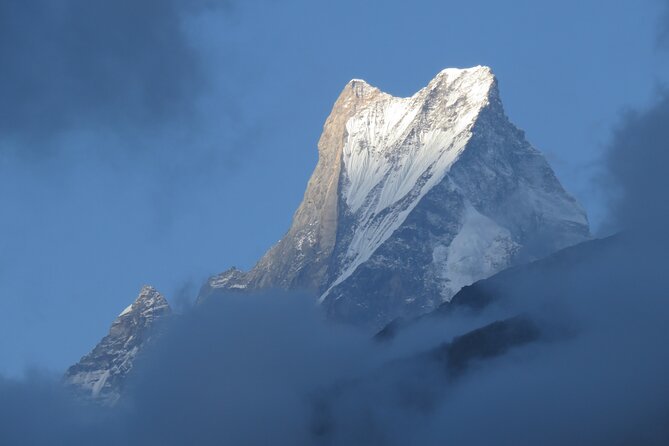
Chhomrong is one of the route’s key viewpoints. From here, you can see Annapurna South at 7,219 meters, Hiunchuli at 6,441 meters, and Machhapuchchhre, also called Fishtail. The village gives you an early taste of the high mountain setting without yet placing you at the coldest part of the sanctuary.
The drive is useful because it cuts out a large amount of approach walking. The tradeoff is that you begin the trek with a demanding combination of road travel and hiking. If you prefer a slower adjustment, ask the operator before booking if the schedule can be modified. The published plan is designed for speed.
Crossing the Jhinu Danda bridge
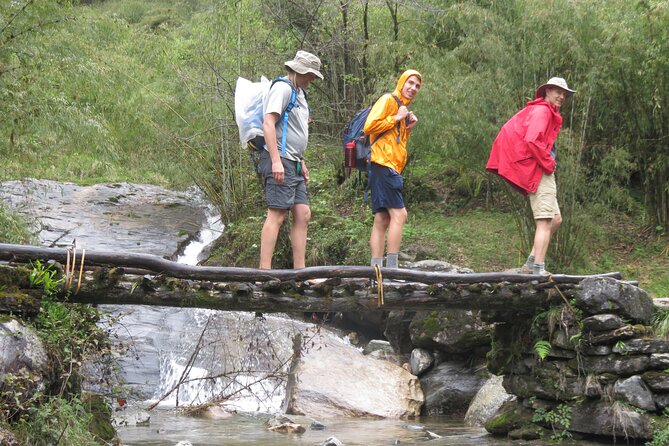
The Jhinu Danda suspension bridge is not just a transport detail. At 285 meters long and 135 meters above the Kimrong River, it is one of the memorable physical moments of the route. You cross above clear water, with steep hills rising around the river valley.
This is also where the trek feels very different from a standard sightseeing trip. You are moving through the foothills on foot, crossing streams and rivers by bridge, and watching village life change as the route climbs. The bridge may be thrilling for some people and uncomfortable for anyone uneasy with height. There is no need to rush across it. Let your guide set a safe pace.
Day two: entering the Annapurna Sanctuary
The second day begins with views of Annapurna South and Machhapuchchhre. From Chhomrong, the trail rises and falls through the foothills before entering the Annapurna Sanctuary. The day is again listed at around 12 hours, so expect a full day rather than a short scenic walk.
The repeated climbs and descents are worth taking seriously. Himalayan trails often make distance hard to judge, and a route that looks short on a map can take most of the day when the trail keeps changing height. Good footwear, steady pacing, and regular water stops will make more difference than racing ahead early.
This section also brings the best mix of village scenery and mountain walking. You pass countryside, forests, river valleys, and settlements linked with Gurung culture. The Gurungs are widely known for their service as Gurkha soldiers, and the villages give the route a human character that pure peak viewing cannot provide.
The accommodation is in teahouses. That means a simple mountain stay rather than a full-service hotel. Breakfast is included, but lunch and dinner are not. Wi-Fi, charging, toiletries, and some drinks may carry small extra charges, so keep some money available.
More Treks and Hikes:
- Poon hill Trek 3 days
★ 5.0 · 176 reviews - Trekking in Annapurna/Langtang/Everest/Upper Mustang regions
★ 5.0 · 161 reviews - Pokhara: 4-Day Ghorepani, Poonhill & Ghandruk Mountain Trek
★ 5.0 · 132 reviews - Ghorepani – Poon Hill Trek 3N-4D
★ 5.0 · 125 reviews
Day three through rhododendron forest and the Modi River valley
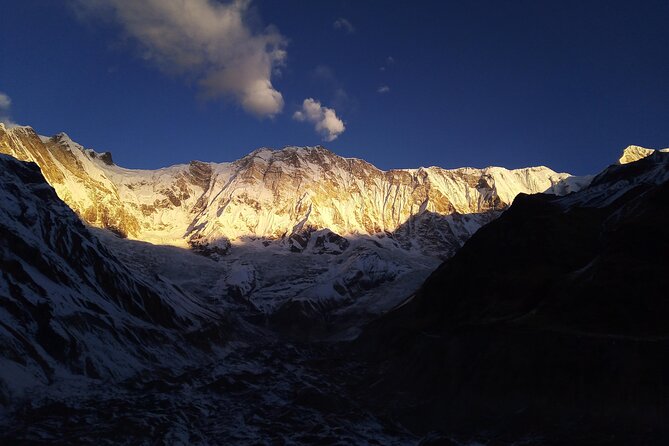
The third day follows the Modi River valley basin around Dovan, with Hiunchuli and Mardi Himal shaping the wider mountain setting. The trail gradually climbs upstream beside the Modi River and passes through thick rhododendron forest.
This is one of the most appealing parts of the trek for anyone who likes variety. You are not looking at snow peaks every minute. Instead, the route moves through trees, clearings, river sounds, and changing views. The forest contains more than 30 rhododendron species, giving the walk a strong seasonal character when the flowers are in bloom.
The itinerary labels this stop Machhapuchchhre, but the description focuses on Dovan and the Modi River basin. This suggests that the day covers a broad section of the route rather than a single sightseeing stop. Your exact walking times and overnight point may depend on trail conditions and the guide’s judgment.
At this stage, fatigue can begin to build. The route is still climbing, and the days remain long. A licensed guide is particularly valuable here because pacing and safe progress matter more than checking off landmarks.
Day four: the final climb to Annapurna Base Camp
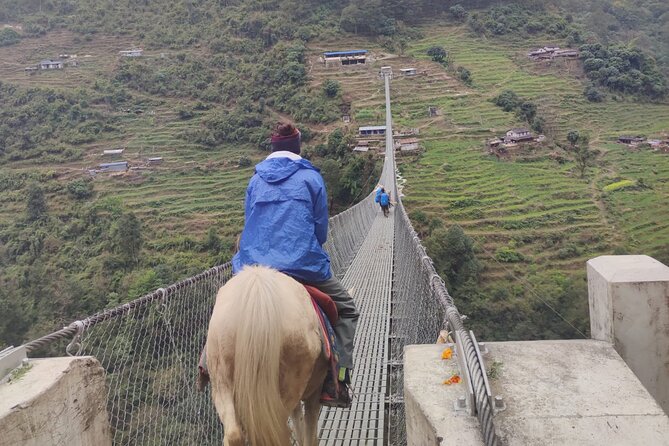
The walk from Deurali to Annapurna Base Camp is described as increasingly scenic, with clear views of Machhapuchchhre, Annapurna III, Annapurna South, Annapurna I, and other peaks. You follow the Modi Khola upstream toward the base camp.
This is the big payoff day, but it is not a quick photo stop. The day is listed at approximately 12 hours, and the climb takes you into colder, higher terrain. The included sleeping bag and anti-slip crampons may be useful depending on conditions, though the information does not guarantee that every item will be needed on every departure.
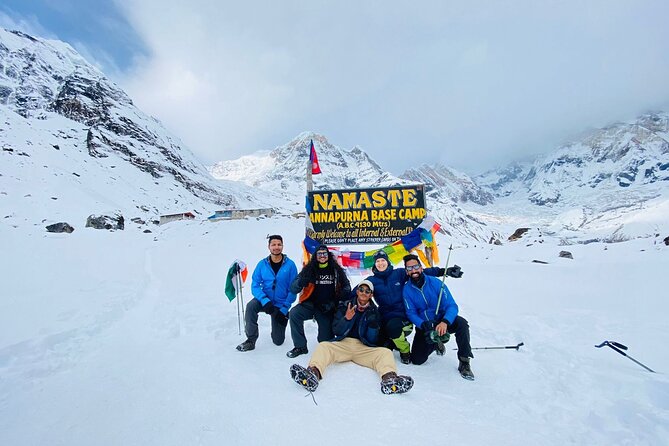
Annapurna Base Camp gives you a powerful sense of enclosure. Mountain walls rise around the sanctuary, and the route’s earlier forests and villages feel far away. The appeal is not only the destination itself. It is the change from green foothills to a stark, high valley surrounded by major peaks.
Admission to Annapurna Base Camp is included in the package. Your guide should help you manage the long day, but you still need to judge your own condition honestly. If altitude symptoms appear, tell the guide at once. The itinerary’s claim of safety should never replace your own caution.
Day five: the Annapurna I sunrise
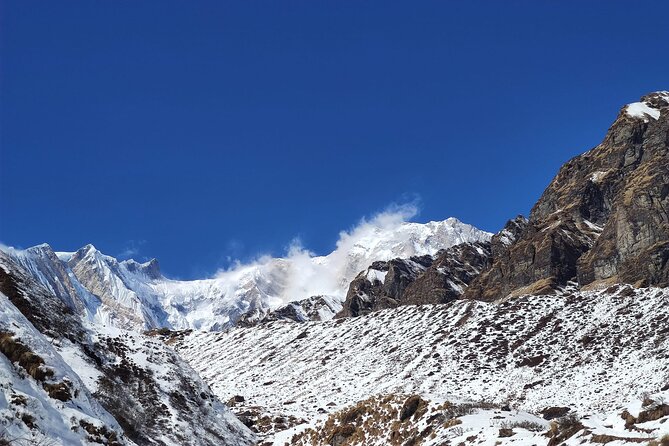
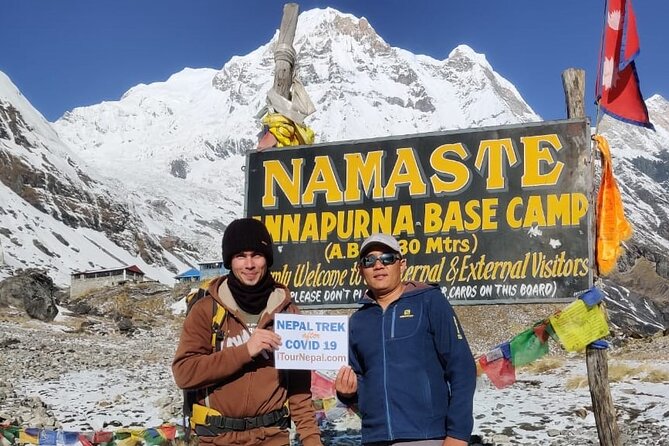
Day five is built around the early morning view from Annapurna Base Camp. The first rays reach the snow peaks, and the color of Annapurna I changes as the sun rises. That gradual shift is the signature scene of the trek.
You also get a calmer morning at base camp before returning downhill. This timing is smart because sunrise is best seen from the high point, not squeezed into the final walking day. Bring warm layers and keep your camera or phone protected from the cold. The information does not specify the exact sunrise departure time, so your guide will set the morning schedule locally.
The descent is not automatically easy. Going downhill can be hard on knees, especially after several long days. Trekking poles may help, though they are not listed among the inclusions. Take your time and keep enough energy for the full return route.
One benefit of spending this morning at base camp is that you get more than a quick arrival, photograph, and departure. The mountain light changes quickly, and having time to watch it is part of the experience.
Day six: returning to green hills and the Modi River valley
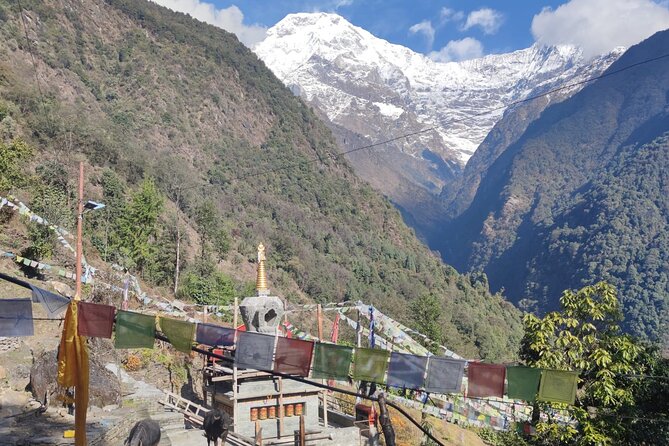
The final day brings you back toward greenery and settled areas. After several days in a cold, enclosed valley, the return to lower hills can feel surprisingly refreshing. Breakfast comes with wide views of layered hills and the Modi River valley.
The published duration is again about 12 hours, which makes the final day another serious walking day. You may be tired, but the changing scenery helps mark your progress. Snow peaks give way to forest and foothill views, and the route feels more connected to everyday Nepal again.
Private transportation is included, although the information does not specify the exact pickup point or final drive time. Confirm the end-of-trek arrangements before departure, especially if you have a flight or another tour scheduled soon after.
Guides, group size, and the human side of the trek
The guide is one of the most important parts of a short high-altitude itinerary. This package includes a licensed, experienced, insured guide, which is more useful here than it might be on an ordinary day hike. The guide helps with route choices, pacing, accommodation arrangements, and decisions in changing conditions.
The operator’s wider work has received especially warm praise for personal service and careful organization. Rabi, the owner, has been described as responsive and flexible, while guides such as Saroj and Ajaya have been praised for patience, kindness, and strong mountain support on related Nepal trips. Your assigned guide may be someone else, so treat those names as examples of the company’s service style, not a promise about your specific departure.
The maximum group size is 20. That is not an intimate private trek, but it is still manageable compared with a large commercial group. Group discounts are offered. If you value quiet walking or want a pace built around your own ability, ask about a smaller or private arrangement before paying.
Fitness, equipment, and daily comfort
You should have moderate physical fitness for this experience. The stated 12-hour days are the clearest warning. You will need to cope with sustained walking, steep sections, repeated ups and downs, and cold conditions near base camp.
The operator supplies or makes available several useful items:
- A duffle bag
- A sleeping bag
- Anti-slip crampons when required
- Teahouse accommodation
- Breakfast for five mornings
You still need personal clothing, toiletries, insurance, and spending money for meals and extras. Since charging and Wi-Fi may cost more in teahouses, use your phone sparingly and carry a power bank if you have one. That suggestion is practical rather than a promised feature of the tour.
The route is described as the shortest and safest Annapurna Base Camp option, but those labels need context. A shorter itinerary compresses the walking. It may suit someone with limited time, yet it gives you less room to recover between stages. You should be comfortable with that tradeoff before booking.
Who gets the most from this six-day trek
This trip suits you if you want a compact introduction to Himalayan trekking from Pokhara, with the main logistics arranged and a clear goal at Annapurna Base Camp. It is a good match for people who value mountain views, village scenery, rhododendron forest, and cultural contact more than luxury.
It also suits repeat clients who appreciate a family-run company and personal planning. The operator has arranged customized Nepal trips combining trekking, cultural visits, Upper Mustang, Bandipur, and Chitwan National Park, so there may be room to add other experiences if your wider trip allows.
I would be more cautious if you dislike long walking days, want private rooms and included dinners, or have little tolerance for changes in mountain conditions. The six-day schedule is efficient, not leisurely.
Cancellation and booking details
You can cancel at least three full days before the local start time for a full refund. Cancellations made inside that window are not refunded, and changes made less than three full days before the start are not accepted.
Confirmation is provided when you book. Pickup is offered, mobile tickets are available, and the route is near public transportation. The practical details are straightforward, but confirm pickup timing, porter needs, meal costs, and the final return point before setting other plans.
Should you book it?
I would book this trek if you have six days, moderate fitness, and a strong desire to see Annapurna Base Camp without arranging every detail yourself. The combination of private transport, a licensed guide, teahouses, breakfast, cold-weather gear, and the sunrise at Annapurna I gives the $450 starting price real value.
I would not book it simply because it is called the shortest or safest route. Read the schedule honestly: several days run about 12 hours, meals beyond breakfast cost extra, and a porter adds $30 per day. If you accept the effort, this is a focused and memorable way to experience the Annapurna Sanctuary, with enough village and forest walking to keep the route from feeling like a race to a viewpoint.
FAQ
Where does the Annapurna Base Camp trek start?
The experience is based in Pokhara, Nepal. Pickup is offered, and private transportation is included.
How long is the trek?
The trek lasts approximately six days. Each day in the stated schedule is listed at about 12 hours, so you should prepare for long walking days.
What fitness level is required?
A moderate level of physical fitness is required. The route includes climbs, descents, high-altitude walking, and cold conditions.
Is Annapurna Base Camp admission included?
Yes. Admission to Annapurna Base Camp is included in the package.
What meals are included?
Breakfast for five mornings is included. Lunch and dinner are not included.
Is a porter available?
Yes. A porter can be arranged for $30 per day. Porter service is not included in the listed price.
What accommodation is provided?
Teahouse accommodation is included. Wi-Fi, charging gadgets, toiletries, and some drinks may involve small extra charges at the teahouses.
What is the cancellation policy?
You can cancel at least three full days before the experience start time for a full refund. Cancellations or changes made less than three full days before the start are not accepted.
More 6-Day Experiences
- 6 Day Upper Mustang Tour by 4WD Jeep from Pokhara
★ 5.0 · 8 reviews - Kathmandu: 6-Day Limitless Langtang Trek
★ 5.0 · 21 reviews - 6 Days Muktinath Tour Package in Nepal
★ 5.0 · 20 reviews - 6 Days/5 Nights Private Kathmandu Pokhara Tour
★ 5.0 · 9 reviews
Just added around Pokhara
- Double Dare: Tandem Bungee Adventure★ 4.3 · 3 reviews
- Exhilarating Pokhara-Kathmandu Bus Journey Experience★ 3.5 · 3 reviews
- 3 Day Australian Camp Dhampus Ghandruk Easy Trek in Pokhara★ 3.5 · 3 reviews
- Paragliding in Pokhara★ 5.0 · 3 reviews
- Seti George and Thrilling Suspension Bridge Tour at Pokhara★ 4.5 · 3 reviews
- Overnight Dhampus Australian Camp Easy Hiking from Pokhara★ 5.0 · 3 reviews
- Full Day Entire Pokhara Tour by Car with Guide★ 4.5 · 3 reviews
- 5 Days Mardi Himal Trek.★ 5.0 · 3 reviews
Annapurna Base Camp Treks, compared.



Kathmandu to Annapurna Base Camp (ABC) 5-Day Trek
Read our review →

Browse the lists this tour appears in