
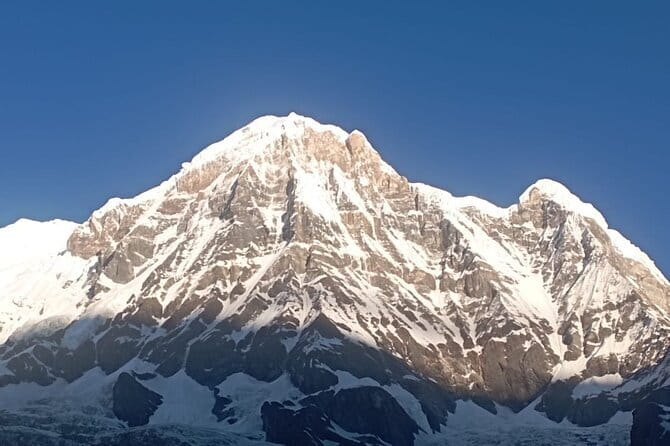
Reviewed · ANNAPURNA BASE CAMP TREKS
Annapurna Base Camp Trek
The Himalaya rewards steady feet. This 14-day Annapurna Base Camp trek combines mountain views, village trails, rhododendron forests, Poon Hill, and a small group capped at 10 people. I like the way the trip handles the practical work, with airport pickup, hotels in Kathmandu and Pokhara, teahouse lodging on the trail, meals during the trek, and a professional guide.
I also like the route itself. You get the famous sunrise at Poon Hill, then continue through Gurung villages and forest to Annapurna Base Camp, rather than rushing straight to the finish. The main consideration is physical: expect 4 to 7 hours of walking most days, with steep stone steps, high altitude, and some long downhill sections.
The $925 price is strong for a guided trek with transport, accommodation, most meals, permits and fees included. Still, you should budget separately for lunch and dinner in Kathmandu and Pokhara, and confirm current arrangements for porter support if you do not want to carry your own bag.
In This Review
- Key points at a glance
- Why this Annapurna route works well
- Days 1 and 2: Kathmandu orientation, then the road to Pokhara
- Days 3 and 4: Nayapool, Ulleri, and Ghorepani
- Day 5: Sunrise from Poon Hill at 3,210 meters
- Days 6 and 7: Tadapani, Gurjung, and Chhomrong
- Days 8 and 9: Bamboo to Machhapuchhre Base Camp
- Day 10: Annapurna Base Camp sunrise and the long return
- Days 11 and 12: Chhomrong and the Jhinu Danda hot springs
- Days 13 and 14: Return to Kathmandu and Pashupatinath
- What the $925 price really covers
- Who should book this trek?
- FAQ
- How long is the Annapurna Base Camp Trek?
- Where does the trek begin?
- How large is the group?
- How many hours do you walk each day?
- Is the trek suitable for beginners?
- Is food included?
- Where do you sleep?
- Is Poon Hill included?
- What happens if bad weather cancels the experience?
Key points at a glance
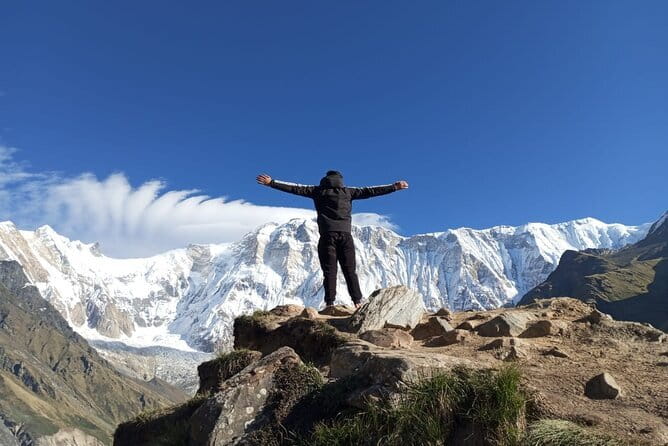
- Poon Hill at 3,210 meters: A short early hike brings one of the route’s best sunrise viewpoints, with views toward Annapurna, Dhaulagiri, and Machhapuchhre.
- A small group of up to 10: The size allows more personal attention than a large trekking departure.
- Two very different trail days: The route moves from village paths and forest to a stark, high mountain setting around Machhapuchhre Base Camp and Annapurna Base Camp.
- Teahouse trekking without daily guesswork: Lodging and meals on the trail are arranged, so you can focus on walking rather than finding a bed and dinner.
- A demanding but manageable route: The trek is rated for people with moderate fitness, but the stone steps and altitude should not be underestimated.
- A hot-spring finish: After the high country, Jhinu Danda offers natural hot-spring ponds near the Modi River.
Why this Annapurna route works well
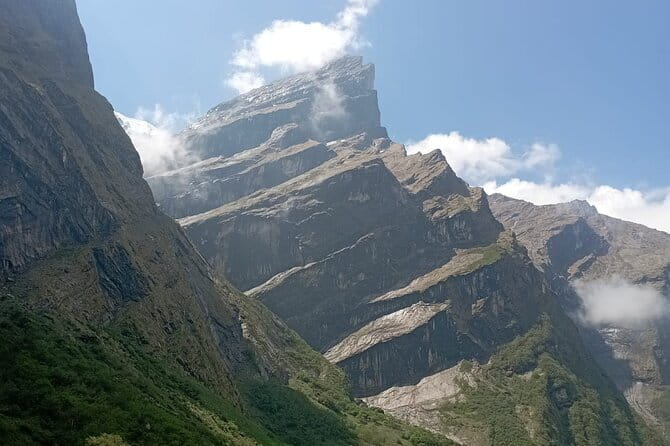
The Annapurna Base Camp Trek is a good choice if you want a serious Himalayan walk without signing up for an expedition. It is not a casual holiday, but it also does not require technical climbing. Your main job is to walk, pace yourself, and handle changing altitude.
Green Valley Nepal Treks & Research Hub arranges the major pieces. Airport pickup begins the trip at Tribhuvan International Airport in Kathmandu. You then move by tourist bus to Pokhara, start the trail near Nayapool, and finish with transport back toward Kathmandu.
The small-group limit matters here. A maximum of 10 people gives a guide a better chance to notice when someone is tired, anxious, or struggling with the altitude. Several guide names appear in the trip’s guest feedback, including Krishna, Tulsi, Suvi, and Anil, while Arjun handled communication for one group. Your guide may be different, but the repeated praise for friendly care and clear organization is a good sign.
One useful point comes through clearly: the staff can adapt when needs change. A participant who felt unwell after arriving was able to request a porter shortly before departure. That does not mean every last-minute request is guaranteed, but it suggests you should speak up early if carrying your own gear becomes too much.
More Annapurna Base Camp Treks:
- Annapurna base camp trek 5 Days
★ 5.0 · 252 reviews - Annapurna Base Camp Trek
★ 5.0 · 111 reviews - Kathmandu to Annapurna Base Camp (ABC) 5-Day Trek
★ 5.0 · 102 reviews
Days 1 and 2: Kathmandu orientation, then the road to Pokhara
Your first day begins with an airport representative meeting you at Tribhuvan International Airport. A private tourist vehicle takes you to your hotel in Thamel, Kathmandu. You can rest after the flight or visit the company office for a fuller briefing.
Thamel is a practical base. It gives you time to settle in and ask questions before leaving for the mountains. Since the itinerary lists the first day as roughly 10 hours, much of that time may depend on your arrival schedule and transfer arrangements rather than sightseeing.
Day two is a road journey to Pokhara. The distance is listed as 200 kilometers, with a tourist bus ride of about six hours and lunch along the way. The full day is shown as roughly 12 hours, so do not treat this as a relaxed transfer.
Pokhara is the launch point for the trek and an overnight guesthouse stay is included. The bus is shared, which keeps the package price down but gives you less control over departure timing and stops. If you are prone to motion sickness, plan accordingly, though the supplied details do not specify the road conditions or vehicle type beyond tourist bus.
Lunch and dinner in Pokhara are not included. Breakfast is included as part of the package, so set aside money for those extra meals.
Days 3 and 4: Nayapool, Ulleri, and Ghorepani
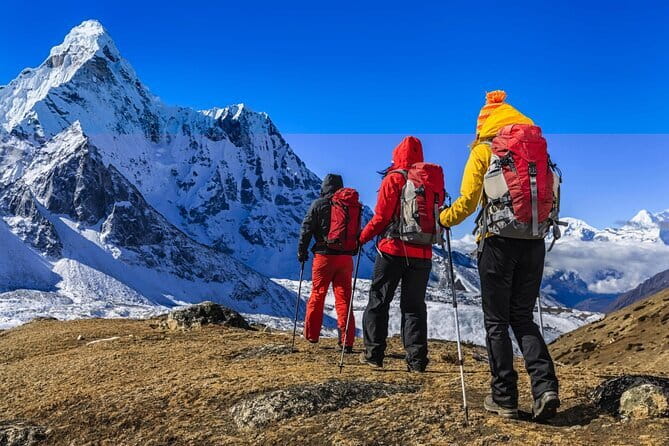
The walking begins after a drive of about an hour from Pokhara to Nayapool. From there, the trail follows the Modi River toward Birethani. Small teahouses line parts of the route, giving you an early look at how mountain communities support trekkers.
This first trail section introduces the rhythm of the trip: walk for several hours, stop for meals, and sleep in a simple teahouse. The exact distance and elevation gain for the day are not provided, so you should rely on your guide for the final pace and rest schedule.
From Ulleri, the route climbs more gently through rhododendron and oak forest toward Banthanti and then Ghorepani. The trees provide shade, and the forest section is a welcome change from exposed mountain paths.
Ghorepani is more than an overnight stop. It is the staging point for Poon Hill, one of the most popular viewpoints in the region. Expect a basic teahouse stay rather than hotel comfort. The package covers accommodation and meals on the trek, but the supplied details do not specify room arrangements, bathroom style, or whether hot showers cost extra.
Day 5: Sunrise from Poon Hill at 3,210 meters
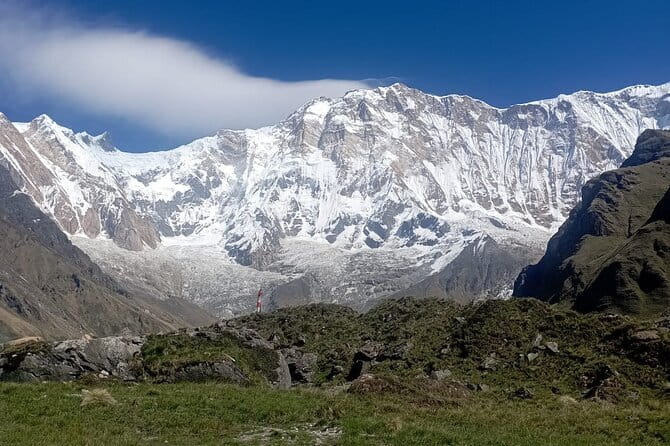
Poon Hill is the photographic high point of the lower route. The morning hike takes about 45 minutes, and the viewpoint sits at 3,210 meters. That short walk can feel quite different before breakfast, especially as you are already adjusting to altitude.
The reward is a broad mountain view at sunrise. The route description specifically highlights Annapurna, Dhaulagiri, and Machhapuchhre, also called Fishtail. Clear skies are never guaranteed, so keep your expectations flexible, but the timing gives you a strong chance to see the mountains in early light.
After Poon Hill, you continue through the Annapurna region rather than ending the trip there. This is one reason the itinerary works well: you get an accessible viewpoint, then a more demanding approach to base camp.
Poon Hill is also a good test of your walking habits. Take the climb slowly, keep your clothing warm, and do not waste energy racing to the top. The stop is listed as about one hour, but the broader day includes more walking.
More Treks and Hikes:
- Everest Base Camp Trek – 14 Days
★ 5.0 · 1,499 reviews - Everest Base Camp Trekking
★ 5.0 · 485 reviews - Nagarkot Sunrise View and Day Hiking from Kathmandu
★ 5.0 · 471 reviews - Annapurna Circuit Trek with Tilicho Lake
★ 5.0 · 368 reviews
Days 6 and 7: Tadapani, Gurjung, and Chhomrong
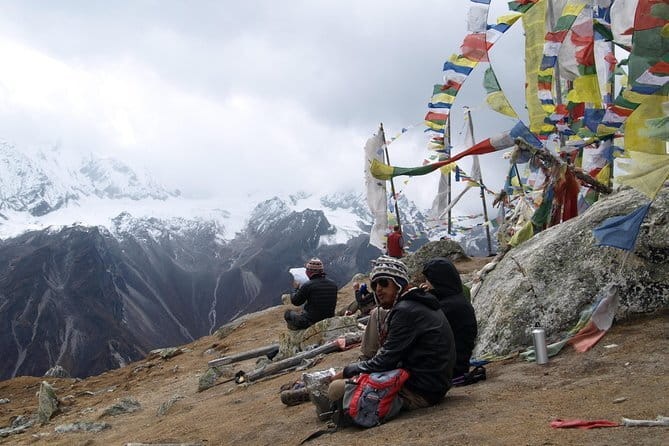
After breakfast at Tadapani, the trail drops through rhododendron forest, crosses the Kimsung River, and climbs toward the Gurung village of Gurjung. From there, a direct climb brings you to Chhomrong.
This is classic Annapurna terrain: forest, river crossings, stone paths, and hillside villages. Chhomrong is spread across a slope with views toward Annapurna and Machhapuchhre. It is an important stop because the trail begins to feel more remote and mountain-focused as you move toward the sanctuary.
Day seven brings a sharp change in rhythm. Stone steps descend from Chhomrong to Chhomrong Khola, followed by a suspension bridge and a steep climb to Sinuwa. The trail then passes through jungle, with an easier downhill section before reaching Bamboo.
Do not mistake downhill for easy. Descending many stone steps can work your knees more than a steady climb. Trekking poles could be useful, but the tour details do not state whether they are supplied, so ask before departure if you need equipment.
The path between Chhomrong and Bamboo also shows why this trek needs moderate fitness. The distances may not sound extreme, but repeated ascents and descents add up over several days.
Days 8 and 9: Bamboo to Machhapuchhre Base Camp
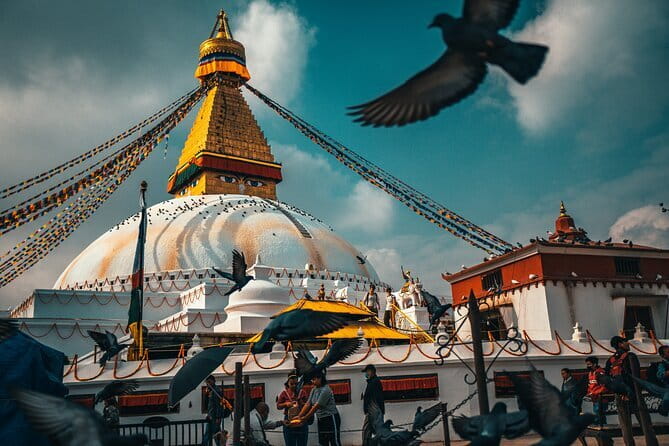
From Dovan to Himalaya, the trail moves through bamboo forest and then rhododendron forest. One section passes a temple where loud noise is discouraged. This small detail gives the walk a cultural layer beyond mountain scenery, and it is a reminder to follow local customs rather than treating the trail as only a physical challenge.
As you continue upward, the setting changes. From Deurali, the path follows a river bed before a tiring climb to Machhapuchhre Base Camp. The approach is more rugged, and the mountains close in around you.
Machhapuchhre Base Camp is surrounded by peaks, with views toward Annapurna, Machhapuchhre, Gangapurna, and Hiunchuli. The name can be confusing because this is not the summit base camp for a technical climb. It is a trekking stop on the route to Annapurna Base Camp.
Day nine is likely one of the most demanding portions of the trip. The itinerary describes the climb as tedious, and that is useful language to take seriously. You are now at high altitude, where even a moderate incline can feel slow.
The guide’s role becomes especially important here. Walk at a pace that lets you speak in short sentences, drink regularly, and report headaches, nausea, or unusual fatigue. The package includes a professional guide, but you remain responsible for telling that guide how you feel.
Day 10: Annapurna Base Camp sunrise and the long return

The itinerary calls for a spectacular sunrise at Annapurna Base Camp before retracing the route through Machhapuchhre Base Camp, Deurali, Himalaya, Bamboo, and Sinuwa. This is a major day because the high point arrives early, followed by a long descent.
The return trail is described as mostly downhill and easier in walking terms. It may still be tiring. Going from the high base camp area all the way to Sinuwa means you should conserve energy before sunrise and keep your pack light.
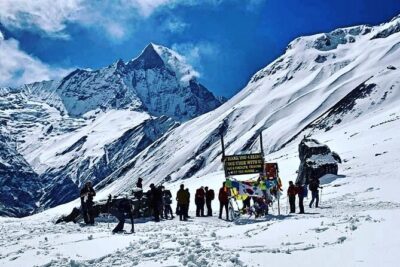
The base camp setting is the main reason to choose this trek. You are surrounded by high peaks rather than simply viewing them from a distant lookout. The route gives you both the panorama from Poon Hill and the enclosed mountain experience of the sanctuary.
If weather blocks the sunrise, the trip can still be worthwhile, but the view is a key part of the value. The operator states that poor weather can lead to a different date or a full refund if the experience is canceled. Conditions inside the trek itself may affect views even when the trip goes ahead.
Days 11 and 12: Chhomrong and the Jhinu Danda hot springs
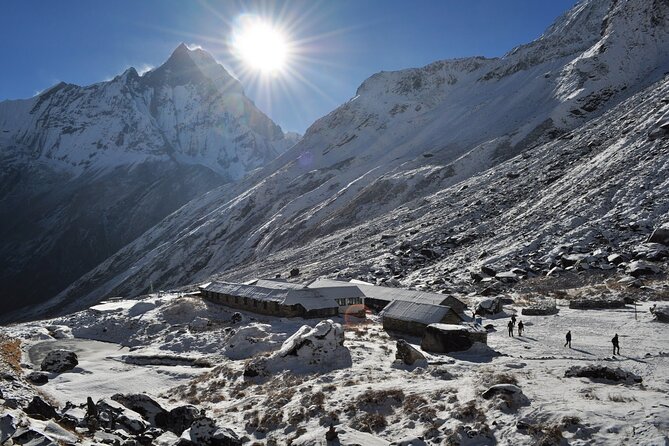
Day 11 returns you to Chhomrong for lunch. The village’s hillside position provides another chance to look back toward the Annapurnas and Machhapuchhre.
This part of the trek is useful as a transition. You are leaving the highest section, but the walk is not finished. The route still includes uneven paths and elevation changes, so do not assume the final days are effortless.
At Jhinu Danda, a natural hot spring lies beside the Modi River. The ponds are about a 20-minute walk from the hotel, and you can bathe there. After several days of climbing and descending, this is a practical pleasure rather than a fancy add-on.
The hot springs also help break up the return journey. You get a chance to rest your legs while staying connected to the river valley that shaped much of the route.
Days 13 and 14: Return to Kathmandu and Pashupatinath
Day 13 includes a stop at Malekhu for lunch, lasting about 30 minutes. The place is noted for fish species and fish products, giving the road journey a local food stop rather than a purely functional break.
The final day includes a drive via Pashupatinath Temple, where you can stop for a few minutes to take photographs. The temple admission ticket is not included, and the listed stop is only five minutes, so think of this as a brief roadside visit, not a full temple tour.
This ending is convenient, but it is not a major sightseeing day. The trip’s main experiences are on the trail, at Poon Hill, and around Annapurna Base Camp. Pashupatinath is a small final touch before departure or the end of the arranged transfer.
What the $925 price really covers
At $925 per person, the package offers solid value for a 14-day guided Himalayan trip. The cost includes accommodation according to the itinerary, airport and road transfers, a professional guide, taxes, fees, handling charges, and meals listed as 13 breakfasts, 10 lunches, and 10 dinners.
The food coverage is strongest on the trail. Lunch and dinner in Kathmandu and Pokhara are excluded, so you should allow extra spending for those city meals. The details also do not list drinks, personal gear, insurance, tips, or optional porter service, so ask for a current cost sheet before paying.
The included teahouses remove a major source of daily uncertainty. You do not need to search for a bed after a long day, and the guide can handle the basic route logistics. That convenience is valuable on a moderate high-altitude trek.
The shared transfer also helps keep the price reasonable. If you want private transport throughout, or a different pace, confirm whether that can be arranged and at what cost.
Who should book this trek?
I would choose this trip if you want a guided route with a clear structure, a small group, and a mix of cultural stops, forests, villages, and high mountain views. It suits active people who can walk 4 to 7 hours a day and handle repeated uphill and downhill sections.
It is also a good first long Himalayan trek if you prefer support rather than doing every arrangement yourself. The care described by past participants includes airport pickup, trip coordination, guide support, and help adjusting plans when someone became unwell.
I would hesitate if you want a soft holiday, private transport, or detailed sightseeing in Kathmandu. I would also think twice if you have not prepared for altitude and long days on uneven ground.
Free cancellation is available up to 24 hours before the start time for a full refund. Changes made within 24 hours are not accepted, and weather-related cancellations may result in a new date or full refund.
FAQ
How long is the Annapurna Base Camp Trek?
The experience lasts approximately 14 days, including arrival in Kathmandu, the transfer to Pokhara, the trek, the return journey, and the final stop near Pashupatinath Temple.
Where does the trek begin?
The arranged meeting point is Tribhuvan International Airport in Kathmandu, Nepal. An airport representative provides pickup and transfers you to the hotel in Thamel.
How large is the group?
The group has a maximum of 10 participants, allowing for more personal attention from the guide than a large departure.
How many hours do you walk each day?
The trek is described as involving roughly 4 to 7 hours of walking each day. The exact time varies by route section and conditions.
Is the trek suitable for beginners?
The experience is designed for people with moderate physical fitness. It is not described as a technical climb, but it includes high altitude, steep stone steps, repeated climbs, and long downhill sections.
Is food included?
Breakfast is included 13 times, lunch 10 times, and dinner 10 times. Lunch and dinner in Kathmandu and Pokhara are not included.
Where do you sleep?
Accommodation is included in hotels or guesthouses in Kathmandu and Pokhara, with teahouse lodging during the trek.
Is Poon Hill included?
Yes. The itinerary includes an approximately 45-minute hike to Poon Hill, which sits at 3,210 meters and is used as a sunrise viewpoint.
What happens if bad weather cancels the experience?
If the experience is canceled because of poor weather, you can be offered a different date or a full refund. Cancellations made at least 24 hours before the start time also qualify for a full refund.
Just added around Kathmandu
- Private Shopping Tour in Kathmandu★ 5.0 · 3 reviews
- Nagarkot Sunrise With 7 UNESCO World Heritage Private Tour★ 5.0 · 3 reviews
- Kathmandu: Nightlife and Pub Crawl Tour★ 5.0 · 3 reviews
- Mount Everest Scenic Flight 50 Minutes★ 5.0 · 3 reviews
- Momo Cooking Class -The Art Of Making MoMo with Home Chef★ 5.0 · 3 reviews
- Kathmandu: Nagarkot, Bhaktapur, Doleswor & Sanga Statue Tour★ 5.0 · 3 reviews
- Makalu Base Camp Trek★ 5.0 · 3 reviews
- Everest Experience Trek 6 Day Hiking Adventure★ 5.0 · 3 reviews
Annapurna Base Camp Treks, compared.



Kathmandu to Annapurna Base Camp (ABC) 5-Day Trek
Read our review →

11-Day Hike Tour to Annapurna Base Camp Bliss in Kathmandu
Read our review →Browse the lists this tour appears in