
Reviewed · ANNAPURNA BASE CAMP TREKS
Annapurna Base Camp Trek
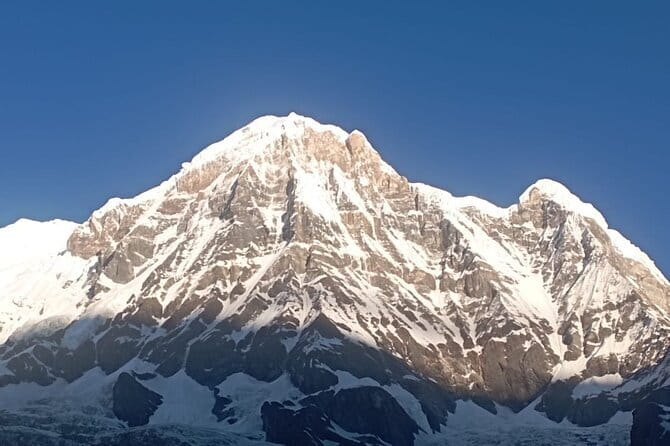
The mountains get bigger every day. This 7-day Annapurna Base Camp Trek takes you from Pokhara through terraced farms, rhododendron forest, Gurung villages, and the high mountain bowl of Annapurna Sanctuary. I like the route because it combines local village life with close views of Annapurna South, Machhapuchhre, and Hiunchuli, rather than rushing straight to a single viewpoint.
I also like that the package includes meals, accommodation, permits, transport, and a licensed mountain guide. Guides such as Suraj, Laku, and Anos have been praised for careful planning, good spirits, and attention to food and lodging. One important consideration is the pace: this is rated moderate, but the route includes long climbs, steep steps, and an early 4:45 am start.
In This Review
- Key points to know before booking
- From Pokhara to Ghandruk on the First Morning
- Ghandruk to Chhomrong: Forest, Farms, and Serious Steps
- Chhomrong to Bamboo Through the Modi River Gorge
- Himalaya Hotel and the Approach to Base Camp
- Annapurna Base Camp and the Sunrise Payoff
- Returning Through Bamboo and Jhinu Danda
- The Final Walk to Siwai and the Drive to Pokhara
- What the $699.67 Price Really Covers
- Guides, Porters, and the Small-Group Advantage
- Who Should Book This Trek?
- Should You Book the Annapurna Base Camp Trek?
- FAQ
- Where does the Annapurna Base Camp Trek start?
- How long is the trek?
- What time does the trek start?
- Is transportation included?
- Are meals included?
- Is accommodation included?
- Are permits included?
- What fitness level is required?
- What happens if bad weather cancels the trek?
Key points to know before booking
- Annapurna Sanctuary is the main prize: The base camp sits among high peaks and glaciers, with sunrise views as the emotional high point.
- The route begins near Pokhara: Ground transport carries you from Pokhara toward Syauli Bazar, with the walking section beginning around Nayapul and nearby trailheads.
- Village life is part of the route: Ghandruk, Chhomrong, Sinuwa, Bamboo, and Jhinu Danda give the trek a human scale.
- Meals and permits are included: Breakfast, lunch, dinner, ACAP permission, TIMS registration, and seasonal fruit are covered.
- It is a private trip: Only your group participates, though the company may arrange a small shared group if requested.
- Budget carefully for extras: Drinks, hot water, showers, laundry, phone calls, battery charging, bottled water, rescue insurance, and guide tips cost extra.
From Pokhara to Ghandruk on the First Morning
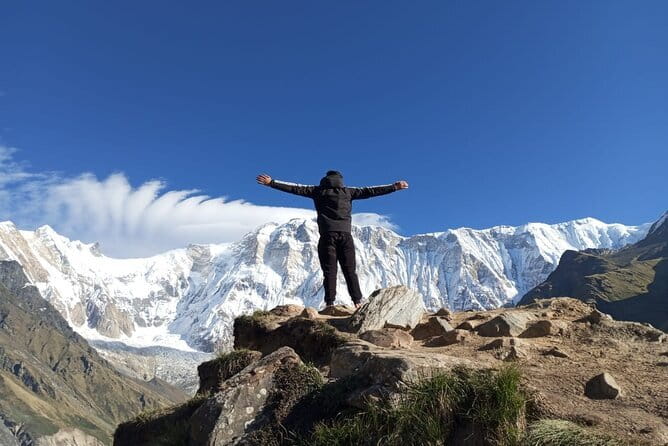
The trip begins early, with a listed start time of 4:45 am. That is not a gentle holiday wake-up, but it gives you time to leave Pokhara and reach the trail before the day gets too warm. Pickup is offered, and transport to the walking area is included in the price.
Ghandruk is an excellent first stop because it introduces the character of the Annapurna region before the trail gets tougher. The village is associated with Gurung culture and sits among terraced hills with views toward the Annapurna range and Machhapuchhre, the distinctive mountain known as Fish Tail.
The first walking day takes about four hours and ten minutes according to the schedule. You can expect a mixture of farm paths, village lanes, and mountain scenery rather than a nonstop climb. That makes this a useful opening day, especially if you are still adjusting to the early start and the rhythm of walking in Nepal.
The practical catch is that road conditions and departure times can affect the day. Since transport and walking are combined, you should keep your plans flexible and avoid scheduling an important fixed activity in Pokhara immediately afterward.
More Annapurna Base Camp Treks:
- Annapurna base camp trek 5 Days
★ 5.0 · 252 reviews - Annapurna Base Camp Trek
★ 5.0 · 111 reviews - Kathmandu to Annapurna Base Camp (ABC) 5-Day Trek
★ 5.0 · 102 reviews
Ghandruk to Chhomrong: Forest, Farms, and Serious Steps
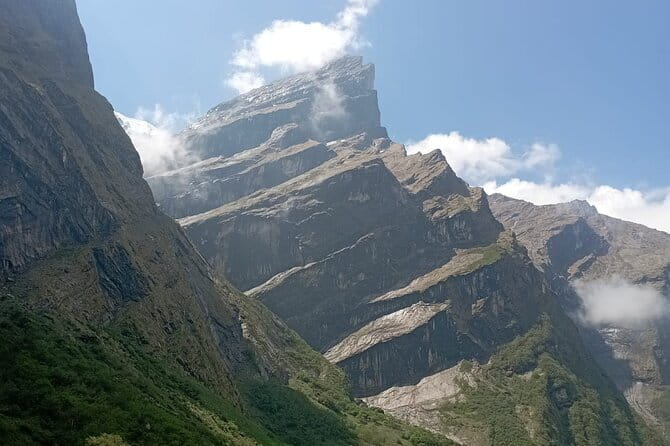
From Ghandruk, the trail begins with a gradual walk before climbing toward Kimrong Danda. This ridge section gives you a feel for the route’s character: a little up, a little down, then another climb when your legs are already warm.
The trail drops through cool forest to the Kimrong River and continues through a farm village. These transitions are part of what makes the Annapurna route rewarding. You are not simply walking through a mountain corridor. You move between cultivated hillsides, forest, streams, and settled communities.
Chhomrong is one of the most important stops on the trek. It is a major village on the route toward base camp, and its position gives you broad mountain views. It also marks a point where the trail becomes more demanding. The itinerary lists a very long 15-hour day, but the supplied schedule appears to contain inconsistent timing, so you should confirm the exact daily walking hours with the operator before departure.
Do not judge the trek by the word moderate alone. Moderate here means suitable for people with a reasonable level of fitness, not an easy stroll. You should be comfortable walking uphill and downhill for several hours, often on stone steps and uneven paths.
The guide matters greatly on this section. Suraj has been especially praised for managing energy levels, meals, and accommodation while keeping the mood cheerful. Laku has also been described as friendly and helpful, with porters Sonam and Necha providing strong support for a small group.
Chhomrong to Bamboo Through the Modi River Gorge
The next stage drops from Chhomrong toward a bridge, then climbs again to Sinuwa Danda. This up-and-down pattern is common on the Annapurna trail. A downhill section may sound easy, but it can be hard on knees, and the following climb quickly reminds you that the mountains set the schedule.
From Sinuwa, the route enters thick forest and follows winding paths toward Bamboo in the Modi River gorge. The forest provides shade and a welcome change from exposed farm terraces. You might find this to be one of the quieter parts of the trek, with the sound of water and the steady work of walking replacing village activity.
Bamboo is a useful overnight point because it breaks the climb into manageable stages. The accommodation is included, but this is still a mountain trek, not a hotel circuit. Expect simple trekking lodges rather than polished rooms. The package covers seven nights on the trek, though the seven-day outline and the accommodation count should be checked carefully when you book.
The schedule gives Day 3 an unusually long listed duration of 14 hours. That figure does not fit neatly with the other time estimates, so treat it as a listing error or a broad transport-and-activity estimate rather than a guaranteed walking time. Ask for the planned start, walking hours, and overnight villages in writing.
Himalaya Hotel and the Approach to Base Camp
The trail continues through forest toward Himalaya Hotel, located near the large Hinko Cave. This is a dramatic part of the route, with the path moving beneath Annapurna South and Hiunchuli. The scenery becomes more imposing as the trees thin and the mountain walls begin to dominate your view.
From Himalaya Hotel, the route descends near the Modi River before continuing upward. The itinerary describes this as the approach to the trek’s main goal, and it is easy to understand why. The valley narrows, the peaks feel closer, and the walk takes on a more serious mountain character.
Day 4 is listed as 13 hours, another timing figure that deserves clarification. The descriptions clearly point to a full trekking day, and your pace will depend on weather, group fitness, rest stops, and trail conditions. A private trip gives the guide more room to adjust the day, but it does not remove the physical demands.
This is where the guide’s judgment is valuable. Anos has been praised for being considerate and dedicated, while another guide was commended for changing the route to match the group’s needs. That flexibility is worth more than a rigid promise of speed. On a mountain path, a sensible adjustment is usually better than forcing everyone to follow a printed timetable.
More Treks and Hikes:
- Everest Base Camp Trek – 14 Days
★ 5.0 · 1,499 reviews - Everest Base Camp Trekking
★ 5.0 · 485 reviews - Nagarkot Sunrise View and Day Hiking from Kathmandu
★ 5.0 · 471 reviews - Annapurna Circuit Trek with Tilicho Lake
★ 5.0 · 368 reviews
Annapurna Base Camp and the Sunrise Payoff
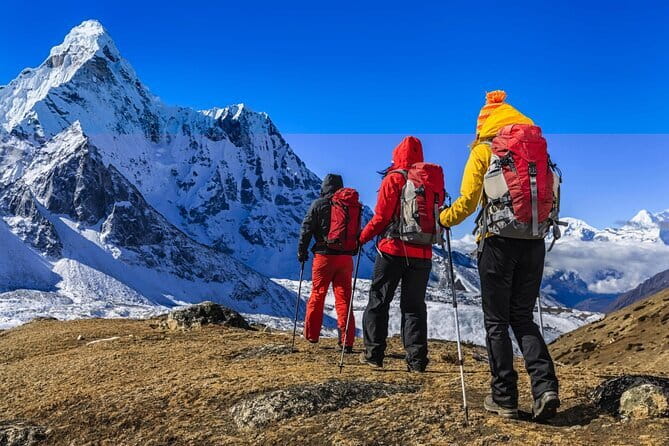
Reaching Annapurna Base Camp is the trek’s defining moment. The base camp lies within the Annapurna Sanctuary, surrounded by towering peaks and glaciers. The reward is not just a single view, but the feeling of being enclosed by the mountains.
The itinerary highlights sunrise from base camp, so your stay should be planned around that early spectacle. Exact weather and visibility cannot be guaranteed, but the setting gives you a strong chance of memorable morning views when conditions cooperate.
The route to base camp is the hardest part for many people because the scenery may tempt you to ignore fatigue. Take the advice of your guide, drink regularly, and keep your pace steady. There is little value in racing ahead only to arrive exhausted and unable to enjoy the place.
The schedule then describes a long descent, close to six hours, toward Bamboo, with short uphill sections mixed in. The listed duration for Day 5 is only two hours, which clearly does not match the written description. This is another reason to request a corrected itinerary. The route itself is understandable, but the displayed timing is not reliable enough for detailed planning.
Returning Through Bamboo and Jhinu Danda
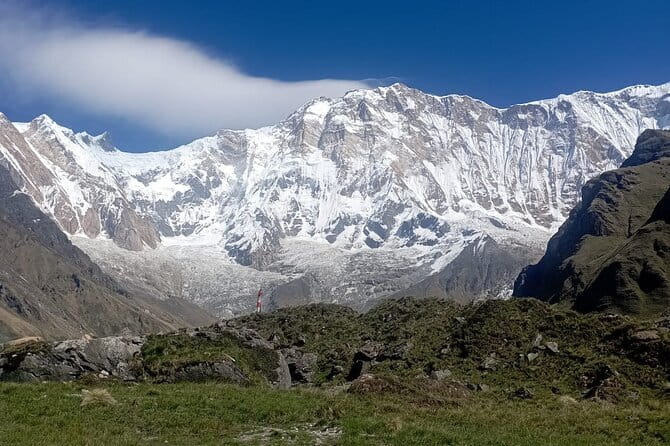
After the base camp visit, the trail returns through Bamboo and back into taller forest. Descending usually feels easier on the lungs, but it can be tiring in a different way. Stone steps and uneven surfaces put pressure on your knees, especially after several days of walking.
The route then returns toward Chhomrong, with repeated climbs and descents. From the Chhomrong hilltop, it takes a different trail toward Jhinu Danda. This change keeps the return journey from feeling like a simple replay of the outward route.
Jhinu Danda is known here for its hot spring, and the stop gives you a pleasant break after the harder mountain sections. The village sits on a ridge with broad views, and the atmosphere is more relaxed than at the base camp. The provided schedule lists only two hours for this day, although the description includes a return to Chomrong and a route to Jhinu, so you should confirm how much walking is planned and when the hot spring visit takes place.
This is also a good place to remember what is not included. Hot water, showers, bottled water, battery charging, laundry, phone calls, and bar bills are all extra. The hot spring is part of the destination described, but any related personal costs should be confirmed before you go.
The Final Walk to Siwai and the Drive to Pokhara
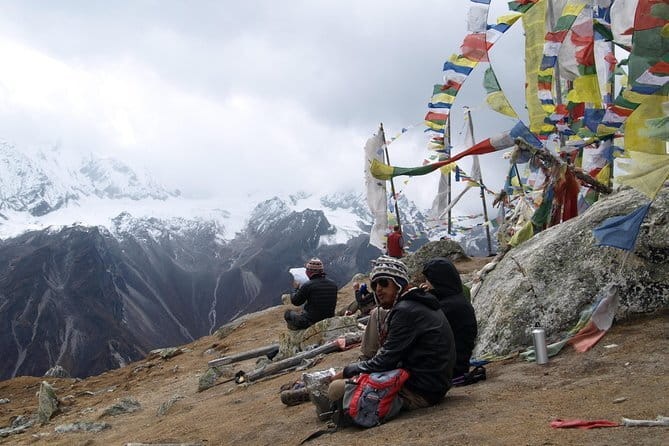
The final day leads downhill through warmer farming country toward Siwai. The walking time is listed as about four hours, followed by a two-hour drive to Pokhara.
This last section is less about dramatic high peaks and more about returning gradually to everyday life. The air becomes warmer, the vegetation changes, and the trail connects mountain walking with road transport. It is a satisfying finish because you can see how quickly the environment changes across the route.
The schedule includes a stop at Pokhara Museum for about 30 minutes, but the exact plan may depend on arrival time and transport. Since the final drive follows a half-day walk, avoid booking a flight or important appointment too tightly afterward.
What the $699.67 Price Really Covers
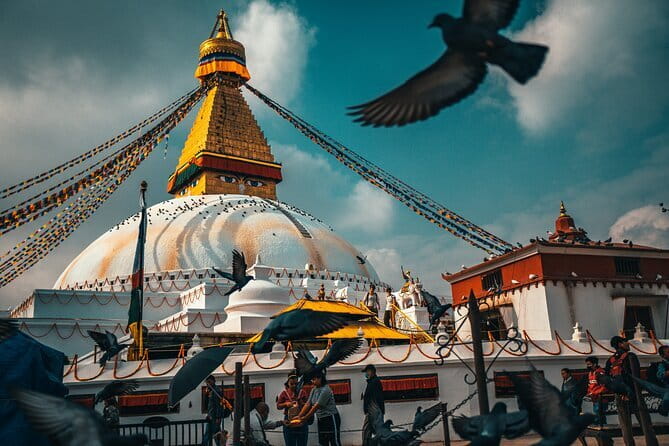
At $699.67 per person, this is a useful package for someone who wants the major practical pieces arranged in advance. You receive three meals a day during the trek, seven breakfasts, seven lunches, six dinners, seasonal fruit, seven nights of accommodation, a licensed mountain guide, ACAP and TIMS permits, and ground transport from Pokhara toward the trail and back from Samrung Khola to Pokhara.
That list has real value. Permits alone require paperwork, and arranging transport between Pokhara and the trail can be a nuisance after a long journey. Having a guide also gives you help with route decisions, lodging, meals, and communication in the villages.
The price is not all-inclusive. You need separate travel and rescue insurance, and you should budget for drinks, showers, hot water, laundry, charging, bottled water, phone calls, and tips. These costs can add up during seven days, especially if you rely on hot showers or charge several devices.
The package is best viewed as a full-service trekking base, not a luxury holiday. If you want simple lodges, organized transport, and a local guide, the cost looks reasonable. If you expect private hotel rooms, unlimited hot water, or every personal expense covered, you will need a different type of trip.
Guides, Porters, and the Small-Group Advantage

This is a private activity, so only your own group participates. That gives you more control than a large scheduled departure, particularly if someone needs a slower pace or an itinerary change.
The company has used guides named Suraj, Laku, and Anos, with particularly strong praise for their friendliness, care, and practical help. Suraj has been described as attentive to meals and accommodation, while Anos was praised for professionalism and personal care. One small group also highlighted porters Sonam and Necha.
You can request specific guides and porters in advance, especially during the busy hiking season. That request is not a guarantee, but it is a useful tip if you have a preferred guide or want to build on an earlier connection with the company.
A guide should do more than lead the path. You want someone who notices when the group is tired, explains what you are seeing, and makes sensible choices about food and sleeping stops. The strongest praise for this trip centers on exactly those everyday details.
Who Should Book This Trek?
You should consider this trek if you want a short route to a major Himalayan destination and prefer to have transport, permits, food, and guiding arranged together. It suits people with moderate physical fitness who are ready for several days of uphill and downhill walking.
It is also a good match if you value village scenery and forest trails as much as the final mountain view. Ghandruk, Chhomrong, Bamboo, and Jhinu Danda make the trip feel like a journey through the region, not merely a march to base camp.
I would be cautious if you dislike early mornings, simple accommodation, uncertain mountain weather, or long days on uneven trails. The route is not a sightseeing bus tour with a few short walks. You need to carry personal essentials, accept extra costs, and allow your guide to adjust the plan.
The monsoon season deserves special care. One successful August trip used Suraj as a guide, but the cancellation terms state that poor weather can force a new date or a full refund. That means the trek may operate in wet conditions, but no departure can promise clear views.
Should You Book the Annapurna Base Camp Trek?
I would book this trek if your priority is reaching Annapurna Base Camp with the main logistics handled and a local guide beside you. The combination of mountain views, Gurung villages, forest, permits, meals, and return transport offers strong value at $699.67.
Before paying, ask the operator to confirm the daily walking hours, the exact overnight stops, the seven-night accommodation count, and which pickup point applies to you. The printed schedule contains several timing inconsistencies, and clearing those up will make the trip much easier to judge.
Choose this trek for a practical, active Himalayan journey with personal guide support. Skip it if you want a relaxed holiday or dislike basic mountain conditions. Free cancellation is available up to 24 hours before the start time, while poor weather or failure to meet the minimum group requirement can lead to a changed date or full refund.
FAQ
Where does the Annapurna Base Camp Trek start?
The experience is based in Kathmandu, but the trekking itinerary begins after an overnight stop in Pokhara. Ground transport takes you from Pokhara toward the trail, with the first walking section associated with Nayapul and nearby starting points.
How long is the trek?
The advertised duration is approximately seven days. The schedule runs from Day 1 through Day 7 and includes the walk to Annapurna Base Camp and the return to Pokhara.
What time does the trek start?
The listed start time is 4:45 am. Confirm the exact pickup time and location with the operator before departure.
Is transportation included?
Yes. Ground transportation is included from Pokhara to Syauli Bazar and from Samrung Khola back to Pokhara. Pickup is also offered.
Are meals included?
Yes. Breakfast, lunch, and dinner are included during the trek, along with seasonal fruit. The package lists seven breakfasts, seven lunches, and six dinners.
Is accommodation included?
Yes. The package includes seven nights of accommodation on the trek.
Are permits included?
Yes. The Annapurna Conservation Area Permit and TIMS card are included.
What fitness level is required?
The activity states that participants should have a moderate level of physical fitness. The route includes repeated uphill and downhill walking through forests, villages, and mountain terrain.
What happens if bad weather cancels the trek?
If poor weather causes cancellation, you will be offered another date or a full refund. You can also cancel up to 24 hours before the start time for a full refund.
Just added around Kathmandu
- Private Shopping Tour in Kathmandu★ 5.0 · 3 reviews
- Nagarkot Sunrise With 7 UNESCO World Heritage Private Tour★ 5.0 · 3 reviews
- Mount Everest Scenic Flight 50 Minutes★ 5.0 · 3 reviews
- Kathmandu: Nightlife and Pub Crawl Tour★ 5.0 · 3 reviews
- Momo Cooking Class -The Art Of Making MoMo with Home Chef★ 5.0 · 3 reviews
- Kathmandu: Nagarkot, Bhaktapur, Doleswor & Sanga Statue Tour★ 5.0 · 3 reviews
- Makalu Base Camp Trek★ 5.0 · 3 reviews
- Everest Experience Trek 6 Day Hiking Adventure★ 5.0 · 3 reviews
Annapurna Base Camp Treks, compared.



Kathmandu to Annapurna Base Camp (ABC) 5-Day Trek
Read our review →

11-Day Hike Tour to Annapurna Base Camp Bliss in Kathmandu
Read our review →Browse the lists this tour appears in