
Reviewed · KATHMANDU UNESCO HERITAGE TOURS
Explore Kathmandu in 2 Days: UNESCO Sites & Nagarkot Sunrise Tour
Kathmandu rewards early risers and curious walkers. This private two-day tour brings together the valley’s major UNESCO sights, from the Hindu rituals of Pashupatinath to the Tibetan prayer wheels at Boudhanath, then adds a Nagarkot sunrise and the medieval squares of Bhaktapur. I like the private format, which keeps the schedule flexible for your group, and the chance to see both Kathmandu’s major temples and its Newar palace cities in a short stay. The main drawback is pace: with five major heritage areas on the first day and an approximately 4 a.m. start on the second, you will need stamina.
The tour costs $100 per person, with hotel pickup, transport by tourist car, a professional guide, water, and visits to a Thanka art school and a singing and healing bowl center included. You should also budget $35 per person for the five UNESCO World Heritage Site entrance fees, plus meals and tips. Guide Prakash receives especially warm praise for making the temples more interesting and keeping communication clear, which matters when two packed days depend on good timing.
In This Review
- Key details before you book
- What two days in Kathmandu can realistically cover
- Pashupatinath: sacred Hindu rituals beside the Bagmati
- Boudhanath: Tibetan Buddhist life around the stupa
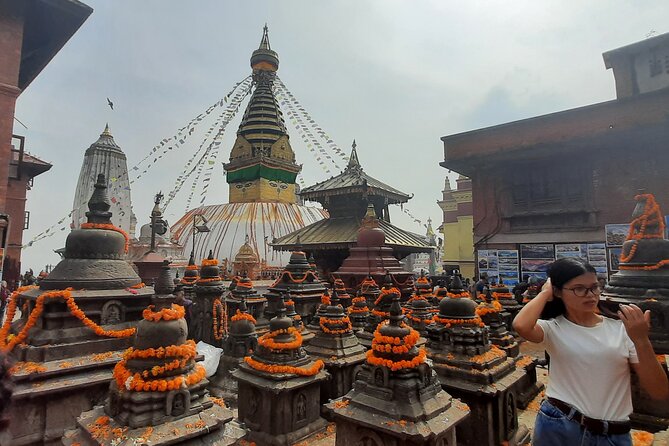
- Swayambhunath: the hilltop stupa and the long stairway
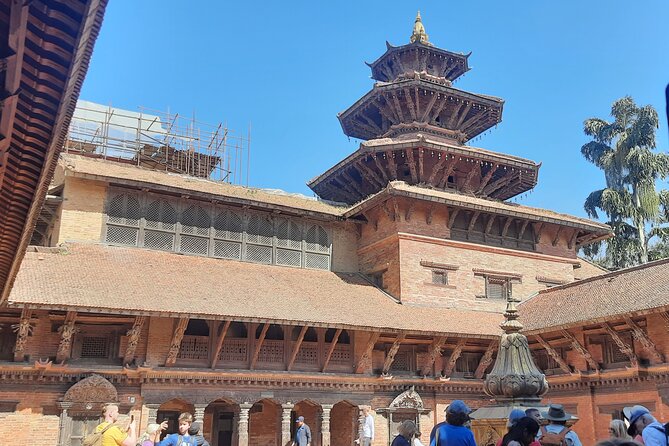
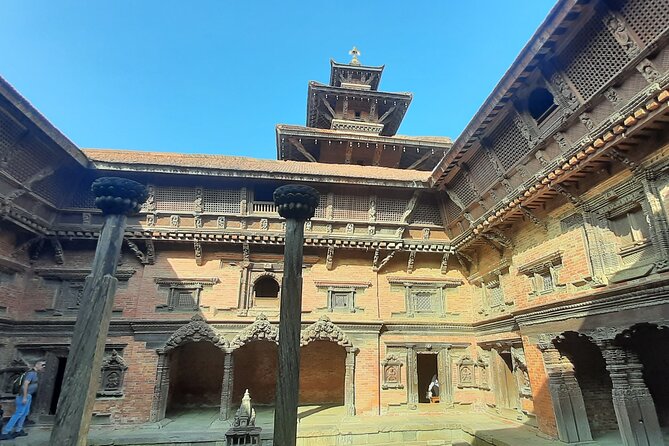
- Patan Durbar Square: Newar craft in its finest setting
- The Golden Temple: a compact stop with a different feel
- Thanka painting and singing bowls: cultural stops beyond monuments
- Nagarkot before dawn: the tour’s biggest visual gamble
- Bhaktapur Durbar Square: a medieval city you can walk through
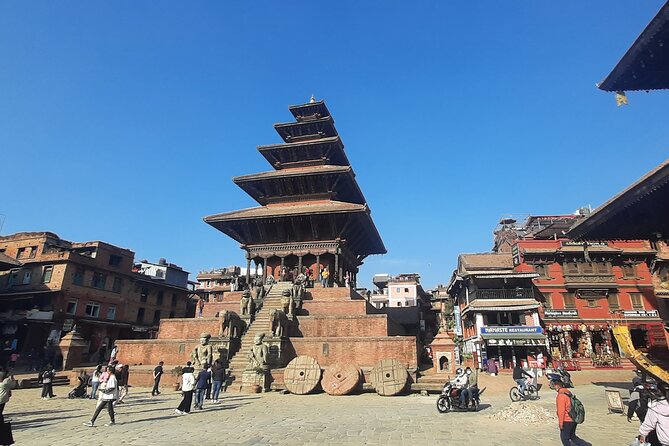
- Nyatapola, Dattatreya, and Pottery Square
- Is $100 per person good value?
- Who will enjoy this Kathmandu tour most?
- Should you book this two-day Kathmandu experience?
- FAQ
- How long does the tour last?
- Is hotel pickup included?
- Are entrance fees included in the tour price?
- What time does the Nagarkot portion begin?
- Are meals included?
- Is this a private tour?
Key details before you book
- Five major UNESCO areas in two days: Pashupatinath, Boudhanath, Swayambhunath, Patan, and Bhaktapur form the tour’s cultural core.
- A very early Nagarkot departure: The drive begins around 4 a.m. and takes about 1 hour and 30 minutes from Kathmandu.
- Private transport and guiding: Only your group participates, with hotel pickup and drop-off by tourist car.
- Entrance fees are extra: Allow NPR 4,600, listed as about $35 per person, for the five UNESCO sites.
- Newar art gets proper attention: Patan’s carvings, the Golden Temple, Bhaktapur’s pottery, and the Thanka school add hands-on cultural detail.
- Weather shapes the mountain view: Nagarkot can offer sunrise, Kathmandu Valley views, Bhaktapur views, and Himalayan peaks including Mount Everest, but clear conditions are needed.
What two days in Kathmandu can realistically cover
Kathmandu Valley is not one single sight. It is a group of historic cities and sacred places spread around the capital, each with its own character. This tour gives you a broad first look rather than a slow study of one neighborhood.
Day one is temple-heavy. You visit Pashupatinath, Boudhanath, Swayambhunath, Patan Durbar Square, the Golden Temple, and a Thanka painting center. Day two begins before dawn at Nagarkot, then continues through Bhaktapur’s squares and temples.
That structure makes sense for a short visit. You get Hindu and Buddhist traditions, palace architecture, local crafts, and a hilltop view in one package. The tradeoff is that most stops have fixed time windows of two hours or less. If you like lingering over carved doors or taking long photo breaks, tell your guide early and decide which places matter most.
Because the tour is private, you are not tied to strangers’ interests. That is useful in Kathmandu, where traffic can affect the day and where one group may want more time at a temple while another prefers photography or shopping. The tour is described as suitable for most participants, but the first day includes several walking areas, and Swayambhunath requires a long stair climb.
More Nagarkot Sunrise Trips:
- Nagarkot Sunrise View and Day Hiking from Kathmandu
★ 5.0 · 471 reviews - Private Bhaktapur and Nagarkot Day Tour From Kathmandu
★ 5.0 · 305 reviews - Kathmandu: Nagarkot Sunrise View & Morning Hike with Lunch
★ 4.9 · 188 reviews
Pashupatinath: sacred Hindu rituals beside the Bagmati
Pashupatinath is one of Kathmandu’s most important Hindu temples. The large Shiva temple is the focal point, but the Bagmati River setting is just as important to understanding the site.
The tour allows about two hours here. You may see open cremation ceremonies along the riverbank, a deeply serious part of Hindu religious life. This is not a staged attraction, so approach with restraint. Your guide can help explain what you are seeing and where to stand respectfully.
The entrance ticket is not included. The site can also feel intense for first-time visitors because religion here is practiced openly, not separated from daily life. Go ready for a place that asks for attention and respect rather than quick sightseeing.
Boudhanath: Tibetan Buddhist life around the stupa
Boudhanath changes the tone completely. The great stupa is surrounded by monasteries and has a strong Tibetan cultural influence. With about two hours, you have time to look closely at the stupa, observe the religious activity around it, and visit the surrounding area with your guide.
This is one of the tour’s best stops for understanding Kathmandu as a meeting point of traditions. Pashupatinath presents Hindu devotion along the Bagmati, while Boudhanath offers a Buddhist setting shaped by monasteries and Tibetan practice.
Entrance is extra here, as it is at the other main heritage stops. Keep your ticket budget in mind before the day begins. The tour does not include food or drinks, so any café stop or meal is paid separately.
Swayambhunath: the hilltop stupa and the long stairway
Swayambhunath, often called the Monkey Temple, sits on a hill above Kathmandu. The principal stupa is reached by a long staircase, and the climb is part of the experience rather than a minor detail.
You have about two hours at the stop. That gives you time to climb, see the stupa, and take in the hilltop setting. The climb may be tiring after Pashupatinath and Boudhanath, especially if you are still adjusting to the early rhythm of a Kathmandu visit.
This is one place where comfortable shoes and a measured pace matter. Since the tour is private, you can ask for a slower climb or a little time to recover without holding up a larger coach group. Admission is not included.
More UNESCO Heritage Days:
- Private Kathmandu Sightseeing Tour | UNESCO World Heritage sites
★ 5.0 · 756 reviews - Kathmandu: Full Day 7 UNESCO Tour with Lunch – Private/Group
★ 5.0 · 415 reviews - Kathmandu: Full Day Top 4 UNESCO Tour with Lunch – Private/Group
★ 5.0 · 269 reviews - UNESCO Seven World Heritage Tour in Kathmandu
★ 5.0 · 253 reviews
Patan Durbar Square: Newar craft in its finest setting
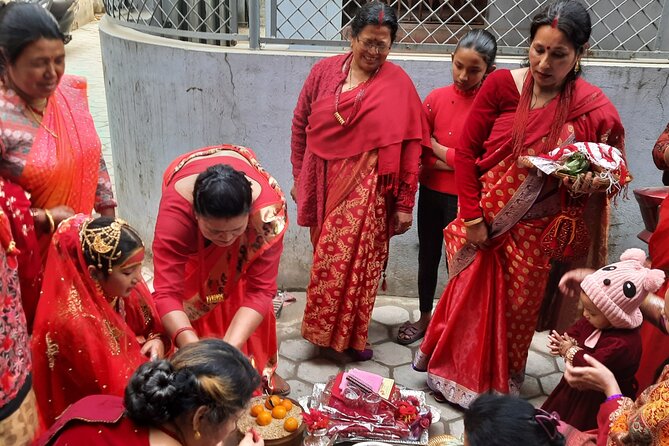
Patan Durbar Square, in Lalitpur, is the artistic center of the first day. The square reflects the work of Newar builders and artists during the Malla period, when the royal courts supported elaborate temples, palace buildings, woodcarving, and stone sculpture.
The tour gives you about two hours here, followed by another 30 minutes at the Golden Temple. That pairing is smart. Patan introduces you to the wider palace square, while the Golden Temple lets you focus on a single religious complex.
Look for the carved windows, temple details, and stone images of Hindu and Buddhist figures. The stone Krishna Temple is singled out as one of the most impressive examples of craftsmanship in the old Malla palace area. The rows of pagoda temples help explain why Patan is more than a photo stop.
Patan is also where a guide adds real value. A quick walk can blur together names, gods, architectural styles, and royal buildings. A guide such as Prakash can give the carvings a story and help you notice the difference between a decorative detail and a religious symbol.
The Golden Temple: a compact stop with a different feel
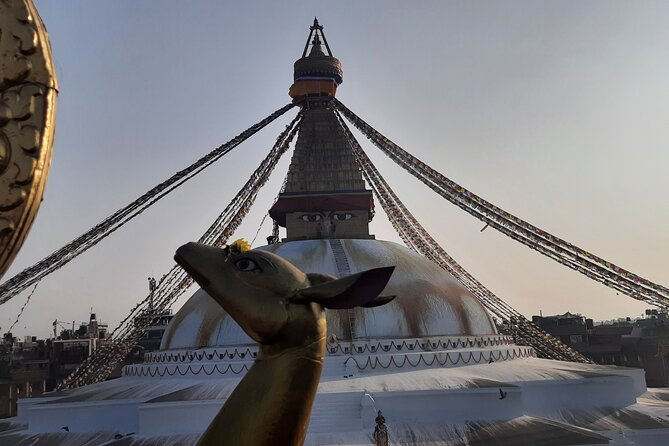
The Golden Temple, formally called Hiranya Varna Mahavihar, is described as a 12th-century temple. Its familiar name comes from the golden-colored front section.
You have around 30 minutes here, which is short but reasonable for a smaller site. It works best as a focused visit after the larger Patan square. Look at the metalwork, the compact courtyard, and the way the temple’s name has become more widely used than its formal title.
This stop is included in the overall route, but its admission fee is not. Since the tour’s entrance cost covers five UNESCO sites separately, you should expect to pay the required fees rather than assume every temple visit is covered by the $100 tour price.
Thanka painting and singing bowls: cultural stops beyond monuments
The tour includes a visit to a Thanka painting art school. Thanka paintings are made on cotton cloth with natural colors, and the designs can include mandalas, the Wheel of Life, scenes from the Buddha’s life, and single-point meditation images.
The scheduled visit is about 20 minutes. That is enough for an introduction to the art form, but not a full workshop or extended class. If you are interested in buying art, take your time assessing what is being offered and ask your guide questions before making a decision.
A singing and healing bowl center is also included in the package, although no separate duration is provided. These cultural visits break up the temple circuit and show how religious art and sound remain part of Nepal’s living traditions. They can also be useful if you want to take home something more meaningful than a standard souvenir.
Nagarkot before dawn: the tour’s biggest visual gamble
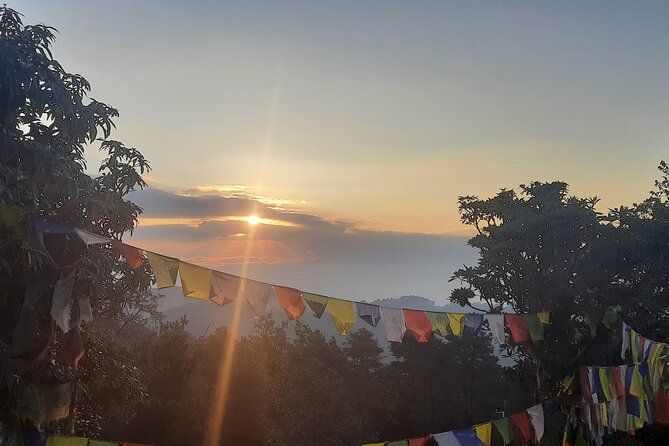
Day two begins at approximately 4 a.m. for the drive to Nagarkot. The hill is about 35 kilometers from Kathmandu, and the drive is listed at roughly 1 hour and 30 minutes by car.
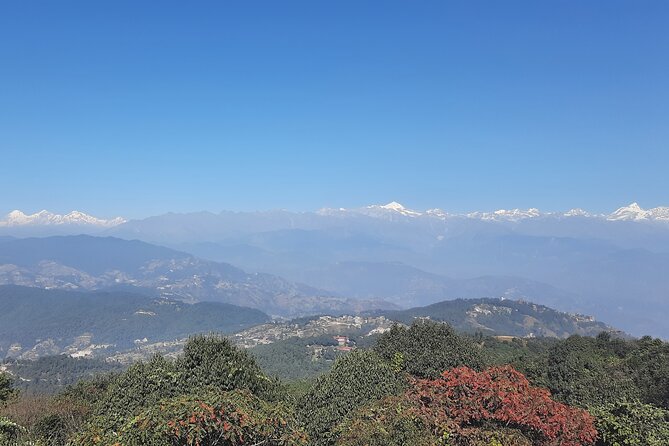
The goal is sunrise over the Himalayas. On a clear morning, you may see mountain peaks including Mount Everest, along with views toward Kathmandu Valley and Bhaktapur. The sunrise visit lasts about three hours, and admission is listed as free.
This is a strong addition to a temple tour because it changes the pace and setting. After a full day of shrines and old cities, you get open views and a quieter start. But you should treat the mountain panorama as weather-dependent. The tour promises the chance to see the Himalayas, not a guaranteed clear view every morning.
The early start is the main practical issue. You will probably be leaving your hotel while much of Kathmandu is still asleep. If sunrise photography is a priority, the sacrifice may be worth it. If you need a slow morning, this schedule could make the second day feel long.
Breakfast is not included. The program says you will visit Bhaktapur after breakfast, but meals and drinks are your responsibility, so confirm the timing and location with the guide.
Bhaktapur Durbar Square: a medieval city you can walk through
Bhaktapur is known as the city of devotees and is often described as a living museum. The tour gives you about two hours in Bhaktapur Durbar Square, followed by shorter visits to Nyatapola Temple, Dattatreya Temple, and Pottery Square.
Bhaktapur feels different from Patan. Patan’s appeal is closely tied to refined carving and its palace square, while Bhaktapur offers a broader old-city setting with several squares and active craft traditions. The tour notes four major squares, including Dattatraya Square, and your guide can help connect the buildings rather than treating each temple as an isolated object.
The entrance fee is not included. This is another place where the separate $35 allowance for five UNESCO sites becomes important. Build that amount into your total before comparing this tour with cheaper-looking options.
Nyatapola, Dattatreya, and Pottery Square
Nyatapola Temple is described as Bhaktapur’s tallest temple and a strong example of Nepali pagoda architecture. It is dedicated to Siddhi Laxmi, with Bhairab Temple nearby. You have about 20 minutes here, enough for a close look at the structure and its setting, though not a long architectural study.
Dattatreya Temple is dedicated to Dattatreya, a Hindu deity associated with the combined forms of Brahma, Vishnu, and Shiva. The visit also lasts about 20 minutes, and admission is not included.
Pottery Square is the most craft-focused stop. Local makers produce different hand-shaped items, and you can look at souvenirs associated with Bhaktapur. The scheduled visit is about 20 minutes, so do not expect a full pottery lesson. Still, it gives you a useful glimpse of work made by hand rather than a display limited to old monuments.
The short stops are best viewed as introductions. If a particular temple or craft interests you, use the private format to ask for extra time, knowing that any extension may require reducing time elsewhere.
Is $100 per person good value?
At $100 per person, this is not the cheapest way to see Kathmandu, but the price covers more than admission to monuments. You receive hotel pickup and drop-off, a tourist car, a professional guide, bottled water, and a private two-day schedule. The Thanka school and singing bowl center are also included.
The biggest extra cost is the listed $35 per person for five UNESCO World Heritage Site entrance fees. Meals, drinks, and gratuities are also excluded. In practical terms, you should compare the full cost, not just the advertised tour price.
The value is strongest if you want one organized package and have only two days. Hiring separate transport, arranging a guide, and planning Nagarkot before dawn could take time and create more moving parts. The private arrangement is also valuable for couples, families, or friends who want to adjust the pace.
The value is weaker if you prefer to spend half a day at one palace square or make your own food and transport choices. This route covers a lot, but it is designed for range rather than long, quiet visits.
Who will enjoy this Kathmandu tour most?
I would recommend this experience to a first-time visitor with a short stay who wants the main cultural sights explained in person. It suits people who enjoy temples, architecture, religious practice, traditional art, and old city streets more than a loose sightseeing schedule.
It is also a good fit for small private groups. Since only your party participates, you can coordinate with the guide about photo stops, walking speed, and which details deserve extra attention. The positive comments about punctuality, communication, and Prakash’s guiding suggest that those practical parts of the day are handled well.
You should think twice if you dislike early mornings, long sightseeing days, or climbing stairs. Swayambhunath involves a long stairway, and Nagarkot begins around 4 a.m. The pace can be managed to some degree, but the itinerary remains ambitious.
Free cancellation is available when you cancel at least 24 hours before the start time. Cancellations or changes made within 24 hours are not refunded or accepted.
Should you book this two-day Kathmandu experience?
Book it if you want a well-organized first look at Kathmandu Valley and would rather let a guide handle the route, driving, and cultural explanation. The combination of Pashupatinath, Boudhanath, Swayambhunath, Patan, Nagarkot, and Bhaktapur gives you an unusually broad introduction in two days.
Before booking, confirm the total budget with the $35 entrance charge, meals, drinks, and expected gratuity added. Also accept that the Everest view is a possibility, not a promise, and that the 4 a.m. departure is a serious one.
For a short visit, the tour offers strong value through its private transport and wide coverage. For a slower cultural holiday, choose a plan that gives you more time in fewer places. If you have two days and want to see Kathmandu’s major sacred and historic sites without sorting out every transfer yourself, this is a sensible choice.
FAQ
How long does the tour last?
The experience lasts approximately two days. Day one covers Kathmandu and Patan, while day two includes Nagarkot and Bhaktapur.
Is hotel pickup included?
Yes. Hotel pickup and drop-off by tourist car are included.
Are entrance fees included in the tour price?
No. Entrance fees are extra. The listed cost for five UNESCO World Heritage Sites is NPR 4,600, or about $35 per person.
What time does the Nagarkot portion begin?
The drive to Nagarkot begins early in the morning at about 4 a.m. The drive from Kathmandu is listed as approximately 1 hour and 30 minutes.
Are meals included?
No. You pay separately for food and drinks.
Is this a private tour?
Yes. Only your group participates in the activity.
More 2-Day Experiences
- 2 Days Chitwan Jungle Safari Tour from Pokhara/Kathmandu
★ 4.5 · 27 reviews - 1 Night 2 Days Chitwan Jungle Safari Tour from Kathmandu
★ 3.5 · 19 reviews - From Kathmandu: Nagarkot Tour Package 1 Nights 2 Days
★ 4.8 · 10 reviews - Pokhara: 2 Day Ghorepani & Poon Hill Private Trekking
★ 4.9 · 8 reviews
Just added around Kathmandu
- Private Shopping Tour in Kathmandu★ 5.0 · 3 reviews
- Nagarkot Sunrise With 7 UNESCO World Heritage Private Tour★ 5.0 · 3 reviews
- Kathmandu: Nightlife and Pub Crawl Tour★ 5.0 · 3 reviews
- Mount Everest Scenic Flight 50 Minutes★ 5.0 · 3 reviews
- Momo Cooking Class -The Art Of Making MoMo with Home Chef★ 5.0 · 3 reviews
- Kathmandu: Nagarkot, Bhaktapur, Doleswor & Sanga Statue Tour★ 5.0 · 3 reviews
- Makalu Base Camp Trek★ 5.0 · 3 reviews
- Kathmandu: Momo Making Class with a Local Chef★ 5.0 · 3 reviews
Kathmandu UNESCO Heritage Tours, compared.

Private Kathmandu Sightseeing Tour | UNESCO World Heritage sites
Read our review →
Full Day 7 UNESCO Tour with Lunch – Private/Group
Read our review →
Full Day Top 4 UNESCO Tour with Lunch – Private/Group
Read our review →
Full-Day 7 UNESCO Tour with Lunch – Private/Group
Read our review →
Kathmandu Private Sightseeing Tour | UNESCO World Heritage Sites
Read our review →Browse the lists this tour appears in