
Reviewed · DURBAR SQUARE TOURS
From Kathmandu: 3 Major Durbar Square Guided Tour
Three royal squares, one very full morning. This private tour links the Kathmandu Valley’s three UNESCO-listed Durbar Squares, giving you a quick but meaningful look at Nepalese palaces, temples, royal courtyards, and living religious traditions. I especially like the private transport and the chance to compare three very different old royal cities in one outing. I also like having an English-speaking guide to explain details that are easy to miss, from carved palace windows to the Kumari’s residence.
The main drawback is pace. The advertised duration is five hours, while the listed visits total five and a half hours: 1.5 hours in Kathmandu, two hours in Bhaktapur, and two hours in Patan. Entrance fees are also not included, so you should budget for those separately. Still, if your time in the valley is short, this is an efficient way to see a lot without arranging three separate trips.
In This Review
- Key points at a glance
- Why these three squares belong together
- Kathmandu Durbar Square and the Kumari’s courtyard
- Bhaktapur’s old royal city and Nyatapola Temple
- Patan Durbar Square and the art of Lalitpur
- What the private transport adds
- The guide can make or break the day
- Price, entrance fees, and overall value
- Who should book this five-hour tour?
- Should you book the three-square tour?
- FAQ
- How long does the tour last?
- Where does pickup take place?
- Which places are included?
- Is transportation included?
- Are entrance fees included?
- Is the tour wheelchair accessible?
Key points at a glance
- Three UNESCO-listed squares in one outing: Visit Kathmandu, Bhaktapur, and Patan, each with a different architectural mood and cultural focus.
- Kathmandu’s living goddess tradition: See the Kumari’s residence near Hanuman Dhoka Palace, with the important reminder that an appearance is not guaranteed.
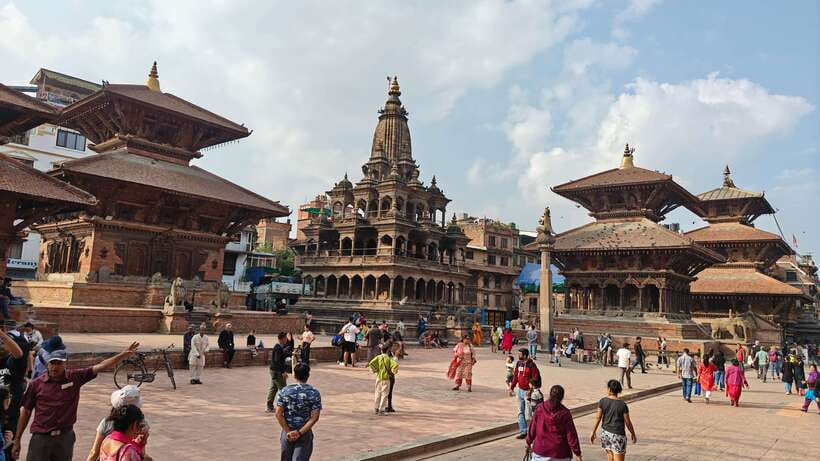
- Patan’s Krishna Mandir: Admire one of the valley’s finest stone temples and allow time for the nearby Patan Museum.
- Bhaktapur’s Nyatapola Temple: See Nepal’s tallest pagoda and the city’s well-preserved royal setting.
- A private English-language guide: Guides Pranav and Aneel, also called Karma, have been praised for clear explanations, storytelling, warmth, and enthusiasm.
- Five hours from Thamel and back: Hotel pickup and drop-off within Kathmandu make the tour simple, though the schedule leaves little room for wandering.
Why these three squares belong together
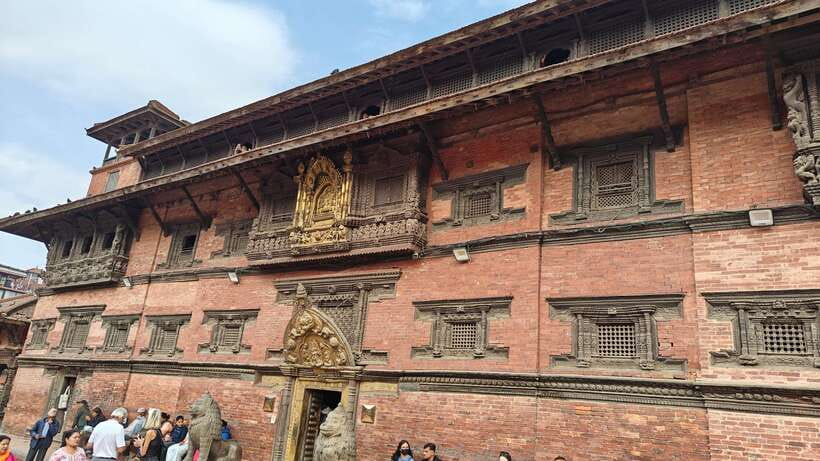
Kathmandu Valley is not one old city with three branches. It is a cluster of historic centers, each once linked to its own royal court. Kathmandu, Patan, and Bhaktapur developed distinct artistic styles, religious traditions, and urban layouts.
That makes this tour more useful than a single-square visit. In Kathmandu, you get the political heart of the former kingdom. In Patan, you see refined metalwork, stone carving, and temple design. In Bhaktapur, old Newari streets and traditional buildings give the strongest sense of a preserved royal city.
I like this three-stop format because comparison becomes part of the experience. You are not simply checking off monuments. You are seeing how the same valley produced three related but different centers of power and worship.
The private format matters, too. You can ask your guide to explain a carved figure, pause at a courtyard, or clarify the difference between a palace and a temple. With a larger group, those small questions often get lost. The tradeoff is that the five-hour schedule is ambitious, particularly when traffic affects the drive between sites.
More Durbar Square Visits:
- Bhaktapur & Patan Durbar Square Day Tours
★ 5.0 · 122 reviews - Kathmandu Sunset Tour by Rickshaw Including Durbar Square Visit
★ 5.0 · 73 reviews - Old Kathmandu Walking Tour, Historic World Heritage Durbar Square
★ 5.0 · 22 reviews
Kathmandu Durbar Square and the Kumari’s courtyard
Your tour begins with pickup in Thamel and heads to Kathmandu Durbar Square, also called Hanuman Dhoka. The visit is scheduled for about 1.5 hours, making this the shortest stop of the day.
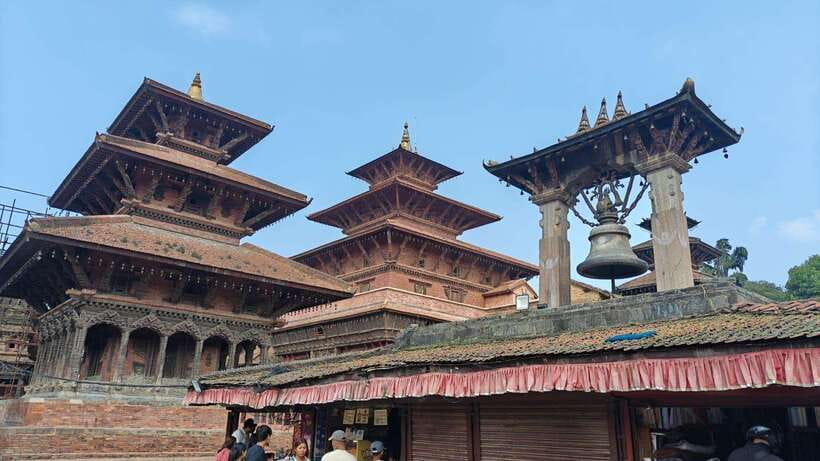
Kathmandu Durbar Square was once the main royal center of Kathmandu. The complex includes Hanuman Dhoka Palace, temple courtyards, shrines, and wooden buildings with elaborate carving. The name refers to Hanuman, the Hindu monkey god, whose image protects the palace entrance.
This is a place where a guide earns the cost of the tour. The square contains plenty of visual noise: carved doorways, roof supports, statues, shrines, palace courtyards, and people moving through the area. Without context, you may admire the woodwork without understanding its purpose. A good guide can connect the buildings to royal life, Hindu belief, and local festivals.
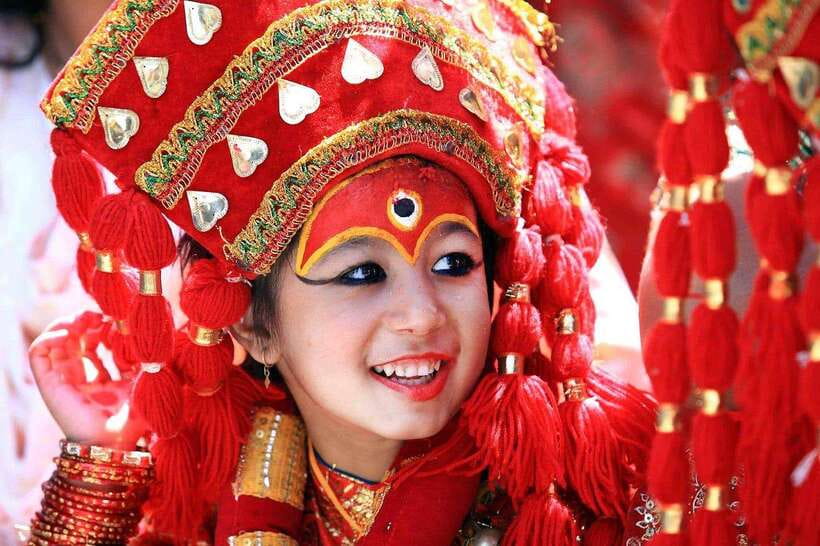
The Kumari’s residence is one of the most unusual stops. The Kumari is a living goddess, traditionally selected as a young girl and worshipped as a manifestation of the goddess Taleju. Her palace is in the square, and the guide can explain the tradition and the role it plays in Nepalese religious life.
Do not treat this as a guaranteed viewing opportunity. The tour promises a visit to the residence, not a personal appearance by the Kumari. Even if you do not see her, the building and the custom provide a rare look at a religious tradition that is still part of daily life.
The square also includes the Taleju Temple, an important structure with restricted access. You should expect to admire some religious buildings from outside, since entry rules can vary by temple and faith. This is one reason a guide is useful: you can learn what you are seeing without guessing which doors are open to you.
With only 1.5 hours here, focus on the major sights rather than trying to inspect every corner. Kathmandu is the best place to pay attention to royal power, palace design, and the connection between religion and public life.
Bhaktapur’s old royal city and Nyatapola Temple
The itinerary gives Bhaktapur Durbar Square two hours, the longest single visit. That extra time is welcome. Bhaktapur has a more preserved old-world character than the other two squares, with traditional buildings, pottery, handicrafts, temples, and narrow lanes surrounding the central monuments.
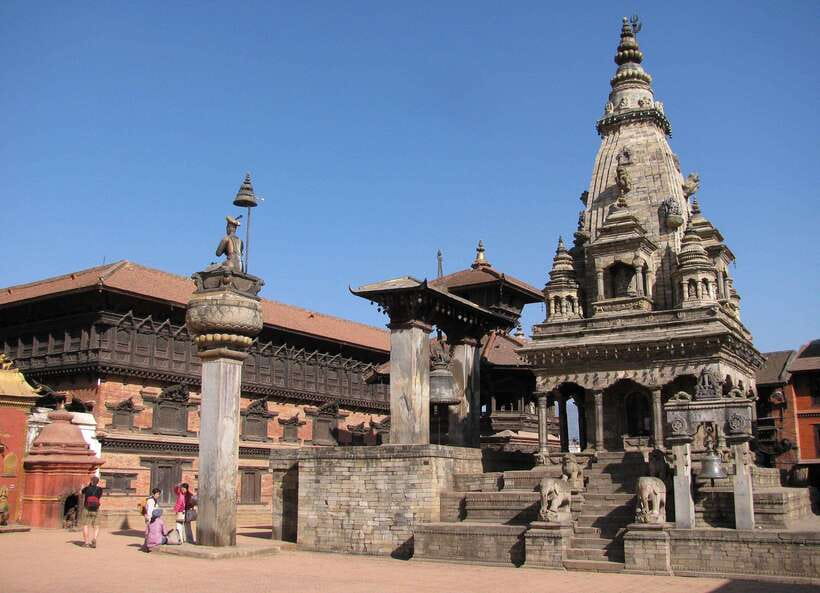
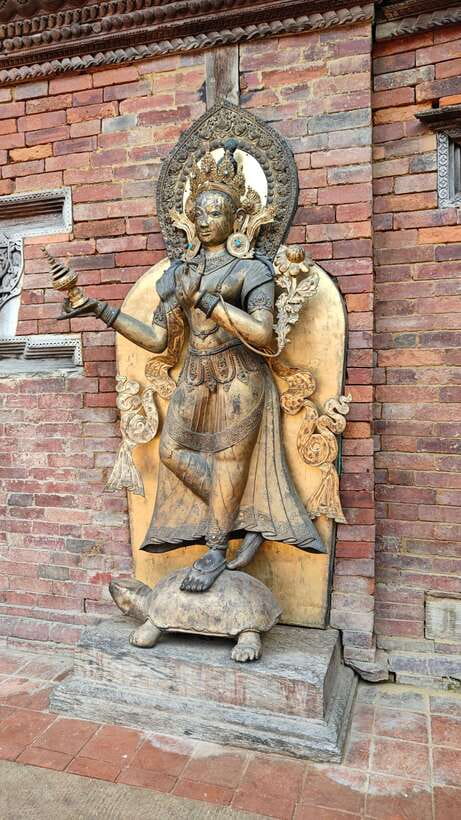
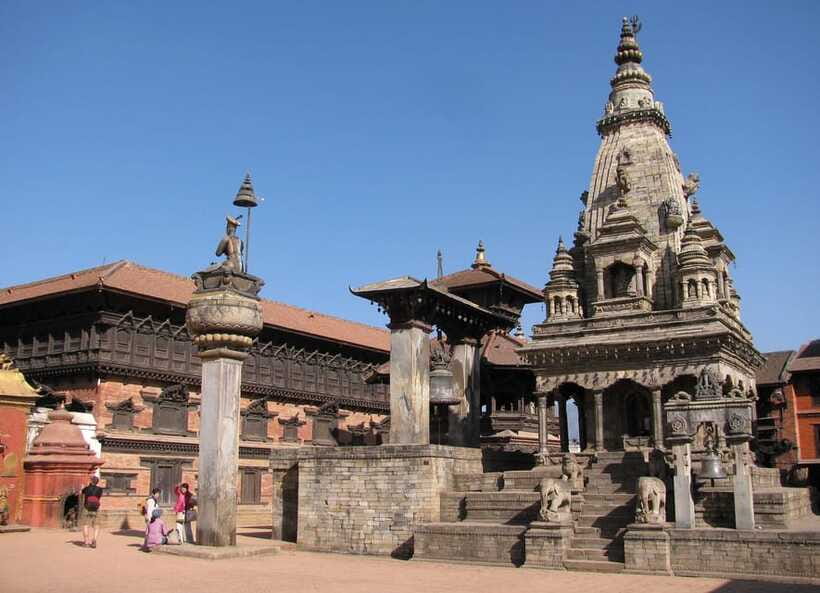
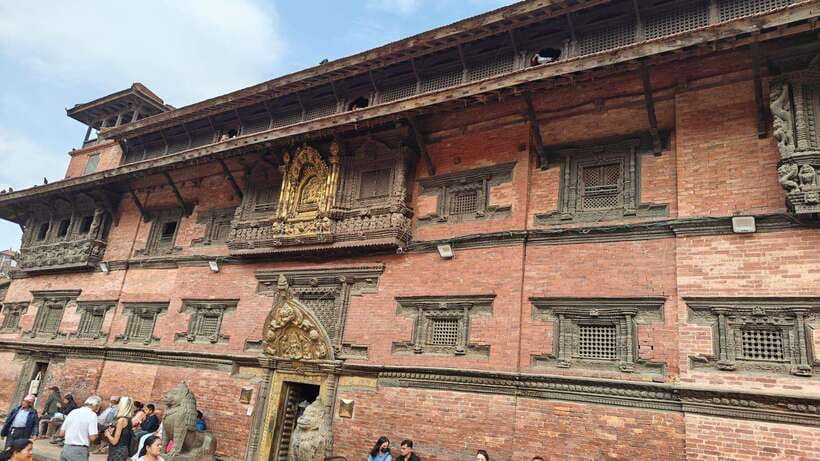
The 55-Window Palace is a major focal point. Its name comes from the carefully carved windows built into the palace facade. The Golden Gate and Vatsala Temple add more detail to the royal complex, and each stop gives your guide an opening to explain Newari architecture.
The highlight for many people is Nyatapola Temple, the tallest pagoda in Nepal. Its steep, tiered form rises above the square, making it easy to recognize. The approach and structure are impressive, but take a moment to look at the figures lining the stairway as well. They are part of the temple’s visual language and help show how architecture, sculpture, and religious meaning work together.
Bhaktapur is also associated with pottery and traditional handicrafts. The tour is not described as a dedicated shopping visit, so do not expect a workshop or a long buying session. You should, however, have a chance to notice the craft traditions that remain part of the city’s identity.
I find Bhaktapur the easiest square in which to slow down mentally. Its lanes and courtyards encourage you to look above shopfronts and beyond the main monuments. At the same time, the two-hour visit can pass quickly if your guide is explaining the palace, temples, gate, and pagoda in detail.
This stop may suit you best if old streets and architectural preservation matter more to you than a crowded urban setting. It is also the square where comfortable shoes matter most. The available information confirms wheelchair accessibility for the activity, but the tour does not provide detailed information about surfaces, steps, or access inside every monument. If you have specific mobility needs, ask before booking.
Patan Durbar Square and the art of Lalitpur
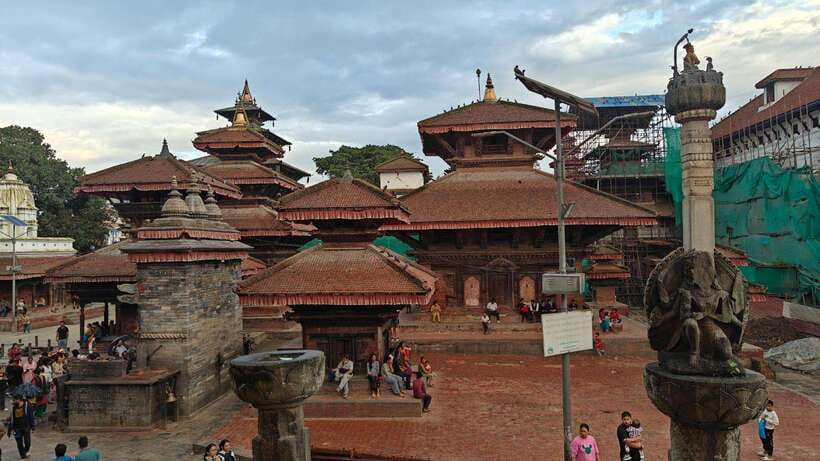
Patan Durbar Square, also called Lalitpur Durbar Square, is the final major stop. The schedule allows two hours, which gives you time to look beyond the main palace frontage.
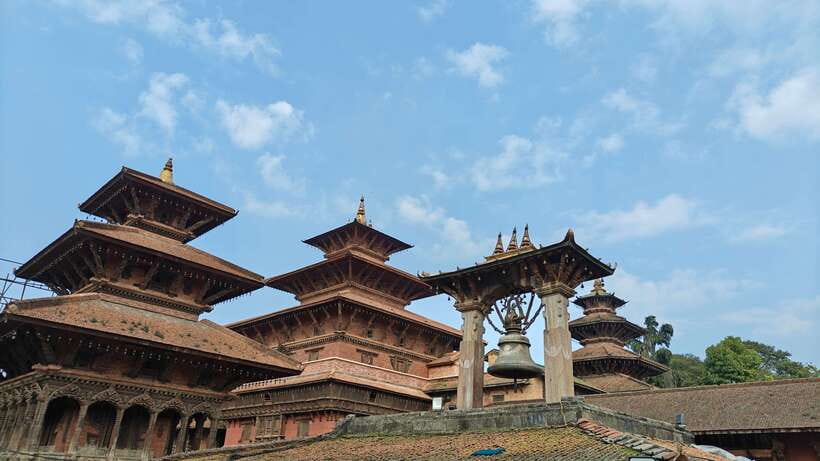
Patan is known for fine arts and careful craftsmanship. The central palace was once the royal residence, and its courtyards and temples show the close relationship between court life and religious practice. Compared with Kathmandu’s political energy and Bhaktapur’s preserved city character, Patan feels like the place to study detail.
Krishna Mandir is the key sight. This stone temple is dedicated to Lord Krishna and has a different appearance from the valley’s many brick and timber pagodas. Its carved stone construction gives it a formal, solid quality, and your guide can explain why it is so important within the square.
The Patan Museum is another worthwhile feature within the palace complex. The museum presents the valley’s history, religious art, and cultural traditions. The tour description identifies it as a place to visit, but it does not clearly state that museum admission is included. Since entrance fees are excluded overall, confirm the current cost if you want to go inside.
Patan is particularly rewarding for you if you enjoy sculpture, temple design, and small artistic details. Let your guide point out the craftsmanship rather than rushing from one major building to the next. Aneel, also known as Karma, has been praised for his passion for Nepalese history, storytelling, and willingness to help. That kind of enthusiasm is valuable here, where the visual details can be easy to overlook.
Because Patan is the last stop, energy may be a factor. After two earlier squares, you may be ready for a break. The private format gives you some flexibility to ask for a slower explanation, but the overall schedule still has to return you to Thamel.
A few more trips worth weighing up before you book
- Everest Base Camp Trek – 14 Days
★ 5.0 · 1,499 reviews - Private Kathmandu Sightseeing Tour | UNESCO World Heritage sites
★ 5.0 · 756 reviews - Everest Base Camp Helicopter Tour landing at Everest View Hotel
★ 5.0 · 668 reviews - Half day cooking class in Thamel kathmandu
★ 5.0 · 607 reviews
What the private transport adds
Hotel pickup and drop-off within Kathmandu make this a simple choice for anyone staying in Thamel. You do not need to organize separate taxis, negotiate routes, or work out how to connect three sites in one day.
The transport is private, and the group is private. That gives you a quieter setting between visits and makes it easier to hear the guide. It also helps if you are traveling with family or friends who want to keep the day together.
The route still depends on road conditions. The schedule lists five hours, but the individual sightseeing periods add up to 5.5 hours before allowing for transport. You should confirm the starting time and expected return when booking, especially if you have an evening flight, meal reservation, or another appointment.
This is best viewed as a tightly organized sightseeing circuit, not a slow day of independent exploration. You will see the three major squares, but you will not have unlimited time for shops, cafés, side streets, or long museum visits.
The guide can make or break the day
The strongest praise for this experience centers on the guides. Pranav has been described as fluent, friendly, and exceptionally clear when explaining history, culture, and architecture. Those qualities matter in the Kathmandu Valley, where a short explanation can turn a decorative carving into a meaningful part of a royal or religious story.
Aneel, also called Karma, has earned praise for his passion, storytelling, and enthusiasm. His strength appears to be connecting the three squares rather than treating them as isolated monuments. That is exactly what you want from this route.
You should still tell your guide what interests you most. If you care about architecture, ask for more detail on temple forms and wood carving. If religion interests you, ask about the Kumari, Krishna Mandir, and the role of the temples. If you prefer palace history, focus your time on Hanuman Dhoka, the 55-Window Palace, and the former royal residences.
A private guide also helps with the practical side of visiting active religious places. You can ask about respectful behavior, photography, and which areas are open to the public. The available information does not promise a specific guide, so guide assignment may vary, but Pranav and Aneel are the names most closely linked with the praise for this experience.
Price, entrance fees, and overall value
The price is $86 per person. That is not the cheapest way to see the squares, especially because entrance fees, meals, personal expenses, insurance, and extra activities are not included.
The value comes from the structure. For the price, you receive a private English-language guide, private transportation, and hotel pickup and drop-off within Kathmandu. If you would otherwise arrange several taxis and hire separate assistance at the sites, the cost becomes easier to justify.
You are paying for interpretation and convenience rather than admission alone. That is important because these squares can look like collections of old buildings when you first arrive. A guide helps you understand the royal, artistic, and religious links between them.
Budget extra money for entrance fees. The exact amount is not provided, so check before departure. Also remember that the Patan Museum or any additional activity may require its own payment.
I would call this good value for a first visit, a short stay, or a private group that wants an efficient introduction. It is less appealing if you have several days in Kathmandu and prefer to visit one square slowly on your own.
Who should book this five-hour tour?
This tour suits you if you want a strong first look at the Kathmandu Valley’s major royal centers. It works well for couples, families, and small private groups who value a guide and do not want to manage local transport.
It is also a good choice for anyone interested in temples, palace architecture, Newari craftsmanship, and living religious customs. The mix is broad enough to keep a varied group interested, while the guide can adjust explanations to your questions.
You may want a different plan if your main goal is photography at a slow pace, extended museum time, or detailed shopping for handicrafts. Five hours is enough for an overview, but not enough to explore every courtyard and lane at leisure.
The tour is wheelchair accessible according to the provided information. However, details about access at each individual monument are not given, so anyone with specific mobility requirements should confirm the route in advance. The activity is not suitable for people over 95, and alcohol and drugs are not allowed.
Free cancellation is available up to 24 hours before the tour for a full refund. You can also reserve now and pay later, which helps if your Kathmandu plans are still changing.
Should you book the three-square tour?
Book it if you want maximum cultural coverage in one private outing. Kathmandu gives you palace power and the Kumari tradition, Patan brings fine artistic detail and Krishna Mandir, and Bhaktapur offers the strongest sense of an old Newari city with Nyatapola Temple at its center.
Go in with realistic expectations. The day is compact, entrance fees are extra, and the time at each square will feel planned rather than leisurely. But with a strong guide such as Pranav or Aneel, the monuments become far more understandable, and private transport removes much of the day’s practical hassle.
If you have only a short time in Kathmandu, I would book it. If you have a full week, consider visiting one or two squares independently as well, so you can return to the places that capture your interest.
FAQ
How long does the tour last?
The advertised duration is five hours. The scheduled visits are 1.5 hours at Kathmandu Durbar Square, two hours at Bhaktapur Durbar Square, and two hours at Patan Durbar Square.
Where does pickup take place?
Pickup and drop-off are available at hotels within Kathmandu. The stated pickup location is Thamel.
Which places are included?
The tour visits Kathmandu Durbar Square, also called Hanuman Dhoka, Bhaktapur Durbar Square, and Patan Durbar Square, also called Lalitpur Durbar Square.
Is transportation included?
Yes. Private transportation between the three sites is included, along with hotel pickup and drop-off within Kathmandu.
Are entrance fees included?
No. Entrance fees are not included in the price. Meals, personal expenses, insurance, hotel accommodation, and extra activities are also excluded.
Is the tour wheelchair accessible?
The activity is listed as wheelchair accessible. The available information does not specify access conditions inside each monument, so confirm any particular requirements before booking.
Just added around Kathmandu
- Private Shopping Tour in Kathmandu★ 5.0 · 3 reviews
- Nagarkot Sunrise With 7 UNESCO World Heritage Private Tour★ 5.0 · 3 reviews
- Kathmandu: Nightlife and Pub Crawl Tour★ 5.0 · 3 reviews
- Mount Everest Scenic Flight 50 Minutes★ 5.0 · 3 reviews
- Momo Cooking Class -The Art Of Making MoMo with Home Chef★ 5.0 · 3 reviews
- Kathmandu: Nagarkot, Bhaktapur, Doleswor & Sanga Statue Tour★ 5.0 · 3 reviews
- Makalu Base Camp Trek★ 5.0 · 3 reviews
- Kathmandu: Momo Making Class with a Local Chef★ 5.0 · 3 reviews
Durbar Square Tours, compared.
Kathmandu Sunset Tour by Rickshaw Including Durbar Square Visit
Read our review →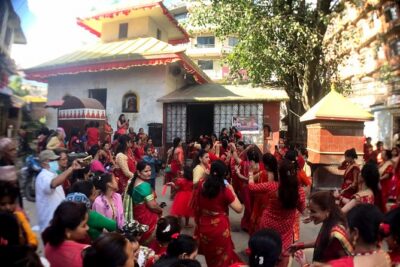
Old Kathmandu Walking Tour, Historic World Heritage Durbar Square
Read our review →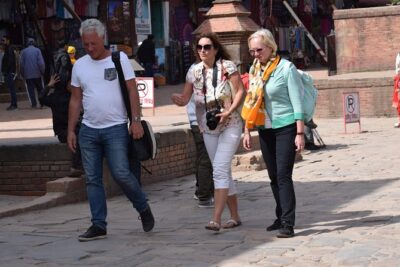
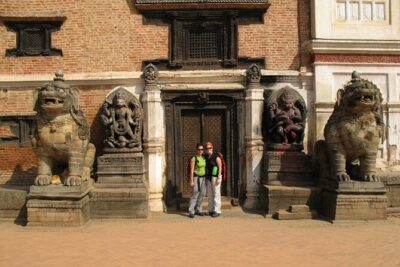
Bhaktapur Old City and Durbar Square Half-Day Tour
Read our review →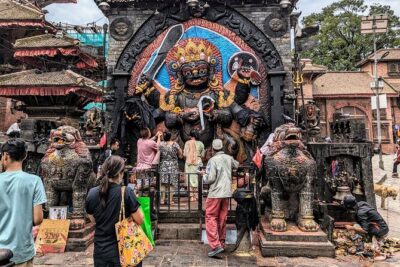
Nagarkot Sunrise & Bhaktapur Durbar Square UNESCO Heritage Tour
Read our review →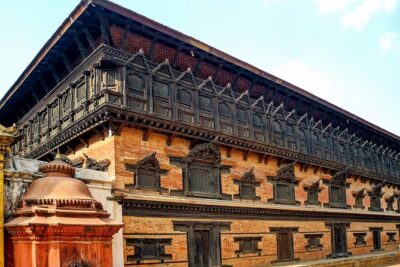
Patan & Bhaktapur Durbar Square Tour with Lunch – Private/Group
Read our review →Browse the lists this tour appears in