
Reviewed · KATHMANDU UNESCO HERITAGE TOURS
Kathmandu: Full Day 7 UNESCO Tour with Lunch – Private/Group
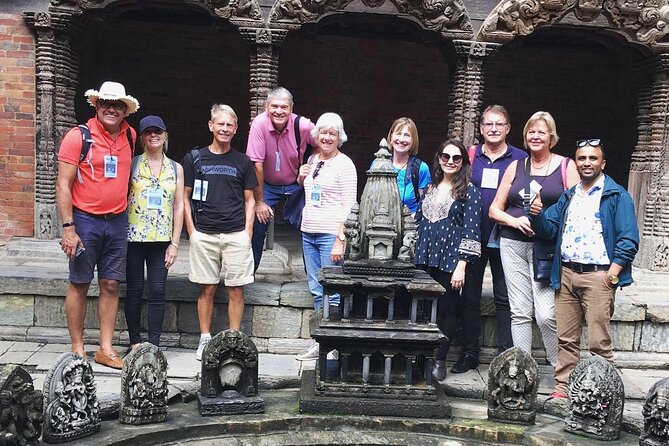
Seven heritage sites, one very long day. This Kathmandu tour packs Swayambhunath, Patan, Boudhanath, Pashupatinath, Kathmandu Durbar Square, Bhaktapur, and Changu Narayan into roughly 9 to 10 hours. I like the remarkable range of sacred and royal sites, and I like that hotel pickup, a private vehicle, guide, and a simple lunch box are included.
I also appreciate the chance to travel with guides such as Sumit, Suresh, Asmi, and Ram, who are praised for clear storytelling, care, humor, and good answers. The main catch is pace: you will spend much of the day in transit or on foot, and standard bookings add about $44 in entrance fees, so the eye-catching $5 price is not the full cost.
In This Review
- Key points to know before booking
- Why this seven-site Kathmandu tour works
- Swayambhunath begins the day with a hilltop view
- Patan Durbar Square shows Newari craftsmanship
- Boudhanath brings a calmer Buddhist rhythm
- Pashupatinath offers the day’s strongest spiritual context
- Kathmandu Durbar Square connects royal power and daily life
- Bhaktapur gives you the longest look at a royal square
- Changu Narayan closes the route with an ancient temple
- Lunch, transport, and the real cost
- What the guides and driver add
- How to prepare for a ten-hour sightseeing day
- Who should book this Kathmandu tour?
- Should you book it?
- FAQ
- How long does the Kathmandu UNESCO tour last?
- Are entrance fees included in the $5 price?
- What food is included?
- Is hotel pickup included?
- Is the tour private or shared?
- What is the cancellation policy?
Key points to know before booking
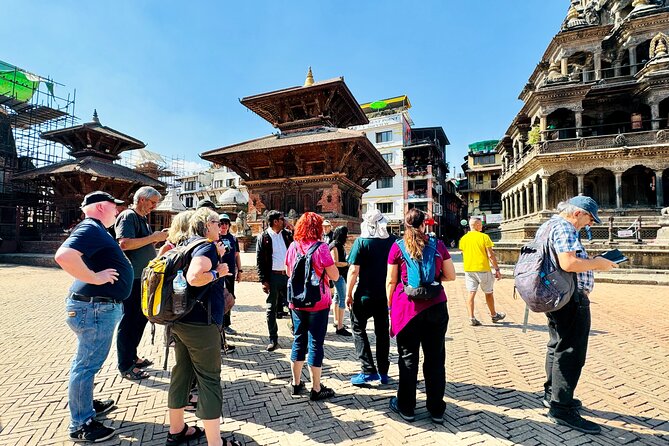
- Seven major heritage sites in one day: The route covers Kathmandu Valley’s best-known religious and royal landmarks.
- About 9 to 10 hours: One guest found it closer to 10 or 11 hours, so keep your evening free.
- Entry fees are usually extra: Budget $44 per person, or $22 total for SAARC nationals, unless you choose the all-inclusive option.
- Hotel pickup and drop-off are included: Transport is by air-conditioned vehicle, with a professional English-speaking guide.
- Walking shoes matter: Expect uphill and downhill walking, especially at Swayambhunath and Changu Narayan.
- Lunch is simple but useful: The box includes water, muffin, donut, banana, seasonal fruit, and juice.
Why this seven-site Kathmandu tour works
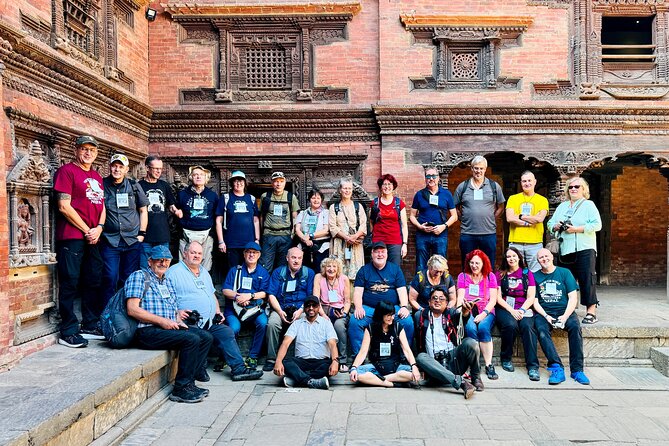
Kathmandu Valley can feel hard to sort out at first. Its major sights are spread across several cities, and each one has its own religious tradition, royal past, and visual style. This full-day route gives you a quick but meaningful introduction without asking you to arrange separate taxis, drivers, and guides.
I like the structure because it joins Buddhist shrines, Hindu temples, and Newari palace squares in one outing. You move from hilltop views at Swayambhunath to the courtyards of Patan, then onward to Buddhist Boudhanath, Hindu Pashupatinath, central Kathmandu, Bhaktapur, and the older temple site of Changu Narayan.
The tradeoff is obvious. Seven stops do not allow leisurely exploration. At several sites, your scheduled time is about one hour, with only 30 minutes at Changu Narayan. That is enough to see the main monuments and hear the basic story, but not enough to inspect every carving or linger over every shrine.
This is best viewed as a first-day orientation to Kathmandu Valley. You get the broad picture, then you can return later to the places that catch your attention.
More Full-Day Tours in Kathmandu
- Kathmandu: Full Day 7 UNESCO Tour with Lunch – Private/Group
★ 5.0 · 415 reviews - Kathmandu: Full Day Top 4 UNESCO Tour with Lunch – Private/Group
★ 5.0 · 269 reviews - Kathmandu: Full-Day 7 UNESCO Tour with Lunch – Private/Group
★ 4.9 · 247 reviews
Swayambhunath begins the day with a hilltop view
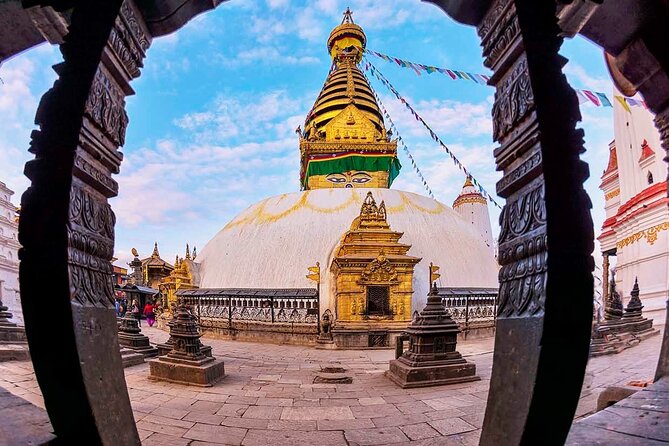
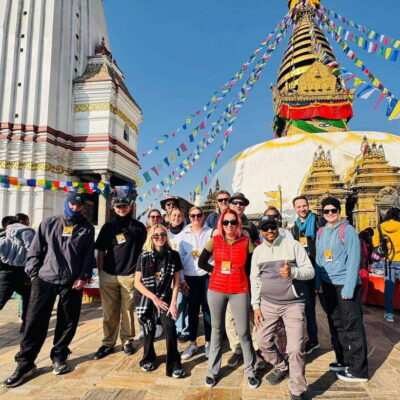
Swayambhunath, often called the Monkey Temple, sits on a hill above Kathmandu Valley. The stupa is a major Buddhist shrine, and the site gives you a quiet spiritual setting along with a wide view over the city.
The scheduled visit lasts about 45 minutes. That makes this an efficient opening stop, but the hillside setting means you should wear shoes with a firm grip. The tour feedback specifically warns about uphill and downhill walking, so do not treat this as a sightseeing day for delicate footwear.
Your guide can help explain the Buddhist symbols and the role of the stupa. Even with limited time, Swayambhunath sets the tone for the day: Nepal’s religious sites are active places of worship, not just old monuments arranged for photographs.
Because admission is listed as free here, this stop also gives you a strong experience before the paid monuments begin. Take a moment to look outward as well as inward. The view helps you understand how closely Kathmandu’s religious centers, neighborhoods, and historic cities sit together.
Patan Durbar Square shows Newari craftsmanship
Patan Durbar Square lies in the old city of Patan and is one of the day’s best stops for architecture. Its palace courtyards, temples, wooden details, and stone work reflect the skill of the Malla-era builders and artisans.
You have about one hour here. That is enough for a guided walk through the main area, though you may wish for longer if you care about carved windows, temple roofs, and smaller shrines. The square rewards slow looking, but this tour has six more sites ahead.
Admission is not included in the standard tour price. This is one of the places where the extra fees add up, so carry enough cash or select the all-inclusive option when booking. The exact fee structure should be checked at the time of purchase, since the supplied details list both a standard entrance total and a separate all-inclusive choice.
Patan is especially valuable if you want to see how religious art and daily city life share the same space. It is not simply a palace complex. It is a place where courtyards, shrines, and historic streets form one living setting.
Boudhanath brings a calmer Buddhist rhythm
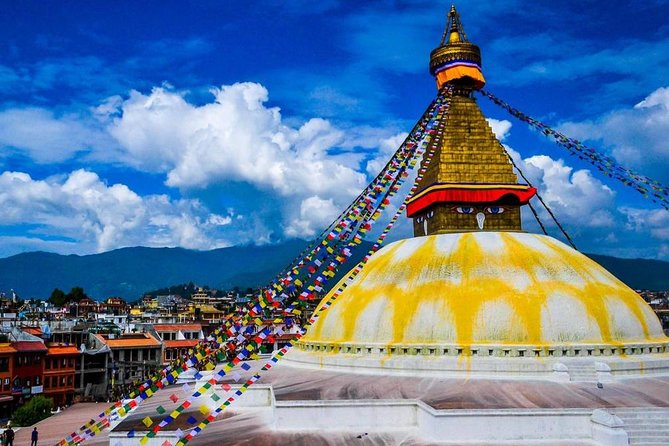
Boudhanath Stupa is one of the world’s largest and most important Buddhist stupas. Its great white dome and painted eyes make it one of Kathmandu’s most recognizable sights, but the real appeal comes from the ritual movement around it.
The visit lasts about one hour. You can walk around the stupa, observe Buddhist practice, and listen as your guide explains its religious importance. The experience is different from Swayambhunath. Swayambhunath is a hilltop shrine with views, while Boudhanath is a broad sacred center where the stupa itself dominates the space.
This is another paid stop under the standard package. Keep your ticket budget in mind, especially because the tour title highlights a very low base price. The low headline cost is attractive, but the complete standard price is closer to the advertised tour amount plus the stated $44 entry total.
I like having both Buddhist sites in the same day. Seeing them together gives you a better sense of the range of Buddhist worship in the valley rather than reducing it to one famous monument.
More UNESCO Heritage Days:
- Private Kathmandu Sightseeing Tour | UNESCO World Heritage sites
★ 5.0 · 756 reviews - UNESCO Seven World Heritage Tour in Kathmandu
★ 5.0 · 253 reviews - Kathmandu: 7 UNESCO Sites Tour in 1 Day (Private Tour)
★ 4.9 · 204 reviews - Kathmandu: Top 4 UNESCO Tour with Lunch – Private/Group
★ 4.9 · 181 reviews
Pashupatinath offers the day’s strongest spiritual context
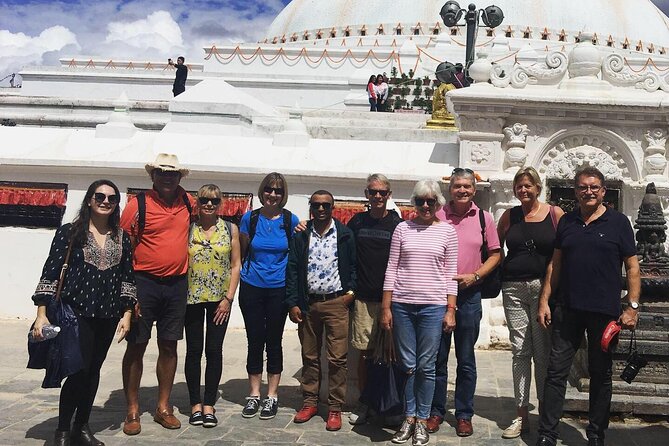
Pashupatinath Temple is a major Hindu pilgrimage site dedicated to Shiva, set beside the Bagmati River. The complex is one of Kathmandu’s most important religious places, and it brings a distinctly Hindu dimension to a day that also includes major Buddhist shrines.
The planned stop is one hour. Your guide can help you understand the temple’s role and the religious practices connected with it. As at other active sacred sites, respectful behavior matters. Treat the complex as a place of worship first and a sightseeing stop second.
The main temple has access restrictions for non-Hindus, though the provided tour details do not specify exactly which areas you can enter. Ask your guide where you may go and follow local instructions. That approach gives you a better experience than treating every doorway as an attraction.
Pashupatinath also makes the route more than an architecture tour. The day is about belief, ritual, and living tradition as much as carved stone and palace walls. At one hour, the stop is useful but brisk, particularly if you want time for quiet observation.
Kathmandu Durbar Square connects royal power and daily life
Kathmandu Durbar Square is surrounded by palaces, temples, courtyards, and shrines from the Malla period and later eras. It is a central stop for understanding how Kathmandu’s royal court, religious life, and traditional architecture developed together.
The tour allows about one hour. Expect a concentrated walk through the main historic area, with time for photographs and an explanation of the carved wooden details. If you are interested in architecture, this is a place where your guide’s ability matters greatly. A good explanation helps you notice details you might otherwise pass without seeing.
Entry is not included in the regular package. As with Patan, the additional charge is part of the real cost of the day.
This stop is also a reminder that Kathmandu’s historic sites have faced difficult conditions, including the need for ongoing preservation. You will see a mixture of grand monuments, working courtyards, and restored or maintained structures. The result is less polished than a single museum complex, but more connected to the city around it.
Bhaktapur gives you the longest look at a royal square
Bhaktapur Durbar Square receives the longest scheduled visit, about one hour and 20 minutes. That extra time is welcome because the area includes several major highlights, including the 55-Window Palace, Golden Gate, and Nyatapola Temple.
The square is known for detailed woodcarving, stone sculpture, and Newari building techniques. Among the seven stops, Bhaktapur is likely to feel the most rewarding for visitors who enjoy historic streets and traditional design.
It is still a packed day, so do not expect to see every corner at a leisurely pace. The guide will help you focus on the major monuments and the stories behind them. If you want to shop for gifts, this is one point in the day when that may fit naturally, although shopping time is not guaranteed.
The entry fee is extra on the standard plan. Since Bhaktapur is one of the longest visits, I consider the cost easier to justify here than at a very brief stop. You get time to look carefully, take photographs, and ask questions before moving on.
Changu Narayan closes the route with an ancient temple
Changu Narayan Temple is dedicated to Vishnu and is described as one of Nepal’s oldest and most revered Hindu temples. The site dates back to the fourth century and is noted for Newari architecture and craftsmanship.
The scheduled time is only 30 minutes, making this the quickest stop of the day. That short visit may feel frustrating if ancient religious architecture is your main interest. Still, Changu Narayan adds historical depth and gives the route a final temple setting beyond the larger urban squares.
The site also reinforces the variety of the itinerary. You have seen hilltop Buddhism, large-scale Buddhist ritual, Hindu pilgrimage, royal squares, and now an old Vishnu temple. Seven stops can feel like a lot, but the contrasts are what make the route worthwhile.
Because this comes late in the day, energy may be a factor. Bring water, use the supplied bottle when needed, and pace yourself from the start rather than spending all your energy at the first two monuments.
Lunch, transport, and the real cost
The standard package includes hotel pickup and drop-off in a private vehicle, air-conditioned transport, and an English-speaking professional guide. You also receive a lunch box with 500 milliliters of bottled water, a muffin, donut, banana, seasonal fruit, and juice.
This is not a restaurant lunch or a cultural food experience. It is practical fuel for a long day. I like that food is built into the plan because stopping for a full meal could make it difficult to reach all seven sites.
The details also mention an all-inclusive option with food, soft drinks, entrance fees, and a khana set or choice of dishes. If you want a simpler budget, the standard option may work. If you dislike carrying cash or calculating entry charges during the day, the all-inclusive package may offer better convenience.
The listed price is $5 per person, but standard entry fees add $44 per person. SAARC nationals have a stated total of $22 for fees. Personal expenses and tips are separate. Group discounts are offered, while the additional information also describes a private activity in which only your group participates. Confirm the exact format and final total before paying, especially if you are choosing between group and private options.
At this price, transport and guiding are doing much of the value work. The tour becomes less of a bargain once entry fees are added, but it can still be good value if you have only one or two days in Kathmandu and want the major sites covered efficiently.
What the guides and driver add
The strongest praise centers on the guides and driver. Sumit is described as energetic and able to keep seven stops moving without losing the group. He is also praised for strong storytelling and clear answers.
Suresh receives credit for a warm approach and detailed explanations of Kathmandu Valley’s history and culture. Asmi is singled out as a capable guide for a full day covering the main sites. Ram is praised for taking care of the group and explaining each place clearly.
The driver matters, too. Krishna is described as helpful throughout the day, and good transport coordination is repeatedly appreciated. In Kathmandu, a reliable driver can make a major difference because the route crosses several historic areas rather than staying in one neighborhood.
Your guide may be Sumit, Suresh, Asmi, Ram, or someone else from the team. The useful point is that the experience depends heavily on the person leading it. Ask questions, request a sensible pace, and say when you need a short pause. The guide feedback suggests the team is used to adjusting the day for photographs, shopping, and questions, but seven stops still require discipline.
How to prepare for a ten-hour sightseeing day
Start with comfortable walking shoes. You will encounter uphill and downhill sections, and the day includes several historic areas with extended walking.
Keep enough cash for entrance fees if you book the standard option. The stated fee is $44 per person, or $22 total for SAARC nationals. Since personal expenses are not included, cash can also help with small purchases or optional stops.
Keep your evening open. The advertised duration is 9 to 10 hours, but one detailed account puts the actual day closer to 10 or 11 hours. Traffic, time spent at the sites, and the distance between locations can affect the finish.
Use the lunch box as a convenience rather than expecting a long meal break. Water, fruit, and packaged snacks are provided. You should also make sure your booking choice clearly states whether entrance fees and a full meal are included.
Free cancellation is available up to 24 hours before the start time for a full refund. Changes or cancellations inside that window are not accepted for a refund, and the experience requires a minimum number of participants. Confirmation is provided at booking, and the activity is described as suitable for most participants.
Who should book this Kathmandu tour?
I would choose this tour if you have limited time and want a guided introduction to Kathmandu Valley’s major UNESCO sites. It suits first-time visitors, people who prefer a planned route, and anyone who wants transport and a guide rather than negotiating separate rides all day.
It also suits people who enjoy context. The sites are more rewarding when you understand the Malla-era squares, Buddhist stupas, Hindu temples, and Newari craftsmanship as parts of one cultural region.
I would hesitate if you prefer slow travel. Seven sites in one day means you will leave some places wanting more. Travelers with mobility limits should also think carefully about the walking and hills, since the provided details only say most travelers can participate and do not give specific accessibility information.
Should you book it?
Book this tour if your priority is coverage, structure, and a strong first look at Kathmandu’s religious and architectural heritage. The guides, private transport, hotel service, and practical lunch make a demanding day easier, and the route covers an impressive amount of ground.
Skip it if you want long visits, unhurried meals, or time to study each square in detail. Before booking, compare the $5 base price with the added entrance fees, ask which package and tour format you are receiving, and reserve a full evening for recovery. With those points clear, this is a useful, well-focused way to see seven major sites in a single Kathmandu day.
FAQ
How long does the Kathmandu UNESCO tour last?
The stated duration is approximately 9 to 10 hours. One detailed account describes the day as closer to 10 or 11 hours, so you should keep your evening free.
Are entrance fees included in the $5 price?
Standard group and private options do not include monument entrance fees. The stated charge is $44 per person, or $22 total for SAARC nationals. An all-inclusive option is also offered and includes entrance fees.
What food is included?
The lunch box includes 500 milliliters of bottled water, a muffin, donut, banana, seasonal fruit, and juice. The all-inclusive option includes food, soft drinks, and a khana set or choice of dishes.
Is hotel pickup included?
Yes. Hotel pickup and drop-off are included, along with air-conditioned private transportation.
Is the tour private or shared?
The experience is offered in private and group formats. The additional information describes the activity as private, with only your group participating, so confirm the format when booking.
What is the cancellation policy?
You can cancel at least 24 hours before the start time for a full refund. Cancellations or changes made less than 24 hours before the start time are not accepted for a refund.
More Full-Day
- Kathmandu: Full Day Top 4 UNESCO Tour with Lunch – Private/Group
★ 5.0 · 67 reviews - Kathmandu Heritage Tour (Full Day)
★ 5.0 · 63 reviews - Full Day Guided Tour in Kathmandu
★ 5.0 · 61 reviews - Whole Day Massage & Spa With Lunch
★ 5.0 · 54 reviews
More Lunch Experiences
- Kathmandu: Nagarkot Sunrise View & Morning Hike with Lunch
★ 4.9 · 188 reviews - Kathmandu: Nagarkot Sunrise & Hike with Lunch -Private/Group
★ 4.9 · 122 reviews - Kathmandu: Full Day Private Top 4 UNESCO Heritage Tour W/Lunch.
★ 5.0 · 86 reviews - Nagarkot Sunrise Trip & Day Hike with Lunch from Kathmandu
★ 4.5 · 83 reviews
Just added around Kathmandu
- Private Shopping Tour in Kathmandu★ 5.0 · 3 reviews
- Nagarkot Sunrise With 7 UNESCO World Heritage Private Tour★ 5.0 · 3 reviews
- Mount Everest Scenic Flight 50 Minutes★ 5.0 · 3 reviews
- Kathmandu: Nightlife and Pub Crawl Tour★ 5.0 · 3 reviews
- Kathmandu: Nagarkot, Bhaktapur, Doleswor & Sanga Statue Tour★ 5.0 · 3 reviews
- Momo Cooking Class -The Art Of Making MoMo with Home Chef★ 5.0 · 3 reviews
- Makalu Base Camp Trek★ 5.0 · 3 reviews
- Kathmandu: Momo Making Class with a Local Chef★ 5.0 · 3 reviews
Kathmandu UNESCO Heritage Tours, compared.

Private Kathmandu Sightseeing Tour | UNESCO World Heritage sites
Read our review →
Full Day 7 UNESCO Tour with Lunch – Private/Group
Read our review →
Full Day Top 4 UNESCO Tour with Lunch – Private/Group
Read our review →
Full-Day 7 UNESCO Tour with Lunch – Private/Group
Read our review →
Kathmandu Private Sightseeing Tour | UNESCO World Heritage Sites
Read our review →Browse the lists this tour appears in