
Reviewed · TEMPLES & MONASTERIES
Kathmandu: Guided Walking Tour with Monkey Temple
Kathmandu reveals itself one street at a time. This low-cost walking tour links the Garden of Dreams, Kathmandu Durbar Square, local Newari neighborhoods, and the Monkey Temple, giving you a useful first look at the city with a local guide beside you. I like the route because it combines famous sights with ordinary streets, and I like that the guide explains religious customs instead of simply pointing at buildings. The main drawback is physical: you will walk a great deal, including a 45-minute uphill approach and 365 steps down from the hilltop.
At $15 per person, this is a strong value if you want orientation without paying for a private vehicle. Guide Shiva has earned particular praise for being patient, friendly, and willing to answer detailed questions about Kathmandu’s culture and religion. Still, this is not a soft introduction for anyone with mobility limits, and you will need comfortable shoes, water, sun protection, and some tolerance for changing weather.
In This Review
- Key points to know before you book
- Starting at the Garden of Dreams
- Old stupas, temples, and daily ritual
- Kathmandu market and Durbar Square
- Following the Newari residential area
- The 45-minute walk to Monkey Temple
- Descending 365 steps back to Thamel
- What the $15 price really buys you
- Who will enjoy this Kathmandu walk?
- Should you book the Monkey Temple walking tour?
- FAQ
- Where does the Kathmandu walking tour start?
- Where does the tour end?
- Is hotel pickup included?
- What places does the tour visit?
- How much walking is involved?
- Is the tour suitable for wheelchair users?
- Can young children join?
- What should I bring?
- Is the tour offered in English?
Key points to know before you book
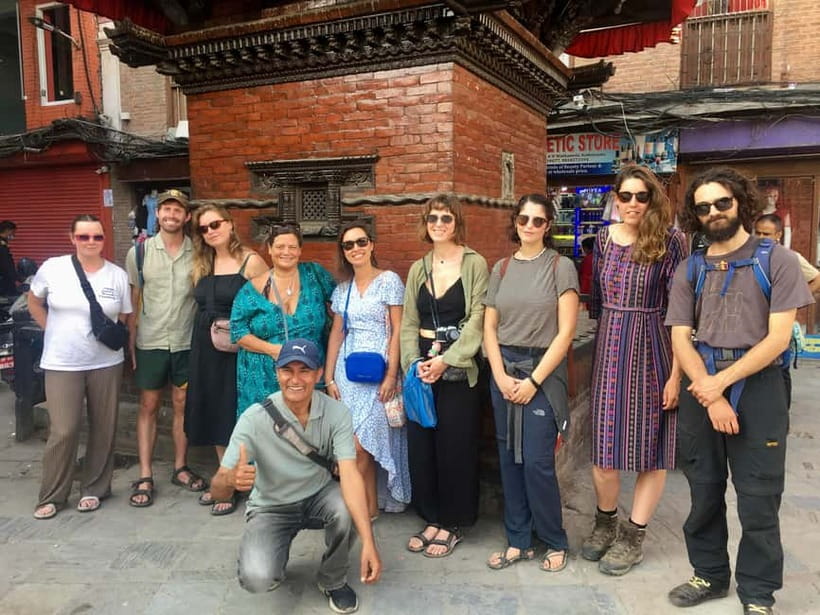
- A full city walk for $15: The price covers a professional English-speaking guide and a route through several major parts of Kathmandu.
- Starts at the Garden of Dreams: You meet at the front gate, where the guide carries a placard marked Himkala Adventure.
- Famous sights and local streets: The route includes Kathmandu Durbar Square, old stupas, temples, a Newari residential area, and a cremation place.
- Monkey Temple requires effort: Reaching the hill involves about 45 minutes of walking, followed by a descent of 365 steps.
- Shiva receives especially warm praise: His calm manner, cultural knowledge, and patient answers make the walking tour feel personal.
- Not suitable for everyone: Children under five, wheelchair users, and people with mobility impairments should choose another way to see these sights.
Starting at the Garden of Dreams
Your meeting point is easy to identify: the front gate of the Garden of Dreams. Look for a guide holding a sign with Himkala Adventure written on it. Hotel pickup is not included, so you need to make your own way there and arrive ready to walk.
The Garden of Dreams provides a gentle opening to a busy city. It is an oasis in central Kathmandu, and its formal gardens offer a clear contrast with the streets outside. I like beginning here because you can collect yourself before moving into the noise, foot traffic, temples, and market lanes.
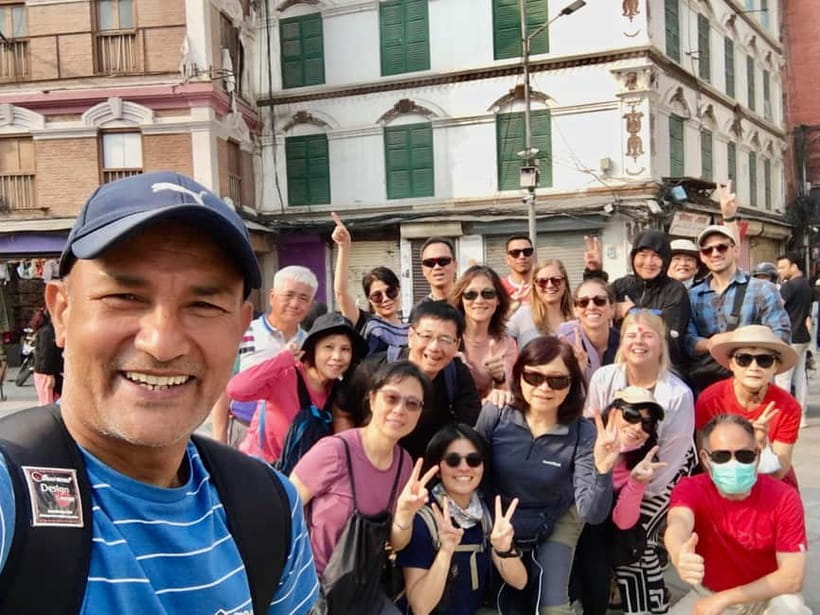
The tour is conducted in English. Shiva is the guide most often singled out for his friendly attitude and patient explanations, although the assigned guide may vary. If you enjoy asking questions, this is the kind of experience where you should speak up. The route covers history, culture, religion, and daily ritual activity, so your questions can turn a sightseeing walk into a much more useful lesson.
There is no stated group size or fixed duration for the entire tour. That means you should plan your day with some flexibility rather than scheduling a tight appointment immediately afterward. The walking route itself is substantial, and the hill climb and stairs make this more than a brief city stroll.
More Walking Tours in Kathmandu
- Kathmandu Food and Drink Walking Tour
★ 5.0 · 266 reviews - Kathmandu: Food and Drink Walking Tour
★ 4.9 · 119 reviews - Walking Street Food Tour in Kathmandu
★ 5.0 · 111 reviews
Old stupas, temples, and daily ritual
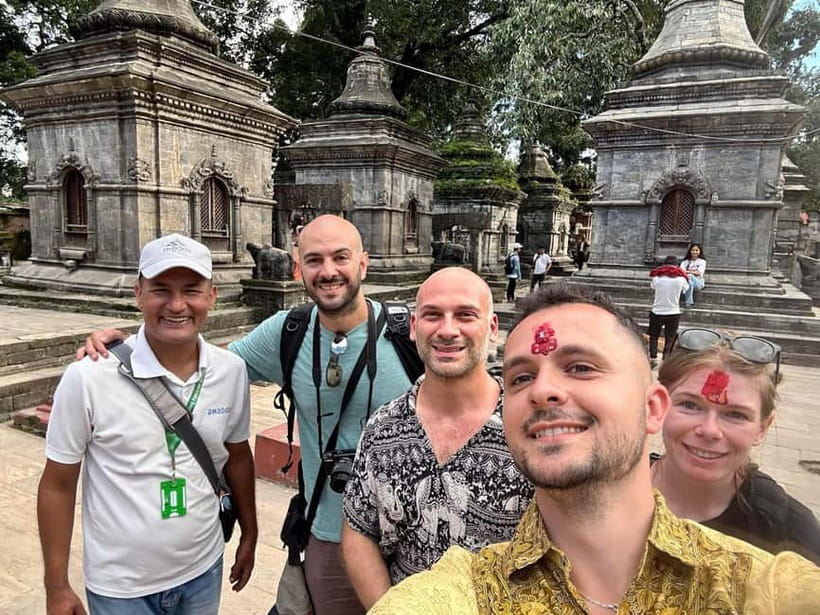
From the garden, you walk toward local areas where age-old stupas and temples appear along the route. This part matters because Kathmandu is not only a collection of major monuments. Religious practice is woven into residential streets, courtyards, and small shrines that you could easily pass without noticing.
Your guide helps explain what you are seeing and how local people use these places. You can expect to see people performing ritual activities, rather than encountering temples as empty museum pieces. Be respectful when people are praying or making offerings. Keep your voice low near religious sites, avoid blocking entrances, and ask before taking close photographs of people.
This is also where a guide adds real value. On your own, you might recognize a stupa or temple but miss the meaning behind the form, the ritual, or the neighborhood around it. Shiva is praised for giving clear answers about culture and religion, which is useful when the setting raises more questions than it answers.
The route is not designed as a polished monument-to-monument circuit. Streets and local areas are part of the experience. You may find the surroundings crowded or uneven, and the pace can be affected by city conditions. That is a fair trade for seeing a side of Kathmandu that a car-based sightseeing trip can skip.
Kathmandu market and Durbar Square
The route continues into Kathmandu’s main market area. The market gives you a stronger sense of the city’s working rhythm, with people moving through commercial streets and local activity continuing around religious spaces. The supplied details do not promise specific shops, foods, or purchases, so treat this section as a walking and observation experience rather than a shopping tour.
After the market, you visit Kathmandu Durbar Square. This is one of the essential historic areas in the city, and the guide’s explanations help place the buildings and religious activity in context. The square is more rewarding when you understand that it remains part of a living city, not merely a collection of old structures.
Take your time looking beyond the most obvious monuments. Notice the shrines, images, courtyards, and people carrying out ritual practices. A good guide can help you tell the difference between a place of worship, a historic structure, and a site still used by the local community.
The square can be intense for first-time visitors. There is a lot to see, and the route has already included gardens, local temples, and market streets. I recommend staying close enough to hear the guide and saving questions for each stop rather than trying to absorb every detail at once.
Following the Newari residential area
After the central sights, the walk follows a Newari residential area. This is one of the most valuable parts of the route for anyone who wants more than a checklist of famous places. You get to see how older homes, local temples, and neighborhood religious life fit together.
The tour also includes a cremation place. That may feel confronting, but it is an important part of understanding how ritual and community life appear in Kathmandu. Follow your guide’s lead, be discreet with photography, and remember that this is a place connected to real families and religious practice.
The Newari neighborhood also helps explain why walking works so well here. A vehicle might carry you between major sights, but it would not give you the same connection between residential streets and historic monuments. The route lets you see how sacred and ordinary spaces exist side by side.
This section may feel less predictable than a standard sightseeing itinerary. You are not simply moving from one grand entrance to the next. Instead, you are watching the city change from garden to market, from market to royal square, and from major heritage area to a local residential setting.
More Temples, Stupas and Monasteries:
- Kathmandu Spiritual Sites: Bodhnath & Pashupatinath Tour
★ 5.0 · 185 reviews - Kathmandu: Chandragiri Cable Car and Monkey Temple Tour
★ 4.8 · 139 reviews - From Kathmandu: 2 Stupas and Kopan Monastery Spiritual Tour
★ 4.8 · 115 reviews - Lunch with Nuns – Monastery
★ 5.0 · 75 reviews
The 45-minute walk to Monkey Temple
The walk to the Monkey Temple is the tour’s main physical challenge. You spend about 45 minutes walking to a conical hill that rises 77 meters above Kathmandu’s ground level. The route is not suitable for wheelchair users or people with mobility impairments, and it is not recommended for children under five.
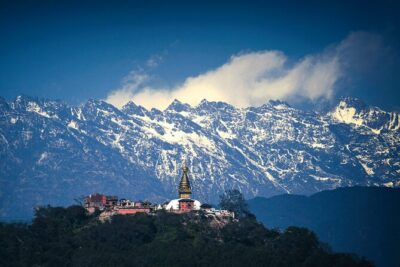
The hilltop reward is the Monkey Temple, a UNESCO World Heritage Site. You visit the stupa and the surrounding area, with time to take in the religious setting and the views from the raised position. The supplied information does not give an exact amount of time at the site, so do not assume you will have a long, unhurried stop unless your guide confirms the schedule.
This is where proper preparation pays off. Wear shoes with a secure fit, bring water, and use sunscreen and a hat. Kathmandu weather can change, and the tour specifically advises you to be ready for varying conditions. A camera is useful, but keep it secondary to watching your footing and respecting worshippers.
The Monkey Temple is often the image people associate with this route, but I would not book the experience only for the hilltop. The real appeal is the connected journey: you see local streets and ritual life before reaching one of Kathmandu’s best-known religious sites.
Descending 365 steps back to Thamel
After visiting the stupa and surrounding area, you return toward Thamel by descending 365 steps. The stairs are a clear reminder that this is an active walking tour, not a sightseeing outing with occasional short walks.
Going down can be harder than it sounds, especially after the uphill approach and the rest of the city route. Take steady steps, use the available handrails if present, and do not rush to keep pace with the group. If your knees, balance, or stamina are concerns, this is the point to think seriously about choosing another activity.
The experience ends back at the meeting point. Since hotel drop-off is not included, you should arrange your own return from there. The end point is practical for anyone staying nearby, but you need to factor in your own transport if your accommodation is elsewhere.
What the $15 price really buys you
The $15 fee includes a professional guide. It does not include hotel pickup and drop-off, meals, drinks, or personal expenses. You should budget for your own water and any snacks or purchases during the day.
The value is strongest if you want cultural context and a compact introduction to Kathmandu. For the price of a simple meal or short paid attraction in many cities, you receive a guided route through gardens, markets, heritage sites, local neighborhoods, and the Monkey Temple. That is a lot of ground to cover on foot.
The price is less attractive if you mainly want independent time at Kathmandu Durbar Square or the Monkey Temple. A guided route means following the planned sequence, and the walk may not leave unlimited time at each place. You are paying less for lingering at one monument and more for connecting several parts of the city.
I also like that the tour does not hide the effort involved. The information clearly warns you about significant walking and stairs. That honesty makes the price easier to judge: this is a budget-friendly cultural walk, not a comfort-focused excursion.
Who will enjoy this Kathmandu walk?
This experience suits you best if you want to get your bearings in Kathmandu quickly and prefer seeing a city on foot. It is a good match for curious adults, independent explorers, and anyone who wants a local guide to explain customs, temples, stupas, and the history of the city and its people.
You will probably enjoy it if you like variety. The route moves through a garden, local streets, a market, Kathmandu Durbar Square, a Newari residential area, a cremation place, and a hilltop religious site. Each section feels different, and the walk gives you a stronger sense of how the city’s historic and modern sides meet.
It may not suit you if you need frequent rest breaks, avoid stairs, or prefer air-conditioned transport. It is also a poor choice for anyone looking for a food tour, shopping tour, or private vehicle service, since none of those are included.
Bring comfortable walking shoes, water, a hat, sunscreen, and a camera. Dress modestly at religious sites. Smoking is not allowed during the activity, and respectful behavior matters more than getting the perfect photograph.
The booking terms are flexible: you can reserve now and pay later, and cancellation up to 24 hours in advance qualifies for a full refund. Those details make it easier to fit the walk into a changing Kathmandu schedule.
Should you book the Monkey Temple walking tour?
Book it if you want a low-cost, active introduction to Kathmandu with plenty of cultural explanation. The route gives you more than a quick visit to the Monkey Temple, and the strongest part is the connection between major heritage sites and ordinary local neighborhoods.
I would especially recommend it if you enjoy asking questions. Shiva’s calm manner and willingness to explain culture and religion can make a real difference, particularly when the city feels confusing at first.
Skip it if the 45-minute approach and 365-step descent sound daunting. For everyone else, $15 buys a full, demanding, and useful day of city orientation, with the best value coming from the guide’s insight and the chance to see Kathmandu beyond its headline monuments.
FAQ
Where does the Kathmandu walking tour start?
The tour starts at the front gate of the Garden of Dreams. Your guide will carry a placard marked Himkala Adventure.
Where does the tour end?
The activity ends back at the meeting point.
Is hotel pickup included?
No. Hotel pickup and drop-off are not included, so you must make your own way to the Garden of Dreams and arrange your own return.
What places does the tour visit?
The route includes the Garden of Dreams, local stupas and temples, Kathmandu’s market area, Kathmandu Durbar Square, a Newari residential area, a cremation place, and the Monkey Temple.
How much walking is involved?
The tour involves significant walking. The route includes about 45 minutes of walking to the conical hill where the Monkey Temple is located, followed by 365 steps descending the hill.
Is the tour suitable for wheelchair users?
No. It is not suitable for wheelchair users or people with mobility impairments.
Can young children join?
Children under five years old are not considered suitable for this activity.
What should I bring?
Bring comfortable shoes, a hat, sunscreen, water, and a camera. You should also be ready for varying weather conditions.
Is the tour offered in English?
Yes. English is the listed tour language.
Just added around Kathmandu
- Nagarkot Sunrise With 7 UNESCO World Heritage Private Tour★ 5.0 · 3 reviews
- Private Shopping Tour in Kathmandu★ 5.0 · 3 reviews
- Mount Everest Scenic Flight 50 Minutes★ 5.0 · 3 reviews
- Kathmandu: Nightlife and Pub Crawl Tour★ 5.0 · 3 reviews
- Kathmandu: Nagarkot, Bhaktapur, Doleswor & Sanga Statue Tour★ 5.0 · 3 reviews
- Momo Cooking Class -The Art Of Making MoMo with Home Chef★ 5.0 · 3 reviews
- Kathmandu: Momo Making Class with a Local Chef★ 5.0 · 3 reviews
- Everest Experience Trek 6 Day Hiking Adventure★ 5.0 · 3 reviews
Temples & Monasteries, compared.
Kathmandu Spiritual Sites: Bodhnath & Pashupatinath Tour
Read our review →
Monkey Temple – Swayambhunath Tour – Private/Small Group
Read our review →
Dhulikhel, Namobuddha & Panauti: A Scenic Day Tour from Kathmandu
Read our review →Browse the lists this tour appears in