
Reviewed · KATHMANDU UNESCO HERITAGE TOURS
Kathmandu Heritage Tour – Private Full-Day UNESCO Sites & Temples
Kathmandu rewards a full day of context. This private tour links Swayambhunath, Kathmandu Durbar Square, Pashupatinath, and Boudhanath with a guide who explains the beliefs, buildings, and earthquake damage behind each site. I like the private vehicle and flexible pace, and I like that guides such as Krishna, Jamuna, SuJan, and Janina have been praised for patience, clear explanations, and adapting the day to each group.
The main catch is cost clarity. The $60 price does not include entrance fees, food, drinks, tips, or souvenirs, and admission charges can add a noticeable amount. You also cover a lot of ground in five to eight hours, so this is an energetic introduction rather than a slow, detailed study of every temple.
In This Review
- Key points to know before booking
- Why this private Kathmandu day works well
- Swayambhunath, where Kathmandu opens below you
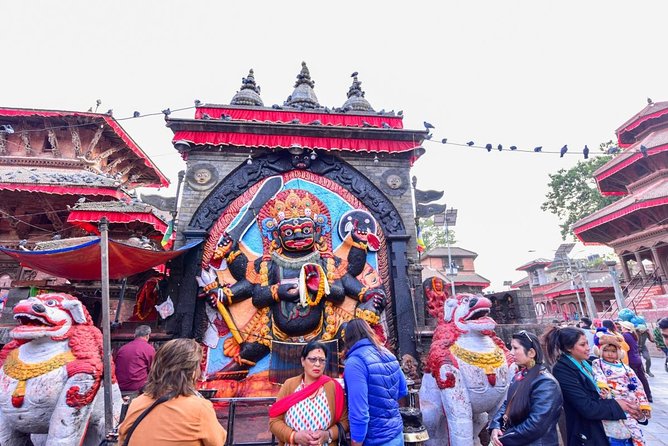
- Kathmandu Durbar Square and the living Kumari
- Pashupatinath, the day’s most serious stop
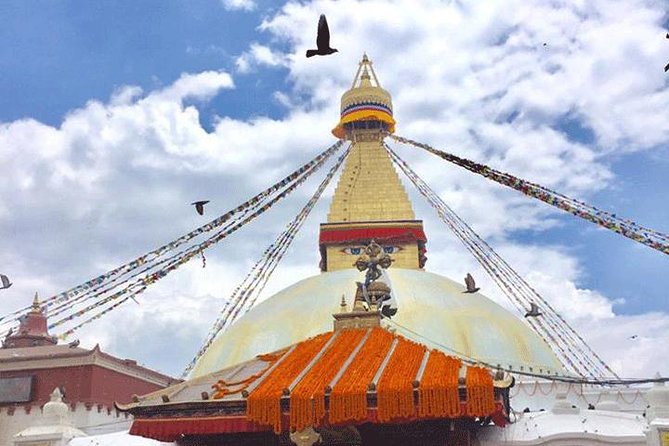
- Boudhanath and the rhythm of the stupa
- Patan, Bhaktapur, and what the routing may include
- The Garden of Dreams and central Kathmandu
- Guides make or break this packed itinerary
- What $60 really buys you
- Pace, comfort, and small practical matters
- Is this the right Kathmandu tour for you?
- FAQ
- How long does the Kathmandu Heritage Tour last?
- What does the $60 price include?
- Are entrance fees included?
- Is lunch included?
- Is this a private tour?
- Can the tour be changed or canceled?
- Are the sites fully restored after the 2015 earthquake?
Key points to know before booking
- Swayambhunath starts the day with hilltop views across Kathmandu and an important Buddhist shrine.
- Kathmandu Durbar Square brings you close to royal courtyards, Hanuman Dhoka, and the Kumari Chowk.
- Pashupatinath offers the most powerful cultural experience, including Hindu shrines and the cremation ghats.
- Boudhanath shifts the mood to Tibetan Buddhist devotion, with its huge white stupa and watchful Buddha eyes.
- A private guide makes the packed route workable, especially if you want to skip, shorten, or expand certain stops.
- Entrance fees are extra, so budget beyond the advertised $60 per person.
Why this private Kathmandu day works well
Kathmandu is not a city you understand by simply ticking off monuments. A carved window, a smoking cremation pyre, and a ring of prayer wheels each carry religious meaning that is easy to miss without explanation. This tour gives you a guide, a private car, hotel pickup, hotel drop-off, and a full day built around the valley’s major sacred places.
That arrangement is especially useful if you have only one day in Kathmandu. Traffic can make short distances feel long, and the sites are spread across different parts of the city. Having a driver handle the roads lets you focus on the temples instead of negotiating every taxi ride.
The tour is private, with no more than 10 people in one booking. That matters. You can ask questions, set a reasonable pace, and tell the guide if you need more time for photographs or less time at a crowded courtyard. Several strong experiences came from guides who adjusted the content and speed to suit the group.
The day usually lasts between five and eight hours. That is a wide range, and it makes sense because traffic, entrance queues, photography, and your own pace can change the schedule. You should expect a busy day, not a leisurely stroll with long breaks.
More Full-Day Tours in Kathmandu
- Kathmandu: Full Day 7 UNESCO Tour with Lunch – Private/Group
★ 5.0 · 415 reviews - Kathmandu: Full Day Top 4 UNESCO Tour with Lunch – Private/Group
★ 5.0 · 269 reviews - Kathmandu: Full-Day 7 UNESCO Tour with Lunch – Private/Group
★ 4.9 · 247 reviews
Swayambhunath, where Kathmandu opens below you
The first major stop is Swayambhunath, often called the Monkey Temple. It sits on a hill and gives you a broad view of Kathmandu from above. The site is one of Nepal’s main Buddhist centers and is described as having more than 3,000 years of history.
The hilltop setting gives this first stop a useful purpose. Before you get lost in courtyards and shrines, you see the city as a whole. Your guide can also introduce the mix of Buddhist and Hindu practice that shapes much of Kathmandu Valley.
The name Monkey Temple is not decorative. Monkeys live around the site, so keep your belongings secure and avoid treating them like tame pets. The stop is scheduled for about an hour, enough to see the principal area and hear the basic story, though you may want longer if the view is clear.
Entrance is not included. The tour information does not give a fixed fee, so ask your guide about the current charge at the start of the day. That small question helps you avoid surprises later.
Kathmandu Durbar Square and the living Kumari
Kathmandu Durbar Square is the historic royal center, filled with ornate buildings, courtyards, shrines, and the Hanuman Dhoka palace complex. The route gives you about an hour here, though the surrounding stops add more time to the same historic area.
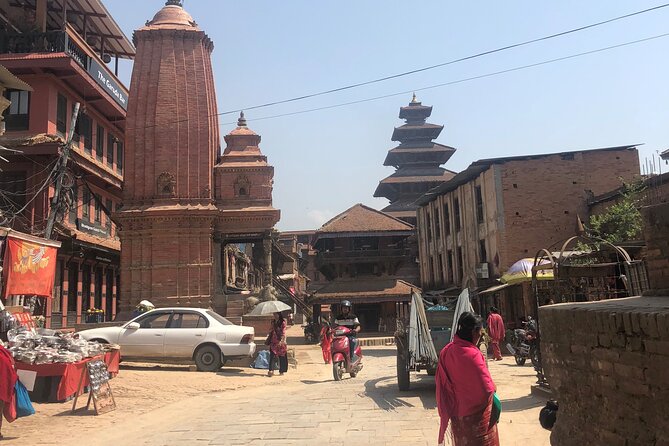
The great value of a guide appears here. Without help, the square can look like an impressive jumble of wood carving and brick. With context, you begin to understand how the royal court, Hindu worship, Buddhist practice, and daily city life overlap.
Kumari Chowk is one of the most unusual stops. This palace is associated with the Kumari, a young girl worshipped as a living form of the goddess Durga. She may appear briefly at a window, but there is no promise that you will see her. The visit is short, respectful, and not a staged performance.
Hanuman Dhoka adds another layer. The square honors Hanuman, the courageous monkey god, and real monkeys may be present around the area. Basantpur Dabali, an old tourist center with a Hindu temple, and Taleju Bhawani Temple are also listed among the brief stops around the Durbar Square portion of the day.
The 2015 earthquakes damaged parts of Kathmandu’s historic sites. Some buildings have been repaired, while others may still show loss, scaffolding, or altered details. That damage is not a flaw in the tour. It is part of the present story of Nepal, and a good guide can explain how the disaster affected buildings and families.
Pashupatinath, the day’s most serious stop
Pashupatinath is one of the world’s most sacred Hindu shrines. It lies about five kilometers east of central Kathmandu and centers on a richly ornamented pagoda containing a sacred linga associated with Lord Shiva.
The itinerary gives Pashupatinath roughly two hours across the main temple area and the cremation grounds. That is sensible. The complex is not just one building. It includes riverside ghats, shrines, courtyards, and places of worship with different rules and levels of access.
Non-Hindu visitors cannot enter the main temple itself, but the surrounding area still offers a close look at Hindu religious life. Your guide can explain what you are seeing and help you behave respectfully around worshippers.
The cremation ghats are the most emotionally demanding part of the day. Funerals take place here, and the setting can feel direct and solemn. It is not a spectacle. You should keep your distance, avoid intrusive photographs, and follow your guide’s advice about where to stand.
One particularly thoughtful account described Pashupatinath as more reverent than sensational. That is the right way to approach it. You may find the experience moving, but you should not expect a polished attraction. It is an active place of mourning and religious duty.
Pashupatinath admission is extra. The itinerary lists one crematoria stop as free, while also noting that the main entrance fee applies in this area. Ask exactly what your ticket covers before paying.
More UNESCO Heritage Days:
- Private Kathmandu Sightseeing Tour | UNESCO World Heritage sites
★ 5.0 · 756 reviews - UNESCO Seven World Heritage Tour in Kathmandu
★ 5.0 · 253 reviews - Kathmandu: 7 UNESCO Sites Tour in 1 Day (Private Tour)
★ 4.9 · 204 reviews - Kathmandu: Top 4 UNESCO Tour with Lunch – Private/Group
★ 4.9 · 181 reviews
Boudhanath and the rhythm of the stupa
Boudhanath changes the tone of the afternoon. This large Buddhist stupa is described as about 2,500 years old and built in the fifth century. Its four pairs of Buddha eyes face the four cardinal directions, a symbol of watchfulness over the surrounding community.
The stupa is best understood by walking around it in the traditional clockwise direction. The tour gives you about an hour, which lets you take in the structure, watch people move through the square, and ask about the prayer wheels and painted symbols.
This is a good place to slow down after the intensity of Pashupatinath. The white dome, golden details, prayer flags, and steady movement around the stupa create a very different religious setting from the Hindu temple complex.
Again, admission is not included. Boudhanath is one of the major paid stops, so build that charge into your budget. The guide can also point out the proper direction of movement and explain why the site matters, details that make the visit more than a photo stop.
Patan, Bhaktapur, and what the routing may include
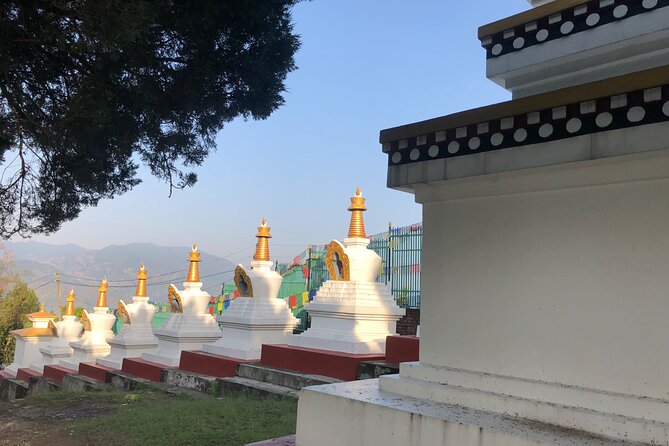
The supplied route includes Taleju Bhawani Temple in Bhaktapur, and several full-day accounts describe seeing the three major Durbar Squares: Kathmandu, Patan, and Bhaktapur. Because the stated duration is only five to eight hours, you should confirm the exact route before departure if all three squares matter to you.
Patan’s small museum has also been singled out as worthwhile because it displays finely made religious objects and palace pieces. If Patan is included in your day, the museum can add real depth, but it may also reduce time at other locations.
Bhaktapur is known here through the Taleju Bhawani stop, linked with the Malla kings who ruled Nepal from the twelfth to the eighteenth century. The short 10-minute listing suggests that this may be an exterior orientation rather than a long visit inside a full complex.
This is an important practical point. The tour covers many locations, but not every stop receives equal time. If you want detailed visits to every square, ask the operator to confirm whether the route can be adjusted and which sites will be shortened.
The Garden of Dreams and central Kathmandu
The Garden of Dreams is listed as an additional stop in the main tourist area. It is a neoclassical garden in central Kathmandu, with paved paths and a formal European design.
No visit length is given, so treat it as a possible short add-on rather than the core of the tour. It can offer a quieter change from the temples, but the UNESCO sites are the reason to book this particular experience.
The same information also presents the company as an established Nepal operator with more than 20 years of experience. That may reassure you when arranging a private day, but the guide assigned to your booking matters more than a general company claim. Ask for a guide who can explain both architecture and present-day life, not only recite dates.
Guides make or break this packed itinerary
The strongest part of the experience is the human one. Krishna is praised for being accommodating, fluent in English, and well informed, though one person found that he needed to speak more slowly. Krishna A. is described as patient and careful about not rushing the sights.
Jamuna received especially warm praise for tailoring the day and staying in touch during a wider Nepal trip. SuJan is described as patient and highly informed, while Janina is praised for being kind, patient with photography, and generous with time.
Those details give you a useful request to make at booking. If you take many photographs, say so. If you want religious meaning rather than only architectural facts, say that too. English ability may vary by guide, so a request for clear, slower explanations is reasonable.
The driver also matters. Kathmandu traffic can be difficult, and one account reported a clutch problem that forced the group to walk about one kilometer to a site. That appears to have been an isolated vehicle issue, but it is a reminder that a private tour cannot remove every road problem.
What $60 really buys you
At $60 per person, the package includes hotel pickup and drop-off in Kathmandu, bottled water, a private guide, and private transport. For a solo visitor or couple, that can be good value because you are paying for a full day of transport and interpretation rather than a series of separate rides.
The value is strongest when you have only one day, are jet-lagged, or do not want to work out the city’s routes yourself. One person who had a single day in Kathmandu found the packed schedule useful for seeing a large share of the city.
The headline price needs careful handling. Entrance fees are not included, and lunch is also your responsibility. The guidance suggests allowing around $10 for a locally purchased lunch. Tips, drinks, and photographs can add more.
One booking account described paying a much higher tour price and then about $60 per person in entrance fees. Prices can change, and that figure may not match the current $60 rate, but it shows why you should ask for an estimated total before booking. At minimum, plan for the tour fee, site admissions, lunch, and gratuities.
There are no mandatory shopping stops listed, which is a real plus. Your time stays focused on temples, squares, religious sites, and city life.
Pace, comfort, and small practical matters
Hotel pickup and drop-off keep the day simple. Bottled water is included, but food and drinks are not. Wear shoes you can walk in, modest clothing for sacred places, and something that works in changing weather.
Some sites involve uneven ground, steps, crowds, and outdoor waiting. Most people can participate, and there is no stated age limit, but the long schedule may tire young children or anyone not used to a full day of sightseeing.
Service animals are allowed. The tour is available for one person, and bookings can include up to 10 people, though only your own group participates.
You can change the date and time for free under the stated terms. Cancellation is free with at least 24 hours’ notice. Inside 24 hours, refunds and changes are not accepted, with cut-off times based on local time.
Is this the right Kathmandu tour for you?
Book this if you want a strong first look at Kathmandu, have limited time, and value a guide who can connect buildings with Nepal’s Buddhist and Hindu traditions. It is also a smart choice if private transport, hotel pickup, and the freedom to adjust the pace are worth paying for.
Think twice if you prefer slow museum visits, dislike packed schedules, or are on a tight budget. Entrance fees can make the real cost much higher than $60, and the sheer number of stops means some visits are necessarily brief.
For most first-time visitors, I see this as a useful one-day framework. Request a patient English-speaking guide, confirm whether Patan and Bhaktapur are included in your exact route, and ask for an estimate of all admission charges. With those details settled, the tour offers a practical way to meet Kathmandu’s grand squares, living religious centers, and difficult but important places in one carefully organized day.
FAQ
How long does the Kathmandu Heritage Tour last?
The tour lasts approximately five to eight hours. The final length can depend on traffic, entrance queues, the number of sites visited, and how much time you spend at each stop.
What does the $60 price include?
The price includes hotel pickup and drop-off, bottled water, a private tour guide, and transport by private vehicle.
Are entrance fees included?
No. Entrance fees are not included and must be paid separately. Charges can apply at Swayambhunath, Kathmandu Durbar Square, Pashupatinath, and Boudhanath.
Is lunch included?
No. Food and drinks are not included. You should expect to spend around $10 for lunch purchased locally.
Is this a private tour?
Yes. This is a private activity, and only your own group participates. A booking can include up to 10 people.
Can the tour be changed or canceled?
The date and time can be changed for free under the stated terms. You can receive a full refund if you cancel at least 24 hours before the start time. Cancellations or changes made within 24 hours are not accepted and are not refunded.
Are the sites fully restored after the 2015 earthquake?
No. Some sites visited on the tour suffered significant damage in the April and May 2015 earthquakes. You may still see repaired areas, damaged structures, or ongoing effects of the disaster.
More Full-Day
- Kathmandu: Full Day 7 UNESCO Tour with Lunch – Private/Group
★ 5.0 · 101 reviews - Kathmandu: Full Day Top 4 UNESCO Tour with Lunch – Private/Group
★ 5.0 · 67 reviews - Kathmandu Heritage Tour (Full Day)
★ 5.0 · 63 reviews - Full Day Guided Tour in Kathmandu
★ 5.0 · 61 reviews
More History Tours
- Kathmandu Private Sightseeing Tour | UNESCO World Heritage Sites
★ 5.0 · 109 reviews - Kathmandu: Full Day Private Top 4 UNESCO Heritage Tour W/Lunch.
★ 5.0 · 86 reviews - Kathmandu World Heritage Tour
★ 5.0 · 74 reviews - Nagarkot Sunrise & Bhaktapur UNESCO Heritage Private Tour
★ 5.0 · 66 reviews
Just added around Kathmandu
- Private Shopping Tour in Kathmandu★ 5.0 · 3 reviews
- Nagarkot Sunrise With 7 UNESCO World Heritage Private Tour★ 5.0 · 3 reviews
- Mount Everest Scenic Flight 50 Minutes★ 5.0 · 3 reviews
- Kathmandu: Nightlife and Pub Crawl Tour★ 5.0 · 3 reviews
- Momo Cooking Class -The Art Of Making MoMo with Home Chef★ 5.0 · 3 reviews
- Kathmandu: Nagarkot, Bhaktapur, Doleswor & Sanga Statue Tour★ 5.0 · 3 reviews
- Makalu Base Camp Trek★ 5.0 · 3 reviews
- Everest Experience Trek 6 Day Hiking Adventure★ 5.0 · 3 reviews
Kathmandu UNESCO Heritage Tours, compared.

Private Kathmandu Sightseeing Tour | UNESCO World Heritage sites
Read our review →
Full Day 7 UNESCO Tour with Lunch – Private/Group
Read our review →
Full Day Top 4 UNESCO Tour with Lunch – Private/Group
Read our review →
Full-Day 7 UNESCO Tour with Lunch – Private/Group
Read our review →
Kathmandu Private Sightseeing Tour | UNESCO World Heritage Sites
Read our review →Browse the lists this tour appears in