
Reviewed · WALKING TOURS
Kathmandu Walking Tour
Kathmandu reveals itself on foot. This four-hour walk links Ason market, Kathmandu Durbar Square, Freak Street, and Swayambhunath, giving you a useful first look at the city’s streets, shrines, temples, and daily routines. I like the route because it combines ordinary Kathmandu life with two UNESCO World Heritage Sites, rather than keeping you inside a sightseeing bubble. I also like the small-group limit of 10, which gives the English-speaking guide room to explain things and answer questions.
The main drawback is the walking itself. Streets are busy, the route includes a hill up to Swayambhunath, and the tour does not include monument entrance fees or a taxi back to Thamel. At $30 per person, the price is fair if you want context and conversation, but less appealing if you prefer to explore independently or already know Kathmandu well.
In This Review
- Key points at a glance
- Why this walking route works
- Starting near Thamel and entering Ason market
- Kathmandu Durbar Square and the royal center
- Freak Street and Kathmandu’s hippie-era memory
- Climbing to Swayambhunath, the Monkey Temple
- Walking back to Thamel or paying for a taxi
- What the guides add to the experience
- Is $30 good value?
- Who should book this tour?
- Practical details before you go
- FAQ
- How long is the Kathmandu Walking Tour?
- What places does the tour visit?
- Does the tour visit UNESCO World Heritage Sites?
- Is hotel pickup included?
- Is transportation included after Swayambhunath?
- Are monument entrance fees included?
- What language is the tour conducted in?
- How large is the group?
- What should I bring?
- Can I cancel for a refund?
- Who should not take this tour?
Key points at a glance
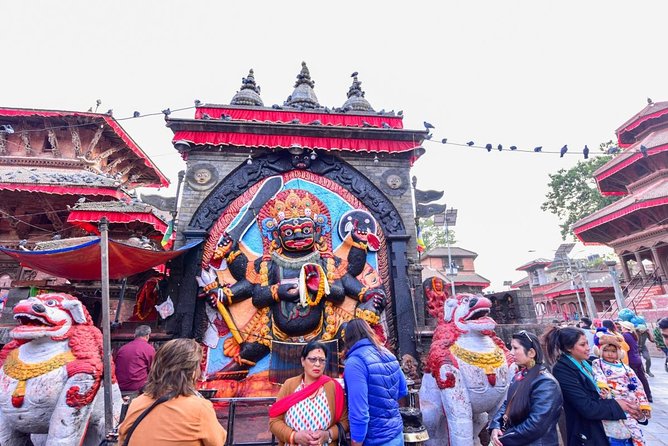
- Ason market comes first: Begin among shops, alleys, squares, temples, and the everyday commerce of Kathmandu’s oldest market area.
- Two UNESCO sites in four hours: Visit Kathmandu Durbar Square and Swayambhunath, also called the Monkey Temple.
- Swayambhunath brings the big view: The hilltop setting offers a panoramic view across the Kathmandu Valley.
- Freak Street adds a different chapter: See the famous former hippie-era junction near Durbar Square.
- Small group, English guide: Groups are limited to 10, with mineral water included and hotel pickup available from the Thamel area.
- Bring cash and good shoes: Monument fees are extra, and the walk is not suitable for wheelchair users or pregnant women.
Why this walking route works
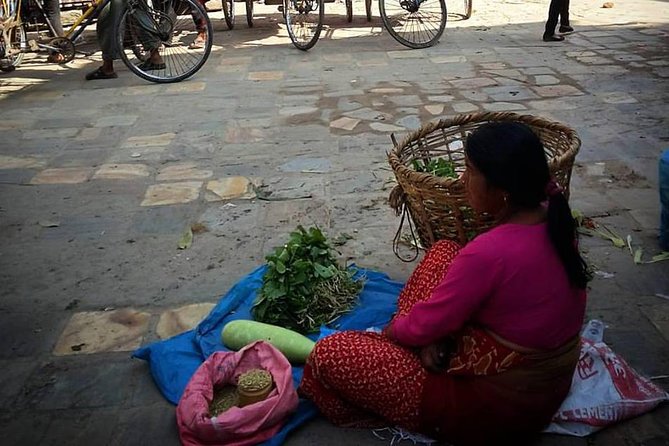
Kathmandu can feel confusing at first. The streets twist, temples appear beside shops, and important buildings are mixed into ordinary neighborhoods. A walking guide helps you connect those pieces instead of seeing isolated monuments one after another.
This route also has a sensible shape. You begin near your hotel in Thamel, walk toward Ason, continue to Kathmandu Durbar Square, visit Freak Street, and then finish at Swayambhunath. The route moves from local market streets to royal and religious sites, then up to a hilltop viewpoint.
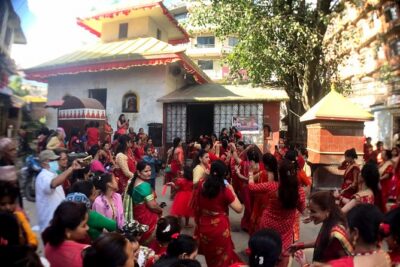
I especially like that the tour does not focus only on grand buildings. The walk through Ason gives you a look at how people shop, work, move, and worship in the center of Kathmandu. You pass shops, squares, old temples, and narrow lanes before reaching the more obvious sightseeing stops.
The tour lasts four hours, so you should expect a steady half-day outing rather than a slow, leisurely wander. Your guide will explain the places along the way, and the strongest feedback has centered on clear explanations, good timing, and guides who can discuss Kathmandu’s cultures, religions, shrines, and daily life.
More Walking Tours in Kathmandu
- Kathmandu Food and Drink Walking Tour
★ 5.0 · 266 reviews - Kathmandu: Food and Drink Walking Tour
★ 4.9 · 119 reviews - Walking Street Food Tour in Kathmandu
★ 5.0 · 111 reviews
Starting near Thamel and entering Ason market
Pickup is available from hotels in the Thamel area. Your guide comes to collect you, so you need to provide your hotel name when booking. From there, the tour begins on foot rather than by private vehicle.
Ason is one of the most useful places to begin. It is described as the oldest market place in Kathmandu, and it gives you an immediate sense of the city as a working place, not just a monument zone. You pass busy streets, shops, small squares, and ancient temples while watching local routines unfold around you.
This part of the route is likely to be crowded and active. That is part of the point, but it can also be tiring if you want a quiet start to your morning. Keep your attention on the walking surface and your belongings in crowded areas.
Ason is valuable because it gives the later monuments some context. After seeing the market, you have a better feel for how religious sites fit into the city’s ordinary streets. Kathmandu’s temples and shrines are not always separated from daily life. They can appear along a shopping route, beside a square, or in the middle of a busy neighborhood.
The guide matters here. A good explanation can help you notice the difference between a place of worship, a historic building, and a small shrine that might otherwise look easy to miss. Several ratings praise guides for answering questions and explaining Nepal’s religions and cultures in a clear way.
Kathmandu Durbar Square and the royal center
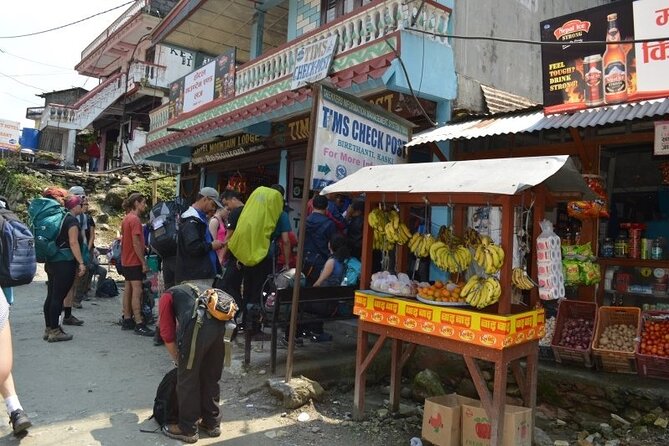
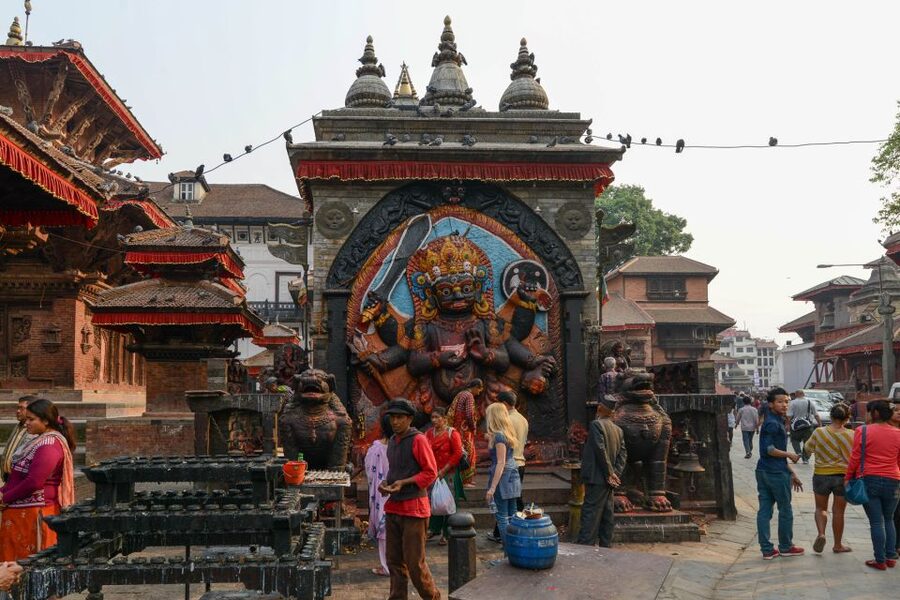
From Ason, you continue toward Kathmandu Durbar Square, one of the two UNESCO World Heritage Sites on the route. This is a major historical and religious area filled with temples, palaces, and shrines.
The square is the tour’s most concentrated stop for historic buildings. You can expect to spend time looking at the architecture and hearing how the area functioned as a center of power and worship. The guide’s role is especially useful here because the square contains many structures close together, and a short explanation can make the collection feel less overwhelming.
You should budget for an entrance fee. Monument entrance fees are not included in the $30 tour price, and the exact amount is not provided in the tour details. Bring cash, as requested, and ask your guide about the current fee during the walk.
The description notes skip-the-ticket-line access, which may save some waiting at the included stops. It does not mean that entry is free. This is an important distinction when you are calculating the day’s total cost.
Durbar Square can be a strong part of the tour if you want a guide to point out what you are seeing. It may be less satisfying if you are expecting a long, quiet visit to each temple. The whole route must also include Ason, Freak Street, and Swayambhunath, so the time at the square is part of a larger program.
Freak Street and Kathmandu’s hippie-era memory
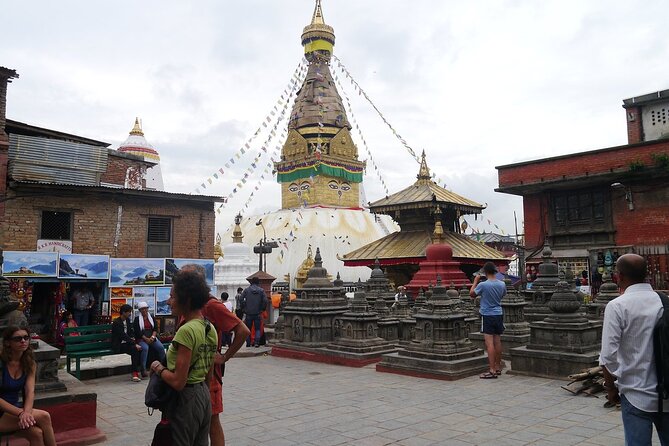
After Durbar Square, the route continues to nearby Freak Street. The area became a famous junction during the hippie era, giving the walk a different angle on Kathmandu’s past.
Freak Street is not presented as a separate long stop with a detailed program. Instead, it works as a short historical link between Durbar Square and the next part of the tour. The value comes from the contrast: you move from royal palaces and sacred sites into a place remembered for a very different kind of cultural history.
If you have heard about Kathmandu’s hippie era, this stop adds a physical setting to that story. If you have not, the guide can provide a quick introduction. Do not expect Freak Street alone to fill a large part of the four hours. It is one piece of a route built around variety.
This is also where the tour’s balance becomes clear. You are not only visiting famous monuments. You are moving through market life, old streets, religious sites, and a well-known cultural junction. That range is one of the best reasons to choose a guided walk at the start of your stay.
A different sort of day from Kathmandu:
- Everest Base Camp Trek – 14 Days
★ 5.0 · 1,499 reviews - Private Kathmandu Sightseeing Tour | UNESCO World Heritage sites
★ 5.0 · 756 reviews - Everest Base Camp Helicopter Tour landing at Everest View Hotel
★ 5.0 · 668 reviews - Half day cooking class in Thamel kathmandu
★ 5.0 · 607 reviews
Climbing to Swayambhunath, the Monkey Temple
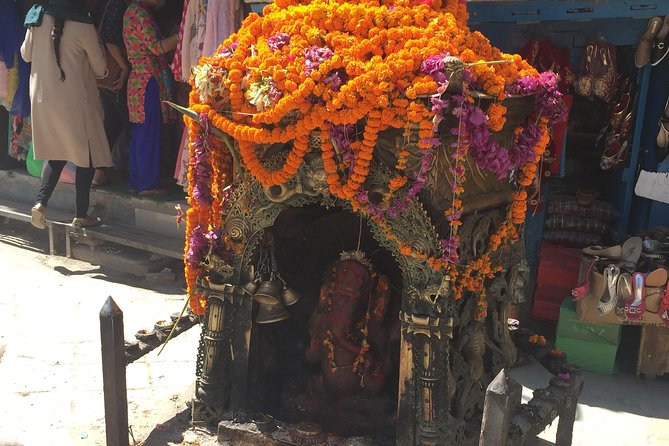
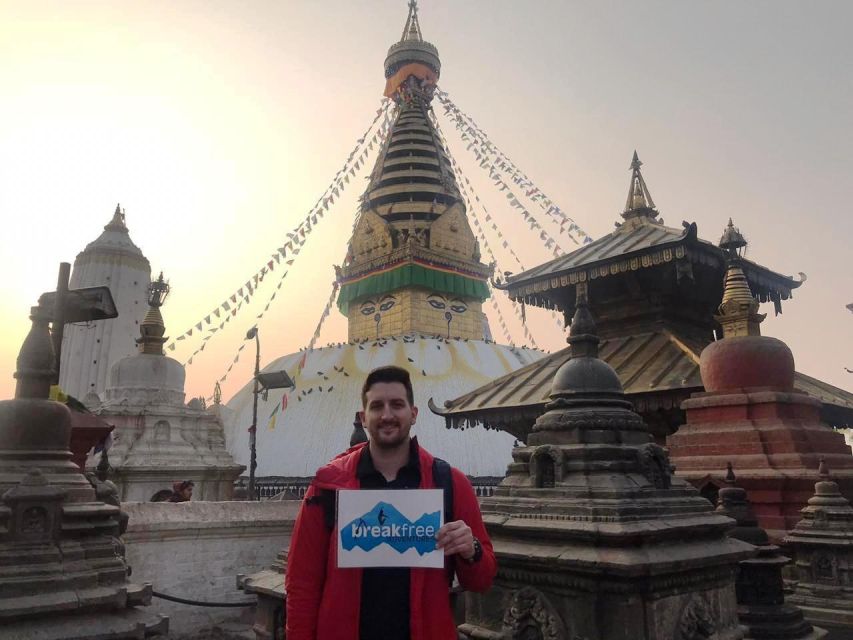
The final major stop is Swayambhunath, commonly called the Monkey Temple. It sits on top of a hill and provides a panoramic view of the Kathmandu Valley.
The hilltop setting gives the tour a strong finish. After walking through crowded streets and compact historic areas, you reach a place where you can look outward across the valley. The view is one of the clearest reasons to include this tour in a first visit to Kathmandu.
You should be ready for a climb. The tour is not suitable for wheelchair users, and pregnant women are advised not to take it. Even if you are comfortable walking, wear proper shoes and bring water. One bottle of mineral water is included, but you should still prepare for a four-hour outing.
Swayambhunath is also a religious site, not just a viewpoint. You will see temples and shrines, and the guide can explain the religious setting and its place in Nepal. The Monkey Temple name is widely used, but the site itself deserves more attention than a quick photo stop.
Entrance fees are not included here either. Carry cash for monument access. The tour details also ask you to bring a passport or ID card, so keep that with you along with your cash and booking information.
Walking back to Thamel or paying for a taxi
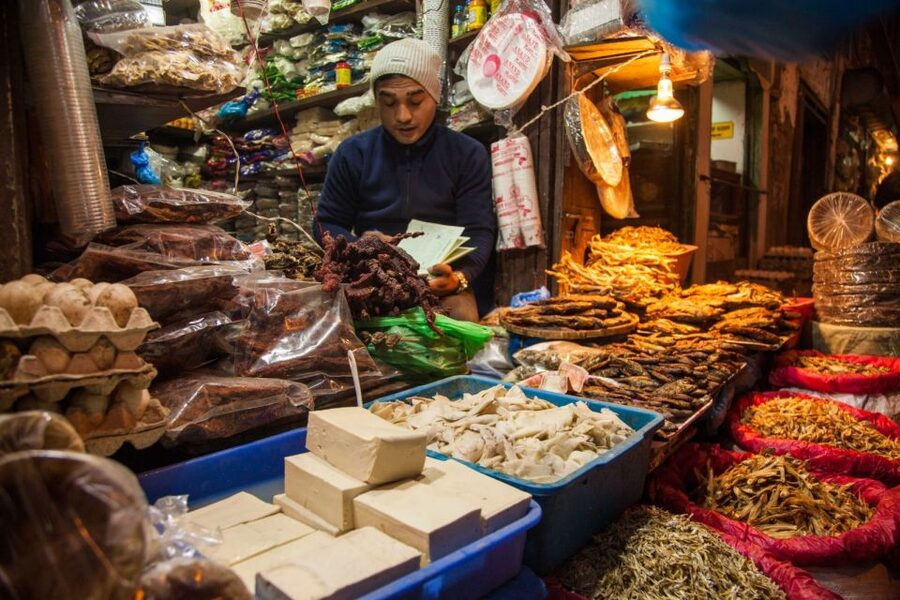
After Swayambhunath, the stated plan is to walk back to Thamel. You may also take a taxi from Swayambhunath to Thamel, but that transfer is not included.
This affects the real price of the outing. At $30, the tour covers an experienced guide and mineral water, but you need to add monument entrance fees and possibly taxi fare. If you walk back, you avoid the extra transport cost. If your legs are tired after the hill, a taxi may be the more comfortable choice.
The return arrangement is worth clarifying with the guide at the start. One rating specifically praised a guide for dropping the participant back at the hotel, but the standard details say that transfers and taxis are not included. Treat a hotel drop-off as something to confirm, not as a guaranteed part of the package.
What the guides add to the experience
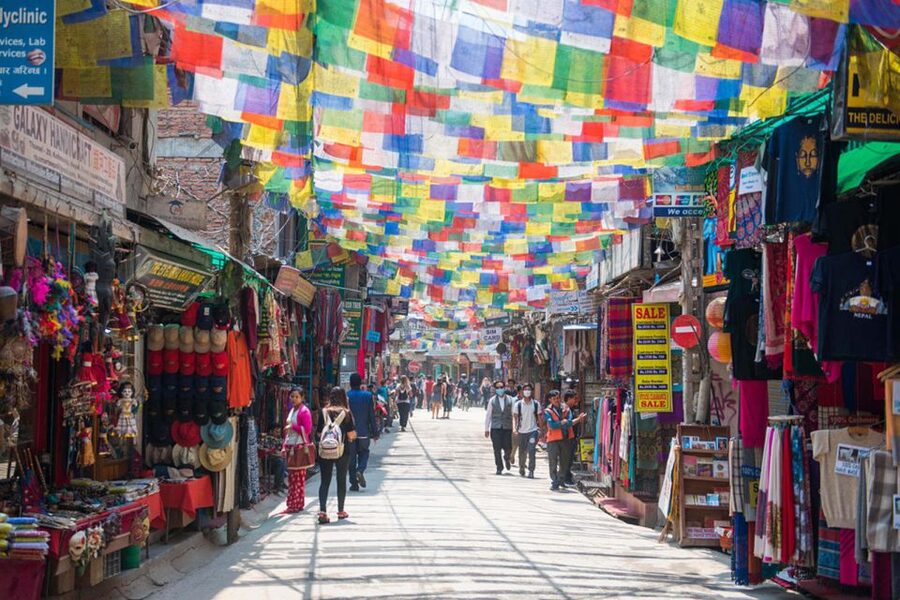
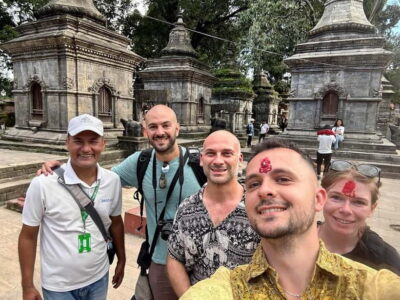
The strongest part of this tour is likely to be the guide. The activity uses an English-speaking live guide, and the group is limited to 10 people. That is a good size for walking city streets without the group becoming unwieldy.
The ratings repeatedly praise the explanations. Specific guide names mentioned positively include Shankar Bhattarai and Madan Sakota. Shankar was praised for his storytelling and broad knowledge, while Madan was praised for explaining the city’s history, cultures, and shrines in a pleasant way.
You should not assume you will receive either of those two guides. Guide assignment can vary. Still, the feedback gives you a useful picture of the level of service to hope for: clear facts, answers to questions, and an ability to connect monuments with religious practice and daily life.
The ratings are generally strong, with an overall score of 4.3 from 15 ratings. Several people gave the tour five stars, while one three-star rating found the visit uninteresting. That mixed result is useful. The tour depends heavily on your interest in guided explanation and city walking. If you want detailed cultural background, it may be a good match. If you want only major sights and plenty of free time, the pace may not suit you.
Is $30 good value?
The $30 price is reasonable for a four-hour guided walk in a major capital, especially with a small group and hotel pickup from Thamel. You are paying for route planning, an English-speaking guide, local explanation, and access to a practical introduction to the city.
The value is strongest during your first days in Kathmandu. A guide can help you understand where the main historic and religious areas sit, how the city’s old streets connect, and what you are looking at when you return on your own.
The price is less attractive if you already have strong background knowledge or plan to visit the same places with another guide. It is also not an all-inclusive sightseeing price. Add monument fees, and possibly a taxi from Swayambhunath, to your budget.
I would judge the cost by the guide rather than by the number of stops. A four-hour walk with thoughtful explanations can be worthwhile. A rushed route with little interaction would feel less useful. The positive ratings suggest that the best guides make the difference.
Who should book this tour?
I would recommend this walk to first-time visitors who want a quick orientation to Kathmandu. It suits people who enjoy street scenes, religious sites, historic squares, and learning as they walk.
It is also a good fit if you are staying in Thamel and want a half-day outing without arranging separate transport. The route covers several important areas, and the small group keeps the experience more personal than a large coach tour.
You should think twice if walking on uneven or busy streets is difficult for you. The tour is not suitable for wheelchair users or pregnant women, and the climb to Swayambhunath adds physical effort. It may also disappoint you if your main goal is a slow, detailed visit inside every monument.
Book it if you value a guide’s local explanation and want to see both working Kathmandu and its major heritage sites. Skip it if you prefer to set your own pace, dislike crowded streets, or want all entrance fees and transport included in one price.
Practical details before you go
The tour lasts four hours, with starting times subject to availability. Pickup is included only from hotels in the Thamel area, so provide the correct hotel name at booking.
Bring comfortable shoes, cash, mineral water if you want more than the included bottle, and your passport or ID card. Monument entrance fees are extra, and any taxi is also your responsibility.
You can cancel up to 24 hours before the start for a full refund. The reserve-now, pay-later option lets you hold a place without paying immediately, which is useful if your Kathmandu plans are still changing.
FAQ
How long is the Kathmandu Walking Tour?
The tour lasts four hours.
What places does the tour visit?
The route includes Ason market, Kathmandu Durbar Square, Freak Street, and Swayambhunath, also called the Monkey Temple.
Does the tour visit UNESCO World Heritage Sites?
Yes. The tour visits Kathmandu Durbar Square and Swayambhunath, both UNESCO World Heritage Sites.
Is hotel pickup included?
Pickup is included from hotels in the Thamel area. You need to provide your hotel name when booking.
Is transportation included after Swayambhunath?
No. You can walk back to Thamel or take a taxi, but transfers and taxi costs are not included.
Are monument entrance fees included?
No. You must pay monument entrance fees separately.
What language is the tour conducted in?
The tour has a live English-speaking guide.
How large is the group?
The group is limited to 10 participants.
What should I bring?
Bring comfortable shoes, cash, and a passport or ID card. Mineral water is included.
Can I cancel for a refund?
Yes. You can cancel up to 24 hours in advance for a full refund.
Who should not take this tour?
The tour is not suitable for pregnant women or wheelchair users.
Just added around Kathmandu
- Private Shopping Tour in Kathmandu★ 5.0 · 3 reviews
- Nagarkot Sunrise With 7 UNESCO World Heritage Private Tour★ 5.0 · 3 reviews
- Mount Everest Scenic Flight 50 Minutes★ 5.0 · 3 reviews
- Kathmandu: Nightlife and Pub Crawl Tour★ 5.0 · 3 reviews
- Kathmandu: Nagarkot, Bhaktapur, Doleswor & Sanga Statue Tour★ 5.0 · 3 reviews
- Momo Cooking Class -The Art Of Making MoMo with Home Chef★ 5.0 · 3 reviews
- Everest Experience Trek 6 Day Hiking Adventure★ 5.0 · 3 reviews
- Kathmandu: Momo Making Class with a Local Chef★ 5.0 · 3 reviews
Walking Tours, compared.


Walking Food Tour in Hidden Local Eateries of Kathmandu
Read our review →
Old Kathmandu Walking Tour, Historic World Heritage Durbar Square
Read our review →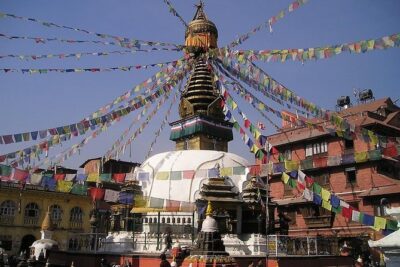
Browse the lists this tour appears in