
Reviewed · KATHMANDU TOURS
Mera Peak Climbing
Six giant peaks frame one serious climb. Mera Peak Climbing takes you through Nepal’s remote Hongu and Hinku valleys before reaching one of the country’s highest permitted trekking peaks. I like the chance to see Everest, Lhotse, Makalu, Cho Oyu, Kanchenjunga, and Mera in one demanding journey, and I like the mix of teahouse stays, camping, Sherpa culture, and real mountaineering. The main drawback is that this is not a gentle high-altitude walk. You need strong fitness, careful acclimatization, and comfort with uncertain weather.
I also like the practical support from Nepal Guide Treks and Expedition, including climbing permits, an experienced guide, and necessary climbing equipment. Names connected with successful trips include Dandee, Dende, Gelchen Sherpa, Mingma, Sonam Sherpa, and Samdu. Still, check exactly which personal climbing items you must bring, since personal gear is excluded even though necessary climbing gear is included.
In This Review
- Key points to know before booking
- Why Mera Peak is a serious but rewarding choice
- Starting in Kathmandu with the right expectations
- The Hongu and Hinku valleys: remote scenery with a price
- What the 18-day schedule means for you
- Guides, porters, and the value of local support
- The climbing gear question needs a clear answer
- Altitude advice you should take seriously
- Is $3,000 good value?
- Who should book Mera Peak Climbing?
- Should you book this Mera Peak trip?
- FAQ
- How long does Mera Peak Climbing take?
- What is included in the $3,000 price?
- What is not included?
- Is there a minimum age?
- How fit do I need to be?
- Can I cancel for a refund?
Key points to know before booking
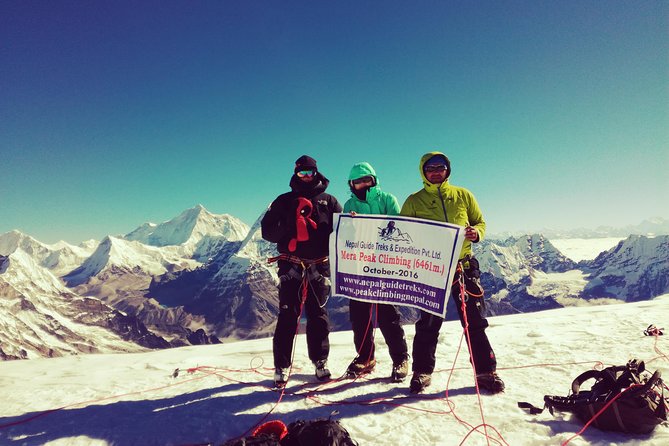
- Mera Peak reaches about 6,476 meters, making this a serious Himalayan climbing objective rather than an ordinary trek.
- Six famous 8,000-meter peaks are named on the route, including Mount Everest at 8,848 meters and Kanchenjunga at 8,586 meters.
- The route explores the Hongu and Hinku valleys, remote areas known for their wild setting and highland Sherpa communities.
- The 18-day program combines teahouses and camping, giving you both basic village lodging and a more rugged mountain experience.
- The package costs $3,000 per person, with permits, four Kathmandu nights, food, accommodation, guides, and necessary climbing gear included.
- Altitude safety is central, with advice to drink 2 to 3 liters of lukewarm water daily, avoid alcohol and smoking, and descend if symptoms worsen.
Why Mera Peak is a serious but rewarding choice
Mera Peak is officially the highest of Nepal’s permitted trekking peaks south of Mount Everest. That label can sound reassuring, but it should not fool you into thinking this is simply a long walk with a dramatic finish.
You need strong physical fitness, and the high altitude can affect even people who are fit at sea level. The experience includes trekking through remote valleys, adapting to thin air, sleeping at elevation, and using climbing equipment. The final goal is important, but the whole route tests your patience and judgment.
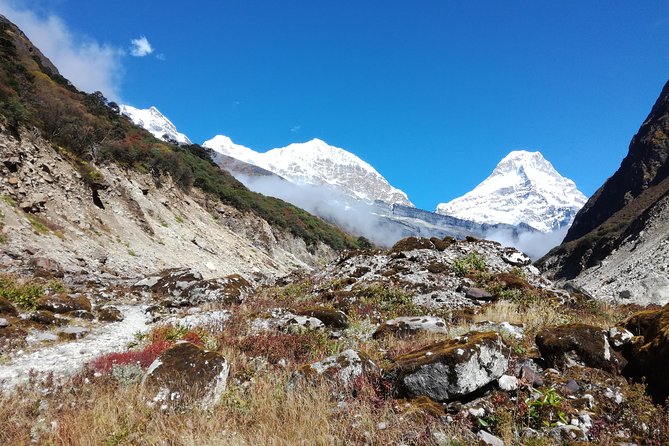
The reward is a broad view across the Everest region. The named peaks include Mount Everest, Cho Oyu, Makalu, Kanchenjunga, and Lhotse, along with Mera itself and other Himalayan summits. The supplied information first describes five mountains over 8,000 meters, then names six, so I would ask the operator to clarify the exact viewpoints and conditions you can expect. Either way, this is a remarkable collection of high peaks.
I especially like that the route is not presented only as a summit exercise. The Hongu and Hinku valleys add a remote, less developed feel, while contact with highland Sherpa communities gives the journey a cultural side. You are not simply driven to a trailhead, handed equipment, and pointed uphill. The setting and local communities are a major part of the experience.
A few more trips worth weighing up before you book
- Everest Base Camp Trek – 14 Days
★ 5.0 · 1,499 reviews - Private Kathmandu Sightseeing Tour | UNESCO World Heritage sites
★ 5.0 · 756 reviews - Everest Base Camp Helicopter Tour landing at Everest View Hotel
★ 5.0 · 668 reviews
Starting in Kathmandu with the right expectations
The trip begins at Tribhuvan Airport in Kathmandu, where pickup is offered. Four nights in Kathmandu with bed-and-breakfast accommodation are included, giving you time to arrive, organize equipment, and prepare before the mountain section.
The meeting information lists Nepal Guide Treks and Expedition as the starting point and gives opening hours of 9:45 a.m. to 6:15 p.m., Monday through Sunday. The listed operating period runs from November 21, 2022, through December 9, 2026. Since mountain plans can change with weather and local conditions, confirm your exact pickup details and start date before departure.
Kathmandu is also useful for practical preparation. The operator can help with logistics, and direct communication appears to be one of its strengths. Prakash Devkota is repeatedly identified as the main contact, and several people received quick help before and during their trips. That matters when flights, weather, route closures, or health concerns force a change of plan.
One account describes a journey affected by protests, confusion, and canceled internal flights. The group still received help finding a workable solution. Another planned route involving the Amphu Laptsa Pass had to change after heavy snowstorms closed the pass in late October. The team adjusted the plan rather than forcing a dangerous schedule.
That flexibility is valuable, but it also tells you something important: you must accept uncertainty. A summit cannot be guaranteed, and a route may change for reasons outside anyone’s control.
The Hongu and Hinku valleys: remote scenery with a price
The route explores the Hongu and Hinku valleys, described as wild, beautiful, and uninhabited in places. This is a strong reason to choose Mera Peak instead of a more established trekking route. You get a sense of distance from roads, towns, and daily routines.
Remote scenery also means fewer comforts. The combined teahouse and camping format gives the journey variety, but it may also mean simple rooms, basic meals, and nights with little privacy. The supplied details do not promise hotel-style facilities, private bathrooms, or a fixed camping standard, so ask what accommodation looks like on each section.
Food is covered during the trek, along with accommodation. You are advised to eat light food that is high in calories, and to add ginger and garlic. These suggestions are practical at altitude, where appetite can fall even as your body needs more energy.
The instruction to drink 2 to 3 liters of lukewarm water each day should be taken seriously. Cold conditions and exertion make hydration easy to neglect. Carrying and drinking enough water is part of your daily job, not a small comfort item.
The route also introduces you to highland Sherpa culture and tradition. The details do not promise a formal cultural program, so think of this as an organic part of passing through local communities rather than a staged performance. Be respectful, ask before taking photographs, and remember that homes and villages are not scenery alone.
What the 18-day schedule means for you
The advertised duration is approximately 18 days, 2 hours, and 5 minutes. That unusual precision should not be treated as a promise that every hour will run to schedule. Mountain travel depends on weather, flight operations, health, snow conditions, and the pace of the group.
The only formal stop supplied is Nepal Guide Treks and Expedition, so a detailed day-by-day route is not available here. You should request the full schedule before paying. Ask for the names of overnight locations, the number of acclimatization days, the planned summit window, and the backup plan if weather or altitude causes delays.
Even without a full stage list, the structure is clear. You begin with Kathmandu preparation, move through the Hinku and Hongu valleys, spend nights in a combination of teahouses and camps, and finish with a high-altitude climbing attempt. The gradual progression is important because the body needs time to adjust to thinner air.
Do not judge the trip only by the summit day. The approach takes stamina, and the return is still tiring after your main objective. A good guide will watch your pace, appetite, sleep, and symptoms rather than treating the itinerary as more important than your health.
The group limit is 15 people. That is small enough for a personal feel, but large enough for different walking speeds and fitness levels to matter. Ask how the group is managed on steep sections, how many guides and porters are assigned, and whether the climbing team is divided by ability.
A different sort of day from Kathmandu:
- Half day cooking class in Thamel kathmandu
★ 5.0 · 607 reviews - Everest Base Camp Trekking
★ 5.0 · 485 reviews - Nagarkot Sunrise View and Day Hiking from Kathmandu
★ 5.0 · 471 reviews - Kathmandu: Full Day 7 UNESCO Tour with Lunch – Private/Group
★ 5.0 · 415 reviews
Guides, porters, and the value of local support
The strongest praise attached to this experience concerns support and communication. Prakash Devkota is described as responsive before departure, including help with plans before and after the climb. That can save you considerable stress, especially if Mera Peak is only one part of a longer Nepal trip.
Several guides and Sherpa staff are named in connection with successful journeys. Dandee and Sherpa Mingma helped one climber reach a long-held goal. Sonam Sherpa and the porters were credited with making another climb memorable. Samdu was described as good company and attentive to a climber’s condition, while Dende and Gelchen Sherpa were involved in trips affected by weather and route problems.
I would not choose a high-altitude trip on names alone, since staff can change. Still, these details show the type of help you should expect to discuss before departure: health checks, route changes, summit decisions, and support during difficult weather.
Tips for guides and porters are not included. Set aside money for them and ask about customary amounts before leaving Kathmandu. A clear tipping plan avoids awkwardness at the end of a demanding trip.
The climbing gear question needs a clear answer
The package includes all necessary climbing gear, but personal climbing gear is excluded. Those two statements can sound contradictory, so get a written equipment list.
Ask exactly what the operator supplies and what you must bring yourself. The available information does not identify individual items, sizes, rental charges, or the condition of the gear. Do not assume that boots, clothing, gloves, sunglasses, a sleeping bag, or personal safety items are all covered.
This is one of the most important questions to settle before arrival. Poorly fitting equipment can turn a hard climb into an unpleasant or unsafe one. If you already own suitable gear, ask if you may use it. If you need rentals, confirm costs and availability.
The experience does include climbing permits, which is a meaningful part of the price. Permits are not an optional extra for a permitted peak, so having them arranged reduces paperwork and removes one major task from your preparation.
Altitude advice you should take seriously
The health instructions are direct and sensible. Drink 2 to 3 liters of lukewarm water each day, avoid alcohol and smoking, eat high-calorie food, and add ginger and garlic if those foods suit you.
If symptoms are mild, the advice is to stay where you are, avoid panic, sleep sufficiently, and drink water. You are also told to discuss your condition with your guide and, if available, a doctor. Do not hide symptoms to protect a summit schedule.
If your condition does not improve after acclimatization, begin descending. If the case is serious, descend immediately. The guidance also mentions Diamox and a Gamow bag, a high-pressure inflatable bag used to help restore oxygen levels and air pressure.
Do not treat Diamox or a Gamow bag as a substitute for medical judgment. Ask before departure what emergency equipment the company carries, who makes evacuation decisions, and which altitude gear is available. The instructions specifically say to check if the trekking company provides all altitude equipment.
The most valuable attitude here is simple: the summit is optional, your health is not. Several journeys succeeded because guides adjusted plans when conditions or health made the original plan unsuitable.
Is $3,000 good value?
At $3,000 per person, this is a major purchase, but the package includes several expensive and useful elements:
- Four nights in Kathmandu with bed and breakfast
- Mera Peak climbing permits
- Teahouse and camping food and accommodation during the trek
- An experienced trekking and climbing guide
- Necessary climbing gear
- Airport pickup
That makes the price more meaningful than a simple trek-only quote. You are paying for organization, permits, mountain support, lodging, meals during the route, and some equipment.
The value depends on what the phrase necessary climbing gear covers. Since personal gear is excluded, you may still need to buy or rent important items. International airfare, departure tax, personal expenses, and tips are also extra.
The group maximum of 15 helps keep the cost from becoming a private expedition price. If the final group is smaller, you may receive closer attention, but you should not assume a private guide unless that is confirmed.
For a first 6,000-meter climb, the practical support can justify the price. For an experienced mountaineer who owns equipment and wants a highly customized schedule, the package may feel less flexible. Ask for a full cost sheet before booking so the $3,000 figure does not grow through surprises.
Who should book Mera Peak Climbing?
This experience suits an adult with strong physical fitness who wants a serious Himalayan goal without committing to an 8,000-meter expedition. The minimum age is 18, and the combination of trekking, camping, cultural contact, and climbing appeals to people who want more than a standard mountain walk.
It is also a good fit if you value help with logistics. The operator has handled route changes, weather problems, internal flight difficulties, and plans before and after the climb. Responsive communication can be a major benefit in Nepal.
You should think twice if you dislike basic accommodation, uncertain schedules, or physical strain. This is not a sightseeing package with a guaranteed summit. It is a demanding mountain trip where patience and good judgment matter as much as determination.
Solo participation is possible based on the experience of a 27-year-old solo woman who wanted strong logistical support and felt well cared for. That does not remove the need to ask about group arrangements, guide ratios, and emergency procedures.
The free cancellation policy allows a full refund if you cancel at least 24 hours before the local start time. Cancellations inside that window are not refunded, and late changes are not accepted.
Should you book this Mera Peak trip?
I would consider booking it if you want a well-supported 6,000-meter goal, appreciate clear communication, and are prepared to trade comfort for mountain access. The combination of remote valleys, Sherpa communities, major Himalayan views, permits, food, accommodation, and guide support gives the $3,000 price real substance.
Before committing, request the complete day-by-day plan and equipment list. Confirm the acclimatization schedule, summit backup dates, emergency procedures, staff assignments, personal gear costs, and what happens if flights or passes are affected by weather.
Book it if your priority is a serious but organized Himalayan challenge. Skip it if you need a fixed timetable, resort-level comfort, or a guaranteed summit. Mera Peak rewards preparation, flexibility, and the willingness to turn around when the mountain says no.
FAQ
How long does Mera Peak Climbing take?
The advertised duration is approximately 18 days, 2 hours, and 5 minutes. Confirm the detailed day-by-day schedule with the operator because the available information does not provide each overnight stop.
What is included in the $3,000 price?
The price includes four Kathmandu nights with bed and breakfast, Mera Peak climbing permits, teahouse and camping food and accommodation during the trek, an experienced trekking and climbing guide, necessary climbing gear, and airport pickup.
What is not included?
International airfare, departure tax, personal climbing gear, personal expenses, and tips for guides and porters are not included.
Is there a minimum age?
Yes. Participants must be at least 18 years old.
How fit do I need to be?
You should have a strong physical fitness level. The trip involves high-altitude trekking and climbing, so you should also be prepared to monitor your health and follow your guide’s advice about acclimatization and descent.
Can I cancel for a refund?
Yes, if you cancel at least 24 hours before the experience start time, you can receive a full refund. Cancellations or changes made less than 24 hours before the start time are not accepted for a refund.
Just added around Kathmandu
- Nagarkot Sunrise With 7 UNESCO World Heritage Private Tour★ 5.0 · 3 reviews
- Private Shopping Tour in Kathmandu★ 5.0 · 3 reviews
- Mount Everest Scenic Flight 50 Minutes★ 5.0 · 3 reviews
- Kathmandu: Nightlife and Pub Crawl Tour★ 5.0 · 3 reviews
- Kathmandu: Nagarkot, Bhaktapur, Doleswor & Sanga Statue Tour★ 5.0 · 3 reviews
- Momo Cooking Class -The Art Of Making MoMo with Home Chef★ 5.0 · 3 reviews
- Kathmandu: Momo Making Class with a Local Chef★ 5.0 · 3 reviews
- Everest Experience Trek 6 Day Hiking Adventure★ 5.0 · 3 reviews
Kathmandu Tours, compared.


Private Kathmandu Sightseeing Tour | UNESCO World Heritage sites
Read our review →
Everest Base Camp Helicopter Tour landing at Everest View Hotel
Read our review →

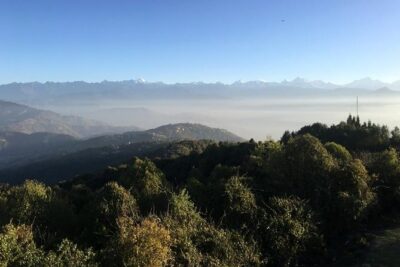
Nagarkot Sunrise View and Day Hiking from Kathmandu
Read our review →
Full Day 7 UNESCO Tour with Lunch – Private/Group
Read our review →