
Reviewed · EVEREST BASE CAMP TREKS
Everest Base Camp Trekking
The trail begins with a thrilling flight. This 14-day Everest Base Camp trek takes you from Kathmandu into the Khumbu, where pine forests, Buddhist monasteries, suspension bridges, and giant Himalayan peaks turn each walking day into a memorable chapter. I like the small group of no more than 10 people, and I like that your guide handles the route, teahouses, meals, and local transport while you focus on walking.
The strongest praise goes to the guides and porters. Names such as Biru, Amabar, Ramesh, and Kanchar appear in the feedback, with repeated credit for kindness, safety, and practical help. The main caution is simple: this is a serious high-altitude trek, not a sightseeing walk. You need strong physical fitness, patience for basic mountain accommodation, and some flexibility for weather.
In This Review
- What makes this Everest trek worth considering
- Kathmandu arrival and the practical start
- Day 2: The Lukla flight and the first mountain steps
- Days 3 and 4: River trails and acclimatization in Namche Bazaar
- Days 5 and 6: Ama Dablam views and Buddhist heritage
- Days 7 and 8: Glacier country and memorial stones
- Day 9: Reaching Everest Base Camp
- Day 10: Kala Patthar at sunrise
- Days 11 and 12: The long return through Pheriche
- Days 13 and 14: Back to Kathmandu
- What the $1,350 price really gives you
- Guide support and the small-group advantage
- Who should book this trek?
- Should you book the Everest Base Camp trek?
- FAQ
- How long is the Everest Base Camp trek?
- Where does the tour begin?
- What is the maximum group size?
- Is airport pickup included?
- Are meals and accommodation included?
- Is a guide provided?
- Do I need a passport?
- Can I cancel for a full refund?
What makes this Everest trek worth considering
- A 14-day route with acclimatization: You spend a rest day in Namche Bazaar and gain altitude in stages rather than rushing straight toward Base Camp.
- The famous Lukla flight: The early flight offers sunrise views of snowcapped peaks before you even reach the trail.
- A personal group size: With a maximum of 10 people, your guide can give closer attention than on a large commercial departure.
- More than one big viewpoint: Everest Base Camp is the goal, but Kala Patthar provides the sunrise mountain view that many people remember most.
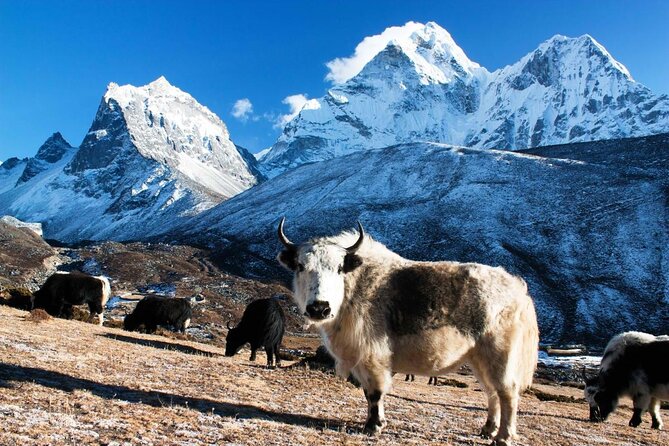
- A genuine Khumbu setting: You walk through Sherpa villages, Buddhist sites, pine forests, river valleys, and the dramatic Khumbu glacier area.
- Useful inclusions: Teahouse lodging, meals, local transport, airport pickup, and a guide are included in the package price.
Kathmandu arrival and the practical start
Your first day begins at Tribhuvan International Airport, where an airport representative meets you and takes you to your hotel in a private tourist vehicle. This is a helpful beginning after an international flight, especially if Kathmandu is new to you and you are arriving tired or dealing with jet lag.
You can rest or visit the company office to receive more information about the trek. I would use this time to confirm the walking plan, ask how weather changes will be handled, and make sure you understand what is included. A current passport is required, and booking requires each participant’s passport name, number, expiry date, and country.
Day 14 also leaves time for Kathmandu before your scheduled airport transfer. You can shop or see more of Kathmandu Valley, though the amount of free time will depend on your return flight and how smoothly the mountain flight operates.
More Everest Base Camp Treks:
- Everest Base Camp Trek – 14 Days
★ 5.0 · 1,499 reviews - Everest Base Camp Trekking – 13 Day
★ 5.0 · 365 reviews - Everest Base Camp Trek -14 Days
★ 5.0 · 321 reviews
Day 2: The Lukla flight and the first mountain steps
The trek gets serious on Day 2. After breakfast, you are taken early to the domestic airport terminal for the flight to Lukla. The flight is part of the experience, not just a transfer. The route offers early views of the Himalayan peaks, and landing at Tenzing-Hillary Airport puts you directly into the mountain world.
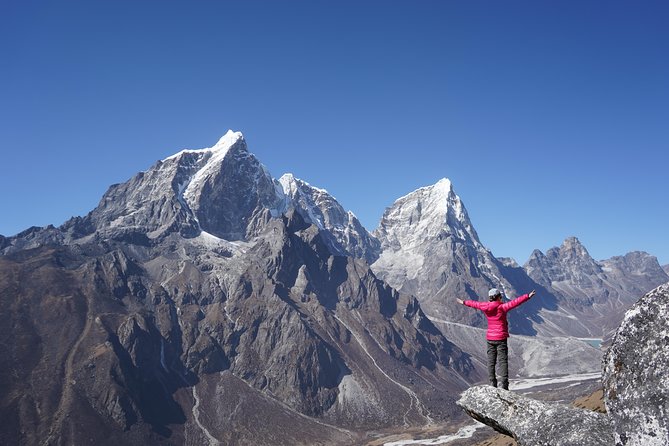
From Lukla, you begin walking toward the lower Khumbu settlements. This first walking day introduces the pace of the trek, with paths through pine forests, along the Dudh Koshi River, and past views of Mount Thamserku.
You also pass through a checkpoint at the entrance to Sagarmatha National Park. The trail is already scenic, but do not treat this day as a warm-up you can ignore. The route sets the rhythm for the following two weeks, and a steady pace is more useful than trying to walk fast.
Days 3 and 4: River trails and acclimatization in Namche Bazaar
The approach toward Namche follows the Dudh Koshi and passes through mountain settlements. You will encounter suspension bridges, forested sections, and changing views as the trail gains height. The route feels active and varied, with enough visual interest to keep your mind off the physical effort.
Namche Bazaar is the biggest settlement in the Khumbu region and an important pause in the itinerary. It has ATMs, internet cafes, restaurants, and bakeries, giving you a brief taste of modern convenience before the villages become smaller and the facilities more basic.
Day 4 is listed as an acclimatization day, but it is not a day of complete inactivity. You take a short hike to a nearby viewpoint, with the area around Tengboche included in the day’s sights. This kind of short climb matters because your body needs time to adjust to altitude.
I like the fact that the itinerary does not simply place you in Namche for the night and push onward the next morning. The short hike keeps you moving while giving your legs and breathing time to adapt. Still, the schedule is demanding, and you should tell your guide promptly if you feel unwell.
Days 5 and 6: Ama Dablam views and Buddhist heritage
From Namche, the trail continues toward Phorse. You reach Mugla Pass, where the views open toward Ama Dablam, Mount Khumbu, and Mount Thamserku. Ama Dablam is one of the most recognizable peaks in the region, and seeing it from the trail gives this section a memorable visual focus.
The route then descends toward the Dudh Koshi and crosses the river before climbing again. That pattern of gaining and losing height is typical of mountain trekking, so your daily walking distance is only part of the story. The repeated ups and downs can make a day feel harder than the figures suggest.
Day 6 takes you from Phorse toward Dingboche, with a visit to the region’s largest Buddhist monastery. You continue through alpine forest to Pangboche and then through smaller settlements, including Shomare.
This is one of the more meaningful parts of the trip for me because the cultural side of the Khumbu becomes more visible. You are not just walking toward a famous mountain. You are passing through communities shaped by Buddhist practice, high-altitude farming, guiding, and mountain trade.
More Treks and Hikes:
- Nagarkot Sunrise View and Day Hiking from Kathmandu
★ 5.0 · 471 reviews - Annapurna Circuit Trek with Tilicho Lake
★ 5.0 · 368 reviews - Annapurna base camp trek 5 Days
★ 5.0 · 252 reviews - Everest Base Camp Trekking – 2025/2026
★ 5.0 · 199 reviews
Days 7 and 8: Glacier country and memorial stones
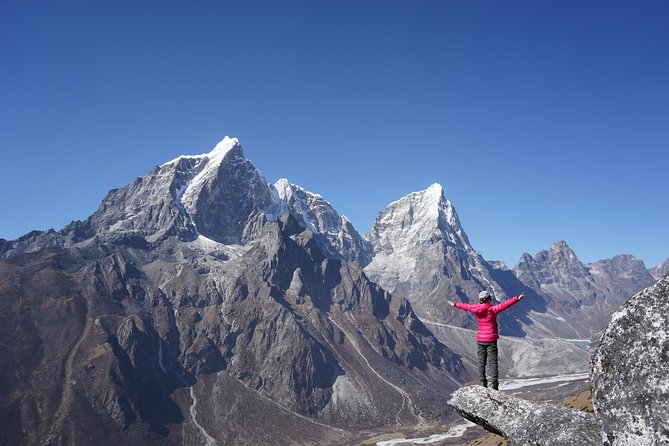
The itinerary moves through the Duglha and Khumbu Khola valley area on Day 7. Along the way, you pass Dusa, described as a place used by yak herders, and Phulong Karp, connected with the first successful Everest expedition in 1953.
The day also includes views connected with Cho La Lake. The exact feel of the route will depend on weather and trail conditions, but this section marks a clear change from the lower forested trail. Vegetation becomes less prominent, and the surroundings feel more exposed and severe.
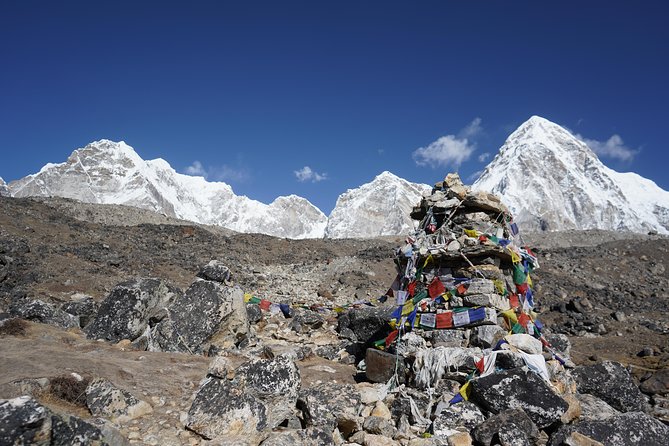
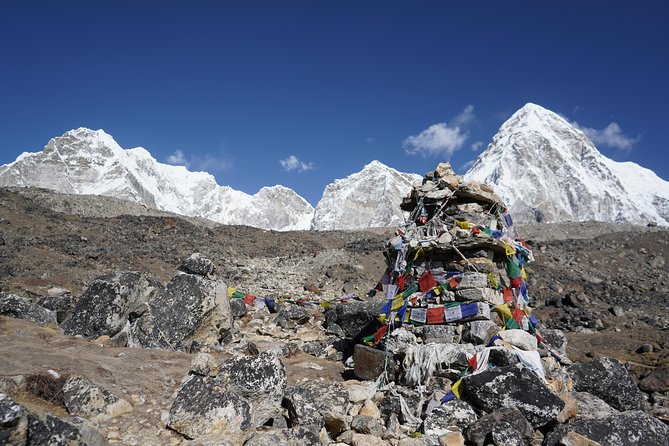
Day 8 brings a steep climb up the terminal moraine of the Khumbu glacier toward Chupki Lhara. The trail includes boulder-covered slopes and a collection of stones decorated with prayer flags.
These stones are an important reminder that the Everest region is not only a place of achievement and adventure. The high route has also seen loss, endurance, and devotion. Take this day slowly. Steep rocky ground requires careful foot placement, and rushing here would serve no purpose.
Day 9: Reaching Everest Base Camp
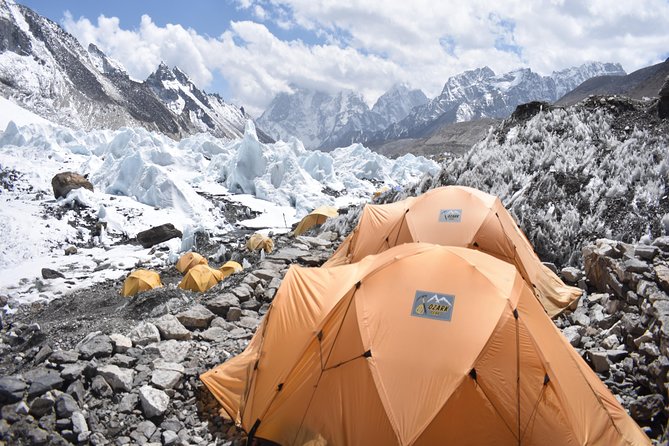
Day 9 is the main goal of the trek. The route reaches Everest Base Camp, described as a 30-minute stop. Base Camp itself is the emotional high point for many people, even though Mount Everest is not clearly visible from the camp area.
That detail matters. If your main hope is a full view of Everest from Base Camp, you may be disappointed. The camp is a historic and symbolic destination, but the best broad mountain panorama comes from another point on the route.
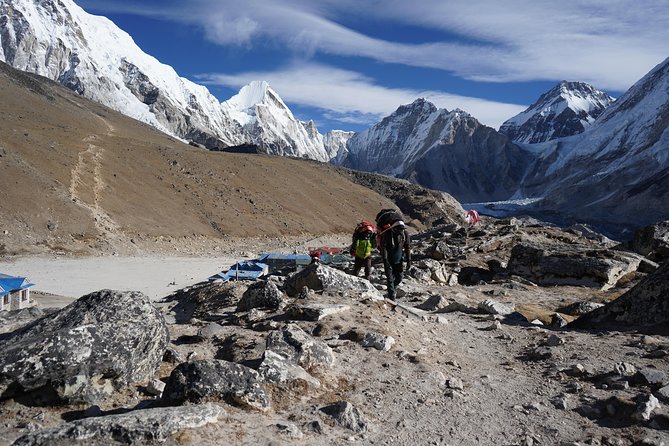
The approach includes a panoramic viewpoint at Thangma Riju, where you can see snowcapped mountains in every direction. The walk through the Everest Base Camp route brings you into the Khumbu glacier area and the severe, rocky surroundings that make the destination feel earned.
The group format is especially useful here. A guide helps you follow the correct trail, manage the day’s pace, and deal with the practical details while you concentrate on the achievement of arriving.
Day 10: Kala Patthar at sunrise
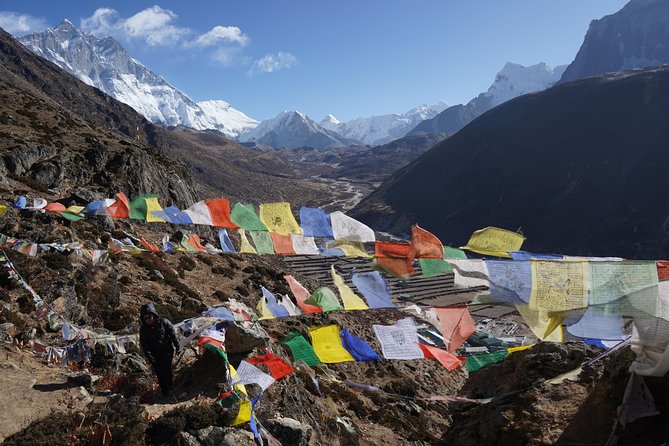
The next morning begins very early. The goal is Kala Patthar, a famous sunrise viewpoint, and the timing is designed to catch the mountains as darkness gives way to daylight.
This is the point where the itinerary answers the Base Camp visibility problem. From Kala Patthar, you have a much better chance of seeing Mount Everest along with nearby peaks such as Lingtr, according to the route description. The stop is listed as about 30 minutes, but the walk to the viewpoint and the early start make this a demanding morning.
Expect cold conditions at this hour. The tour operates in all weather, so proper clothing is not optional. You will want warm layers and clothing suitable for changing mountain conditions, though the supplied information does not specify a required equipment list.
The sunrise also gives the trek a strong final peak. Base Camp is the named objective, but Kala Patthar is likely to provide the clearest visual reward.
Days 11 and 12: The long return through Pheriche
After the high point of the trip, the route turns back toward lower villages. Day 11 follows the same general route through Duglha, Pheriche, Orsho, and Shomare before reaching Pangboche.
Descending is not automatically easy. Your breathing may improve as you lose altitude, but steep rocky paths can be hard on knees and ankles. The itinerary specifically warns you to move slowly and stay controlled on the downward trail.
Pangboche offers another chance to explore an old monastery. This stop adds cultural interest to the return journey and gives you a reason to pay attention even after Base Camp is behind you.
Day 12 continues down through the Dudh Koshi area. You cross a suspension bridge and pass through smaller settlements on the way back toward Lukla. The final mountain walking day is still active, so do not assume the hard work ends when you leave Base Camp.
Days 13 and 14: Back to Kathmandu
Day 13 brings the mountain flight from Lukla back to Kathmandu. Once in the capital, you have time for shopping and walking around the city, followed by an evening celebration for completing the trek.
The return flight is an important logistical point. Mountain aviation is tied to weather, and the stated schedule should be treated as a plan rather than a guarantee of exact timing. The tour operates in all weather, but that does not mean every flight will run on schedule. Keep your final Kathmandu plans flexible.
Day 14 is your last day in Nepal. Depending on your flight time, you can shop or enjoy more sightseeing around Kathmandu Valley before going to Tribhuvan International Airport.
What the $1,350 price really gives you
At $1,350 per person, this is not a low-cost independent hike, but the package includes several items that can be awkward and time-consuming to arrange yourself. You receive airport pickup, local transportation, a guide, teahouse accommodation, meals, and a small-group structure.
The value is strongest if you want the route organized for you. You do not need to work out each night’s lodging, manage every local transfer, or navigate the trail alone. The guide also provides local context about the Himalaya, the people living in the mountain villages, and Nepali culture.
You should still read the final inclusions carefully before paying. The supplied details do not spell out every possible cost, such as personal purchases or other optional expenses. The package is best judged as a supported trek rather than an all-inclusive luxury holiday.
The 56-day average booking lead time is useful planning information. It suggests that this is an experience people arrange well ahead of departure, especially if you need to coordinate international flights and a 14-day schedule.
Guide support and the small-group advantage
The strongest praise is directed at the human side of the trek. Biru is singled out for excellent company and guidance. Amabar and porter Kanchar are praised for helping a hiker feel safe, while Ramesh is described as a supportive Sherpa guide during a longer Three Passes itinerary.
Green Valley’s owners, Arjun and Raj, are also praised for responding to questions and helping with logistical coordination. That kind of communication matters before a high-altitude trip, when small uncertainties about flights, meeting points, or timing can cause needless stress.
The maximum group size is 10. That is small enough for direct contact with your guide but large enough that the group dynamic may vary. If you are hiking solo, you may appreciate the built-in company. If you prefer complete privacy and your own pace, a private departure may suit you better, though this product is specifically designed as a small group.
Who should book this trek?
This trek suits active people with strong physical fitness who are comfortable walking for many days at altitude. You should be ready for steep trails, rocky ground, cold mornings, basic teahouse accommodation, and changing weather.
I would choose it if you want the classic Everest Base Camp route without handling every detail yourself. It also suits a solo participant who wants a guide and a small group rather than an entirely independent trip.
I would think twice if you want short walks, predictable weather, private hotel rooms, or a relaxed cultural tour. The schedule is full, and reaching Base Camp requires sustained effort. The tour description says it is best for active and moderately fit hikers, but the strong fitness requirement in the additional information should be taken seriously.
Free cancellation is available if you cancel at least 24 hours before the local start time. Changes or cancellations inside that window are not accepted for a refund.
Should you book the Everest Base Camp trek?
Yes, if you want a guided, practical route with strong mountain scenery and a manageable group size. The best reasons to book are the well-spaced acclimatization plan, the Kala Patthar sunrise, the cultural stops, and the repeated praise for guides who provide safety and personal care.
Book it with realistic expectations. Everest Base Camp is not the best place for an Everest panorama, the return walk is still tiring, and weather can affect the mountain flights. If you are fit, patient, and happy to trade comfort for access to one of the world’s great trekking routes, this $1,350 package offers a sensible way to reach the Khumbu without carrying the full burden of planning yourself.
FAQ
How long is the Everest Base Camp trek?
The experience lasts approximately 14 days, including arrival and departure days in Kathmandu, the mountain flights, the trek to Base Camp, the return walk, and time in Kathmandu.
Where does the tour begin?
The meeting point is Tribhuvan International Airport on Ring Road in Kathmandu, Nepal. An airport representative meets you and arranges transport to your hotel.
What is the maximum group size?
The group has a maximum of 10 participants.
Is airport pickup included?
Yes. Airport pickup is offered on arrival, with transport from Tribhuvan International Airport to your hotel by private tourist vehicle.
Are meals and accommodation included?
Yes. Teahouse accommodation and meals are included in the trek package.
Is a guide provided?
Yes. The experience is guided, helping you follow the route safely and avoid getting lost.
Do I need a passport?
Yes. A current valid passport is required on the day of travel. Passport name, number, expiry date, and country are required for every participant at booking.
Can I cancel for a full refund?
Yes, if you cancel at least 24 hours before the experience start time. Cancellations made less than 24 hours in advance are not refunded, and changes inside that period are not accepted.
Just added around Kathmandu
- Private Shopping Tour in Kathmandu★ 5.0 · 3 reviews
- Nagarkot Sunrise With 7 UNESCO World Heritage Private Tour★ 5.0 · 3 reviews
- Kathmandu: Nightlife and Pub Crawl Tour★ 5.0 · 3 reviews
- Mount Everest Scenic Flight 50 Minutes★ 5.0 · 3 reviews
- Momo Cooking Class -The Art Of Making MoMo with Home Chef★ 5.0 · 3 reviews
- Kathmandu: Nagarkot, Bhaktapur, Doleswor & Sanga Statue Tour★ 5.0 · 3 reviews
- Makalu Base Camp Trek★ 5.0 · 3 reviews
- Everest Experience Trek 6 Day Hiking Adventure★ 5.0 · 3 reviews
Everest Base Camp Treks, compared.





Everest Base Camp Trek with Helicopter Return from Gorakshep to Lukla
Read our review →
Browse the lists this tour appears in