
Reviewed · KATHMANDU TOURS
Mt Everest Base CampTrek | Budget Package
Everest rewards patience, fitness, and sturdy boots. This 14-day budget trek from Kathmandu takes you through Sherpa villages, high mountain passes, Tengboche Gompa, Everest Base Camp, and Kala Patthar, with flights between Kathmandu and Lukla included. At $400, it offers strong value for a high-altitude route, though you must budget separately for all meals, drinks, insurance, equipment, and personal costs.
I especially like the two acclimatization days, which give your body time to adjust before the hardest walking. I also like the small maximum group size of 15 and the included English-speaking guide, medical kit, airport pickup, and local flights. The main concern is that breakfast, lunch, and dinner are not included, so the final cost will be well above the advertised price.
The human side gets good marks too. Jiban is praised for clear trip coordination, while guides Tony and Tika are described as patient, helpful, polite, and well organized. That matters on a route where a calm guide can make a tiring day feel manageable. Still, this is a serious high-altitude trek, not a simple sightseeing tour, and the itinerary includes several long days above 4,000 meters.
In This Review
- Key points at a glance
- What the $400 price really covers
- Kathmandu preparation before the trail
- Day 2: Lukla to Phakding, 8 kilometers
- Day 3: Phakding to Namche Bazaar, 11 kilometers
- Day 4: Acclimatization at 3,440 meters
- Day 5: Namche Bazaar to Tengboche, 10 kilometers
- Day 6: Tengboche to Dingboche, 9 kilometers
- Day 7: A second acclimatization day in Dingboche
- Day 8: Dingboche to Lobuche, 7 kilometers
- Day 9: Lobuche to Everest Base Camp via Gorak Shep
- Day 10: Kala Patthar and the long walk to Pheriche
- Days 11 and 12: Returning to Namche and Lukla
- Day 13 and 14: Back to Kathmandu and departure
- Tea houses, meals, and what you still pay for
- Guide support and group size
- Who should book this trek?
- Should you book the $400 Everest Base Camp trek?
- FAQ
- How long is the Everest Base Camp budget trek?
- What is the price of the trek?
- Are Kathmandu to Lukla flights included?
- Is airport pickup provided?
- Is accommodation included?
- Are meals included?
- Is a trekking guide included?
- What is the maximum group size?
- Do I need travel insurance?
- What is the cancellation policy?
Key points at a glance
- Kala Patthar reaches 5,545 meters: The pre-dawn climb is the trip’s best chance for broad views of Everest, Nuptse, the South Col, and nearby glaciers.
- Two acclimatization days are built in: You pause at Namche Bazaar and Dingboche instead of racing uphill every day.
- Lukla flights are included: The package covers round-trip air service from Kathmandu, plus pickup and drop-off transport.
- Food is not included: All breakfasts, lunches, dinners, drinks, and beverages come out of your pocket.
- The group limit is 15 people: That is large enough for company but small enough for the guide to keep track of the group.
- The route reaches Everest Base Camp at 5,364 meters: You also spend a night at Gorak Shep, the highest overnight stop listed.
What the $400 price really covers
The $400 price looks remarkably low for a 14-day Everest Base Camp trip. Its value comes from the items that are included: ten nights in tea house accommodation, round-trip Kathmandu to Lukla flights, private pickup and drop-off transport, an English-speaking trekking guide, government and local taxes, a medical kit, certificates, and preparation sessions before and after arrival.
The flights alone are an important part of the package. You avoid arranging the Kathmandu to Lukla route separately, and the operator handles the connection between the airport and the trekking itinerary. Airport pickup is also included, which is useful after an international arrival at Tribhuvan International Airport.
But do not treat $400 as your full trip budget. Breakfast, lunch, and dinner are excluded, along with drinks and beverages. You also pay for your visa, international airfare, insurance, trekking equipment, any extra porter or gear, tips, shopping, and other personal expenses.
That makes this a low-cost trekking package, not an all-inclusive holiday. The advertised price works best if you already own suitable gear and are comfortable paying for meals as you go. Ask for a current estimate of food and equipment costs before booking, since the listed price does not tell you the final amount needed.
A few more trips worth weighing up before you book
- Everest Base Camp Trek – 14 Days
★ 5.0 · 1,499 reviews - Private Kathmandu Sightseeing Tour | UNESCO World Heritage sites
★ 5.0 · 756 reviews - Everest Base Camp Helicopter Tour landing at Everest View Hotel
★ 5.0 · 668 reviews
Kathmandu preparation before the trail
The journey begins in Kathmandu with arrival at Tribhuvan International Airport. The package includes private pickup and a preparatory session before and after arrival, which should help you understand the route and organize the early stages of the trip.
The preparation matters because the trek begins quickly. On the second day, you fly to Lukla and start walking to Phakding. You will need your passport details at booking, including your name, number, expiry date, and country of issue.
The operator also provides a medical kit and an English-speaking guide. That is useful support, but it does not replace personal travel insurance. Insurance is specifically excluded, and you should regard it as essential for a high-altitude trip.
The operator’s stated opening hours cover every day, from September 17, 2025, through September 16, 2026. Confirmation is normally issued when you book. If you book within four days of departure, confirmation can take up to 48 hours and remains subject to availability.
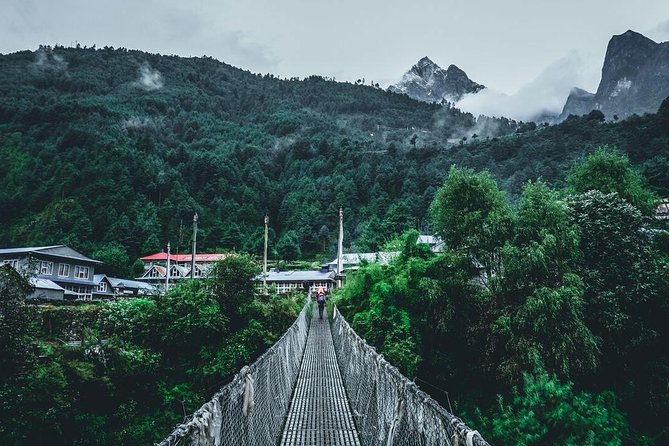
Day 2: Lukla to Phakding, 8 kilometers
The trek starts with the flight from Kathmandu to Tenzing-Hillary Airport in Lukla. From Lukla, you walk about 8 kilometers to Phakding, at 2,651 meters, in roughly three to four hours.
This is a sensible opening day. You begin walking at a lower elevation than Lukla and avoid an immediate long climb. Phakding serves as the first overnight stop before the route gains height toward Namche Bazaar.
The short distance may sound easy, but you are still adjusting to the pace, the terrain, and the altitude. Keep your first day relaxed. The goal is not to prove your fitness, but to arrive ready for the much longer climb ahead.
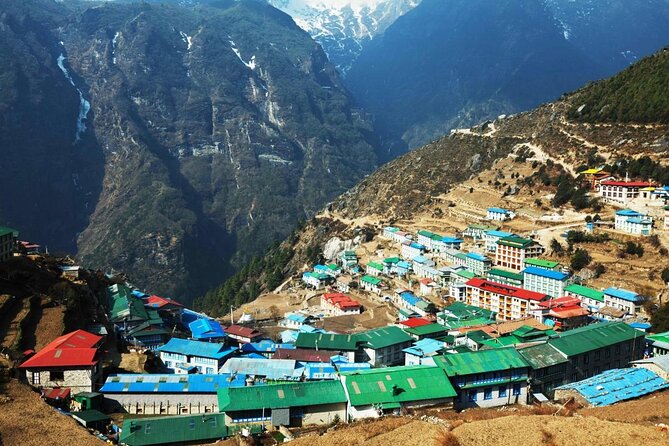
Day 3: Phakding to Namche Bazaar, 11 kilometers
The path continues for about 11 kilometers to Namche Bazaar, at 3,438 meters. The walk takes around five to six hours and brings your first major gain in altitude.
Namche is one of the most important stops on the route because the next day is reserved for acclimatization. You have time to rest and adjust before heading higher. That built-in pause is one of the best features of this itinerary.
Namche also marks a change in the feel of the journey. You leave the lower approach behind and enter the high mountain portion of the trek. The schedule does not provide a detailed activity plan for the acclimatization day, so ask your guide how the day will be used.
A different sort of day from Kathmandu:
- Half day cooking class in Thamel kathmandu
★ 5.0 · 607 reviews - Everest Base Camp Trekking
★ 5.0 · 485 reviews - Nagarkot Sunrise View and Day Hiking from Kathmandu
★ 5.0 · 471 reviews - Kathmandu: Full Day 7 UNESCO Tour with Lunch – Private/Group
★ 5.0 · 415 reviews
Day 4: Acclimatization at 3,440 meters
The fourth day is spent in Namche Bazaar, at approximately 3,440 meters. You do not simply lose a day here. A rest and acclimatization day helps prepare you for Tengboche, Dingboche, and the even higher stops ahead.
The route description does not specify a particular side walk or viewpoint for this day. That is worth confirming with the operator before departure. You should also use the time to check boots, layers, water supplies, and any equipment that needs attention.
I like that the itinerary protects this day instead of squeezing the whole route into a continuous uphill push. If you are new to high-altitude trekking, this pause may be more valuable than an extra sightseeing stop.
Day 5: Namche Bazaar to Tengboche, 10 kilometers
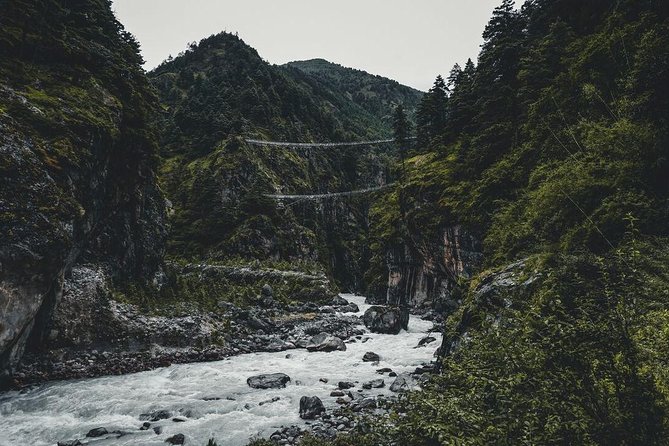
From Namche, you walk 10 kilometers to Tengboche, at 3,870 meters. The scheduled walking time is five to six hours.
Tengboche is one of the route’s cultural highlights because the itinerary includes Tengboche Gompa. The monastery gives the day more character than a simple mountain transfer. You get a chance to connect the high peaks with the Sherpa culture and Buddhist traditions of the area.
The elevation gain is steady rather than extreme on paper, but the route is now well above 3,500 meters. Walk at the guide’s pace and do not burn energy early in the day. The stronger you feel at Tengboche, the better prepared you will be for Dingboche.
Day 6: Tengboche to Dingboche, 9 kilometers
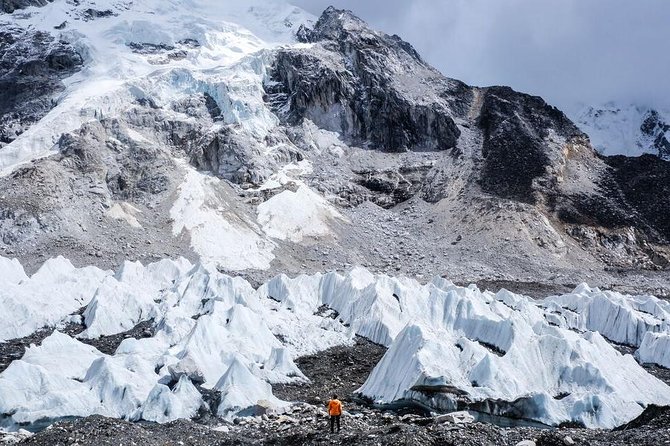
The sixth day covers about 9 kilometers to Dingboche, at 4,360 meters, in five to six hours. This is an important transition because you spend the next night above 4,000 meters.
The itinerary includes a stop around the Dingboche and Chhukhung Path area. The details of that stop are not fully explained, so you should ask whether it is a brief route point, a side walk, or part of the main trail.
Dingboche is a practical place to pause before the route climbs toward Lobuche. At this altitude, a moderate distance can feel much harder than the numbers suggest. Your guide’s role becomes especially important here, and the positive comments about Tony and Tika focus on patience, helpfulness, and good manners.
Day 7: A second acclimatization day in Dingboche
The second acclimatization day takes place at about 4,360 meters. This is well timed. You have already gained a lot of height since Lukla, and the next nights will be at nearly 5,000 meters and above.
Again, the exact program is not specified. Confirm how the day is organized and how much walking is expected. You should not assume that an acclimatization day means complete rest, but you should expect a slower schedule than a normal trekking day.
This is also a good point to review your personal supplies. Since meals and drinks are excluded, you will be responsible for paying for food and beverages throughout the route. Keep some money available for those costs and for personal needs in the mountain lodges.
Day 8: Dingboche to Lobuche, 7 kilometers
The route now climbs to Lobuche, at 4,940 meters. The day covers about 7 kilometers and takes five to six hours.
The shorter distance does not make this an easy day. Altitude is now the main challenge, and the air is thinner than it was at Namche or Tengboche. A slow, steady pace is more useful than speed.
Lobuche is a key staging point for the biggest day of the trek. You are close to Gorak Shep and Everest Base Camp, but you should resist treating the next day as a quick outing. The itinerary combines the walk to Gorak Shep with a visit to Base Camp, so rest matters.
Day 9: Lobuche to Everest Base Camp via Gorak Shep
This is the day many people have been waiting for. You walk from Lobuche to Gorak Shep, at 5,170 meters, then continue to Everest Base Camp at 5,364 meters before returning to Gorak Shep. The full distance is listed as 13 kilometers, taking six to seven hours.
Reaching Base Camp is the high point of the route, but the setting is not a conventional summit or a single grand platform. It is a serious high-altitude destination surrounded by enormous peaks and glacial terrain. The draw is the sense of reaching the foot of the world’s highest mountain by trekking there under your own power.
The return to Gorak Shep is part of the challenge. At this height, every kilometer costs more energy. Keep your expectations realistic and follow your guide’s advice about pace, hydration, and rest.
The itinerary includes a stop identified as Everest Camp II, though the program does not explain whether this means a specific viewpoint or a mapped route point. Ask for clarification if that detail matters to you.
Day 10: Kala Patthar and the long walk to Pheriche
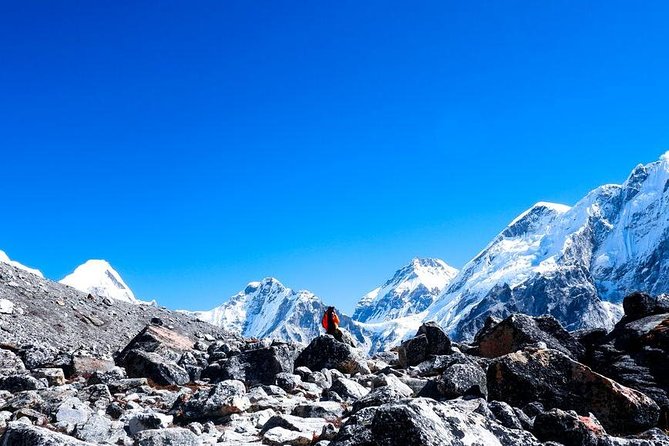
Day ten begins with the route’s most famous viewpoint: Kala Patthar, at 5,545 meters. The schedule calls for a pre-dawn climb, followed by a descent to Pheriche, at 4,288 meters. The total walking distance is listed as 16 kilometers, taking seven to eight hours.
The early start is worthwhile because Kala Patthar provides the clearest stated view of Everest, the South Col, Nuptse, and the lower glaciers. This is where the route’s mountain drama is most concentrated, and the high viewpoint may be more visually rewarding than Base Camp itself.
It is also the most demanding day in the schedule. You climb to the highest point of the trek, descend, and continue for a long distance to Pheriche. You need good physical conditioning and a willingness to walk before sunrise in cold conditions.
The reward is a major altitude drop by the end of the day. Sleeping at Pheriche instead of Gorak Shep should feel easier, but you will still have completed one of the hardest sections of the trip.
Days 11 and 12: Returning to Namche and Lukla
Day eleven takes you from Pheriche back to Namche Bazaar. The itinerary gives a distance of 20 kilometers and a walking time of six to seven hours. That is a long day, even though you are descending overall.
Day twelve continues from Namche to Lukla, covering 19 kilometers in six to seven hours. These distances make the return leg more than a gentle stroll downhill. Tired legs, repeated descents, and the need to keep to the flight schedule can make these final walking days demanding.
The benefit is that the route does not add extra nights in the mountains. You reach Lukla in time for the flight back to Kathmandu on day thirteen. Since the package depends on air service between Kathmandu and Lukla, weather remains an important factor. If poor weather causes the experience to be canceled, you are offered another date or a full refund.
Day 13 and 14: Back to Kathmandu and departure
Day thirteen is reserved for the flight from Tenzing-Hillary Airport to Tribhuvan International Airport. The final day is departure from Kathmandu.
The package includes airport pickup and private transportation, but the exact departure transfer arrangements should be confirmed during your preparation session. The schedule is compact, so avoid adding an international flight connection too tightly around the Lukla return unless the operator confirms the timing.
The final preparation session after arrival is a useful feature if it includes a proper equipment and trip check. Ask what is covered before you commit, especially since trekking equipment and insurance are not part of the price.
Tea houses, meals, and what you still pay for
Ten nights of tea house accommodation are included. Tea houses are the standard lodging style for this route, and their inclusion keeps the package simple and affordable.
The information provided does not specify room standards, bathroom arrangements, meal menus, or whether any Kathmandu hotel nights are included. You should ask those questions directly. The package is described as a budget option, so do not expect the same arrangements as a luxury mountain trip.
Food is the biggest financial detail to plan around. Breakfast, lunch, and dinner are all excluded, as are drinks and beverages. That means you will pay as you go for the basic fuel needed to complete each walking day.
The package also excludes an additional porter. If you want help carrying your luggage, ask about the cost before booking. Equipment rental or purchase is also your responsibility, and the operator does not include insurance.
Guide support and group size
The maximum group size is 15 people. That is a reasonable limit for a long mountain route. A group of this size can offer company during difficult stretches without becoming unwieldy, though the personal attention you receive will depend on the guide-to-group ratio.
The most specific praise is directed at the staff. Jiban is described as responsive and attentive during trip coordination. Tony and Tika are praised for patience, practical help, polite behavior, and the ability to guide people through the harder parts of the route.
Those qualities matter more than flashy promises. A guide who helps you develop better trekking habits can make a real difference on the climb to Dingboche, the approach to Base Camp, and the early start for Kala Patthar.
The package includes a certificate, a medical kit, taxes, and preparation sessions. These are useful extras, but the guide remains the most important part of the service. Confirm who will lead your group and how many guides or assistants will be present.
Who should book this trek?
This package suits you if you want the classic Everest Base Camp route at a low starting price and are comfortable managing some costs yourself. It is also a good fit if you value a guided group trek, want airport transfers included, and prefer an itinerary with two acclimatization days.
You need a moderate level of physical fitness. The route includes days of five to eight hours, plus 19 and 20 kilometer return days. The maximum altitude is 5,545 meters at Kala Patthar, and the schedule includes a night at Gorak Shep above 5,000 meters.
I would think twice if you want an all-inclusive holiday, dislike early starts, or have not planned for equipment and insurance. The $400 price is attractive, but it is only a starting point once food, drinks, gear, insurance, tips, and personal expenses are added.
The cancellation terms are simple. Cancel at least 24 hours before the experience begins for a full refund. Cancellations or changes within 24 hours are not refunded or accepted. Poor weather cancellation brings the choice of another date or a full refund.
Should you book the $400 Everest Base Camp trek?
Book it if you want the full Everest Base Camp route, can handle long high-altitude walking days, and are prepared to pay for meals and gear separately. The included Lukla flights, tea house nights, guide, transfers, medical kit, taxes, and acclimatization days give the package solid value.
Before paying, confirm the exact food budget, porter options, equipment arrangements, guide staffing, tea house details, and flight contingency plan. If those points are clear, this is a practical entry into one of Nepal’s most famous treks, with the greatest payoff arriving at Kala Patthar rather than simply checking Base Camp off your list.
FAQ
How long is the Everest Base Camp budget trek?
The experience lasts approximately 14 days, from arrival in Kathmandu through final departure.
What is the price of the trek?
The listed price is $400 per person.
Are Kathmandu to Lukla flights included?
Yes. Round-trip flights between Kathmandu and Lukla are included.
Is airport pickup provided?
Yes. Private transportation for pickup and drop-off is included.
Is accommodation included?
Yes. The package includes 10 nights of tea house accommodation.
Are meals included?
No. Breakfast, lunch, dinner, drinks, and beverages are excluded.
Is a trekking guide included?
Yes. An English-speaking trekking guide is included.
What is the maximum group size?
The group can have a maximum of 15 participants.
Do I need travel insurance?
Insurance is not included in the package. You must arrange and pay for it separately.
What is the cancellation policy?
You receive a full refund if you cancel at least 24 hours before the experience begins. Cancellations or changes made within 24 hours are not refunded or accepted. If poor weather causes cancellation, you are offered another date or a full refund.
Just added around Kathmandu
- Nagarkot Sunrise With 7 UNESCO World Heritage Private Tour★ 5.0 · 3 reviews
- Private Shopping Tour in Kathmandu★ 5.0 · 3 reviews
- Mount Everest Scenic Flight 50 Minutes★ 5.0 · 3 reviews
- Kathmandu: Nightlife and Pub Crawl Tour★ 5.0 · 3 reviews
- Kathmandu: Nagarkot, Bhaktapur, Doleswor & Sanga Statue Tour★ 5.0 · 3 reviews
- Momo Cooking Class -The Art Of Making MoMo with Home Chef★ 5.0 · 3 reviews
- Everest Experience Trek 6 Day Hiking Adventure★ 5.0 · 3 reviews
- Kathmandu: Momo Making Class with a Local Chef★ 5.0 · 3 reviews
Kathmandu Tours, compared.


Private Kathmandu Sightseeing Tour | UNESCO World Heritage sites
Read our review →
Everest Base Camp Helicopter Tour landing at Everest View Hotel
Read our review →

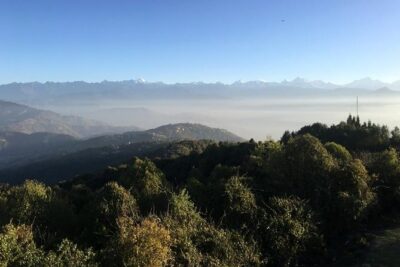
Nagarkot Sunrise View and Day Hiking from Kathmandu
Read our review →
Full Day 7 UNESCO Tour with Lunch – Private/Group
Read our review →