
Reviewed · ANNAPURNA BASE CAMP TREKS
Pokhara: 7-Day Annapurna Base Camp Trek via Ghandruk
The sunrise is worth the stairways. This seven-day trek from Pokhara reaches Annapurna Base Camp at 4,130 meters, then exits through Ghandruk village. I like the changing scenery, from Gurung villages and terraced fields to bamboo forests and high alpine peaks, and I especially like the sunrise inside the Annapurna Sanctuary. The $179 price also covers permits, tea-house lodging, meals under the selected option, guide services, local transport, and basic trekking gear.
The main caution is organization. The walking route is excellent, but you should confirm the exact return transport, meal plan, porter cost, and overnight stops in writing before you set off. One poor account describes extra charges for Wi-Fi and drinking water, an unexpectedly early finish, and a less comfortable return by bus after a Jeep was not arranged.
In This Review
- Key points to know before booking
- Why this Pokhara to ABC route works
- Day 1: Kande to Australian Camp, Pothana, and Landruk
- Day 2: Landruk, Chhomrong, and Sinuwa
- Day 3: Sinuwa through Bamboo and Dovan to Deurali
- Day 4: Deurali to MBC and Annapurna Base Camp
- Sunrise inside the Annapurna Sanctuary
- Day 5: The long descent from ABC
- Day 6: Sinuwa to Chhomrong and Ghandruk
- Day 7: Ghandruk to Birethanti and Pokhara
- What the $179 price really covers
- Who should book this trek?
- Should you book the Annapurna Base Camp trek via Ghandruk?
- FAQ
- How long is the Annapurna Base Camp trek from Pokhara?
- What is the highest point on the trek?
- Is the trek private?
- What languages can the guide speak?
- Is travel insurance included?
- Is a porter included?
Key points to know before booking
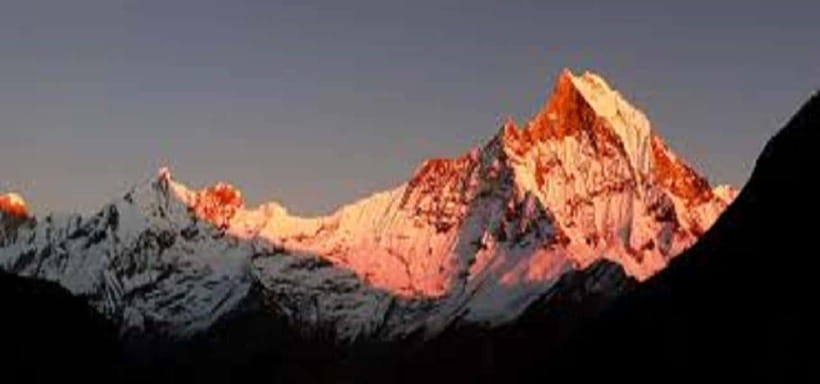
- Sunrise at 4,130 meters: You spend the night at Annapurna Base Camp, so you can step outside for a dawn view of Annapurna I, Machapuchare, and Hiunchuli.
- A real route through mountain villages: The trek begins at Kande, passes Australian Camp, Pothana, Landruk, Chhomrong, Sinuwa, and Ghandruk.
- Forests change as you climb: Lower trails pass through bamboo and rhododendron woods, while the route above Deurali becomes open, cold, and alpine.
- Private group format: Pickup is offered from hotels in Pokhara Lakeside, Sarangkot, and Pokhara International Airport, with English, Hindi, or Nepali guiding.
- A demanding seven days: The hardest stretch is the climb from Sinuwa through Deurali to Machapuchare Base Camp and ABC, followed by a long descent the next day.
- Good price, but check the fine print: Travel insurance, personal purchases, emergency rescue, and a porter if needed are not included.
Why this Pokhara to ABC route works
This trek packs a great deal into one week. You get village life, stone stairways, river valleys, thick forest, snow peaks, and one night in the high mountains. It is not a gentle scenic walk, but it gives you a strong taste of the Annapurna region without requiring a much longer itinerary.
The route also has useful variety. The first days feel green and settled, with farms and Gurung communities. Higher up, the trail follows the Modi Khola valley and becomes more enclosed by forest. Near Machapuchare Base Camp, trees thin out and the mountains take over.
I like the way the schedule handles the main goal. You reach ABC on day four, sleep there, and see the sunrise before descending. That timing matters because the morning view is one of the main reasons to come, and you are not trying to reach base camp and leave again in the dark.
The price of $179 is appealing for a private seven-day trek. Permits, government and local taxes, accommodation in basic tea houses or lodges, a registered guide, transportation connected with the trek, and a first aid kit are listed as included. Meals are included under the selected option, so check which booking choice you are buying rather than treating every package as identical.
More Annapurna Base Camp Treks:
- Kathmandu/Pokhara: 5-Day Annapurna Base Camp (ABC) Trek
★ 4.9 · 72 reviews - Private 7 – Day Annapurna Base Camp Trekking
★ 5.0 · 50 reviews - Annapurna Base Camp Trek (8 days)
★ 5.0 · 45 reviews
Day 1: Kande to Australian Camp, Pothana, and Landruk
Your first morning begins with about an hour by road from Pokhara to Kande at 1,770 meters. Pickup is available from the Lakeside and Sarangkot areas, as well as Pokhara International Airport, and the guide is scheduled to arrive five minutes early with your name and booking details.
From Kande, the trail climbs toward Australian Camp and Pothana. This is a pleasant opening because you begin with ridge views before entering more wooded paths. You get an early look at the Himalayan peaks without immediately facing the huge stair climbs found later.
The walk takes about four to five hours and ends at Landruk, at 1,565 meters. The village setting and terraced fields give you a first feel for life in the hills. Landruk is lower than Kande, which makes this a relatively forgiving first night, though the day still includes a descent after the ridge walking.
The word tea house can mean simple accommodation, not hotel comfort. Expect a basic lodge setting, and keep warm clothing and a small flashlight close at hand. The supplied packing advice also sensibly calls for cash, because personal purchases such as drinks and snacks are not covered.
Day 2: Landruk, Chhomrong, and Sinuwa
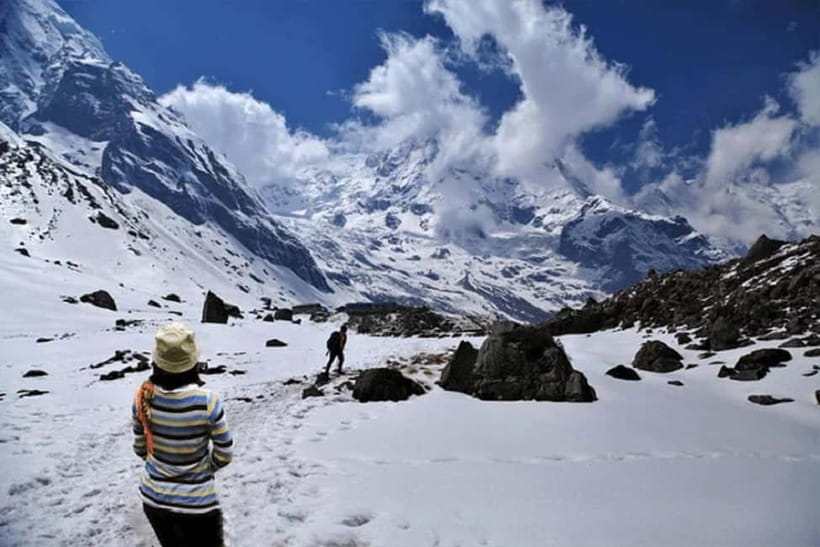
Day two is longer, with six to seven hours of walking. You first descend toward the river, then climb to Chhomrong, one of the important settlements on the route.
Chhomrong is a key point because the trail turns more firmly toward the Annapurna Sanctuary. The route includes stone steps, and this is where you begin to understand that distance alone does not tell the full story of the trek. A short section can feel slow when every few minutes brings another stairway.
After Chhomrong, you continue through forest trails to Sinuwa at 2,340 meters. Bamboo and rhododendron become more prominent, and the trail feels more enclosed than it did around Australian Camp and Landruk.
This is a day to pace yourself. You do not need to rush into Chhomrong, and you should tell your guide if the climb is taking more out of you than expected. The itinerary is private, so the useful advantage is flexibility within the planned route, not a license to ignore altitude or fatigue.
Day 3: Sinuwa through Bamboo and Dovan to Deurali
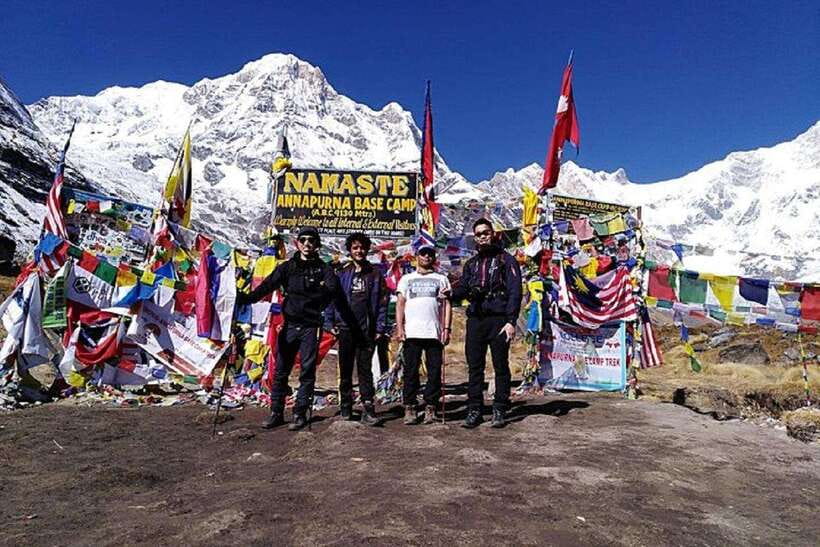
The third day takes you deeper into the Modi Khola valley. You pass Bamboo and Dovan before reaching Deurali at 3,230 meters, with six to seven hours on foot.
The forest is the star here. Bamboo and rhododendron create a very different mood from the open ridges of the first day. You cross rivers and continue along a trail that gradually feels more remote, though the route still uses tea houses and lodges for overnight stops.
Deurali is an important staging point before the high section. At this altitude, temperatures can drop sharply, and you should have your jacket, warm layers, and dry change of clothes ready rather than buried in your main bag.
The day can feel long because the climb is steady. The best approach is simple: walk at a pace that lets you speak in short sentences, drink regularly, and let the guide know early if you feel unwell. A reasonable level of fitness is required, and the operator specifically warns that this trek can be physically demanding.
More Treks and Hikes:
- Poon hill Trek 3 days
★ 5.0 · 176 reviews - Trekking in Annapurna/Langtang/Everest/Upper Mustang regions
★ 5.0 · 161 reviews - Pokhara: 4-Day Ghorepani, Poonhill & Ghandruk Mountain Trek
★ 5.0 · 132 reviews - Ghorepani – Poon Hill Trek 3N-4D
★ 5.0 · 125 reviews
Day 4: Deurali to MBC and Annapurna Base Camp
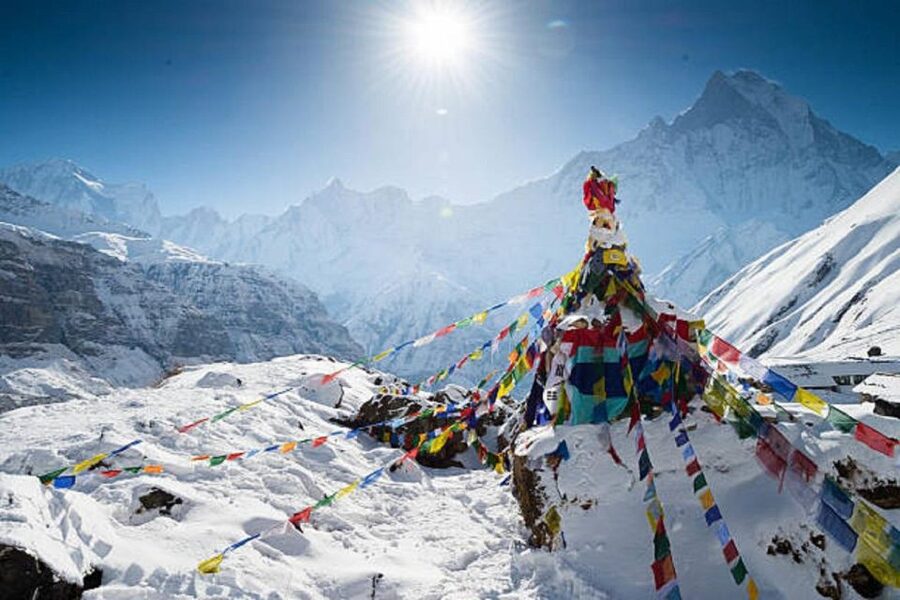
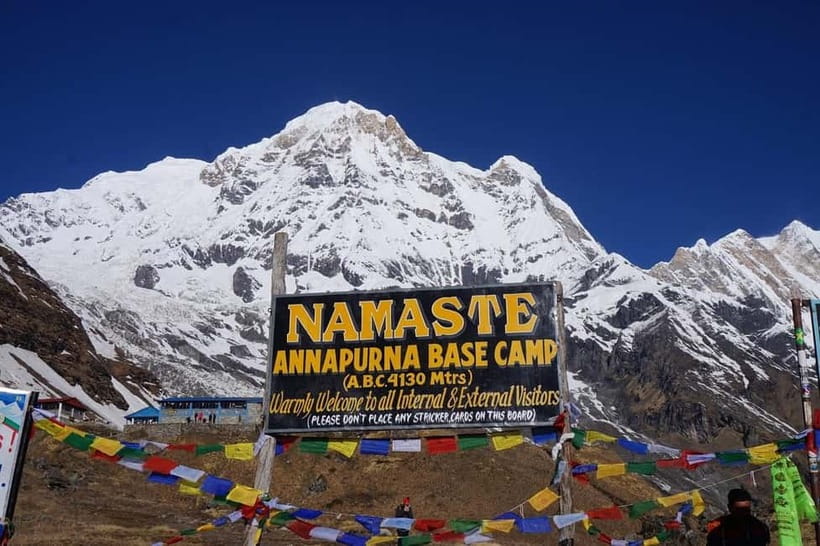
Day four is the dramatic center of the trek. You leave the forest and enter alpine terrain, passing Machapuchare Base Camp at 3,700 meters before continuing to Annapurna Base Camp at 4,130 meters.
The walk is listed at five to six hours, but the altitude makes this section feel harder than the numbers suggest. The route rises through increasingly open ground, with glacier and peak views replacing the close forest. You are heading into the Annapurna Sanctuary, a natural amphitheater surrounded by snow-covered mountains.
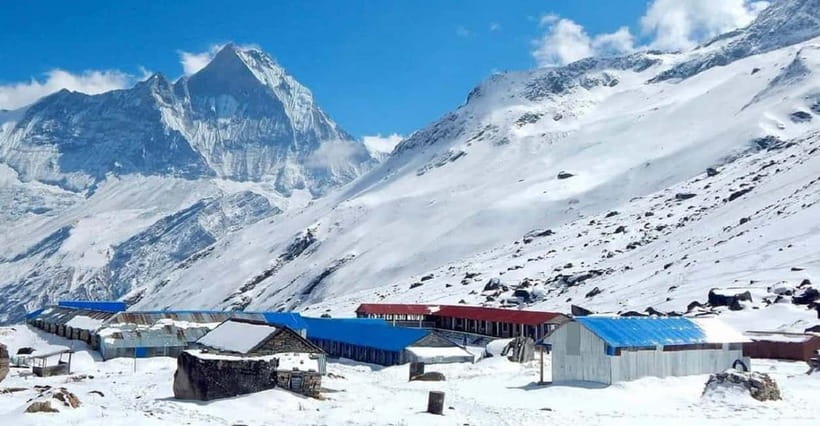
At MBC, Machapuchare becomes especially important to the view. The peak is also called Fishtail, and the route gives you a close mountain setting before the final climb to ABC. Annapurna I, Hiunchuli, Machapuchare, and surrounding peaks form the main visual reward.
Reaching ABC is not just a photo stop. You spend the night at 4,130 meters, which allows you to see the site in the evening and again at dawn. Conditions are basic and cold, so this is the night to use the sleeping bag if one has been provided or arranged, keep your clothes dry, and avoid assuming that blankets alone will be enough.
Sunrise inside the Annapurna Sanctuary
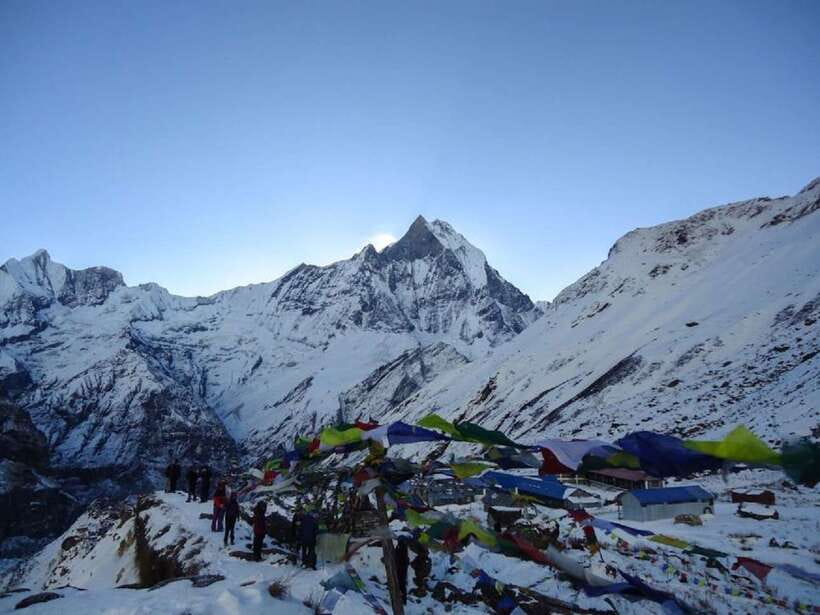
The sunrise is the strongest part of the itinerary. You wake inside the high mountain amphitheater rather than viewing it from a lower village, and the first light reaches the peaks around you.
I like this arrangement because the early start is built into the overnight plan. You do not need to make a predawn climb from below, though the cold at ABC will still be serious. A warm jacket, hat, gloves if available, and shoes with a firm grip are sensible choices from the supplied packing list.
Your camera will have plenty to do, but do not reduce the moment to a quick photograph. The appeal is the scale: Annapurna I, Machapuchare, Hiunchuli, and the surrounding peaks rise close around the sanctuary. Weather can change quickly, so allow yourself to appreciate the view even if the morning is not perfectly clear.
Day 5: The long descent from ABC
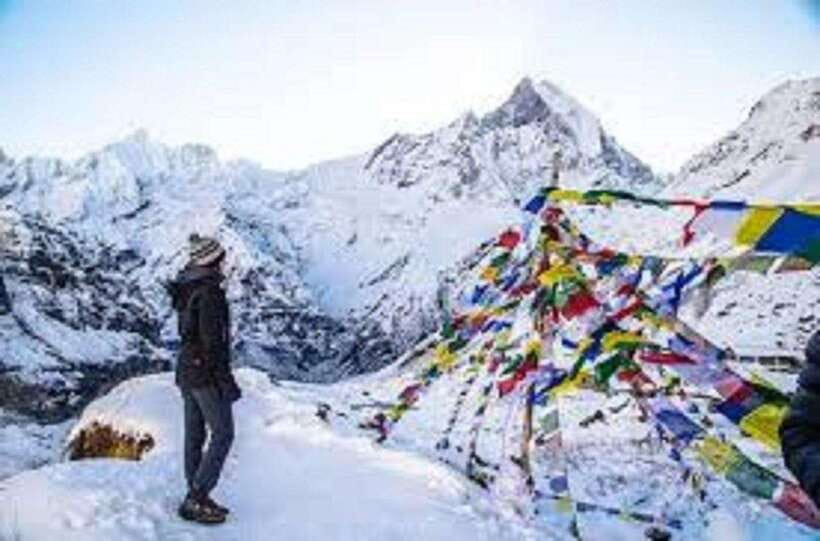
After sunrise, you retrace the route through MBC, Deurali, and Dovan, continuing toward Bamboo or Sinuwa depending on your pace. The walking time is six to seven hours.
This is one of the most demanding days in a different way. Descending from 4,130 meters is good for altitude, but your knees and feet absorb a lot of work. Stone steps that seemed manageable on the way up can feel punishing on the way down.
The stated overnight stop may be Bamboo or Sinuwa. That flexibility makes sense on paper, since walking speed varies, but it is also something you should confirm before departure. You want to know how much of the descent is planned and what happens if you arrive earlier or later than expected.
Keep water and snacks accessible. Personal drinks, snacks, and beverages are not included, and the available feedback specifically raises concern about charges for drinking water and Wi-Fi at lodges. Ask your guide what is included before ordering, and carry enough Nepalese cash for small purchases.
Day 6: Sinuwa to Chhomrong and Ghandruk
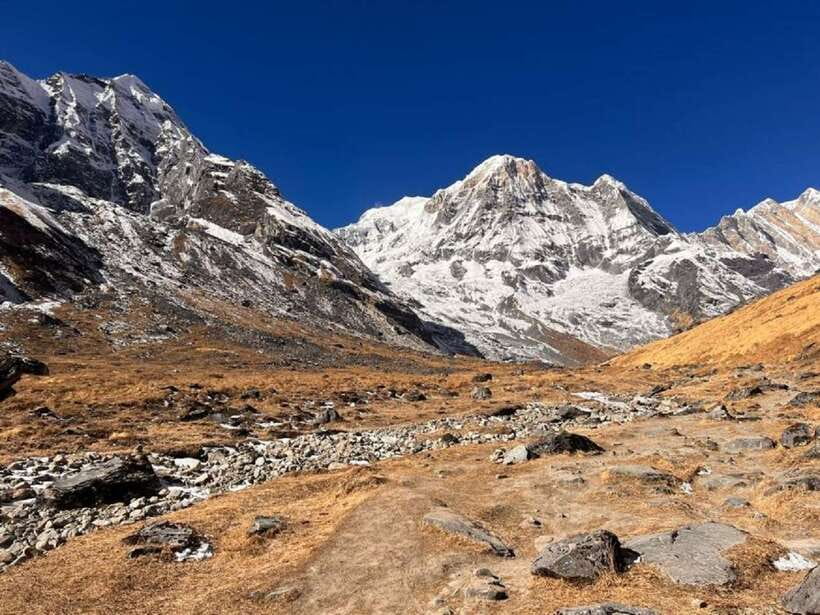
Day six returns toward Chhomrong, then follows a scenic village trail to Ghandruk at 1,940 meters. The walk takes five to six hours.
Ghandruk is a fine choice for the final mountain night. It is known here for Gurung culture, traditional village life, and broad mountain views. After the stark high-altitude setting at ABC, the return to fields, homes, and village paths gives the trip a satisfying change of pace.
This is also the point that makes the route feel more than a simple up-and-down climb. The final approach through Ghandruk adds cultural interest and gives you another view of the mountain country from a settled hillside village.
Still, be clear about the route before paying. The promotion describes a return through Ghandruk, but one unhappy account says the traveler expected a more varied village-to-village journey and felt the actual arrangement was effectively an out-and-back. Ask for the precise daily route and lodge names, not just the headline.
Day 7: Ghandruk to Birethanti and Pokhara
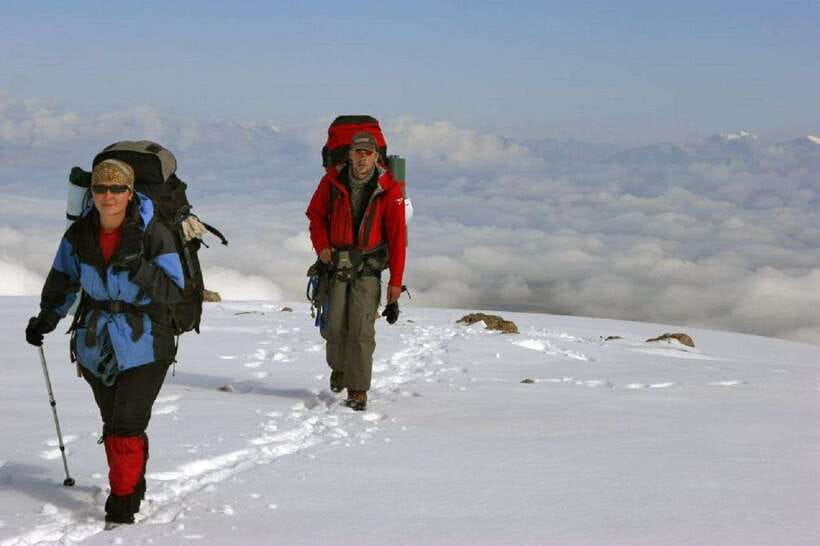
The final walking section takes three to four hours from Ghandruk to Birethanti at 1,025 meters. You descend through villages and farmland, then drive about an hour back to Pokhara.
This is a manageable finish after the long descent from ABC, though downhill walking can still be tiring. The road transfer matters more than it may seem. After seven days on foot, a safe and comfortable vehicle is part of the service you are paying for.
One account describes a problem when a Jeep was not arranged for the return and a bus was used instead, with serious concern about road safety. That is a practical warning, not a reason to dismiss the route. Confirm the return vehicle, the pickup point, and what happens if you finish the walking section earlier than scheduled.
What the $179 price really covers
At $179 per person, this is a low-cost way to arrange a private ABC trek. The value is strongest if your selected option truly includes the stated meals, permits, guide, accommodation, trek transport, and equipment.
The guide and porter wording needs careful clarification. Guide and porter food, lodging, insurance, salary, transport, and equipment are listed among the inclusions, but a porter is also listed as an extra at $20 per day if needed. Ask whether a porter is included in your exact package or only available as an add-on.
Travel insurance is mandatory and is not included. Emergency rescue is also not included, even though it is available if needed. At this altitude, insurance with trekking and helicopter rescue coverage is not a luxury detail. It is part of planning responsibly.
Basic gear such as a trekking stick and sleeping bag can be supplied as needed, along with a first aid kit. Do not assume every item is automatically waiting for you. Confirm what size and equipment are available before leaving Pokhara.
Who should book this trek?
I would recommend it to a fit hiker who wants the main Annapurna Base Camp highlights in seven days and likes having a private guide. It suits someone who values a compact schedule, mountain villages, forest trails, and a guaranteed night near the base camp more than polished lodging.
It is less suitable if you want relaxed walking days or a fully predictable hotel-style service. Six to seven-hour days, repeated stone steps, cold conditions, and a night at 4,130 meters demand preparation.
You should also be comfortable with simple tea houses and extra costs for personal purchases. Pack cash, warm clothes, sturdy hiking shoes, a flashlight, hand sanitizer or tissues, and a copy of your passport. The passport copy must be submitted at least one day before the trek so permits can be arranged.
The private format is useful if you want to discuss pace and comfort with your guide. English, Hindi, and Nepali guiding is available. Pickup can be arranged from the main Pokhara hotel areas and the international airport, which is helpful if you are joining the trek soon after arriving.
Should you book the Annapurna Base Camp trek via Ghandruk?
Book it if the walking route is your main priority and you confirm the service details first. The mountain section is genuinely rewarding, the sunrise plan is excellent, and the combination of Gurung villages, forest, and high peaks gives you plenty for seven days.
Before booking, request a written day-by-day plan that confirms the overnight stops, meal option, porter arrangement, Wi-Fi and water charges, and return vehicle. If the company answers clearly, the $179 price can be strong value. If the answers are vague, choose a provider with firmer transport and cost communication, even if the price is higher.
Free cancellation up to 24 hours before departure and reserve-now, pay-later terms make the booking less rigid. They do not replace good preparation, insurance, or an honest conversation about your fitness. The views may be unforgettable, but your knees and wallet still deserve a plan.
FAQ
How long is the Annapurna Base Camp trek from Pokhara?
The trek lasts seven days. Walking times range from three to seven hours per day, with a drive from Pokhara to Kande at the beginning and a road transfer from Birethanti to Pokhara at the end.
What is the highest point on the trek?
Annapurna Base Camp is the highest overnight point at 4,130 meters. Machapuchare Base Camp is reached earlier at 3,700 meters.
Is the trek private?
Yes. The experience is arranged for a private group rather than a shared group.
What languages can the guide speak?
Guiding is available in English, Hindi, and Nepali.
Is travel insurance included?
No. Travel insurance is mandatory but must be arranged separately. Emergency rescue services are available if needed but are not included in the price.
Is a porter included?
The information is not fully clear. Porter services are listed as available for $20 per day if needed, while guide and porter support costs are also described among the inclusions. Confirm your exact package before booking.
More 7-Day Experiences
- Annapurna Base Camp Trek from Pokhara 7 Days
★ 5.0 · 19 reviews - 7-Day Trek to Annapurna Base Camp from Pokhara
★ 5.0 · 12 reviews - Pokhara: 7-Day Annapurna Base Camp Trek & Natural Hot Spring
★ 5.0 · 11 reviews - Annapurna Base Camp 7 Days Trek from Pokhara
★ 5.0 · 8 reviews
Just added around Pokhara
- Double Dare: Tandem Bungee Adventure★ 4.3 · 3 reviews
- Exhilarating Pokhara-Kathmandu Bus Journey Experience★ 3.5 · 3 reviews
- 3 Day Australian Camp Dhampus Ghandruk Easy Trek in Pokhara★ 3.5 · 3 reviews
- Paragliding in Pokhara★ 5.0 · 3 reviews
- Seti George and Thrilling Suspension Bridge Tour at Pokhara★ 4.5 · 3 reviews
- Overnight Dhampus Australian Camp Easy Hiking from Pokhara★ 5.0 · 3 reviews
- Full Day Entire Pokhara Tour by Car with Guide★ 4.5 · 3 reviews
- 5 Days Mardi Himal Trek.★ 5.0 · 3 reviews
Annapurna Base Camp Treks, compared.



Kathmandu to Annapurna Base Camp (ABC) 5-Day Trek
Read our review →

Browse the lists this tour appears in