
Reviewed · KATHMANDU TOURS
Spiritual Journey to Kailash Manasarovar 16 Days Overland Trip
Sacred mountains demand time and stamina. This 16-day overland journey from Kathmandu to Mount Kailash and Lake Manasarovar combines Hindu and Buddhist pilgrimage sites, Tibetan border crossings, a three-day Kailash Kora, and practical support at high altitude. I like the way the trip begins with Kathmandu’s major shrines before heading north, and I also like the small-group format, capped at 10 people.
The package includes private transport, Tibet permits and visa fees, vegetarian meals, accommodation, daily health checks, and an oxygen cylinder for emergencies. That gives the trip useful structure, especially in a remote region. The main caution is physical: the Kora reaches the 5,630-meter Dolma La Pass, and the itinerary includes several long driving days. Moderate fitness is the minimum, and altitude can affect even fit people.
In This Review
- Key Points About This Kailash Pilgrimage
- What the 16 Days Really Feel Like
- Kathmandu’s Sacred Opening: Pashupatinath and the Aarti
- Visa Day and Kathmandu’s Four Major Heritage Sites
- Bhaktapur, Doleshwor, and Nepal’s Giant Shiva Statue
- The Road to Tibet: Syabrubesi, Gyirong, and Saga
- Lake Manasarovar and the First View of Kailash
- Darchen: Preparing for the 4,575-Meter Kora
- Day One of the Kora: Darchen to Dirapuk
- Dolma La Pass: The Hardest Day of the Pilgrimage
- Zuthulphuk to Darchen and the Return Road
- Crossing Back to Nepal and Flying Home
- What the $3,999 Price Includes
- Who Should Book This Trip?
- Booking Details and Cancellation Terms
- FAQ
- Where does the 16-day Kailash Manasarovar trip begin?
- How much does the trip cost?
- Are Tibet visa and permit fees included?
- How far in advance should I book?
- What passport requirements apply?
- How large is the group?
- Are meals included?
- Are horse and pony fees included during the Kora?
- How demanding is the physical activity?
- Should You Book the Kailash Manasarovar Journey?
Key Points About This Kailash Pilgrimage
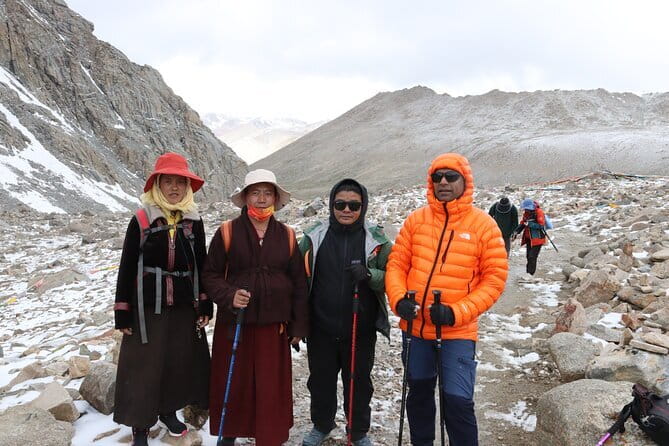
- The Kailash Kora takes three days: You walk from Darchen to Dirapuk, cross Dolma La Pass, continue to Zuthulphuk, and return to Darchen.
- The trip begins and ends in Kathmandu: You get several days of cultural sightseeing before crossing into Tibet, then return through Rasuwa Gadhi.
- Tibet permits and visa fees are included: You must book at least 20 days ahead and send a passport photo within two days of confirmation.
- The highest challenge is Dolma La Pass: This section is the toughest physical day, lasting about nine hours.
- Meals are full board and vegetarian: The package includes 15 breakfasts, 15 dinners, and 11 lunches.
- Support is built around altitude care: Blood pressure and blood oxygen are checked daily, with an oxygen cylinder available if needed.
What the 16 Days Really Feel Like
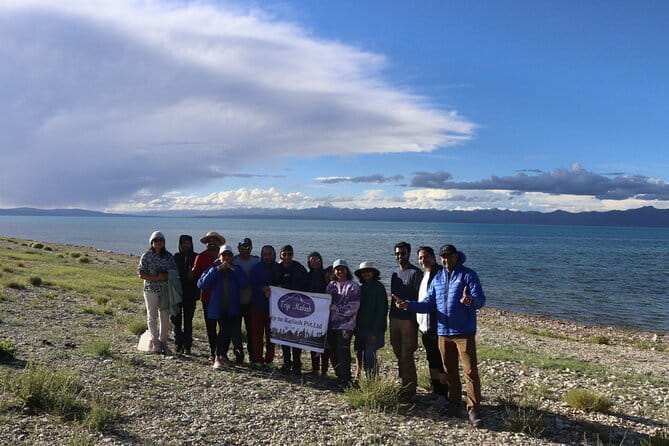
This is not a quick sightseeing holiday. It is a pilgrimage with a long approach, two international border procedures, basic conditions during the Kora, and plenty of time spent in vehicles. You spend the opening days in Nepal, travel into Tibet, reach the sacred sites, complete the circumambulation of Kailash, and then retrace much of the route.
The fixed departure dates make planning easier. The listed 2024 departures were May 12, June 10, July 8, August 11, and September 9. Since departure schedules can change, confirm the current dates before paying.
The group size is limited to 10 people, which is a useful middle ground. You are not alone in a demanding place, but the group should still be small enough for guides to keep track of people and respond to individual needs. A private trip can also be arranged for groups of more than five.
The strongest praise goes to the support team, especially Kashyap. Direct feedback describes him as a steady source of help and motivation, with close attention to comfort and individual needs. The chef, porter, and guide team also receive warm praise for being thoughtful and attentive. On a high-altitude trip, that personal care matters more than polished hotel service.
A few more trips worth weighing up before you book
- Everest Base Camp Trek – 14 Days
★ 5.0 · 1,499 reviews - Private Kathmandu Sightseeing Tour | UNESCO World Heritage sites
★ 5.0 · 756 reviews - Everest Base Camp Helicopter Tour landing at Everest View Hotel
★ 5.0 · 668 reviews
Kathmandu’s Sacred Opening: Pashupatinath and the Aarti
The first evening begins at Pashupatinath Temple, one of Nepal’s most important Hindu pilgrimage sites. The visit is timed for the evening aarti beside the Bagmati River, where oil lamps, bells, prayers, and singing create a powerful public ceremony.
You get about two hours here. Admission is listed as free, though the tour later notes that monument entry fees during Kathmandu sightseeing may total about $30. Clarify which sites are covered by the package and which require payment at the entrance.
Pashupatinath is not simply a photo stop. It gives you an early sense of the religious purpose behind the journey. Lord Shiva is central to the temple and to the wider Kailash pilgrimage, so this opening ritual connects Kathmandu with the mountain you will reach later.
Visa Day and Kathmandu’s Four Major Heritage Sites
Day two combines an application visit to the Chinese Visa Centre with a trip to Chandragiri Hills. The visa formalities are an important practical step, not a sightseeing interruption. You should have your passport ready, and the passport must be valid for at least six months.
Chandragiri adds a hilltop view and a change of pace after the paperwork. The schedule allows about three hours, although the admission ticket is not included. Since the day includes administrative work, do not expect a relaxed full-day excursion.
Day three focuses on Kathmandu’s major heritage sites:
- Swayambhunath, often called the Monkey Temple
- Boudhanath Stupa
- Pashupatinath Temple
- Patan Durbar Square
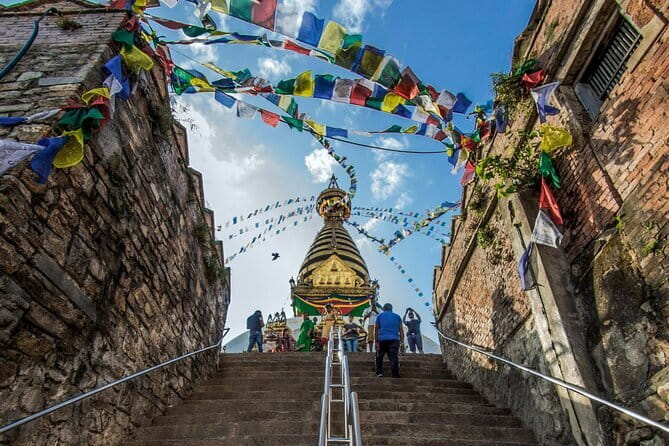
You have about five hours for these places. That is enough for a useful introduction, but not enough for a slow, detailed visit at every site. Boudhanath gives you a strong look at Tibetan Buddhist practice in Nepal, while Patan Durbar Square brings together courtyards, temples, and traditional architecture. Returning to Pashupatinath after the opening aarti may help you see the temple in a more visual, daytime setting.
Bhaktapur, Doleshwor, and Nepal’s Giant Shiva Statue
Day four heads to Bhaktapur, with three distinct stops. Bhaktapur Durbar Square is known for medieval buildings, carved wooden temples, the 55-Window Palace, and Nyatapola Temple. The five-hour schedule allows more breathing room than the previous Kathmandu sightseeing day.
Doleshwor Mahadev is a smaller but highly meaningful religious stop. It is associated with one of the Kedarnath temples and is believed to house a sacred lingam connected with Lord Shiva. If your interest is spiritual rather than purely architectural, this stop may be one of the most personal parts of the Nepal section.
The day also includes the Kailashnath Mahadev Statue at Sanga. At 143 feet, it is described as the tallest Shiva statue in the world and sits on a hill with views across the Kathmandu Valley. The contrast is striking: Bhaktapur offers old urban craftsmanship, while Sanga presents a huge modern religious image.
A different sort of day from Kathmandu:
- Half day cooking class in Thamel kathmandu
★ 5.0 · 607 reviews - Everest Base Camp Trekking
★ 5.0 · 485 reviews - Nagarkot Sunrise View and Day Hiking from Kathmandu
★ 5.0 · 471 reviews - Kathmandu: Full Day 7 UNESCO Tour with Lunch – Private/Group
★ 5.0 · 415 reviews
The Road to Tibet: Syabrubesi, Gyirong, and Saga
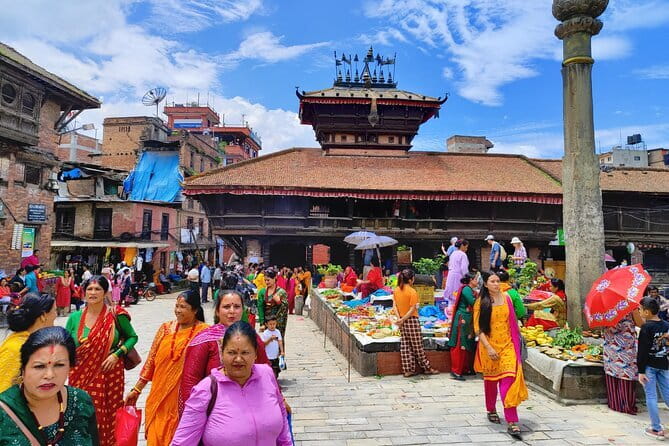
On day five, you collect the Tibet visa and drive from Kathmandu to Syabrubesi, a village at about 1,550 meters. The journey takes around seven hours. This is your first major road day, so keep essentials in a small day bag rather than buried in luggage.
Syabrubesi serves as the gateway toward the Tibetan border. The drive offers Himalayan foothill views, but the important point is that the journey begins to shift from city touring to remote overland travel.
Day six brings the border crossing into Tibet and the drive to Gyirong Town, also written as Kyirong in the itinerary. You have another seven-hour day in the vehicle. This is where permits, immigration, and changing road conditions can affect the schedule, so flexibility is wise.
Gyirong is an acclimatization stop before the route climbs farther onto the Tibetan plateau. You are not yet at the highest part of the trip, but this is the point to start taking altitude symptoms seriously. Rest, follow the guide’s instructions, and use the daily health checks as a real safety tool rather than a formality.
Day seven continues to Saga County, with about six hours of driving. The route passes through wide, rugged Tibetan scenery, traditional villages, nomadic herders, and high mountain views. This is a scenic day, but it is still mostly a road transfer. If you need regular movement breaks, ask the guide early.
Lake Manasarovar and the First View of Kailash
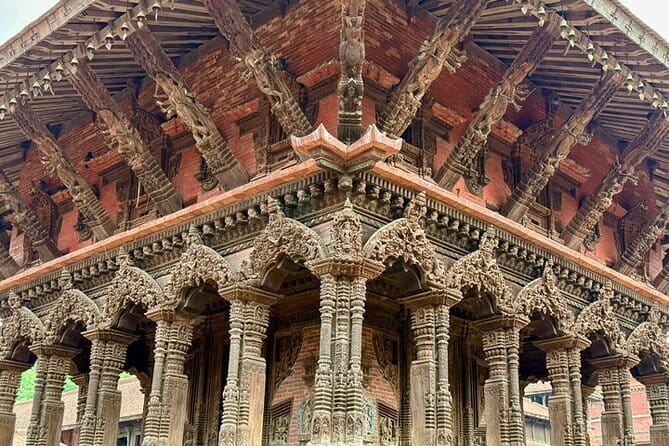
Day eight takes you to the Manasarovar Wetland and Lake Manasarovar, one of the world’s highest freshwater lakes and a sacred place for Hindus and Buddhists. The drive takes around four hours, followed by a puja on the lakeshore.
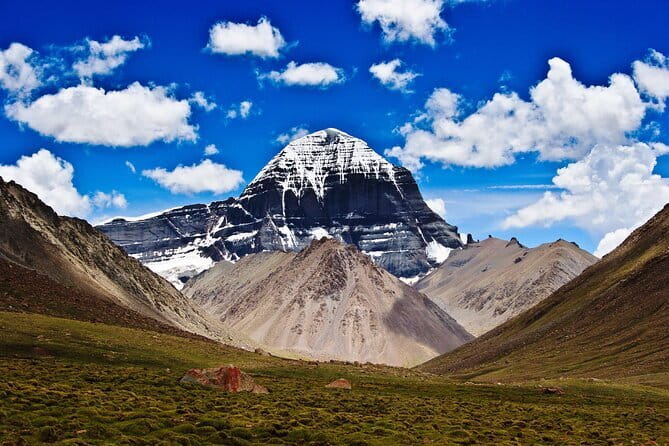
This is one of the emotional centers of the journey. The ritual gives you time to pause before the physical challenge of the Kora. The sight of Mount Kailash from the lake adds a strong visual link between the religious traditions represented across the trip.
The admission ticket for this stop is included. You should still expect simple conditions and fast-changing mountain weather. Keep warm clothing and personal essentials close by, even if the morning began comfortably in the vehicle.
Darchen: Preparing for the 4,575-Meter Kora
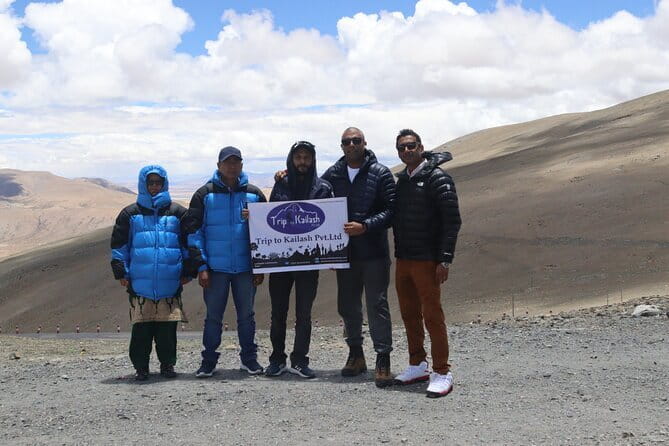
On day nine, you travel to Darchen, the base for the circumambulation of Mount Kailash. The drive takes about seven hours, and Darchen sits at roughly 4,575 meters.
At this height, your body may feel the altitude before the walking begins. The itinerary includes health monitoring and emergency oxygen, but those provisions do not remove the need for caution. Tell the guide immediately about headache, nausea, unusual fatigue, breathlessness, or confusion.
Darchen is a preparation day in practical terms, even though it is listed as a travel day. Organize your walking gear, keep your pack light, and confirm how luggage, porters, horses, or ponies will be handled. Horse and pony fees during the Kora are not included, so budget separately if you think you may need one.
Day One of the Kora: Darchen to Dirapuk
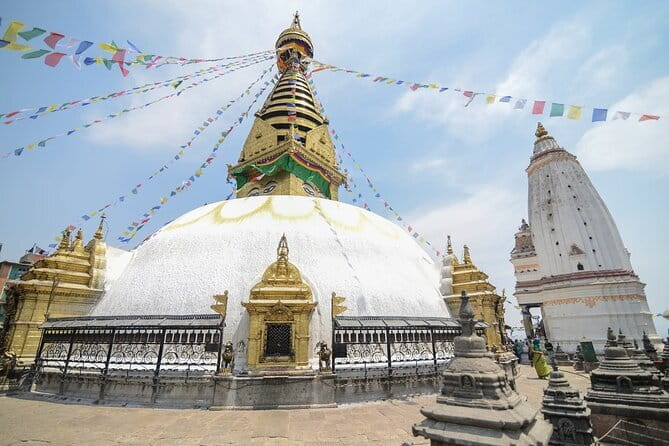
The first walking stage runs from Darchen to Dirapuk and takes about seven hours. The route crosses rough ground with views of Mount Kailash and the surrounding Himalayan peaks.
This is a serious hiking day, not a gentle spiritual walk. The altitude, uneven trail, and duration can make the first stage harder than the distance suggests. Walk slowly and stay with the group. Your goal is not speed. It is reaching the overnight stop in good condition.
Dirapuk Monastery is an important destination because it places you close to the mountain during the first night of the Kora. The setting carries religious meaning, but practical comfort may be limited compared with the 3-star hotels in Kathmandu. The accommodation during the Kora is described as the best available, which signals that conditions may be basic.
Dolma La Pass: The Hardest Day of the Pilgrimage
Day 11 is the demanding section from Dirapuk to Zuthulphuk. The schedule allows about nine hours and includes Dolma La Pass, the highest point of the Kora at roughly 5,630 meters.
This is the day to take the moderate-fitness requirement seriously. The pass is physically taxing, and altitude symptoms can worsen quickly. The group’s small size and daily health checks are valuable here, while the guide’s judgment becomes especially important.
The route offers spiritual meaning and stark mountain scenery, but you should not confuse a sacred purpose with an easy experience. You may need to use a horse or pony, though those fees are extra. Ask about availability and pricing before the walking days begin, rather than waiting until you are already tired.
The descent toward Zuthulphuk brings the second night of the Kora. Even after the pass, you still have a long day behind you. Eat what you can, drink according to the guide’s advice, and protect your energy for the final stage.
Zuthulphuk to Darchen and the Return Road
Day 12 completes the Kora, taking you from Zuthulphuk back to Darchen in about seven hours. Finishing the circuit can feel like a major personal milestone, particularly for people making the journey for religious reasons.
You then retrace the route on days 13 and 14. Day 13 takes you from Darchen to Saga in about six hours. Day 14 continues to Gyirong Town in roughly five hours, where the team assists with the necessary arrangements and you get time to rest.
These days are not filler. After three days on foot at high altitude, a gradual return with overnight stops is far more sensible than rushing straight back to Kathmandu. Still, the repeated drives can feel long, especially after the Kora.
Crossing Back to Nepal and Flying Home
Day 15 includes immigration at the Rasuwa Gadhi border and a drive to Kathmandu of about 265 kilometers. The stated driving time is roughly eight to 11 hours, so plan for a full day with little sightseeing.
You return to Kathmandu before the final morning. Day 16 includes breakfast and airport departure, with about two hours allocated at Tribhuvan International Airport. The tour begins at the same airport, with a listed start time of 10:15 a.m., so confirm your arrival details carefully before booking flights.
What the $3,999 Price Includes
At $3,999 per person, the cost is substantial, but the package includes more than transport and hotels. You receive:
- Private transportation
- Tibet visa and permit fees
- All listed taxes and fees
- Kathmandu accommodation in 3-star hotels
- The best available accommodation during the Kora
- Full-board vegetarian meals
- Kathmandu sightseeing
- A Shivapuri National Park hike
- Daily blood pressure and blood oxygen checks
- An oxygen cylinder for altitude emergencies
The value depends heavily on how much support you want. Permits, border arrangements, remote transport, meals, and high-altitude logistics can be difficult to arrange independently. The price also reduces uncertainty around the Tibet portion.
You should still budget for personal expenses, tips, Kathmandu monument entry fees of roughly $30, and horse or pony use during the Kora. The meal totals are listed as 15 breakfasts, 15 dinners, and 11 lunches, so check exactly where lunch is not supplied.
Who Should Book This Trip?
I would recommend it to someone seeking a structured religious pilgrimage rather than a casual mountain holiday. It suits people who value guidance, group support, vegetarian full-board meals, and a clear route through Nepal and Tibet.
You should be comfortable with long road transfers and basic accommodation during the Kora. You also need enough fitness for seven to nine-hour walking days at extreme altitude. If you have a medical condition or previous altitude problems, get professional medical advice before committing.
This is less suitable if you want independent travel, luxury rooms throughout, flexible dates, or a relaxed sightseeing pace. The fixed departures and permit requirements leave little room for last-minute changes.
Booking Details and Cancellation Terms
Confirmation is provided within 48 hours, subject to availability. Book at least 20 days in advance because Tibet entry permits must be arranged, then send a passport photo within two days of confirmation.
The experience provider is Kaleidoscopic Nepal. Cancellation at least six full days before the start time qualifies for a full refund. Cancellation two to six full days ahead qualifies for a 50 percent refund, while cancellation less than two full days ahead is nonrefundable. The cut-off uses local time.
FAQ
Where does the 16-day Kailash Manasarovar trip begin?
The trip begins at Tribhuvan International Airport in Kathmandu, Nepal. The listed start time is 10:15 a.m.
How much does the trip cost?
The listed price is $3,999 per person.
Are Tibet visa and permit fees included?
Yes. Tibet visa fees and permit fees are included in the package.
How far in advance should I book?
You must book at least 20 days before departure so the Tibet entry permit can be arranged.
What passport requirements apply?
Your passport must be valid for at least six months. After confirmation, you must send a passport photo within two days.
How large is the group?
The maximum group size is 10 people. A private trip can be arranged for groups larger than five.
Are meals included?
Yes. The package includes full-board pure vegetarian meals, with 15 breakfasts, 15 dinners, and 11 lunches listed.
Are horse and pony fees included during the Kora?
No. Horse and pony fees during the Kora are extra, along with personal expenses, tips, and some Kathmandu monument entry fees.
How demanding is the physical activity?
You should have a moderate level of physical fitness. The Kora includes walking days of about seven to nine hours, including the crossing of Dolma La Pass at high altitude.
Should You Book the Kailash Manasarovar Journey?
Book this trip if you want a well-supported pilgrimage with permits, transport, food, health checks, and a small group already organized. The strongest reason to choose it is the human support, particularly the personal care associated with Kashyap and the chef, porter, and guide team.
Before booking, make sure you accept the hard parts: long drives, basic high-altitude accommodation, fixed departure dates, extra Kora transport costs, and a demanding pass above 5,000 meters. If those conditions match your purpose, this journey offers a meaningful route from Kathmandu’s Shiva temples to Lake Manasarovar and the full Kailash Kora.
Just added around Kathmandu
- Private Shopping Tour in Kathmandu★ 5.0 · 3 reviews
- Nagarkot Sunrise With 7 UNESCO World Heritage Private Tour★ 5.0 · 3 reviews
- Mount Everest Scenic Flight 50 Minutes★ 5.0 · 3 reviews
- Kathmandu: Nightlife and Pub Crawl Tour★ 5.0 · 3 reviews
- Kathmandu: Nagarkot, Bhaktapur, Doleswor & Sanga Statue Tour★ 5.0 · 3 reviews
- Momo Cooking Class -The Art Of Making MoMo with Home Chef★ 5.0 · 3 reviews
- Kathmandu: Momo Making Class with a Local Chef★ 5.0 · 3 reviews
- Everest Experience Trek 6 Day Hiking Adventure★ 5.0 · 3 reviews
Kathmandu Tours, compared.


Private Kathmandu Sightseeing Tour | UNESCO World Heritage sites
Read our review →
Everest Base Camp Helicopter Tour landing at Everest View Hotel
Read our review →

Nagarkot Sunrise View and Day Hiking from Kathmandu
Read our review →
Full Day 7 UNESCO Tour with Lunch – Private/Group
Read our review →