
Reviewed · KATHMANDU TOURS
Spiritual Nepal: Expert insight into Multifaith Journey
Two sacred sites, one revealing afternoon. This four-hour tour links Boudhanath Stupa and Pashupatinath Temple, giving you a close look at Nepal’s Buddhist and Hindu traditions without asking you to sort out transport or temple entry on your own. I like the clear contrast between the two places, and I like the small-group format, which gives you room to ask questions. The main drawback is time: Kathmandu traffic can squeeze the schedule, and access to Sadhus or a palm reader may depend on what happens around you.
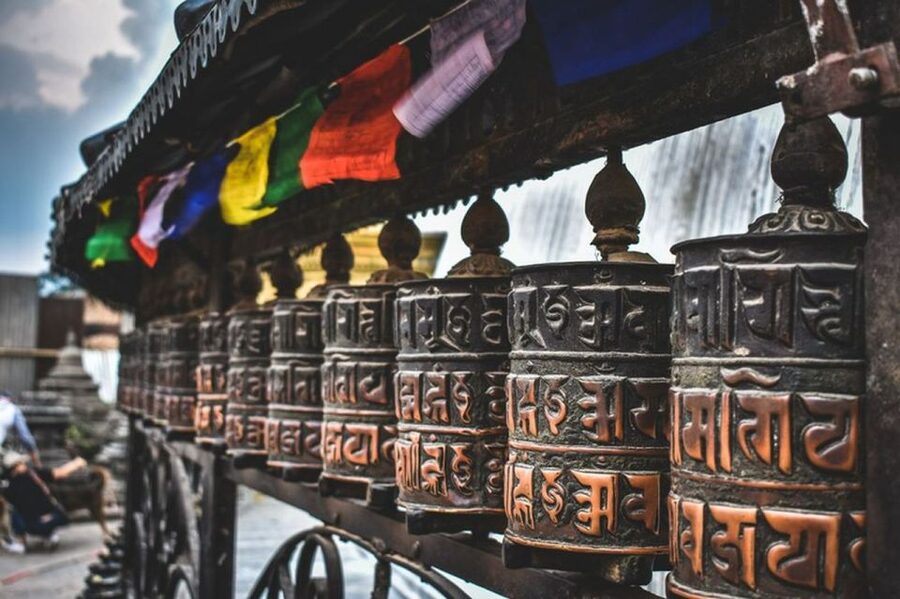
I also appreciate the chance to take part in simple local rituals rather than only snap photographs. You can rotate prayer wheels, walk the Kora around Boudhanath, watch the Bagmati River cremation rites, and attend the evening Aarati, a light offering to Lord Pashupatinath. Guides such as Rozit, Bini, Subash, and Bidhya have earned strong praise for their care and explanations, though one account described a less satisfying experience with limited help in finding a Sadhu.
In This Review
- Key points to know before booking
- Why this short Kathmandu tour works
- Starting at Boudhanath Stupa
- Walking toward Pashupatinath
- Seeing Pashupatinath with care
- Aarati beside the Bagmati River
- Palm readings and other optional costs
- The guide makes or breaks the experience
- Clothing, children, and practical comfort
- Who should book this experience?
- Should you book Spiritual Nepal?
- FAQ
- How long does the Spiritual Nepal tour last?
- Where does the tour start and finish?
- Are entrance fees included?
- Is transportation included?
- Do palm readings and Sadhu interactions cost extra?
- What should I wear?
Key points to know before booking
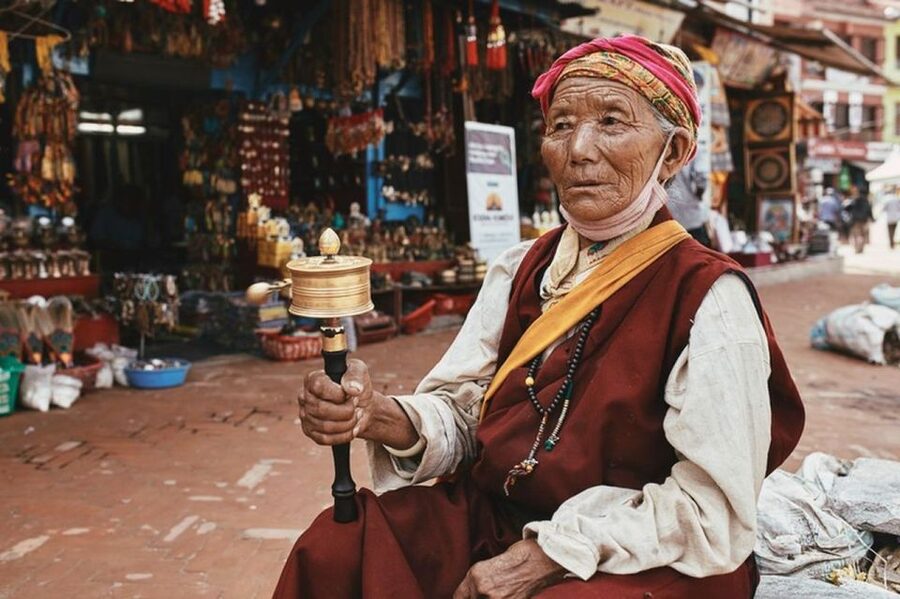
- Boudhanath begins the religious story: Walk the Kora and turn prayer wheels beside local Buddhists at Nepal’s largest Buddhist stupa.
- Pashupatinath is more than a temple visit: You may see Sadhus, cremation ceremonies, and the Bagmati River Aarati.
- Four hours keeps the plan focused: Each major site receives about two hours, with transport between them.
- A small group makes questions easier: The experience is offered as a private group and is designed for about 12 people.
- Several extras cost more: Alms, butter lamps, palm readings, food, drinks, and paid photographs with Sadhus are not included.
- Modest clothing matters: Cover your shoulders and knees, and bring long trousers, a long skirt, or a sarong for temple visits.
Why this short Kathmandu tour works
At $150 per person, this is not a bargain-priced stroll. The cost includes an English-speaking Nepali guide, entrance fees at both UNESCO World Heritage sites, and transport from the meeting point to Boudhanath and from Pashupatinath to the endpoint. You are paying for structure, interpretation, and help with two major religious sites that can feel confusing when visited without local guidance.
I see the strongest value in the cultural explanation. Boudhanath and Pashupatinath are not simply attractive monuments. They are active places of worship, prayer, death rites, offerings, and daily devotion. A good guide helps you understand where to walk, what to watch, and when to stay quiet.
The tour starts at Hotel Marshyangdi. From there, you travel to Boudhanath, then continue to Pashupatinath either on foot for about 15 minutes or by vehicle. You return to the endpoint after the temple visit. The walking distance is about 2 kilometers, so you should be comfortable walking on busy urban streets and around large religious compounds.
The private-group setup is another plus. The experience is intended for a small group of roughly 12 people, and a smaller party can make the guide more responsive. One person had such a small group that the schedule became flexible enough for a rooftop meal and a stop at a traditional mandala school. Those additions are not guaranteed, but they show how much the experience can improve when traffic and group size allow extra time.
A few more trips worth weighing up before you book
- Everest Base Camp Trek – 14 Days
★ 5.0 · 1,499 reviews - Private Kathmandu Sightseeing Tour | UNESCO World Heritage sites
★ 5.0 · 756 reviews - Everest Base Camp Helicopter Tour landing at Everest View Hotel
★ 5.0 · 668 reviews
Starting at Boudhanath Stupa
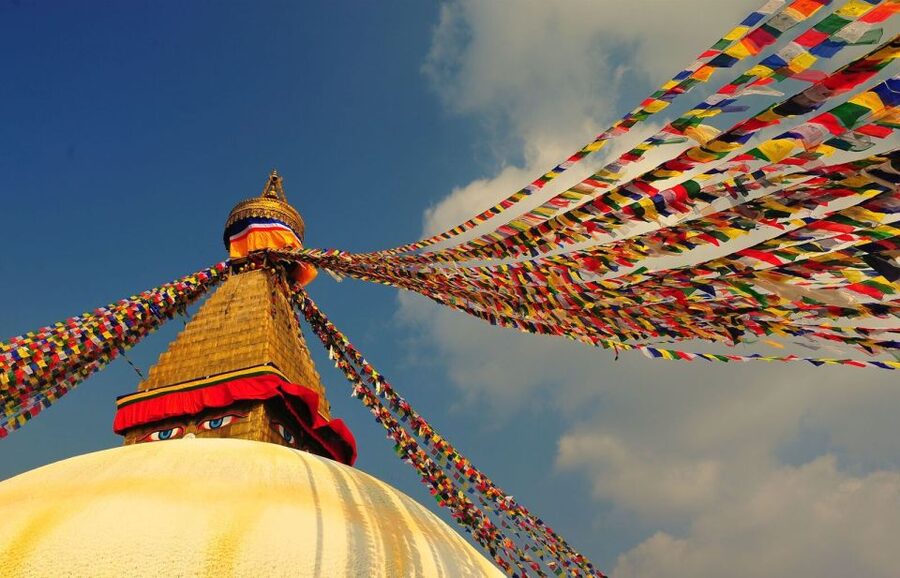
Boudhanath is the gentler opening to the day. The huge white dome and watchful Buddha eyes give the site an immediate sense of calm, even though the area around it can be active and crowded. You will have about two hours here, enough time to circle the stupa, watch worshippers, and ask your guide to explain the symbols around the monument.
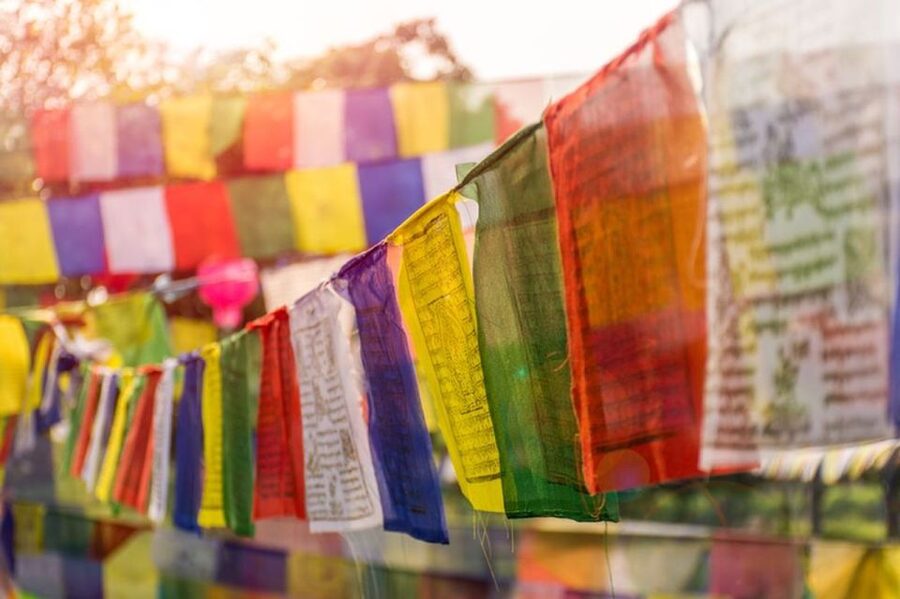
The main ritual is the Kora, walking clockwise around the dome. You can turn the prayer wheels as you go, joining a practice carried out by local Buddhists. The movement is simple, but it gives you a better feel for the site than standing in one place with a camera.
I like that this part of the tour lets you participate without requiring special religious knowledge. You do not need to be Buddhist, spiritual, or highly devout. You only need to follow the walking direction and show respect for people who are praying.
Your guide should also explain how Boudhanath functions as a living religious center rather than a museum piece. The value of the stop lies in observing ordinary devotion: people circling the stupa, turning wheels, making offerings, and moving through the space with purpose.
You may choose to offer butter lamps. That payment is not included, but it can support local people connected with the site. Ask your guide about the correct procedure and the expected cost before you agree to anything.
The time here can pass quickly. If you want photographs, quiet observation, and a chance to ask several questions, tell your guide early. A relaxed private group may have more freedom, while traffic or a larger party can make the visit feel tighter.
Walking toward Pashupatinath
The transfer to Pashupatinath is short in distance but important in rhythm. You may walk for about 15 minutes or ride, depending on the arrangements and traffic. This is also where Kathmandu’s traffic can affect the plan, so keep your expectations flexible.
The two sites feel different in tone. Boudhanath centers on the repeated movement of the Kora and the prayer wheels. Pashupatinath brings you closer to Hindu pilgrimage, cremation rites, ascetic life, and public religious ceremony.
The tour includes transportation from the meeting point to Boudhanath and from Pashupatinath to the endpoint. Transportation between the two sites may involve walking or driving. Since the activity is only four hours, even a short delay can reduce time at the second stop.
Seeing Pashupatinath with care
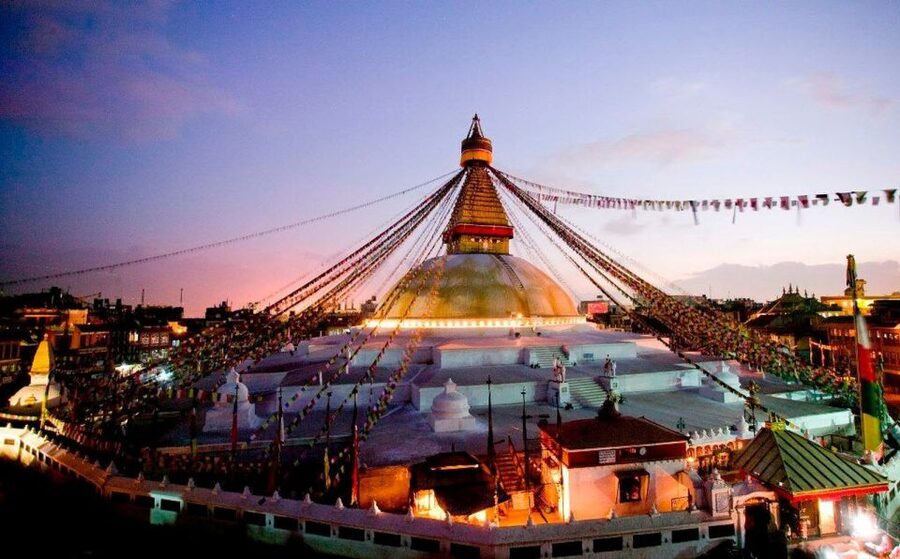
Pashupatinath is Nepal’s largest Hindu pilgrimage site, and this part of the tour carries more emotional weight. Along the Bagmati River, you may witness cremation ceremonies. These are real funerals, not performances arranged for sightseers, so your guide’s advice about distance, silence, and photography matters.
I would treat this stop as an opportunity to observe, not consume. You may feel surprised by how public the rites are, especially if you come from a place where funerals are private. The guide can help explain the religious setting while reminding you to behave respectfully.
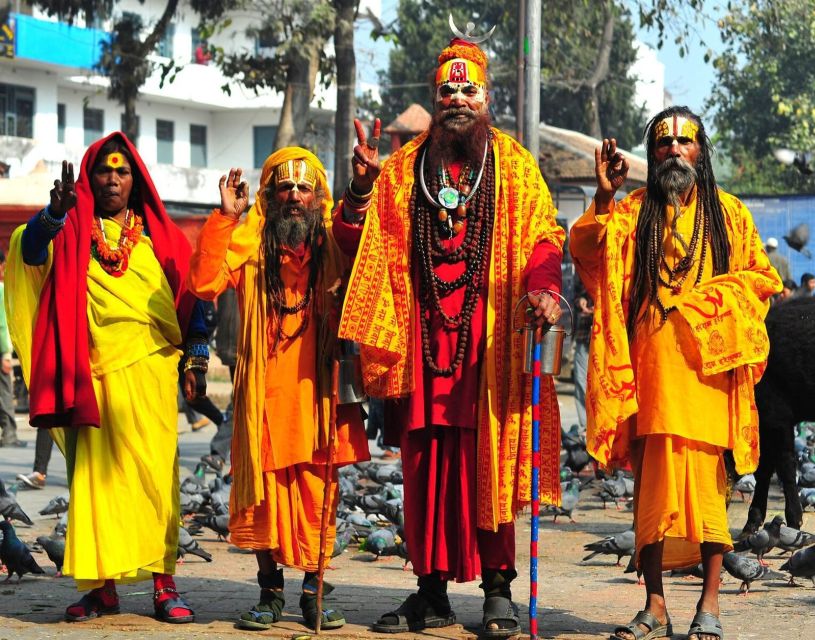
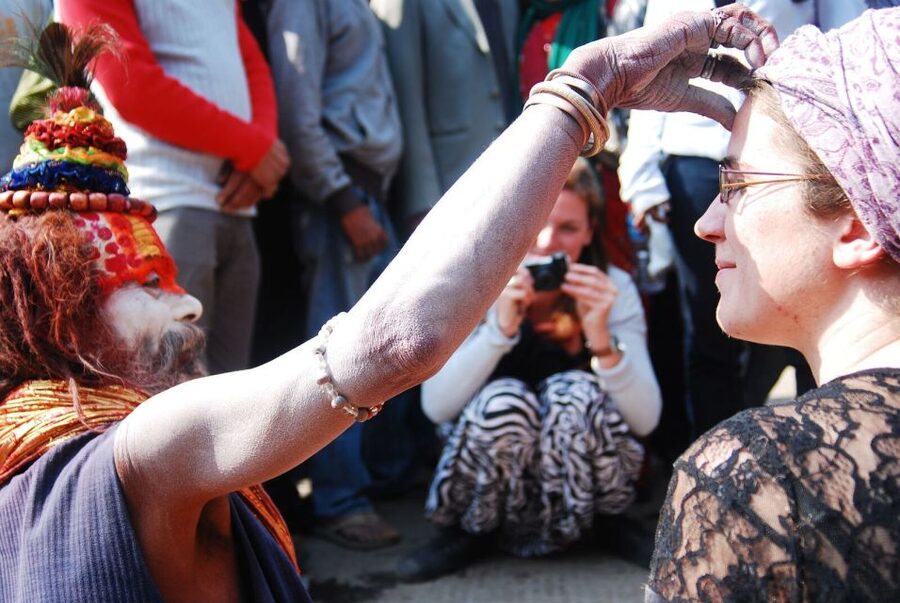
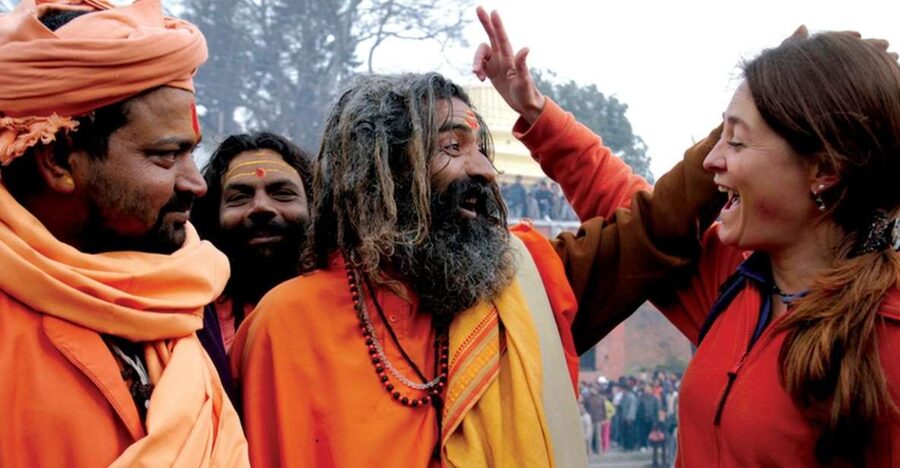
You will also see Sadhus, Hindu holy men whose appearance and way of life draw much attention. The tour offers a glimpse of their lives, and you can offer alms if you want to hear more about an individual Sadhu. This is optional and not included in the price.
The local information says that photographs or interaction with Sadhus may cost about $7.50. Your guide can help negotiate the amount. That assistance is useful, since agreeing to a photograph or conversation without settling the cost first can lead to an awkward moment.
I would not book this tour expecting a guaranteed personal conversation with a Sadhu. One account found that the guide did not do enough to locate one, leaving the participant to seek someone out alone. The experience depends on who is present, how busy the grounds are, and how actively your guide manages the encounter.
A different sort of day from Kathmandu:
- Half day cooking class in Thamel kathmandu
★ 5.0 · 607 reviews - Everest Base Camp Trekking
★ 5.0 · 485 reviews - Nagarkot Sunrise View and Day Hiking from Kathmandu
★ 5.0 · 471 reviews - Kathmandu: Full Day 7 UNESCO Tour with Lunch – Private/Group
★ 5.0 · 415 reviews
Aarati beside the Bagmati River
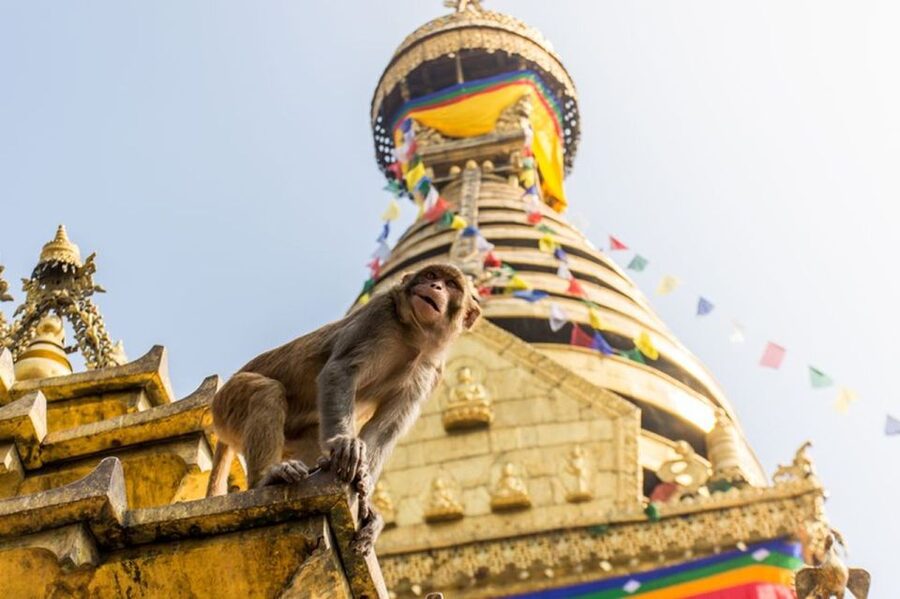
The Aarati is one of the most memorable parts of the visit. Locals offer light to Lord Pashupatinath in a daily ritual beside the river. You can watch the lamps, follow the ceremony, and ask your guide to explain what is happening.
The setting can become very crowded, so stay close to your guide and group. That advice is practical, not decorative. Religious ceremonies attract many people, and it is easy to lose sight of your party when everyone is moving toward the riverbank.
Aarati also gives the tour a strong ending. After the quiet, circular movement around Boudhanath and the solemn cremation area at Pashupatinath, the lamps create a public moment of worship that ties the visit together.
The exact feel of this stop can vary. Timing, traffic, crowd levels, and the pace of the earlier visits all matter. If attending Aarati is your top priority, tell the guide at the start so the group can plan around it as far as possible.
Palm readings and other optional costs
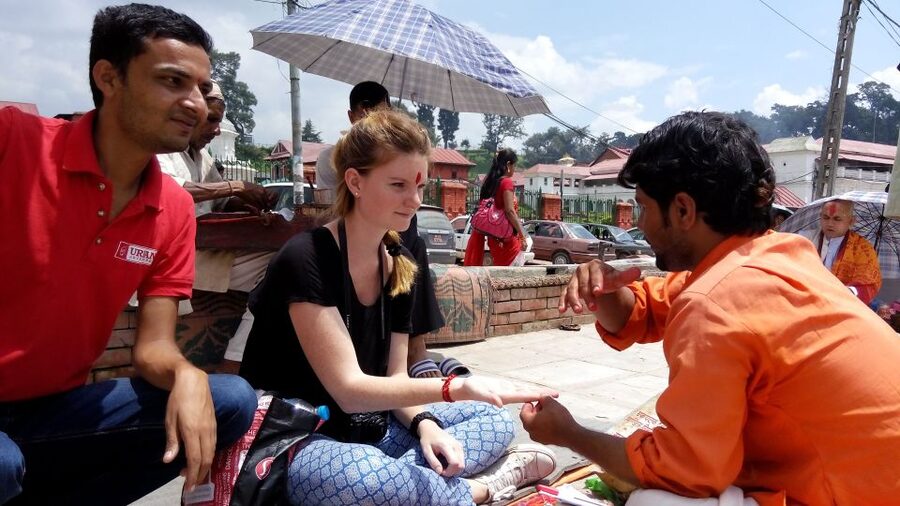
A local palm reader may offer to tell your future. The fee varies from about $7.50 to $9 per person, and the palm reader’s charge is not included. Your guide can help with negotiation, but you should decide in advance how much you want to spend.
This is best treated as a light cultural extra, not as a central reason to book the tour. If you enjoy fortune-telling, it may become a fun personal moment. If you do not, you can skip it and focus on the temples, rituals, and explanations.
Food and drinks are also excluded. The tour lasts four hours, so you may not need a meal during the official schedule. Still, one participant had enough flexibility to stop at a rooftop restaurant with a view of Boudhanath. That kind of addition depends on time, group size, and the guide’s judgment, so do not count on it.
The same applies to a stop at a traditional mandala school. It was possible for one particularly flexible group, but it is not listed as a standard part of the route. Consider it a pleasant bonus rather than a promised feature.
The guide makes or breaks the experience
The strongest praise centers on the guides. Rozit was called excellent, while Bini was appreciated for answering questions and meeting the group’s expectations despite a rushed schedule. Subash helped explain the basics clearly and paid attention to the group’s needs. Bidhya was praised for her personal commitment and strong explanations.
Those comments point to the main benefit of booking with a guide: the sites become easier to read. You can ask what a ritual means, why people walk in a certain direction, or how to behave near a cremation ceremony. The guide also helps with practical matters such as Sadhu payments and palm reader negotiations.
There is some variation in the experience. One person complained about a guide coughing without covering her mouth and felt that the Sadhu portion was not handled well. That is a fair reminder to keep expectations grounded. A guide can improve your chances of a useful encounter, but cannot control every person, ceremony, or crowd.
The tour is conducted in English. If you want detailed explanations, ask questions as you go rather than waiting until the final few minutes. The four-hour schedule is compact, and traffic may shorten the time available for conversation.
Clothing, children, and practical comfort
Dress conservatively. Cover your shoulders and knees, and choose long trousers for men or a long skirt or sarong for women. Religious sites in Nepal are not the place for beach clothing, and modest dress helps you enter and observe with fewer interruptions.
Children are welcome, and children under six can join free of charge. Families should still consider the subject matter. Cremation ceremonies and serious religious rites may be difficult for very young children to understand, so parents should decide if the child is ready for that setting.
The activity is carbon neutral and operated by a B Corp certified company that presents travel as a force for good. That may matter to you if environmental and social commitments influence your booking choices. The more direct local impact comes from optional spending on butter lamps, palm readers, and Sadhus, though you should always confirm prices before paying.
The tour offers free cancellation up to 24 hours before departure and a reserve-now, pay-later option. Starting times vary, so check availability when you choose your date.
Who should book this experience?
I would recommend it to first-time visitors who want a guided introduction to Nepal’s Buddhist and Hindu traditions in one half-day. It suits curious people who enjoy observation, questions, and local context more than a checklist of monuments.
It also works well if you have limited time in Kathmandu. Four hours covers two major sites without requiring you to plan entry fees, transport, or the order of visits yourself.
You may want another option if you dislike crowds, death-related rituals, or uncertain interactions. The cremation area can be confronting, the Aarati can be crowded, and a personal Sadhu conversation is not assured.
The tour also suits solo visitors and couples who value personal attention. A private group of about 12 keeps the outing smaller than a large coach excursion. If your group is tiny, you may have some flexibility, but traffic can still set the pace.
Should you book Spiritual Nepal?
Book it if you want a focused, guided look at two of Kathmandu’s most important religious sites, and if you are willing to approach the rituals with respect. The best parts are the contrast between Boudhanath and Pashupatinath, the chance to walk the Kora and turn prayer wheels, and the chance to see Aarati and cremation rites in their real setting.
At $150 per person, the value depends on your need for guidance. Independent visitors may spend less, but they will need to arrange entry, transport, timing, and cultural interpretation themselves. I would book this tour for the guide’s help and the practical structure, not for guaranteed palm readings, Sadhu conversations, or extra stops.
FAQ
How long does the Spiritual Nepal tour last?
The tour lasts four hours. About two hours are planned at Boudhanath Stupa and two hours at Pashupatinath Temple.
Where does the tour start and finish?
The tour starts at Hotel Marshyangdi and returns to Hotel Marshyangdi as the stated endpoint.
Are entrance fees included?
Yes. Entrance fees for Boudhanath and Pashupatinath are included, along with an English-speaking Nepali guide.
Is transportation included?
Transportation is included from the meeting point to Boudhanath and from Pashupatinath Temple to the endpoint. The transfer between the two sites may be a walk of about 15 minutes or a drive.
Do palm readings and Sadhu interactions cost extra?
Yes. Palm reader fees are not included and vary from about $7.50 to $9 per person. Alms to Sadhus and monks, butter lamps, and paid photographs or interactions with Sadhus also cost extra.
What should I wear?
Wear modest clothing that covers your shoulders and knees. Men often need long trousers, while women should consider a long skirt or sarong for religious-site visits.
Just added around Kathmandu
- Private Shopping Tour in Kathmandu★ 5.0 · 3 reviews
- Nagarkot Sunrise With 7 UNESCO World Heritage Private Tour★ 5.0 · 3 reviews
- Kathmandu: Nightlife and Pub Crawl Tour★ 5.0 · 3 reviews
- Mount Everest Scenic Flight 50 Minutes★ 5.0 · 3 reviews
- Kathmandu: Nagarkot, Bhaktapur, Doleswor & Sanga Statue Tour★ 5.0 · 3 reviews
- Momo Cooking Class -The Art Of Making MoMo with Home Chef★ 5.0 · 3 reviews
- Makalu Base Camp Trek★ 5.0 · 3 reviews
- Everest Experience Trek 6 Day Hiking Adventure★ 5.0 · 3 reviews
Kathmandu Tours, compared.


Private Kathmandu Sightseeing Tour | UNESCO World Heritage sites
Read our review →
Everest Base Camp Helicopter Tour landing at Everest View Hotel
Read our review →

Nagarkot Sunrise View and Day Hiking from Kathmandu
Read our review →
Full Day 7 UNESCO Tour with Lunch – Private/Group
Read our review →