Reviewed · TOURS
Buddhist Pilgrimage Tour In Nepal
Sacred places, close to the city. This one-day Buddhist pilgrimage tour gives you a focused look at three important spiritual sites in Kathmandu Valley: Boudhanath Stupa, Kopan Monastery, and Swayambhunath. With private ground transport, an English-speaking guide, and a maximum group size of 10, you get more than a quick photo stop. You get a day built around Buddhist practice, architecture, and Nepal’s close blend of Hindu and Buddhist traditions.
I like the route because it covers three very different places without asking you to organize transport through Kathmandu’s traffic yourself. I also like the guide-led format, especially for anyone who wants to ask direct questions about Buddhism and local culture. The main drawback is the tight schedule. Each major stop is planned for about an hour, and the tour’s short format leaves little room for quiet reflection or unplanned exploration.
In This Review
- Key points to know before booking
- Why this pilgrimage route works in Kathmandu
- Boudhanath Stupa: begin with Kathmandu’s great Buddhist symbol
- Kopan Monastery: a quieter change of pace
- Swayambhunath and the planned Thamel lunch
- What the $150 price really covers
- How the day feels in practice
- Who will get the most from this tour
- Booking, cancellation, and small practical points
- Should you book the Buddhist Pilgrimage Tour in Nepal?
- FAQ
- Where does the Buddhist pilgrimage tour begin?
- How long does the tour last?
- Which Buddhist sites are included?
- Is transportation included?
- Is a guide included?
- Are admission tickets included?
- Is lunch included in the price?
Key points to know before booking
- Three major Buddhist sites in one day: Visit Boudhanath Stupa, Kopan Monastery, and Swayambhunath from a Kathmandu starting point.
- Private transport is included: A driver takes you between sites, which matters in a city where traffic can make short distances surprisingly slow.
- Small groups keep the day personal: The maximum group size is 10, with a professional English-speaking guide.
- Boudhanath is the visual centerpiece: The great stupa offers the strongest sense of scale and daily Buddhist devotion.
- Lunch is planned in Thamel: A table is reserved at The Ship Restaurant and Bar, with traditional Nepali dal-bhat listed as the featured meal.
- The price reflects convenience: At $150 per person, this is not a budget sightseeing shuttle, but it includes transport, guiding, staff costs, insurance, and taxes.
Why this pilgrimage route works in Kathmandu
Kathmandu is a city where religious traditions share the same streets, courtyards, and public spaces. Hindu shrines, Buddhist monasteries, prayer flags, stupas, and temples can all appear within a short drive of one another. This tour uses Buddhism as its main theme while still giving you a clear view of Nepal’s mixed religious culture.
That focus is useful. Kathmandu offers so many temples and monuments that a first visit can become a blur of names. A guide who explains the meaning of what you are seeing can turn three stops into a coherent day. You are not simply collecting entrance tickets. You are moving from a major stupa, to a monastic setting, to one of the valley’s best-known hilltop religious sites.
The tour begins at 9:15 a.m. with pickup in Kathmandu. The exact pickup point is listed within Kathmandu, Kathmandu Valley, in Bagmati Zone. Since the day starts at a fixed time and ends back at the meeting point, you should allow the full day for the experience, even though the stated duration is approximately one day.
The small-group limit is important. With no more than 10 people, the guide should have a reasonable chance to answer questions instead of delivering one long speech to a crowd. Strong praise for the guide centers on the ability to explain both Buddhism and wider Nepalese culture, a major benefit on a tour where interpretation matters as much as sightseeing.
A few more trips worth weighing up before you book
- Everest Base Camp Trek – 14 Days
★ 5.0 · 1,499 reviews - Private Kathmandu Sightseeing Tour | UNESCO World Heritage sites
★ 5.0 · 756 reviews - Everest Base Camp Helicopter Tour landing at Everest View Hotel
★ 5.0 · 668 reviews
Boudhanath Stupa: begin with Kathmandu’s great Buddhist symbol
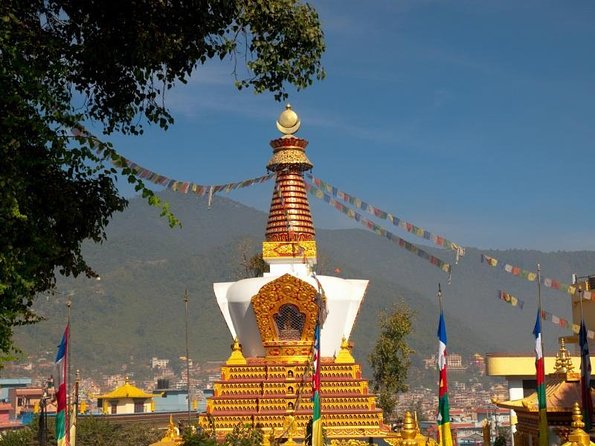
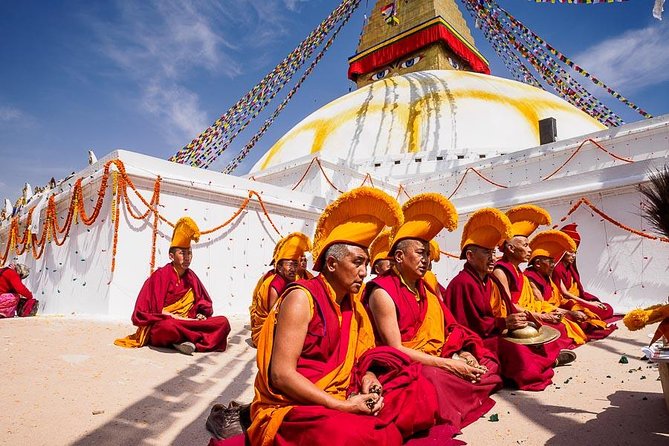
Boudhanath Stupa is the first stop, about four miles from the heart of Kathmandu. It is described as one of the largest stupas in the world and remains one of the main Buddhist centers in the valley.
This is the place where the scale of the pilgrimage becomes clear. A stupa is not simply a building to enter and leave. Its form, circular setting, and religious use give the visit a rhythm that is different from a standard monument tour. You may see people walking around the stupa, praying, observing rituals, or simply sitting quietly. The guide can help explain what those actions mean and how the site fits into Buddhist life in Nepal.
Plan on about one hour here. That is enough time to see the main structure and get an introduction to its importance, but it is not a long meditation session or a detailed architectural study. If you like to linger, photograph details, or watch the steady movement around the stupa, the schedule may feel brisk.
The included admission ticket removes one small task from the morning. More valuable is having transport arranged from your hotel or meeting point. Boudhanath is close to central Kathmandu by distance, but city traffic can make the journey less simple than the map suggests.
I would pay close attention to the guide’s explanation at this stop. Ask about the stupa’s design, the meaning of Buddhist devotional practices, and the way Boudhanath functions as both a sacred place and a major Kathmandu attraction. The supplied feedback gives the guide high marks for answering questions, so this is a good part of the day to make use of that access.
Kopan Monastery: a quieter change of pace
After Boudhanath, the group crosses Kathmandu’s daytime traffic to reach Kopan Monastery. The drive itself is worth allowing time for. Kathmandu distances can look short, yet road conditions and traffic affect the pace of almost every city tour.
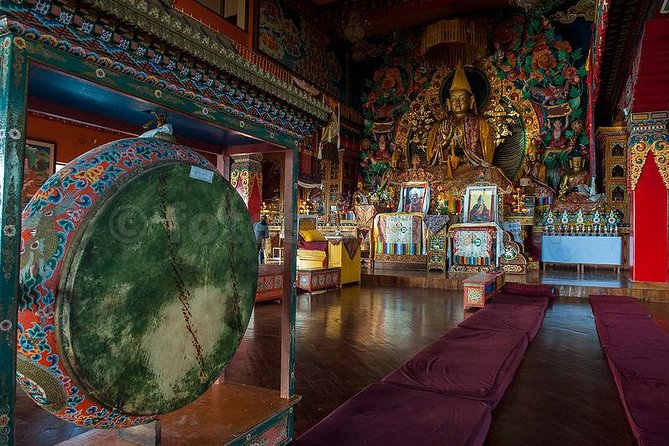
Kopan Monastery follows the Gelug tradition of Tibetan Mahayana Buddhism. That detail gives the visit a more specific religious setting than a general temple stop. You are visiting a working Buddhist monastery with its own tradition and teaching background, not just a monument placed on a sightseeing circuit.
The planned visit lasts about one hour and admission is included. The stop should appeal most to you if you want to understand Buddhist practice in a living institutional setting. The experience is less about rushing through a list of objects and more about hearing how monastic life and Buddhist thought connect.
Still, keep expectations realistic. The available schedule does not promise a long meditation class, a private audience with monks, or a formal chanting session. The tour description refers to chanting and spiritual understanding, but the confirmed inclusions are transport, guiding, and admission. Treat the monastery as a guided pilgrimage visit rather than a guaranteed religious ceremony.
That distinction matters. Sacred sites operate on their own schedules, and a one-day sightseeing program cannot promise every possible activity. Your guide can explain what you are seeing, while the monastery visit gives you a chance to absorb the setting without expecting a staged performance.
Swayambhunath and the planned Thamel lunch
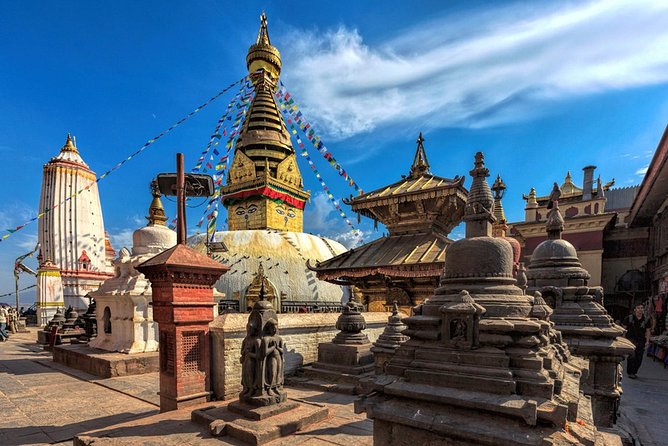
The final named pilgrimage site is Swayambhunath, often called the Monkey Temple. The route description places lunch in Thamel after the drive from Kopan Monastery, with a table reserved at The Ship Restaurant and Bar. Traditional Nepali dal-bhat, a lentil and rice meal, is identified as the featured food.
There is an awkward point here: the supplied schedule gives Swayambhunath only one minute and provides no detailed description of the visit. That may be a simple timing or formatting error, but you should confirm the exact amount of time at this stop before booking if Swayambhunath is your main reason for choosing the tour.
The site itself is an important part of Kathmandu’s Buddhist story, and its popular Monkey Temple name hints at a more lively setting than Kopan Monastery. Yet the tour details do not specify the length of the visit, the order of the stop and lunch, or what is included in the meal. The safest approach is to regard the restaurant reservation as arranged, while confirming whether lunch is included in the $150 price or paid separately.
The meal can be a useful pause in a full morning of religious sites. Dal-bhat is one of Nepal’s best-known traditional meals, and a reserved table means you should not need to spend valuable sightseeing time searching for a place to eat. On the other hand, the general inclusions specifically list transport, guiding, salaries, insurance, and taxes, while the exclusions list meals. That wording indicates you should budget separately for lunch.
A different sort of day from Kathmandu:
- Half day cooking class in Thamel kathmandu
★ 5.0 · 607 reviews - Everest Base Camp Trekking
★ 5.0 · 485 reviews - Nagarkot Sunrise View and Day Hiking from Kathmandu
★ 5.0 · 471 reviews - Kathmandu: Full Day 7 UNESCO Tour with Lunch – Private/Group
★ 5.0 · 415 reviews
What the $150 price really covers
The price is $150 per person. That amount buys a guided, private-vehicle day rather than a simple admission package.
Included are all ground transportation in a comfortable private vehicle, a trained English-speaking professional guide, staff salary and insurance, and government and local taxes. Admission tickets are also included for the listed sites. For a small group, this can be fair value, especially if you would otherwise need to hire a vehicle, arrange a driver, pay entry fees, and find a guide independently.
The value depends heavily on group size. A maximum of 10 people is stated, but the price is still quoted per person. If you are traveling with family or a small group, ask about the available group discount. A discount could make the cost more attractive for several people booking together.
You will need to pay for meals, accommodation, Nepal visa fees, tips, and optional activities. The visa instructions say to bring accurate U.S. dollar cash and two passport photographs. That is not a tour expense, but it is a practical reminder to handle visa arrangements before the pilgrimage day.
At $150, I would choose this tour for ease and interpretation, not for the lowest possible price. If you are comfortable arranging local transport and entrance tickets, you may find a self-guided day cheaper. If you want one person to handle the driving and explain the religious sites, the package is easier to justify.
How the day feels in practice
The best part of this experience is its clear purpose. Many Kathmandu day tours pile together temples, markets, palaces, and viewpoints. This one keeps Buddhist pilgrimage at the center. That makes it a better choice for you if you want cultural context instead of a broad but shallow city tour.
The private vehicle also protects your energy. Kathmandu traffic can be tiring, especially after several stops. Having the driver move you between Boudhanath, Kopan, Thamel, and Swayambhunath means you do not need to negotiate each transfer yourself.
The schedule can also work against the tour. One hour per major stop gives you an introduction, but not a slow visit. Sacred places often reward patience, and you may wish for more time at Boudhanath or Kopan. The route is best for a first look, not for a specialist pilgrimage or a retreat-style experience.
Dress and conduct should be respectful at every religious site. The supplied details do not give a formal dress code, so follow your guide’s instructions and behave quietly around worship. Ask before photographing people or religious activity. These simple choices help keep the visit respectful and also lead to a better cultural experience.
The tour is listed as suitable for most people and near public transportation, but no detailed accessibility information is provided. If you have mobility concerns, contact the provider before booking and ask about vehicle access, walking surfaces, stairs, and the exact conditions at each site.
Who will get the most from this tour
I would recommend this day to first-time visitors who want an organized introduction to Buddhism in Nepal. It also suits people with limited time in Kathmandu who prefer a focused religious and cultural route rather than a long list of unrelated attractions.
It should work well for families, couples, and small groups who value a private vehicle and the chance to ask questions. The English-speaking guide is especially important if you want explanations of Buddhist customs, monastic traditions, and the relationship between Hindu and Buddhist life in Nepal.
You may want another option if your priority is extended meditation, attending a specific ceremony, or spending several hours at one monastery. The tour promises access to major sites and a guide-led introduction, but it does not promise a retreat, a teaching course, or a guaranteed chanting session with monks.
The experience also makes sense for people who dislike handling city transport. Kathmandu can be rewarding but demanding. A driver, guide, included admission, and planned route remove much of the day’s practical friction.
Booking, cancellation, and small practical points
Confirmation is provided at booking, and the activity accepts mobile tickets. Free cancellation is available if you cancel at least 24 hours before the local start time. Cancellations made less than 24 hours before departure are not refunded, and late changes are not accepted.
The tour is often booked about 18 days ahead. That does not guarantee that every date fills, but it suggests you should reserve in advance if your Kathmandu schedule is fixed. Group discounts may be available, so ask about them before paying.
The experience starts at 9:15 a.m. and returns to the meeting point. Since the exact hotel pickup procedure is not detailed beyond Kathmandu as the starting area, confirm your pickup location and time after booking.
Should you book the Buddhist Pilgrimage Tour in Nepal?
Book it if you want a convenient, guide-led introduction to three major Buddhist sites and you value cultural explanation over free-form wandering. The strongest reason to choose it is the guide. The tour’s full value depends on clear answers and thoughtful context, and the feedback gives especially strong praise to that part of the experience.
The $150 price is reasonable for a small-group day with private transport, admission tickets, staff costs, insurance, and taxes, though lunch and visa expenses are extra. Before booking, confirm the time allocated to Swayambhunath and whether the restaurant meal is included, since those details are not fully clear.
I would not choose it for a slow spiritual retreat. I would choose it for a practical first encounter with Buddhist Kathmandu, especially if you have only one day and want the driving, route, and basic arrangements handled for you.
FAQ
Where does the Buddhist pilgrimage tour begin?
The tour begins in Kathmandu, Kathmandu Valley, at 9:15 a.m. The activity ends back at the meeting point.
How long does the tour last?
The experience lasts approximately one day.
Which Buddhist sites are included?
The named sites are Boudhanath Stupa, Kopan Monastery, and Swayambhunath, also known as the Monkey Temple.
Is transportation included?
Yes. All ground transportation is provided in private, comfortable vehicles.
Is a guide included?
Yes. A trained English-speaking professional tour guide is included.
Are admission tickets included?
Admission tickets are included for the listed visits.
Is lunch included in the price?
Meals are listed among the exclusions. A table is reserved at The Ship Restaurant and Bar in Thamel, where traditional Nepali dal-bhat is planned, but you should expect to pay for the meal separately.
Just added around Kathmandu
- Private Shopping Tour in Kathmandu★ 5.0 · 3 reviews
- Nagarkot Sunrise With 7 UNESCO World Heritage Private Tour★ 5.0 · 3 reviews
- Kathmandu: Nightlife and Pub Crawl Tour★ 5.0 · 3 reviews
- Mount Everest Scenic Flight 50 Minutes★ 5.0 · 3 reviews
- Momo Cooking Class -The Art Of Making MoMo with Home Chef★ 5.0 · 3 reviews
- Kathmandu: Nagarkot, Bhaktapur, Doleswor & Sanga Statue Tour★ 5.0 · 3 reviews
- Makalu Base Camp Trek★ 5.0 · 3 reviews
- Everest Experience Trek 6 Day Hiking Adventure★ 5.0 · 3 reviews
Tours, compared.

Private Kathmandu Sightseeing Tour | UNESCO World Heritage sites
Read our review →
Everest Base Camp Helicopter Tour landing at Everest View Hotel
Read our review →
Full Day 7 UNESCO Tour with Lunch – Private/Group
Read our review →
Private Bhaktapur and Nagarkot Day Tour From Kathmandu
Read our review →
Full Day Top 4 UNESCO Tour with Lunch – Private/Group
Read our review →