
Reviewed · FULL-DAY TOURS IN KATHMANDU
Full Day Private Kathmandu City Tour
Kathmandu rewards a well-planned day. This private seven-to-eight-hour tour links four major sights with a personal art historian guide, making it a practical choice if you want context instead of simply collecting temple photos. I like the door-to-door transport and the freedom to explore with only your own group. The main drawback is that food and entry tickets are extra, so the $95 price is not the full cost.
The route brings together Buddhist and Hindu places in one busy day. I also like that the guide can explain local religion, art, and customs as you go, rather than leaving you to decode the symbols alone. Saraswati Ghimire receives especially warm praise for her friendly manner, humor, and care with solo visitors. Ask for her if she is available, though guide assignment is not guaranteed.
In This Review
- Key points at a glance
- Why this private Kathmandu route works
- Pashupatinath and the Bagmati River
- Boudhanath, the great Buddhist stupa
- Swayambhunath on the hilltop
- Patan Durbar Square and Newar art
- What the private vehicle adds
- The guide can make or break the day
- Is $95 a fair price?
- Timing, preparation, and small practical choices
- Who should book this Kathmandu day tour?
- Should you book it?
- FAQ
- What time does the Kathmandu tour start?
- How long does the experience last?
- Which sites are included?
- Is hotel transportation included?
- Are entrance tickets and meals included?
- Is this a private activity?
- What is the cancellation policy?
Key points at a glance
- Four major Kathmandu Valley sights in one day: Visit Pashupatinath, Boudhanath, Swayambhunath, and Patan Durbar Square.
- A genuinely private outing: Only your group takes part, so the pace and questions are not shaped by a large busload.
- A strong mix of faiths: See important Hindu and Buddhist sites, with a guide to explain how each place is used.
- Hotel pickup at 9:15 a.m.: Round-trip transport in an air-conditioned vehicle removes much of the day’s practical hassle.
- Guide quality matters here: Saraswati Ghimire is praised for her warmth, humor, and strong command of the subject.
- Plan for extra costs: Food, drinks, and entry permits are not included in the $95 rate.
Why this private Kathmandu route works
Kathmandu can feel like several cities pressed together. Religious shrines, palace courtyards, stupas, workshops, and ordinary neighborhood life all share the same urban space. This tour gives you a useful first look by covering four of the valley’s best-known cultural sites in one outing.
The private format is the real advantage. You are not following a guide who must repeat the same speech to a large group or wait for strangers who want one more photo. You can ask why a ritual matters, pause when a carving catches your eye, or request a little more time at one stop if the schedule allows.
The guide is described as an art historian, which suits the route. Patan is full of carved metalwork and architectural detail, while the three religious sites require some basic understanding of Hindu and Buddhist practice. Without explanation, you can still admire the buildings. With a good guide, you have a better chance of understanding what you are seeing.
At $95 per person, the tour is not the cheapest way to move around Kathmandu. It becomes better value when you consider the private vehicle, hotel pickup and drop-off, bottled water, and a full day of guiding. For a solo visitor, the cost is higher than a shared excursion, but the personal attention can make the difference. For two or more people, the price is easier to justify, especially if you want one efficient sightseeing day near the beginning of your stay.
More City Tours in Kathmandu
- Private Kathmandu Sightseeing Tour | UNESCO World Heritage sites
★ 5.0 · 756 reviews - Kathmandu: Private City Guided Tour
★ 4.9 · 174 reviews - Kathmandu Private Sightseeing Tour | UNESCO World Heritage Sites
★ 5.0 · 109 reviews
Pashupatinath and the Bagmati River
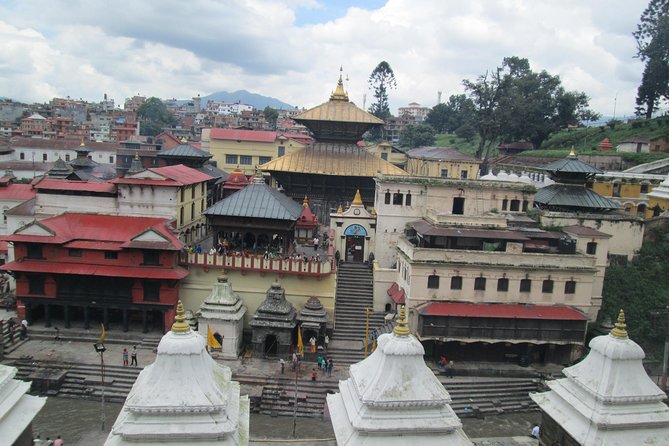
Pashupatinath is the most emotionally powerful stop on this route. The temple complex sits beside the Bagmati River and is one of the most important Hindu religious sites in Nepal. The riverbank also contains the famous burning ghats, where Hindu cremation ceremonies may take place.
That possibility gives the visit a serious tone. This is not a staged cultural performance. It is a working religious site connected with death, mourning, and the Hindu idea of impermanence. Your guide can help you understand what is happening and remind you to behave with care and respect.
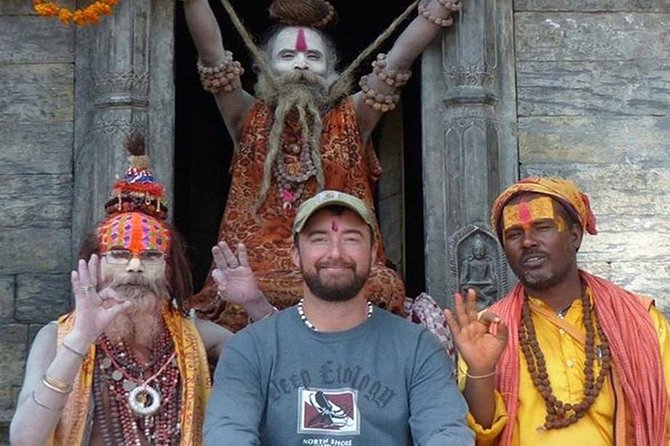
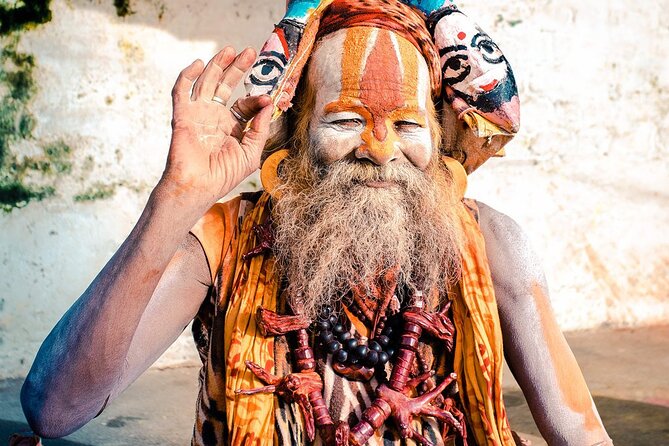
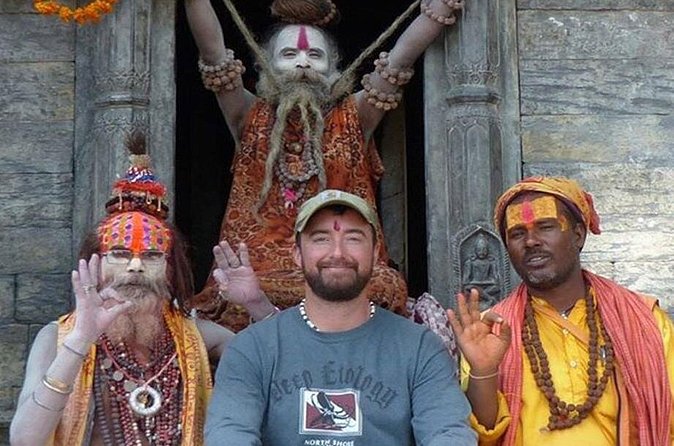
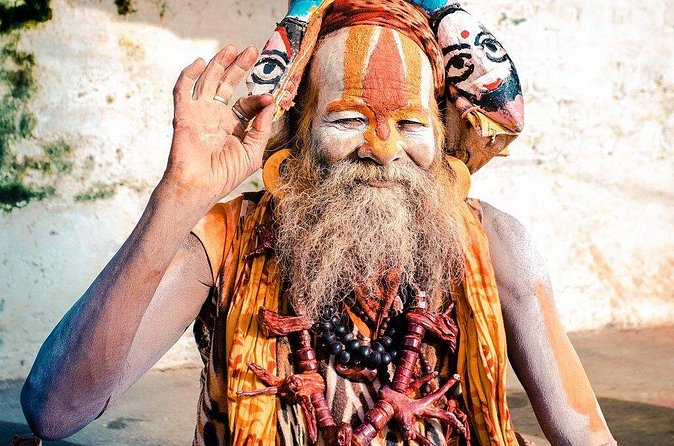
You may meet Hindu holy men at the complex. Their appearance, clothing, and presence are part of the visual experience, but they are also religious figures, not props for photographs. Ask your guide before taking pictures, particularly near ceremonies or people in mourning.
The word may matters here. A cremation is not guaranteed, and access or views can vary. The tour description specifically notes that you might see one, so you should arrive prepared for the possibility without expecting it as a scheduled attraction.
Pashupatinath can be intense for some people. If you prefer light sightseeing with little emotional weight, this may be the hardest stop of the day. If you want to see a living place of worship and learn about an important part of Nepali religious life, it is essential.
Boudhanath, the great Buddhist stupa
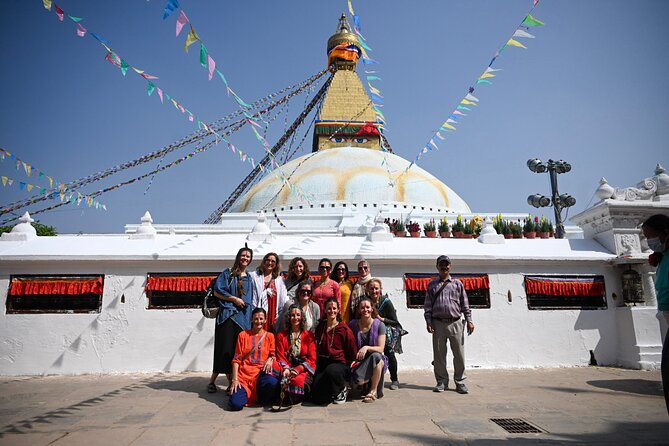
Boudhanath, also written Bouddhanath, is one of Kathmandu’s major Buddhist pilgrimage sites. The enormous white dome and watchful eyes create a very different mood from the riverbank at Pashupatinath. The site is about seven kilometers east of the capital and is recognized as a UNESCO World Heritage cultural site.
Your guide’s explanation is particularly useful here. A stupa is not simply a large monument to admire from the outside. Its form, symbols, and role in religious practice all carry meaning. The route gives you a chance to ask about those details instead of circling the structure without context.
Boudhanath is also a good place to compare religious traditions within the same city. Pashupatinath centers on Hindu worship, while Boudhanath is a major Buddhist site. Seeing both in one day helps you understand that Kathmandu is not defined by one faith or one style of architecture.
The stop should appeal to you if you enjoy religious art, sacred buildings, and places that remain important to local worshippers. It may feel less satisfying if you want a quiet museum-style visit, since this is an active pilgrimage center rather than a preserved display.
Take the guide’s lead on respectful behavior and photography. A private tour makes those questions easy to ask without holding up a group.
Swayambhunath on the hilltop
Swayambhunath is one of the oldest and most sacred religious locations in the Kathmandu Valley. It sits on a hill and is an important pilgrimage site for Buddhists from Nepal and beyond. Many visitors know it by the informal name Monkey Temple, but the official name points to its religious importance.
The hilltop position gives this stop a visual reward that the other sites do not. From above, you can look across the Kathmandu Valley. The tour information does not specify the number of steps or the exact route used, so ask your guide about the approach if stairs or steep walking are a concern.
Swayambhunath works well after Boudhanath because the two Buddhist sites offer a useful comparison. Boudhanath centers on a huge stupa in an urban setting. Swayambhunath combines the hilltop setting with a broader group of religious structures and a long pilgrimage tradition.
You will get more from this stop if you pay attention to the details rather than treating it as a quick viewpoint. Ask your guide to connect the symbols, architecture, and ceremonies to Buddhist practice. The private format gives you room to do that.
The drawback is simple: a hilltop religious site can require more physical effort than a level courtyard. The tour states that most people can participate, but it does not promise step-free access or describe mobility arrangements. If that matters to you, contact the provider before booking.
More Full-Day Tours in Kathmandu
- Kathmandu: Full Day 7 UNESCO Tour with Lunch – Private/Group
★ 5.0 · 415 reviews - Kathmandu: Full Day Top 4 UNESCO Tour with Lunch – Private/Group
★ 5.0 · 269 reviews - Kathmandu: Full-Day 7 UNESCO Tour with Lunch – Private/Group
★ 4.9 · 247 reviews - Kathmandu: Full Day 7 UNESCO Tour with Lunch – Private/Group
★ 5.0 · 101 reviews
Patan Durbar Square and Newar art
The final listed stop is Patan Durbar Square, in the city of Patan, one of the three historic cities in the Kathmandu Valley. Patan is known for traditional crafts and artistic work, and the square is a strong place to focus on architecture.
This is where the art historian guide may be most valuable. Temples and palace buildings can blur together when you see several in one day. A guide can point out carved wood, metalwork, layout, and decorative features that you might otherwise pass without noticing.
Patan is described as a city of fine art and architecture, and that focus gives the day a useful finish. After the religious atmosphere of Pashupatinath and the Buddhist sites, the square shifts attention toward urban design, craftsmanship, and royal history.
The exact time spent here is not listed, and that is worth noting. Four major sights in seven or eight hours create a full schedule. You should expect an overview of Patan rather than unlimited time to browse every corner or shop for crafts.
Still, the stop earns its place. If your interest is mainly temples and ritual, Patan adds variety. If you care about design and traditional arts, it may become one of the day’s highlights.
What the private vehicle adds
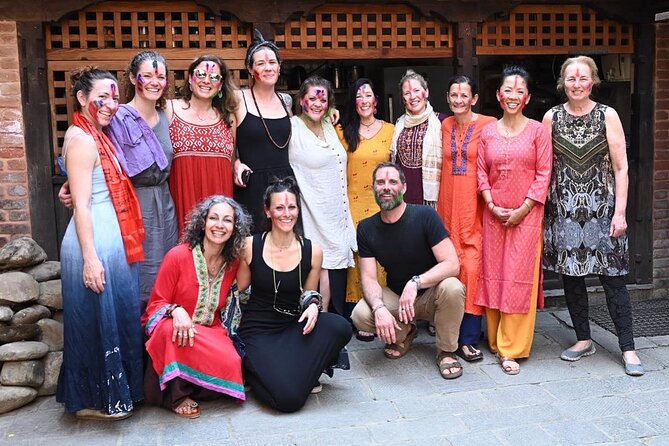
The tour includes hotel pickup and drop-off, bottled water, and an air-conditioned vehicle. Pickup is offered from Kathmandu, with a stated start time of 9:15 a.m. That makes the morning simple: you do not need to find a taxi, negotiate a route, or work out how to connect four distant sights on your own.
Air conditioning is a welcome practical feature for a full day of sightseeing. You have a place to rest between stops, and your group does not need to split up between separate vehicles. The private arrangement also means the transport is built around your party rather than a fixed public route.
The tour does not provide a detailed driving schedule, so traffic and the time at each site may affect the order or length of visits. That is normal for a city tour covering several major locations. I would keep the day flexible and avoid booking an evening commitment that requires a precise return time.
Door-to-door service is especially useful if you are new to Kathmandu or staying somewhere without an obvious meeting point. The tour begins at 9:15 a.m., and confirmation is provided at booking. Make sure your hotel pickup details are clear when you reserve.
The guide can make or break the day
The route is strong on paper, but the guide determines how much you learn. You are paying for more than transportation, and the best use of the day is to ask questions constantly. Religion, symbols, architecture, festivals, cremation practice, and local customs all come up naturally at these sites.
Saraswati Ghimire is specifically praised for being friendly, funny, and well informed. Her ability to put a solo woman at ease is also noted, which is useful if you are traveling alone and want a guide who combines subject knowledge with a welcoming manner.
That praise does not guarantee she will lead every departure. The experience includes a professional art historian guide, but individual assignment can vary. If having Saraswati is important to you, request her before booking and wait for confirmation rather than assuming.
Because this is private, you can shape the conversation around your interests. Tell the guide if you care most about religious practice, photography, architecture, art, or daily life. You will get more from the tour by making those priorities clear at the start.
Is $95 a fair price?
The price is $95 per person. Included are all activities, a professional art historian guide, hotel pickup and drop-off, private transport, bottled water, and an air-conditioned vehicle. Food, drinks, and entry permits are not included.
That last point affects the real budget. You will need to pay entrance costs at the sites, and you should plan separately for meals and any other refreshments. The tour description does not state the ticket prices, so ask the provider for the current amount before you go.
The value is strongest for people who want structure and explanation. If you are comfortable arranging taxis, reading about the sites yourself, and visiting at your own pace, an independent day may cost less. If you want four major places covered without handling transport, the private service saves effort and adds useful interpretation.
Solo visitors pay the full per-person rate, so the value question is personal. The kind of warm, supportive guide represented by Saraswati’s praise can be meaningful when you are alone. Couples, families, and small groups may find the private rate more comfortable because the cost buys a vehicle and guide dedicated to them.
Timing, preparation, and small practical choices
The experience lasts about seven to eight hours and starts at 9:15 a.m. That is enough time for a substantial introduction to Kathmandu, but not enough to linger without limit at every site. Wear something suitable for religious places and be ready for a day that combines walking, temple visits, and time in the vehicle.
Bring extra money for entry permits, food, and drinks beyond the bottled water supplied. Since the tour does not include meals, you should not assume lunch is covered. Ask how meal timing will work when you meet the guide.
Respect matters most at Pashupatinath, particularly around the burning ghats. Listen to your guide about photography and appropriate behavior. At Buddhist and Hindu sites alike, treat active worship as part of the visit, not as a show arranged for you.
Most people can participate, according to the provided details. Still, the tour information does not spell out accessibility features, step-free routes, or vehicle accommodations. If you have mobility needs, ask specific questions before reserving, especially because Swayambhunath is on a hilltop.
Free cancellation is available if you cancel at least 24 hours before the 9:15 a.m. start time. Changes or cancellations made within 24 hours are not accepted for a refund, and the cutoff uses local time.
Who should book this Kathmandu day tour?
I would choose this tour for a first visit to Kathmandu when I wanted orientation, cultural context, and simple transport in one package. It suits solo visitors, couples, families, and small groups who prefer a private day to a shared coach.
It is also a good match if you want to see both Buddhist and Hindu religious sites, rather than focusing only on palaces or shopping. The combination of Pashupatinath, Boudhanath, Swayambhunath, and Patan gives you four distinct ways to read the city.
I would think twice if you want a slow day with long meals, extended shopping, or deep time at one monument. Four major stops in seven to eight hours is an ambitious plan. The excluded entrance fees also mean you should calculate the total before deciding.
Should you book it?
Book this private Kathmandu tour if you value a personal guide, hotel pickup, and a clear route through four major cultural sites. The $95 cost is reasonable for a private vehicle and full-day guide, provided you budget separately for tickets and food.
Skip it if you prefer complete independence or already have transport and detailed site knowledge. For everyone else, it is a useful first-day framework, especially if you can secure a warm guide such as Saraswati Ghimire and keep your expectations realistic about the pace.
FAQ
What time does the Kathmandu tour start?
The stated start time is 9:15 a.m.
How long does the experience last?
The tour lasts approximately seven to eight hours.
Which sites are included?
The route includes Pashupatinath Temple, Boudhanath Stupa, Swayambhunath, and Patan Durbar Square.
Is hotel transportation included?
Yes. Hotel pickup and drop-off are included, along with private transport in an air-conditioned vehicle.
Are entrance tickets and meals included?
No. Entry permits, food, and drinks are not included. Bottled water is provided.
Is this a private activity?
Yes. Only your own group participates in the tour.
What is the cancellation policy?
You can cancel at least 24 hours before the start time for a full refund. Cancellations or changes made less than 24 hours before the start time are not accepted for a refund.
More Full-Day
- Kathmandu: Full Day Private Top 4 UNESCO Heritage Tour W/Lunch.
★ 5.0 · 86 reviews - Kathmandu: Full Day Top 4 UNESCO Tour with Lunch – Private/Group
★ 5.0 · 67 reviews - Kathmandu Heritage Tour (Full Day)
★ 5.0 · 63 reviews - Full Day Guided Tour in Kathmandu
★ 5.0 · 61 reviews
Just added around Kathmandu
- Private Shopping Tour in Kathmandu★ 5.0 · 3 reviews
- Nagarkot Sunrise With 7 UNESCO World Heritage Private Tour★ 5.0 · 3 reviews
- Mount Everest Scenic Flight 50 Minutes★ 5.0 · 3 reviews
- Kathmandu: Nightlife and Pub Crawl Tour★ 5.0 · 3 reviews
- Momo Cooking Class -The Art Of Making MoMo with Home Chef★ 5.0 · 3 reviews
- Kathmandu: Nagarkot, Bhaktapur, Doleswor & Sanga Statue Tour★ 5.0 · 3 reviews
- Makalu Base Camp Trek★ 5.0 · 3 reviews
- Kathmandu: Momo Making Class with a Local Chef★ 5.0 · 3 reviews
Full-Day Tours in Kathmandu, compared.

Full Day 7 UNESCO Tour with Lunch – Private/Group
Read our review →
Full Day Top 4 UNESCO Tour with Lunch – Private/Group
Read our review →Full-Day 7 UNESCO Tour with Lunch – Private/Group
Read our review →Full Day 7 UNESCO Tour with Lunch – Private/Group
Read our review →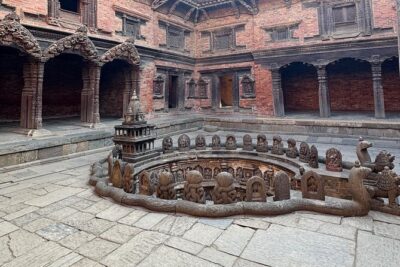
Full Day Private Top 4 UNESCO Heritage Tour W/Lunch.
Read our review →Full Day Top 4 UNESCO Tour with Lunch – Private/Group
Read our review →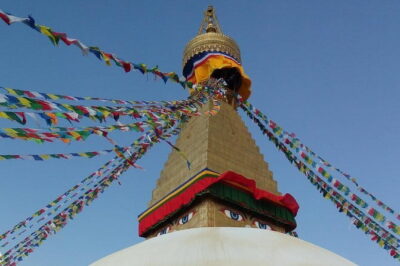
Browse the lists this tour appears in