
Reviewed · KATHMANDU TOURS
Gurkha Knife Making
Fire changes everything. This four-hour Kathmandu workshop lets you help shape an authentic Gurkha knife while learning about the strength and history tied to the famous kukri. I love the small-forge setting, where a local smith guides the work closely, and I like that you leave with a knife made for you, complete with your initials stamped on the blade. The main drawback is the early start, with sessions running from 7:15 to 10:15 in the morning.
The experience costs $66 per person and is limited to four people, so you should expect a personal session rather than a large class. It is a strong choice if you want a hands-on souvenir, but less appealing if you prefer a quick demonstration with little physical participation or have strict plans immediately after.
In This Review
- Key Points Before You Book
- Why the Gurkha Knife Matters
- Meeting at the Garden of Dreams
- Entering the Small Kathmandu Forge
- From Scrap Metal to a Finished Blade
- Choosing the Rosewood Handle
- Stamping Your Initials on the Blade
- Guides, Translation, and the Human Side
- Is $66 a Fair Price?
- Who Will Enjoy This Most?
- Booking, Timing, and Cancellation
- What Makes This Morning Special
- Should You Book the Gurkha Knife-Making Experience?
- FAQ
- Where does the Gurkha knife-making experience start?
- How long does the activity last?
- What time does the activity operate?
- How many people can join?
- Is pickup available?
- Can I cancel for a full refund?
Key Points Before You Book
- You help make a kukri-style Gurkha knife instead of simply watching a blacksmith work.
- The group size is capped at four people, giving the smith and guide time to help with each stage.
- Indian rosewood is used for the handle, adding a warm, traditional finish to the knife.
- Your initials are stamped on the blade, making the finished piece personal.
- Tea and cookies are served during the session, a small touch that helps keep the morning relaxed.
- Each knife comes with a 100-year guarantee, which adds value to the $66 price.
Why the Gurkha Knife Matters
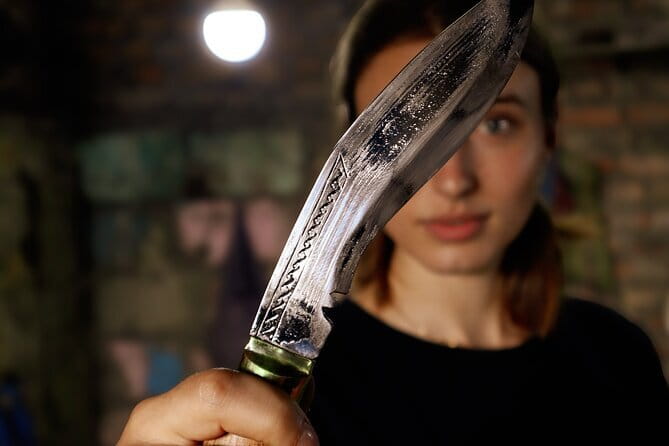
The Gurkha knife, commonly called a kukri, is more than a practical blade. It is linked with the Gurkha warriors of Nepal and carries associations with strength, resistance, and service. The workshop uses that story as a starting point, so you are not just shaping metal without context.
That cultural background gives the activity a useful sense of purpose. You learn why the knife matters before taking part in its creation. The focus is not on buying a factory-made souvenir from a shop shelf. You spend time with a working blacksmith and see how skill, heat, pressure, and patience turn basic metal into a finished object.
The experience is also presented as welcoming to everyone. It is operated by Queermandu, also known as Gay Tours Nepal, and one of the sessions described by the host included support for the local queer community. If you value activities that connect cultural learning with inclusive local businesses, that is an important part of the appeal.
A few more trips worth weighing up before you book
- Everest Base Camp Trek – 14 Days
★ 5.0 · 1,499 reviews - Private Kathmandu Sightseeing Tour | UNESCO World Heritage sites
★ 5.0 · 756 reviews - Everest Base Camp Helicopter Tour landing at Everest View Hotel
★ 5.0 · 668 reviews
Meeting at the Garden of Dreams
The stated meeting point is the Garden of Dreams on Tridevi Sadak in central Kathmandu. The start time is early, from 7:15 to 10:15 in the morning, and the activity returns to the same meeting point at the end.
That timing can work well in Kathmandu. You begin before the day gets too busy, spend the main part of the morning at the forge, and finish with time left for lunch or another sightseeing plan. Still, do not book it casually against an early flight, a long transfer, or a fixed morning appointment. Four hours is the approximate duration, and hands-on work can feel longer than a standard guided visit.
Pickup is offered, but the published meeting details identify the Garden of Dreams as the start and end point. Confirm the pickup arrangement when you book rather than assuming a hotel collection. You receive confirmation at booking, and mobile tickets make it easy to keep the details on your phone.
Entering the Small Kathmandu Forge
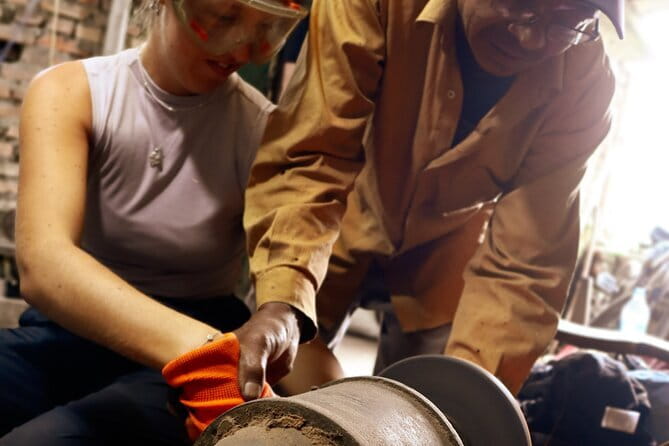
The setting is part of what makes this experience worthwhile. You work in a small forge with a long-time knife maker, rather than standing behind a barrier while someone performs a polished show. The compact space allows the blacksmith to focus on your group, explain the work, and help you take part.
The atmosphere sounds friendly and informal. Tea and cookies are available while you work, which gives the session a social rhythm instead of making it feel like a hard technical class. The guide may also help translate between you and the smith, an important service when the craftsperson and visitor do not share the same first language.
The limited group size matters here. With no more than four people, you have a better chance to ask questions and receive direct help. A larger class could turn a blacksmithing activity into a queue, but this format keeps the experience closer to a private lesson.
From Scrap Metal to a Finished Blade
The work begins with the metal itself. One account of the activity describes taking part in making a quality knife from scrap metal, which gives you a clear sense of the transformation involved. You are not merely choosing a handle or watching the final polishing stage. You get to help with the process of turning rough material into a useful blade.
The blacksmith remains the expert throughout. This is not a situation where an inexperienced visitor is expected to manage a forge alone. You take part under instruction, while the smith handles the work that requires years of practice. That balance makes the activity accessible to people with no previous blacksmithing experience.
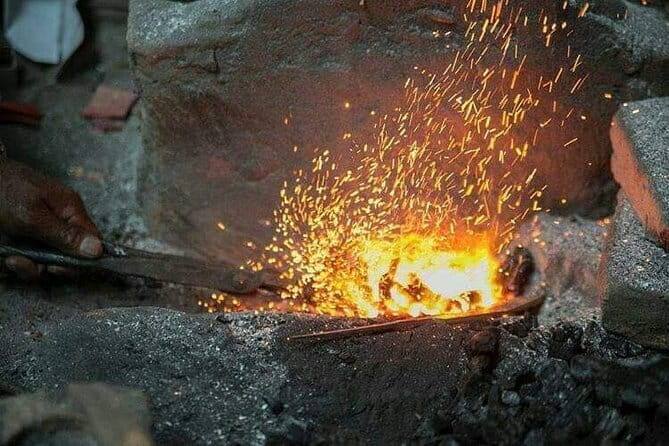
You should expect the process to be physical and practical. The work involves metal, heat, shaping, and repeated attention to form. The exact amount of work you personally do may vary, since the blacksmith needs to control the difficult stages and protect the quality of the finished knife. That is a strength, not a weakness. You get genuine participation without the pressure of producing a perfect blade unaided.
The blacksmith has been described as a master of the craft, and the warm teaching style is a repeated part of the experience. Some sessions have included the smith’s son or apprentice, creating a family workshop feel. You are likely to remember the people and the setting as much as the tool itself.
A different sort of day from Kathmandu:
- Half day cooking class in Thamel kathmandu
★ 5.0 · 607 reviews - Everest Base Camp Trekking
★ 5.0 · 485 reviews - Nagarkot Sunrise View and Day Hiking from Kathmandu
★ 5.0 · 471 reviews - Kathmandu: Full Day 7 UNESCO Tour with Lunch – Private/Group
★ 5.0 · 415 reviews
Choosing the Rosewood Handle
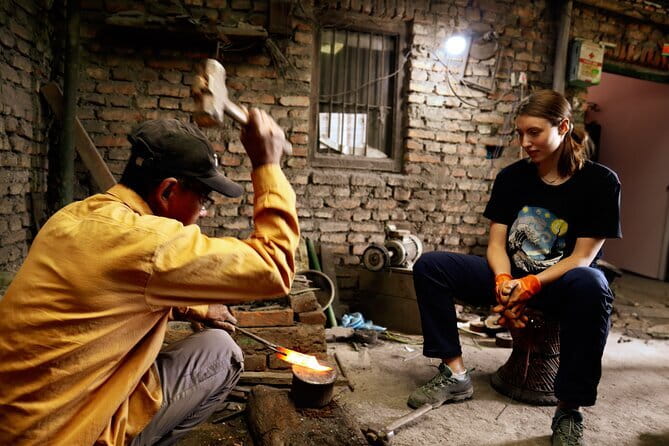
Once the blade has taken shape, the handle gives the knife its character. The workshop uses Indian rosewood, a material with a rich color and pleasing grain. A rosewood handle also helps the finished piece feel like a crafted object rather than an unfinished piece of metal.
The handle is where the knife becomes especially personal. You can see the difference between the raw material at the start and the completed souvenir at the end. The process gives you a better understanding of how much work goes into a knife that might look simple when displayed in a shop.
Do not expect a broad retail selection of handle designs unless the host confirms that in advance. The information provided specifies Indian rosewood but does not promise a menu of shapes, colors, or custom fittings. The real personal feature is the work you help with and the initials added later.
Stamping Your Initials on the Blade
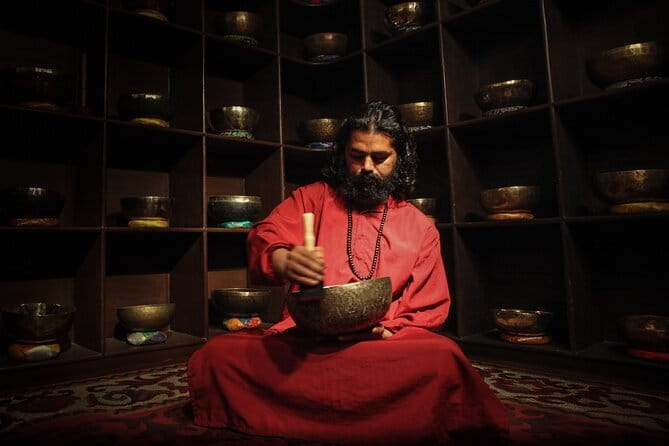
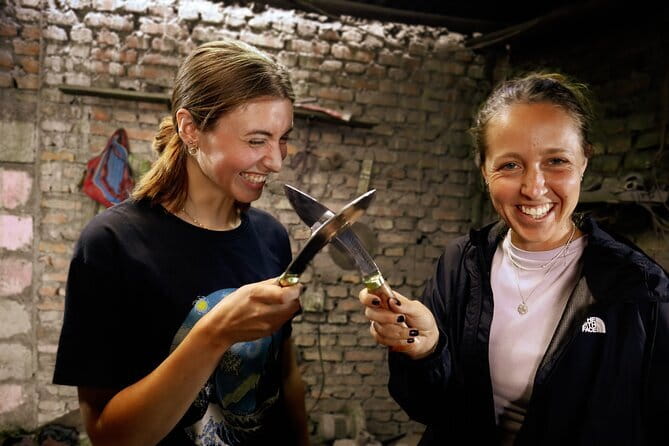
The final personal touch is stamping your initials on the blade. This is a small step, but it changes the meaning of the souvenir. Instead of carrying home a knife that could belong to anyone, you have a piece marked with your own initials and connected to a morning you spent at the forge.
That detail also makes the activity suitable for a couple, a parent and older child, or a small group of friends. Each person can leave with a distinct finished knife, even though the workshop follows the same basic process.
The knife is backed by a 100-year guarantee. That is an unusually long promise for a souvenir and suggests that the maker wants the item to be treated as a durable working object, not a disposable decoration. You should still ask what the guarantee covers, since the supplied information does not spell out the terms, repairs, or conditions.
Guides, Translation, and the Human Side
A good guide matters in a craft activity, especially when technical instructions are involved. Aayam has been praised for keeping the session lively and adding humor, while Aachal has been described as friendly, patient, and attentive. Indra is identified as the craftsman who teaches the knife-making process.
Names and roles may vary by date, but the format includes both a guide and a local knife maker. That division works well. The guide can help you understand the story and instructions, while the blacksmith concentrates on the metalwork.
The social tone is one of the strongest reasons to choose this activity. The hosts are described as friendly and affable, and the session seems designed to make beginners feel comfortable. If you are nervous about using tools or communicating across a language barrier, the guide’s support should make the morning easier.
At the same time, the experience is still centered on the craft. It is not simply a cultural talk with a souvenir handed over at the end. You spend several hours participating in the making process, which gives the finished knife a stronger connection to place.
Is $66 a Fair Price?
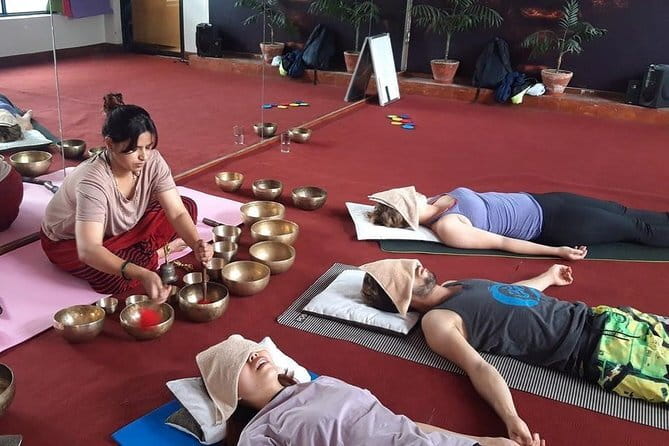
At $66 per person, the activity is not the cheapest way to buy a knife in Kathmandu. Local shops and markets may offer blades for less, especially if you are only comparing the cost of the object.
That is the wrong comparison, though. The fee includes roughly four hours of instruction, access to a working forge, help from a local blacksmith and guide, tea and cookies, the rosewood handle, the initials on the blade, and the finished knife itself. You are paying for time, teaching, materials, and the story behind the object.
The maximum of four people also improves the value. A private or very small group format gives you more direct attention than a crowded workshop. For someone who enjoys making things, the experience may be worth more than a larger sightseeing tour that costs the same but leaves you with only photographs.
The price is less convincing if you do not care about the process. If your goal is simply to take home a kukri, buying one may be faster and cheaper. But if you want to say I helped make this, $66 is a reasonable price for a distinctive Kathmandu morning.
Who Will Enjoy This Most?
I would recommend the workshop to you if you enjoy practical activities, local craft, and souvenirs with a story. It suits solo visitors particularly well because the small group format does not require you to arrive with a large party. It also works for pairs and groups of up to four people who want to share a hands-on morning.
The activity may appeal to history enthusiasts, metalworkers, collectors, and anyone curious about Nepal beyond temples and mountain views. You do not need to be an expert. The blacksmith provides the skilled work, and the guide helps explain what is happening.
It may not suit you if you dislike heat, physical work, or close workshop settings. The forge is small, and the activity is not a passive show. You should also think carefully about the early start. The available hours are fixed in the morning, Monday through Sunday, from 7:15 to 10:15.
The knife itself creates one more practical question. The provided details do not explain transport rules for carrying the finished blade on flights or across borders. If you are flying from Kathmandu, ask the host about packing and check your airline and destination regulations before counting on carrying it in hand luggage.
Booking, Timing, and Cancellation
The activity is usually booked about nine days ahead, so planning a little early is sensible, especially if you have limited time in Kathmandu. Confirmation arrives at the time of booking, and the ticket is available on your mobile.
Free cancellation is available up to 24 hours before the start time for a full refund. Changes or cancellations made less than 24 hours before the local start time are not accepted for a refund, so check your schedule before booking the morning slot.
The published operating period runs from March 22, 2024, through December 15, 2026. Since dates and availability can change, rely on the confirmation you receive for your exact session.
What Makes This Morning Special
The best part of the experience is the combination of three things: the object, the setting, and the people. The kukri has a clear connection to Nepal and the Gurkha story. The small forge shows you how local craft works in practice. The smiths and guides add warmth, humor, and patient instruction.
The finished knife is attractive, but it is not the only reward. You remember the raw metal, the shaping process, the rosewood handle, the initials, and the moment the object becomes recognizable as a knife. That sequence gives the souvenir a personal value that a market purchase cannot match.
I also like that the activity supports a local business with an inclusive purpose. You are not just consuming a cultural image. You are spending time with people who make a living from a traditional skill and welcome visitors into their working space.
Should You Book the Gurkha Knife-Making Experience?
Yes, if you want a personal, hands-on Kathmandu activity and you have a free morning. The small group limit, friendly guides, skilled blacksmith, rosewood handle, initials on the blade, and 100-year guarantee make the $66 fee fair for the right kind of visitor.
I would skip it only if you want a fast souvenir purchase, dislike workshop conditions, or cannot commit to the early four-hour schedule. For everyone else, this is a memorable way to learn about the kukri while making something you can keep. Check how you will transport the knife afterward, then book with enough notice to secure the morning that suits you.
FAQ
Where does the Gurkha knife-making experience start?
It starts at the Garden of Dreams on Tridevi Sadak in Kathmandu, Nepal.
How long does the activity last?
The experience lasts approximately four hours.
What time does the activity operate?
The listed session runs from 7:15 AM to 10:15 AM, Monday through Sunday.
How many people can join?
The activity accepts a maximum of four people.
Is pickup available?
Pickup is offered, although the stated meeting point is the Garden of Dreams. Confirm the pickup details when booking.
Can I cancel for a full refund?
Yes. You can cancel at least 24 hours before the local start time for a full refund. Cancellations or changes made less than 24 hours before the start are not accepted for a refund.
Just added around Kathmandu
- Private Shopping Tour in Kathmandu★ 5.0 · 3 reviews
- Nagarkot Sunrise With 7 UNESCO World Heritage Private Tour★ 5.0 · 3 reviews
- Mount Everest Scenic Flight 50 Minutes★ 5.0 · 3 reviews
- Kathmandu: Nightlife and Pub Crawl Tour★ 5.0 · 3 reviews
- Momo Cooking Class -The Art Of Making MoMo with Home Chef★ 5.0 · 3 reviews
- Kathmandu: Nagarkot, Bhaktapur, Doleswor & Sanga Statue Tour★ 5.0 · 3 reviews
- Makalu Base Camp Trek★ 5.0 · 3 reviews
- Kathmandu: Momo Making Class with a Local Chef★ 5.0 · 3 reviews
Kathmandu Tours, compared.


Private Kathmandu Sightseeing Tour | UNESCO World Heritage sites
Read our review →
Everest Base Camp Helicopter Tour landing at Everest View Hotel
Read our review →

Nagarkot Sunrise View and Day Hiking from Kathmandu
Read our review →
Full Day 7 UNESCO Tour with Lunch – Private/Group
Read our review →