
Reviewed · MARDI HIMAL TREKS
Mardi Himal Trek 5 Days
The mountains arrive before the crowds do. The Mardi Himal Trek gives you a five-day route through rhododendron forest, alpine scenery, streams, and big Annapurna views, including the unmistakable Machapuchare. I like its quieter feel and the way the scenery changes quickly as you climb.
I also like that the $500 price includes meals, tea-house lodging, permits, local transport, and shared porter service. The main consideration is the moderate fitness level required. This is not a sightseeing ride with a few easy walks. You will spend several days climbing and descending on mountain paths, and the short schedule leaves little room for a slow pace.
- Ancient rhododendron forest: The trail passes through mossy forest before opening into high mountain country.
- Machapuchare views: The route offers striking views of the famous fishtail peak and the Annapurna range.
- Five-day format: It suits you if you want a shorter Himalayan trek rather than a longer circuit.
- Shared porter service: One porter is provided for every two people, but solo trekkers do not receive a porter.
- Tea-house comfort: Breakfast, lunch, dinner, and tea or coffee are included during the trek.
- Private group: Only your own party takes part, with guide support arranged through Everest Trekking Routes Pvt. Ltd.
In This Review
- Why Mardi Himal Works in Five Days
- Starting from Pokhara and Reaching Kande
- Through Rhododendron Forest and Mountain Streams
- Climbing Toward 3,300 Meters
- The High Views and Machapuchare
- The Tea-House Experience and Included Meals
- Guides, Porters, and Group Support
- What the $500 Price Really Covers
- Who Should Book This Trek
- Booking Details and Cancellation
- Should You Book the Mardi Himal Trek?
- FAQ
- How long is the Mardi Himal Trek?
- Where does the trek take place?
- What meals are included?
- Is accommodation included?
- Are permits included in the price?
- Is porter service included for solo trekkers?
Why Mardi Himal Works in Five Days
Mardi Himal is a good choice when you want a real mountain trek but cannot spare two or three weeks. The route reaches the upper Annapurna region without asking you to complete a long circuit. In five days, you pass from Pokhara’s road network into forest, open high country, and rugged mountain scenery.
I would not call this an easy walk. The route is suitable for people with moderate fitness, but the elevation and repeated uphill sections matter. The trail climbs to around 3,300 meters, where thinner air and colder conditions can make a short day feel much longer.
The reward is variety. The lower route includes dazzling rivers, streams, and forest. Higher up, the trees thin out and the views become broader. That change gives the trek its character. You are not staring at one type of scenery for five days.
The route is also relatively new compared with some of Nepal’s better-known trekking paths. That helps explain its appeal. You get the Annapurna setting and mountain drama without following the busiest classic routes.
Starting from Pokhara and Reaching Kande
The included transport takes you from Pokhara to Kande at the beginning and from Siddhing back to Pokhara at the end. That is useful because you do not have to arrange separate local transport for the trailhead and return point.
Kande is the practical starting point for the uphill section. From there, the route moves away from ordinary road travel and into the walking portion of the trip. The early hours are important because they set the rhythm for the next several days. Take your time, keep your pack light, and do not try to prove anything on the first climb.
The supplied information lists a start time of 8:15 pm, which is unusual for a mountain departure. I would confirm the exact meeting time directly before setting out, since the trek itself includes daytime walking and local road transport. The meeting details should be clear at booking, but this particular time deserves a quick check.
The tour is private, so you walk with your own group rather than joining a large mixed party. That can make rest stops and walking speed easier to manage. It also means your group should agree early on how much time to spend taking photographs.
More Mardi Himal Treks:
- Pokhara: 4-Day Mardi Himal Trek
★ 4.9 · 59 reviews - Private Mardi Himal Trek
★ 5.0 · 42 reviews - From Pokhara: 4-Day Mardi Himal Base Camp Trek
★ 4.9 · 31 reviews
Through Rhododendron Forest and Mountain Streams
One of the best parts of Mardi Himal is the forest section. The trail winds through ancient rhododendron trees, with moss and alpine vegetation adding texture to the route. In the right season, rhododendrons can add color, but the forest is worthwhile even without flowers because it gives the lower trek a cool, enclosed feel.
You will also cross or follow areas with rivers and streams. These details matter because they make the route feel like a journey through changing country, not simply a climb toward a viewpoint. The sound of moving water and the shade of the forest provide a welcome break before the higher, more exposed sections.
The forest can hide the wider mountain views for a while. That is not a flaw. The gradual reveal makes the open high country feel more dramatic when it arrives. You should expect some stretches where the scenery is close and green, followed by sudden views toward the snow-covered peaks.
Tea-house accommodation is included throughout the trek. These are practical mountain lodges rather than luxury hotels. You get a place to sleep and simple meals, with breakfast, lunch, dinner, and a cup of tea or coffee included each day.
Climbing Toward 3,300 Meters
As you gain height, the scenery changes from thick forest to more open alpine country. The route becomes rougher and the mountains feel closer. Around 3,300 meters, you reach the sort of altitude where pacing matters more than enthusiasm.
I would use the uphill sections to settle into a steady pace. The aim is not to race the guide or arrive first. A moderate fitness level will help, but altitude affects people differently, so listen to your body and tell your guide if you feel unwell.
The shorter five-day plan is both a strength and a limitation. It lets you see a great deal in a compact period, but it may feel demanding because there is less spare time. If you want long breaks, extra photography time, or a relaxed walking rhythm, ask about the exact daily distances before booking.
The route is described as suitable for most people of average fitness, but that should not be confused with effortless. You need to be comfortable walking for several hours on uneven mountain trails. The challenge is part of the appeal, though the trip is best enjoyed when you prepare for it rather than underestimate it.
The High Views and Machapuchare
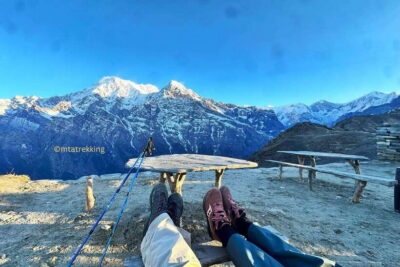
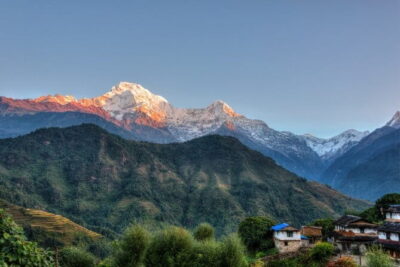
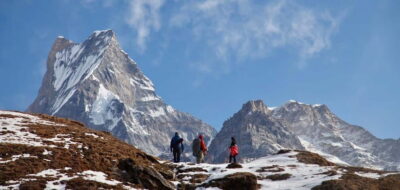
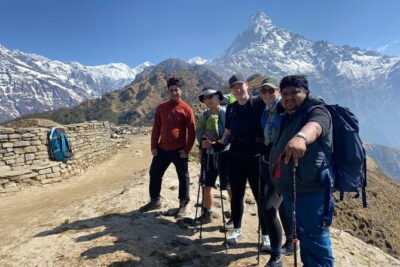
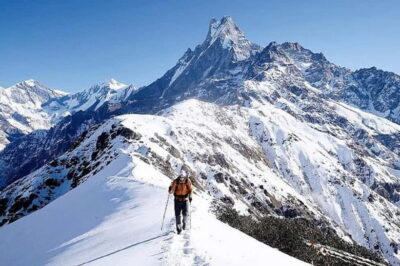
The mountain views are the main prize. From the higher sections, you can see the Annapurna range and Machapuchare, also known as the Fishtail Mountain. Its distinctive shape gives the trek a memorable focal point.
The views are not limited to one final lookout. As you climb above the forest, the scenery opens in stages. Snow-capped peaks, alpine trees, and rugged high country create the strongest visual contrast of the route. One account of the trek described the snow-covered mountains and surrounding scenery as difficult to capture in words, which is a fair warning not to judge the experience only by photographs.
The high point is also where the weather matters most. Clear conditions can give you broad views, while cloud can cover the peaks. No trekking company can control that. The route still has value in mist and changing weather, but you should keep your expectations flexible.
This is a good place to put the camera away for a few minutes. The combination of height, open space, and mountain silhouettes is what you paid for. The trail may be challenging, but the setting gives the effort a clear purpose.
More Treks and Hikes:
- Poon hill Trek 3 days
★ 5.0 · 176 reviews - Trekking in Annapurna/Langtang/Everest/Upper Mustang regions
★ 5.0 · 161 reviews - Pokhara: 4-Day Ghorepani, Poonhill & Ghandruk Mountain Trek
★ 5.0 · 132 reviews - Ghorepani – Poon Hill Trek 3N-4D
★ 5.0 · 125 reviews
The Tea-House Experience and Included Meals
The meal plan is simple and useful. Breakfast, lunch, and dinner are included, along with tea or coffee. That removes a major daily expense and means you do not need to negotiate every meal once you are on the trail.
Food in the mountains is part of the practical side of trekking. You should think of it as fuel and local hospitality, not a restaurant tour. The tea houses provide the basic setting for rest, meals, and sleep. One guide, Phul, was praised for finding seasonal vegetables and mushrooms, suggesting that meals can sometimes include local ingredients rather than only standard trekking fare.
Accommodation is included in tea houses each night. The details of room arrangements are not specified, so I would ask the operator what to expect for your group and whether rooms are shared. The important point is that this is mountain lodging, not a polished city hotel.
Tea houses also add a cultural element to the trek. You are moving through communities and stopping in the same kind of practical lodges used by other people on the route. That makes the experience feel connected to everyday mountain life, even though the tour remains organized and supported.
Guides, Porters, and Group Support
The strongest part of the human side of this trek is the guide service. Several guides connected with the operator are named in the available information, including Sushil Gurung, Phul Gurung, Sobit, and Sandesh. One solo trekker specifically credited Robin and Sobit with making the journey welcoming, while another described Sobit as attentive to safety.
That matters on a route where conditions, pace, and confidence can change from day to day. A good guide does more than lead the path. You want someone who watches the group, helps with practical decisions, and keeps the walk moving without turning it into a race.
Porter service is included at a ratio of one porter for two people. That is valuable because it lets you carry a smaller day pack and focus more on the walking. Solo trekkers do not receive a porter under the stated arrangement, so this is an important cost and comfort difference for anyone traveling alone.
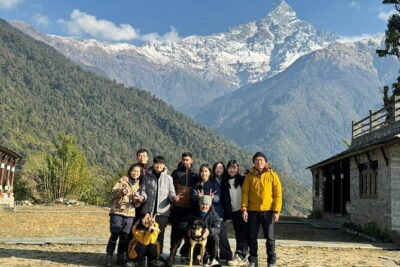
Larger private groups may have several porters and more than one guide. A group of nine hikers, for example, used two guides and five porters. If you are booking as a group, confirm the final guide and porter setup, since the exact staffing may depend on party size.
Tips for guides, porters, and the driver are not included. Set aside money for this separately. It is one of the few clear extra costs attached to the trek.
What the $500 Price Really Covers
At $500 per person, the trip offers solid value if you want a supported trek from Pokhara. The fee includes local transport from Pokhara to Kande and from Siddhing back to Pokhara, all tea-house accommodation, three daily meals, tea or coffee, ACAP and TIMS permits, porter service for pairs, and government taxes.
That package removes several expenses that can add up quickly. Permits alone require paperwork and payment, while arranging mountain lodging and meals independently takes time and some flexibility. The included local transport also makes the five-day schedule easier to manage.
The price does not include hotels in Kathmandu or Pokhara. It also excludes Kathmandu to Pokhara and return transport, domestic flights, personal expenses, and tips. If you are arriving in Nepal through Kathmandu, your full holiday budget will be higher than $500.
The package also does not include internal flight fares. That may not matter if you are already based in Pokhara, but it matters if your wider Nepal plans involve flying between cities. I would compare the trek price with your total Nepal travel costs, not view it in isolation.
Who Should Book This Trek
I would recommend Mardi Himal to you if you want:
- A five-day trek from Pokhara
- Big Annapurna and Machapuchare views
- Forest, streams, alpine trees, and high mountain scenery in one route
- Tea-house lodging and meals included
- A private trip with guide support
- A shorter alternative to a longer Annapurna trek
I would hesitate if you dislike uphill walking, struggle with uneven paths, or want a soft adventure with extensive free time. The route reaches around 3,300 meters and includes genuine mountain challenges.
It also suits a group that values flexibility. Since only your party participates, you are not tied to the needs of a large public group. Still, private does not mean effortless. Your group must be prepared to walk at a sensible pace and follow the guide’s advice.
The trek has also worked for first-time trekkers, but first-timers should prepare properly. The experience includes difficulties as well as beautiful scenery. Good footwear, a realistic attitude, and moderate fitness will do more for your enjoyment than expensive equipment.
Booking Details and Cancellation
Confirmation is received at the time of booking, and the experience is near public transportation. Pickup is offered, and the ticket is mobile, which makes the start easier to organize.
The cancellation policy is generous if your plans change early. You can cancel at least 24 hours before the local start time for a full refund. Cancellations or changes made less than 24 hours before the start are not accepted for a refund.
The experience is offered by Everest Trekking Routes Pvt. Ltd. It has a perfect five-star rating from 23 listed reviews, with 100 percent recommendation shown. Ratings are useful, but I would still ask for the final day-by-day plan, exact meeting time, room setup, and expected walking hours before paying.
Should You Book the Mardi Himal Trek?
Book it if you want a compact, scenic Himalayan trek with the main practical pieces handled for you. The best reasons are the quieter Annapurna route, the rhododendron forest, the views of Machapuchare, and the useful package of meals, tea houses, permits, transport, and shared porter support.
Think twice if you need a relaxed walking holiday or if you are traveling solo and want porter service included. Solo trekkers do not receive a porter under this package, and the climb to about 3,300 meters requires steady fitness.
For the right person, this is a strong five-day introduction to Nepal’s mountain trails. You get real effort, real tea houses, and scenery that changes from forest shade to high snowy peaks without committing to a long expedition.
FAQ
How long is the Mardi Himal Trek?
The trek lasts approximately five days.
Where does the trek take place?
It takes place in Nepal’s Annapurna region, beginning with transport from Pokhara to Kande and ending with transport from Siddhing back to Pokhara.
What meals are included?
Breakfast, lunch, and dinner are included each day, along with a cup of tea or coffee.
Is accommodation included?
Yes. Tea-house accommodation is included throughout the trek.
Are permits included in the price?
Yes. The package includes ACAP and TIMS permits, along with government taxes.
Is porter service included for solo trekkers?
No. The package provides one porter for every two people, but no porter is provided for solo trekkers.
More 5-Day Experiences
- Kathmandu/Pokhara: 5-Day Annapurna Base Camp (ABC) Trek
★ 4.9 · 72 reviews - From Pokhara: 5-Day Annapurna Basecamp Trek with Hot Springs
★ 4.9 · 26 reviews - Ghorepani Poonhill Trek 5 Days from Pokhara
★ 5.0 · 14 reviews - 5 Days Adventures Lower Mustang Trip by 4WD Jeep
★ 5.0 · 12 reviews
Just added around Pokhara
- Double Dare: Tandem Bungee Adventure★ 4.3 · 3 reviews
- Exhilarating Pokhara-Kathmandu Bus Journey Experience★ 3.5 · 3 reviews
- 3 Day Australian Camp Dhampus Ghandruk Easy Trek in Pokhara★ 3.5 · 3 reviews
- Paragliding in Pokhara★ 5.0 · 3 reviews
- Seti George and Thrilling Suspension Bridge Tour at Pokhara★ 4.5 · 3 reviews
- Overnight Dhampus Australian Camp Easy Hiking from Pokhara★ 5.0 · 3 reviews
- Full Day Entire Pokhara Tour by Car with Guide★ 4.5 · 3 reviews
- 5 Days Mardi Himal Trek.★ 5.0 · 3 reviews
Mardi Himal Treks, compared.
Browse the lists this tour appears in