
Reviewed · MARDI HIMAL TREKS
Private Mardi Himal Trek
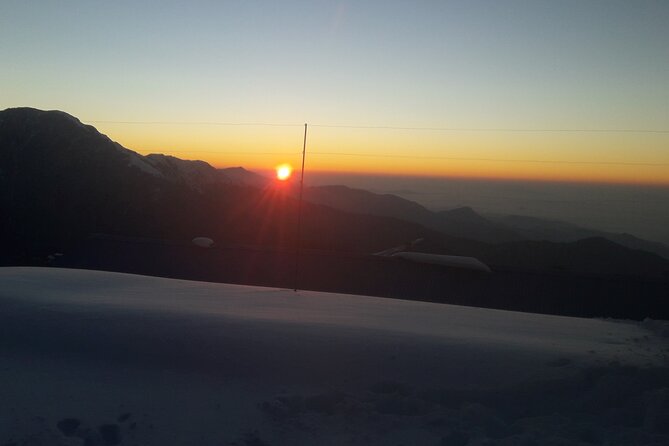
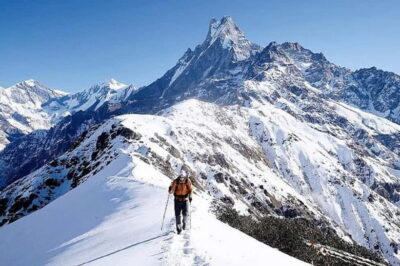
Mountain views come early on Mardi Himal. This private five-day trek from Pokhara combines forest paths, high ridges, and close views of Machhapuchhre and Annapurna South. I like the private format, which lets your guide adjust the pace, and I like that permits, meals, a porter, trekking gear, and mountain lodges are included. The main caution is altitude: High Camp reaches 3,700 meters, so this is not a casual hill walk.
I also like the supportive approach built around a female guide, especially for people who prefer a woman leading the group. The company has also used guides such as Bhim, Saugat Tamang, Yakub, and Ganesh, with porters including Tashi Tamang and Manjung. One practical concern is the itinerary wording, which shifts between Pothana, Deurali, and Dhampus, so confirm the exact overnight stops and pickup time before setting out.
In This Review
- Key points to know before you book
- Why Mardi Himal works so well in five days
- Day 1: Kande to Deurali through the forest
- Day 2: Forest Camp and the climb to Low Camp
- Day 3: Low Camp to High Camp at 3,700 meters
- Day 4: Mardi Himal Base Camp or the shorter viewpoint
- Day 5: Badal Danda to Siding, then back to Pokhara
- What the $399 price really covers
- Guides, porters, and the human side of the trek
- Weather, water, and the small costs that add up
- Who will enjoy this trek most
- Should you book the Private Mardi Himal Trek?
- FAQ
- How long is the Private Mardi Himal Trek?
- Where does the trek start?
- Where does the trek finish?
- How high does the trek go?
- Is Mardi Himal Base Camp included?
- Are meals included?
- Is accommodation included?
- Is a guide and porter included?
- Can I cancel for a full refund?
Key points to know before you book
- High Camp reaches 3,700 meters, with a demanding but rewarding walk to Mardi Himal Base Camp.
- Private transport starts from Pokhara, with a drive to Kande and a shared jeep back from Siding.
- A guide and porter are included, with one porter assigned for every two trekkers.
- Meals and mountain lodges are covered, but drinks, insurance, tips, and Pokhara or Kathmandu stays cost extra.
- A shorter viewpoint option is available on Day 4 if the full Base Camp walk feels too much.
- The trek has a 4.9 rating and 100 percent recommendation rate, with repeated praise for guide care, pacing, and local insight.
Why Mardi Himal works so well in five days
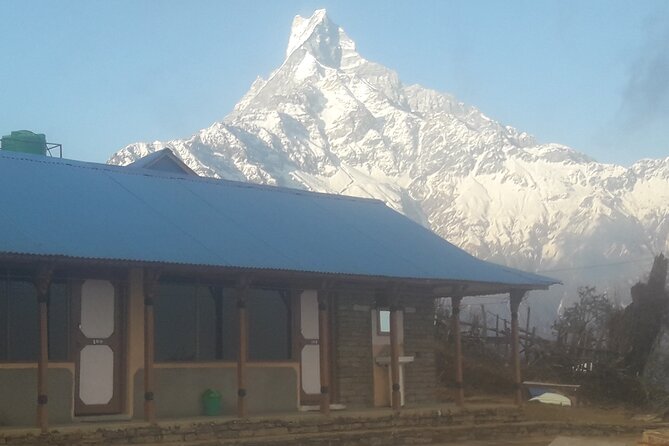
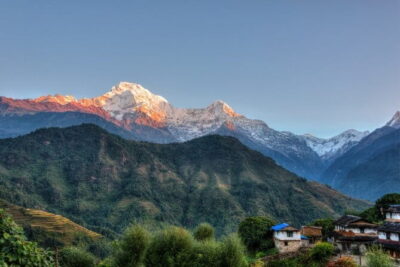
Mardi Himal is a good choice if you want a short Himalayan trek with a real sense of height. You begin among forest and village paths near Pokhara, then climb toward open ridges where Machhapuchhre, often called Fishtail, and Annapurna South become the main event.
The route is compact, but the altitude gain is serious. You start near Kande and finish at Siding, with the highest overnight stay at High Camp. That means you get striking views without committing to a two-week expedition, but you still need to respect the climb.
The private setup matters here. A fixed group tour can force you to walk at someone else’s speed. On this trip, your guide can respond to how you are feeling, stop when needed, and decide if the Base Camp walk is sensible on the day.
The female-guide concept adds another useful layer. The experience is designed to give you a supportive atmosphere led by an experienced female trekking professional. Since the named guides in the supplied information include both men and women are not individually identified, ask who will lead your departure if having a female guide is important to you.
More Mardi Himal Treks:
- Pokhara: 4-Day Mardi Himal Trek
★ 4.9 · 59 reviews - From Pokhara: 4-Day Mardi Himal Base Camp Trek
★ 4.9 · 31 reviews - Mardi Himal Trek
★ 5.0 · 30 reviews
Day 1: Kande to Deurali through the forest
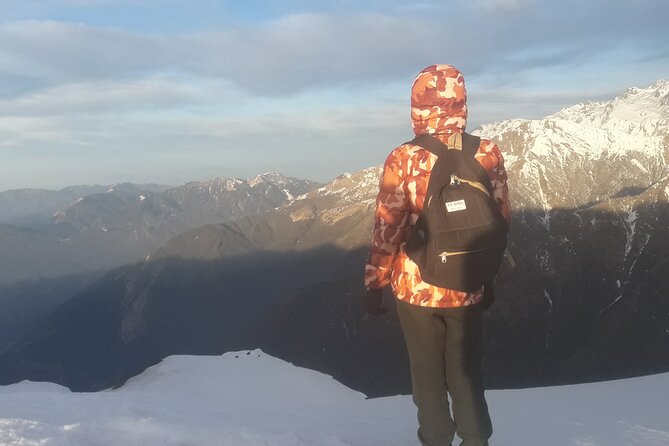
Your first day begins with a private car or van from Pokhara to Kande. The drive takes about one to one and a half hours. That private transfer is a small but useful comfort, since you avoid arranging local transport at the start of a strenuous day.
From Kande, you walk toward Deurali for about five hours. The trail passes through lush forest, with glimpses of Annapurna South and Hiunchuli along the way. The first day is less about huge mountain panoramas and more about getting your legs ready for the climb ahead.
The itinerary also lists Dhampus for this section, while the walking description refers to Kande and Deurali. Treat Dhampus as part of the approach area rather than assuming it is your overnight stop. Confirm the exact route and sleeping village with the operator before departure.
Deurali is a sensible first night because you are already moving uphill without trying to reach the highest ridges too quickly. Your lodge should be clean, according to the package description, but mountain accommodation is simple. Think basic lodge comfort, not a resort room.
Day 2: Forest Camp and the climb to Low Camp
Day 2 takes you deeper into the Mardi Himal route. After roughly four hours of walking, you reach Forest Camp at about 2,600 meters for lunch. The forest remains a major part of the day, but the route gradually begins to feel more remote and more elevated.
You then continue toward Low Camp. The stated walking time is about six hours, although the itinerary also refers to starting from Pothana, which does not perfectly match the Day 1 description. This is another detail worth checking in advance. The exact time will depend on the confirmed overnight location and your group’s pace.
Low Camp is where the views begin to open in a more dramatic way. You can expect broader mountain views along the ridge, with the Annapurna area appearing through breaks in the trees. The reward is not just the destination, but the change from shaded woodland to more exposed high-country walking.
Lunch, dinner, and breakfast are included during the trek. That helps keep the price under control, though you should budget for drinks. One direct practical warning from the experience is that water can be expensive on the route, so ask your guide how much to carry and what refill options are available.
Day 3: Low Camp to High Camp at 3,700 meters
Day 3 is the key climbing day. From Low Camp, you walk for about four hours to High Camp, which sits at approximately 3,700 meters. The total day is listed as six hours, allowing time for breaks and the changing terrain.
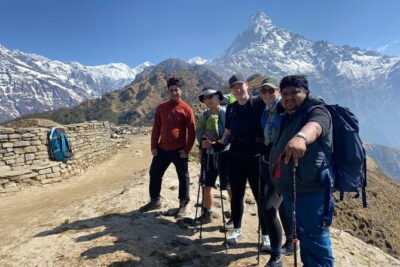
The mountain views become the main attraction here. Machhapuchhre and Annapurna South should feel much closer, and the open ridge gives you a better chance of seeing the peaks than the forest sections below.
This is also where you need to slow down. A four-hour uphill walk at altitude can feel very different from four hours near sea level. Your guide’s pacing is especially important, and that is one of the strongest themes in the feedback: guides such as Bhim and Saugat Tamang were praised for adjusting speed, offering reassurance, and helping people stay comfortable.
High Camp is not a place to rush through. Eat, drink, and rest. The package includes a sleeping bag rated for temperatures as low as minus 25 degrees, along with lodge accommodation. That rating is useful protection in cold conditions, but it does not turn a mountain lodge into a heated hotel. Bring suitable warm layers.
More Treks and Hikes:
- Poon hill Trek 3 days
★ 5.0 · 176 reviews - Trekking in Annapurna/Langtang/Everest/Upper Mustang regions
★ 5.0 · 161 reviews - Pokhara: 4-Day Ghorepani, Poonhill & Ghandruk Mountain Trek
★ 5.0 · 132 reviews - Ghorepani – Poon Hill Trek 3N-4D
★ 5.0 · 125 reviews
Day 4: Mardi Himal Base Camp or the shorter viewpoint
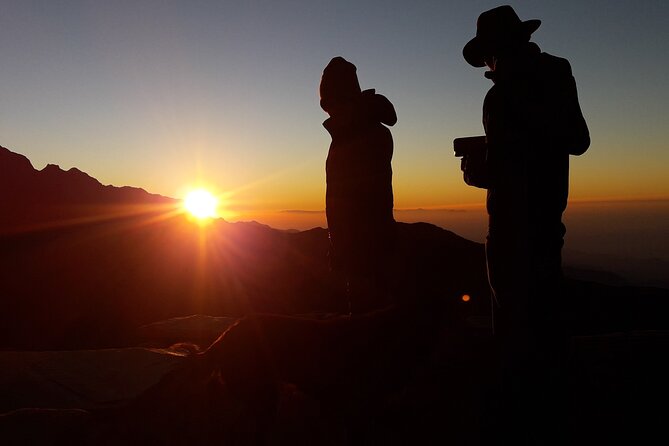
Day 4 gives you the most choice. From High Camp, you can make the roughly four to five-hour round trip to Mardi Himal Base Camp. You then return to High Camp before descending to Badal Danda at 3,210 meters.
The Base Camp outing is the trip’s high point, both literally and visually. It puts you closer to the mountain wall and gives you the clearest chance to appreciate the scale of Machhapuchhre and the Annapurna peaks. The route is also likely to feel tougher because of altitude, uneven trail conditions, and the round-trip format.
If you are tired, the itinerary allows a shorter hike to a viewpoint halfway along the route. I consider this a real strength, not a consolation prize. A good mountain day is one you finish safely and enjoy. The shorter option lets you see the high ridge without forcing a summit-style effort when conditions or energy are poor.
After returning to High Camp, you descend to Badal Danda. That descent breaks up the next day’s walk and gives you a lower sleeping altitude. Your guide can help decide between Base Camp and the viewpoint, but you should still speak up early if you feel unwell.
Day 5: Badal Danda to Siding, then back to Pokhara
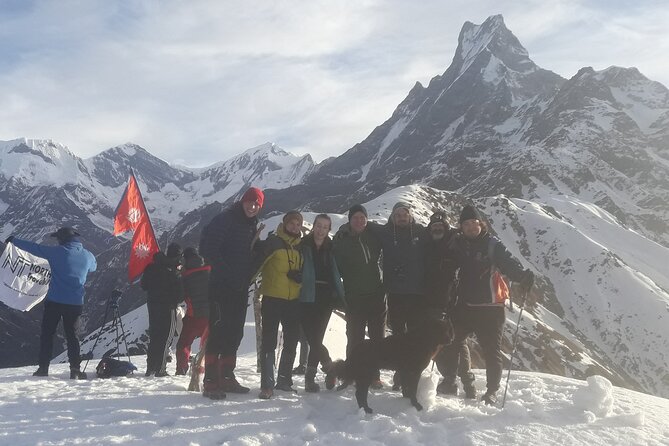
The final walking day runs from Badal Danda down to Siding Village. It takes about five hours. After Siding, you return to Pokhara by shared jeep.
The descent can be harder on knees than the uphill sections are on lungs. Trekking poles are included, and I would use them here, especially if the trail is wet or your legs are tired after the high-altitude day.
The shared jeep is less private than the first-day vehicle. It is included in the package, but shared transport can be less predictable in comfort and timing. That is a fair trade for keeping the package price at $399.
You can also extend the route by one day from Siding to Lwang via Ghalel, a five to six-hour walk. That option is not part of the five-day price description, so ask about the extra cost, accommodation, meals, and transport before choosing it.
What the $399 price really covers
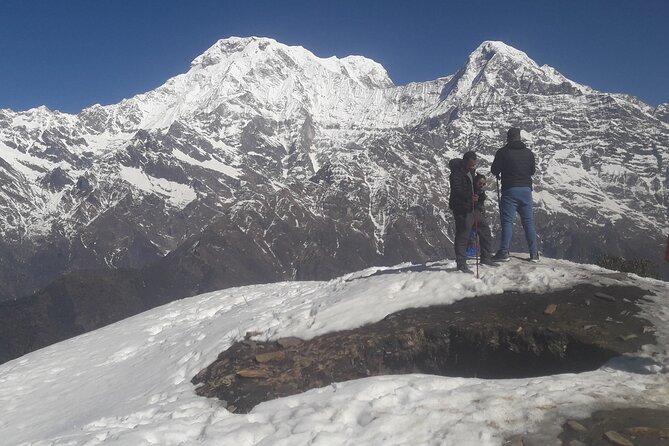
At $399, this trek offers solid value for a private five-day mountain trip. The cost includes:
- Private car or van from Pokhara to Kande
- Shared jeep from Siding to Pokhara
- Lodge accommodation during the trek
- ACAP permit
- TIMS card
- English-speaking, government-registered guide
- First-aid-trained guide
- One porter for every two trekkers
- Kitbag for your belongings
- Sleeping bag
- Microspikes
- Trekking poles
- Five lunches
- Four breakfasts
- Four dinners
- Government and local taxes
- Trek paperwork
- Certificate of appreciation after completion
Permits alone can make independent planning less simple, and the included porter changes the physical demands of the trip. You still carry a daypack, but you do not need to haul all your clothing and equipment up to High Camp.
The meal coverage is also useful. Four breakfasts, five lunches, and four dinners match the five-day schedule, though the package does not include drinks. Budget separately for water and other beverages. Insurance, tips, and accommodation and meals in Pokhara or Kathmandu are also excluded.
For a private group, the value is strongest if you are two or more people sharing the guide and porter arrangement. Solo pricing may still be worthwhile for the flexibility, but you should ask how the porter allocation affects the cost.
Guides, porters, and the human side of the trek
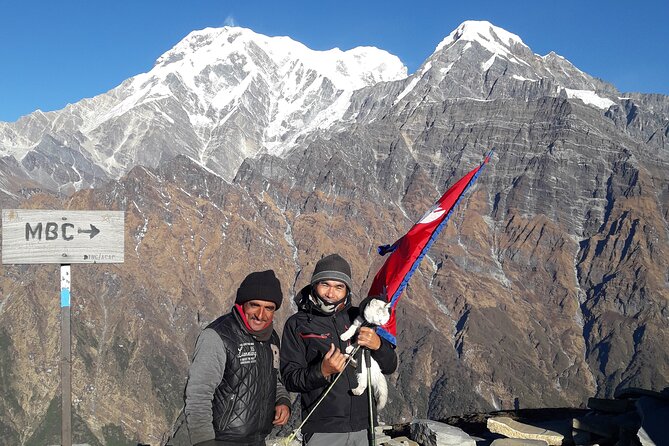
The strongest praise goes to the staff. Bhim is repeatedly described as friendly, reassuring, and full of information about Nepal and local culture. Saugat Tamang was praised for arriving punctually, understanding walking pace, and suggesting alternatives. Yakub was valued for professionalism, friendliness, humor, and conversation about Nepal.
Those details matter more than a polished itinerary. On a five-day trek, your guide controls the rhythm of each day. A guide who notices when you need a slower pace can make High Camp feel manageable instead of miserable.
Porters such as Tashi Tamang, Menjum, Manjung, Kazoo, and Gobinda were also praised for practical help and steady support. The one-porter-for-two-trekkers arrangement is a reasonable balance, but you should pack responsibly. A porter is there to help with your load, not to carry an oversized suitcase.
The package says the guide is first-aid trained and government registered. That is reassuring, but it does not replace your own travel insurance. Personal insurance is excluded, and you should arrange it before the trek.
Weather, water, and the small costs that add up
The route’s conditions can change quickly, especially near High Camp. The included microspikes and trekking poles are valuable because they give you more control on cold or slippery sections. You should still bring warm clothing and practical rain protection, since equipment supplied by an operator may not cover every personal need.
Water is one of the clearest extra costs. Drinks are excluded, and water along the route can be expensive. Ask about current prices, carrying capacity, and refill arrangements before you leave Pokhara. This is a simple way to avoid surprise spending.
The lodges are described as clean, but the package does not promise private bathrooms, heating, or luxury facilities. If those details matter to you, ask before booking. The real attraction is the trail and the mountain view, not the room.
The listed start time is 11:45 pm, which is unusual for a trek beginning with a morning drive from Pokhara. Confirm the actual meeting time directly with Nepal Wilderness Trekking. The company says confirmation is provided at booking, so use that confirmation to settle the pickup details.
Who will enjoy this trek most
I would recommend this trip to you if you want:
- A short Himalayan trek from Pokhara
- A private guide and flexible walking pace
- A route that reaches 3,700 meters
- Close views of Machhapuchhre and Annapurna South
- Included permits, meals, lodge stays, and trekking equipment
- Support from a guide and porter
- The choice between Mardi Himal Base Camp and a shorter viewpoint
You should think twice if you want a relaxed nature walk with little uphill effort. The altitude and six-hour walking days make this a moderate physical challenge. You also need to be comfortable with simple lodge accommodation and paying extra for drinks.
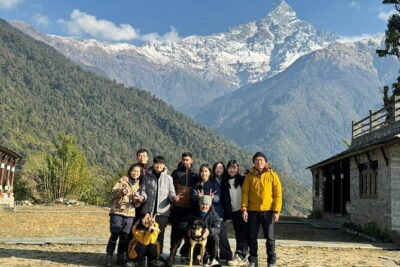
Families with older teenagers may find the private format useful because the guide can adjust the pace. The supplied feedback includes a family trek with teenage sons, where the guide’s friendliness and support were especially appreciated. Still, the trip is not described as suitable for young children, so do not assume that it will suit every family.
The experience is also a good match for people who value cultural conversation. Guides have shared information about Nepal and local traditions, and one winter trek included a cultural dance on the first night. That is the kind of personal contact that makes a mountain route more than a series of photographs.
Should you book the Private Mardi Himal Trek?
I would book it if you want a well-supported, five-day route with serious mountain views and do not need luxury. The $399 price covers many of the costly and awkward parts of trekking in Nepal, including permits, a guide, porter, meals, sleeping equipment, and transport.
Before paying, confirm three things: the assigned guide, especially if you want a female guide; the exact Day 1 and Day 2 overnight stops; and the unusual 11:45 pm start time shown in the details. Also set aside money for drinks, insurance, tips, and city accommodation.
The 4.9 rating and 100 percent recommendation are backed by consistent praise for pacing, kindness, local knowledge, and practical care. If you accept the altitude and basic lodges, this is a strong way to see the Mardi Himal route without managing every detail yourself.
FAQ
How long is the Private Mardi Himal Trek?
The trek lasts approximately five days.
Where does the trek start?
The experience begins in Pokhara, followed by a private drive to Kande. The drive takes about one to one and a half hours.
Where does the trek finish?
The walking route finishes at Siding Village. From Siding, you return to Pokhara by shared jeep.
How high does the trek go?
High Camp is at approximately 3,700 meters. The Day 4 walk continues toward Mardi Himal Base Camp.
Is Mardi Himal Base Camp included?
Yes. Day 4 includes a four to five-hour round trip to Mardi Himal Base Camp. You may choose a shorter hike to a halfway viewpoint instead.
Are meals included?
Yes. The package includes five lunches, four breakfasts, and four dinners. Drinks are not included.
Is accommodation included?
Yes. Clean lodge accommodation is included along the Mardi Himal route. Accommodation and meals in Pokhara and Kathmandu are not included.
Is a guide and porter included?
Yes. The package includes an English-speaking, government-registered, first-aid-trained guide and one porter for every two trekkers.
Can I cancel for a full refund?
Yes, if you cancel at least 24 hours before the experience start time. Cancellations or changes made within 24 hours are not refunded or accepted.
Just added around Pokhara
- Double Dare: Tandem Bungee Adventure★ 4.3 · 3 reviews
- Exhilarating Pokhara-Kathmandu Bus Journey Experience★ 3.5 · 3 reviews
- 3 Day Australian Camp Dhampus Ghandruk Easy Trek in Pokhara★ 3.5 · 3 reviews
- Paragliding in Pokhara★ 5.0 · 3 reviews
- Seti George and Thrilling Suspension Bridge Tour at Pokhara★ 4.5 · 3 reviews
- Overnight Dhampus Australian Camp Easy Hiking from Pokhara★ 5.0 · 3 reviews
- Full Day Entire Pokhara Tour by Car with Guide★ 4.5 · 3 reviews
- 5 Days Mardi Himal Trek.★ 5.0 · 3 reviews
Mardi Himal Treks, compared.
Browse the lists this tour appears in