
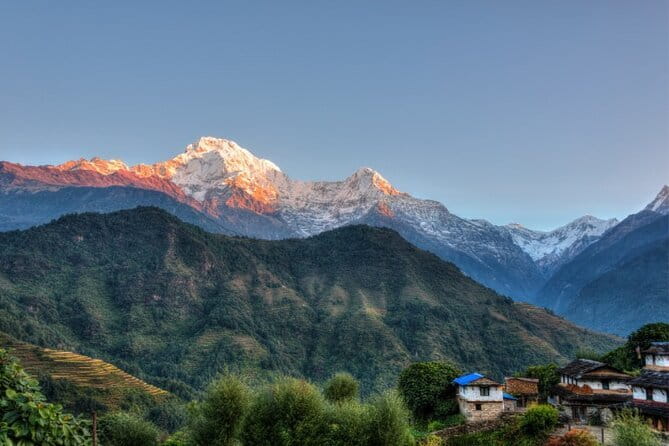
Reviewed · MARDI HIMAL TREKS
Mardi Himal Trek
Mountain views arrive early here. The Mardi Himal Trek gives you a well-organized route through Nepal’s Annapurna region, with two things I especially like: the gradual climb through rhododendron and pine forests and the big payoff at Mardi Base Camp, around 4,500 meters. The private format, experienced trekking staff, and included domestic flights also make the trip easier to manage. The main catch is altitude. This may be a beginner-friendly Himalayan trek, but the high days still demand steady walking, warm clothing, and sensible pacing.
I also like the way the trip adds time in Kathmandu and Pokhara rather than treating the trek as a stand-alone rush into the mountains. Guides such as Birendra have earned praise for careful route planning, humor, photography help, and patient support when conditions get tough. You should still expect basic mountain lodges, extra charges for hot showers and WiFi, and no refund if you leave the trek early.
In This Review
- Key points at a glance
- What the Mardi Himal Trek is really like
- Day 1: Kathmandu arrival and Thamel
- Day 2: Kathmandu to Pokhara, then Kande and Deurali
- Day 3: Deurali to Forest Camp
- Day 4: Forest Camp to Low Camp
- Day 5: Low Camp to High Camp
- Day 6: High Camp to Mardi Base Camp and back
- Day 7: High Camp to Sidding
- Day 8: Sidding to Lwangghale
- Day 9: Lwangghale to Pokhara
- Day 10: Pokhara sights and lakeside time
- Day 11: Return to Kathmandu and city sightseeing
- What the $1,058 price covers
- The guide and porter support
- Who should book this trek?
- Booking details and cancellation
- Final call: is Mardi Himal worth it?
- FAQ
- How long is the Mardi Himal Trek experience?
- What is the highest point on the trek?
- Is this trek suitable for beginners?
- Are flights between Kathmandu and Pokhara included?
- What meals are included?
- Is accommodation included?
- Is the trek private?
- Can I cancel for a full refund?
Key points at a glance
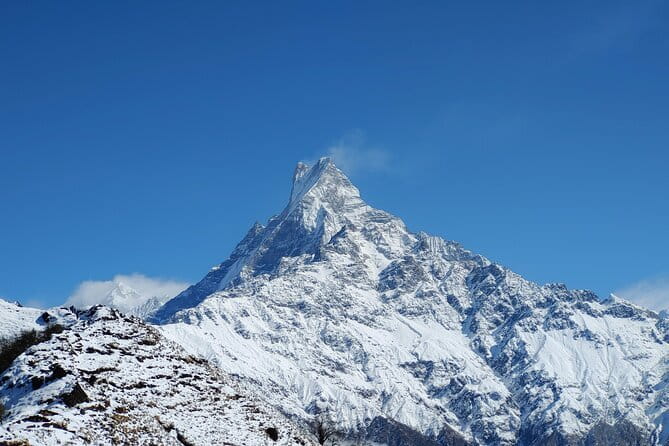
- Mardi Base Camp reaches about 4,500 meters: The summit section is the most demanding and rewarding part of the route.
- Forest scenery changes day by day: You walk through rhododendron and pine woods before reaching open high-country viewpoints.
- Kathmandu and Pokhara are included: The trip combines mountain walking with guided city time and lakeside downtime.
- Private travel keeps the pace flexible: Only your own group participates, with a licensed guide and porter support.
- Domestic flights save road time: Kathmandu to Pokhara and back are included, along with private ground transfers.
- Pack serious cold-weather gear: High Camp and Base Camp can feel very cold, even though the route suits newer hikers.
What the Mardi Himal Trek is really like
This is an 11-day Nepal holiday built around a roughly four-day ascent and descent in the Mardi Himal area, with city stays before and after. The route begins near Pokhara, climbs from Kande through Deurali, Forest Camp, Low Camp, and High Camp, then reaches the Mardi Himal viewpoint and Base Camp.
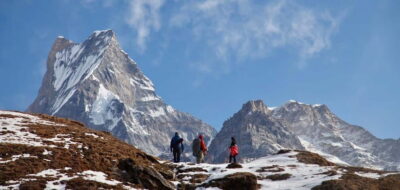
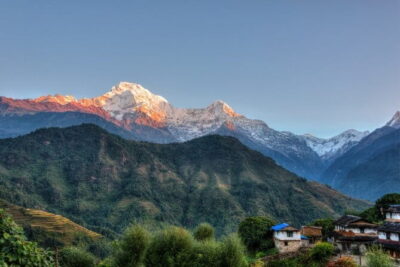
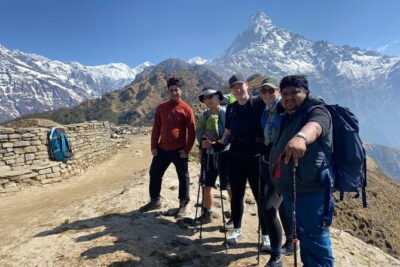
The appeal is the variety. One day may put you under colorful spring rhododendrons. The next opens toward the Annapurna Massif, Mount Machhapuchhre, and Mardi Himal. The route is not presented as an extreme mountaineering test, but the upper section is still serious walking at altitude.
I would describe it as a good introduction to Himalayan trekking for someone with moderate fitness. You do not need to be an expert climber, but you do need to accept long walking days, simple accommodation, changing weather, and a climb that becomes harder above 3,000 meters.
The private arrangement matters. Your group is not tied to a large mixed party, so the guide can adjust the route when weather or energy levels demand it. That flexibility proved useful for people who completed the route despite difficult conditions, and it is one of the strongest reasons to consider this package over a cheaper, less supported option.
More Mardi Himal Treks:
- Mardi Himal Trek Nepal
★ 5.0 · 29 reviews - Pokhara: 4-Day Mardi Himal Trek
★ 4.9 · 59 reviews - Private Mardi Himal Trek
★ 5.0 · 42 reviews
Day 1: Kathmandu arrival and Thamel
Your first day is deliberately light. After airport entry formalities, a company representative or tour leader meets you and drives you to Thamel. The listed activity time is only about 30 minutes, leaving the rest of the day for rest and preparation.
This is a sensible start after an international flight. Thamel is a useful base for getting settled, checking your gear, and meeting the people handling your trek. If your luggage arrives late or you need to organize personal items, having this buffer is helpful.
Your Kathmandu hotel is in the three-star category, with breakfast included. Meals in the city are otherwise your responsibility, so budget separately for lunches, dinners, drinks, and personal spending.
Day 2: Kathmandu to Pokhara, then Kande and Deurali
The trip uses an early domestic flight from Kathmandu to Pokhara. Flights are included for you and your guide, and private road transport takes you onward to Kande.
From Kande, the walking begins gently. The route gradually gains height toward Deurali, making this a useful first day on foot rather than an immediate high-altitude push. The full day is listed at about five hours, including the transfer and walking portion.
Deurali is more than a stop on a schedule. It marks the shift from transport to mountain rhythm, with a hearty meal before the next day’s climb. Your first lodge stay on the route is basic by city standards, but that is part of the deal. You are paying for access, support, and scenery rather than polished hotel service.
Day 3: Deurali to Forest Camp
After eating in Deurali, you continue toward Forest Camp on a trek of about six hours. The path starts relatively level and then moves through woodland.
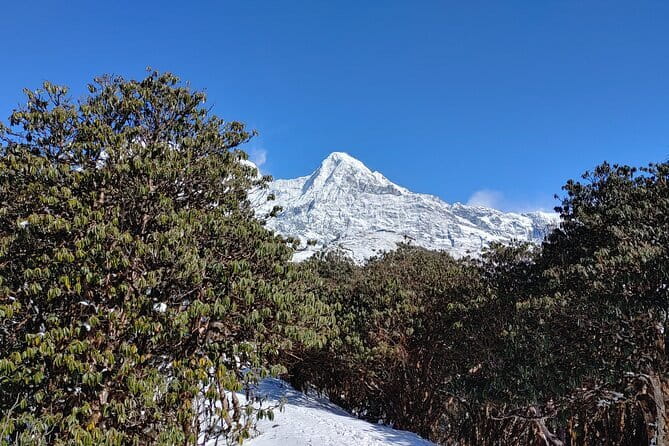
This is one of the prettiest parts of the route. Rhododendron trees provide the real show in spring, when the forest can be filled with color. Pine and mixed woodland keep the walking shaded in places, but the steady climb still requires effort.
The forest also changes your sense of distance. You may not have constant mountain views here, yet the quiet path and gradual gain prepare you for the open ridges above. I like this pacing because the route does not reveal every major view on the first day.
More Treks and Hikes:
- Everest Base Camp Trek – 14 Days
★ 5.0 · 1,499 reviews - Everest Base Camp Trekking
★ 5.0 · 485 reviews - Nagarkot Sunrise View and Day Hiking from Kathmandu
★ 5.0 · 471 reviews - Annapurna Circuit Trek with Tilicho Lake
★ 5.0 · 368 reviews
Day 4: Forest Camp to Low Camp
Above 3,000 meters, the itinerary shortens the walking day to about five hours. After breakfast, you continue through mixed woodland and stop for lunch at Low Camp.
This is where altitude becomes a practical concern rather than an abstract number. The company advises regular hydration, and you should take that seriously. Walk at a pace that lets you breathe comfortably, tell your guide if you feel unwell, and do not treat a slower day as failure.
Low Camp offers a change in feel from the enclosed forest. As the route gains height, views toward the Annapurna range and Machhapuchhre may become more open, depending on weather. The scenery can be spectacular, but cloud cover is always a possibility, so do not judge the trip by one afternoon’s visibility.
Day 5: Low Camp to High Camp
The next five-hour day continues above 3,000 meters. The shorter distance is designed to help your body adjust before the highest part of the trek.
High Camp is an important staging point. It gives you a place to sleep before the Base Camp push, but it is also where comfort becomes more limited. Cold is a real issue. One person who completed the route in late November specifically stressed bringing enough warm clothing, and that advice deserves a prominent place in your packing plan.
The package can provide a down jacket, sleeping bag, and duffel bag on request. These items must be returned after the trek. Confirm the arrangement before departure rather than assuming every piece will appear automatically.
Food at the lodges is included for the trekking days, with eight breakfasts, eight lunches, and eight dinners listed in the package. Personal snacks are still useful, particularly for the high sections. A useful tip from the trip feedback: lodge food can be satisfying, and High Camp pizza received a special nod. You will not need to carry every meal, but a few favorite snacks can make the long days easier.
Day 6: High Camp to Mardi Base Camp and back
This is the centerpiece of the trip. The day is listed at about seven hours, and it includes the walk toward Mardi Himal Base Camp, around 4,500 meters, plus the return to your overnight base.
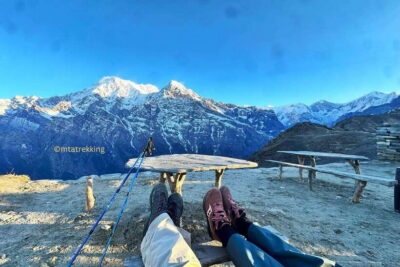
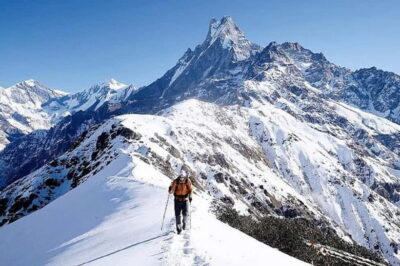
The route reaches a viewpoint with broad views of the Annapurna Massif, Mount Machhapuchhre, and Mardi Himal. This is the moment many people have been working toward since leaving Kande. The upper path is exposed compared with the forest sections, and the air is thinner, so the distance may feel longer than the number suggests.
Do not underestimate this day because the trek is marketed to newer hikers. The climb can be challenging, especially in cold weather or poor visibility. A guide who knows when to slow down, change the route, or turn back is a major benefit here. Birendra is singled out for patient leadership and careful arrangements, but the operator may assign a different guide, so treat his name as an example rather than a guarantee.
The reward is not just a photograph at Base Camp. It is the changing view as the trees fall away and the Himalayan peaks take over. If the weather clears, this is the section most likely to produce the emotional high point of the trip.
Day 7: High Camp to Sidding
After breakfast at altitude, you turn downhill toward Sidding. The day takes about six hours, with the first section passing through rhododendron and pine trees.
Descending sounds easier than climbing, but tired knees can make it demanding. One account of the route described the final days as hard on the knees, especially after the Base Camp effort. Trekking poles, careful footing, and a controlled pace are useful here, though poles are not listed as included.
The return through the trees gives you a different view of the route. You are no longer focused only on gaining height, and the forest becomes a welcome change after the cold upper slopes. Lunch timing depends on progress, with Low Camp mentioned as a possible stop.
Day 8: Sidding to Lwangghale
This six-hour walking day is often treated as one of the most enjoyable sections. The route is mostly flat and leads toward Lwangghale, a village with traditional ancestral houses.
That village setting gives the trek a human scale. You are not simply moving between mountain camps. You are passing through settled places where local architecture and farming life remain part of the journey.
Lwangghale also offers a slower evening after the high-altitude push. The village stay is in the best available lodge accommodation, normally twin sharing. Expect simple rooms and services, not hotel-style facilities. WiFi, hot showers, drinks, and other personal expenses cost extra where available.
Day 9: Lwangghale to Pokhara
An early start lets you walk through the tea gardens around Lwangghale at sunrise. The morning light adds a quiet final scene to the trekking section before you return to the guesthouse for breakfast.
The day takes about five hours and ends in Pokhara. After several nights in mountain lodges, a three-star hotel and a proper city base feel especially welcome. Breakfast is included at the hotel, but other Pokhara meals are not unless specifically listed.
I like this transition because it does not force you straight onto a flight or into a long road journey. You have time to settle back into city life, eat comfortably, and recover before sightseeing.
Day 10: Pokhara sights and lakeside time
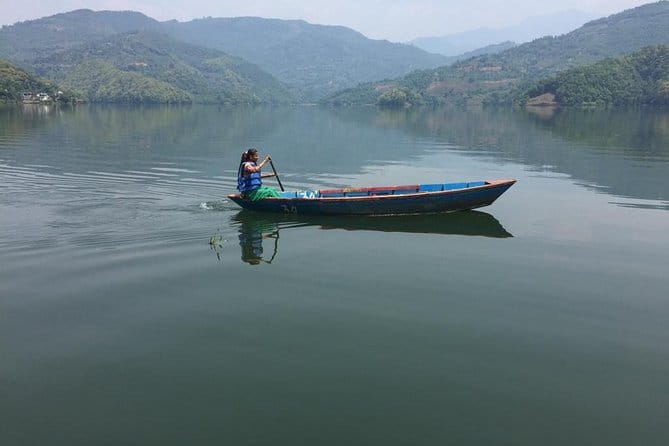
Your Pokhara day begins with breakfast at a well-known lakeside spot, followed by guided city sightseeing. The stated options include Davis Waterfall and Gupteswor Mahadev Cave.
This day gives the package more range than a simple trek transfer. You get a look at Pokhara beyond the trail, with its water features, cave site, and lakeside setting. The five-hour schedule should leave some breathing room, though the exact sightseeing order is not detailed.
Meals outside the included breakfast remain your responsibility. That is easy to manage in Pokhara, but remember that the $1,058 price is not an all-inclusive food budget for the city.
Day 11: Return to Kathmandu and city sightseeing
You fly back to Kathmandu, with the domestic ticket included, then spend about five hours visiting cultural and heritage sights with a town guide. The precise list of Kathmandu stops is not specified, so you should ask the operator what is planned for your date.
This final day works well for people who want more than mountain scenery. It also provides a last look at Nepal’s capital before the trip ends back at the Mission Himalaya Treks and Expeditions meeting point in Thamel.
Private vehicles handle airport, city, and sightseeing transfers. That removes much of the guesswork after a tiring trek, though flight schedules can still affect the day.
What the $1,058 price covers
At $1,058 per person, the package is not just a four-day walk. It includes Kathmandu and Pokhara hotels, round-trip Kathmandu to Pokhara flights, private transfers, sightseeing transport, trekking permits, guide and porter services, and most trekking meals.
The guide is government licensed and ministry trained. The porter’s salary, food, accommodation, and insurance are included as well. This is meaningful value, because arranging those services separately can be confusing, particularly when you are dealing with permits, domestic flights, and mountain transport.
You also receive government and local taxes, GST, company charges, and the ACAP and TIMS permits. A down jacket, sleeping bag, and duffel bag are available on request, which can reduce the amount of specialist gear you need to buy.
The price does not include international flights, a Nepal visa, travel or rescue insurance, meals in Kathmandu and Pokhara beyond the stated breakfasts, drinks, WiFi, hot showers, tips, and personal expenses. Add those costs before deciding that the package is cheap or expensive.
Group discounts are offered, but the activity itself is private, meaning only your own group participates. That combination could make the price more attractive for friends or families traveling together.
The guide and porter support
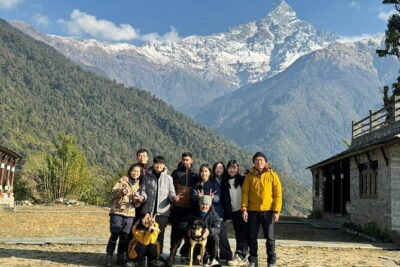
Good support matters most when the weather shifts, the trail feels longer than expected, or your knees begin to complain. The strongest feedback about this trip centers on friendly guides, caring porters, sensible traffic arrangements, route adjustments, and practical food advice.
Birendra is praised by name for smooth organization, warmth, humor, photography, and patience. Another account credits the guide and porter team with helping the group finish despite difficult conditions. Those are useful signs, but guide assignments can change, so ask who will lead your departure.
The porter service is also a major part of the value. You are not expected to carry the full load while walking to Base Camp. Even so, pack responsibly and respect the weight limits set by the company and local staff.
Tipping is not included. It is listed as a personal expense, so plan for it as part of the trek budget.
Who should book this trek?
I would recommend it to you if you want a first Himalayan trek with a clear support system, moderate physical demands, and a strong mountain-view payoff. The route is especially appealing if you want forests, villages, high ridges, and city sightseeing in one trip.
It also suits a private group that values flexibility. Friends, couples, and families with moderate fitness can benefit from having their own guide rather than being locked into the pace of a large party.
I would be more cautious if you dislike basic lodges, cold nights, long downhill walks, or uncertain mountain weather. The word beginner-friendly should not be confused with effortless. The seven-hour Base Camp day and the 4,500-meter altitude require preparation.
You should also be comfortable with a no-refund rule if you decide to leave the trek early. Travel and rescue insurance is not included, so arranging appropriate cover is important.
Booking details and cancellation
Confirmation is provided at booking. The meeting point is Mission Himalaya Treks and Expeditions on Thamel Marg in Kathmandu, and the trip ends back there.
The experience is offered from February 28, 2024 through November 25, 2026, every day of the week. You can cancel up to 24 hours before the start time for a full refund. Cancellations or changes made within 24 hours are not accepted for a refund, based on local time.
Final call: is Mardi Himal worth it?
Yes, if you want a supported trek with serious views but do not want to commit to a much longer Himalayan expedition. The mix of forest walking, village stays, tea gardens, Machhapuchhre views, and Mardi Base Camp gives you a satisfying route in a manageable 11-day package.
I would book it if the included flights, porter, permits, city hotels, and private transport match the kind of help you want. Before paying, confirm the guide, the gear available on request, the exact Kathmandu sightseeing stops, and the expected lodge conditions.
Pack warm layers, drink steadily, protect your knees on the descent, and keep your schedule flexible around weather. Do that, and this trek offers a strong first taste of Nepal’s high country without stripping away the practical support that makes the experience enjoyable.
FAQ
How long is the Mardi Himal Trek experience?
The full experience lasts approximately 11 days, including time in Kathmandu, Pokhara, the trek, and guided sightseeing.
What is the highest point on the trek?
Mardi Himal Base Camp is approximately 4,500 meters above sea level.
Is this trek suitable for beginners?
The route is considered suitable for novice hikers, but you should have moderate physical fitness and be prepared for altitude, cold conditions, and long walking days.
Are flights between Kathmandu and Pokhara included?
Yes. Domestic flights from Kathmandu to Pokhara and back are included for you and your guide.
What meals are included?
The package includes 10 breakfasts, eight lunches, and eight dinners. Meals in Kathmandu and Pokhara are not included except for the stated breakfasts.
Is accommodation included?
Yes. Three-star hotel accommodation in Kathmandu and Pokhara with breakfast is included. During the trek, you stay in the best available lodges with twin-sharing rooms.
Is the trek private?
Yes. This is a private activity, and only your group participates. Group discounts are also available.
Can I cancel for a full refund?
Yes, if you cancel at least 24 hours before the experience start time. Cancellations or changes made less than 24 hours before the start time are not refunded.
Just added around Kathmandu
- Private Shopping Tour in Kathmandu★ 5.0 · 3 reviews
- Nagarkot Sunrise With 7 UNESCO World Heritage Private Tour★ 5.0 · 3 reviews
- Kathmandu: Nightlife and Pub Crawl Tour★ 5.0 · 3 reviews
- Mount Everest Scenic Flight 50 Minutes★ 5.0 · 3 reviews
- Momo Cooking Class -The Art Of Making MoMo with Home Chef★ 5.0 · 3 reviews
- Kathmandu: Nagarkot, Bhaktapur, Doleswor & Sanga Statue Tour★ 5.0 · 3 reviews
- Makalu Base Camp Trek★ 5.0 · 3 reviews
- Kathmandu: Momo Making Class with a Local Chef★ 5.0 · 3 reviews
Mardi Himal Treks, compared.
Browse the lists this tour appears in