
Reviewed · KATHMANDU TOURS
Rainbow Mo:Mo
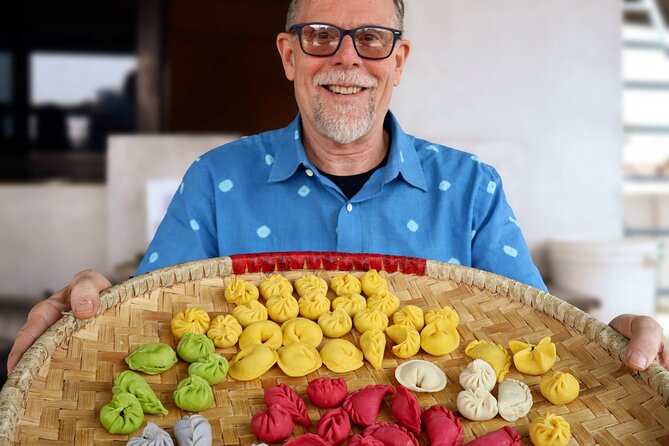
Pinch your way into Kathmandu culture. Rainbow Mo:Mo gives you a hands-on introduction to Nepal’s beloved dumplings, adding a playful queer touch and naturally colored dough made with beetroot, spinach, carrot, and butterfly pea. I like the creative use of local ingredients and the fact that the class celebrates diversity without treating it as an afterthought.
I also like the small-group format, capped at 15 people, plus the option of pickup. The main consideration is that the class lasts about two hours, so it offers a focused taste of momo-making rather than a broad Nepalese cooking course. At $44 per person, the value depends on how much you enjoy participating rather than simply eating.
In This Review
- Key points at a glance
- Why Rainbow Mo:Mo is more than a cooking lesson
- Starting at Garden of Dreams
- The color palette: beetroot, spinach, carrot, and butterfly pea
- Pinching, folding, and making the momo face
- Meeting Prajeet and learning from Aayam
- From bright dough to the cooking stage
- What $44 buys you
- Who will enjoy this experience most
- Practical planning for your Kathmandu day
- Booking and cancellation advice
- Should you book Rainbow Mo:Mo?
- FAQ
- Where does Rainbow Mo:Mo begin?
- Where does the activity end?
- How long does the experience last?
- How much does Rainbow Mo:Mo cost?
- Is hotel pickup available?
- What are the operating hours?
- What ingredients create the momo colors?
- How many people can join?
- Are service animals allowed?
- What is the cancellation policy?
Key points at a glance
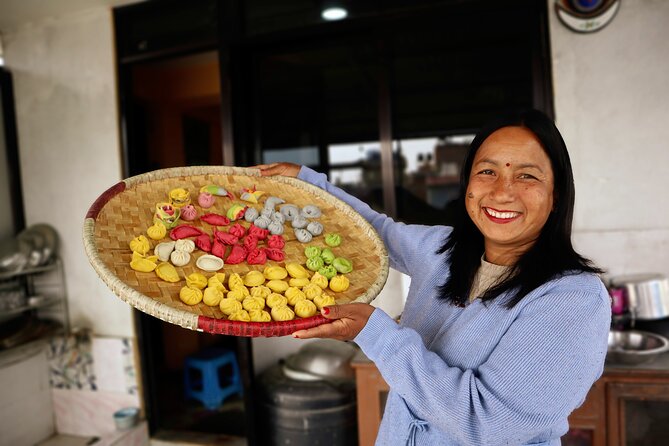
- Natural colors from four ingredients: Beetroot creates pink dough, spinach adds green, carrot brings orange, and butterfly pea supplies blue.
- A queer-forward Kathmandu experience: The class connects food, humor, creativity, and inclusion in a welcoming setting.
- Hands-on shaping: You learn the careful pinch-and-fold work that gives momos their familiar form.
- Two ways to eat them: The finished momos are served steamed and fried, according to the available experience details.
- Convenient Garden of Dreams meeting point: The activity begins and ends at Tridevi Sadak in central Kathmandu.
- Strong early response: The experience holds a 4.9 rating from 19 reviews, with 100 percent recommending it.
Why Rainbow Mo:Mo is more than a cooking lesson
Momos are among Nepal’s most approachable foods. They are dumplings, often filled and folded by hand, then cooked until tender or crisp. A class built around them gives you more than a snack. You get a simple way to connect with an everyday part of Kathmandu food culture.
Rainbow Mo:Mo adds a clear point of view. The class is queer-forward, and the colors are not just decorative. They turn the dumplings into a visual celebration of identity and difference. The result sounds playful rather than formal, with the shaping process compared humorously to cosmetic work: first putting the Botox in the face, then pinching the dough into place.
That tone matters. You are not signing up for a stiff culinary demonstration. You are joining an activity built around making, laughing, and eating together. If you enjoy food experiences with a social message, this will likely feel more memorable than a standard cooking lesson.
A few more trips worth weighing up before you book
- Everest Base Camp Trek – 14 Days
★ 5.0 · 1,499 reviews - Private Kathmandu Sightseeing Tour | UNESCO World Heritage sites
★ 5.0 · 756 reviews - Everest Base Camp Helicopter Tour landing at Everest View Hotel
★ 5.0 · 668 reviews
Starting at Garden of Dreams
The meeting point is Garden of Dreams, at Tridevi Sadak, Kathmandu 44600. The activity also ends there, which keeps the logistics tidy. You do not need to arrange a second drop-off point or work out a new location after the class.
Pickup is offered, though the details supplied do not specify the pickup area or whether it costs extra. If you want to use it, confirm the arrangement when booking. Otherwise, Garden of Dreams is the fixed point to keep in mind, and the location is near public transportation.
The stated opening hours run Monday through Sunday from 9:15 AM to 4:15 PM, for the listed operating period from November 3, 2024, through November 25, 2026. That broad weekly schedule gives you useful flexibility, especially if your Kathmandu plans already include sightseeing in the morning or evening.
Because the class begins at a named meeting point, arrive with enough time to find the entrance and settle in. If you have arranged pickup, make sure the meeting instructions are clear before the day of the activity.
The color palette: beetroot, spinach, carrot, and butterfly pea
The most distinctive part of Rainbow Mo:Mo is the dough itself. Instead of plain wrappers, you work with colors drawn from food ingredients.
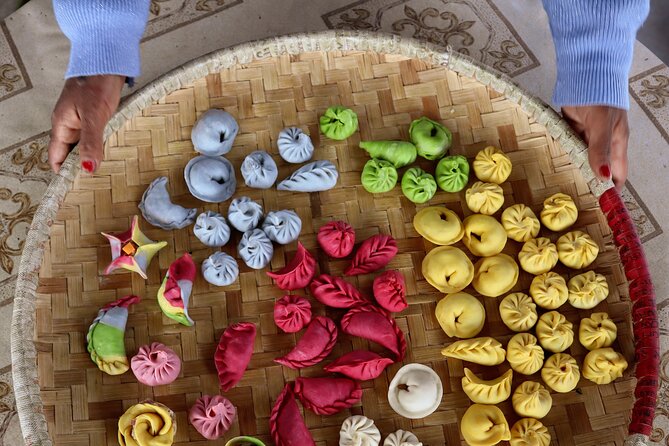
Beetroot produces a strong pink shade. Spinach brings green. Carrot adds orange, while butterfly pea creates blue. These ingredients make the class feel like a small food-art project, but they also keep the focus on natural coloring rather than artificial decoration.
I like this approach because the ingredients are easy to understand. You can see how an ordinary vegetable or flower-based ingredient changes the appearance of the dough. The class makes the visual side of cooking part of the lesson without turning the food into a gimmick.
The supplied details do not specify how the fillings are seasoned or which fillings are used. That is worth asking about if you have dietary restrictions, allergies, or strong preferences. The colors are clearly identified, but the full ingredient list is not.
Pinching, folding, and making the momo face
The shaping stage is where the class becomes properly hands-on. You do not simply watch someone produce perfect dumplings. You work with the dough and learn the repeated pinching motion that closes the wrapper.
The playful cosmetic comparison captures the basic challenge. A momo needs a neat face, and the final look depends on small, careful movements. Your first few may be uneven. That is part of the fun, especially in a class designed around humor and creative expression.
You should expect the work to require some patience. The ingredients and colors may attract attention, but the real skill lies in shaping the dumpling so it holds together. If you like activities that involve your hands, this is a better choice than a passive food tour.
The class is limited to a maximum of 15 people. That is large enough to create a social atmosphere, but small enough to keep the activity more manageable than a crowded demonstration. The experience can also work with very few participants. One available account describes a person attending alone and still having a fun, personal session.
That point is useful for solo visitors. You should not assume you need a large group to enjoy the class. If your booking happens to have only one participant, the format may become more personal rather than less worthwhile.
A different sort of day from Kathmandu:
- Half day cooking class in Thamel kathmandu
★ 5.0 · 607 reviews - Everest Base Camp Trekking
★ 5.0 · 485 reviews - Nagarkot Sunrise View and Day Hiking from Kathmandu
★ 5.0 · 471 reviews - Kathmandu: Full Day 7 UNESCO Tour with Lunch – Private/Group
★ 5.0 · 415 reviews
Meeting Prajeet and learning from Aayam
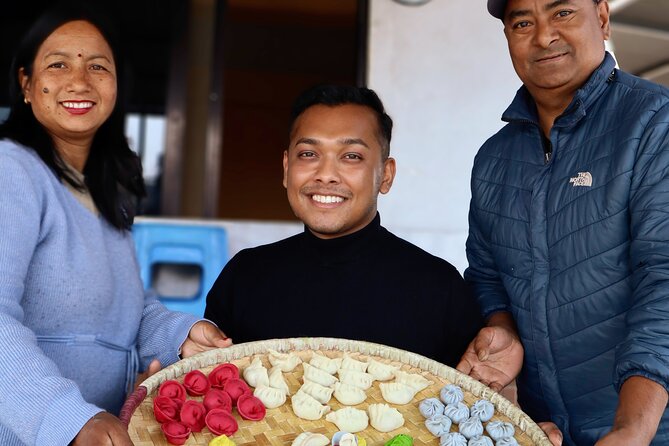
Two names connected with the experience are Prajeet and Aayam. Prajeet handled a hotel-lobby pickup on time for one participant, while Aayam taught the momo-making process.
Those details give the activity a human scale. If pickup is part of your arrangement, punctual coordination can make a big difference in Kathmandu, where traffic and unfamiliar streets can complicate short journeys. A named guide also helps you know who to look for and who may be involved in the experience.
Aayam is specifically associated with teaching the shaping process. That suggests the class is not only about being handed a plate of colorful dumplings. You are shown how to roll and pinch them yourself.
The information does not provide a full guide biography or describe the language used during instruction. If that matters to you, ask before booking. The strongest evidence here is practical: pickup was handled on time, and the cooking instruction was remembered as a high point.
From bright dough to the cooking stage
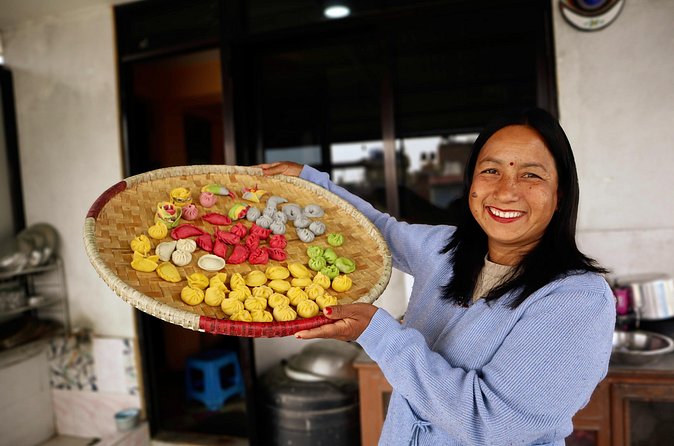
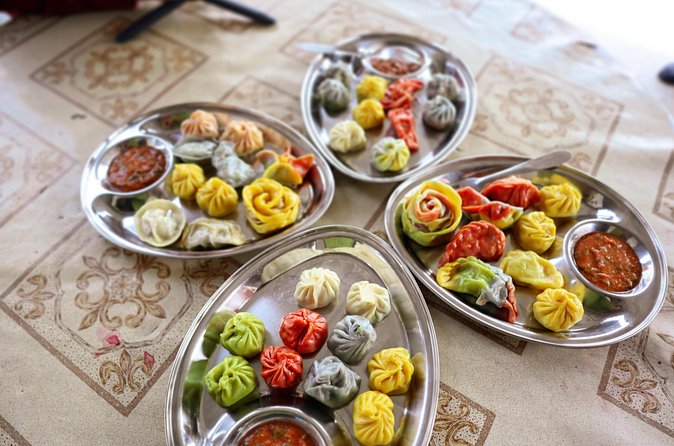
Once the momos are shaped, the experience moves toward eating them. The available details indicate that the finished dumplings are served in both steamed and fried versions.
That pairing is useful because it lets you compare two textures from the same basic food. Steamed momos tend to keep the wrapper soft, while fried momos offer a crisper finish. The activity therefore ends with more than a single sample.
The exact cooking sequence is not provided, so I would not promise a particular kitchen setup or cooking method beyond the steamed and fried presentation. Still, the two styles make the final tasting more interesting. You get to see whether you prefer the softer or crunchier result.
The phrase delicious, darling captures the intended mood well, but the food remains the main test. Color alone does not make a good momo. The value of the class comes from joining the preparation, seeing the colors develop, shaping the dumplings, and then eating what you made.
What $44 buys you
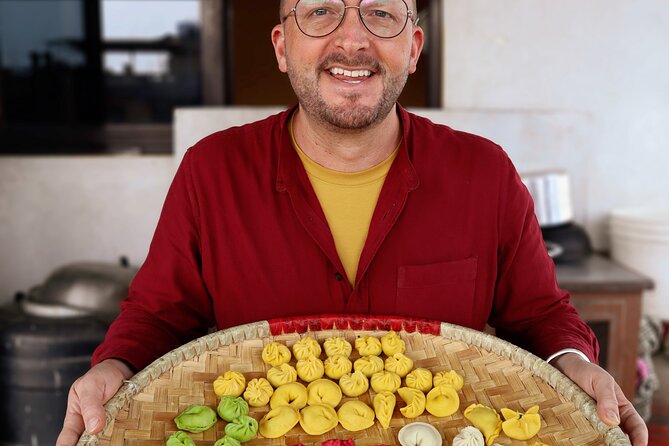
At $44 per person, Rainbow Mo:Mo is not the cheapest way to eat dumplings in Kathmandu. You can find inexpensive momos across the city. The question is not simply how many dumplings you receive for the price. It is how much you value the class itself.
The fee pays for a guided activity, the chance to work with several natural colors, and a queer-forward setting that is unusual in the city’s food-tour market. Pickup may also add convenience, depending on where you are staying and how the arrangement works.
I see the price as reasonable for someone who wants a social, participatory experience. It is less compelling for someone who only wants a quick meal or a standard introduction to Nepalese food. You can buy momos for much less, but you cannot reproduce the class atmosphere by ordering a plate at a restaurant.
The maximum group size of 15 also helps explain the cost. This is not simply a food stop where you arrive, eat, and leave. Time is set aside for instruction and making.
Who will enjoy this experience most
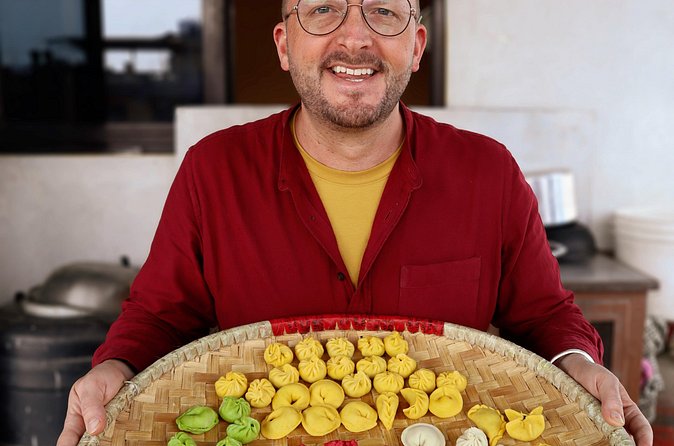
Rainbow Mo:Mo suits several kinds of visitors:
- Solo visitors: The class can still work if you are the only person booked, and the format gives you an easy social activity.
- Queer visitors and allies: The experience puts inclusion at the center rather than treating it as a side note.
- Food-focused visitors: You get to handle ingredients, shape dough, and taste the finished result.
- Creative families and friends: The colorful dough and pinching process offer an activity everyone can attempt.
- People with limited time: At about two hours, the class fits into a busy Kathmandu schedule.
It may be less suitable if you want a long culinary course with several dishes, detailed lessons on Nepalese regional food, or a full market-to-table itinerary. None of those features is listed here. This is a short momo-focused session with a strong social identity.
Practical planning for your Kathmandu day
The operating window runs from 9:15 AM to 4:15 PM, every day of the week. You can place it between other central Kathmandu plans, but leave room for pickup or the trip to Garden of Dreams.
The experience is booked an average of 31 days ahead. That does not guarantee you must reserve a month early, but it signals that advance planning is sensible. The maximum is 15 people, and a minimum number of participants may be required. If the minimum is not reached, the activity can be canceled and you will be offered another date or experience, or a full refund.
Confirmation arrives at booking. Service animals are allowed, and the meeting point is near public transportation. These are useful details, but the available information does not describe wheelchair access, seating, restroom arrangements, or allergy procedures. Contact the provider if you need those specifics.
The provider is Queermandu, also identified as Gay Tours Nepal. That name makes the focus of the class clear. You are booking a queer-led or queer-focused cultural activity, not a generic dumpling workshop with a rainbow garnish added at the last minute.
Booking and cancellation advice
You can cancel for a full refund if you do so at least 24 hours before the start time. Cancellations made less than 24 hours ahead are not refunded, and changes inside that window are not accepted.
The cut-off uses local Kathmandu time. If your plans are uncertain, handle changes early rather than waiting until the day before. Also remember that the minimum-participant rule applies. If the provider cancels because that number is not met, you receive the choice of another date or experience, or a full refund.
Should you book Rainbow Mo:Mo?
Book it if you want a short, social cooking activity with a clear queer identity and a playful visual hook. The natural colors, hands-on shaping, and steamed and fried tasting give the two-hour session a satisfying arc. The 4.9 score from 19 reviews and 100 percent recommendation rate support the idea that the format is working well for its audience.
I would especially recommend it to solo visitors, queer visitors, and anyone who prefers making food to simply photographing it. The possible solo-friendly format is another plus, and Prajeet’s timely pickup and Aayam’s instruction add reassuring personal details.
Skip it if your main goal is the cheapest possible meal, a broad Nepalese cooking curriculum, or a long market visit. At $44, you are paying for participation, guidance, and a welcoming queer-forward setting. For the right audience, that is the point. For everyone else, a plate of ordinary momos will cost less.
FAQ
Where does Rainbow Mo:Mo begin?
The activity begins at Garden of Dreams, Tridevi Sadak, Kathmandu 44600, Nepal.
Where does the activity end?
It ends back at the Garden of Dreams meeting point.
How long does the experience last?
The momo-making class lasts approximately two hours.
How much does Rainbow Mo:Mo cost?
The listed price is $44 per person.
Is hotel pickup available?
Pickup is offered. The supplied details do not specify the pickup area or any additional cost, so confirm those points when booking.
What are the operating hours?
The experience operates Monday through Sunday from 9:15 AM to 4:15 PM during the listed period from November 3, 2024, through November 25, 2026.
What ingredients create the momo colors?
Beetroot creates pink, spinach creates green, carrot creates orange, and butterfly pea creates blue.
How many people can join?
The maximum group size is 15 people.
Are service animals allowed?
Yes, service animals are allowed.
What is the cancellation policy?
You can cancel at least 24 hours before the start time for a full refund. Cancellations or changes made less than 24 hours before the start time are not accepted for a refund.
Just added around Kathmandu
- Private Shopping Tour in Kathmandu★ 5.0 · 3 reviews
- Nagarkot Sunrise With 7 UNESCO World Heritage Private Tour★ 5.0 · 3 reviews
- Kathmandu: Nightlife and Pub Crawl Tour★ 5.0 · 3 reviews
- Mount Everest Scenic Flight 50 Minutes★ 5.0 · 3 reviews
- Momo Cooking Class -The Art Of Making MoMo with Home Chef★ 5.0 · 3 reviews
- Kathmandu: Nagarkot, Bhaktapur, Doleswor & Sanga Statue Tour★ 5.0 · 3 reviews
- Makalu Base Camp Trek★ 5.0 · 3 reviews
- Kathmandu: Momo Making Class with a Local Chef★ 5.0 · 3 reviews
Kathmandu Tours, compared.


Private Kathmandu Sightseeing Tour | UNESCO World Heritage sites
Read our review →
Everest Base Camp Helicopter Tour landing at Everest View Hotel
Read our review →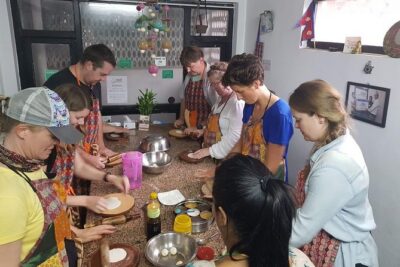

Nagarkot Sunrise View and Day Hiking from Kathmandu
Read our review →
Full Day 7 UNESCO Tour with Lunch – Private/Group
Read our review →