
Reviewed · TEMPLES & MONASTERIES
The Boudhanath Yoga Experience in Nepal
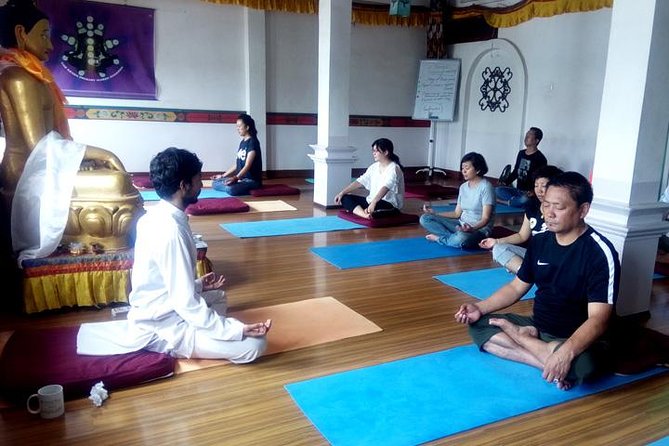
Find calm beside Kathmandu’s great stupa. The Boudhanath Yoga Experience pairs a 2.5-hour yoga class with time near one of Buddhism’s most important pilgrimage sites. I like the setting most: the yoga center sits across from Boudhanath Stupa, so the morning connects physical practice with a living spiritual place.
I also like the practical setup. Your private round-trip vehicle collects you from your Kathmandu hotel, and the group is capped at 14 people. The main drawback is the price, $110 per person, which is a serious spend for four hours and does not include food or drinks.
In This Review
- Key points to know
- Why Boudhanath makes this yoga class different
- The 9:00 am hotel pickup
- A 2.5-hour class built around five practices
- Practicing with Boudhanath Stupa across the way
- How the teaching feels in practice
- Is $110 a fair price?
- Who should book this morning?
- Practical details that affect your morning
- The main strengths and limits at a glance
- Should you book the Boudhanath Yoga Experience?
- FAQ
- Where does the yoga experience take place?
- What time does the experience start?
- How long does the experience last?
- Is hotel pickup included?
- Is entry to Boudhanath Stupa included?
- What does the yoga class cover?
- What should I wear?
- How many people can join the experience?
- Are food and drinks included?
Key points to know
- Yoga beside Boudhanath Stupa: Practice with views of one of the world’s largest Buddhist stupas directly across from the center.
- A full mind-and-body lesson: The class covers asanas, mudras, pranayama, Dharana, and Dhyana, not only stretching.
- About 2.5 hours of instruction: This is a substantial workshop rather than a quick hotel activity.
- Private hotel transfers included: You do not need to work out Kathmandu transport before a morning start.
- Small maximum group: The experience accepts no more than 14 people, giving you a better chance to ask questions.
- Best for curious beginners: The teaching is explained move by move, and most people can participate.
Why Boudhanath makes this yoga class different
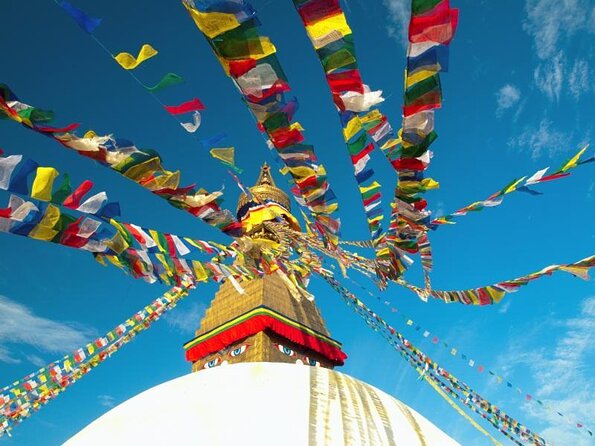
Yoga can feel detached from place when it happens in a hotel room or generic studio. Here, the setting gives the practice a clear cultural frame. Boudhanath is a sacred Buddhist pilgrimage site, and the stupa sits directly across from the yoga center.
That location matters even if you know little about Buddhism. You are not simply taking a fitness class with a Himalayan backdrop. The course connects movement, breathing, hand gestures, concentration, and meditation with Buddhist ideas about discipline and freedom of mind.
The setting is also not silent or isolated. Boudha is a busy area, and you should expect some city activity around you. That can be a drawback if you want a retreat-like hush, but it also keeps the class tied to daily life rather than placing it in a sealed wellness bubble.
One useful detail comes from the teaching itself: the instructor explains each movement step by step. That makes the class less intimidating if you are new to yoga or unsure how traditional postures should work. You are encouraged to ask questions, which is especially helpful during breathing and meditation exercises.
More Temples, Stupas and Monasteries:
- Kathmandu Spiritual Sites: Bodhnath & Pashupatinath Tour
★ 5.0 · 185 reviews - Kathmandu: Chandragiri Cable Car and Monkey Temple Tour
★ 4.8 · 139 reviews - From Kathmandu: 2 Stupas and Kopan Monastery Spiritual Tour
★ 4.8 · 115 reviews
The 9:00 am hotel pickup
The experience begins at 9:00 am, with pickup from your Kathmandu hotel. Transport is by private vehicle, and drop-off is included after the class and stupa visit.
This is one of the clearest reasons to consider the tour. Kathmandu traffic and unfamiliar streets can make a short morning outing feel harder than it should. With transport arranged, you can focus on arriving prepared instead of negotiating a taxi or finding the yoga center yourself.
The exact pickup time at your hotel is not stated beyond the 9:00 am start, so confirm the meeting details when you book. The experience is near public transportation, but you do not need to rely on it if you use the included private transfer.
Wear loose-fitting clothing. You will spend a long stretch of the morning moving, sitting, breathing, and meditating, so restrictive trousers or stiff clothing would work against the purpose of the class. The supplied information does not mention equipment, changing rooms, or showers, so avoid assuming those services are available.
A 2.5-hour class built around five practices
The class lasts about 2.5 hours, giving the instructor time to cover more than basic poses. The course presents yoga as a complete approach to body and mind, with Buddhist teachings shaping the session.
Here is what the main parts mean for you:
- Asanas: These are the physical postures. You work on body position and alignment rather than treating yoga as a race through a series of poses.
- Mudras: These hand gestures are used to support the flow of energy. They add a traditional element that you may not find in a standard Western fitness class.
- Pranayama: These breathing methods are intended to relax you and purify the body and energy. Pay close attention here, since breathing is often harder to follow than the physical movements.
- Dharana: This practice focuses on controlling the mind and directing attention toward positive energy.
- Dhyana: This is meditation aimed at freeing the mind. It gives the class a quiet inward section after the physical work.
The course also refers to the Eight-Fold Path taught by Buddha and the Seven Disciplines. Those terms give the class a philosophical structure, but the supplied details do not spell out every discipline in full. You should expect an introduction to the ideas rather than a university-style lecture on Buddhist philosophy.
For a first visit, the key benefit is variety. You are not asked to spend the full morning doing difficult postures. The session brings together movement, breath, gestures, concentration, and meditation. That makes it useful for someone who wants to understand the spiritual side of yoga, not just improve flexibility.
Practicing with Boudhanath Stupa across the way
The stupa is the visual anchor of the experience. Boudhanath is described as the world’s largest Buddhist stupa, and its presence gives the class a strong sense of place.
You also receive entry to Boudhanath Stupa, so the morning is not limited to indoor instruction. The stupa visit lets you connect the lesson with an actual pilgrimage site. Even a short look can help make the discussion of Buddhism feel less abstract.
The information does not give a separate length of time for the stupa visit. Since the full experience lasts about four hours and the yoga class takes 2.5 hours, the remaining time includes transportation and time at the site. Keep your expectations realistic: this is a yoga workshop with a stupa visit, not an extended archaeological or religious tour.
The area itself may feel active. One particularly useful point from the available feedback is that the surrounding activity did not stop the class from feeling peaceful. That is a good sign for anyone worried that Boudha’s city setting will ruin concentration. At the same time, you should not book this expecting complete silence.
More Yoga and Meditation Retreats:
- 200 Hours Yoga Teacher Training at Nepal Yoga Home (starts on 1st of everymonth)
★ 5.0 · 125 reviews - 3 night 4 Day Yoga & Ayurveda Retreat to Detox the Body & Mind, Nepal
★ 5.0 · 37 reviews - 10 Days Ayurveda & Yoga Retreat in Kathmandu, Nepal
★ 5.0 · 24 reviews - 21 Day Ayurveda & Yoga Retreat in the Himalayan country, Nepal
★ 5.0 · 19 reviews
How the teaching feels in practice
The strongest praise focuses on the instructor’s manner. The teaching is described as welcoming, with an energy that helps you feel comfortable and connected. The movements are explained one by one, and questions are welcomed.
That approach matters because yoga terms can quickly become confusing. A teacher who demonstrates and explains each movement gives you a better chance to practice safely and understand what you are doing. It also takes pressure off beginners who may feel they need to copy an advanced student.
The class is presented as suitable for most people, and the maximum group size is 14. That does not guarantee a private lesson, but it is more manageable than a large studio session. If you need special physical accommodations, ask before booking, since the available information does not describe modifications, medical guidance, or accessibility arrangements.
The tone appears to lean toward traditional and spiritual instruction rather than a fast, athletic workout. If you want a demanding fitness class with constant movement, this may feel slow. If you want to learn how breathing and meditation fit with postures, the pace should suit you better.
Is $110 a fair price?
At $110 per person, this is not a budget yoga class. The value depends on how much you want the full package.
You are paying for a 2.5-hour class, a trained and highly qualified yoga instructor, private hotel transport in both directions, and entry to Boudhanath Stupa. Those inclusions remove several small costs and hassles. A taxi to and from Boudha, admission, and a shorter independent class would still require planning, though the exact local prices are not provided.
The price makes more sense if you are staying in Kathmandu for a short time and want one organized morning that combines culture and wellness. It makes less sense if you are already staying near Boudhanath, can arrange inexpensive transport, or mainly want an hour of stretching.
Group discounts are offered, which may improve the value for couples, families, or friends traveling together. The published group limit is 14 people, so ask about the discount before booking rather than assuming it will be applied automatically.
Food and drinks are not included. Eat beforehand if you need a full breakfast, or plan your own meal afterward. The experience is built around yoga and the stupa, not a food stop.
Who should book this morning?
I would point this experience toward several types of visitors:
- You are new to yoga and want patient explanations rather than a self-guided class.
- You are interested in Buddhism and want a practice connected to a real pilgrimage site.
- You want to see Boudhanath without arranging Kathmandu transport yourself.
- You prefer a small group over a crowded class.
- You want meditation and breathing included alongside physical postures.
- You have one free morning and value convenience.
It may be a poor fit if you want a long sightseeing tour of Boudha, a completely quiet retreat, or a high-intensity workout. The class is also not described as a private session, and the maximum group is 14, so contact the provider if personal instruction is essential.
The experience suits a thoughtful first introduction better than a specialist yoga retreat. A regular practitioner may enjoy the Buddhist setting, but the class appears designed to explain the foundations rather than push advanced techniques.
Practical details that affect your morning
The start time is 9:00 am, and the total duration is about four hours. Plan for a morning commitment rather than a quick stop between other activities.
Wear loose clothing, and bring the mindset for both physical and seated practice. The course includes meditation and breathing, so comfort matters as much as movement. The available information does not say what supplies are provided, so ask whether mats or other equipment are available if you do not carry your own.
Most people can participate, but no detailed fitness level, age range, or accessibility information is provided. If you have an injury, mobility concern, or medical issue that affects breathing or movement, ask the provider for guidance before reserving.
Confirmation is provided when you book. The activity is operated by Himalayan Advisor Pvt. Ltd. Free cancellation is available up to 24 hours before the local start time. Cancellations or changes made inside that window are not accepted for a refund, so keep the deadline in mind if your Kathmandu schedule is uncertain.
The main strengths and limits at a glance
The experience’s best feature is the link between instruction and location. The stupa is not a distant backdrop reached after a long transfer. It is right across from the yoga center, giving the class a setting that supports its Buddhist focus.
The second strength is the teaching style. Clear, move-by-move instruction and an open attitude toward questions are valuable when the course includes unfamiliar terms such as mudras, Dharana, and Dhyana. The welcoming tone described in the available feedback also matters, especially for first-time participants.
The main limits are price and scope. At $110, you should want both yoga and Boudhanath access. And while the stupa is included, the morning is not a full guided exploration of Kathmandu’s Tibetan Buddhist culture. It offers a focused introduction.
The active surroundings are another consideration. Some people will find the nearby city life distracting. Others will appreciate practicing calmly in a real religious neighborhood rather than in an artificial retreat setting.
Should you book the Boudhanath Yoga Experience?
Book it if you want a well-organized cultural wellness morning with hotel transport, a substantial yoga class, and entry to Boudhanath Stupa. The strongest reasons are the location, the broad range of practices, and the welcoming, step-by-step instruction.
Skip it if you only want inexpensive exercise or a long sightseeing visit. At $110, the value comes from the combination of teaching, setting, transport, and admission. For the right person, that combination makes the morning easy and memorable. For a serious bargain hunter, it is probably too much to pay for a class that does not include refreshments.
FAQ
Where does the yoga experience take place?
It takes place near Boudhanath Stupa in Boudha, Kathmandu. The yoga center is directly across from the stupa.
What time does the experience start?
The start time is 9:00 am.
How long does the experience last?
The full experience lasts about four hours. The yoga class itself lasts 2.5 hours.
Is hotel pickup included?
Yes. Hotel pickup and drop-off are included, with transport by private vehicle.
Is entry to Boudhanath Stupa included?
Yes. The entry fee to Boudhanath Stupa is included.
What does the yoga class cover?
The class covers asanas, mudras, pranayama, Dharana, and Dhyana. It also presents the Eight-Fold Path and Seven Disciplines connected with Buddhist teaching.
What should I wear?
Loose-fitting clothing is advised so you can practice comfortably.
How many people can join the experience?
The group has a maximum of 14 participants.
Are food and drinks included?
No. Food and drinks are not included.
Just added around Kathmandu
- Private Shopping Tour in Kathmandu★ 5.0 · 3 reviews
- Nagarkot Sunrise With 7 UNESCO World Heritage Private Tour★ 5.0 · 3 reviews
- Mount Everest Scenic Flight 50 Minutes★ 5.0 · 3 reviews
- Kathmandu: Nightlife and Pub Crawl Tour★ 5.0 · 3 reviews
- Momo Cooking Class -The Art Of Making MoMo with Home Chef★ 5.0 · 3 reviews
- Kathmandu: Nagarkot, Bhaktapur, Doleswor & Sanga Statue Tour★ 5.0 · 3 reviews
- Makalu Base Camp Trek★ 5.0 · 3 reviews
- Kathmandu: Momo Making Class with a Local Chef★ 5.0 · 3 reviews
Temples & Monasteries, compared.
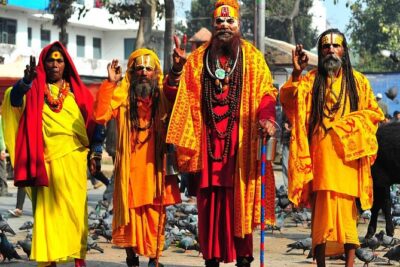
Kathmandu Spiritual Sites: Bodhnath & Pashupatinath Tour
Read our review →
Monkey Temple – Swayambhunath Tour – Private/Small Group
Read our review →
Dhulikhel, Namobuddha & Panauti: A Scenic Day Tour from Kathmandu
Read our review →Browse the lists this tour appears in