
Reviewed · UPPER MUSTANG TREKS
Upper Mustang Trekking
The Himalaya keeps a secret up north. This 18-day Upper Mustang trek takes you from Kathmandu through Jomsom, Kagbeni, ancient villages, and the walled city of Lo Manthang, with dramatic Himalayan scenery and a strong Tibetan Buddhist character. I especially like the quiet trails and the chance to see daily life in villages that have retained their own customs. I also like that the route includes a full day in Lo Manthang rather than rushing through it. The main drawback is the cost, plus dusty, windy trails and long road and bus journeys at both ends.
This is a private trip with a licensed guide and one porter for every two people. The package costs $2,400 per person, including domestic flights, accommodation, permits, meals listed in the package, and transport between Kathmandu and Pokhara. You still need money for personal expenses, tips, and any extra hotel nights, so read the inclusions closely before booking.
In This Review
- Key points to know before you go
- Why Upper Mustang feels unlike Nepal’s usual trekking routes
- What the $2,400 price actually covers
- Kathmandu begins with permits and preparation
- Days three and four: bus roads, mountain flights, and Kagbeni
- Days five through eight: entering the restricted valley
- Days nine and ten: arriving in Lo Manthang
- Days eleven and twelve: returning by a different stretch of trail
- Days thirteen through fifteen: wind, descent, and Jomsom
- Days sixteen through eighteen: flights, Pokhara, and home
- Fitness, comfort, and the real trail conditions
- Service and organization
- Who should book this trek?
- Should you book the Upper Mustang Trek?
- FAQ
- How long is the Upper Mustang Trek?
- What does the Upper Mustang special permit cost?
- Do I need my original passport for the permit?
- How do I reach the trekking area?
- Is the trek suitable for people with low fitness?
- What accommodation is included?
- Is the tour private?
Key points to know before you go
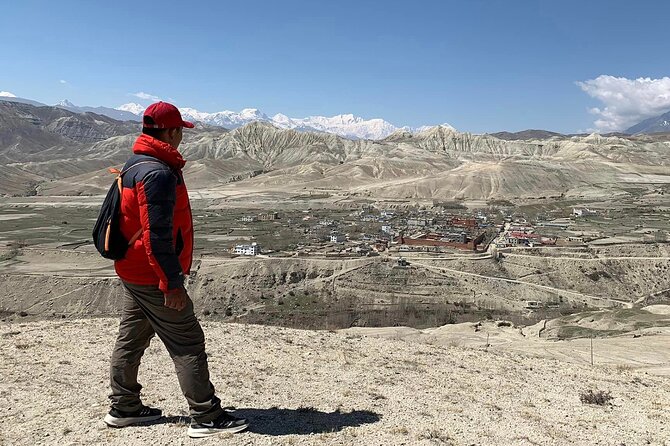
- Lo Manthang gets a full exploration day: Visit monasteries, the former King’s Palace, and the compact old city without packing every sight into one hurried afternoon.
- The $500 special permit is included: Upper Mustang is a restricted area, and the package includes the 10-day permit along with the Annapurna Conservation Area permit.
- The route reaches Jomsom at 2,715 meters: The trek is demanding, but it is not presented as an extreme high-altitude climb. One account noted that the route rarely rose above 4,000 meters.
- Expect powerful scenery and strong winds: Dhaulagiri and Annapurna I appear from the route, while the Kali Gandaki Valley can become very windy after midday.
- The trip uses lodges and tea houses: This keeps the experience close to local village life, though comfort is simpler than in a city hotel.
- Transport is part of the adventure: You take a tourist bus between Kathmandu and Pokhara, then fly between Pokhara and Jomsom.
Why Upper Mustang feels unlike Nepal’s usual trekking routes
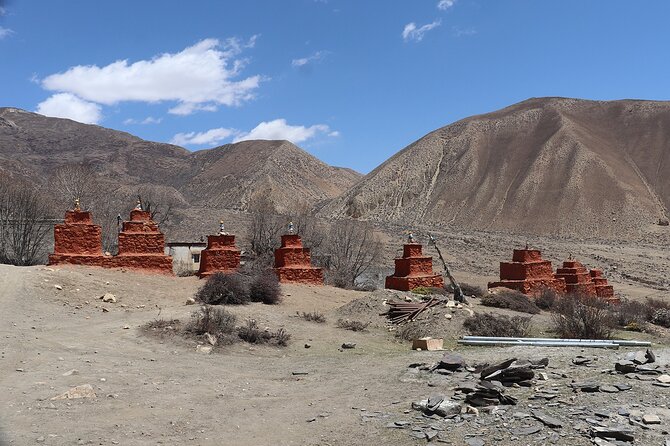
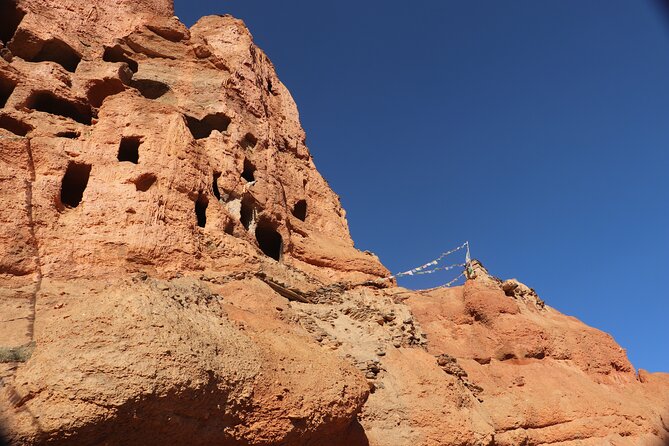
Upper Mustang has a dry, open setting that feels far removed from Kathmandu’s streets and Nepal’s greener lower valleys. The route follows old village paths, river crossings, apple gardens, farm areas, monasteries, and wide views of the Himalaya.
What makes the region special is not simply the scenery. The villages, gompas, prayer traditions, old buildings, and local way of life give the trek a clear Tibetan influence. Lo Manthang is the emotional center, but the smaller settlements are just as important. Ghiling, Ghami, Tsarang, Samar, Chele, and Kagbeni give you a sense of how people live along a remote trade route.
I would choose this trek if you want culture and scenery in equal measure. If your main aim is lush forest, crowded mountain viewpoints, or a nonstop sequence of famous peaks, this is probably the wrong route. Upper Mustang is more spare and exposed. It can also be dusty, and its roads and trails are not polished for comfort.
More Upper Mustang and Muktinath Trips:
- 6 Days Muktinath Tour Package in Nepal
★ 5.0 · 20 reviews - Jeep Trip to Upper Mustang
★ 5.0 · 10 reviews - 12 Days Overland Tour to Upper Mustang
★ 5.0 · 4 reviews
What the $2,400 price actually covers
At first glance, $2,400 is a serious price for an 18-day Nepal trip. The value becomes clearer once you count the restricted-area permit. The Upper Mustang permit costs $500 per person for 10 days, and the package also includes the Annapurna Conservation Area permit.
The price also includes:
- Three nights in a three-star Kathmandu hotel with breakfast
- Two nights in a Pokhara hotel with breakfast
- Lodge and tea-house accommodation during the trek
- A licensed trekking guide
- One porter for every two people
- Domestic flights between Pokhara and Jomsom
- Tourist bus transport between Kathmandu and Pokhara
- Airport and hotel transfers
- Government taxes and service charges
- Breakfasts and 16 lunches and dinners as stated in the package
That is a useful bundle, especially for a private trip. You are not arranging separate permits, domestic flights, porters, and road transfers on the ground.
Still, check the meal wording before paying. The package lists 17 breakfasts and 16 lunches and dinners, but the itinerary itself is an 18-day plan. Ask the operator exactly which meals are covered on travel days. You should also budget for tips, personal purchases, drinks, and extra nights if weather or flight changes affect your schedule.
Kathmandu begins with permits and preparation
Day one is simple. A representative from Everest Trekking Routes meets you at Tribhuvan International Airport and transfers you to your hotel. That private pickup is welcome after an international flight, especially if this is your first visit to Kathmandu.
The second day is partly practical and partly optional sightseeing. After breakfast, you can visit points in the Kathmandu Valley if you are interested, while the operator handles the Upper Mustang permit. You must bring your original passport and a Nepal visa for the permit process.
That detail matters. Do not arrive with only a photocopy or assume the permit can be handled without your passport. Use this day to check your gear, confirm the flight plan, and ask your guide about the walking schedule. Kathmandu is also your best place to deal with anything you forgot before the trail begins.
Days three and four: bus roads, mountain flights, and Kagbeni
On day three, you walk about 10 minutes from the hotel to the tourist bus station for a 7:00 AM departure. The bus follows the Prithvi Highway toward Pokhara, with a breakfast stop after roughly two hours.
You should treat this as a full transport day, not a sightseeing excursion. The package describes the journey as taking about seven hours, so bring water, snacks, and patience. Road conditions and traffic can make bus travel tiring, but it is an efficient way to connect Kathmandu and Pokhara without arranging a private vehicle.
Day four brings an early transfer to the domestic airport and a flight to Jomsom at 2,715 meters. From Jomsom, you trek four to five hours to Kagbeni. This is your first real walking day, with mountain scenery along the lower Mustang and the well-known Jomsom to Muktinath route.
Kagbeni is more than an overnight stop. It is the main entrance to the restricted Upper Mustang area. Your permit is checked here before you continue north. The village gives the trip a clear change of mood: you are no longer simply trekking in the wider Annapurna region, you are entering a controlled and distinctive part of Mustang.
More Treks and Hikes:
- Everest Base Camp Trek – 14 Days
★ 5.0 · 1,499 reviews - Everest Base Camp Trekking
★ 5.0 · 485 reviews - Nagarkot Sunrise View and Day Hiking from Kathmandu
★ 5.0 · 471 reviews - Annapurna Circuit Trek with Tilicho Lake
★ 5.0 · 368 reviews
Days five through eight: entering the restricted valley
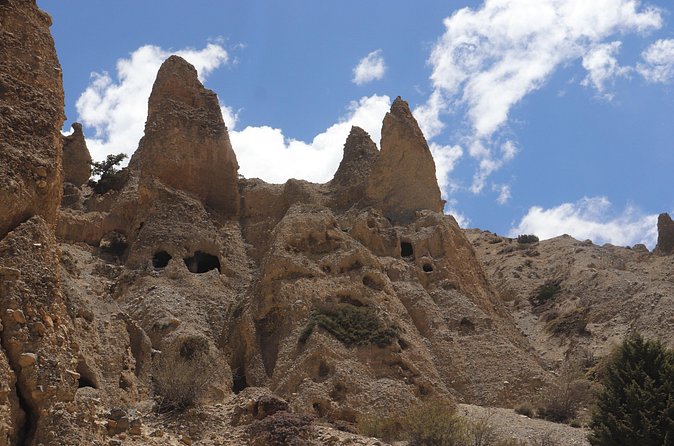
Day five takes you from Kagbeni to Chhusang. The route descends toward the area where your permit is checked, then continues into Upper Mustang. This is a good day to settle into the trek’s rhythm, with village paths and dry scenery replacing the road-focused travel of the opening days.
From Chhusang, the route moves toward Somare on day six. The trail is described as mostly flat at first, followed by a steeper climb after Chele toward Syangboche. You walk for about five to six hours, passing an apple garden and village scenery along the way.
Day seven is more uphill. You climb toward Syangboche, stop for lunch, and continue through a section known for broad views of the high peaks. Dhaulagiri, at 8,167 meters, and Annapurna I, at 8,097 meters, are among the major mountains visible from the route when conditions are clear.
This is one of the trek’s best rewards. You do not need to be standing beside a peak to appreciate it. The high mountains appear across the dry valleys, often at a distance, giving the route a huge sense of space.
Day eight continues through Ghiling toward Tsarang. Clear weather may reveal farms and the old village setting of Ghiling, including its monasteries. Tsarang is described as the largest village on this part of the route, so it gives you a useful chance to see a more settled community before Lo Manthang.
The exact pace can feel demanding here. You are climbing and descending on exposed trails, and the dry air and dust may be more tiring than the altitude alone. Good footwear, sun protection, and a steady pace matter more than trying to race ahead.
Days nine and ten: arriving in Lo Manthang
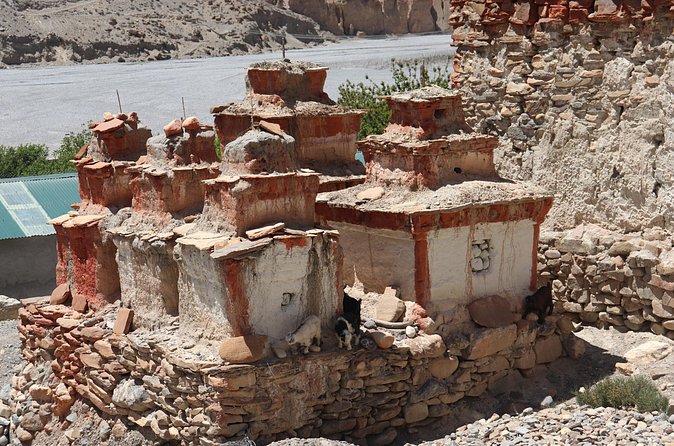
Day nine is the approach to Lo Manthang, usually a five to six-hour walk. You cross rivers and bridges, pass through stark scenery, and finally reach the walled city often described as the Himalayan kingdom of Nepal.
Lo Manthang is not just a place to sleep before turning around. Its compact old setting, colorful buildings, monasteries, and former royal spaces give the trek its strongest cultural focus. The walled form of the city helps explain why the region feels separate from the rest of Nepal.
Day ten is reserved for exploration. After breakfast, you visit monasteries and the King’s Palace. That extra day is a major strength of the itinerary. You can look around without carrying your full trekking schedule in your head, and you have time to notice details in the buildings and village streets.
Do not expect a large urban center. Lo Manthang is valuable because it feels tied to its setting and traditions. The experience is quiet and culturally focused rather than packed with formal attractions. Your guide’s explanations will make a real difference here, particularly around the monasteries and local customs.
Days eleven and twelve: returning by a different stretch of trail
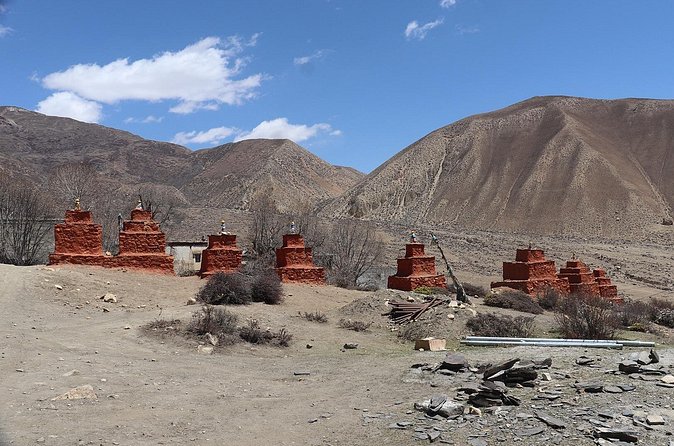
The return does not simply repeat every step. Day eleven heads toward Dhakmar, beginning with an uphill section to a gompa. This is another good day for the historical side of the trek, since the route passes old religious sites and gives you more time with the Upper Mustang region beyond its main city.
Day twelve continues from Dhakmar to Ghami. Ghami is one of the larger villages on the route and is known for its monastery. The area also includes farm production and apple gardens, which add a human scale to the otherwise dry, open setting.
These days show why you should not think of Upper Mustang as a peak-bagging trip. The reward comes from moving between settlements, seeing how farming fits into a dry valley, and noticing the relationship between monasteries and village life.
Days thirteen through fifteen: wind, descent, and Jomsom
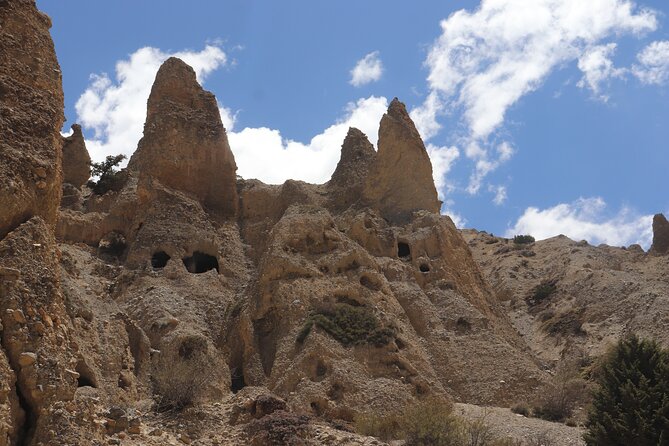
Day thirteen takes you from Syangboche down to Chhusang. This is a big descent, passing Samar, Bhena, and Chele before dropping about 1,000 meters toward the Kali Gandaki River.
The descent may be harder on your knees than the earlier climbs. The valley also becomes increasingly windy, especially later in the day. Plan to start early, keep your layers handy, and protect your eyes and face from dust. The timing is not a minor detail here. Strong afternoon winds can make the same route feel much less pleasant.
Day fourteen is an early walk from Chhusang back to Kagbeni. Breakfast is scheduled early so you can reach Kagbeni before the strongest winds after noon. This is sensible planning, not needless rushing.
Day fifteen is a shorter and easier trek to Jomsom. Once there, you check the flight schedule for the following day and have time to see the town. The itinerary also suggests buying apple brandy or other apple products from local makers.
Jomsom is a practical base rather than the cultural centerpiece, but it helps break up the return journey. Use the afternoon to organize your bags, confirm your flight, and rest your legs.
Days sixteen through eighteen: flights, Pokhara, and home
Day sixteen depends on the flight schedule. If there is time, you eat breakfast in Jomsom. Otherwise, you leave early to report to the airport and wait for the flight to Pokhara.
The flight itself is listed at about 25 minutes. That sounds easy, but the schedule is clearly important, so you should not plan a tight international connection immediately afterward. Once in Pokhara, you transfer to your hotel and leave your trekking pack there as arranged.
Pokhara gives you two nights with breakfast included. That is a sensible buffer after the trek and before the return overland journey. You have time to rest, organize luggage, and enjoy a slower city stop, though the package does not specify additional sightseeing.
On day seventeen, you take a short transfer to the Pokhara tourist bus park and board the tourist bus to Kathmandu. The journey takes about seven hours. Like the earlier bus ride, this is functional transport rather than a luxury transfer.
Day eighteen ends with a private transfer to Tribhuvan International Airport. The schedule is straightforward, but keep your departure details visible to the operator since the preceding bus journey can be long.
Fitness, comfort, and the real trail conditions
The operator requires a strong level of physical fitness. That fits the itinerary: several days last five to six hours, the route includes significant uphill and downhill walking, and you move through dry, exposed terrain.
The supplied material describes Upper Mustang as not especially high compared with other Himalayan treks, with elevation rarely exceeding 4,000 meters. That does not make it effortless. Altitude, dust, wind, uneven trails, and repeated walking days all add up.
Accommodation is in lodges and tea houses. I like this arrangement because it keeps you connected to village communities, but you should not expect three-star comfort outside Kathmandu and Pokhara. Bring a flexible attitude, follow your guide’s pacing, and do not treat the permit dates as a reason to hurry.
This is a private activity, so only your group participates. That can make a big difference on a demanding route. You can discuss pace, rest stops, and local interests with your guide instead of trying to fit into a large group timetable.
Service and organization
Everest Trekking Routes Pvt. Ltd. handles the transfers, permits, guides, porters, accommodation, and transport connections. The four published evaluations all give the experience a five-star rating, with repeated praise for careful organization, kind and patient staff, and a trip that adapted to personal requests.
The strongest pattern is reliability from the first airport pickup through the return arrangements. That matters in Upper Mustang, where domestic flights and permit checks are central parts of the plan.
There is no guide name supplied, so I cannot point you to a particular staff member. I can say that the package uses a government licensed guide and one porter for every two people. Tips are not included, so plan to thank the team separately if the service meets your expectations.
Who should book this trek?
I would recommend it to you if you want:
- A quieter Himalayan route with relatively few people
- Tibetan Buddhist monasteries and older village culture
- A private itinerary with guide and porter support
- Dramatic mountain views without choosing a pure high-altitude mountaineering route
- A full day in Lo Manthang
- A trip where local lodges and simple travel are part of the appeal
I would hesitate if you need polished hotels every night, dislike long bus rides, or want a relaxed walking holiday. The price is also high enough that you should compare what other operators include, especially meals, extra nights, flight changes, and porter arrangements.
The cancellation terms are reasonably clear. Cancel at least six full days before the start for a full refund. Cancellation two to six days ahead receives a 50 percent refund, while cancellation less than two full days ahead is nonrefundable. Cutoff times follow local time.
Should you book the Upper Mustang Trek?
Book it if you want a culturally focused trek through a dry, remote part of Nepal and you are comfortable with simple lodges, dusty trails, wind, and long transport days. The full day in Lo Manthang, included restricted-area permit, private format, and guide support give the $2,400 price a reasonable basis.
Skip it if you want easy access, soft beds throughout, or a route built mainly around close-up peaks. Upper Mustang rewards patience more than speed. If you prepare for the practical challenges, this trip offers a rare look at villages, monasteries, and mountain country that still feels distinctly its own.
FAQ
How long is the Upper Mustang Trek?
The planned duration is approximately 18 days, including arrival and departure days, Kathmandu and Pokhara stays, transport, flights, and trekking.
What does the Upper Mustang special permit cost?
The special permit is listed at $500 per person for 10 days, and it is included in the $2,400 package price.
Do I need my original passport for the permit?
Yes. You need to take your original passport with a Nepal visa when the Upper Mustang permit is arranged.
How do I reach the trekking area?
You take a tourist bus from Kathmandu to Pokhara, fly from Pokhara to Jomsom, and then trek to Kagbeni before entering the restricted Upper Mustang area.
Is the trek suitable for people with low fitness?
No. The additional information requires a strong physical fitness level. The route includes five to six-hour walking days, uphill sections, major descents, and exposed, windy trails.
What accommodation is included?
The package includes three-star hotel accommodation in Kathmandu for three nights, two hotel nights in Pokhara, and lodge or tea-house accommodation during the trek.
Is the tour private?
Yes. Only your group participates in this private tour or activity. A licensed trekking guide and one porter for every two people are included.
Just added around Kathmandu
- Private Shopping Tour in Kathmandu★ 5.0 · 3 reviews
- Nagarkot Sunrise With 7 UNESCO World Heritage Private Tour★ 5.0 · 3 reviews
- Kathmandu: Nightlife and Pub Crawl Tour★ 5.0 · 3 reviews
- Mount Everest Scenic Flight 50 Minutes★ 5.0 · 3 reviews
- Momo Cooking Class -The Art Of Making MoMo with Home Chef★ 5.0 · 3 reviews
- Kathmandu: Nagarkot, Bhaktapur, Doleswor & Sanga Statue Tour★ 5.0 · 3 reviews
- Makalu Base Camp Trek★ 5.0 · 3 reviews
- Kathmandu: Momo Making Class with a Local Chef★ 5.0 · 3 reviews
Upper Mustang Treks, compared.
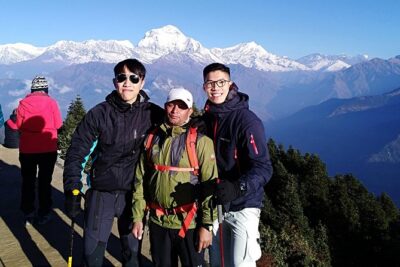
Trekking in Annapurna/Langtang/Everest/Upper Mustang regions
Read our review →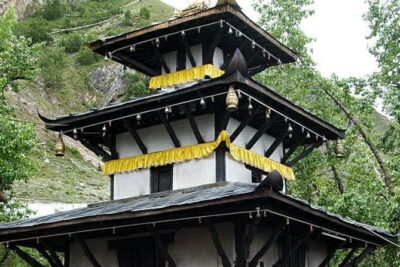
2-Day Scenic Mustang Tour: Pokhara to Jomsom, Kagbeni & Muktinath
Read our review →
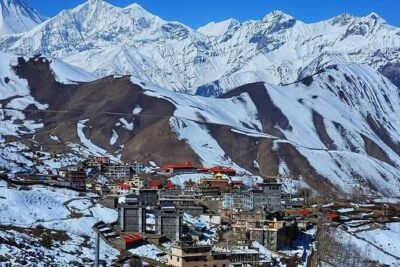
3 Day Lower Mustang Tour with 4WD Jeep from Pokhara
Read our review →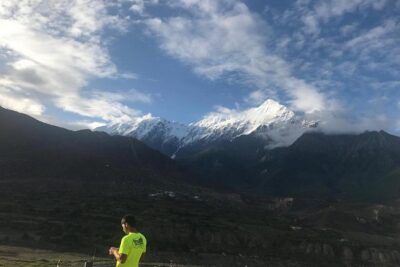
5 Days Adventures Lower Mustang Trip by 4WD Jeep
Read our review →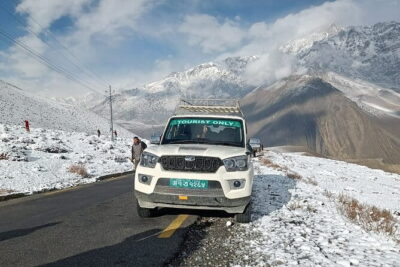
“Exclusive Round-Trip Transfer: Pokhara to Jomsom & Muktinath”
Read our review →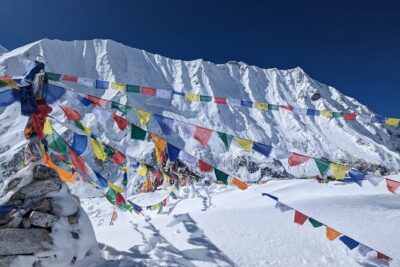
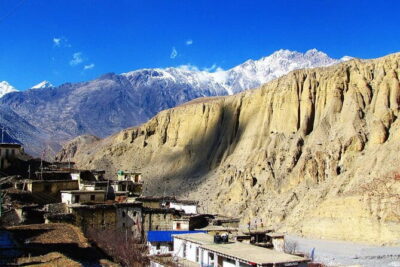
6 Day Upper Mustang Tour by 4WD Jeep from Pokhara
Read our review →Browse the lists this tour appears in