Reviewed · TOURS
Fixed Departure Tibet Overland Group Joining Tours.
Tibet begins with an early start. This 8-day overland trip from Kathmandu packs high mountain passes, sacred monasteries, Lhasa landmarks, and the long road across the Tibetan Plateau into one carefully arranged journey. I like the grand route, especially the views of Mount Everest, Yamdrok Tso, and the Brahmaputra River. I also like that the price includes transport, breakfast, a Tibetan guide, monastery fees, and the Tibet Travel Permit. The main drawback is the pace: you spend long hours in a van or bus, and the very high altitude gives you little time to adjust.
The strongest practical point is the help with permits and border formalities. Reviews praise Asmita for careful preparation and Gokul for arranging complex Nepal and Tibet plans, with one guest noting his English and Spanish skills. Still, this is not a soft, easy sightseeing holiday. You need an original passport several working days ahead, patience at the border, and a good tolerance for early mornings, thin air, and changing road conditions.
In This Review
- Key points to know before booking
- What this Tibet route does well
- Day 1: Kathmandu to Kerung by an early mountain road
- Day 2: Toward Tengri and the Tibetan Plateau
- Day 3: Shigatse and the 5,220-meter Gyatchu La
- Day 4: Tashlhumpu Monastery and the road to Gyantse
- Day 5: Yamdrok Tso, two high passes, and arrival in Lhasa
- Day 6: Potala Palace, Norbulingka, and Lhasa’s central sights
- Day 7: Drepung, Sera, Jokhang, and Shalu Monastery
- Day 8: Leaving by road toward Kathmandu or mainland China
- Guides, organization, and group size
- What the $1,300 price really buys
- Who should book this overland trip
- FAQ
- How long is the Tibet overland tour?
- What time does the tour start?
- Is the Tibet Travel Permit included?
- How far in advance must I provide my passport?
- Are meals included?
- How large can the group be?
- Should you book it?
Key points to know before booking
- Mount Everest appears as part of a high-plateau road journey, not a dedicated trekking trip.
- Gyatchu La reaches 5,220 meters, the highest pass on the route.
- Lhasa sightseeing includes Potala Palace, Jokhang Temple, Sera Monastery, and Drepung Monastery.
- The $1,300 price covers shared rooms, breakfast, transport, guide service, entrance fees, and the Tibet Travel Permit.
- You must provide your original passport at least three working days ahead for the Tibet visa process.
- The group can reach up to 30 people, so expect a social but less personal touring style.
What this Tibet route does well
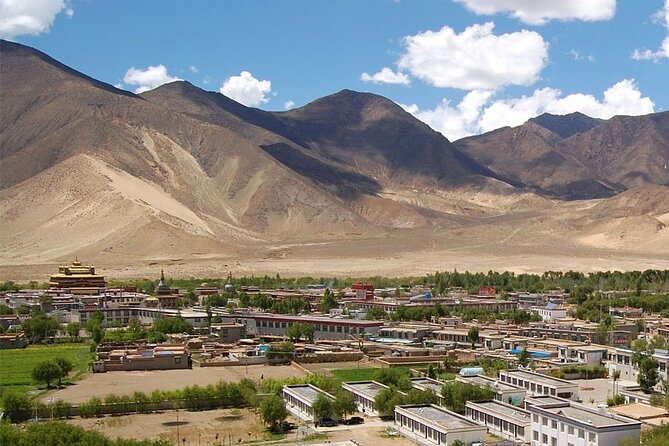
I like this tour because it shows Tibet as a place you cross slowly, not just a place you reach by air and tick off in Lhasa. The road from Kathmandu passes through Kerung, high Himalayan country, Tibetan villages, major monasteries, and some of the best-known sights around Lhasa.
The route also gives you strong visual variety. You move from the green hills near Nepal toward the stark open plateau, then pass turquoise water, snow peaks, broad valleys, and old religious centers. That changing scenery is one of the main reasons to choose the overland option.
The price is fair for a guided group trip with permits included. At $1,300 per person, you receive twin-sharing accommodation on a bed-and-breakfast basis, seven breakfasts, road transport, an English-speaking Tibetan guide, monastery entrance fees, and the Tibet Travel Permit. Lunch, dinner, drinks, tips, personal costs, and any flights or train tickets remain yours to pay.
That division matters. The tour is not all-inclusive, but the expensive and complicated parts of entering Tibet are built into the package. You should still budget for meals, drinks, tips, and transport outside the stated route.
A few more trips worth weighing up before you book
- Everest Base Camp Trek – 14 Days
★ 5.0 · 1,499 reviews - Private Kathmandu Sightseeing Tour | UNESCO World Heritage sites
★ 5.0 · 756 reviews - Everest Base Camp Helicopter Tour landing at Everest View Hotel
★ 5.0 · 668 reviews
Day 1: Kathmandu to Kerung by an early mountain road
The day begins at 5:15 in the morning, so put your alarm far from the bed. The drive heads from Kathmandu toward the Kerung border through picturesque countryside, followed by border formalities and an uphill journey toward Kerung.
This first day is mainly about getting across the frontier and into Tibet. Do not think of it as a relaxed sightseeing day. Border procedures can shape the schedule, and the long drive means you should carry water, snacks, warm clothing, and anything you may need during stops.
The value here is logistical. A group tour gives you support while crossing a complicated international border, and the provider handles the Tibet Travel Permit process. The tradeoff is less control over timing. If you prefer choosing every stop and setting your own pace, this fixed departure format may feel restrictive.
Day 2: Toward Tengri and the Tibetan Plateau
The second day continues across the world’s highest plateau. You can expect broad Tibetan scenery and Himalayan views, with the route reaching Tengri and offering a chance to see dramatic mountain country.
The word scenic gets used too easily in tour descriptions, but this section earns it through scale. The road opens into a huge, spare setting where distance and altitude become part of the experience. The mountain views are not presented as a short photo stop. They unfold during a long road journey.
This is also where altitude becomes a serious consideration. The schedule reaches very high ground quickly, and the itinerary does not offer a long acclimatization period before the highest passes. I would treat the first days conservatively: keep your schedule simple, drink water, avoid heavy exertion, and tell the guide promptly if you feel unwell.
The information provided does not specify the hotel names, exact driving hours, or meal stops. That is worth confirming before departure, especially if you want a precise daily plan.
Day 3: Shigatse and the 5,220-meter Gyatchu La
After breakfast, the road continues to Shigatse over Gyatchu La at 5,220 meters. This is the highest pass on the trip, so the journey’s altitude challenge reaches its peak here.
The pass is a major reason to choose this route, but it is also a physical warning. At this elevation, even a short walk can feel harder than expected. You may want to keep your camera ready for brief stops, but do not let the search for the perfect photograph turn into unnecessary exertion.
Shigatse gives the trip a useful change of rhythm. Instead of only crossing open country, you begin focusing on major religious sites and Tibetan culture. The town becomes a base for the next day’s visit to Tashlhumpu Monastery and the road to Gyantse.
Because transport is by van or bus, your comfort depends partly on the group. A maximum of 30 people is not enormous, but it is large enough that road stops and boarding times can take a while. You should expect a shared schedule rather than a private-car experience.
A different sort of day from Kathmandu:
- Half day cooking class in Thamel kathmandu
★ 5.0 · 607 reviews - Everest Base Camp Trekking
★ 5.0 · 485 reviews - Nagarkot Sunrise View and Day Hiking from Kathmandu
★ 5.0 · 471 reviews - Kathmandu: Full Day 7 UNESCO Tour with Lunch – Private/Group
★ 5.0 · 415 reviews
Day 4: Tashlhumpu Monastery and the road to Gyantse
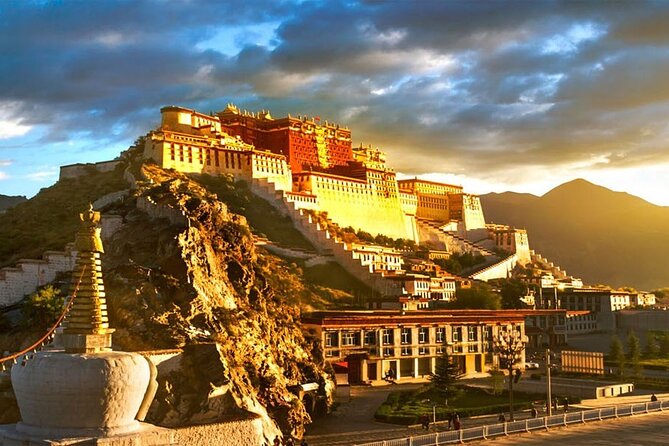
After breakfast, the tour visits Tashlhumpu Monastery, associated with the Panchen Lama. This is one of the trip’s most important cultural stops, since the monastery connects the journey to Tibetan religious life rather than treating the region as a collection of mountain views.
The itinerary then heads toward Gyantse through Tibetan villages. The slower road movement lets you see how the built environment changes as the trip continues across the plateau. You are not simply rushing from one famous building to another.
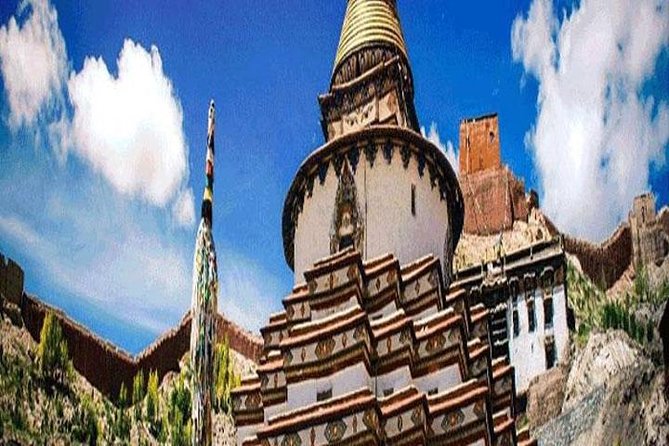
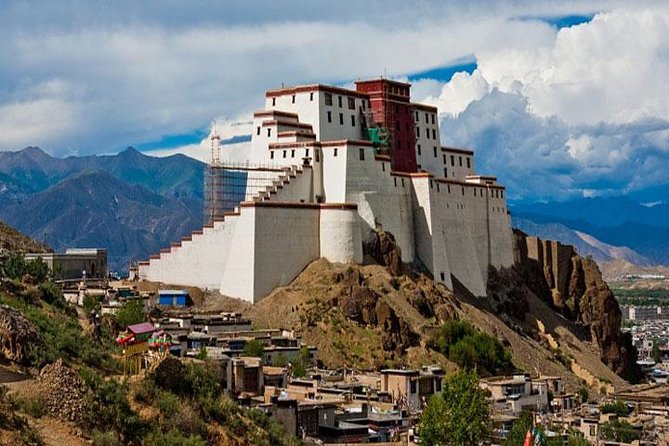
Gyantse adds two especially notable sights: Gyantse Kumbum and Gyantse Dzong. Kumbum refers to a distinctive Buddhist structure with many chapels and religious images, while the dzong is connected with Gyantse’s hilltop fort setting. The exact visiting time is not given, so the amount of time inside each site may depend on the day’s road conditions and group schedule.
I like this day because it balances a major monastery with a smaller-town setting. Lhasa can feel grand and ceremonial. Gyantse gives you a more grounded stop along the route.
Day 5: Yamdrok Tso, two high passes, and arrival in Lhasa
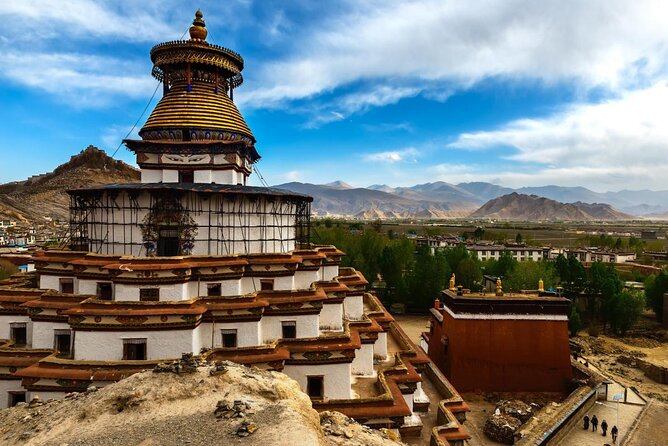
The drive to Lhasa crosses Karo La at 5,010 meters and Kamba La at 4,794 meters. Between them, the tour reaches Yamdrok Tso, known as Turquoise Lake, and follows views of the Brahmaputra River.
This is likely the most visually packed road day. Yamdrok Tso is the headline sight, but the passes and river help explain the geography of the region. The combination gives you a strong sense of Tibet as a high, open world shaped by water, altitude, and mountains.
The drawback is another long day in transit after several demanding days already on the road. By the time you reach Lhasa, you may be ready for a quiet evening rather than more sightseeing. The schedule wisely places the main Lhasa visits on Days 6 and 7, giving the journey a clear arrival point.
The route also includes panoramic views of Mount Everest at 8,848 meters. The itinerary does not state the exact viewpoint or guarantee clear weather, so think of Everest as a possible highlight of the road journey rather than the sole reason to book.
Day 6: Potala Palace, Norbulingka, and Lhasa’s central sights
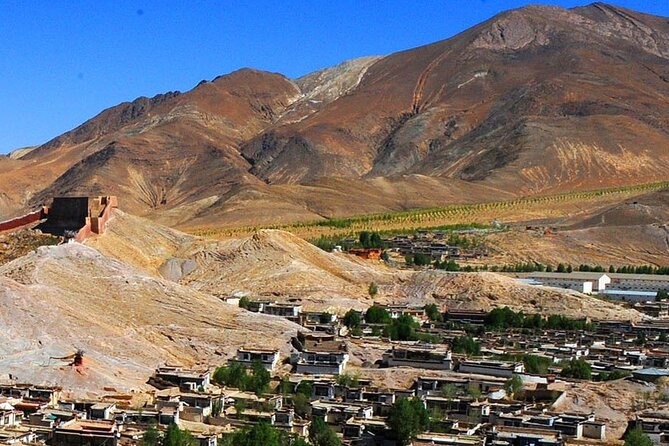
The first full sightseeing day in Lhasa includes Potala Palace, the former winter palace of the Dalai Lama. Its position above the city makes it a powerful introduction to Lhasa, and the itinerary notes that you can see the town from there.
Potala Palace is not just a grand photograph. It gives context to Tibet’s religious and political past, though the experience can also involve stairs and a fixed visiting schedule. The tour details do not specify how much time you spend inside, so ask about the palace entry arrangements before booking.
The day also includes Norbulingka Palace, the Barkhor Bazaar, and the Tibet Museum. Together, these sites widen the story. Norbulingka offers another important palace setting, Barkhor brings you into Lhasa’s traditional commercial and pilgrimage area, and the museum provides historical background.
I like the mix. You get architecture, public life, and museum context rather than visiting only one monumental building. The pace may feel full, though, especially after the long road from Nepal.
Day 7: Drepung, Sera, Jokhang, and Shalu Monastery
The second sightseeing day focuses on major Buddhist sites. Drepung Monastery, built in the 14th century, was once described as the world’s largest monastery and formerly housed as many as 10,000 monks. That scale gives the site real importance, even if modern conditions differ from its historic peak.
Sera Monastery follows, along with Jokhang Temple and Shalu Monastery. This is a substantial list for one day. You will see different religious settings, but you should not expect an unhurried study of every building and courtyard.
Jokhang Temple is particularly important within Lhasa’s sacred center, while Sera and Drepung help explain the monastic institutions that shaped Tibetan religious life. Shalu adds another monastery to the wider route and links this final day back to the religious sites visited outside Lhasa.
The schedule rewards curiosity. I would read a little about Tibetan Buddhism, the Dalai Lama, the Panchen Lama, and the role of monasteries before departure. Even a small amount of preparation will help you understand what your guide is showing you.
Day 8: Leaving by road toward Kathmandu or mainland China
After breakfast, you check out and continue toward either Kathmandu or mainland China. The final drive is described as scenic, but the itinerary does not state the exact end point, arrival time, or onward transport.
That flexibility can be useful if you are building a longer Nepal and Tibet trip. It also means you need to confirm your personal onward arrangements carefully. Do not book a tight connection based only on the eight-day estimate.
The trip is approximately eight days, not a promise that every road segment will run like a train timetable. Border procedures, road conditions, weather, and group movement can all affect the day.
Guides, organization, and group size
The most praised part of the service is the human support before and during the trip. Asmita is singled out for preparing travelers and making sure they had what they needed. Gokul is praised for arranging a wider Nepal and Tibet journey and for speaking English and Spanish.
That matters because Tibet travel involves more paperwork than a normal regional tour. You must provide your original passport at least three working days in advance for the Tibet visa process, and booking confirmation is required at least 15 working days before the Tibet tour for the permit arrangements.
The guide is listed as English-speaking, and the tour operator is Outshine Adventure Pvt Ltd. Several direct comments praise the organization, permits, hotel cleanliness and comfort, and the sense of safety. Those are encouraging signs, but your experience will still depend on group size, road conditions, and the guide assigned to your departure.
With a maximum of 30 people, this works best for someone who values shared transport and a set route. If you want a private guide, flexible meal stops, or extra time at one monastery, ask about a private alternative.
What the $1,300 price really buys
The $1,300 cost is strongest as a package of access and organization. You receive:
- Twin-sharing rooms
- Bed and breakfast accommodation
- Seven breakfasts
- Van or bus transport on the stated route
- An English-speaking Tibetan guide
- Monastery entrance fees
- Tibet Travel Permit
You pay separately for lunch and dinner, drinks, tips, personal expenses, visa fees, flights, train tickets, and a single supplement if needed. Natural or political disruptions beyond the operator’s control are also excluded.
For a solo person, the shared-room arrangement helps keep the cost down, but you need to confirm how a single supplement works if you do not want to share. The price also does not cover every transport leg, so check whether your trip begins and ends exactly where your own flights or train tickets do.
The cancellation terms are fairly clear but not especially generous close to departure. Cancel at least six full days before the start for a full refund. Cancel two to six full days ahead for a 50 percent refund, while cancellation less than two full days ahead brings no refund. Changes inside those cutoffs are not accepted.
Who should book this overland trip
I would recommend it to you if you want:
- A first organized visit to Tibet from Nepal
- Major monasteries and palaces in a single route
- Mountain views without trekking
- Help with permits and border procedures
- A shared group experience at a set price
- A journey that combines scenery with Tibetan culture and religion
I would be more cautious if you need a slow schedule, dislike early starts, struggle at high altitude, or want control over every hotel, meal, and stop. The route is rewarding, but it is physically demanding and road-heavy.
FAQ
How long is the Tibet overland tour?
The tour lasts approximately eight days, beginning in Kathmandu and ending toward either Kathmandu or mainland China.
What time does the tour start?
The stated meeting time is 5:15 am.
Is the Tibet Travel Permit included?
Yes, the Tibet Travel Permit is included in the tour price.
How far in advance must I provide my passport?
You must provide your original passport at least three working days in advance for the Tibet visa process. Booking confirmation is required at least 15 working days in advance for the Tibet tour permit.
Are meals included?
Seven breakfasts are included. Lunch and dinner are not included.
How large can the group be?
The tour can include a maximum of 30 people.
Should you book it?
Book this tour if you want the major sights, high mountain scenery, and a managed route without handling Tibet’s permits and border arrangements alone. The strongest value comes from the combination of transport, guide service, entrance fees, breakfast, and permit support.
Before paying, confirm the exact hotel names, road timings, onward transport on Day 8, single-room cost, and the visa process for your nationality. If you accept long drives, early mornings, and serious altitude, this is a strong way to reach Lhasa overland from Kathmandu. If you want a gentle holiday, choose a slower plan with more acclimatization time.
Just added around Kathmandu
- Private Shopping Tour in Kathmandu★ 5.0 · 3 reviews
- Nagarkot Sunrise With 7 UNESCO World Heritage Private Tour★ 5.0 · 3 reviews
- Kathmandu: Nightlife and Pub Crawl Tour★ 5.0 · 3 reviews
- Mount Everest Scenic Flight 50 Minutes★ 5.0 · 3 reviews
- Kathmandu: Nagarkot, Bhaktapur, Doleswor & Sanga Statue Tour★ 5.0 · 3 reviews
- Momo Cooking Class -The Art Of Making MoMo with Home Chef★ 5.0 · 3 reviews
- Makalu Base Camp Trek★ 5.0 · 3 reviews
- Kathmandu: Momo Making Class with a Local Chef★ 5.0 · 3 reviews
Tours, compared.

Private Kathmandu Sightseeing Tour | UNESCO World Heritage sites
Read our review →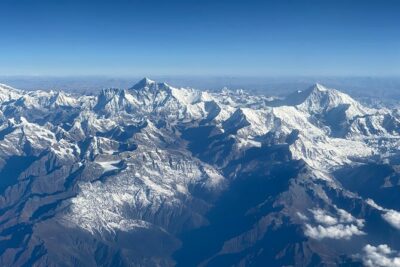
Everest Base Camp Helicopter Tour landing at Everest View Hotel
Read our review →
Full Day 7 UNESCO Tour with Lunch – Private/Group
Read our review →
Private Bhaktapur and Nagarkot Day Tour From Kathmandu
Read our review →
Full Day Top 4 UNESCO Tour with Lunch – Private/Group
Read our review →