
Reviewed · FOOD & DRINK
Kathmandu Secret Food Crawl & Local Market Tour
Come hungry, leave better oriented. This two-hour Kathmandu food walk combines Newari dishes and local street snacks with a visit to Ason Bazar, the city’s oldest local market. I like that the tour goes beyond restaurant menus, taking you into small food stalls and narrow market lanes where daily life unfolds. I also like the cultural layer: your English-speaking guide explains religion, traditions, clothing, politics, and the history of Kathmandu as you eat.
The main consideration is pace. Two hours is short for a market, culture, and food tour, and one guest felt the guide sometimes hurried between stops. You should also expect a full stomach, since the tour includes at least five foods with drinks, and often eight or nine tastings according to the detailed accounts.
In This Review
- Key points at a glance
- Starting at Chhaya Devi Complex
- Ason Bazar and the daily life of Kathmandu
- Tasting Newari cuisine one bite at a time
- Street food in the alleys
- Why the guide matters here
- Thamel, Ason, and what the route may feel like
- Is $28 a good price?
- Who will enjoy this food walk most?
- Practical tips for getting the most from it
- Should you book the Kathmandu Secret Food Crawl?
- FAQ
- Where does the Kathmandu food tour meet?
- How long does the food crawl last?
- What foods are included?
- Is a guide included?
- Does the tour visit Ason Bazar?
- Can I cancel for a full refund?
Key points at a glance
- Ason Bazar: Explore Kathmandu’s oldest local market and see crafts, clothing, food stalls, and everyday trade.
- Five foods minimum: The price includes at least five food items plus drinks, with common tastings including momos, laphing, pani puri, lassi, and Newari specialties.
- Newari food focus: Try dishes such as chatamari, yomari, samay baji, and other foods connected to Kathmandu’s indigenous Newar culture.
- Local food stalls: Your guide takes you to places that are easy to miss if you only eat around the main tourist streets.
- Cultural context: Santosh, the guide named most often in the feedback, is praised for explaining Nepali society, religion, customs, and food traditions.
- Strong value: At $28 per person, the included food and guiding make this a practical introduction to Kathmandu’s eating culture.
Starting at Chhaya Devi Complex
The meeting point is the main gate of Chhaya Devi Complex. This gives you a clear landmark, which matters in Kathmandu, where streets can feel confusing and names may not match the way they appear on a map.
The tour lasts two hours. That is enough time for several tastings and a useful walk through local streets, but it is not a slow, full-day food safari. I would treat it as an introduction rather than a complete survey of Nepali cuisine.
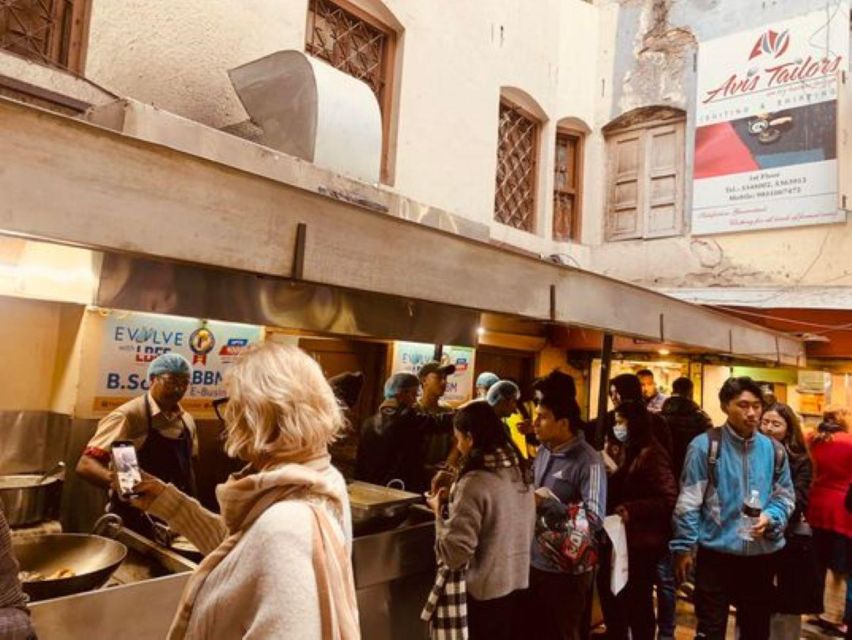
The tour is conducted in English with a live guide. Santosh is the guide most often named in the feedback, and his role seems to be a large part of the appeal. He is described as friendly, patient, flexible, and able to discuss far more than food. One guest with a meeting after the tour said he adjusted the timing to help them get there on time.
That personal attention is useful in Kathmandu. A guide does more than point at a plate. He can explain what you are eating, how it is served, and why a particular dish matters to Newar culture or wider Nepali life.
More Food Tours:
- Kathmandu Food and Drink Walking Tour
★ 5.0 · 266 reviews - Kathmandu: Food and Drink Walking Tour
★ 4.9 · 119 reviews - Walking Street Food Tour in Kathmandu
★ 5.0 · 111 reviews
Ason Bazar and the daily life of Kathmandu
Ason Bazar is one of the most useful parts of the walk for first-time visitors. It is described as Kathmandu’s oldest local market, and its value is not limited to shopping. The market brings together food, religious goods, clothing, crafts, and household trade in one compact area.
You can expect a sensory walk rather than a polished sightseeing route. Narrow lanes, shopfronts, market activity, and small vendors give you a close look at how local commerce works. The tour also highlights Newar crafts and traditions, along with other cultural influences found in the Kathmandu Valley.
I like this setting because food makes more sense when you see the market around it. A plate of beaten rice or a sweet dumpling is not just something to photograph. It connects to festivals, family customs, local ingredients, and the long presence of Newar communities in Kathmandu.
The market portion also helps you notice details you might otherwise pass without understanding. Traditional clothing, religious practices, and neighborhood customs can look mysterious when you are walking alone. A guide can provide the missing explanation without turning every stop into a formal lecture.
One guest particularly enjoyed visiting the Kumari Temple during an early evening walk and seeing the Kumari make an appearance. This should not be treated as a guaranteed part of every tour, since the timing and route can vary, but it shows how the walk may combine food with unexpected cultural moments.
Tasting Newari cuisine one bite at a time
Newari food is the heart of this tour. The Newar people are indigenous to the Kathmandu Valley, and their cooking is known for bold seasoning, contrasting textures, pickles, beaten rice, buffalo meat, and festival foods.
The exact order and selection are not fixed in the information provided, so you should think of the following as likely examples rather than a guaranteed menu.
Samay baji is a traditional platter often linked with ceremonies and celebrations. It may include beaten rice, spiced buffalo meat, pickles, beans, eggs, and other small portions. It is a useful dish for understanding how Newari meals bring many flavors together at once.
Chatamari is often described as a Newari version of pizza, though that comparison only goes so far. It is a thin rice-flour base with toppings, and it offers a different texture from the wheat breads or dumplings many visitors expect.
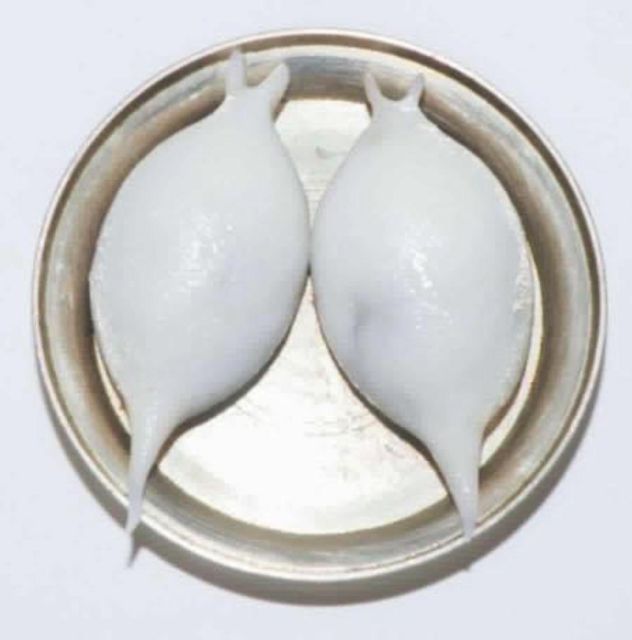
Yomari is a steamed sweet dumpling made from rice flour and filled with molasses and sesame seeds. It is especially interesting if you like desserts that are not overly sugary. The shape and preparation also connect it to Newari tradition.
Food preferences vary. Most detailed accounts describe the tastings as fresh, plentiful, and enjoyable, but one guest said the selection was interesting without being especially suited to their taste. That is an important point. This is a chance to try local dishes, not a tour built around familiar Western flavors.
Street food in the alleys
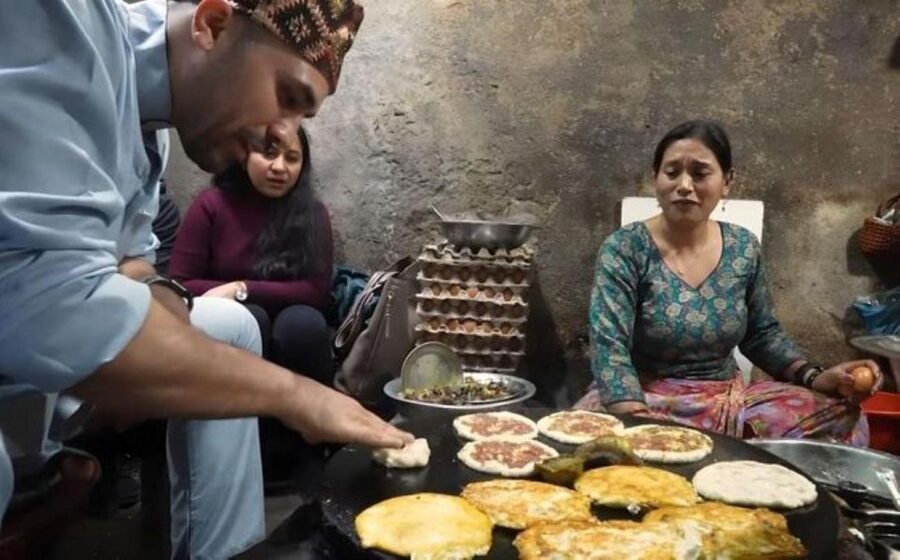
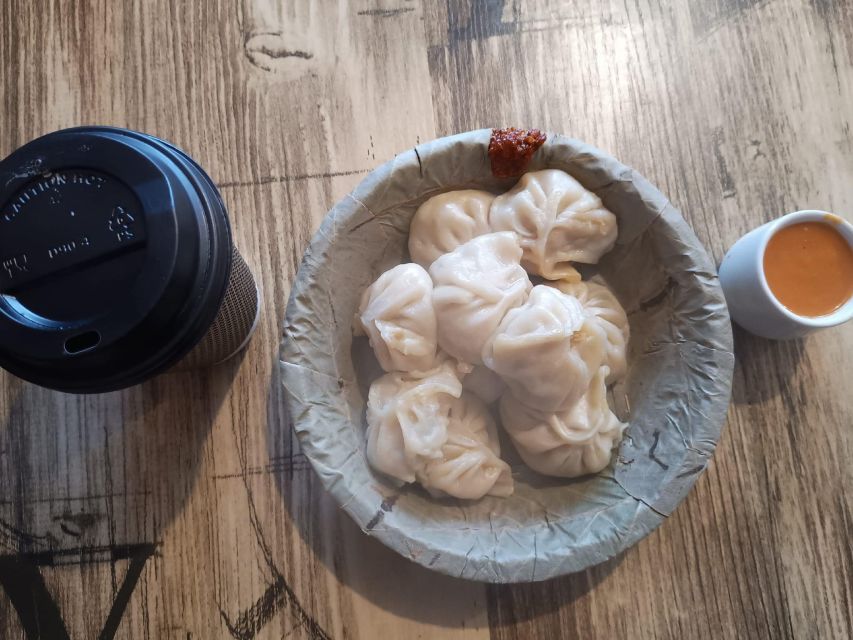
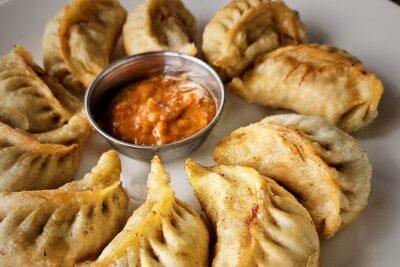
The street food selection adds range. You might try momos, Nepal’s famous dumplings, served in many variations. They are familiar to many visitors by the end of a Nepal trip, but eating them at a local stall gives you a chance to compare styles and seasonings.
Laphing is a cold mung bean noodle dish with a spicy sauce. Its slippery texture and strong heat make it very different from momos or chatamari. If you do not enjoy chili, ask your guide about the spice level before taking a large portion.
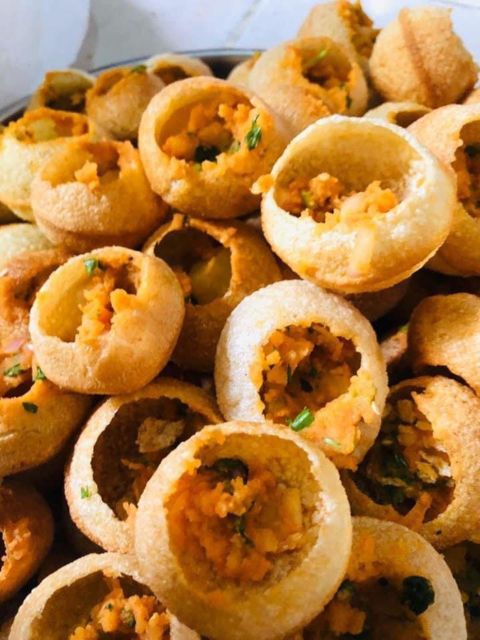
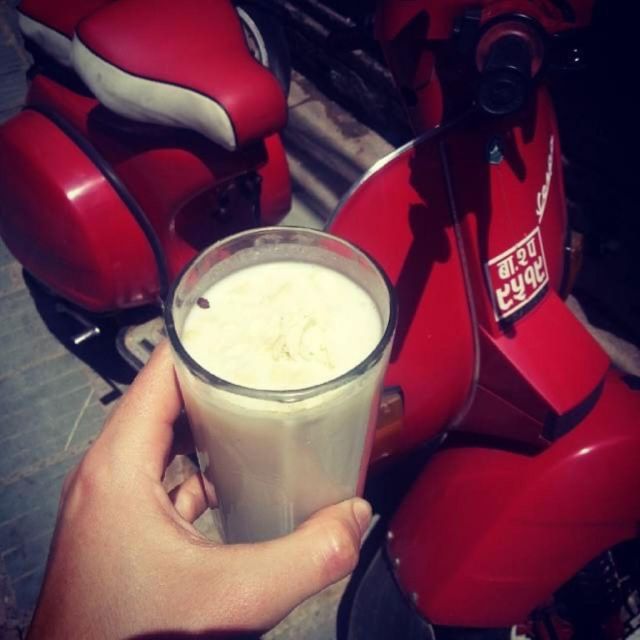
Pani puri combines crisp shells, filling, and spiced flavored water. It is a quick, messy snack, which is part of the fun. Lassi provides a cooler, sweeter break between savory tastings.
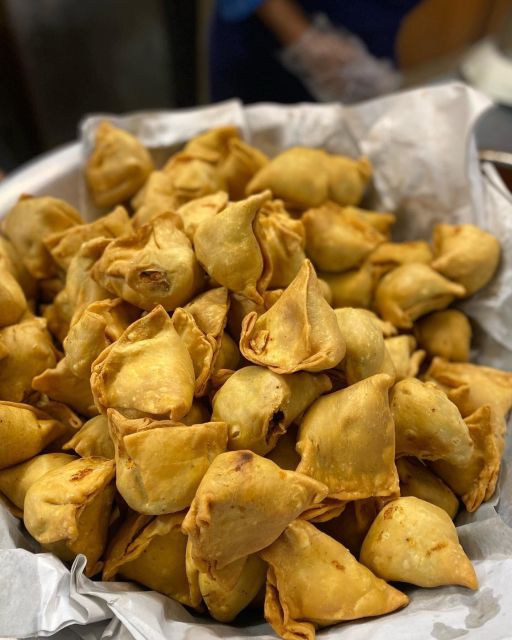
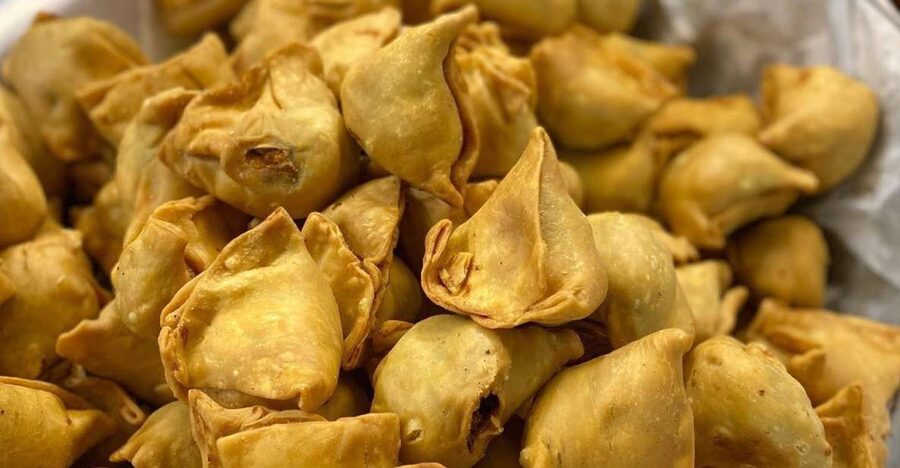
Other foods mentioned include buckwheat pancakes, samosas, chapati, and local drinks. Since the tour promises a minimum of five foods with drinks, you are not paying only for a series of tiny samples. Several people found the portions generous enough to feel completely full by the end.
That is good value, but it also affects how you plan your day. Do not schedule a large lunch immediately afterward. If you take the tour early, it can function as a substantial brunch. If you take it later, consider it dinner rather than a pre-dinner snack.
A few more trips worth weighing up before you book
- Secret Food Tour – Food Bites and Sights Kathmandu 14+ Testings
★ 5.0 · 82 reviews - Kathmandu Food & Drink and Shopping Rickshaw Tour
★ 5.0 · 48 reviews - Walking Food Tour in Hidden Local Eateries of Kathmandu
★ 5.0 · 40 reviews - Kathmandu Food Crawl & Market Tour
★ 5.0 · 26 reviews
Why the guide matters here
The guide is the difference between eating and understanding. Santosh is repeatedly praised for explaining the story behind dishes, local customs, religion, politics, and Nepali society. That range makes the walk useful even when a particular food is not your favorite.
I especially like the way this format gives you permission to try things you might otherwise avoid. A visitor walking alone may hesitate at a crowded stall or worry about ordering the wrong item. A local guide can choose established vendors, explain the menu, and help you approach unfamiliar food with more confidence.
Several accounts describe the stalls as clean, safe, and used by locals. That is reassuring, but normal food care still matters. Look at how the stall handles food, follow your guide’s advice, and tell the guide about allergies or dietary limits before the tastings begin.
The personal side also seems strong. Guests describe Santosh as easy to talk with, courteous, and accommodating. Conversations may range from food to geopolitics, local culture, and city life. If you prefer a silent tasting schedule, this may feel talkative. If you want context, it is a major benefit.
Thamel, Ason, and what the route may feel like
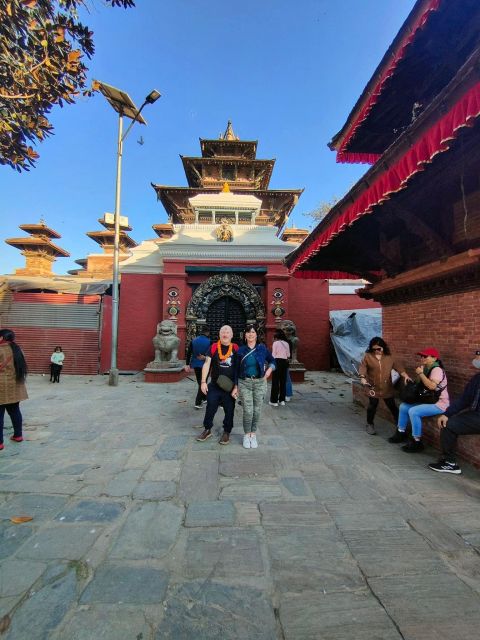
The experience is described around Ason Bazar, while several accounts refer to food stops through Thamel and nearby local alleys. That suggests the walk may connect tourist-facing streets with less obvious neighborhood food places, but you should confirm the precise route and start time when booking.
This mixture is useful. Thamel is convenient for visitors and filled with restaurants, trekking shops, and hotels. Ason gives you a more local market setting. Moving between such areas helps you see the difference between Kathmandu presented for visitors and Kathmandu used for daily life.
The route appears to be on foot, with food stops spread through market streets and back lanes. Wear comfortable shoes and keep your belongings secure in crowded areas. You will want clothing that is practical for walking and sitting at informal stalls, not your finest dinner outfit.
Because the tour is only two hours, the guide may keep you moving. One guest felt rushed at some points. I would see that as a manageable tradeoff if your goal is to taste many foods in a short window, but it may disappoint you if you want long shopping stops or detailed architectural sightseeing.
Is $28 a good price?
At $28 per person, the value is strong if you are willing to eat a full meal’s worth of food. The fee includes an English-speaking guide, government taxes, official expenses, at least five food items, and drinks. Personal expenses are not included.
The price also buys access to local knowledge. You are not simply paying for ingredients. You are paying to find stalls you might not locate on your own, understand unfamiliar dishes, and move through the market with someone who can explain what you are seeing.
The value is even better for solo visitors. Ordering several different foods alone can be awkward and expensive, while a guided tasting lets you sample broadly without having to commit to a full serving of every dish.
I would not book it mainly to save money on meals. Kathmandu food is affordable in many places. Book it because the guide can connect the food to local life and lead you beyond the easiest tourist choices.
Who will enjoy this food walk most?
I would recommend it to first-time visitors who want to get their bearings quickly. One guest took the tour soon after arriving and found the introduction to Kathmandu, its religions, and its customs especially useful.
It also suits curious eaters who want Newari food, street snacks, and small local specialties in one outing. You do not need to be an expert foodie. In fact, the guide is most useful when you are unsure what to order.
The tour may also work well for solo visitors, couples, and small groups. A private-feeling outing was described by one couple who spent the walk with Santosh, while other accounts suggest the guide can adapt to individual timing needs.
I would be more cautious if you have strict dietary restrictions, a low tolerance for spice, or little interest in trying unfamiliar food. The supplied information does not specify vegetarian, vegan, halal, gluten-free, or allergy arrangements, so ask before booking.
Practical tips for getting the most from it

- Arrive hungry but not starving. You may eat five or more items, and portions can be generous.
- Ask about spice early. Laphing and other street foods may be hot.
- Tell the guide about dietary needs. The food list is varied, but special arrangements are not stated.
- Bring water and wear walking shoes. The route uses market streets and alleys.
- Keep your schedule flexible. The tour lasts two hours, but you may want time afterward to linger in Ason or continue exploring.
- Consider taking it near the start of your stay. The cultural orientation can help you understand later meals and market visits.
- Do not expect a fixed restaurant menu. The appeal is the changing mix of stalls and local foods.
Cancellation is free up to 24 hours before the activity for a full refund, and you can reserve now and pay later. Starting times depend on availability, so check the schedule before choosing your day.
Should you book the Kathmandu Secret Food Crawl?
Yes, if you want an affordable introduction to Kathmandu through food and local conversation. The strongest reasons are the generous range of tastings, the access to small food vendors, and Santosh’s ability to explain Nepali culture along the way.
I would book it early in your Kathmandu stay, especially if this is your first visit. It can help you understand what you are eating, point you toward dishes you may want to seek out later, and make the market streets feel less confusing.
Skip it if you want a quiet, formal dining experience or a tightly fixed itinerary. The pace may be brisk, the food is local and sometimes unfamiliar, and the exact stops may change. For most curious eaters, though, $28 buys a lot: a substantial meal, a walk through Ason Bazar, and a friendly introduction to the food culture of Kathmandu.
FAQ
Where does the Kathmandu food tour meet?
The meeting point is at the main gate of Chhaya Devi Complex.
How long does the food crawl last?
The tour lasts two hours.
What foods are included?
At least five food items with drinks are included. Possible tastings mentioned for this experience include Newari dishes, momos, laphing, chatamari, yomari, samay baji, pani puri, lassi, buckwheat pancakes, samosas, and chapati. The exact selection may vary.
Is a guide included?
Yes. An experienced, friendly, English-speaking tour guide is included.
Does the tour visit Ason Bazar?
Yes. The experience includes a visit to Ason Bazar, described as Kathmandu’s oldest local market.
Can I cancel for a full refund?
Yes. You can cancel up to 24 hours in advance for a full refund. You can also reserve now and pay later.
More Shopping Tours
- Kathmandu: Food, Drink and Shopping Rickshaw Tour
★ 4.7 · 7 reviews - Half Day Cooking Class in Thamel with Local Market Visit
★ 4.5 · 6 reviews - Local Bazaar Walking Tour in Kathmandu with Professional Guide
★ 5.0 · 4 reviews - Private Shopping Tour in Kathmandu
★ 5.0 · 3 reviews
More Markets
- Best Nepali Cooking Class in Thamel with Local Market Trip
★ 5.0 · 26 reviews - Oldest Local Market Walking Tour with Living Goddess Kumari
★ 5.0 · 8 reviews - Oldest Local Market Walking Tour With Living Goddess Kumari
★ 5.0 · 8 reviews - Kathmandu Food Crawl & Market Tour
★ 5.0 · 8 reviews
Just added around Kathmandu
- Private Shopping Tour in Kathmandu★ 5.0 · 3 reviews
- Nagarkot Sunrise With 7 UNESCO World Heritage Private Tour★ 5.0 · 3 reviews
- Kathmandu: Nightlife and Pub Crawl Tour★ 5.0 · 3 reviews
- Mount Everest Scenic Flight 50 Minutes★ 5.0 · 3 reviews
- Momo Cooking Class -The Art Of Making MoMo with Home Chef★ 5.0 · 3 reviews
- Kathmandu: Nagarkot, Bhaktapur, Doleswor & Sanga Statue Tour★ 5.0 · 3 reviews
- Makalu Base Camp Trek★ 5.0 · 3 reviews
- Kathmandu: Momo Making Class with a Local Chef★ 5.0 · 3 reviews
Food & Drink, compared.
Secret Food Tour – Food Bites and Sights Kathmandu 14+ Testings
Read our review →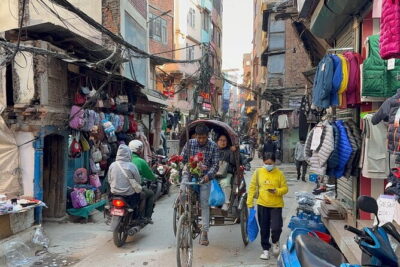
Kathmandu Food & Drink and Shopping Rickshaw Tour
Read our review →
Walking Food Tour in Hidden Local Eateries of Kathmandu
Read our review →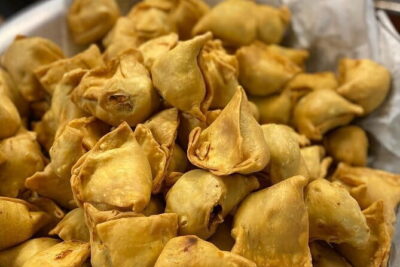
Browse the lists this tour appears in