
Reviewed · COOKING CLASSES
Half Day Cooking Class in Thamel with Local Market Visit
Come hungry, and bring your curiosity. This three-hour cooking class combines a local market visit with hands-on Nepali and Newari cooking in a small group. I like the chance to choose from three four-dish menus and the freedom to adjust chili and spices to your taste. I also like that you cook one course, eat it fresh, then move on to the next. The main caution is that the market visit may not always happen, and spice purchases can be costly.
The $21 price is especially appealing if you want more than a quick demonstration. You get ingredients, equipment, masala tea, water, an English-speaking instructor, and a full four-course meal. Classes run at 9 am, 1:30 pm, and 4:30 pm, so you can fit one around a day in Kathmandu.
In This Review
- Key things to know before cooking
- Why this Thamel cooking class is worth your time
- Starting with a local market in Kathmandu
- Choosing among three four-course menus
- Cooking one course at a time
- A friendly class with room for questions
- What the $21 price really covers
- Picking the right start time
- Who will enjoy this experience most
- Small details that make the day easier
- Should you book this Nepali cooking class?
- FAQ
- How long does the cooking class last?
- What time does the class start?
- Is a local market visit included?
- What food will I cook?
- Is the cooking class suitable for people who do not like spicy food?
- What is included in the $21 price?
Key things to know before cooking
- Momos are included on every menu, so Nepal’s best-known dumpling is not left to chance.
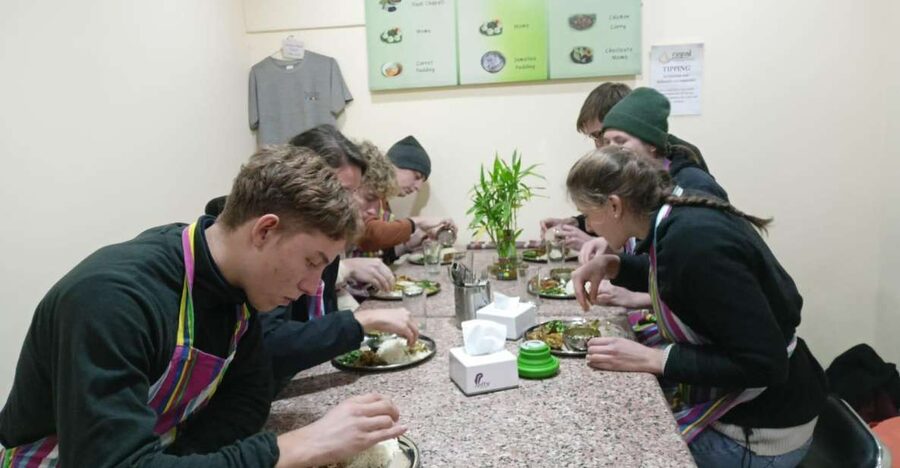
- You cook and eat each course in sequence, which keeps the food hot and lets you taste your work as you go.
- Three menus offer useful choice, with some flexibility to swap or adjust individual dishes.
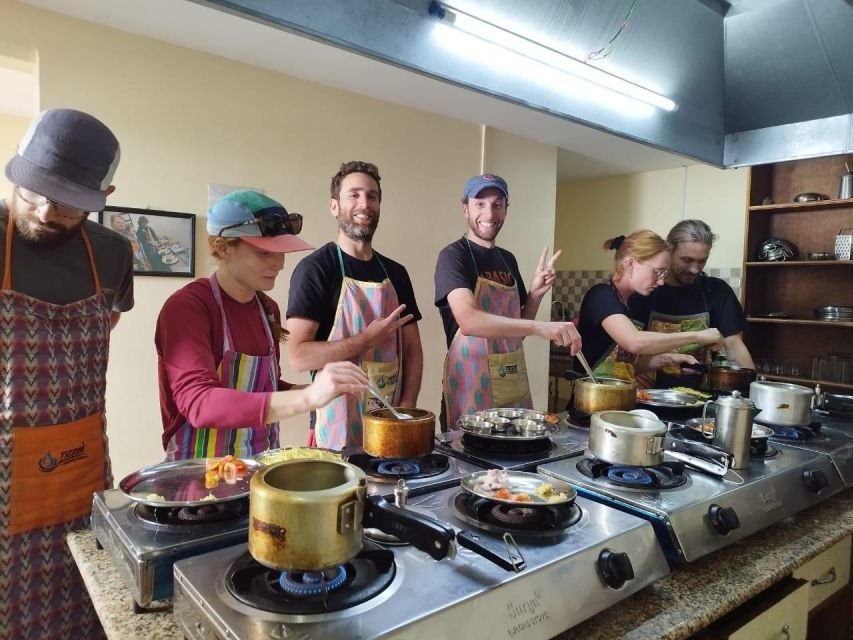
- The group is limited to eight people, making it easier to get direct help at the stove.
- The class costs $21 per person, a strong value for a market visit, instruction, and four courses.
- Market access can vary, and one Saturday morning class did not include the planned market stop.
Why this Thamel cooking class is worth your time
Thamel is packed with restaurants, cafés, trekking shops, and tour offices. It is easy to eat well here without learning anything about the food in front of you. This class gives you a more active way to understand Nepali cooking, with an instructor explaining ingredients, spices, and methods as you work.
The format is practical rather than formal. You are not expected to sit quietly while a chef performs at a distance. You prepare the food yourself, ask questions, taste along the way, and decide how much chili or seasoning belongs in your portion.
That makes the class suitable for a wide range of cooking ability. If you already know your way around a kitchen, you can focus on flavor and technique. If you rarely cook, the step-by-step guidance keeps the process manageable.
The experience has a 4.5 rating from six verified bookings, with especially strong praise for the friendly staff, relaxed teaching style, fresh food, and interactive format. One solo participant felt welcome from the first minute, while another described the cooking family as growing its own spices. Those details suggest a personal class rather than a large commercial demonstration.
More Cooking Classes in Kathmandu
- Half day cooking class in Thamel kathmandu
★ 5.0 · 607 reviews - Kathmandu: Local Women-Led Nepali Cooking & Momo Class
★ 4.9 · 360 reviews - Kathmandu: Local Lead Nepali Cooking & Momo-Making Class
★ 5.0 · 212 reviews
Starting with a local market in Kathmandu
The market visit is meant to set the stage for the cooking. Rather than meeting the ingredients only after they have been cleaned and placed in bowls, you get a chance to see where the class begins its food story.
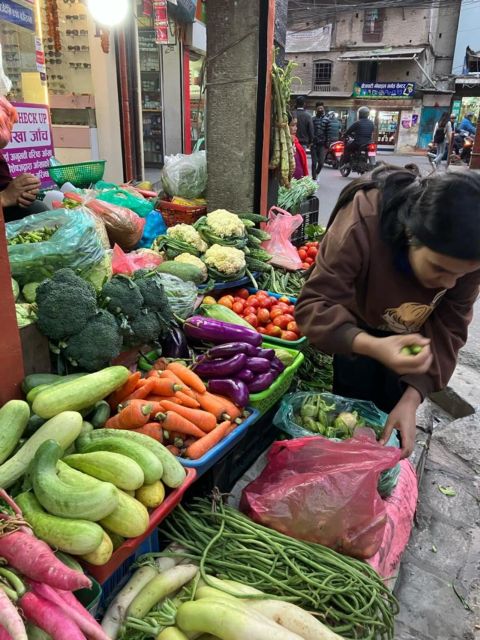
Your instructor takes you through a local market near the school and points out the fresh ingredients and spices used in Nepali cooking. This part matters because many Nepali dishes depend on small changes in seasoning, texture, and freshness. Seeing the ingredients before cooking helps you understand what each item contributes.
The market also gives you a little more contact with everyday Kathmandu. You may see produce, herbs, spices, and other food items being sold for local kitchens. The exact market route and selection may vary, so do not treat this as a full food tour or a major sightseeing stop. It is a short introduction tied to the dishes you will prepare.
There is one practical qualification. The market visit did not take place during at least one Saturday morning class. The reason was not clear, so if this part is important to you, confirm it when booking or on the day. The class still has value without it, but the market visit is one of its advertised attractions.
You may also have the chance to buy spices. One participant found the prices high. I would treat this as an optional purchase, not part of the value calculation, and compare prices before buying a large amount.
Choosing among three four-course menus
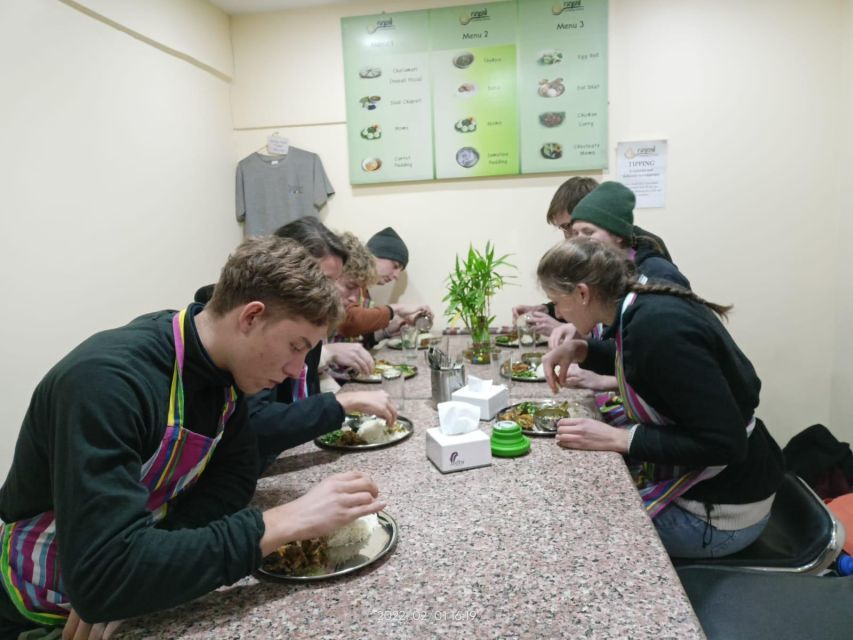
The class offers three menus, each built around four traditional dishes. This is a useful feature because it prevents the session from becoming the same fixed meal for every group. It also gives you some control if you have already eaten certain Nepali dishes elsewhere.
Momos appear on every menu. That is a smart choice. These steamed or cooked dumplings are a favorite introduction to Nepali food, and many people arrive hoping to learn how they are made. Including them in every menu means you will not leave wondering if you missed the dish most associated with Kathmandu’s casual food scene.
The menus cover traditional Nepali and Newari food. Newari cooking comes from the Newar community of the Kathmandu Valley and is known for distinctive combinations of spices, grains, vegetables, and meat dishes. The class lets you meet that food through cooking rather than simply ordering an unfamiliar plate.
The menu choice may also be flexible. The class format allows individual dishes to be changed or adjusted within the available menus. Ask about swaps early, especially if you have strong dislikes, food allergies, or a preference for vegetarian food. The supplied details do not promise that every substitution is possible, so think of flexibility as a helpful option rather than a guarantee.
Cooking one course at a time
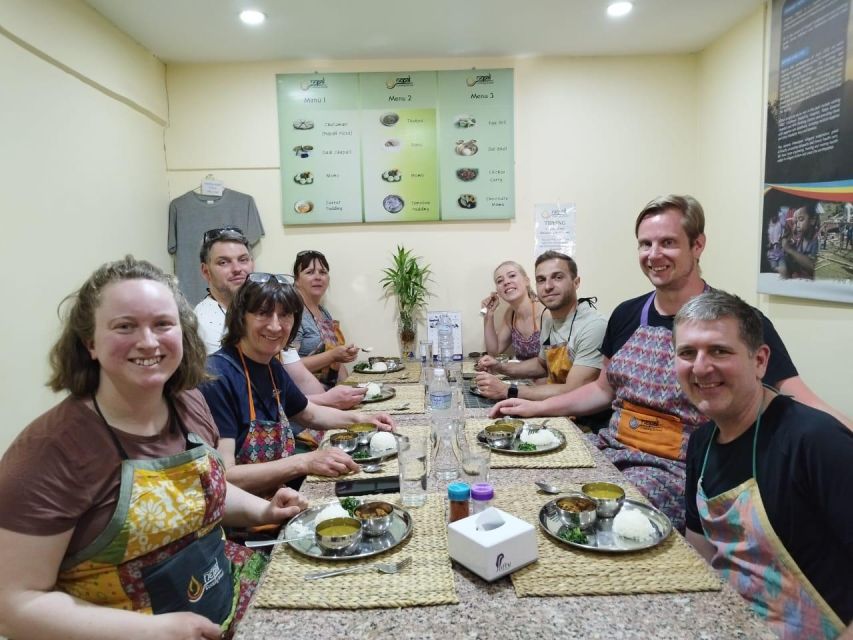
The most effective part of the format is its order. You cook one course, eat it while it is fresh, and then continue with the next dish. This avoids the common cooking-class problem of preparing everything at once and eating a lukewarm meal at the end.
Your instructor guides you through the process step by step. Expect explanations of Nepali ingredients, spices, and cooking techniques, followed by your own work with the provided equipment. Since all equipment and ingredients are included, you do not need to arrive with anything besides yourself and perhaps a camera.
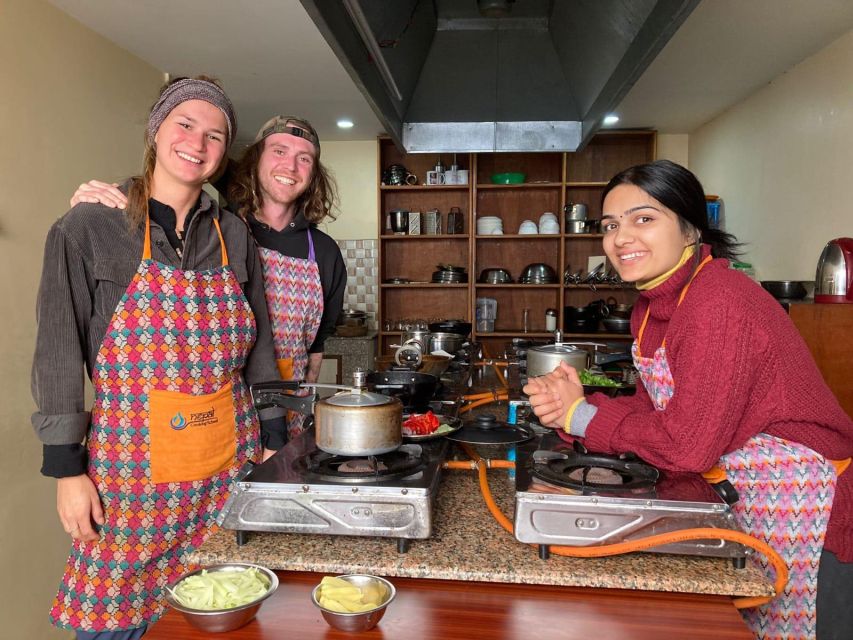
You can adjust the seasoning as you cook. Like chili? Add more. Prefer milder food? Use less or leave it out. This is a small detail, but it makes a big difference in a group class, where everyone may have a different idea of what spicy means.
The arrangement also helps you learn by tasting. You can see how a dish changes as ingredients are added, then eat the result soon afterward. That connection between instruction, action, and flavor is more useful than taking notes on a demonstration you never get to repeat.
The class includes four courses, so the meal is substantial. You should arrive hungry. With masala tea and drinking water included, the food and drink covered by the price are enough to make this a proper meal rather than a small sample.
More Half-Day Tours in Kathmandu
- Private Half-Day Chandragiri Cable Car Tour in Kathmandu
★ 5.0 · 155 reviews - Namo Buddha and Thrangu Tashi Yangtse Monastery Half-Day Tour
★ 5.0 · 24 reviews - Private Half Day Tour in Kathmandu
★ 5.0 · 20 reviews - Bhaktapur Old City and Durbar Square Half-Day Tour
★ 5.0 · 15 reviews
A friendly class with room for questions
The group limit is eight participants. That is small enough for the instructor to keep an eye on each person, though the amount of individual attention will still depend on the number of people attending that day.
The teaching language is English. The tone appears to be relaxed and patient, with staff taking time to explain each step. One solo participant found the setting welcoming, and another described the interaction as feeling closer to a visit with friends than a formal lesson. For someone traveling alone, that social ease can be as valuable as the recipes.
The class is also a good choice if you do not usually join group activities. You are given a clear task at each stage, and the meal provides natural conversation. You can participate actively without needing advanced cooking skills or a strong interest in culinary theory.
The family-run feel is another appealing detail. The cooks are described as growing their own spices, which adds a direct link between the people teaching you and the ingredients they use. The available information does not say which spices they grow or how much of the class menu comes from their own supply, so I would enjoy this as part of the story rather than expect a farm visit.
What the $21 price really covers
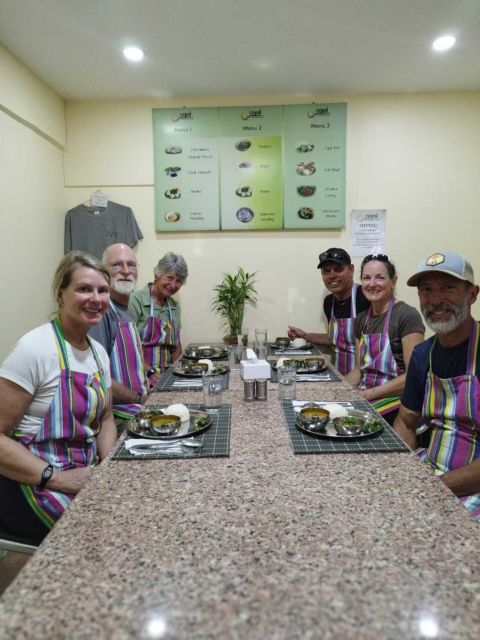
At $21 per person, this is a good-value activity in Kathmandu if you want a meal plus instruction. You are paying for about three hours, a local market visit when available, an English-speaking instructor, all equipment, all ingredients, masala tea, drinking water, and four courses that you cook yourself.
A comparable restaurant meal might cost less, but it would not give you the skills, explanations, or active role. A private cooking lesson would likely offer more personal attention, but this is a small-group experience rather than a private one.
The value is strongest for people who plan to cook Nepali food again after the trip. You leave with a better feel for seasoning, preparation, and the balance of ingredients. Even if you never recreate the whole menu, you may recognize spices and dishes more confidently when ordering elsewhere.
The price does not include transport outside Thamel. Pick-up inside Thamel is done on foot, while private transportation and alcoholic drinks are not included. If you are staying outside Thamel, factor in the cost and time of reaching the meeting point yourself.
Picking the right start time
You can choose from three daily shifts:
- Morning at 9 am
- Afternoon at 1:30 pm
- Evening at 4:30 pm
The morning class gives you the best chance of combining cooking with a fresh market visit, though the market is not guaranteed on every day. It also leaves the rest of your day free.
The 1:30 pm option works well if you want a slower Kathmandu morning. Since the class includes a full meal, it can function as a late lunch and may help you avoid paying for another large meal afterward.
The 4:30 pm class is a natural choice for an evening meal. It finishes around three hours later, so plan your evening around a substantial dinner rather than booking another restaurant meal at the same time.
Check the exact starting time when you reserve. The activity runs for about three hours, although the included details also describe the cooking portion as two to three hours. The full experience, including the market visit when offered, should be treated as a half-day commitment.
Who will enjoy this experience most
I would recommend this class to anyone who wants a hands-on introduction to Nepali food rather than another restaurant meal. It suits solo visitors, couples, friends, and families who enjoy making something together.
It is particularly useful for:
- First-time visitors to Nepal who want food context
- People who enjoy momos and want to learn how they fit into local cooking
- Cooks who want to adjust spice levels and practice techniques
- Solo visitors looking for a small, social activity
- Anyone staying in or near Thamel
- People seeking a good-value meal activity lasting about three hours
It may be less suitable if you want a private lesson, a guaranteed market tour, or a highly advanced culinary course. The class is designed for participation and enjoyment, not professional chef training.
Tell the school about allergies and dietary restrictions before the class. The menus may allow some exchanges or adjustments, but you should not wait until cooking begins to raise an important food concern.
Small details that make the day easier
Bring a camera if you want to record the market, ingredients, or finished dishes. Wear clothing you do not mind cooking in, although no special equipment is listed as required.
Because you will eat four courses, avoid having a large meal just before class. The food is cooked and served as you progress, so arriving hungry makes the format work better.
If chili is a concern, say so at the beginning. The class allows you to add as much or as little as you like, but it is easier to start mild and add heat than to rescue a dish that has become too spicy.
If you want to purchase spices, ask about prices before agreeing to buy. The class itself is well priced, but spice purchases are separate and may not feel like a bargain.
Cancellation is flexible: you can cancel up to 24 hours ahead for a full refund, and you can reserve now and pay later. That is useful when your Kathmandu plans depend on weather, flights, or a changing trekking schedule.
Should you book this Nepali cooking class?
Book it if you want a friendly, practical introduction to Nepali and Newari food, especially if momos are high on your list. The combination of three menu choices, four courses, adjustable spice, and a small group gives you more than a basic cooking demonstration.
I would book the morning time if the market visit is a priority, then confirm that the market stop is planned for your date. Choose the afternoon or evening if you mainly want the cooking and meal.
Skip it if your main goal is a guaranteed market tour, private instruction, or advanced technique. For most people staying in Thamel, though, $21 is a sensible price for three hours of cooking, eating, and learning. Come hungry, keep your spice expectations clear, and you should leave with a full stomach and a better understanding of what is on your plate.
FAQ
How long does the cooking class last?
The full experience lasts about three hours. The cooking portion is described as lasting two to three hours, with the local market visit included when available.
What time does the class start?
There are three shifts each day: 9 am, 1:30 pm, and 4:30 pm. Check availability for the exact date and starting time.
Is a local market visit included?
Yes, a local market visit is included in the activity. However, the market stop may not take place on every occasion. One Saturday morning class did not include the visit.
What food will I cook?
You will cook four traditional Nepali and Newari dishes. There are three different menus, and momos are included on each menu.
Is the cooking class suitable for people who do not like spicy food?
Yes. You can add as much or as little chili as you prefer. Tell the instructor about your spice preference before you begin.
What is included in the $21 price?
The price includes the cooking class, four-course meal, equipment, ingredients, local market visit, English-speaking instructor, walking pick-up inside Thamel, masala tea, drinking water, and tasting your own food. Private transport, pick-up outside Thamel, and alcoholic drinks are not included.
More Shopping Tours
- Kathmandu Food & Drink and Shopping Rickshaw Tour
★ 5.0 · 48 reviews - Oldest Local Market Walking Tour with Living Goddess Kumari
★ 5.0 · 8 reviews - Kathmandu Food Crawl & Market Tour
★ 5.0 · 8 reviews - Kathmandu: Food, Drink and Shopping Rickshaw Tour
★ 4.7 · 7 reviews
More Markets
- Kathmandu Secret Food Crawl & Local Market Tour
★ 4.7 · 54 reviews - Kathmandu Food Crawl & Market Tour
★ 5.0 · 26 reviews - Best Nepali Cooking Class in Thamel with Local Market Trip
★ 5.0 · 26 reviews - Oldest Local Market Walking Tour With Living Goddess Kumari
★ 5.0 · 8 reviews
Just added around Kathmandu
- Private Shopping Tour in Kathmandu★ 5.0 · 3 reviews
- Nagarkot Sunrise With 7 UNESCO World Heritage Private Tour★ 5.0 · 3 reviews
- Kathmandu: Nightlife and Pub Crawl Tour★ 5.0 · 3 reviews
- Mount Everest Scenic Flight 50 Minutes★ 5.0 · 3 reviews
- Momo Cooking Class -The Art Of Making MoMo with Home Chef★ 5.0 · 3 reviews
- Kathmandu: Nagarkot, Bhaktapur, Doleswor & Sanga Statue Tour★ 5.0 · 3 reviews
- Makalu Base Camp Trek★ 5.0 · 3 reviews
- Kathmandu: Momo Making Class with a Local Chef★ 5.0 · 3 reviews
Cooking Classes, compared.




Nepalese Momos or Dal Bhat Cooking Class (Cook with Delight)
Read our review →
The best Private Nepali Cooking Class in Kathmandu
Read our review →
Nepalese Kitchen in Pokhara: Momos or Dal Bhat Cooking Class
Read our review →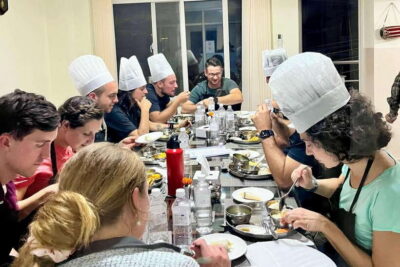
Browse the lists this tour appears in