Reviewed · TOURS
Temples and Stupas Tour in Kathmandu Valley
Three sacred places, one useful day. This small-group outing gives you a focused look at Kathmandu’s religious and royal past, with stops at Pashupatinath Temple, Patan Durbar Square, and Boudhanath Stupa. I like the combination of Hindu, Buddhist, and Newari sites, and I like having air-conditioned transport between them. The main drawback is that entrance fees, food, and hotel transfers are not included, so the $34 price is not the final cost.
I also like the small maximum group of 10, which should make it easier to hear the English-speaking guide and ask questions. Guides such as Deepa and Kalpana have received especially warm praise for explaining local culture and history clearly. Still, the quality of the day depends heavily on the guide assigned to your group, and one poor experience involved a guide and driver speaking to each other in Nepali between stops.
In This Review
- Key points to know before booking
- Why this three-stop route works
- Pashupatinath: Kathmandu’s most powerful first stop
- Patan Durbar Square and the Malla kings
- Boudhanath Stupa and the turn toward Buddhism
- What the guide can make or break
- Is $34 good value for Kathmandu?
- Timing, meeting point, and practical details
- Who should book this experience?
- My final booking advice
- FAQ
- How long does the Temples and Stupas Tour in Kathmandu Valley last?
- What time does the tour start?
- Where does the tour begin?
- Where does the tour end?
- Which places does the tour visit?
- Are entrance fees included?
- Is hotel pickup included?
- What is the maximum group size?
Key points to know before booking
- Three UNESCO-listed sights in about seven hours: You cover Kathmandu Valley’s most famous Hindu, Buddhist, and royal landmarks in one well-packed day.
- Pashupatinath is a serious religious site: You may see Hindu holy men and, depending on the day, a cremation ceremony along the Bagmati River.
- Patan Durbar Square rewards slow looking: Its Newari woodcarving, former royal palace, and temple details deserve more than a quick photograph.
- Boudhanath changes the mood: The great Buddhist stupa offers a calmer, more contemplative stop after the intensity of Pashupatinath.
- Budget extra for admissions: All entrance fees are excluded. One reported total was about 2,000 Nepalese rupees, with fees charged at two stops.
- The group is capped at 10: That is a good size for a city day, though the tour begins and ends at the Royal Mountain Travel office rather than your hotel.
Why this three-stop route works
Kathmandu Valley can feel confusing at first. Important sites are spread across Kathmandu and Lalitpur, traffic can slow even short journeys, and taxi prices may require bargaining. This tour removes some of that friction by joining the three major sights with transport and an English-speaking guide.
The route also has a useful religious balance. Pashupatinath introduces you to Nepal’s Hindu traditions, Patan shows the artistic and political world of the Newari kings, and Boudhanath brings you into the orbit of Tibetan-influenced Buddhism. You are not simply visiting three old buildings. You are seeing three different ways Kathmandu’s people have expressed faith and power.
The day lasts about seven hours, with roughly two hours assigned to each stop. That gives you enough time to see the main areas without spending an entire day on one monument. It also means the schedule is fairly full. If you prefer long café breaks, independent wandering, or detailed photography, you may find the pace brisk.
The tour begins at 9:00 a.m. at Royal Mountain Travel on Lal Durbar Marg in Kathmandu and returns there at the end. Hotel pickup and drop-off are not part of the package, although one guide kindly took a group back to its hotel afterward. Treat that as a courtesy, not something to count on.
A few more trips worth weighing up before you book
- Everest Base Camp Trek – 14 Days
★ 5.0 · 1,499 reviews - Private Kathmandu Sightseeing Tour | UNESCO World Heritage sites
★ 5.0 · 756 reviews - Everest Base Camp Helicopter Tour landing at Everest View Hotel
★ 5.0 · 668 reviews
Pashupatinath: Kathmandu’s most powerful first stop
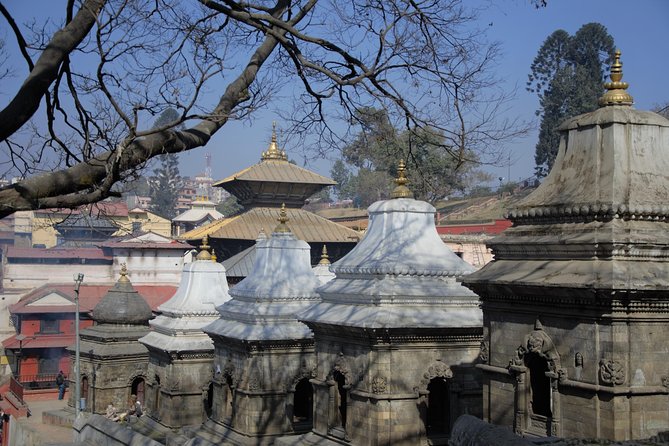
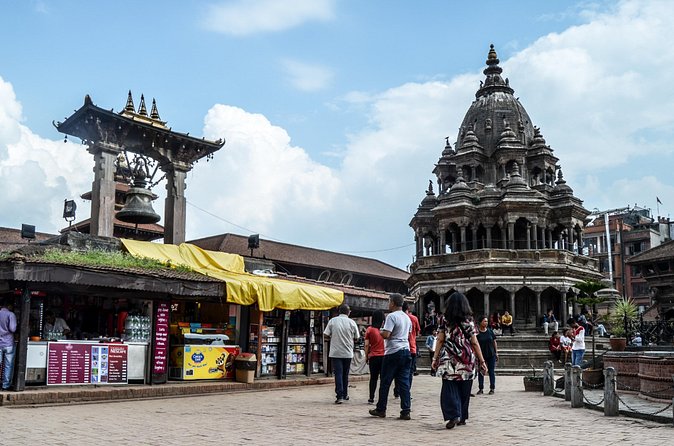
Pashupatinath Temple is dedicated to Shiva, known here as Pashupatinath, or Lord of Animals. It is one of the most important Hindu religious sites in Nepal and serves as a final destination for Hindu devotees.
This is the stop where a guide adds real value. The complex is not just a single temple with a clear entrance and exit. It is a working religious area, and the meaning of what you see can be difficult to grasp without context. Your guide can explain the role of Shiva, the importance of the temple, and the relationship between worship, death, and cremation in Hindu practice.
You may see Hindu holy men at Pashupatinath. You might also witness a cremation ceremony. That possibility makes this a more serious visit than a standard sightseeing stop. Keep your behavior respectful, especially near funeral activity. This is not a staged cultural display, and photography may be inappropriate in sensitive areas.
The listed visit lasts about two hours. That should allow time to see the main structures and absorb the atmosphere without rushing from one corner to another. At the same time, the site can feel intense, particularly if you have never encountered an active cremation ground. I would not book this portion expecting a light or purely scenic morning.
Pashupatinath has an additional practical issue: entrance fees are not included. The tour information says children aged 10 and above are charged an entrance fee. Since the supplied price does not include any admission or taxes, carry Nepalese rupees for the day.
Patan Durbar Square and the Malla kings
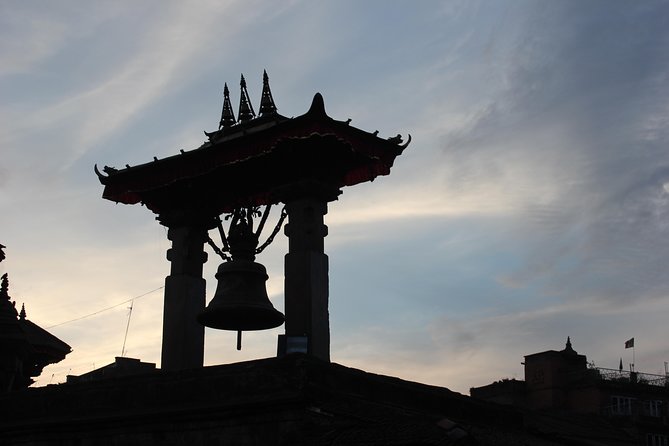
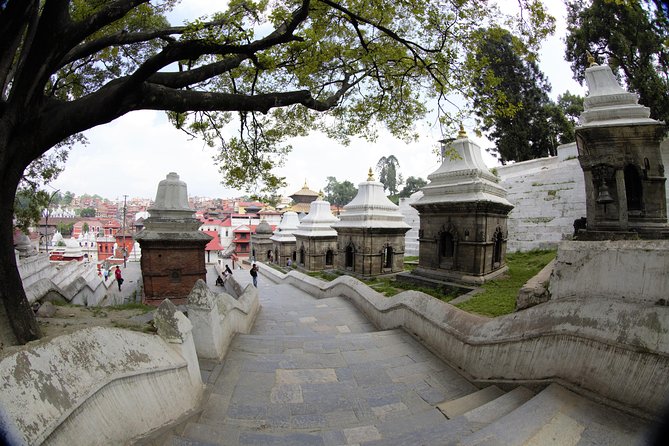
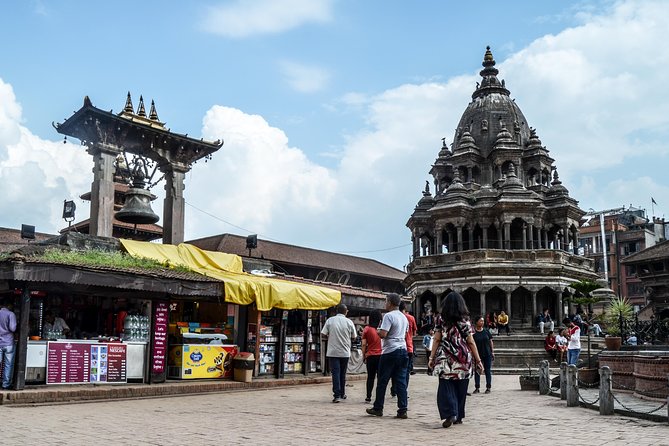
The second major stop is Patan Durbar Square, in the city of Lalitpur. This UNESCO World Heritage Site was once the royal center of the Malla kings and is known for Newari architecture.
If Pashupatinath is about living faith and death rituals, Patan is about craftsmanship, court life, and sacred design. The square brings together palace buildings, temples, carved timber, and brickwork. Look up and around, not only straight ahead. Newari details can be easy to miss when a guide points toward the largest structure in the square.
The phrase Durbar Square means palace square, and that is the key to understanding this place. You are walking through an old royal setting, not simply a collection of unrelated shrines. A strong guide can connect the buildings to Nepalese history and explain how the Malla rulers used architecture to express power and devotion.
The visit is scheduled for two hours, which is useful here. You need time to listen, look closely, and move through the square without treating it as a quick photo stop. One highly praised guide, Kalpana, was noted for her broad knowledge of local culture and her willingness to answer questions. Another guide, Deepa, was praised for making the day pleasant and well organized.
The tour includes transportation to Patan but not admission. One reported cost for entrance fees was around 2,000 Nepalese rupees in total, with 1,000 rupees paid at each of two stops. Fees can change, so use that figure only as a rough planning guide, not a promise.
Patan also gives you a chance to ask practical questions about Nepalese traditions while the information from Pashupatinath is still fresh. I would use this portion of the day to ask about the Malla kings, Newari building methods, and the difference between a palace square and a temple complex.
Boudhanath Stupa and the turn toward Buddhism
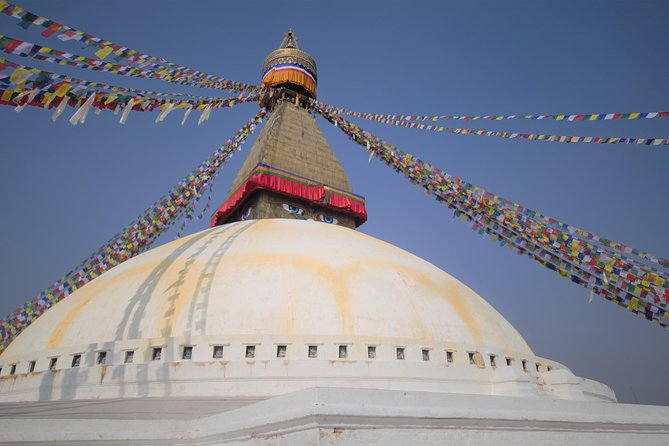
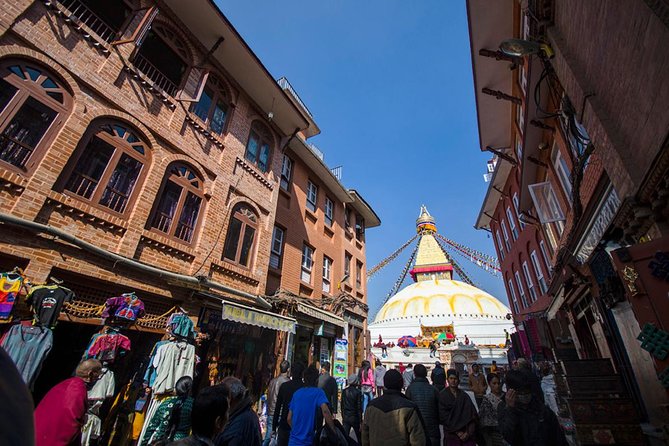
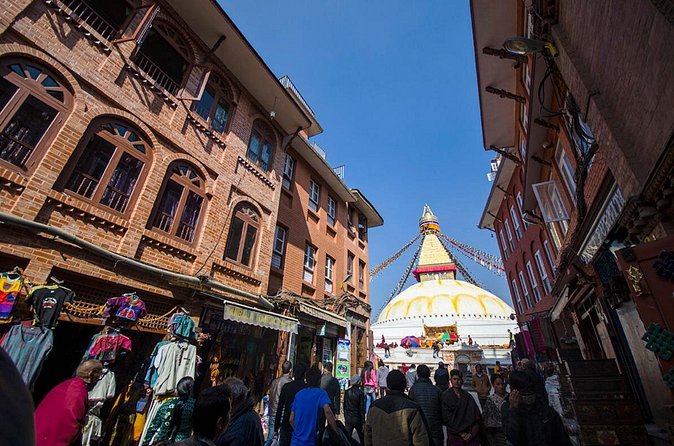
Boudhanath Stupa is one of Nepal’s holiest Buddhist sites. It also receives respect from Hindu devotees, which reflects Kathmandu Valley’s long pattern of shared religious life.
The stupa is the final stop, and the change in mood can be welcome. After the solemn atmosphere of Pashupatinath and the royal architecture of Patan, Boudhanath offers a more unified visual experience. Its huge stupa is the focus, with the familiar painted eyes looking out across the area.
Your guide can help explain why the site matters from a Buddhist perspective and why it is also respected by Hindus in Nepal. That cross-religious connection is one of the most useful ideas running through the day. You begin to see Kathmandu not as a place divided into neat religious boxes, but as a valley where traditions overlap.
The planned two hours gives you time to take in the stupa and its surrounding sacred setting. The tour description does not promise a particular ritual, ceremony, or special event, so keep expectations grounded. You are coming for the site, the explanation, and the chance to understand its place in Nepalese religious life.
Boudhanath is also where a guide’s communication style matters. A highly rated day included a guide who continued explaining Nepalese history and answering questions even during lunch. Food itself is not included, but a guide who stays engaged during a break can make the schedule feel more personal and useful.
A different sort of day from Kathmandu:
- Half day cooking class in Thamel kathmandu
★ 5.0 · 607 reviews - Everest Base Camp Trekking
★ 5.0 · 485 reviews - Nagarkot Sunrise View and Day Hiking from Kathmandu
★ 5.0 · 471 reviews - Kathmandu: Full Day 7 UNESCO Tour with Lunch – Private/Group
★ 5.0 · 415 reviews
What the guide can make or break
The best reason to book this tour is not simply transport. It is the chance to have the three sites interpreted for you. Several strong experiences were tied to guides who explained local culture, answered questions, and taught throughout the day. Deepa and Kalpana are two names associated with especially positive feedback.
That praise sets a clear expectation: you should want a guided introduction, not just a vehicle between monuments. Ask questions. If you are curious about cremation customs, Newari architecture, Hindu and Buddhist practice, or the Malla kings, this is the time to speak up.
But you should also know the risk. One disappointing experience involved long stretches when the guide and driver spoke to each other in Nepali, leaving the visitor without information between stops. The listed service is an English-speaking guide, but that does not guarantee constant commentary during every drive.
I would judge the tour mainly by the time spent at the monuments, where guiding matters most. Still, if the roads are slow, the gaps between stops can feel long. A phone, map, or short reading guide can help you make use of quiet travel time, but the operator should ideally explain what you are passing and prepare you for the next site.
The maximum group size is 10. That is small enough for a more direct exchange than a large coach tour, though it is not a private tour. If you want every question answered at length, a private guide would offer more control. If you want a reasonably priced introduction without arranging everything yourself, this group size is a sensible middle ground.
Is $34 good value for Kathmandu?
At $34 per person, the tour is priced as an affordable introduction to the valley’s major sights. You get an English-speaking guide and air-conditioned transport suited to the size of the group. You do not get meals, hotel transfers, entrance fees, or taxes.
That distinction matters. The advertised price is not an all-inclusive day rate. Add admission costs and your own food, then account for getting to and from Royal Mountain Travel’s office. One past cost estimate put entrance fees at about 2,000 Nepalese rupees for two stops, so I would budget extra cash rather than assume the $34 covers every door.
Even with those additions, the tour can offer solid value if you are staying in Kathmandu for a short time. You see three major heritage sites in one day and avoid negotiating with taxi drivers for each journey. You also avoid the work of building a route through Kathmandu and Lalitpur on your own.
The value is weaker if you already know the valley well or want to spend half a day at one site. Patan alone can reward patient exploration, while Pashupatinath may call for a slower and more thoughtful visit. This is a sampler, not a deep study of each monument.
Timing, meeting point, and practical details
The start time is 9:00 a.m. at Royal Mountain Travel, Lal Durbar Marg, Kathmandu 44601. The activity ends back at the same meeting point. There is no stated hotel pickup or drop-off, so plan your morning around reaching the office on time.
Transport is by air-conditioned vehicle, with the vehicle size based on the group. That is useful in Kathmandu, where a day of road travel can be tiring. The small group limit of 10 should also make loading and unloading less awkward than on a large bus.
A mobile ticket is provided, and booking confirmation is received at the time of booking. The activity is near public transportation, and the supplied information says most people can participate. No special accessibility details are provided, so ask the operator directly if you need specific assistance.
The tour includes about six hours across the three stops, while the full experience lasts about seven hours. The remaining time is likely used for transport and the day’s break, though the exact schedule can vary with traffic and group needs. Food and drinks are your responsibility.
Free cancellation is available up to 24 hours before the local start time for a full refund. Changes or cancellations made within 24 hours are not accepted for a refund. Be careful with flight connections: one person missed the tour after a flight delay and was not able to transfer the booking to another departure.
Who should book this experience?
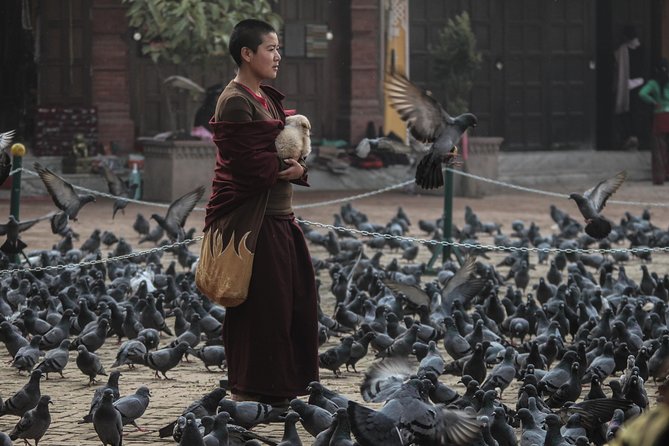
I would recommend this tour to a first-time visitor with one open day in Kathmandu. It suits you especially well if you want the major religious and royal sights explained in plain English and prefer not to arrange local transport yourself.
It also suits solo visitors and couples who like small groups but do not need a private guide. The 10-person limit keeps the outing personal enough for questions, while the $34 base price remains lower than arranging private transport and guiding independently.
Families with older children may also find it useful. The information says entrance fees apply to children aged 10 and above. Younger children may still attend, but the day includes religious sites, royal history, and the possibility of seeing cremation activity, so parents should decide if that setting is suitable.
I would think twice if you dislike fixed schedules, need hotel pickup, or want meals included. I would also be cautious if your main goal is photography and quiet exploration. The tour visits the right places, but it is designed to introduce you to them efficiently.
My final booking advice
Book this tour if you want a practical first look at Kathmandu Valley’s three signature heritage sites and value having a guide explain what you are seeing. The strongest experiences appear to come from guides such as Deepa and Kalpana, who bring local culture and history into the day rather than simply leading you from gate to gate.
Before paying, set aside money for entrance fees and lunch, confirm how you will reach the Royal Mountain Travel office, and remember that the tour ends there. If you accept those limits, this is a well-priced way to organize a busy Kathmandu day.
Skip it if you want a private pace or a fully inclusive package. For everyone else, the mix of Pashupatinath’s Hindu devotion, Patan’s royal Newari architecture, and Boudhanath’s Buddhist faith gives you a useful foundation for understanding the valley.
FAQ
How long does the Temples and Stupas Tour in Kathmandu Valley last?
The experience lasts approximately seven hours, with about two hours planned at each of the three main stops.
What time does the tour start?
The tour starts at 9:00 a.m.
Where does the tour begin?
It begins at Royal Mountain Travel on Lal Durbar Marg, Kathmandu 44601, Nepal.
Where does the tour end?
The activity ends back at the Royal Mountain Travel meeting point.
Which places does the tour visit?
The tour visits Pashupatinath Temple, Patan Durbar Square, and Boudhanath Stupa.
Are entrance fees included?
No. Entrance fees, taxes, food, and drinks are not included in the tour price.
Is hotel pickup included?
No. Hotel pickup and drop-off are not included, although a guide may sometimes provide an additional hotel drop-off as a courtesy.
What is the maximum group size?
The tour has a maximum of 10 travelers and uses an air-conditioned vehicle based on the group size.
Just added around Kathmandu
- Private Shopping Tour in Kathmandu★ 5.0 · 3 reviews
- Nagarkot Sunrise With 7 UNESCO World Heritage Private Tour★ 5.0 · 3 reviews
- Mount Everest Scenic Flight 50 Minutes★ 5.0 · 3 reviews
- Kathmandu: Nightlife and Pub Crawl Tour★ 5.0 · 3 reviews
- Kathmandu: Nagarkot, Bhaktapur, Doleswor & Sanga Statue Tour★ 5.0 · 3 reviews
- Momo Cooking Class -The Art Of Making MoMo with Home Chef★ 5.0 · 3 reviews
- Makalu Base Camp Trek★ 5.0 · 3 reviews
- Kathmandu: Momo Making Class with a Local Chef★ 5.0 · 3 reviews
Tours, compared.

Private Kathmandu Sightseeing Tour | UNESCO World Heritage sites
Read our review →
Everest Base Camp Helicopter Tour landing at Everest View Hotel
Read our review →
Full Day 7 UNESCO Tour with Lunch – Private/Group
Read our review →
Private Bhaktapur and Nagarkot Day Tour From Kathmandu
Read our review →
Full Day Top 4 UNESCO Tour with Lunch – Private/Group
Read our review →