
Reviewed · ANNAPURNA BASE CAMP TREKS
Annapurna base camp -9 days
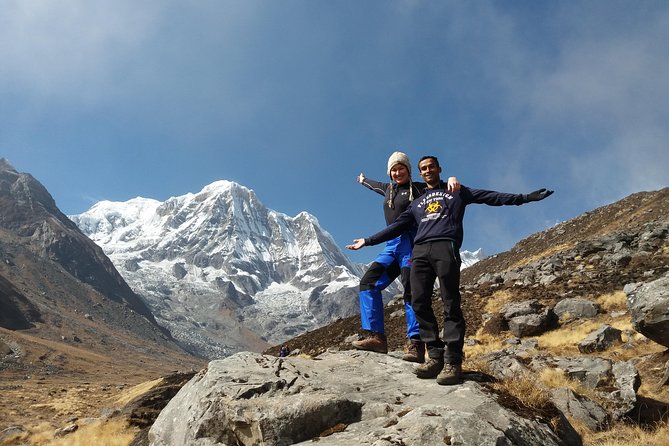
The mountains begin with a long climb. This 9-day Annapurna Base Camp trek combines Himchuli, Annapurna South, and Machhapuchchhre views with Gurung and Magar villages, forest trails, hot springs, and the high Annapurna Sanctuary. I like that airport transfers, permits, meals, guide costs, a sleeping bag, and a down jacket are included. I also like the private format, which lets your group adjust the pace and, as Binod did for one pair of hikers, sometimes reshape the plan around changing travel needs.
The main caution is the itinerary’s timing and wording. The package is listed as nine days with nine nights, yet the first day includes airport pickup and says the trekking package begins on day two. The Poon Hill entry also appears out of sequence, so confirm the exact overnight stops and transport plan before paying. The separate $220 porter charge is another cost to add to the advertised $693.34 price.
In This Review
- Key points to know before you book
- What the $693.34 price really covers
- Day 1: Kathmandu pickup and the itinerary puzzle
- Day 2: Phedi to Dhampus and the first mountain views
- Day 3: Landrung, Jhinudanda, and village life
- Day 4: Sinuwa, rhododendron forest, and Seti Gandaki
- Day 5: Following the river toward Machhapuchchhre Base Camp
- Day 6: Entering the Annapurna Sanctuary
- Day 7: Sunrise at Base Camp and the long descent
- Day 8: Chhomrong, Jhinu, and the hot springs
- Day 9: Nayapul to Pokhara and the return journey
- Guides, porters, and the private format
- Who should book this Annapurna trek?
- Should you book it?
- FAQ
- How long is the Annapurna Base Camp trek?
- What is included in the price?
- Is a porter included?
- Does the tour include flights between Kathmandu and Pokhara?
- What level of fitness is required?
- Can I cancel for a full refund?
Key points to know before you book
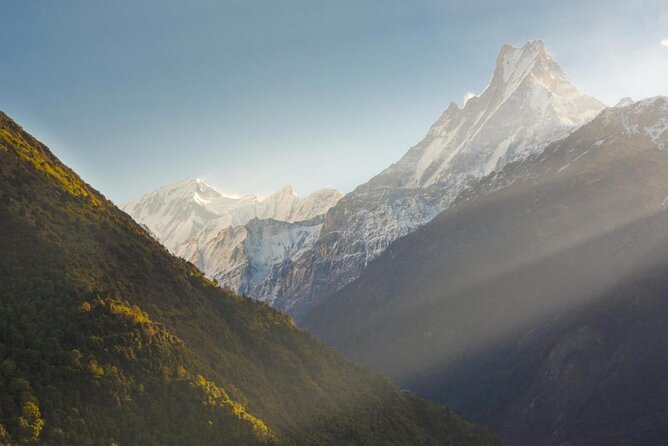
- Annapurna Sanctuary sunrise: Reach Annapurna Base Camp for early views inside a dramatic mountain bowl.
- Gurung and Magar villages: Dhampus, Landrung, Chhomrong, and Jhinu offer cultural encounters along the trail.
- Jhinu hot springs: The final trekking days include time to visit natural hot springs.
- Private guiding: Only your own group participates, with a licensed English-speaking guide.
- Helpful named staff: Guides such as Binod and Sona, along with porters including Rajendra, Rahul, and Bikash, have earned especially warm praise for their care and flexibility.
- Good package coverage: Meals, permits, guide expenses, airport transfers, transport, and trekking equipment are included, but Kathmandu lodging and personal costs are not.
What the $693.34 price really covers
At $693.34 per person, this is a reasonably full package for a guided Himalayan trek. You are not simply paying for a guide and a bed. The price includes airport pickup and drop-off in a private vehicle, tourist-bus transport between Kathmandu and Pokhara, trekking permits and paperwork, a licensed English-speaking guide, guide insurance and meals, a first-aid kit, nine breakfasts, nine lunches, nine dinners, and nine nights of accommodation.
You also receive a down jacket and sleeping bag to use during the trek and return afterward. That matters if you do not want to buy bulky cold-weather gear for one trip.
The value becomes less clear once you add the extras. A porter costs $220 per person. Personal drinks, hot showers, laundry, phone calls, snacks, shopping, and bar bills are not included. Food and accommodation in Kathmandu are also outside the package, as are international airfare, visa fees, medical and travel insurance, and emergency helicopter costs.
I would treat the advertised price as a solid starting figure, not your complete trip budget. The porter fee is especially important for solo trekkers or anyone carrying more than a light daypack. Tips for guides and porters are also separate.
Transport deserves attention too. The package uses a tourist bus between Kathmandu and Pokhara, with flights available at an added cost. A bus keeps the basic price lower, but it also makes the overall journey more dependent on road conditions and departure timing. Ask which transport is planned for your dates and how long you should allow before a flight or major booking.
More Annapurna Base Camp Treks:
- Annapurna base camp trek 5 Days
★ 5.0 · 252 reviews - Annapurna Base Camp Trek
★ 5.0 · 111 reviews - Kathmandu to Annapurna Base Camp (ABC) 5-Day Trek
★ 5.0 · 102 reviews
Day 1: Kathmandu pickup and the itinerary puzzle
Your experience begins at Tribhuvan International Airport in Kathmandu, with a listed start time of 6:30 a.m. A private vehicle takes you to your hotel. The package states that the actual trek begins on the second day of your arrival, which means the airport transfer day may function more as an arrival and preparation day than a full trekking day.
The itinerary also places Poon Hill under day one, with an estimated six-hour duration. That does not fit neatly with airport pickup in Kathmandu and the separate Kathmandu to Pokhara transfer. Poon Hill is generally associated with the Pokhara and Ghorepani side of the Annapurna area, while the remaining route described here follows the Annapurna Base Camp approach.
Do not ignore this discrepancy. Ask the company to send you a day-by-day schedule showing each night’s accommodation, the exact position of Poon Hill, and when you travel from Kathmandu to Pokhara. This is a simple question, but it can prevent confusion after a long international flight.
A welcome or farewell dinner at a cultural restaurant in Kathmandu is included. Since Kathmandu lodging and meals are not included, check which evening the dinner takes place and whether your hotel nights before or after the trek must be arranged separately.
Day 2: Phedi to Dhampus and the first mountain views
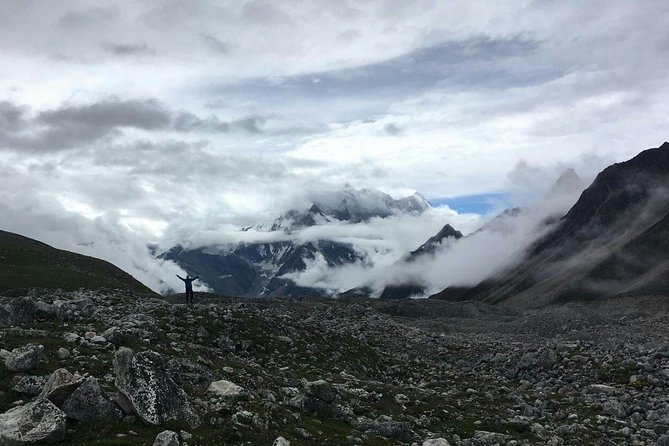
The trekking route begins with a drive from Pokhara to Phedi. From there, you walk uphill toward Dhampus, a Gurung village known for views of Himchuli, Annapurna South, and Machhapuchchhre, also called Fishtail.
This is a good opening day because the trail introduces both the people and the scenery of the Annapurna area. Dhampus is not just a place to sleep between transport segments. Its village setting and mountain outlook give you an early sense of how the trek links local life with the high peaks.
The listed walking time is about four hours. That sounds manageable, but you should still expect a steady physical effort from the start. The tour requires moderate physical fitness, and the trail later includes long stone stairways, repeated ascents, and descents. Comfortable walking shoes and a willingness to take the day at a calm pace will help more than speed.
Day 3: Landrung, Jhinudanda, and village life
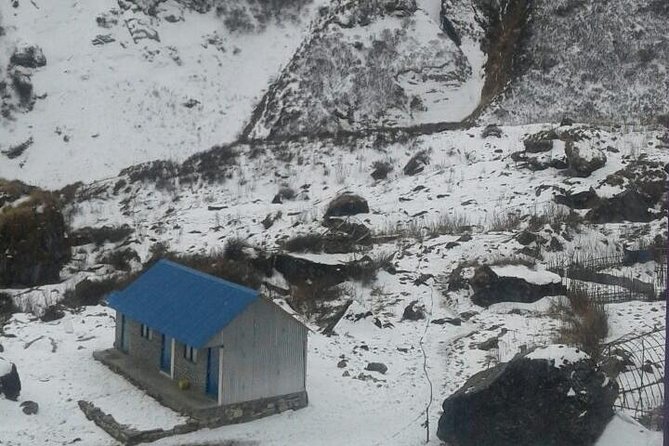
The trail passes through oak forest and terraced fields on its way to Landrung. This village is associated with Gurung, Magar, and Brahmin communities, giving you a broader view of rural life in the region than a route made only of mountain lodges.
From Landrung, the path continues down toward Jhinudanda and the Chhomrong area. The day is listed at about five hours. The repeated downhill sections may feel easy at first, but descending stone steps can be tiring on knees and thighs. Trekking poles can be useful, though they are not listed among the included equipment.
The village sections are one of the strongest parts of this trip. You are not being rushed from one viewpoint to another. The route passes through working communities, fields, and forest, allowing the cultural side of the Annapurna area to share the stage with the peaks.
A few more trips worth weighing up before you book
- Everest Base Camp Trek – 14 Days
★ 5.0 · 1,499 reviews - Private Kathmandu Sightseeing Tour | UNESCO World Heritage sites
★ 5.0 · 756 reviews - Everest Base Camp Helicopter Tour landing at Everest View Hotel
★ 5.0 · 668 reviews - Half day cooking class in Thamel kathmandu
★ 5.0 · 607 reviews
Day 4: Sinuwa, rhododendron forest, and Seti Gandaki
From Chhomrong, you cross a bridge and climb to Sinuwa Danda. The path then enters thick rhododendron forest and reaches Khuldighar before dropping down a long, steep stone staircase.
The listed walking time is about five hours, but the terrain is the real story. A five-hour day with steep steps can feel harder than a longer day on a smoother trail. Keep water close, protect your knees on the descent, and ask your guide for breaks before you are exhausted.
The forest also changes the mood of the trek. Earlier days feature villages and open mountain views. Here, trees and narrow trails make the walk feel more enclosed, while the sound of the Seti River helps mark your progress. This variety keeps the route from becoming a simple procession toward Base Camp.
Day 5: Following the river toward Machhapuchchhre Base Camp
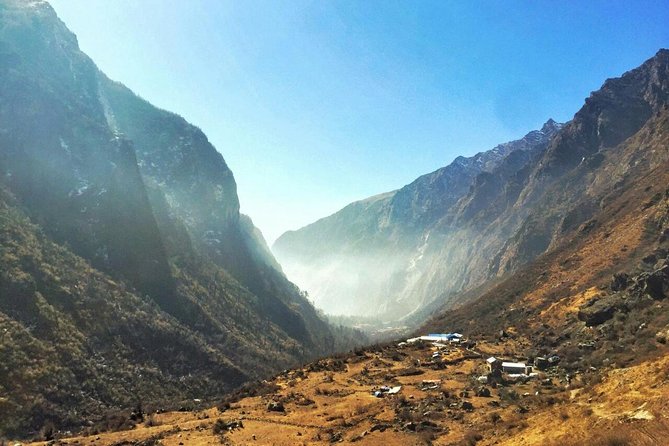
The route follows the banks of the Madi River through a sacred valley. Meat and fish are not allowed in this section because of Buddhist and Hindu beliefs. Bamboo trees appear along the trail, and the route continues upward toward Machhapuchchhre Base Camp.
This is a six-hour walking day, and the elevation begins to matter more. The itinerary describes a gradual ascent, but gradual does not mean effortless. You are gaining height while walking through a more rugged mountain setting, so a slow pace is sensible.
The food restriction in the valley is a useful cultural detail, not just a practical rule. It reflects the religious character of the area and reminds you that the trek passes through places with their own customs and values. Ask your guide about local practices rather than treating them as obstacles.
Machhapuchchhre Base Camp is a major visual point on the route. Fishtail is one of Nepal’s most recognizable peaks, and reaching its base camp gives you a stronger connection to the mountain than viewing it from distant villages. Accommodation is included as part of the package, but the exact lodge standard can vary, so pack with simple mountain lodging in mind rather than expecting hotel comforts.
Day 6: Entering the Annapurna Sanctuary
After leaving Machhapuchchhre Base Camp, the trail leaves behind most vegetation and enters the Annapurna Sanctuary. The route becomes a high, open wilderness surrounded by major peaks, with Annapurna Base Camp as the day’s focus.
This section is listed at about five hours. The distance may not look extreme on paper, but altitude can slow everyone down. You should not judge your ability by how quickly you walked during the first few days. A good private guide can help you keep a pace that feels steady rather than forcing the group to match an artificial schedule.
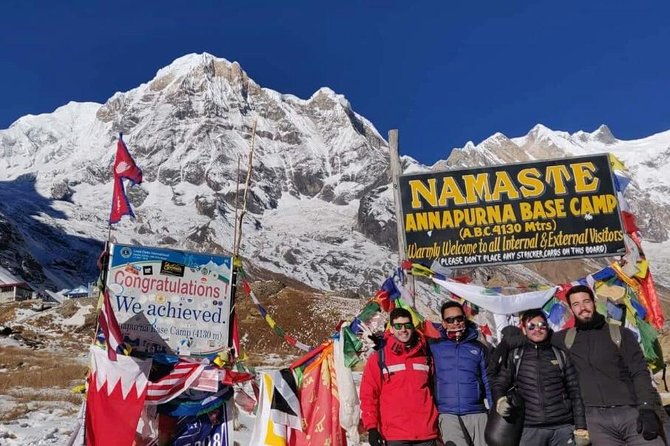
The Sanctuary is the emotional center of the trip. The route narrows from village walking and forest paths into a mountain setting where the surrounding peaks become the main event. The reward is not only reaching the sign or destination at Annapurna Base Camp. It is the change in scale as the peaks close around you.
The upper Annapurna region also supports unusual wildlife, including the possibility of snow leopards and blue sheep, along with birds such as the Himalayan monal and blood pheasant. You should not book this trek expecting guaranteed sightings. The value is in walking through the habitat and seeing how sharply the plants and animals change as the trail rises.
Day 7: Sunrise at Base Camp and the long descent
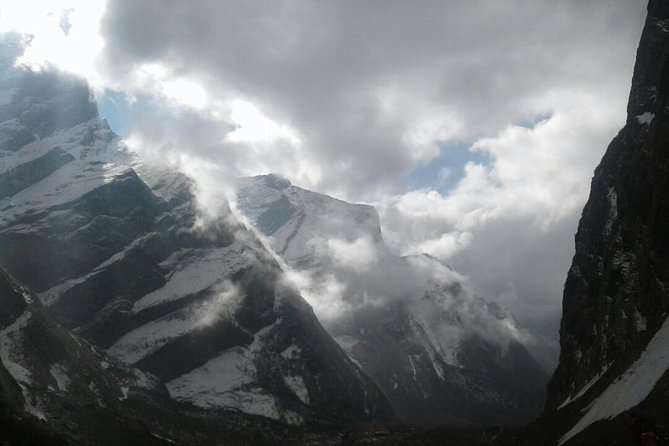
An early wake-up call gives you the chance to see sunrise across the Annapurna Sanctuary. This is one of the best choices in the schedule. Mountain light changes quickly, and an early start offers a quiet moment before the descent begins.
Afterward, you follow the Modi Khola River down toward Bamboo Hut. The walking time is listed at six hours. Descending from the high Sanctuary is physically different from climbing into it. Your lungs may appreciate the lower elevation, but your legs still have to absorb every step.
This is where a private trip can be worth the extra structure. If your knees are struggling, you can discuss a slower pace or longer breaks with the guide. Past trekkers have especially valued guides such as Binod and Sona for being attentive and good company, while porters such as Rajendra, Rahul, and Bikash have been praised for making solo and small-group treks feel well supported.
Day 8: Chhomrong, Jhinu, and the hot springs
The route begins with an uphill walk to Sinuwa, then descends to the Chhomrong Khola River before climbing again to Chhomrong. The final descent leads to Jhinu, where you can visit natural hot springs.
This six-hour day is a classic Annapurna reminder that the route is not simply downhill after Base Camp. You may lose altitude overall, but the trail still rises and falls. The repeated climbs can be more tiring than expected, especially after the high Sanctuary day.
Jhinu is a welcome change of pace. The hot springs offer a chance to relax your legs before the final walk out. They are not an extra attraction added from far away. They fit naturally into the route and give the trek a satisfying pause between mountain walking and the return to roads.
One useful point comes from the way the private guides have handled schedules. Binod adjusted one trip from eight days to suit a pair’s travel plans and arranged a night at the hot springs. That does not guarantee the same change for every booking, but it suggests you should ask early if Jhinu is a priority.
Day 9: Nayapul to Pokhara and the return journey
The final day begins with an easy descent toward the Modi Khola River and continues to Nayapul. From there, a private car takes you back to Pokhara in about an hour and a half.
The listed walking time is five hours. This final stretch is less about dramatic altitude and more about finishing the route without rushing. Your feet may be tired, so use the day to enjoy the last village views and the feeling of returning to ordinary roads.
The package then includes transport back toward Kathmandu, described as a tourist bus unless you choose a flight for an additional fee. Confirm whether the return to Kathmandu occurs on the same calendar day or after an overnight in Pokhara, because the written schedule places both the Nayapul transfer and the wider return transport within the package details.
Guides, porters, and the private format
This is a private activity, so only your own group participates. That gives you more say over breaks, pace, photos, and small schedule changes than a large mixed group would normally allow.
The strongest personal element is the staff. Binod is described as cheerful, experienced, accommodating, and attentive to where people stay. Sona has been praised for helping make a trek with an older parent comfortable. Rajendra, Rahul, and Bikash are named as porters who contributed humor, care, and practical support.
You should still ask how many people your guide-to-group ratio covers and whether the porter fee is per person or shared within your group. The supplied pricing lists $220 per person, so get the final total in writing.
The guide carries a first-aid medical kit, and guide insurance is included. That is useful, but it does not replace your own travel and medical insurance. Emergency helicopter expenses are specifically excluded, so you should not travel without coverage that addresses trekking emergencies.
Who should book this Annapurna trek?
I would recommend this trip to you if you want a guided route with a strong mix of mountain scenery, village life, and logistical support. It suits trekkers with moderate fitness who can handle several hours of walking, steep steps, repeated climbs, and a high-altitude section.
It is also a good fit for solo hikers who want company and practical help without joining a large group. The experience with Binod and Rajendra shows how a solo trek can feel friendly and well managed.
You may want a different arrangement if you prefer a fully fixed schedule, luxury accommodation, or a route with no transport uncertainty. The itinerary needs clarification, Kathmandu lodging is not included, and the porter fee adds a meaningful amount to the total. Families or older trekkers should discuss pacing and the day-by-day plan in advance, even though the guide team has handled a trek with a parent successfully.
Should you book it?
Book this Annapurna Base Camp trek if the included meals, permits, transfers, equipment, and private guide match the kind of support you want. The combination of Dhampus, Landrung, Chhomrong, Machhapuchchhre Base Camp, Annapurna Sanctuary, and Jhinu gives you a satisfying route rather than a quick out-and-back walk.
Before booking, ask for a corrected schedule, confirm the nine nights, check where Poon Hill belongs, and add the $220 porter fee plus insurance and Kathmandu costs to your budget. If those points are clear, the package offers strong value and a personal guiding style, with staff such as Binod and Sona adding the human touch that can make a demanding trek feel much easier.
FAQ
How long is the Annapurna Base Camp trek?
The experience is advertised as a 9-day trek, with approximately nine nights of accommodation included. The itinerary says the airport pickup occurs on arrival and that the trekking package begins from the second day, so confirm the exact day count with the operator.
What is included in the price?
The package includes airport pickup and drop-off, tourist-bus transport between Kathmandu and Pokhara, a licensed English-speaking guide, guide transportation, food, accommodation, insurance, trekking permits, paperwork, a first-aid kit, a welcome or farewell dinner in Kathmandu, a down jacket, a sleeping bag, nine breakfasts, nine lunches, nine dinners, and nine nights of accommodation.
Is a porter included?
No. Porter service is listed as an additional $220 per person. Tips for guides and porters are also not included.
Does the tour include flights between Kathmandu and Pokhara?
Tourist-bus transport is included between Kathmandu and Pokhara. An optional flight is available at an additional cost.
What level of fitness is required?
A moderate level of physical fitness is required. The route includes walking days of about four to six hours, steep stone steps, repeated uphill and downhill sections, and high-altitude trekking in the Annapurna Sanctuary.
Can I cancel for a full refund?
Yes. You can cancel at least 24 hours before the experience start time for a full refund. Cancellations or changes made less than 24 hours before the start time are not accepted for a refund.
Just added around Kathmandu
- Private Shopping Tour in Kathmandu★ 5.0 · 3 reviews
- Nagarkot Sunrise With 7 UNESCO World Heritage Private Tour★ 5.0 · 3 reviews
- Mount Everest Scenic Flight 50 Minutes★ 5.0 · 3 reviews
- Kathmandu: Nightlife and Pub Crawl Tour★ 5.0 · 3 reviews
- Momo Cooking Class -The Art Of Making MoMo with Home Chef★ 5.0 · 3 reviews
- Kathmandu: Nagarkot, Bhaktapur, Doleswor & Sanga Statue Tour★ 5.0 · 3 reviews
- Makalu Base Camp Trek★ 5.0 · 3 reviews
- Everest Experience Trek 6 Day Hiking Adventure★ 5.0 · 3 reviews
Annapurna Base Camp Treks, compared.



Kathmandu to Annapurna Base Camp (ABC) 5-Day Trek
Read our review →

Browse the lists this tour appears in