
Reviewed · ANNAPURNA BASE CAMP TREKS
Annapurna Base Camp Trek
The Himalayas save their best view for the end. This 11-day Annapurna Base Camp trek combines Gurung villages, waterfalls, forests, and hot springs with a dramatic finish at 4,130 meters. I like that airport transfers, domestic transport, trekking permits, lodging, meals, guides, porters, and basic gear rental are bundled into the $906.67 price. I also like the slow approach through Jhinu Danda, Bamboo, Deurali, and Machhapuchhre Base Camp, which gives you time to adjust before the highest point.
The main caution is physical: this is not a casual walk. You will handle steep stone steps, long trekking days, thinner air, and rocky ground. The return route repeats much of the outward trail, so the biggest reward comes during the climb toward base camp rather than from constant new scenery.
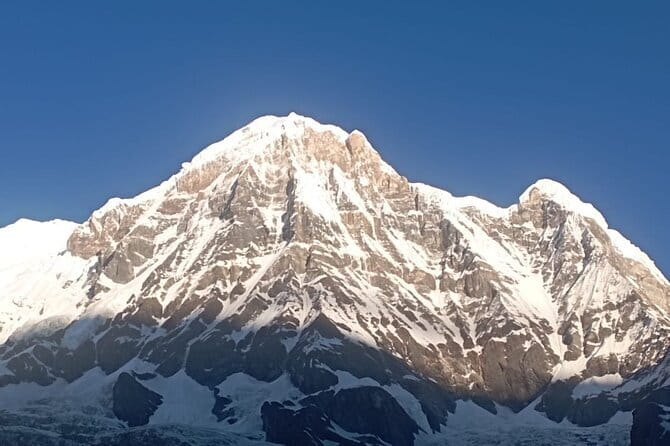
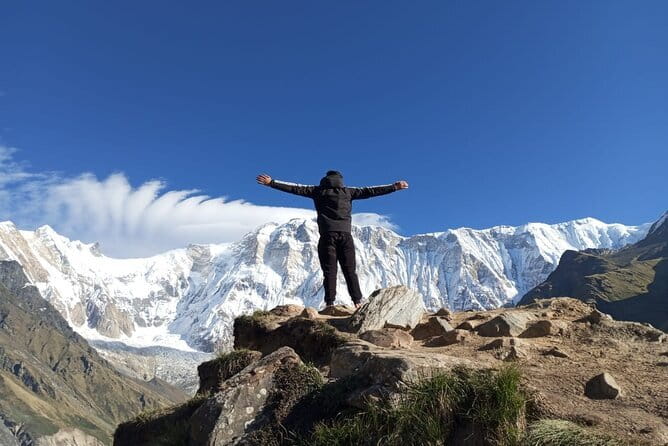
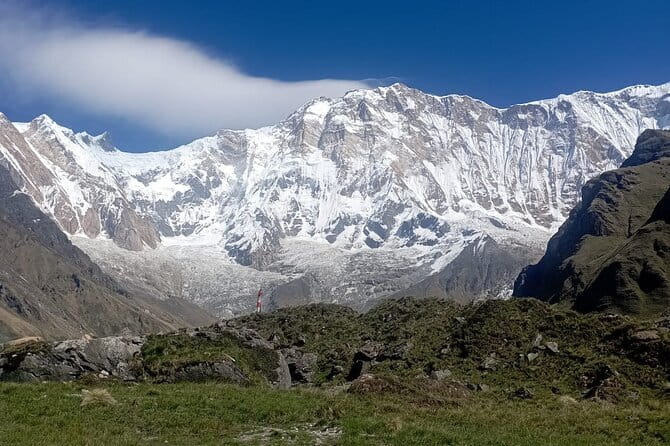
- Reach 4,130 meters at Annapurna Base Camp, surrounded by Annapurna I, Annapurna South, Hiunchuli, Machhapuchhre, and other Himalayan peaks.
- Sleep in mountain lodges, with breakfast, lunch, and dinner included during the trek.
- Pass through Gurung settlements and rhododendron forests, with waterfalls, suspension bridges, terraces, and river valleys along the way.
- Relax at Jhinu Danda’s natural hot springs near the start and again on the return.
- Travel with a guide, assistant guide, and porter support, with a maximum group size of 15 people.
- Use included permits and rented gear, including a sleeping bag and down jacket.
In This Review
- What You Get for $906.67
- Kathmandu Begins the Trip Gently
- Day Three: Nayapul to Jhinu Danda
- Days Four and Five: Stone Steps, Bamboo, and Deurali
- Day Six: Machhapuchhre Base Camp to the Main Goal
- Days Seven and Eight: Sunrise, Forest, and the Hot Springs
- Day Nine: Returning to Pokhara
- Days Ten and Eleven: Kathmandu and Departure
- Guides, Porters, and Group Size
- Fitness, Gear, and Altitude
- Who Should Book This Trek?
- Should You Book the Annapurna Base Camp Trek?
- FAQ
- How long is the Annapurna Base Camp Trek?
- What is the highest point of the trek?
- Where does the experience begin?
- Is airport pickup included?
- How many nights are spent in Kathmandu?
- How many nights are spent in Pokhara?
- Are meals included during the trek?
- Are trekking permits included?
- Is porter support provided?
- Is travel insurance included?
- What group size should you expect?
- What fitness level is required?
What You Get for $906.67
At first glance, $906.67 may look like a serious price for an 11-day trip. On a Himalayan trek, though, the useful question is not simply how much it costs. Ask what you would have to arrange and pay for yourself.
This package covers three nights in Kathmandu, two nights in Pokhara, lodging and meals during the trek, transport, airport transfers, an English-speaking trekking guide, an assistant guide, and porters. It also includes the TIMS card and Annapurna Conservation Area permit, which are required for this route.
The porter arrangement is one porter for two trekkers, with a maximum load of 30 kilograms. That matters. You are still responsible for a daypack, but you do not need to carry every piece of clothing and sleeping equipment from Kathmandu to base camp.
A first-aid medical box is supplied, and sleeping bags and down jackets are available to rent. That can reduce the cost and hassle of buying bulky cold-weather gear for one trip. The package also includes Nepal’s 13 percent VAT and a 10 percent company service charge.
You still pay for your Nepal visa, international flights, food in Kathmandu and Pokhara, personal spending, tips, travel insurance, and rescue operations. Extra accommodation and meals caused by changes to the schedule are also outside the price. I would budget for those items before deciding that the advertised fare is your full trip cost.
The package has a maximum of 15 people. That is large enough to provide support but small enough for a guide to keep track of the group on narrow trails. The price is strongest for someone who wants a guided trek with the main practical details handled in advance.
Kathmandu Begins the Trip Gently
Your arrival day is simple. A representative meets you at Tribhuvan International Airport after immigration and drives you to Hotel Green Horizon in Thamel. The transfer can take about two hours, depending on conditions, and the hotel is positioned in one of Kathmandu’s main tourist areas.
Thamel is useful for a first or final night because you are close to shops, restaurants, and travel services. You have time to settle in rather than rushing straight into the mountains.
On the second day, you meet your trekking guide for a briefing. This is the moment to ask about walking times, the porter system, rented equipment, meals, and the schedule at altitude.
The supplied plan describes a 30-minute flight from Kathmandu to Pokhara. Parts of the detailed schedule also describe a scenic road journey with valley views and possible stops at a picnic area and a highly revered temple. Since those transport details do not fully match, confirm before departure if your group is flying or traveling by road on this leg.
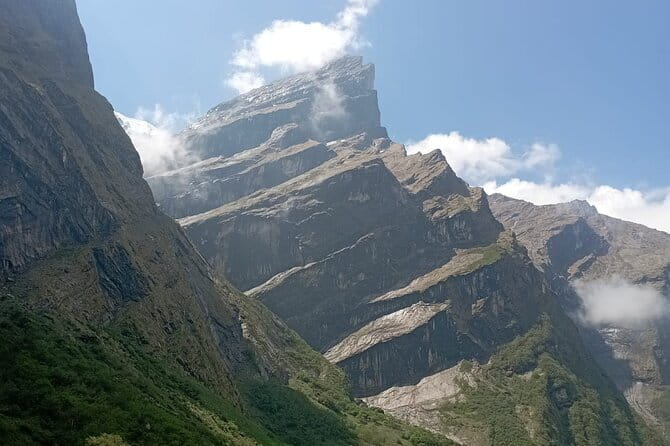
Pokhara is the adventure center for the Annapurna region. The city is known for its lakes, cool air, green hills, terraced fields, and mountain views. Lakeside gives you a final dose of cafés, shops, and modern comforts before the trail becomes much quieter and more basic.
More Annapurna Base Camp Treks:
- Annapurna base camp trek 5 Days
★ 5.0 · 252 reviews - Annapurna Base Camp Trek
★ 5.0 · 111 reviews - Kathmandu to Annapurna Base Camp (ABC) 5-Day Trek
★ 5.0 · 102 reviews
Day Three: Nayapul to Jhinu Danda
The trek proper begins with transport from Pokhara to Nayapul, a drive of about an hour and a half. The route passes remote settlements, temples, rivers, and mountain views before you reach the trailhead.
From Nayapul, you follow the Modi River toward Jhinu Danda. The route passes Chandrakot, Pritam Deurali, Tolga, and Landruk, with flagstone steps, smaller settlements, religious monuments, and a suspension bridge along the way.
This is a good first trekking day because the setting changes often. The river gives you a steady point of reference, while villages and cultivated terraces show how people live in the hills. The trail is not flat, though. You descend after Landruk, cross a bridge, then climb again toward Jhinu Danda.
The reward is the natural hot spring below the settlement. It is a welcome place to rest tired legs, although reaching it means an additional descent and later climb back to your lodging. You should treat the full day as a real trekking day, not simply a transfer with a short walk.
Days Four and Five: Stone Steps, Bamboo, and Deurali
The route from Jhinu Danda to Bamboo takes roughly six hours. You begin with a steep climb through terraces toward Chhomrong, passing through Nayagaon and crossing the Chhomrong River on stone steps.
Chhomrong is an important settlement on the route, and the trail then continues through terraced fields, smaller villages, bamboo, and rhododendron forest. The ground can be rough, and the later descent toward Bamboo is followed by a steeper section of walking.
Overnight accommodation is in the Bamboo area, including the Bamboo Lodge Restaurant. Expect mountain lodge conditions rather than city hotel comfort. The setting is the point: forest, trail, and river replace traffic and storefronts.
Day five is described as a shorter preparation day before the highest part of the trek. You cross a stream and climb gradually through rhododendron and oak forest to Dovan.
From Dovan, the trail becomes more demanding. You pass waterfalls and reach the Himalaya Hotel area, where the view opens toward the Modi River. The route then climbs toward Hinku Cave and Deurali.
As you gain height, the trees thin out and the ground becomes rockier. That change is useful to notice because it marks the shift from forest trekking to high mountain terrain. The day is not the longest, but the steeper sections and changing altitude make it important to walk steadily.
Day Six: Machhapuchhre Base Camp to the Main Goal
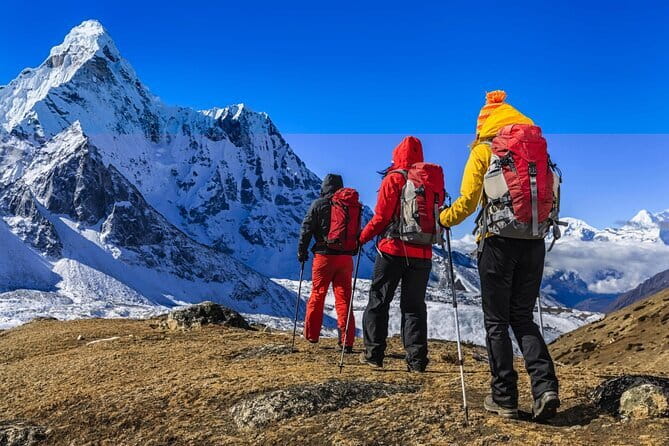
This is the key day of the trek. From Deurali, you continue toward Bagar and then Machhapuchhre Base Camp, also known as the base camp for Fishtail Mountain.
The route becomes more strenuous as the vegetation fades. At Machhapuchhre Base Camp, you can see Machhapuchhre, Hiunchuli, Annapurna South, Annapurna I, Annapurna III, Gangapurna, and other peaks.
You then leave the Modi River and turn toward Annapurna Base Camp. The path widens, the surroundings become more open, and the mountain walls grow larger. At 4,130 meters, Annapurna Base Camp feels dramatically different from the forested trail below.
The overnight stay here is one of the strongest parts of the trip. The mountains surround the camp, and there is little to interrupt the view. Conditions will be basic and cold, so keep warm clothing, water, and essential items accessible rather than buried in your porter’s load.
This is also the day when pacing matters most. Do not treat the approach to base camp as a race. Your guide is there to manage the group, and the package includes an assistant guide and porter support, but you still need to listen to your body and follow the guide’s instructions.
More Treks and Hikes:
- Everest Base Camp Trek – 14 Days
★ 5.0 · 1,499 reviews - Everest Base Camp Trekking
★ 5.0 · 485 reviews - Nagarkot Sunrise View and Day Hiking from Kathmandu
★ 5.0 · 471 reviews - Annapurna Circuit Trek with Tilicho Lake
★ 5.0 · 368 reviews
Days Seven and Eight: Sunrise, Forest, and the Hot Springs
You leave base camp on day seven and return to Bamboo. The walking is mostly downhill, making it easier on your breathing but not necessarily on your knees.
The morning begins with a sunrise over the Annapurna range. You then pass an area prone to avalanches before retracing the route through Deurali and Dovan. Forest returns as you lose height, and the trail crosses a wooden bridge before Bamboo.
Day eight takes you back toward Jhinu Danda. You climb toward Khuldighar, pass its helipad, and follow the twisting trail to Sinuwa. From there, you continue through Tilche and Chhomrong, crossing a bridge and descending or climbing steep stone steps around the Taulung area.
The route junction near Taulung connects trails toward Landruk, Tadapani, and Kot Danda. You do not need to follow those branches on this trip, but the junction helps explain how extensive the Annapurna trail system is.
After roughly another hour, you reach Jhinu Danda and its hot springs. This second visit is well timed. You have already completed the highest section, and the springs give you a chance to rest before the final walk out.
Day Nine: Returning to Pokhara
The final trekking day leads from Jhinu Danda down toward the Modi Khola valley and Nayapul. You pass New Bridge, farms, traditional houses, wooden bridges, suspension bridges, and stone stairways.
The scenery changes as you lose height. The valley widens, fields become larger, and the trail feels more connected to settled hill country. The route still requires effort, especially on stone steps, but the knowledge that Nayapul marks the end of the physical trek can lift your spirits.
From Nayapul, you return to Pokhara. The program includes two nights in Pokhara, but food in the city is not included. That gives you freedom to choose your own meals, though you should remember that the package’s all-inclusive meal plan applies to the trekking section, not your time in Pokhara.
Lakeside is a comfortable place to recover. The contrast with the mountain lodges is part of the trip’s rhythm: simple rooms and narrow trails give way to easier city comforts.
Days Ten and Eleven: Kathmandu and Departure
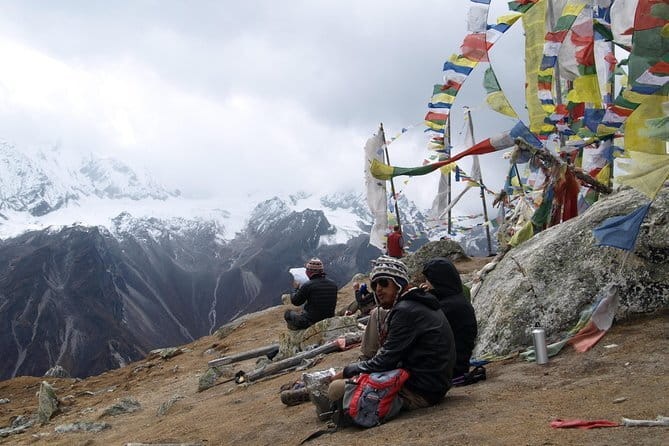
The return to Kathmandu is planned as a scenic five to six-hour drive through hills, valleys, terraced fields, and mountain country. Road travel can be tiring after a trek, but it lets you see how the mountain region connects with the capital.
Once back in Kathmandu, you can visit Kathmandu Durbar Square if time allows. The stone-paved royal complex provides a final cultural stop after days focused on mountains and villages. You can also shop for souvenirs in Thamel.
Your final day includes transfer to Tribhuvan International Airport at least three hours before your scheduled flight. The airport drop-off is included, but your international airfare is not.
Guides, Porters, and Group Size
The support team is a major part of the value here. You receive a trained English-speaking trekking guide, an assistant guide, and porters arranged at one for every two trekkers.
One detailed account praised guide Shiva and porter Bishal for their support, while Suman was noted for a warm airport welcome. Those names are useful if you want to ask the company whether the same staff are available for your departure, since staffing can vary.
The maximum group size is 15. That is worth noting for anyone who wants personal support but does not want a private trek. The assistant guide and porter setup also gives the group more practical help on long walking days.
Tips for guides and porters are not included. Carry enough local currency for gratuities and personal needs, but the exact amount is not specified here, so ask the operator for current guidance.
Fitness, Gear, and Altitude
The trip requires moderate physical fitness. You should be comfortable with repeated uphill and downhill walking, long days on uneven trails, steep stone staircases, and a high point of 4,130 meters.
The route starts in warmer, greener areas and moves through rhododendron and oak forest before reaching rockier terrain with sparse vegetation. Pack for changing conditions. A sleeping bag and down jacket can be rented through the program, which is helpful if you do not already own cold-weather trekking gear.
Travel insurance and rescue costs are not included. That is one of the most important financial considerations because altitude and remote terrain can create expenses outside the package price.
Cancellation is free if you cancel at least 24 hours before the local start time. Changes or cancellations made later are not accepted for a refund.
Who Should Book This Trek?
I would recommend this trip to someone who wants a classic Himalayan base camp route without arranging every permit, lodge, transfer, meal, and porter independently.
It suits hikers who value mountain scenery, village life, forest trails, suspension bridges, and a dramatic destination. It also works well for a first guided trek in Nepal because the guide, assistant guide, porter, permits, and basic rented gear are already part of the plan.
I would hesitate to recommend it to anyone seeking a relaxed sightseeing holiday. The trek includes steep sections, long days, basic mountain lodging, and high altitude. The repeated return route may also disappoint you if you want a different trail every day.
Should You Book the Annapurna Base Camp Trek?
Book it if you want a well-supported 11-day route with Annapurna Base Camp as the clear goal. The strongest value comes from the combination of transport, permits, meals, lodging, guide services, porter support, and gear rental at $906.67.
Before paying, confirm the Kathmandu to Pokhara transport plan, ask which hotel rooms and mountain lodges are used, and check current arrangements for insurance, altitude support, and tipping. If you are prepared for the physical work, this trek gives you a direct route from Nepal’s city life to one of the world’s great mountain viewpoints.
FAQ
How long is the Annapurna Base Camp Trek?
The experience lasts approximately 11 days, including time in Kathmandu, Pokhara, the trek, and airport transfers.
What is the highest point of the trek?
Annapurna Base Camp is at an altitude of 4,130 meters above sea level.
Where does the experience begin?
The meeting point is Nepal Mountain Trekkers at Pyramid Galli, Kathmandu 44600, Nepal.
Is airport pickup included?
Yes. Airport pickup on arrival and airport drop-off at the end are included.
How many nights are spent in Kathmandu?
The package includes three nights at a hotel in Kathmandu.
How many nights are spent in Pokhara?
The package includes two nights at a hotel in Pokhara.
Are meals included during the trek?
Yes. Breakfast, lunch, and dinner during the trekking portion are included. Food in Kathmandu and Pokhara is not included.
Are trekking permits included?
Yes. The TIMS card and Annapurna Conservation Area fees are included.
Is porter support provided?
Yes. One porter is provided for every two trekkers, with a maximum load of 30 kilograms.
Is travel insurance included?
No. Travel insurance and rescue operation costs are not included.
What group size should you expect?
The activity has a maximum of 15 people.
What fitness level is required?
A moderate level of physical fitness is required. The route includes steep trails, stone steps, forest paths, rocky ground, and high altitude.
Just added around Kathmandu
- Private Shopping Tour in Kathmandu★ 5.0 · 3 reviews
- Nagarkot Sunrise With 7 UNESCO World Heritage Private Tour★ 5.0 · 3 reviews
- Mount Everest Scenic Flight 50 Minutes★ 5.0 · 3 reviews
- Kathmandu: Nightlife and Pub Crawl Tour★ 5.0 · 3 reviews
- Kathmandu: Nagarkot, Bhaktapur, Doleswor & Sanga Statue Tour★ 5.0 · 3 reviews
- Momo Cooking Class -The Art Of Making MoMo with Home Chef★ 5.0 · 3 reviews
- Everest Experience Trek 6 Day Hiking Adventure★ 5.0 · 3 reviews
- Kathmandu: Momo Making Class with a Local Chef★ 5.0 · 3 reviews
Annapurna Base Camp Treks, compared.



Kathmandu to Annapurna Base Camp (ABC) 5-Day Trek
Read our review →

Browse the lists this tour appears in