
Reviewed · EVEREST BASE CAMP TREKS
Everest Base Camp Trekking – 13 Day
The trail earns every blister. This 13-day Everest Base Camp trek takes care of the major moving parts, including flights between Kathmandu and Lukla, trailside lodging, meals, permits, and a guide. I like the relief of having those details handled, and I like that private departures can be adjusted for families, couples, honeymooners, or existing groups. The main caution is simple: this is a serious high-altitude trek, not a long weekend walk.
The $1,399 price offers good value if you want one company handling transport, accommodation, food, and local arrangements. I also appreciate the built-in acclimatization days in Namche Bazaar and Dingboche. Still, you must budget for insurance, Kathmandu meals, personal expenses, Nepal visa fees, drinks, and possible weather delays.
In This Review
- Six useful things to know before you go
- Kathmandu arrival and preparation on Day 1
- The short flight to Lukla on Day 2
- Following the Dudh Koshi to Namche on Day 3
- Acclimatizing around Namche on Day 4
- Forest trails and Tengboche on Day 5
- Deboche and Dingboche on Day 6
- The second acclimatization day on Day 7
- Dingboche to Lobuche on Day 8
- The big day at Everest Base Camp on Day 9
- Kala Patthar before sunrise on Day 10
- The long return through Pheriche and Namche on Day 11
- Namche to Lukla on Day 12
- Returning to Kathmandu on Day 13
- What $1,399 covers, and what it does not
- Guides, support, and the private-tour advantage
- Who should book this Everest trek?
- Should you book it?
- FAQ
- Is the Kathmandu to Lukla flight included?
- Are meals included during the trek?
- Is accommodation included?
- Is this a private trek?
- Is there an acclimatization day?
- What fitness level do I need?
- Is travel insurance included?
- Can I cancel for a full refund?
Six useful things to know before you go
- Lukla flights are included: The Kathmandu to Lukla and Lukla to Kathmandu flights save you from arranging one of the trek’s key transport links yourself.
- Namche and Dingboche acclimatization days matter: These pauses help you adjust before the route climbs higher.
- Private departures offer flexibility: You can request a private trek and may be able to shape the pace or schedule around your group.
- Guides receive strong praise for care and timing: Milan, Dibash, Achyut Mishra, Ratna, Anil, Dipak, and others are named in detailed feedback, with special praise for daily briefings and steady support.
- The price is not fully all-inclusive: Flights, meals on the trail, permits, lodging, and taxes are covered, but insurance, evacuation cover, Kathmandu meals, drinks, and personal purchases are not.
- You need real mountain clothing: The suggested kit includes trekking shoes, warm layers, gloves, rain protection, a day pack, water bottles, and a torch.
Kathmandu arrival and preparation on Day 1
Your first day begins at Tribhuvan International Airport, where a representative receives you after customs and takes you to your Kathmandu hotel. This is a practical start, especially if you arrive tired or are unfamiliar with Nepal’s airport and city traffic.
Use the day to check your equipment and ask questions. The next morning begins early, and the company asks you to organize your trekking gear and pack before departure. That small bit of preparation matters. A misplaced glove or poorly packed rain layer becomes a nuisance once you are on the trail.
The package includes airport reception and hotel arrangements in Kathmandu, but meals in Kathmandu are not included. Keep money aside for food, drinks, phone use, battery charging, and other city expenses.
More Everest Base Camp Treks:
- Everest Base Camp Trek – 14 Days
★ 5.0 · 1,499 reviews - Everest Base Camp Trekking
★ 5.0 · 485 reviews - Everest Base Camp Trek -14 Days
★ 5.0 · 321 reviews
The short flight to Lukla on Day 2
Lukla is the gateway to the Everest region, and reaching it by air saves several days of road travel. The flight from Kathmandu to Lukla is included, along with the return flight and airport departure tax.
The morning can feel busy because the group must load bags and get moving quickly after arrival. From Lukla, the walking begins under the direction of your guide. This is where the trip changes from a city-based holiday into a full mountain journey.
Weather affects flights in the Himalayas, and the tour operates in all weather conditions. That does not mean every flight will run on schedule. You should avoid booking a tight international connection after the return flight. The itinerary includes the domestic flight, but weather-related disruption can still affect your plans.
Following the Dudh Koshi to Namche on Day 3
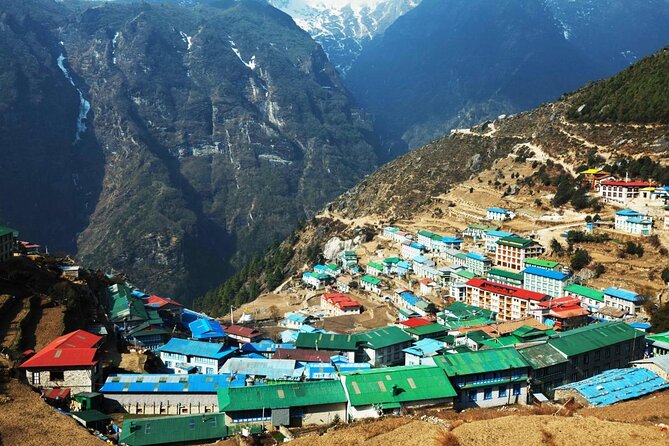
The route follows the Dudh Koshi River toward Namche Bazaar, an old trading center in the Khumbu region. Early views include Kongde Ri Peak, and the trail crosses suspension bridges before turning toward the higher settlement.
This is an important first test of your pace. The distance may not look intimidating on paper, but the route is not a flat city walk. You will be walking on mountain trails, gaining height, and carrying a day pack. Let your guide set a steady rhythm instead of trying to rush ahead.
Namche is one of the most memorable stops because it feels like a real mountain town rather than just a place to sleep. Shops and local activity give you a chance to see how the route serves residents as well as trekkers. The trailside lodges are basic, but they put you close to the route and keep the logistics simple.
Acclimatizing around Namche on Day 4
The rest day in Namche is not meant for staying under a blanket all day. Short walks to higher points and time spent returning to town help your body adjust to the altitude.
Namche also gives you a welcome break from the trail. You can look around the shops, enjoy the town’s lively Saturday market if your schedule matches it, and prepare for the higher route. This is one of the itinerary’s strongest features because skipping acclimatization can turn a difficult trek into an unsafe one.
Your guide should explain the next day’s walking time and route. Milan receives particular praise for giving clear briefings, estimating walking times based on physical ability, and planning around daylight. That kind of communication is useful here, where fatigue and altitude can change your pace from one day to the next.
More Treks and Hikes:
- Nagarkot Sunrise View and Day Hiking from Kathmandu
★ 5.0 · 471 reviews - Annapurna Circuit Trek with Tilicho Lake
★ 5.0 · 368 reviews - Annapurna base camp trek 5 Days
★ 5.0 · 252 reviews - Everest Base Camp Trekking – 2025/2026
★ 5.0 · 199 reviews
Forest trails and Tengboche on Day 5
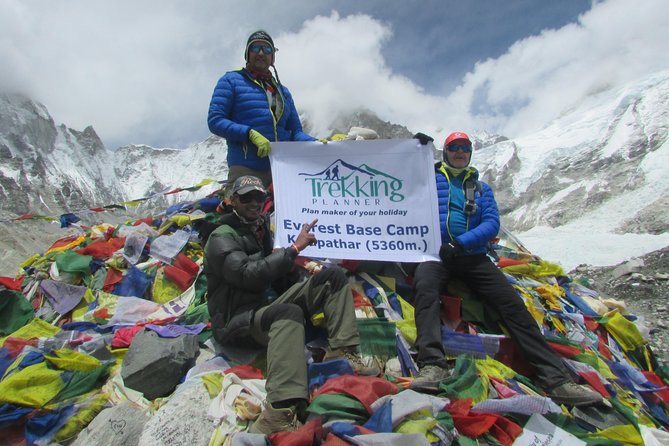
Leaving Namche involves a short but steep climb. After that, the trail becomes more level as you continue through Kenjoma and Sanasa, with dense forest along parts of the route.
The setting changes as you walk. Instead of only open mountain views, you pass through wooded sections and reach Tengboche, a major spiritual stop in the region. The monastery gives the day a cultural focus, not just a scenic one. You have a chance to pause and appreciate that the Khumbu is a lived-in highland area with its own religious traditions.
Tengboche is also known for sunrise and sunset views. The schedule allows time to appreciate both, weather permitting. A guide who understands timing can make a real difference here. The feedback about guides accurately judging sunset times is especially useful for anyone hoping to catch the best light without turning the day into a race.
Deboche and Dingboche on Day 6
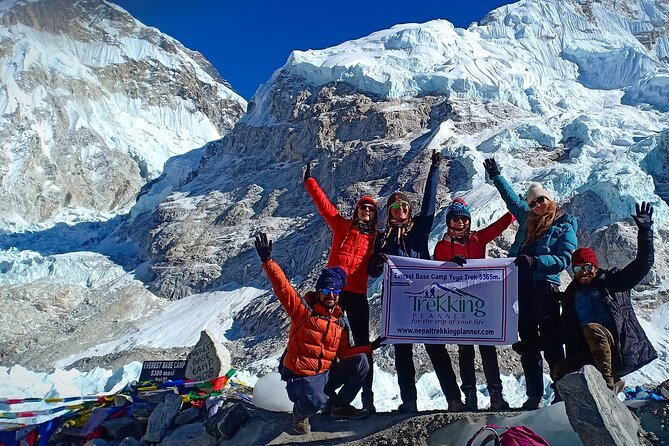
The route continues from Tengboche through the forest toward Deboche, then on to Dingboche. Deboche offers mountain views, while the trail gradually leads you to a more open, higher-altitude setting.
Dingboche is an important point in the trek. The air is thinner, the nights are colder, and the walking can feel harder even when the trail rises gradually. Your guide will need to keep an eye on your pace and general condition.
The lodges along this part of the route are functional rather than luxurious. You should expect a simple mountain stay, shared communal areas, and limited personal comforts. That is part of the trade-off for reaching Everest Base Camp without arranging each night yourself.
The second acclimatization day on Day 7
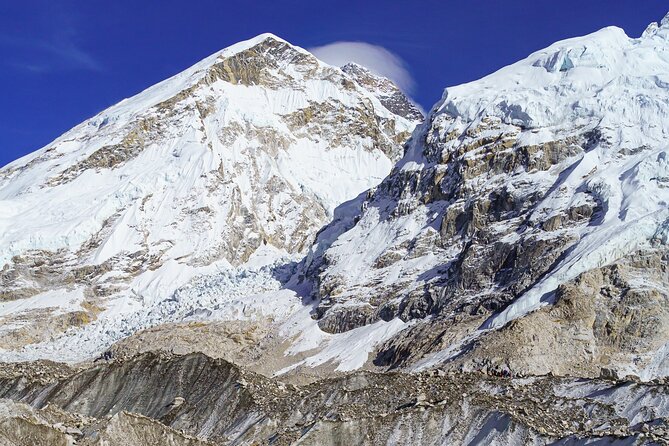
Dingboche provides another rest and acclimatization day before the route climbs toward Lobuche and Everest Base Camp. Short hikes to higher ground are used to help your body adapt.
This is not wasted time. It is one of the reasons the 13-day plan has a reasonable structure. You are not simply pushed uphill every day with no pause. The itinerary gives you two dedicated adjustment days, one in Namche and one in Dingboche.
Still, no schedule can remove altitude risk. You should report headaches, nausea, unusual tiredness, or other symptoms to your guide promptly. The tour information specifically warns about acute mountain sickness, and you should take that warning seriously.
Dingboche to Lobuche on Day 8
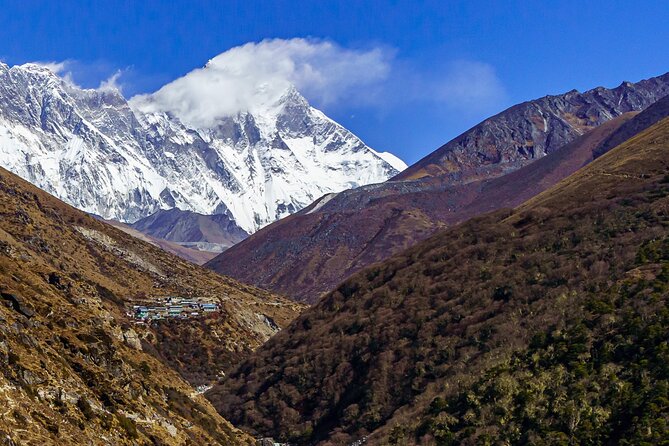
The trail leaves Dingboche on a gradual ascent through grazing areas and open mountain country. Chortens and Mani walls add cultural detail to the walk, while the mountains remain the main visual reward.
This is a quieter section of the journey. The route can feel exposed compared with the forested trails below, and the high altitude makes a moderate day feel demanding. Walk slowly, drink regularly, and do not judge your fitness by how quickly you managed the lower sections.
The guide’s role becomes increasingly important here. Dibash is repeatedly praised for handling logistics and pacing the group, while Achyut Mishra is described as attentive, supportive, and good at finding practical solutions when the route becomes difficult. Those qualities matter more than a polished speech or a fast walking pace.
The big day at Everest Base Camp on Day 9
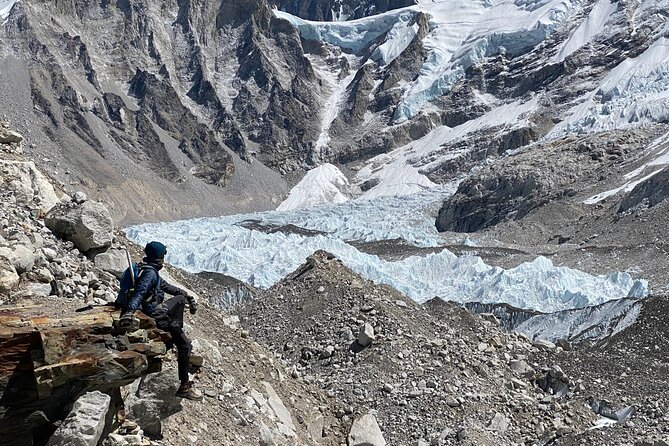
From Lobuche, you set out early for Everest Base Camp. This is the emotional center of the trek, but it is not an easy photo stop. The altitude is high, the route can be tiring, and the day requires careful pacing.
Your guide should help you manage the effort and watch for signs of altitude sickness. Reaching Base Camp is rewarding because you have arrived there on foot after days of steady travel through the Khumbu. The destination matters, but so does the build-up through Namche, Tengboche, Dingboche, and Lobuche.
Conditions at Base Camp can vary, and the view is not the same as the famous summit photographs. You are visiting the base area, not climbing Everest. The achievement is still substantial, especially for anyone who has never spent time at high altitude.
Kala Patthar before sunrise on Day 10
The next morning brings one of the trip’s most demanding and memorable outings: an early climb toward Kala Patthar. You leave before dawn to reach the viewpoint around sunrise, then return to lower elevations.
The early start is worthwhile if the weather cooperates. Kala Patthar is valued for its broad mountain views and for the chance to see the high peaks in changing morning light. It also gives you a different perspective from Base Camp itself.
This day can be harder than the previous one because of the early hour, cold, altitude, and accumulated fatigue. Wear warm layers, gloves, and a reliable outer shell. The recommended packing list includes a warm fleece or puffy jacket, waterproof Gore-Tex layer, woolen cap, gloves, and a torch. These are not decorative extras.
The long return through Pheriche and Namche on Day 11
After the high point of the journey, the route turns back toward Namche Bazaar. The walk from Pheriche is mostly downhill and again follows the Dudh Koshi River.
Downhill sounds easy, but tired legs and uneven trails can make it surprisingly demanding. Trekking poles may help, though they are not specifically listed among the required items. Good socks and well-fitted trekking shoes are especially important now.
The return route lets you see familiar villages from a new angle. You may notice details that escaped you while climbing, simply because you are less focused on managing the altitude.
Namche to Lukla on Day 12
The final trekking day takes you down from Namche toward Lukla. The trail includes a steep descent toward the riverbed and the confluence of the Dudh Koshi and another river.
This is a satisfying close to the walking portion, but it is not a gentle stroll. Descending can be hard on knees, and the trail may feel long after the high-altitude days. Keep some energy in reserve and follow your guide’s pace.
The package provides a complimentary Trekking Planner duffel bag, which must be returned after the trip. You also need a day pack of roughly 25 to 40 liters. Confirm before departure how your main luggage will be handled and what weight limit applies, since those details are not specified here.
Returning to Kathmandu on Day 13
The final day takes you by air from Lukla back to Kathmandu. Because Himalayan weather can shift quickly, the schedule calls for an early flight and allows for weather-related disturbance.
Once back in Kathmandu, your trek is finished, but you should not plan an important same-day onward connection. The included flight is convenient, yet mountain aviation remains dependent on conditions.
The company provides airport transfer arrangements at the beginning, and the itinerary describes the return to Kathmandu after the Khumbu portion. Confirm the exact airport transfer plan for your departure before you leave.
What $1,399 covers, and what it does not
At $1,399 per person, the cost is attractive for a 13-day guided Everest Base Camp package. The price includes:
- Kathmandu to Lukla and Lukla to Kathmandu flights
- National Park entrance fee
- Trekkers’ Information Management System card
- Government and local taxes listed in the itinerary
- Trailside accommodation
- Meals on the trekking route
- A guide and private group arrangement
- One complimentary company duffel bag
The meal details list 11 lunches, 12 dinners, and 12 breakfasts. Since the trip lasts about 13 days, I would ask the provider to confirm exactly which meals are covered on arrival and departure days.
You pay separately for alcoholic drinks, Kathmandu meals, personal phone use, battery charging, bar and beverage bills, Nepal visa fees, and food or drinks not specifically included. Personal travel and health insurance are essential, and helicopter evacuation insurance is also excluded.
There is an important pricing wrinkle for solo visitors. The advertised rate can apply to one person even when two people book, depending on group size, date, or shared accommodation. A $150 single surcharge may apply if you want a solo departure rather than joining an existing group. Ask for the final price before you commit.
Guides, support, and the private-tour advantage
The strongest praise centers on guide care, organization, and daily communication. Milan is credited with explaining the next day’s plan and adjusting walking estimates to suit ability. Dibash receives repeated praise for professional pacing and logistics, while Achyut Mishra is described as calm, attentive, and helpful when problems arise.
Ratna is praised for adding local explanation and personal support. Anil, Dipak, and Prokhas are also named as helping make one trek special. A porter named Ganesh is remembered for bringing luggage to the lodge before the couple arrived each day.
These details point to the real value of a private trek. You are not simply buying a route. You are paying for someone to manage the daily decisions that become tiring at altitude: when to leave, how fast to walk, where to rest, and how to handle a rough day.
Other great hike spots: Kathmandu, covered on kathmandutrips.com.
Private also does not always mean completely alone. The price information says you may join an existing group unless you pay the solo-departure surcharge. Get that point in writing if having an exclusive guide and departure is important to you.
Who should book this Everest trek?
I would recommend it to someone with moderate physical fitness who wants the classic Everest Base Camp route without handling every permit, lodge, flight, and meal personally. It also suits couples, families, honeymooners, and groups that want to discuss a more personal schedule.
You should be comfortable walking for several hours on mountain trails and coping with cold, basic accommodation, early starts, and altitude. You do not need to be an elite athlete based on the information provided, but you do need to prepare seriously.
This is less suitable if you need luxury accommodation, guaranteed flight times, a relaxed sightseeing schedule, or a low-risk holiday. The 13 days are tightly used, and the high-altitude sections can be physically and mentally taxing.
Should you book it?
Book this trek if you value strong logistical support, included Lukla flights, clear acclimatization days, and a guide who stays involved in the small daily decisions. The price is fair for what is covered, especially if you join an existing group and avoid the single surcharge.
Before booking, confirm the exact room arrangement, meal count, luggage handling, guide assignment, and final solo price. If you accept basic lodges, uncertain mountain weather, and a demanding route, this package gives you a practical way to reach Everest Base Camp with the hard planning largely handled.
FAQ
Is the Kathmandu to Lukla flight included?
Yes. The package includes the Kathmandu to Lukla and Lukla to Kathmandu flights, along with the airport departure tax.
Are meals included during the trek?
Yes. Breakfast, lunch, and dinner are included according to the itinerary. Meals in Kathmandu are not included, and the listed meal count should be confirmed because it specifies 11 lunches, 12 dinners, and 12 breakfasts.
Is accommodation included?
Yes. Nightly accommodation in trailside lodges is included during the trekking portion.
Is this a private trek?
The activity is described as a private tour, with only your group participating. However, the pricing information says you may join an existing group unless you pay the single-departure surcharge, so confirm the arrangement for your chosen date.
Is there an acclimatization day?
Yes. Day 4 is set aside for acclimatization in Namche Bazaar, and Day 7 is another rest and acclimatization day in Dingboche.
What fitness level do I need?
You should have a moderate physical fitness level. The route includes steep climbs, high-altitude walking, early starts, and long descents.
Is travel insurance included?
No. Personal travel and health insurance are excluded, as is insurance for helicopter evacuation.
Can I cancel for a full refund?
You can cancel up to 24 hours before the experience start time for a full refund. Cancellations or changes made less than 24 hours before the start time are not accepted for a refund.
Just added around Kathmandu
- Private Shopping Tour in Kathmandu★ 5.0 · 3 reviews
- Nagarkot Sunrise With 7 UNESCO World Heritage Private Tour★ 5.0 · 3 reviews
- Kathmandu: Nightlife and Pub Crawl Tour★ 5.0 · 3 reviews
- Mount Everest Scenic Flight 50 Minutes★ 5.0 · 3 reviews
- Momo Cooking Class -The Art Of Making MoMo with Home Chef★ 5.0 · 3 reviews
- Kathmandu: Nagarkot, Bhaktapur, Doleswor & Sanga Statue Tour★ 5.0 · 3 reviews
- Makalu Base Camp Trek★ 5.0 · 3 reviews
- Everest Experience Trek 6 Day Hiking Adventure★ 5.0 · 3 reviews
Everest Base Camp Treks, compared.





Everest Base Camp Trek with Helicopter Return from Gorakshep to Lukla
Read our review →Browse the lists this tour appears in