
Reviewed · EVEREST BASE CAMP TREKS
Everest Base Camp Trek
The Himalayas demand your full attention. This 15-day Everest Base Camp Trek combines Sherpa culture with a famous high-altitude route, while guides and porters handle much of the daily work. I like the private small-group setup, which lets your party move at a comfortable pace, and I like the useful gear package, including a sleeping bag, down jacket, and duffle bag.
The strongest practical advantage is the steady support from the local team. Guides such as Lok, Khila, Lal, Hari, and Ossman receive repeated praise for safety, pacing, and personal care. The main catch is that this remains a serious mountain trek: moderate fitness is required, weather can cancel the Lukla flights, and the itinerary includes long, steep days at very high altitude.
In This Review
- Key things to know before booking
- What the $1,408 price really includes
- Day 1: Kathmandu arrival and a soft landing
- Day 2: Kathmandu to Lukla, then the trail to Phakding
- Day 3: Pine forests, Monjo, and the Hillary Bridge
- Day 4: Acclimatization around Namche Bazaar
- Day 5: Kyanjuma, Phungi Thanga, and the Dudh Koshi
- Day 6: Pangboche and the brave Sherpa villages
- Day 7: Nagarkhang Peak and the second acclimatization day
- Day 8: Dughla and the steep pass
- Day 9: Glacier walking and Everest Base Camp
- Day 10: The pre-dawn climb to Kalapatthar
- Days 11 and 12: Retracing the route toward Lukla
- Days 13 to 15: Lukla flight, Kathmandu, and departure
- Guides, porters, and the human side of the trek
- Fitness, altitude, and the hard truth about comfort
- Who should book this Everest trek?
- Booking, refunds, and useful planning details
- Should you book it?
- FAQ
- How long does the Everest Base Camp Trek last?
- Where does the trek begin?
- Is the Kathmandu to Lukla flight included?
- Are airport transfers included?
- Are meals included?
- Is accommodation included?
- What trekking equipment is provided?
- Are permits included?
- Is this a private tour?
- What happens if bad weather cancels the experience?
Key things to know before booking
- Lukla flights are part of the adventure: The 30-minute flight from Kathmandu lands at one of the world’s most famous mountain airstrips, but bad weather can cause delays.
- Two acclimatization days help: Rest days near Namche Bazaar and Dingboche break up the climb and include optional hikes to higher viewpoints.
- Porters carry your main gear: You still walk each day with a daypack, but the porter service makes the trek more manageable.
- The price covers major essentials: At $1,408 per person, the package includes domestic flights, permits, meals, accommodation, guides, porters, and trekking gear.
- Kalapatthar is the visual high point: The pre-dawn climb offers the famous view toward Everest and the surrounding Khumbu peaks.
- Build in patience for mountain weather: A spare day in Kathmandu helps protect your international departure if Lukla flights are delayed.
What the $1,408 price really includes
At $1,408 per person, this is not a bare-bones walking trip. The price includes airport transfers in Kathmandu, round-trip Kathmandu to Lukla flights, the Everest National Park entry permit, TIMS registration, accommodation, most meals, a licensed English-speaking guide, porters, and a set of useful cold-weather equipment.
That equipment matters. A four-season sleeping bag, down jacket, and duffle bag can save you from buying or renting bulky items before you start. You return those items after the trek, so you do not need to transport them home.
The porter arrangement also has real value. Your guide organizes the daily route and logistics, while strong Sherpa helpers carry the heavier luggage. You will still need a personal daypack with essentials, but you are not expected to haul every item up and down the Khumbu Valley.
The package includes 14 breakfasts, 11 lunches, and 12 dinners. That is enough to cover nearly the full walking program, but you should budget for personal drinks, hot showers, laundry, telephone use, snacks, and bar bills.
You must pay separately for international flights, a Nepal visa, travel insurance, medical insurance, and emergency evacuation. Those exclusions are important. At high altitude, evacuation coverage is not a minor extra, so check that your policy specifically covers trekking and helicopter evacuation if needed.
More Everest Base Camp Treks:
- Everest Base Camp Trek – 14 Days
★ 5.0 · 1,499 reviews - Everest Base Camp Trekking
★ 5.0 · 485 reviews - Everest Base Camp Trekking – 13 Day
★ 5.0 · 365 reviews
Day 1: Kathmandu arrival and a soft landing
An airport representative meets you with a name card and transfers you to your hotel by private vehicle. The stated airport transfer takes about 30 minutes, and the day is intentionally light.
That is sensible. You may arrive tired, and the next morning begins with one of the world’s most memorable short flights. Use this time to meet your guide, check your borrowed gear, and make sure your personal bags are ready.
Kathmandu is described as the city of temples and Nepal’s gateway to the Himalayas. This program gives you little scheduled sightseeing time at the start, so do not expect a full city tour as part of the package.
Day 2: Kathmandu to Lukla, then the trail to Phakding
The flight to Lukla takes about 30 minutes and offers early Himalayan views. The landing is famous for a reason. It is a small mountain airport, and the approach adds a sharp burst of excitement before the walking begins.
The route then continues toward Phakding. The day is listed at about four hours, though the exact walking time can vary with flight timing and trail conditions.
This first stretch lets you ease into the rhythm of the trek. You are already walking in the Khumbu region, but the day is not yet one of the punishing high-altitude stages. Keep your pace calm and avoid treating the first day like a race.
Day 3: Pine forests, Monjo, and the Hillary Bridge
The trail climbs gently toward Monjo, with a lunch stop at Jorsalle. From there, you continue through pine forest toward the Hillary Bridge.
After crossing the bridge, the path becomes steep in places. This change is useful preparation for the harder days ahead, but it can also reveal whether you are walking too fast. Let your guide set the pace.
The bridge is more than a photo stop. It marks a clear change in the route, with steeper walking and the first real sense that the valley is drawing you upward toward Namche Bazaar and the high country.
More Treks and Hikes:
- Nagarkot Sunrise View and Day Hiking from Kathmandu
★ 5.0 · 471 reviews - Annapurna Circuit Trek with Tilicho Lake
★ 5.0 · 368 reviews - Everest Base Camp Trek -14 Days
★ 5.0 · 321 reviews - Annapurna base camp trek 5 Days
★ 5.0 · 252 reviews
Day 4: Acclimatization around Namche Bazaar
This is a rest and acclimatization day, but rest does not mean staying in bed all day. The guide offers different hiking choices, including Khumjung and Khunde, the Everest View Hotel, Thame, or Sagarmatha National Park.
The choices are valuable because acclimatization works better when you gain some height and return to sleep lower. The program lets the guide adjust the outing to your energy, weather, and group condition.
You should treat this day seriously. It is one of the main reasons the itinerary is more than a simple fast march to Base Camp. The extra time gives your body a better chance to adjust before the route becomes much higher.
Day 5: Kyanjuma, Phungi Thanga, and the Dudh Koshi
The route climbs toward the national park headquarters before continuing along a more gentle trail to Kyanjuma. A short tea break may come before the descent to Phungi Thanga, where lunch is planned.
You then cross the Dudh Koshi River and climb again. This up-and-down pattern is typical of mountain routes, and it can feel harder than the distance suggests.
The day gives you a mixture of forest, river crossings, village stops, and rising mountain views. It is also a reminder that altitude is not the only challenge. Steep descents can work your legs just as much as uphill climbs.
Day 6: Pangboche and the brave Sherpa villages
Following the Imja Khola, you reach Pangboche at about 3,930 meters. The village is known as home to renowned Everest climbers and brave Sherpa families.
This is one of the more meaningful cultural parts of the route. The Everest region is not simply a stage for mountain scenery. It is a working home for the Sherpa people, and walking through villages such as Pangboche gives the journey a human setting.
The mountain views become more dramatic as you move higher. At the same time, you should expect slower walking and colder conditions. Your guide and porter team become more important here, especially when the pace needs to change.
Day 7: Nagarkhang Peak and the second acclimatization day
The second acclimatization day includes a hike to Nagarkhang Peak, at roughly 5,000 meters. From the top, you can see a wide spread of Himalayan peaks.
This is a demanding rest day. You are not simply taking a day off, but making a controlled climb and returning to sleep lower. The high point gives your body extra altitude exposure while keeping the itinerary from adding another long forward-moving day.
Your guide can help decide how far you should go. If you are struggling with altitude symptoms, the goal should be safe acclimatization, not reaching the highest possible point.
Day 8: Dughla and the steep pass
You follow the ridge above Pheriche toward Dughla, with a quick lunch stop before the steep climb to Dughla Pass. The route now feels more exposed and demanding.
This stage is a useful mental marker. Everest Base Camp is getting close, but the hardest walking is not over. The combination of steep ground, thin air, and a growing sense of anticipation can make this day feel longer than its mileage.
Keep your water, warm layer, and snacks easy to reach. You may need them without wanting to stop for a full pack search.
Day 9: Glacier walking and Everest Base Camp
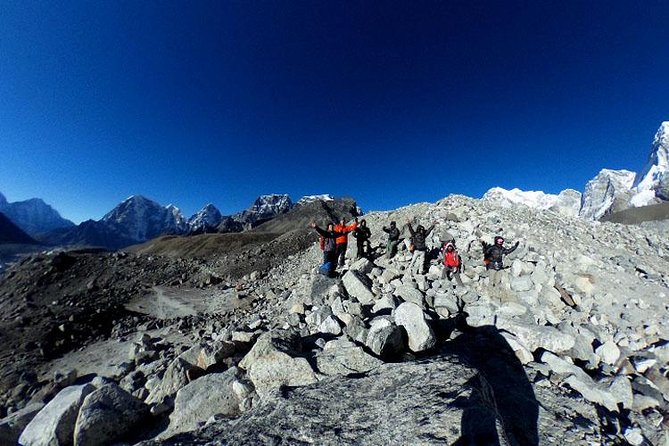
The first section of the day is described as relatively easy. Once you begin climbing over the glaciers, the going becomes harder because of uneven terrain and low oxygen levels.
Crossing the glacier gives you a first look at the severe high-altitude setting around Base Camp. This is not a polished walkway. Conditions can make footing awkward, and the cold and thin air add to the effort.
Reaching Everest Base Camp is the central goal of the trek, but the experience is about more than a single arrival photo. You have already passed through Sherpa villages, crossed rivers and bridges, gained altitude carefully, and adjusted to a very different pace of life.
Day 10: The pre-dawn climb to Kalapatthar
The group wakes early to climb Kalapatthar before sunrise. The ascent is hard, but the viewpoint is famous for its views across the Khumbu Valley and toward Everest and other major Himalayan peaks.
For many people, this is the visual high point of the whole route. Base Camp puts you close to the climbing world, while Kalapatthar gives you the broad mountain view that photographs often promise.
The early start is not a small detail. You will be climbing in cold, dark conditions before the reward arrives. Your down jacket and sleeping bag are especially useful on a morning like this.
Days 11 and 12: Retracing the route toward Lukla
After the high point, the trail turns back through Debuche and Tengboche. You descend steeply to Phungi Tenga for lunch, then climb again toward Kyanjuma.
The return route is not effortless. Downhill walking can be tough on tired knees, and the route still includes uphill sections. You should not assume that reaching Base Camp means every difficult part is finished.
The next day takes you down to Jorsalle, then onward to Phakding and Lukla. The program describes this as the end of the walking portion, after roughly 11 nights and 12 days of trekking.
There is a small timing inconsistency in the supplied schedule: the overall experience lasts 15 days, while parts of the walking description refer to an 11-night, 12-day trek. Ask the operator to confirm the exact overnight plan and meal schedule before paying.
Days 13 to 15: Lukla flight, Kathmandu, and departure
You fly from Lukla to Kathmandu in the morning. The flight is short, scenic, and dependent on weather, so keep your plans flexible.
The itinerary specifically recommends sitting on the right side of the airplane for attractive views on the return flight. That is a useful tip, though seat assignments and aircraft conditions may affect what you see.
Day 14 is a free day in Kathmandu. Its main practical purpose is a buffer for Lukla delays or cancellations, but it also gives you time for shopping, sightseeing, or simply recovering before your international flight.
On Day 15, a private vehicle takes you to the airport about three hours before departure. The airport has one terminal, and breakfast is included.
Guides, porters, and the human side of the trek
The strongest part of this arrangement is the local support. Feedback repeatedly praises guides for setting a comfortable pace, watching safety, answering questions, and handling daily details.
Lok receives especially warm praise for looking after the group and keeping the walking rhythm inclusive. Khila is repeatedly singled out for careful attention, politeness, and a strong focus on safety. Lal is praised for experience and reassurance, while Hari and Ossman also receive positive comments for kindness, encouragement, and care.
Those names matter because a trek like this depends heavily on the guide. The route, accommodation, and flights are important, but good judgment becomes most valuable when somebody in the group feels unwell or the weather changes.
Groups over six people receive an assistant guide. The tour is private, so only your own party participates, but confirm the expected group size if you want to know whether an assistant guide will be present.
Fitness, altitude, and the hard truth about comfort
The experience calls for moderate physical fitness. That wording should not fool you into thinking this is a casual walking holiday. The route includes steep climbs, glacier walking, high passes, and an ascent to roughly 5,000 meters on the acclimatization day.
The schedule does include two acclimatization days, which is a major strength. Still, no itinerary can guarantee that you will avoid altitude sickness. You need travel and medical insurance, and emergency evacuation is not included in the price.
Comfort is practical rather than luxurious. Accommodation and meals are included, but hot showers, laundry, drinks, telephone use, and snacks cost extra. You should also expect basic mountain conditions, though the provided sleeping bag and down jacket reduce the amount of specialized equipment you need to bring.
Who should book this Everest trek?
I would recommend this trip to you if you want the classic Everest Base Camp route but prefer organized support over managing every permit, flight, room, and porter yourself.
It suits a private group of friends or family members who want to walk together at their own pace. It also suits first-time high-altitude trekkers who value a guide and porters, provided they take the fitness and insurance requirements seriously.
I would hesitate if you need fixed flight times, dislike steep walking, or want a sightseeing-heavy holiday. Lukla weather can interfere with plans, and the trail demands patience, stamina, and a willingness to accept simple comforts.
Booking, refunds, and useful planning details
Confirmation is provided at booking. Pickup is available, the meeting area is near public transportation, and the experience operates every day according to the supplied opening schedule.
Cancellation terms are strict close to departure. Cancel at least six full days before the start for a full refund, two to six full days before for a 50 percent refund, and less than two full days before for no refund. If poor weather cancels the experience, you are offered another date or a full refund.
Before booking, confirm three things in writing: the precise accommodation plan, the current Lukla flight arrangements, and what happens if the flight is delayed beyond the planned trekking schedule. The spare Kathmandu day helps, but mountain weather can still affect international connections.
Should you book it?
Yes, if you want a well-supported private trek with the classic Everest Base Camp route, two acclimatization days, porter assistance, and most major costs rolled into one price.
The best reasons to choose it are the local guide support, the included cold-weather gear, and the practical buffer day in Kathmandu. The main reasons to pause are the demanding altitude, weather-dependent flights, and extra personal costs that sit outside the package.
At $1,408, the value is strong for a 15-day organized trip that includes permits, domestic flights, meals, porters, guides, transfers, and equipment. Just make sure your insurance covers the activity and that your body, schedule, and expectations are ready for a real Himalayan trek.
FAQ
How long does the Everest Base Camp Trek last?
The experience is scheduled for approximately 15 days, including arrival and departure days, the trek, domestic flights, and a free day in Kathmandu.
Where does the trek begin?
The program begins in Kathmandu, Nepal, with airport pickup and a transfer to the hotel. The walking route begins after the flight to Lukla.
Is the Kathmandu to Lukla flight included?
Yes. Round-trip domestic airline tickets between Kathmandu and Lukla are included for the participant and guide.
Are airport transfers included?
Yes. Private-vehicle airport pickup and drop-off are included before and after the trek.
Are meals included?
Breakfast is included 14 times, lunch 11 times, and dinner 12 times. Personal drinks, snacks, bar bills, and similar expenses are not included.
Is accommodation included?
Yes. Accommodation is included as part of the trekking package, along with meals and porter support.
What trekking equipment is provided?
The company provides a down jacket, four-season sleeping bag, and duffle bag. These items must be returned after the trip.
Are permits included?
Yes. The Everest National Park entry permit and Trekkers Information Management System registration card are included.
Is this a private tour?
Yes. Only your own group participates. An assistant trekking guide is included for groups larger than six people.
What happens if bad weather cancels the experience?
Because the experience requires good weather, a weather cancellation results in an offer of a different date or a full refund. Lukla flights may also face weather-related delays or cancellations, which is why a free day in Kathmandu is included.
Just added around Kathmandu
- Private Shopping Tour in Kathmandu★ 5.0 · 3 reviews
- Nagarkot Sunrise With 7 UNESCO World Heritage Private Tour★ 5.0 · 3 reviews
- Kathmandu: Nightlife and Pub Crawl Tour★ 5.0 · 3 reviews
- Mount Everest Scenic Flight 50 Minutes★ 5.0 · 3 reviews
- Momo Cooking Class -The Art Of Making MoMo with Home Chef★ 5.0 · 3 reviews
- Kathmandu: Nagarkot, Bhaktapur, Doleswor & Sanga Statue Tour★ 5.0 · 3 reviews
- Makalu Base Camp Trek★ 5.0 · 3 reviews
- Everest Experience Trek 6 Day Hiking Adventure★ 5.0 · 3 reviews
Everest Base Camp Treks, compared.





Everest Base Camp Trek with Helicopter Return from Gorakshep to Lukla
Read our review →Browse the lists this tour appears in